Imanuddin Hasbi* | Mokhtarrudin Ahmad | Mahendra Fakhri | Ridho Joviano | Mahir Pradana
© 2025 The authors. This article is published by IIETA and is licensed under the CC BY 4.0 license (http://creativecommons.org/licenses/by/4.0/).
OPEN ACCESS
This article aims to investigate the impact of functional elements of green marketing on ecological behavior through the mediating effect of green competencies. It offers a novelty in becoming among the first studies focusing on exploring green competencies as mediating effect to ecological behavior. This study attempts to identify the other element of green marketing advertising and focusing on the psychological effect of ecology. The data analysis method involves collecting primary data from respondents in Malaysia and applying statistical model using structural equation modeling partial least square to evaluate the impact of the policy. The analysis highlights the positive relationship between functional elements of green marketing on ecological behavior through the mediating effect of green competencies. The implications of these findings can provide valuable insights for regulators and institutions in managing green awareness in the advertising sector.
green marketing, advertising, ecological psychology, green awareness
As more research has focused on these market niches in recent years, green marketing has become a central concept in the marketing literature [1]. On the other hand, government and non-governmental groups are attempting to change people's ideas of environmental consciousness through the use of green marketing strategies in order to increase public knowledge of environmental challenges [2]. Green marketing is considered one of the most effective techniques when properly planned and executed [3]. Electronic trash, in the form of unused and disposed electronic devices, is one of the most challenging issues to solve since, according to studies, it is expanding up to three times faster than the world's population [4]. In the twenty-first century, electronic and electrical equipment has always been a part of our lives, even as technology becomes more important and assists us in our everyday lives [5].
Pollution is spreading quicker than we realize these days, starting with trash and continuing with electronic waste (e-waste), which has the potential to become a problem [5, 6]. Electronic trash, or "e-waste," is being produced at an alarmingly rapid rate, posing a serious threat to both our valuable human health and the environment [7].
The exponential growth of electronic and electrical equipment will ultimately create an issue as more people enter the digital world [8]. According to official forecasts, the quantity of e-waste produced will increase by up to 14% annually; by the end of each year, 1.17 billion units, or 21.38 million tons, are estimated to be produced [9]. These expanding issues with electronic trash need to be properly managed in order to prevent contamination [10].
A number of non-profit groups and the government have started campaigns to raise awareness about ordinary rubbish and electronic waste, commonly known as "e-waste," in an effort to promote environmental sustainability and an eco-friendly way of life [11]. Even though Malaysia has already started a few campaigns and initiatives, the recycling system has been proven to be ineffectual and was primarily designed with huge corporations in mind [11]. Many Malaysians continue to dispose of their electrical and electronic equipment carelessly, oblivious to the enormous harm that their actions cause to the environment and wildlife, despite the Department of Environment Malaysia's (DoE) aggressive efforts to reduce electronic waste (also known as "e-waste") nationwide [12].
Even though sustainability and environmental awareness are becoming more and more important in marketing strategies, there are still a number of unanswered questions about how green competencies affect ecological behavior, especially when it comes to green advertising. Current research mostly focuses on how green advertising directly affects consumer behavior, frequently ignoring the functional components that motivate the behavioral and cognitive mechanisms that underlie eco-friendly behavior.
2.1 Functional elements of green marketing advertising
Functional and emotional values are the two categories under which green marketing advertising falls [13]. Functional values often deliver data or information, but there are opposing data on which values work best [14]. Emotional values strategy focuses primarily on the visual and appearance, such as beautiful scenery or a view of the outdoors. Meanwhile, functional values often deliver data or information [15].
Information sharing is highly valued by functional values, as evidenced by the distribution of statistics on recycling benefits and rates, among other things [16]. Functional value is established in order to communicate information, specifically about the environmental impact of data or the influence on the environment, such as the use of arguments in advertisements [17]. Customers may find functional value less appealing due to a variety of issues, including human nature and their limited ability for reason in real-world setting [18].
In the natural world, people have a wide range of alternatives to choose from when making selections, including what product to buy. Due to the continual barrage of information, they are exposed to—also known as information overload—this may be too much for them to handle and may hinder their capacity to make judgments. As a result, buyers are more inclined to select goods that are enticing and provide outstanding value [19].
Emotional values emphasize the relationship between people's feelings and the marketing that has been used, for example, by adding elements of serenity, rage, or melancholy that may affect consumers [20]. An increasing number of advertisers are shifting to emotional values, which is backed by research showing a correlation between emotional advertising and recall of the advertisement [21]. Emotional advertising allows the targeted audience to become fully immersed and feel as though they are inside the situation that the advertiser is trying to convey. A single, overwhelmingly positive image in an advertisement can act as a trigger and be sufficient to elicit positive reactions towards the advertisement [22].
Nevertheless, past studies have shown that a thorough assessment must consider both functional and emotional factors [23]. However, despite the expanding practical relevance of functional, emotional, or combination green marketing promotion, our knowledge of the values effect remains inadequate [24]. The efficacy of advertising has been investigated, but the study has not been able to provide solid proof [25] or considered the role that emotions play in assisting the audience in understanding the messages being presented and in making judgments [26].
2.2 Understanding green competencies
A person's ability to interact positively and passionately with their environment is referred to as having green skills [27]. An individual has to fulfill three conditions in order to interact and connect with their surroundings: They have three requirements: (1) they need to be conscious of environmental concerns; (2) they need to know something about environmental issues and the environment in general; and (3) they need to keep up their environmental preservation techniques [28]. Green skills consist of three elements: (1) knowledge; (2) conscientiousness or awareness; and (3) talents connected to resource conservation [29]. The idea that green competences are a higher-order dispositional variable that includes environmental motives and views is supported by empirical data [30]. The study also looked at green motives and green competences as helpful reactions that are essential to environmental preservation [31].
Additionally, according to Fraijo-Sing et al. [29], green competencies are made up of two components: environmental knowledge and abilities. The results highlighted that there are two kinds of green capabilities in management literature: fake and natural. Environmental concern is a component of natural green competencies, whereas artificial green competencies encompass a variety of dimensions, including knowledge, skills, awareness, and attitude towards the environment [32]. In general, "green knowledge" refers to a person's comprehension of ideas, information, and relevant connections related to environmental concerns or environmental knowledge [33]. Finding answers to issues can be aided by using green knowledge and modifying one's own behavior and attitudes [34].
Green knowledge is crucial for employees of the organization since it pertains to their comprehension of ideas and practices linked to environmental preservation and conservation [35]. Moreover, the application and understanding of both objective and subjective green knowledge are crucial in influencing respondents' conduct-based awareness of environmental concerns [36]. Through environmental education, people are usually given the capacity to understand the environment [37]. The degree of awareness regarding environmental issues is important as it may affect how someone behaves and thinks. An individual's green environmental uncertainty and intention may be enhanced by green information, which also acts as a motivation [38].
When discussing green awareness, the research addresses a variety of perspectives, including an individual's knowledge of their carbon footprint [38], their awareness of the effects of air pollution [37], and their awareness of environmental danger [37, 38]. One of the key elements for implementing environmental issues is green awareness [39]. A study carried out in Nicaragua revealed the importance of green awareness among the nearby ecotourism sites' local communities that have different natural resources. The study also revealed that green awareness encourages the community to engage in a variety of environmental activities [40]. According to other studies looking at how ecotourism affects the economy, a person's degree of environmental consciousness does have a big role in how sustainable their travel industry is [41].
An individual's attitude is defined as the extent to which they evaluate or interpret the conduct in question—whether positively or negatively [42]. Environmental attitudes are defined by AlSuwaidi et al. [43] as an individual's cognitive evaluation of the significance of environmental preservation within the framework of environmental management [44]. Environmental performance requires green attitudes, which have been defined as feelings combined with evaluative actions. Several previous research have examined the benefits of adopting a green mentality in environmental management. When IT specialists performed research on the relationship between green computing practices and attitudes, relationships between several constructs were discovered [42].
Green behaviour is sometimes referred to as environmentally sustainable behaviour, eco-friendly behaviour, or even responsible environmental behaviour [43, 45]. It may be defined as employee-initiated activities and behaviors that enhance environmental sustainability within the framework of organizations and enterprises [46]. The usage of ecologically friendly products or making use of reusable, recyclable, energy-efficient, and less polluting objects is another definition of ‘green behavior’ [47, 48]. Chen et al. [49] assert that achieving environmental performance can be aided by green values, communication, and mindset. There have been instances where the majority of those expressing environmentally conscious conduct had knowledge of environmental problems like pollution, which can endanger their health and well-being [50].
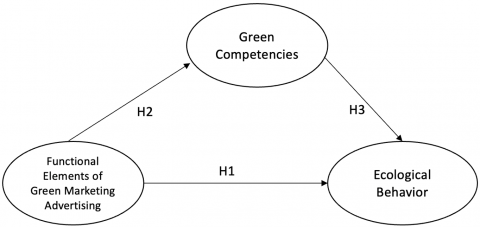
We created these proposed relationships based on the explanations:
H1: Functional elements of green marketing advertising and green competencies are significantly correlated.
H2: Green competencies and ecological behaviour are significantly correlated.
2.3 Determining factor of the ecological behaviour and mediating effect of green competencies
A meta-analysis of data encompassing several aspects of ecological activity, including interacting with nature, preserving it, disseminating sustainability knowledge, and ecological behaviour, lends credence to it [23, 51]. The life cycle of humans and ecological behavior are at odds with one another. A considerable amount of these behaviors, such parents teaching their kids to recycle, start when people become parents [52, 53].
An individual's amount of information and comprehension of environmental issues, as well as their capacity to identify and assess the consequences on the environment, are factors that define their level of knowledge, whether it be general or environmental [52]. People who are very conscious of the environment will act in a more environmentally friendly manner [54].
Thus, educating someone is one of the best strategies to influence their behavior and attitude about environmental concerns [55]. Moreover, individual perspectives on environmental matters differ widely and are impacted by other elements, such as one's degree of environmental literacy [56].
Additionally, those who care more about the environment typically save more energy, for example, and have higher environmental knowledge and values [57]. Ignorance will eventually cause problems since it might result in misinterpretations and contradicting facts, which will prevent ecological behavior [58].
The condition of knowing, attentive, informed, and alert to one's capacity to perceive, experience, and be aware of an event is the broad definition of awareness, according to Gafoor [59]. People become more conscious of environmental concerns after a major natural disaster, which benefits ecological behavior.
Awareness of the educational component that supports environmental activities has a beneficial effect on people's motivation to engage in them [57]. People may find it challenging to determine the root cause of an environmental issue when one occurs because they lack the necessary skills or may choose to wait for a clear, obvious signal, like a natural disaster [60].
Based on an individual's perceptions and evaluation of an event that affected them and was linked to their behavior, emotions may be understood as a person's level of readiness [59]. The surroundings will ultimately bring up the pertinent action done, as an individual's emotional involvements do affect their attitudes and awareness [32]. The findings showed that integrating emotions into advertising efforts and even educational programs can support ecological behavior [61, 62].
To the best of our knowledge, there have not been much research done on ecological behavior from the standpoint of green marketing and advertising. Consequently, we developed these proposed connections:
H3: Green competencies and ecological behaviour are significantly correlated.
Stakeholders are empowered by green competencies to convert green marketing messages into practical actions. Customers who are aware of sustainable practices, for instance, are more likely to buy eco-friendly goods or develop eco-friendly habits [32]. Green competencies help close the gap between ecological behavior and awareness by giving people the skills and self-assurance they need to implement green marketing initiatives. This alignment guarantees that the goals promoted by green marketing are realized through concrete, long-lasting actions. The overall effect of green marketing on ecological behavior is strengthened by this iterative process [63].
By converting the impact of green marketing into ecological behavior, green competencies act as a crucial mediator. They guarantee that the information and inspiration offered by green marketing initiatives are successfully translated into sustainable behavior [64].
H4: Green competencies mediate the relationship between functional elements of green marketing and ecological behaviour.
Figure 1. Conceptual framework
Emotions may be viewed as a person's preparedness level based on how they perceive and assess an event that has influenced them and is related to their action [59]. The environment will eventually highlight the relevant action taken because a person's emotional engagements do influence their attitudes and awareness [32]. The results demonstrated how incorporating feelings into marketing campaigns and even educational initiatives might promote ecological behavior [61, 62]. Cultural factors significantly influence ecological behavior and consumer responses to green marketing. Understanding these influences is essential for developing effective strategies that resonate with diverse consumer bases (Figure 1).
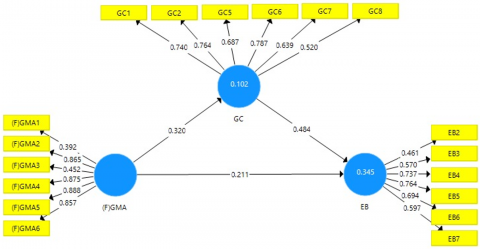
Research indicates that cultural relevance plays a crucial role in predicting environmental behaviors. Cultural factors were considered alongside constructs like connectedness to nature and self-efficacy, cultural relevance significantly predicted environmentally friendly behaviors [32]. This suggests that many models of environmental behavior may overlook critical cultural and ethnic factors, particularly in diverse contexts such as Malaysia. To the best of our knowledge, not much study has been done on ecological behavior from the perspective of environmentally friendly advertising and marketing. For this reason, we created these suggested relationships which are hypothesized as shown in Figure 2.
Figure 2. Result of the path analysis
3.1 The development of the research instrument
A five-point Likert scale was used to assess the study's design, with 1 denoting strong disagreement and 5 strong agreement. Furthermore, given that the intended respondents were Malaysians, the last survey question was further translated into Malay.
3.2 Respondents and methods of data analysis
Participants in this research include people from several Malaysian states. The ideal sample size for the study should be around five to ten times the number of indicators employed, per Hair et al. [65] recommendations. There are thirteen indicators or items in the questionnaire. Nevertheless, we should have collected data from 384 people via social media sites like Instagram and WhatsApp by using the Krejcie and Morgan Sample Size (1970) technique. After that, a survey was requested of these people to complete. Ultimately, we obtained a total of 259 responses.
The SmartPLS programme is used to analyse the data gathered from survey questions. Academic marketers highly consider PLS-SEM as a statistical analytical technique for assessing novel theoretical models with numerous complex social components. Marketing research is one area where structural equation modeling, or SEM for short, is quite popular [53, 66]. The present model is complex enough to use Partial Least Squares Structural Equation Modelling (PLS-SEM) with one moderator variable, which has four components in total. There will be more details on the data analysis and findings interpretation supplied later.
3.3 Method for statistical analysis
Using SmartPLS software, the PLS-SEM technique was used in this study. PLS-SEM's enhanced flexibility and analytical dependability are its main benefits [67]. After that, two steps of statistical analysis using PLS-SEM are carried out: Measurement model evaluation and structural model evaluation, as shown in Table 1 [67]. Together with instructions for each unit of analysis, Table 1 contains instructions for doing PLS-SEM analysis.
Table 1. The development of the research instrument
|
Step of Analysis |
Analysis Unit |
Basic Threshold |
Ref. |
|
Measurement model evaluation |
Indicator reliability: Indicator loadings |
≥ 0.70 |
[68] |
|
Convergent validity: average variance extracted (AVE) |
≥ 0.50 |
[65, 67] |
|
|
Discriminant validity: HTMT |
< 0.85 |
[65, 69] |
|
|
Structural model evaluation |
p-value |
p < 0.05 |
[65, 67] |
|
R2 value |
0.75, 0.50. 0.25 (substantial, moderate, weak) |
[65, 67] |
|
|
f2 (effect size) |
> 0.02 (small); > 0.15 (medium); > 0.35 (large) |
[70] |
SmartPLS software with Partial Least Squares Path Modeling (PLS-SEM) was utilized in this investigation. Ulum et al. [71] state that PLS-SEM looks at whether there is a relationship or influence between such structures in order to assess the predictive link between them. Evaluation of the measurement model occurs in two stages: the structural model (inner model) and the measurement model (outer model). This two-phase assessment of the measurement model aims to evaluate a model's validity and dependability [21].
4.1 Model testing (outer model)
Three criteria are used to evaluate the outer model using the SmartPLS software: the value of the loading factor and AVE indicates convergent validity; the value of the AVE square root indicates discriminant validity; and the value of composite reliability and Cronbach's alpha indicates the correlation between leten constructs and reliability tests.
4.2 Convergent validity
In order to conduct the convergent validity test, the loading factor value is first compared with the thumb rule (> 0.60), and then the AVE value is compared with the same rule (> 0.50) [67, 68]. Because the loading factor value in the first model is less than 0.5, it does not satisfy the convergent validity requirement. In order to remove the indication whose loading factor value was less than 0.5, the model change was done twice. Composite reliability is decreased when one or more indicators have low loadings because this lowers the total shared variance among the indicators. This suggests that there may be internal inconsistencies in the construct, thus we deleted the values with asterisks for further analysis (Table 2).
Table 2. The factor loading values of the first model
|
Variable |
Factor Loading |
|
Functional Green Marketing Advertising |
|
|
GMA1 |
0.688 |
|
GMA2 |
0.844 |
|
GMA3 |
0.711 |
|
GMA4 |
0.829 |
|
GMA5 |
0.875 |
|
GMA6 |
0.851 |
|
Green Competencies |
|
|
GC1 |
0.751 |
|
GC2 |
0.762 |
|
GC3 |
0.425* |
|
GC4 |
0.388* |
|
GC5 |
0.649 |
|
GC6 |
0.746 |
|
GC7 |
0.663 |
|
GC8 |
0.536 |
|
AWA8 |
0.600 |
|
Ecological Behaviour |
|
|
EB1 |
0.289* |
|
EB2 |
0.553 |
|
EB3 |
0.637 |
|
EB4 |
0.744 |
|
EB5 |
0.662 |
|
EB6 |
0.591 |
|
EB7 |
0.653 |
4.3 Discriminant validity and reliability test
Reliability test to prove the accuracy, consistency, and accuracy of the instrument in measuring constructs. Reliability tests were carried out by looking at the value of composite reliability and the value of Cronbach's alpha (> 0.60) for exploratory research [67, 68].
Table 3. Values of Cronbach’s alpha, composite reliability and AVE
|
|
Cronbach Alpha (> 0.5) |
CR (> 0.7) |
AVE (> 0.5) |
|
GMA |
0.888 |
0.915 |
0.645 |
|
GC |
0.769 |
0.834 |
0.397 |
|
AWA |
0.785 |
0.843 |
0.407 |
|
EB |
0.703 |
0.796 |
0.370 |
The values of Cronbach's alpha and composite reliability of each indicator are above 0.6. The total research variables are therefore deemed to meet or reliably, it may be inferred.
Since the AVE values shown in Table 3 are somewhat brittle, we had to come up with a hypothesis that would allow us to proceed with the data analysis. According to Lam [72], the three measures' combined dependability falls between 0.71 and 0.74, which is within the acceptable range of .60 [73]. However, even if more than 50% of the variance is attributable to error, the researcher may infer that the construct's convergent validity is sufficient if the average variance extracted falls between 31% and 40% and is below the suggested threshold of 0.5 [28]. The internal reliability is adequate since the three constructions' composite reliability is significantly higher than the suggested threshold.
4.4 Structural model testing (Inner model)
Inner model testing was carried out using R-Square for dependent constructs and significance values (t-value 1.96 with a significant level of 5%). R-Square's assessment aims to measure the degree of variation in the change of independent variables to dependent variables [21]. Rule of thumb values for R Square, namely 0.75, 0.50. 0.25 indicate strong, medium, and weak models, as shown in Table 4 [67].
Table 4. R-Square
|
|
R Square |
|
Awareness |
0.078 |
|
Green Competencies |
0.070 |
|
Ecological Behaviour |
0.469 |
Based on the aforementioned statistics, it can be concluded that the green competences as measured by the impact of green marketing advertising were 0.143, or 14.3% (weak). While other things impact the remaining ones. Additionally, data indicated that green marketing promotion had a weak (value of 0.392 or 39.2%) effect on ecological behavior. While additional elements that have not been further investigated affect the other. According to Ulum et al. [71], the significance of the hypothesis is seen from the path coefficients table the magnitude of the calculated t value < t of table 1.96. Weak to moderate effects suggest that while there is a relationship between variables, it may not be strong enough to imply significant practical implications or robust predictive power. Even if an effect is statistically significant, a weak or moderate size may indicate that the relationship is not practically significant.
Table 5. Hypothesis testing of the direct effects
|
Hypothesis |
Paths |
Path Coefficient |
P Values |
Verdict |
|
Hypothesis 1 |
FMA $\rightarrow$ GC |
0.272 |
0.000 |
Accepted |
|
Hypothesis 2 |
FMA $\rightarrow$ EB |
0.161 |
0.004 |
Accepted |
|
Hypothesis 3 |
GC $\rightarrow$ EB |
0.352 |
0.000 |
Accepted |
Based on Table 5, it can be concluded that:
Hypothesis 1 is accepted because it has a p-value below 0.005, the results have achieved these criteria. The path value result (0.272) showed that Green Marketing Advertising has a significant and positive effect on Green Competencies.
Hypothesis 2 is accepted because it has p-value below 0.005, the results have achieved t hese criteria with path value 0.161. It showed that Green Marketing Advertising has a significant and positive effect on Ecological Behavior.
Hypothesis 3 is accepted because it has a p-value below 0.005, the results have achieved these criteria with path value 0.286. the results showed that Green Competencies has a significant and positive effect on Ecological Behavior.
Table 6. Hypothesis testing of the direct effects
|
Hypo. |
Paths |
Path Coefficient |
P Values |
Verdict |
|
Hypotesis 4 |
FMA $\rightarrow$ GC $\rightarrow$ EB |
0.184 |
0.003 |
Accepted |
Because hypothesis 4's p-value is less than 0.005, and the data meet these requirements (path value of 0.184), it is accepted. The findings demonstrated the strong and favorable influence that Green Marketing Advertising via Competencies has on Ecological Behavior. This indicates that green competencies variable has a moderating influence (Table 6).
The promotion of ecologically friendly activities and goods is at the center of the interaction between green marketing, green competences, and ecological behavior. When the idea is applied to the creation and promotion of goods and services with environmental advantages, it entails integrating environmental factors into a number of marketing-related areas, including distribution, pricing, product design, and promotion [71]. Green marketing promotes goods and services that are seen as ecologically friendly in an effort to change customer behavior. The goal is to persuade customers to choose environmentally friendly products while making purchases [72].
The ability of people and organizations to successfully solve environmental issues and adopt sustainable practices is the foundation of green competences. Businesses that possess green skills are more suited to create and promote eco-friendly goods and services [73]. Comprehending environmental rules, integrating sustainable practices into corporate operations, and successfully conveying environmental objectives to customers are some examples of these abilities. Ecological behavior refers to individual or group behaviors that influence the environment in either a favorable or bad way. It covers things like recycling, energy saving, sustainable consumerism, and advocating for green behaviors and goods [74]. The goal of green marketing initiatives is to persuade and motivate customers to act sustainably. Strong green competences increase a company's likelihood of implementing sustainable business practices, which benefits the environment. Consumer trust is increased and credibility is strengthened when green marketing messaging are in line with real green skills.
To sum up, green marketing is a tactic used to influence consumer behavior and promote eco-friendly products. Green skills facilitate the implementation of sustainable practices by firms, enabling them to connect their actions with the principles advocated by green marketing [75]. The ultimate objective is to encourage environmentally conscious behavior among firms and customers, hence promoting environmental sustainability. A study by Widodo et al. [73] demonstrated that green marketing and sustainable advertising significantly enhance consumers' intentions to purchase green products. This aligns with findings from Harva et al. [74], which also confirmed a positive relationship between green marketing efforts and purchasing behavior. Research indicates that consumers who are more environmentally conscious are more likely to respond positively to green marketing strategies.
The difficulties that we had during the study process, namely related to scheduling problems and the limited sampling frame that made it difficult to obtain a representative sample from the East Coast of Malaysia, underscore the necessity for more studies to address these issues. The result is that qualitative methodologies should be used in future research to enhance our knowledge of the factors impacting beliefs and actions. Focus groups and in-depth interviews are examples of qualitative approaches that can offer deeper insights into the subtleties of individual viewpoints and experiences. We also require the cultural components that are ingrained in the study's environment. Investigating the potential effects of cultural variables on reactions to green marketing advertisements is part of this. Developing a more complete and contextually appropriate Green Marketing Advertisement model requires an understanding of the cultural environment.
In conclusion, by using qualitative methods, taking cultural factors into account, and using more comprehensive and varied sample tactics, future research projects should seek to address the limitations found in this study. By doing this, we may further our knowledge of public attitudes and actions about green marketing in Malaysia in a more complex and thorough way.
The findings underscore the practical significance of aligning green marketing strategies with the development of robust green competencies within organizations. Companies aiming to promote environmentally friendly products and influence consumer behavior must invest in cultivating green competencies. This entails incorporating sustainable practices into every aspect of the company's operations in addition to comprehending and abiding by environmental standards. The development of green competences may have a practical influence on the environment by facilitating the creation and promotion of goods and services that are really ecologically friendly. As a result, in order to increase the legitimacy of their green marketing initiatives and foster customer confidence, practitioners should give acquisition and application top priority.
Brands can increase consumer trust and loyalty by equipping them with the information and abilities to act in an environmentally responsible manner. Customers are more inclined to support businesses that actively support their ability to live sustainably in addition to marketing sustainable goods. Based on this research, industries like consumer goods (FMCG), fashion, and energy can customize green advertising strategies to target particular ecological behaviors that are pertinent to their industries, increasing the campaigns' relevance and efficacy.
Both the theoretical comprehension and the actual implementation of green marketing are significantly impacted by this research. By emphasizing the mediating function of green competencies, it not only advances scholarly discourse but also offers practical advice to companies and decision-makers who want to encourage ecological behavior and sustainable consumption.
In terms of limitation, the findings' applicability to Malaysia's larger population may be limited by the sample size and geographic constraints. The lack of East Coast representation could lead to conclusions that fail to take into consideration the region's distinct cultural, socioeconomic, and environmental features. Results might overrepresent the attitudes, behaviors, or experiences of the sampled regions, which could result in skewed policies or recommendations. Because specific viewpoints and experiences are routinely left out, sampling bias is introduced by the exclusion of participants from the East Coast. The sample might not accurately represent the diversity of Malaysians, especially if there are notable differences between the East Coast and the rest of the country in areas like environmental consciousness, cultural customs, and consumer behavior.
The study clarifies the connections between ecological behavior, green skills, and green marketing from a theoretical perspective. This adds to the growing corpus of information in the literature on sustainability and the environment. The study emphasizes the significance of green competences as a mediator between green marketing initiatives and good ecological behavior, providing empirical evidence in support of the theoretical framework connecting these notions. Theoretical implications underscore the necessity for investigators to delve deeper into the dynamics and mechanisms that underlie the correlation between ecological behavior, green skills, and green marketing. This may involve enhancing current models or formulating novel theoretical frameworks. Scholars may develop sustainable marketing theories and direct future studies in this area by expanding their theoretical knowledge.
We would like to thank Telkom University and Multimedia University for supporting this research.
[1] Papadas, K.K., Avlonitis, G.J., Carrigan, M., Piha, L. (2019). The interplay of strategic and internal green marketing orientation on competitive advantage. Journal of Business Research, 104: 632-643. https://doi.org/10.1016/j.jbusres.2018.07.009
[2] Szabo, S., Webster, J. (2021). Perceived greenwashing: The effects of green marketing on environmental and product perceptions. Journal of Business Ethics, 171: 719-739. https://doi.org/10.1007/s10551-020-04461-0
[3] Andeobu, L., Wibowo, S., Grandhi, S. (2021). A systematic review of e-waste generation and environmental management of Asia Pacific Countries. International Journal of Environmental Research and Public Health, 18(17): 9051. https://doi.org/10.3390/ijerph18179051
[4] Ward, S. (2020). What is green marketing? The balance. https://www.thebalancemoney.com/green-marketing-2948347.
[5] Wardynski, D.J. (2022). Technology and society: How technology changed our lives. https://www.brainspire.com/blog/technology-and-society-how-technology-changed-our-lives.
[6] Widmer, R., Oswald-Krapf, H., Sinha-Khetriwal, D., Schnellmann, M., Böni, H. (2005). Global perspectives on e-waste. Environmental Impact Assessment Review, 25(5): 436-458. https://doi.org/10.1016/j.eiar.2005.04.001
[7] Kemp, S. (2022). The global state of digital in July 2022. DataReportal - Global Digital Insights. https://datareportal.com/reports/digital-2022-july-global-statshot.
[8] Perunding Good Earth. (2020). The E-waste inventory project in Malaysia. https://www.env.go.jp/en/recycle/asian_net/Project_N_Research/E-wasteProject/06.pdf.
[9] Ogiri, I.A., Sidique, S.F., Talib, M.A., Abdul-Rahim, A.S., Radam, A. (2019). Encouraging recycling among households in Malaysia: Does deterrence matter? Waste Management & Research, 37(7): 755-762. https://doi.org/10.1177/0734242X19842328
[10] Lee, J. (2020). Waste not want not: Malaysia moves to become a leader in tackling plastic waste. New Security Beat. https://www.newsecuritybeat.org/2021/01/waste-not-malaysia-moves-leader-tackling-plastic-waste/.
[11] The Star Online. (2021). DOE to start e-waste collection campaign. The Star. https://www.thestar.com.my/news/nation/2021/02/07/doe-to-start-e-waste-collection-campaign.
[12] Krey, N., Chuah, S.H.W., Ramayah, T., Rauschnabel, P.A. (2019). How functional and emotional ads drive smartwatch adoption. Internet Research, 29(3): 578-602. https://doi.org/10.1108/intr-12-2017-0534
[13] Andersson, J., Kaplar, E., Selö, N. (2013). Functional or emotional values in B2B?: A study of marketing communication in the B2B healthcare market. Business Administration and International Marketing. https://www.diva-portal.org/smash/record.jsf?pid=diva2%3A629469&dswid=-1417.
[14] Hartmann, P., Apaolaza Ibáñez, V., Forcada Sainz, F.J. (2005b). Green branding effects on attitude: Functional versus emotional positioning strategies. Marketing Intelligence & Planning, 23(1): 9-29. https://doi.org/10.1108/02634500510577447
[15] Matthes, J., Wonneberger, A., Schmuck, D. (2014). Consumers’ green involvement and the persuasive effects of emotional versus functional ads. Journal of Business Research, 67(9): 1885-1893. https://doi.org/10.1016/j.jbusres.2013.11.054
[16] Barros, G. (2010). Herbert A. Simon and the concept of rationality: Boundaries and procedures. Brazilian Journal of Political Economy, 30(3): 455-472. https://doi.org/10.1590/S0101-31572010000300006
[17] Kato, T. (2021). Functional value vs emotional value: A comparative study of the values that contribute to a preference for a corporate brand. International Journal of Information Management Data Insights, 1(2): 100024. https://doi.org/10.1016/j.jjimei.2021.100024
[18] Jang, S., Chung, J., Rao, V.R. (2021). The importance of functional and emotional content in online consumer reviews for product sales: Evidence from the mobile gaming market. Journal of Business Research, 130: 583-593. https://doi.org/10.1016/j.jbusres.2019.09.027
[19] Smith, K., Smith, K., Smith, K. (2020). Emotional advertising: Standing out in a sea of sameness. https://www.mightyroar.com/blog/emotional-advertising.
[20] Chowdhury, R.M., Olsen, G.D., Pracejus, J.W. (2008). Affective responses to images in print advertising: Affect integration in a simultaneous presentation context. Journal of Advertising, 37(3): 7-18. https://doi.org/10.2753/JOA0091-3367370301
[21] Lovett, M.J., Peres, R., Shachar, R. (2013). On brands and word of mouth. Journal of Marketing Research, 50(4): 427-444. https://doi.org/10.1509/jmr.11.0458
[22] Lewinski, P., Fransen, M.L., Tan, E.S.H. (2014). Predicting advertising effectiveness by facial expressions in response to amusing persuasive stimuli. Journal of Neuroscience, Psychology, and Economics, 7(1): 1-14. https://psycnet.apa.org/doi/10.1037/npe0000012
[23] Cherubino, P., Martinez-Levy, A.C., Caratù, M., Cartocci, G., Di Flumeri, G., Modica, E., Rossi, D., Mancini, M., Trettel, A. (2019). Consumer behaviour through the eyes of neurophysiological measures: State-of-the-art and future trends. Computational Intelligence and Neuroscience, 2019: 1-41. https://doi.org/10.1155/2019/1976847
[24] Cabral, C., Dhar, R.L. (2019). Green competencies: Construct development and measurement validation. Journal of Cleaner Production, 235: 887-900. https://doi.org/10.1016/j.jclepro.2019.07.014
[25] Cabral, C., Dhar, R.L. (2021). Green competencies: Insights and recommendations from a systematic literature review. Benchmarking: An International Journal, 28(1): 66-105. https://doi.org/10.1108/BIJ-11-2019-0489
[26] Pedersen, D.M. (1999). Dimensions of environmental competence. Journal of Environmental Psychology, 19: 303-308. https://doi.org/10.1006/jevp.1999.0130
[27] Leonidou, L.C., Christodoulides, P., Thwaites, D. (2016), External determinants and financial outcomes of an eco-friendly orientation in smaller manufacturing firms. Journal of Small Business Management, 54(1): 5-25. https://doi.org/10.1111/jsbm.12121
[28] Corral-Verdugo, V. (2002). A structural model of proenvironmental competency. Environment and Behavior, 34(4): 531-549. https://doi.org/10.1177/00116502034004008
[29] Fraijo-Sing, B., Corral-Verdugo, V., Tapia-Fonllem, C., González-Lomelí, D. (2010). Promoting pro-environmental competency. In Psychological Approaches to Sustainability: Current Trends in Theory, Research and Applications. pp. 225-246.
[30] Jacobs, B.W., Singhal, V.R., Subramanian, R. (2010). An empirical investigation of environmental performance and the market value of the firm. Journal of Operations Management, 28(5): 430-441. https://doi.org/10.1016/j.jom.2010.01.001
[31] Fryxell, G.E., Lo, C.W.H. (2003). The influence of environmental knowledge and values on managerial behaviours on behalf of the environment: An empirical examination of managers in China. Journal of Business Ethics, 46(1): 45-69. https://doi.org/10.1023/a:1024773012398
[32] Kollmuss, A., Agyeman, J. (2002). Mind the gap: Why do people act environmentally and what are the barriers to pro-environmental behavior? Environmental Education Research, 8(3): 239-260. https://doi.org/10.1080/13504620220145401
[33] Laroche, M., Bergeron, J., Barbaro-Forleo, G. (2001). Targeting consumers who are willing to pay more for environmentally friendly products. Journal of Consumer Marketing, 18(6): 503-520. https://doi.org/10.1108/EUM0000000006155
[34] Vicente-Molina, M.A., Fernández-Sáinz, A., Izagirre-Olaizola, J. (2013). Environmental knowledge and other variables affecting pro-environmental behaviour: Comparison of university students from emerging and advanced countries. Journal of Cleaner Production, 61: 130-138. https://doi.org/10.1016/j.jclepro.2013.05.015
[35] Erhabor, N.I., Don, J.U. (2016). Impact of environmental education on the knowledge and attitude of students towards the environment. International Journal of Environmental and Science Education, 11(12): 5367-5375. http://files.eric.ed.gov/fulltext/ EJ1115646.pdf.
[36] Zsóka, G., Szerényi, Z.M., Széchy, A., Kocsis, T. (2013). Greening due to environmental education? Environmental knowledge, attitudes, consumer behavior and everyday pro-environmental activities of Hungarian high school and university students. Journal of Cleaner Production, 48: 126-138. https://doi.org/10.1016/j.jclepro.2012.11.030
[37] Liu, W., Xu, Z., Yang, T. (2018). Health effects of air pollution in China. International Journal of Environmental Research and Public Health, 15(7): 1471. https://doi.org/10.3390/ijerph15071471
[38] García-Alaminos, Á., Gilles, E., Monsalve, F., Zafrilla, J. (2022). Measuring a university’s environmental performance: A standardized proposal for carbon footprint assessment. Journal of Cleaner Production, 357: 131783. https://doi.org/10.1016/j.jclepro.2022.131783
[39] Liu, P., Zhang, D., Wang, L., Zhou, Y., Pan, T., Lu, X. (2016). The structure and pyrolysis product distribution of lignite from different sedimentary environment. Applied Energy, 163: 254-262. https://doi.org/10.1016/j.apenergy.2015.10.166
[40] Perron, G.M., Côté, R.P., Duffy, J.F. (2006). Improving environmental awareness training in business. Journal of Cleaner Production, 14(6-7): 551-562. https://doi.org/10.1016/j.jclepro.2005.07.006
[41] de los Angeles Somarriba-Chang, M., Gunnarsdotter, Y. (2012). Local community participation in ecotourism and conservation issues in two nature reserves in Nicaragua. Journal of Sustainable Tourism, 20(8): 1025-1043. https://doi.org/10.1080/09669582.2012.681786
[42] Ajzen, I. (1991). The theory of planned behavior. Organizational Behavior and Human Decision Processes, 50(2): 179-211. https://doi.org/10.4135/9781446249215.n22
[43] AlSuwaidi, M., Eid, R., Agag, G. (2021). Understanding the link between CSR and employee green behaviour. Journal of Hospitality and Tourism Management, 46: 50-61. https://doi.org/10.1016/j.jhtm.2020.11.008
[44] Kirstges, T. (2002). Basic questions of “sustainable tourism”: Does ecological and socially acceptable tourism have a chance? Current Issues in Tourism, 5(3-4): 173-192. https://doi.org/10.1080/13683500208667917
[45] Casaló, L.V., Escario, J.J., Rodriguez-Sanchez, C. (2019). Analyzing differences between different types of pro-environmental behaviors: Do attitude intensity and type of knowledge matter? Resources, Conservation and Recycling, 149: 56-64. https://doi.org/10.1016/j.resconrec.2019.05.024
[46] Wang, H. (2016). Green brand positioning in the online environment. International Journal of Communication, 10: 23. https://ijoc.org/index.php/ijoc/article/view/3996.
[47] Ojo, A.O., Raman, M., Downe, A.G. (2019). Toward green computing practices: A Malaysian study of green belief and attitude among Information Technology professionals. Journal of Cleaner Production, 224: 246-255. https://doi.org/10.1016/j.jclepro.2019.03.237
[48] Ones, D.S., Wiernik, B.M., Dilchert, S., Klein, R. (2015). Pro-environmental behavior. International Encyclopedia of the Social & Behavioral Sciences, pp. 82-88. https://experts.umn.edu/en/publications/pro-environmental-behavior.
[49] Paço, A.D., Shiel, C., Alves, H. (2019). A new model for testing green consumer behaviour. Journal of Cleaner Production, 207: 998-1006. https://doi.org/10.1016/j.jclepro.2018.10.105
[50] Chen, X., Rahman, M.S., Rana, S., Gazi, M.A.I., Rahaman, M.A., Nawi, N.C. (2022). Predicting consumer green product purchase attitudes and behavioral intention during COVID-19 pandemic. Frontiers in Psychology, 12: 760051. https://doi.org/10.3389/fpsyg.2021.760051
[51] Aprile, M.C., Fiorillo, D. (2017). Water conservation behavior and environmental concerns: Evidence from a representative sample of Italian individuals. Journal of Cleaner Production, 159: 119-129. https://doi.org/10.1016/j.jclepro.2017.05.036
[52] Blankenberg, A.K., Alhusen, H. (2019). On the determinants of pro-environmental behavior: A literature review and guide for the empirical economist. SSRN Electronic Journal. https:/doi.org/10.2139/ssrn.3473702
[53] Stern, P.C., Dietz, T., Kalof, L. (1993). Value orientations, gender, and environmental concern. Environment and Behavior, 25(5): 322-348. https://doi.org/10.1177/0013916593255002
[54] Wiernik, B.M., Ones, D.S., Dilchert, S. (2013). Age and environmental sustainability: A meta-analysis. Journal of Managerial Psychology, 28(7/8): 826-856. https://doi.org/10.1108/JMP-07-2013-0221
[55] Lynn, P., Longhi, S. (2011). Environmental Attitudes and Behaviour: Who Cares about Climate Change? ISER eBooks.
[56] Hines, J.M., Hungerford, H.R., Tomera, A.N. (1987). Analysis and synthesis of research on responsible environmental behavior: A meta-analysis. The Journal of Environmental Education, 18(2): 1-8. https://doi.org/10.1080/00958964.1987.9943482
[57] Pothitou, M., Hanna, R.F., Chalvatzis, K.J. (2016). Environmental knowledge, pro-environmental behaviour, and energy savings in households: An empirical study. Applied Energy, 184: 1217-1229. https://doi.org/10.1016/j.apenergy.2016.06.017
[58] Steg, L., Vlek, C. (2009). Encouraging pro-environmental behaviour: An integrative review and research agenda. Journal of Environmental Psychology, 29(3): 309-317. https://doi.org/10.1016/j.jenvp.2008.10.004
[59] Gafoor, A. (2011). Emerging trends in education. Considerations in the Measurement of Awareness.
[60] Lorenzoni, I., Nicholson-Cole, S., Whitmarsh, L. (2007). Barriers perceived to engaging with climate change among the UK public and their policy implications. Global Environmental Change, 17(3-4): 445-459. https://doi.org/10.1016/j.gloenvcha.2007.01.004
[61] Zhang, Y., Wu, S., Rasheed, M.I. (2020). Conscientiousness and smartphone recycling intention: The moderating effect of risk perception. Waste Management, 101: 116-125. https://doi.org/10.1016/j.wasman.2019.09.040
[62] Zorić, J., Hrovatin, N. (2012). Household willingness to pay for green electricity in Slovenia. Energy Policy, 47: 180-187. https://doi.org/10.1016/j.enpol.2012.04.055
[63] Bagozzi, R.P., Gopinath, M., Nyer, P.U. (1999). The role of emotions in marketing. Journal of the Academy of Marketing Science, 27(2): 184-206. https://doi.org/10.1177/0092070399272005
[64] Rezvani, A., Khosravi, P., Ashkanasy, N.M. (2018). Examining the interdependencies among emotional intelligence, trust, and performance in infrastructure projects: A multilevel study. International Journal of Project Management, 36(8): 1034-1046. https://doi.org/10.1016/j.ijproman.2018.08.002
[65] Hair, J.F., Risher, J.J., Sarstedt, M., Ringle, C.M. (2019). When to use and how to report the results of PLS-SEM. European Business Review, 31(1): 2-24. https://doi.org/10.1108/EBR-11-2018-0203
[66] Sekaran, U., Bougie, R. (2016). Research Methods for Busi-Ness: A Skill Building Approach. John Wiley and Sons. USA.
[67] Hair, J.F., Matthews, L.M., Matthews, R.L., Sarstedt, M. (2017). PLS-SEM or CB-SEM: Updated guidelines on which method to use. International Journal of Multivariate Data Analysis, 1(2): 107-123. https://doi.org/10.1504/IJMDA.2017.087624
[68] Hair, J.F., Risher, J.J., Sarstedt, M., Ringle, C.M. (2019). When to use and how to report the results of PLS-SEM. European Business Review, 31(1): 2-24. https://doi.org/10.1108/EBR-11-2018-0203
[69] Henseler, J., Dijkstra, T.K., Sarstedt, M., Ringle, C.M., et al. (2014). Common beliefs and reality about PLS: Comments on Rönkkö and Evermann (2013). Organizational Research Methods, 17(2): 182-209. https://doi.org/10.1177/1094428114526928
[70] Cohen, J. (1988). The Effect Size. Statistical Power Analysis for the Behavioral Sciences. Abingdon: Routledge, pp. 77-83.
[71] Ulum, I., Ghozali, I., Purwanto, A. (2014). Konstruksi model pengukuran kinerja dan kerangka kerja pengungkapan modal intelektual. Jurnal Akuntansi Multiparadigma (JAMAL), 5(3): 380-392. https:/doi.org/10.18202/jamal.2014.12.5028
[72] Lam, L.W. (2012). Impact of competitiveness on salespeople's commitment and performance. Journal of Business Research, 65(9): 1328-1334. https://doi.org/10.1016/j.jbusres.2011.10.026
[73] Fornell C., Larcker D.F. (1981). Evaluating structural equation models with unobservable variables and measurement error. Journal of Marketing Research, 18: 39-50. https://doi.org/10.1177/002224378101800104
[74] Widodo, A., Rubiyanti, N., Madiawati, P.N. (2024). Navigating the digital revolution in the food industry: Consumers' perceived environmental risks and purchasing decisions. Journal of Ecohumanism, 3(6): 509-528. https://www.ceeol.com/search/article-detail?id=1274537.
[75] Harva, Z.B., Pradana, M., Yunani, A., Tikupadang, W., Kurnianingrum, D. (2024). Green purchase behavior: A preliminary study. In International Conference on Medical Imaging, Electronic Imaging, Information Technologies, and Sensors (MIEITS 2024), pp. 322-327. https://doi.org/10.1117/12.3030878