Muhammad Kamil* | Rifki Muhammad | Ali Roziqin | Ayu Evita Sari | Kismartini
© 2025 The authors. This article is published by IIETA and is licensed under the CC BY 4.0 license (http://creativecommons.org/licenses/by/4.0/).
OPEN ACCESS
This research aims to explore the dynamics of Smart Governance concerning digital transformation in Malang City using a qualitative method with a case study. Malang City is selected as the research location because of the activity of implementing an Electronic-Based Government System (SPBE) as part of Smart City program. The results show that digital transformation is supported by 3 main aspects, namely institutional strengthening, human resources (HR) development, and SPBE infrastructure. Additionally, the government has shown a strong commitment by establishing Communication and Informatics Office (Diskominfo) as the main driver of Smart Governance development, as well as allocating budget and resources to support digital transformation. Efforts to improve the efficiency of technology-based services are reflected in the use of more than 68 E-Government applications and the integration of services through MPP. However, this research also has limitations since only Smart Governance dimension is considered. Future research is expected to explore the other 6 dimensions of Smart City to provide a more comprehensive understanding.
Smart City, Smart Governance, digital transformation, Malang City
Government innovation through digital transformation is essential to promote good and inclusive governance [1]. In this context, digital transformation, urban governance, and planning systems are key cornerstones of policy initiatives to promote sustainable development [2]. Additionally, digitalization in governance and public services requires a comprehensive method of multiple stakeholders [3]. Digital transformation is the adoption of new technologies and a fundamental paradigm shift in urban governance. The concept includes restructuring administrative processes, increasing transparency, and empowering citizens through active participation in government affairs. Therefore, the initiation of innovation-based and digital government development policies needs to be considered in the complexity of government management due to urbanization. This is related to Smart City research since the concept is largely dependent on the use of technology. Currently, Smart City is implemented in various cities and has urgency as an integral part of digital government transformation.
Governance is required to analyze the development of information and communication technology (ICT) and improve the decision-making process through collaboration between different stakeholders, as well as the face of public organizations [4]. Suryanto Adi showed that digital transformation had been carried out through empirical examination, reporting the importance of continuity to develop action plans in the public sector and synchronize knowledge acquisition models. This is achieved through training to obtain behavioral changes and broader organizational impacts in public sector institutions [5]. According to Asadzadeh et al. [6], the needs and thought processes of urban governance resilience are often adopted as short-term reformative and conservative capacity. However, reliance on coping capacity leads to unforeseen social, political, and conflict dependencies.
Buck et al. [4] stated that the impact of digital transformation was more important since the concept had strategic relevance for the entire economy in a region. Many local governments do not have mature resilience in terms of infrastructure and superstructure. According to Sulistyaningsih et al. [7], the implementation of Smart City is less than optimal due to the low capability and comprehensive understanding of policymakers. Therefore, the state of maturity and resilience of local government organizations should be understood in digital transformation efforts [8]. The level of a city's development is measured by the services provided to its communities [9]. The services include infrastructure and public service information, as well as the development of various services digitally integrated and easily accessible [10]. The use of ICT as a form of improving the effectiveness, efficiency, and quality of services offered to the public is “digitalization”. The implementation allows the government to increase efficiency, and accessibility as a method of providing public services.
The concept of Smart Governance has gained significant attention in developing countries. These countries grapple with the challenges of rapid urbanization, limited resources, as well as the need to provide efficient and effective public services to citizens [11]. The governance processes of Smart City can be more intricate in routing to meet basic needs [12]. The complexity of governance issues faced by developing countries differs significantly. Lessons from Bangladesh, Malaysia, and several other Southeast Asian countries show key challenges, including policy formulation, budgeting, the development of smart infrastructure, and ensuring data privacy and security [11-14].
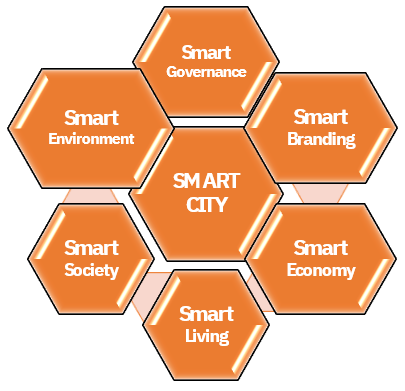
In Indonesia, the Ministry of Communication and Information Technology (KOMINFO) determines Smart City by dividing the concept into 6 components, namely Smart Governance, Smart Branding, Smart Economy, Smart Living, Smart Society, and Smart Environment. These 6 components are the supporting pillars in implementing Smart City in Indonesia, see Figure 1.
The implemented governance is often the context represented by the government. The demands present for services become the morals obtained by the community. The implementation of Smart City needs to be spearheaded by governance and the support of developing technology becomes the capital in providing effective and efficient services to the community. Digital services can also be implemented with technology-based governance and transformation refers back to Smart Governance. The implementation promotes digital transformation in services and supports Smart City.
Smart Governance is a key pillar in Smart City ecosystem. The concept uses digital technology to revolutionize governmental operations, create policies, and interact with citizens [15]. According to KOMINFO, Smart Governance has implications for ICT ecosystem, data and technology standards, and human resources (HR) capacity. The implementation includes the use of integrated information systems, big data analysis, artificial intelligence, and digital interaction platforms that enable faster, more accurate, and evidence-based decision-making. The realization of Smart Governance is supported by E-Government, which refers to the use of information and communication technology in governance and the provision of public services [16]. E-Government is an information system that provides installations for the general public through the Internet [17]. The specific fundamentals play a major role in determining the effectiveness and quality of the implemented system.
Malang City has been promoting Smart City program since 2014. The government only signed a memorandum of understanding (MoU) with KOMINFO in 2021 which marked the beginning of the overall implementation. A total of 48 districts were selected by KOMINFO to participate in the Movement Towards 100 Smart City program. This program is a government initiative to build a smarter and more efficient city through the use of information and communication technology. Malang City is among the 191 districts selected in the first batch for the 2017-2022 period.
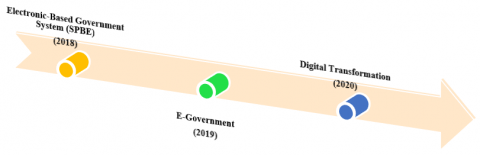
The government has supported Smart City concept through Electronic-Based Government System (SPBE) since 2018. This system also continues to be improved through various new applications and technological innovations towards better services and community life order by focusing on 6 important components. The implementation is regulated in Malang City Mayor Regulation No. 55 of 2019 concerning Electronic-Based Government System Governance. In this context, the implementation of an electronic-based system is required in the administration of regional government to improve the quality of public services in meeting the aspects of transparency, accountability, and high performance. Digital transformation has been carried out through the development of infrastructure and application systems for SPBE, as well as the implementation of Smart City concept stipulated in Malang Mayor Regulation No. 43 of 2020 concerning the 2020-2025 Smart City Master Plan. The emphasis on Smart Governance is also part of the effort to provide the best services professionally for public satisfaction.
Figure 1. Dimension Smart City by KOMINFO
Source: KOMINFO Smart City Component Adaptation
Figure 2. Implementing Smart Governance in Malang City
Source: Processed by Researcher
Figure 2 shows the long journey of Malang City Government in developing digital transformation is a commitment adjusted to the conditions of society in the implementation of Smart Governance. The commitment is carried out by using ICT to connect, monitor, and control various resources as well as maximize services to the community and support sustainable development. Therefore, the realization of digital-based governance and the implementation of Smart City concept must be re-examined to determine the capabilities of various resources in the planning process. The system also generates the necessary strategies for the development of a governance system connecting policy instruments with practices at the government level.
The role of the government makes this research a form of examination in the implementation of Smart City. In the context of government science and public administration, Smart Governance has urgency as an important entity of policymakers [18, 19]. Several previous research reported the importance of examining Smart Governance in the context of Smart City [7, 19, 20]. However, the scope in a comprehensive local government framework remains limited. Smart Governance research is supported by the existence of Malang City SPBE in supporting digital transformation in smarter government governance. Considering SPBE of Malang City, this research examines the influencing factors (antecedents) in terms of institutions, human resources, and infrastructure. Malang City Government can further optimize the implementation of Smart Governance.
This research focuses on determining and examining the direction of Smart Governance development in Malang City to realize Smart Governance. The results have become a concept for a better understanding of Smart Governance in increasing the effectiveness of local government. Specific insights are also provided into the application of technology in transparent, responsive, and participatory city management by focusing on Malang City. Therefore, this research is an important reference for other city hoping to implement Smart City concept from Smart Governance perspective. Another contribution is the development of Smart Governance model adapted to local context in Indonesia. This can help in the adaptation of technologies and innovations more relevant to local socio-economic conditions.
This research used qualitative analysis with a case study in line with qualitative design of Cresswell [21]. Malang City was selected as the research location for implementing Smart City program because of several advantages and potentials, such as adequate infrastructure, government, and community readiness, as well as tourism and creative economy support. Considering the implementation of SPBE, Malang City is aggressively implementing Smart Governance program, specifically in the fields of public services and electronic-based city management.
Primary and secondary data were used in this research. Observations, interviews, and literature research were carried out with document analysis from official government reports. Primary data were gathered from interviews with key informants, government leaders, and the Bureau of Communication and Information of Malang City. The selection of informants was carried out purposively, considering that these actors have formal roles in the development of Smart City. Semi-informal interviews were conducted while adhering to a question guide designed to gather information and data addressing the research questions. The secondary data used was obtained from the literature “Urban Governance”, “Smart City” and journals related to the development of Smart Governance. The documents are related to Malang City regulations, RPJMD, and Master Plan of Smart City, as well as supporting data in the system integration process.
Data triangulation methods were applied to ensure data validation. According to Creswell and Poth [21], data triangulation includes several stages, such as reading data from various sources, processing the phenomenon and research questions, analyzing data by synthesizing information from multiple sources, and drawing conclusions presented in the form of narrative information. Data analysis in qualitative research aims to minimize bias and errors in interpretation when constructing arguments.
3.1 Initiation of transformation policy in Malang City
The development of Smart Governance is part of the vision of a cultured and competitive Smart City [22]. Effective, efficient, communicative, and innovative Smart Governance uses ICT in an integrated manner [23]. Meanwhile, E-governance adopts the application in governance to improve the quality of public services, transparency, accountability, participation, and collaboration. Electronic-based governance includes Electronic-Based Government Systems (EGMS), Electronic-Based Public Service Systems (EPS), and Electronic-Based Government Information Systems (SIPE) [24].
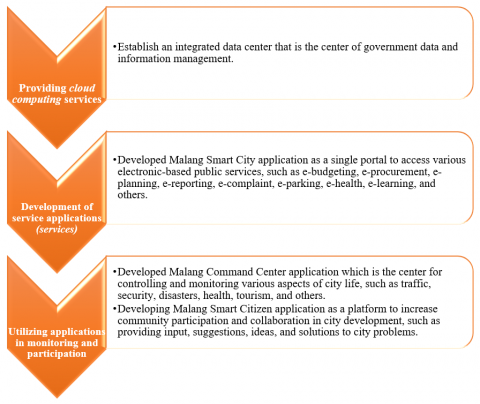
Malang City Government has issued several policies supporting digital transformation in the region, such as Malang City Mayor Regulation No. 43 of 2020 concerning Smart City Master Plan 2020-2025, Malang City Mayor Regulation No. 8 of 2022 concerning Government Goods/Services Procurement, and Malang City Mayor Regulation No. 9 of 2022 concerning the Implementation and Operation of Data Centers [25]. The detail explanation in Figure 3 which the policy is a legal umbrella regulating the development of Smart City, procurement of government goods and services, as well as the implementation and operation of data centers. This supports the development of electronic-based governance to provide directions, guidelines, and standards in Malang City [26].
The policy carried out aims to regulate and direct the development of Smart City in Malang City. The process of drafting and ratifying the policy includes various stakeholders from in the government, academia, private sector, and community [27]. To start Smart Governance, the implementation of an electronic-based system should be supported by SPBE architecture integrated with the national government. SPBE architecture is determined by a Mayoral Decree and serves as a guideline in the process of integrating services between Local Government and central agencies [28]. The implementation of digital-based governance is carried out under Malang Mayor Regulation No. 8 of 2023 concerning Electronic-Based Government Systems [22].
Figure 3. Framework of Smart Governance in Malang City
Source: Processed by Researcher
Malang City started through the preparation of SPBE architecture to support the Electronic-Based Government System. SPBE was prepared by referring to National Architecture and Regional Government Strategic Plan/Regional Medium-Term Development Plan. In the preparation, Regional Government of Malang City consulted with National SPBE Coordination Team. The implementation of SPBE is an integral part of efforts towards the creation of Smart Governance which includes digital transformation, clean, effective, transparent, and accountable governance to improve the quality of public services [29]. Therefore, the relationship between SPBE and Smart Governance is closely related. The implementation can support Smart Governance through transformation to improve the quality of digital-based governance [30]. Some programs or initiatives are carried out by Malang City with a focus on electronic-based governance.
3.2 The dynamics of Smart Governance in Malang City
There are several challenges in governance conditions even though significant efforts have been considered in developing digital transformation and implementing Smart Governance. The main challenge is the uneven technology infrastructure and information accessibility throughout the city. In this context, some areas are not covered by Internet services or other technology facilities. This leads to digital divide between developed urban and peripheral areas lagging in terms of access to technology and information.
The lack of digital awareness and skills in the community is also an obstacle to the implementation of Smart Governance. Several efforts have been considered to improve digital literacy through training and socialization programs. However, there are still many people who lack knowledge and skills in using information technology. This can hinder the active participation of the community in digital public services provided by the government. The aspect of data security and protection is also a challenge in the development of Smart Governance. The risk of data leakage and cybercrime attacks is also increasing with the wider adoption of information technology [31].
Personal data protection and digital infrastructure security are priorities addressed to maintain the integrity of Electronic-Based Government Systems and build public trust in digital services [32]. In addition, regulatory and policy aspects also need to be considered in the development of Smart Governance [33]. Comprehensive and adaptive policies are needed to accommodate the ever-changing technological developments. Outdated regulations can hinder innovation and the growth of the digital ecosystem.
Concerning human resources, the shortage of experts and personnel skilled in information and communication technology is an obstacle to the development of Smart Governance [34]. Greater investment is needed in training and developing human resources who can manage and use technology effectively. Furthermore, inter-agency coordination and cross-sectoral collaboration are also challenges in the implementation of Smart Governance [35]. Concerning the complexity of urban problems, close cooperation between various stakeholders is needed to integrate public services and optimize the use of technology in sustainable urban development [36].
Overcoming the challenges requires strong commitment and coordination between local governments, private sector, academia, and civil society [37]. Therefore, concerted efforts should be made to increase technology accessibility, improve digital literacy, strengthen data security, update relevant regulations and policies, and develop qualified human resources in the field of ICT [31]. By overcoming the challenges, Malang City optimizes the potential of digital transformation and realizes the vision as a cultured and competitive Smart City.
3.3 Innovation in Smart Governance development in Malang City
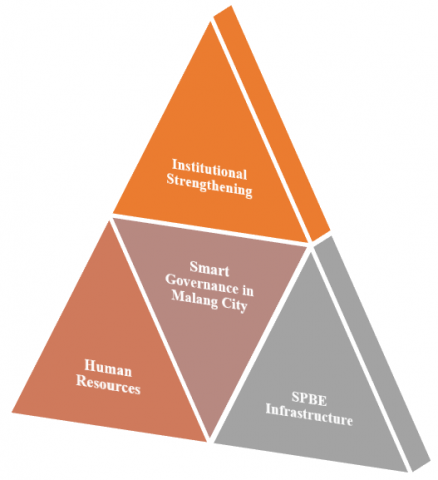
Smart Governance is an important foundation in realizing the vision of Smart City in Malang City. In this context, 3 key aspects need to be considered holistically, including institutions, human resources, and SPBE infrastructure [38]. A comprehensive analysis of the 3 aspects is important to ensure the success of digital transformation towards a sustainable and inclusive Smart City [39].
3.3.1 Institutional strengthening
In developing Smart Governance, institutions are the main foundation that supports policy implementation and technological innovation (Figure 4). Malang City has shown a strong commitment by drafting regulations to support the development. However, the government must show strong political will to reform city governance including the aspects of transparency, accountability, public participation, and good financial management. Communication and Informatics Office (Diskominfo) of Malang City has a crucial role as the leading sector in realizing Smart Governance [40]. An informative, innovative, and integrated vision and mission is the foundation to improve electronic-based public services [41]. A strong commitment from the government and support from various related agencies can realize a bureaucratic culture, enabling effective policy implementation and responsiveness to community needs.
Malang City Government is active in conducting socialization and public testing of various programs and services developed in the context of transformation towards Smart Governance. Data from KOMINFO shows that a series of socialization activities and workshops have been conducted for the community, including training on the use of Malang Smart City and Command Center applications. The government also conducted trials of various electronic-based public services through a public testing program that included active participation from the community. The results of public tests are used as input to make improvements and adjustments to the developed programs.
In terms of budgeting, Malang City has allocated an adequate budget to support the implementation of transformation towards Smart Governance. Based on data from Regional Head Accountability Report of Malang City in 2023, the budget allocated for digital infrastructure development and information technology procurement increased by 20% compared to the previous year. The total budget reached IDR 50 billion, which was used for the construction of integrated data centers, procurement of hardware and software, as well as the implementation of innovative programs to improve electronic-based public services [22]. In addition, the government allocated a budget for training and development of human resources in the use of information technology, with a budget of IDR 10 billion [42].
Figure 4. Aspects in Smart Governance implementation
Source: Processed by Researcher
3.3.2 Human resources
Human resources are crucial aspects in the implementation of digital transformation. To develop effective Smart Governance, creative, adaptive, and innovative human resources are required. Malang City Government needs to pay attention to the quality and quantity of human resources in various aspects, including public services, bureaucratic management, and public policy. The coordination team and audit team stipulated in the Mayor's Regulation No. 8 of 2023 are good stages to ensure the quality of human resources in the implementation of Smart Governance. The government strengthens human resources in facing the challenges of digital transformation through the inclusion of various parties, including academics and the private sector [43]. Organizing training and capacity building ensure that government officials have the necessary skills to deal with the dynamics of technological change. The allocation of human resources is an important element in fulfilling the strategic function as a determining factor in the implementation of Smart Governance. This element is the provision of human resources with a background in information technology to implement Smart Governance program.
Based on the data presentation above, Regional Apparatus Organisations (OPD) of Malang City Government has provided human resources with a background in information technology to manage innovation programs. The government can strategically direct human resources for technological needs and spearhead the shift towards smarter, more efficient, and engaged governance by considering human resources as valuable resources.
The government has taken strategic stages in organizing human resources to support the transformation towards Smart Governance, see Table 1. An important effort is to conduct training and capacity building for government employees in dealing with technological changes and new governance. Data from Malang City Revenue and Financial Management Office showed that 600 government employees attended training related to the use of information technology in 2023 [44]. The government is also active in collaborating with relevant education and training institutions to develop programs in line with human resources [45].
Table 1. Allocation of human resources
|
No. |
Component |
Number |
|
1 |
Employees with an educational background in computer science/information technology |
58 Employees |
|
2 |
Permanent information technology employee |
79 Employees |
|
3 |
Non-permanent information technology employee |
120 Employees |
Source: Processed by Researcher
3.3.3 SPBE infrastructure
SPBE infrastructure is the backbone of digital transformation towards Smart Governance [46]. Diskominfo Malang City has the responsibility to provide the infrastructure needed by regional apparatus. Local government intra-networks and linking systems need to be developed continuously under technological developments and community needs. Technology plays a role in the digital transformation process, and the Internet is essential in improving the effectiveness of government services. Diskominfo needs to strengthen cooperation and collaboration with various parties to ensure that SPBE infrastructure is continuously improved with technological developments and community needs.
The government has carried out the necessary infrastructure development to support the transformation towards Smart Governance. The main project implemented is the center of government data and information management [47]. Data from Communication and Informatics Office of Malang City shows that the project has reached the completion stage and is scheduled to be operated in the second quarter of 2024. However, a major challenge in the digital transformation of Indonesia is data security and privacy. The government has also invested in the development of networks and connectivity by building adequate telecommunications infrastructure to support fast and stable internet access for all levels of society.
The final result of Smart Governance development stage is the creation of a strong foundation for realizing a competitive Smart City. Malang City is ready to face future challenges in optimizing public services, increasing community participation, and creating a more inclusive and sustainable environment through innovative institutions, qualified human resources, and solid SPBE infrastructure [48]. Smart Governance is also developed as the main foundation for a better future with cooperation between the government, the community, and the private sector.
3.4 Analysis of Smart Governance development and digitalization process
Smart Governance is a form of governance that is effective, efficient, communicative, and innovative by using ICT in an integrated manner [49]. The concept forms part of the 6 dimensions of Smart City [24]. The focus of the dimension is the provision of good public services, efficient bureaucracy, and two-way policymaking. According to Smart Governance Road Map of Malang City, the implementation of the application is divided into 3 sub-dimensions, including public services, bureaucratic management, and public policy. The objectives to be achieved consist of increasing the ease of access to public services and satisfaction. In the bureaucratic management sub-dimension, the goal is to improve fair, responsible, and open governance. Meanwhile, public policy sub-dimension targets to increase public participation in regional policy formulation as well as access to regional policies and legal products [50]. Table 2 shows the strategies used by the government to achieve the targets.
Malang Mayor Regulation No. 9 of 2022 on the Implementation and Operation of Data Centers regulates the objectives, functions, organization, work procedures, and supervision related to the management of government data and information, as well as providing cloud computing services for agencies and the public. This supports Smart Governance by improving the quality, security, and availability of government data and information. The stages of Smart Governance implementation include needs and readiness analysis, preparation of action plans and quick wins, development and integration of application systems and ICT infrastructure, evaluation and monitoring, as well as continuous improvement and enhancement [10]. This stage is carried out by including various stakeholders from internal government, academia, private sector, and citizens. The policy serves as a crucial foundation for implementing Smart Governance in Malang City [19]. Malang Mayor Regulation No. 8 of 2022 on Government Procurement of Goods and Services regulates the principles, code of ethics, assembly, examination, decision, and financing of electronic-based procurement. This supports Smart Governance by improving the effectiveness, professionalism, and integrity of public procurement. Malang City Regional Regulation No. 4 of 2023 on Regional Taxes and Levies regulates electronic-based revenue management, including the implementation of taxation, retribution, regional financial management, as well as financial monitoring and control information systems. Regional Regulation supports Smart Governance by improving the efficiency, transparency, and accountability of regional revenue management [37].
Digitalization is carried out by converting analog data, information, or activities into digital forms that can be processed, stored, and transmitted by electronic devices. This process aims to improve the quality, efficiency, and effectiveness of public services, governance, and sustainable development [45]. Additionally, digitization includes several stages such as needs analysis, preparation of action plans, development and integration of applications, as well as evaluation and monitoring.
In the needs analysis and readiness for digitalization, activity was conducted from various fields and sectors, including government, economy, social, environment, and tourism. This stage was taken to identify potentials, challenges, and solutions related to the application of digital technology. Furthermore, digitalization is consistent with the vision, mission, and goals of Smart City to develop action plans. In this context, the government is expected to formulate strategies, programs, and activities with various application systems and ICT infrastructure. This can be achieved by building integrated data centers, fiber optic network, free wifi, and CCTV. The stages provide facilities for accessing, processing, storing, and transmitting data and information using digital methods. The government conducts evaluation and monitoring of the implementation and impact of digitalization to measure the performance, benefits, and challenges arising from the concept, as well as to take necessary actions to improve the quality and effectiveness.
Digitization is a service implementation process in supporting the creation of Smart City as outlined in Malang Mayor Regulation No. 8 of 2023 concerning Electronic-Based Government Systems. This is achieved by paying attention to SPBE implementation, ICT, and SPBE governance. Meanwhile, the implementation of SPBE is carried out to improve the implementation by simultaneously conducting monitoring and evaluation. ICT is used through periodic testing and examination to ensure the effectiveness and security of the technology system. SPBE governance ensures the sustainability of the implementation by analyzing the impact of risk, information security, data, technology and information assets, human resources, knowledge, change, and SPBE services.
The implementation of digital services has been carried out in Electronic Public Service process. This can be seen with the development of E-Government in the form of digital public service processes through applications to improve the quality of integrated government service delivery.
Based on Table 3, the implementation of Smart Governance in Malang City includes various services, such as education, healthcare, population administration, internal government management, tourism, and sports. All of these initiatives indicate Malang City's commitment to realizing technology-based Smart Governance. However, some of these applications are not supported by a strong institutional framework and budgeting, which poses a significant risk of discontinuation [51].
Table 2. Smart Governance implementation strategy in Malang City
|
Sub-Dimensions |
Strategy |
|
|
Public Service |
1. |
Integration of service applications/systems and data interoperability aimed at better public services. |
|
2. |
Provision of integrated public service facilities, such as Public Service Mall (MPP). |
|
|
3. |
Improved Integrated ICT Infrastructure Management. |
|
|
Bureaucratic Management |
1. |
Improved Integrated ICT Infrastructure Management. Integration of applications/service systems and data interoperability related to bureaucratic management, such as personnel matters. |
|
Public Policy |
1. |
Maximizing community participation in development through Musrenbang, Sambat Online, or Ngalam 112. |
|
2. |
Maximization of JIDH website. |
|
Source: Master Plan of Malang Smart City
Table 3. Smart Governance service application in Malang City
|
No. |
Name of Local Institutions |
E-Government (Smart Governance) |
Function |
|
1 |
Office of Population and Civil Registry (Dinas Kependudukan dan Catatan Sipil) |
SI APEL Application |
Services in the field of population and civil registration such as birth certificate services, child identity cards, vulnerable/disabled occupation services, and Electronic ID cards. |
|
2 |
Local Revenue Agency (Badan Pendapatan Daerah) |
SIMPATDA (Regional Revenue Information System) |
Assist local governments in producing relevant, fast, accurate, complete, and verifiable financial information. |
|
3 |
Health Office (Dinas Kesehatan) |
P-Care of Health BPJS |
Monitoring public health, reporting health data, and facilitating access to health services digitally. |
|
4 |
Office of Social Affairs, Women's Empowerment, Child Protection, Population Control and Family Planning (Dinas Sosial, Pemberdayaan Perempuan, Perlindungan Anak, Pengendalian Penduduk dan Keluarga Berencana) |
E-PDKRT |
For digital complaints of domestic violence. |
|
5 |
Regional Labour Agency (Badan Ketenagakerjaan Daerah) |
SIMPEG (Personnel Information System) |
Personnel data management that includes personal data, administrative aspects, and payroll. |
|
6 |
Police Office (Polres Malang Kota) |
Tombol Panik (Panic Button) |
A security tool that allows users to quickly signal an emergency or call for help. |
|
7 |
Transport office |
Area Traffic Control System (ATCS) and Road Transport and Traffic Information Center (RTTIC) |
Manage and control traffic more efficiently, including real-time traffic monitoring, traffic light regulation providing traffic information and data management for transport planning. |
|
8 |
Communication and Informatics Office |
Ngalam Command Center (NCC) |
Provide services related to receiving complaints and information reports from the public. |
|
9 |
Regional Financial and Asset Management Agency (Badan Pengelolaan Keuangan dan Aset Daerah) |
Regional Asset Application SIMBADA |
Regional financial and asset management which includes recording, maintaining and reporting data related to regional finances and assets. |
|
10 |
Education and Sports Office (Dinas Pendidikan dan Olahraga) |
SIMBAH-E Application |
For field rental payment services in booking sports activity facilities. |
|
11 |
Goods and Services Management Services Section (Bagian Layanan Pengolalaan Barang dan Jasa) |
Jatim Bejo Services |
For economic development by increasing the role of MSME providers in the fulfilment of goods and services. |
|
12 |
Regional Archives Section (Bagian Kearsipan Wilayah) |
SRIKANDI (Integrated Dynamic Archives Information System) |
Improve archival management, facilitate the search for historical archives, increase information accessibility and, support public services and archival supervision. |
|
13 |
Government Legal Services Section (Bagian Layanan Hukum Pemerintah) |
Jdih.malangkota.go.id (Website of various types of the latest legal information complete with regional regulations that can be accessed easily and quickly by the public) |
The management of legal documentation and information networks and the provision of complete, accurate, easy, and fast information services. |
|
14 |
Manpower and Transmigration Office (Dinas Ketenagakerjaan dan Transmigrasi) |
Si-Izol (Online Permit Information System) |
To fulfill business commitment services run by the community in Malang City. |
Source: Smart City Program of Malang City, 2024
The strategy for Smart Governance is directed towards integration in systems and service places in response to the applications owned by OPD. However, the applications are not yet interconnected and still operate separately. From the data of the Communication and Information Office, Malang City has no less than 68 active E-Government applications. The integration of service place provision is carried out by providing a Public Service Mall (MPP) for licensing and non-licensing services. The government divides the implementation of Smart City development into the Long (2022-2026) and Short Term Programs (2027-2030) [50].
Malang City has made efforts to digitalize the process of public services in supporting the creation of Smart City through governance. Digitalization is a support process in the creation of integrated public services used to provide services. In this context, the government can be more responsive in meeting the needs of the community through electronic-based public services.
In conclusion, Malang City government developed governance and digitalization processes to support digital transformation. Governance resilience is demonstrated through institutional support, human resource development, and SPBE infrastructure. The government showed a commitment to strengthening institutional infrastructure to support digital transformation. This included the establishment or enhancement of specialized units or departments responsible for digital transformation initiatives, as well as policies supporting the adoption of ICT.
The results could be seen in the existence of regulations and programs supporting the development of Smart Governance. In terms of institutional strengthening, Diskominfo Malang City was appointed as the driving force for Smart Governance development. Additionally, budget allocations were applied to support digital transformation. There were 58 employees with educational backgrounds related to informatics and computers, as well as 79 permanent and 120 non-permanent information technology employees to improve the quality of existing human resources. The government supported SPBE infrastructure by building adequate telecommunications to support fast and stable internet access for all levels of society.
Based on the description above, there was a drive to create efficiency in the use of technology-based services. This could be seen through the short-term and long-term program of Smart City Master Plan in Malang City, which had 68 active E-Government applications. The integration of service place provision was carried out by providing a Public Service Mall (MPP) that united licensing and non-permitting services. This research had limitations by conducting Smart City investigation in Malang City. Therefore, other dimensions of Smart Governance need to be analyzed. Further research should discuss Smart City in 6 dimensions to avoid failures from policymakers in implementing Smart City program.
[1] Grimmelikhuijsen, S.G., Feeney, M.K. (2017). Developing and testing an integrative framework for open government adoption in local governments. Public Administration Review, 77(4): 579-590. https://doi.org/10.1111/puar.12689
[2] Ahern, J. (2012). Urban landscape sustainability and resilience: The promise and challenges of integrating ecology with urban planning and design. Landscape Ecology, 28(6): 1203-1212. https://doi.org/10.1007/s10980-012-9799-z
[3] Ansell, C., Gash, A. (2008). Collaborative governance in theory and practice. Journal of Public Administration Research and Theory, 18(4): 543-571. https://doi.org/10.1093/jopart/mum032
[4] Buck, C., Clarke, J., de Oliveira, R.T., Desouza, K.C., Maroufkhani, P. (2023). Digital transformation in asset-intensive organisations: The light and the dark side. Journal of Innovation & Knowledge, 8(2): 100335. https://doi.org/10.1016/j.jik.2023.100335
[5] Suryanto, A., Nurdin, N., Irawati, E., Andriansyah, A. (2023). Digital transformation in enhancing knowledge acquisition of public sector employees. International Journal of Data and Network Science, 7(1): 117-124. https://doi.org/10.5267/j.ijdns.2022.11.011
[6] Asadzadeh, A., Kötter, T., Zebardast, E. (2015). An augmented approach for measurement of disaster resilience using connective factor analysis and analytic network process (F’ANP) model. International Journal of Disaster Risk Reduction, 14: 504-518. https://doi.org/10.1016/j.ijdrr.2015.10.002
[7] Sulistyaningsih, T., Loilatu, M.J., Roziqin, A. (2024). Research trends on smart urban governance in Asia: A bibliometric analysis. Journal of Science and Technology Policy Management, 15(5): 997-1015. https://doi.org/10.1108/JSTPM-03-2022-0045
[8] He, Z., Huang, H., Choi, H., Bilgihan, A. (2023). Building organizational resilience with digital transformation. Journal of Service Management, 34(1): 147-171. https://doi.org/10.1108/JOSM-06-2021-0216
[9] Tomor, Z., Meijer, A., Michels, A., Geertman, S. (2019). Smart governance for sustainable city: Findings from a systematic literature review. Journal of Urban Technology, 26(4): 3-27. https://doi.org/10.1080/10630732.2019.1651178
[10] Pereira, J.C., Terrenas, J. (2022). Towards a transformative governance of the Amazon. Global Policy, 13: 60-75. https://doi.org/10.1111/1758-5899.13163
[11] Kaiser, Z.A. (2024). Smart governance for smart city and nations. Journal of Economy and Technology, 2: 216-234. https://doi.org/10.1016/j.ject.2024.07.003
[12] Tan, S.Y., Taeihagh, A. (2020). Smart city governance in developing countries: A systematic literature review. Sustainability, 12(3): 899. https://doi.org/10.3390/su12030899
[13] Leong, W.Y., Heng, L.S., Leong, Y.Z. (2023). Smart city initiatives in Malaysia and Southeast Asia. IET Conference Proceedings, 2023(15): 1143-1149. https://doi.org/10.1049/icp.2023.2440
[14] Hardi, R., Nurmandi, A., Purwaningsih, T., Abdul Manaf, H.B. (2023). Exploration organizational interoperability in smart governance in Indonesia and Malaysia. In International Conference on Human-Computer Interaction, Springer, Cham, pp. 203-210. https://doi.org/10.1007/978-3-031-36001-5_26
[15] Toh, C.K. (2022). Smart city indexes, criteria, indicators and rankings: An in‐depth investigation and analysis. IET Smart Cities, 4(3): 211-228. https://doi.org/10.1049/smc2.12036
[16] Ottenburger, S.S., Ufer, U. (2023). Smart cities at risk: Systemic risk drivers in the blind spot of long‐term governance. Risk Analysis, 43(11): 2158-2168. https://doi.org/10.1111/risa.14102
[17] Roziqin, A., Kismartini, Fajrina, A.N., Salahudin, Sulistyaningsih, T. (2022). The development of Indonesian e-government: A bibliometric analysis. COLLNET Journal of Scientometrics and Information Management, 16(1): 49-74. https://doi.org/10.1080/09737766.2021.2007036
[18] Sihidi, I.T., Sugiharto, M.A., Nurkhanifah, L. (2021). The effectiveness of smart city program through batu among tani teknologi (BATT) in Batu City, Indonesia. Publik (Jurnal Ilmu Administrasi), 10(1): 1-17. http://doi.org/10.31314/pjia.10.1.1-17.2021
[19] Maisyarah, M., Roziqin, A., Nugroho, R.A., Te, A.Y. (2024). Examining of E-readiness in the local government toward smart city a study from Balangan regency. Jurnal Ilmu Sosial, 23(1): 37-63. https://doi.org/10.14710/jis.23.1.2024.37-63
[20] Meijer, A., Bolívar, M.P.R. (2016). Governing the smart city: A review of the literature on smart urban governance. International Review of Administrative Sciences, 82(2): 392-408. https://doi.org/10.1177/0020852314564308
[21] Creswell, J.W., Poth, C.N. (2016). Qualitative Inquiry and Research Design: Choosing among Five Approaches. Sage Publications.
[22] Putro, D.T.W.S. (2019). Roadmap smart city Kota Malang. Jurnal Pangripta, 1(2): 307-320. http://download.garuda.kemdikbud.go.id/article.php?article=3456754&val=30141&title=ROADMAP%20SMART%20CITY%20KOTA%20MALANG.
[23] Kang, J., Wang, X. (2020). The organizational structure and operational logic of an urban smart governance information platform: Discussion on the background of urban governance transformation in China. Complexity, 2020(1): 6638958. https://doi.org/10.1155/2020/6638958
[24] Guo, J., Ling, W. (2021). Impact of smart city planning and construction on community governance under dynamic game. Complexity, 2021(1): 6690648. https://doi.org/10.1155/2021/6690648
[25] Widiyastuti, I., Nupikso, D., Putra, N.A., Intanny, V.A. (2021). Smart sustainable city framework: Usulan model kota cerdas yang berkelanjutan dan integratif. Jurnal Penelitian Komunikasi dan Pembangunan, 22(1): 13-30. https://doi.org/10.31346/jpikom.v22i1.3297
[26] Kronvall, A., Haupt, W., Kern, K. (2024). Transformative climate governance in small Swedish municipalities: Exploring the cases of Enköping and Kiruna. Environmental Policy and Governance, 34(4): 339-351. https://doi.org/10.1002/eet.2086
[27] Hao, L., Chen, X., Min, C. (2021). The impact of urban sprawl and smart city construction on regional coordination. Scientific Programming, 2021(1): 5589571. https://doi.org/10.1155/2021/5589571
[28] Collins, A., Cox, A., Torrisi, G. (2021). Searching for a smart city: A bibliographic analysis of ‘Public Facing’EU smart city projects. Tijdschrift Voor Economische en Sociale Geografie, 112(5): 549-565. https://doi.org/10.1111/tesg.12476
[29] Tri, E., Aindita, F., Setiawan, I. (2022). Penerapan konsep smart city dalam tata kelola pemerintahan kota semarang. Jurnal Ilmiah Administrasi Pemerintahan Daerah, 14(1): 97-116.
[30] Fang, Y., Shan, Z. (2024). Optimising smart city evaluation: A people‐oriented analysis method. IET Smart Cities, 6(1): 41-53. https://doi.org/10.1049/smc2.12073
[31] Wang, W. (2022). Design of public building space in smart city based on big data. Journal of Environmental and Public Health, 2022(1): 4733901. https://doi.org/10.1155/2022/4733901
[32] Amalia, D., Nesya, N., Tyrta, M. (2023). Implementasi kota pintar (smart city) di kota surabaya. Ministrate: Jurnal Birokrasi Dan Pemerintahan Daerah, 5(1): 57-64.
[33] Leu, J.H., Lin, B.C., Liao, Y.Y., Gan, D.Y. (2021). Smart city development in Taiwan. IET Smart Cities, 3(3): 125-141. https://doi.org/10.1049/smc2.12008
[34] Walker, M., Fan, S.X., Huang, X., Bartram, T. (2024). The role of Australian local government in economic development: Building international engagement capacity. Australian Journal of Public Administration, 83(1): 3-23. https://doi.org/10.1111/1467-8500.12562
[35] Shan, S., Duan, X., Zhang, Y., Zhang, T.T., Li, H. (2021). Research on collaborative governance of smart government based on blockchain technology: An evolutionary approach. Discrete Dynamics in Nature and Society, 2021(1): 6634386. https://doi.org/10.1155/2021/6634386
[36] Tang, C., Zhao, L. (2022). Smart city public art planning and design in a multimedia Internet of Things environment integrating scene elements. Scientific Programming, 2022(1): 7289661. https://doi.org/10.1155/2022/7289661
[37] Khawaja, S., Javidroozi, V. (2023). Blockchain technology as an enabler for cross-sectoral systems integration for developing smart sustainable cities. IET Smart Cities, 5(3): 151-172. https://doi.org/10.1049/smc2.12059
[38] Pramesti, D.R., Kasiwi, A.N., Purnomo, E.P. (2020). Comparison of smart city implementation in Indonesia: Case study: Comparison of smart people in Surabaya and Malang. Demos, 2(2): 163-173. https://doi.org/10.37950/ijd.v2i2.61
[39] Shabrinawati, A., Yuliastuti, N. (2020). Komponen smart governance berdasarkan konsep smart village. Jurnal PIKOM (Penelitian Komunikasi Dan Pembangunan), 21(2): 141-160. https://doi.org/10.31346/jpikom.v21i2.3020
[40] Setijadi, E., Mardiyanto, R., Darmawan, A.K., Santosa, I. (2020). Pengukuran tingkat kesiapan daan pengembangan model kota cerdas (Smart City) kabupaten pamekasan. Sewagati, 4(2): 79-87. https://journal.its.ac.id/index.php/sewagati/article/view/347.
[41] Abdurahman, S., Kabanda, S. (2024). Factors influencing the design and implementation of accessible e-government services in South Africa. The Electronic Journal of Information Systems in Developing Countries, 90(4): e12317. https://doi.org/10.1002/isd2.12317
[42] Diskominfo Bidang Komunikasi dan Informasi Publik. (2023). Phase II Evaluation, Malang City Smart City Program Realized 96,2%. Pemerintah Kota Malang. https://malangkota.go.id/2023/11/09/evaluasi-tahap-ii-program-smart-city-kota-malang-terealisasi-962/.
[43] Handayani, D.W., Syafarudin, S., Muflihah, L. (2021). Problem realisasi kebijakan smart city di Indonesia: Kasus kota bandar lampung. JISPO Jurnal Ilmu Sosial Dan Ilmu Politik, 11(1): 35-62. https://doi.org/10.15575/jispo.v11i1.10765
[44] Alfiyaturrahmah, A. (2023). Upaya pengembangan smart city kota malang melalui literasi digital (Studi kasus Di DPRD malang: Ranperda penyelenggara perpustakaan). Jurnal Darma Agung, 31(2). http://doi.org/10.46930/ojsuda.v31i2.2826
[45] Riswati, R. (2021). Implementation of local governance based on technology digitalization in Indonesia. Jurnal Media Birokrasi, 3(2): 1-5. https://doi.org/10.33701/jmb.v3i2.2474
[46] Ariwibowo, R., Prasetyo, G. (2023). Reinventing Indonesia’s city branding strategy through conceptual frameworks: Providing ready to use tools for the municipal governments. Jurnal Bina Praja, 15(1): 123-143. https://doi.org/10.21787/jbp.15.2023.123-143
[47] Anggraini, D. (2023). Upaya meningkatkan kualitas layanan publik melalui digitalisasi (Studi kasus di dinas penanaman modal dan pelayanan terpadu satu pintu kota palembang). Praja (Jrnal Ilmiah Pemerintahan), 11(2): 109-120. https://doi.org/10.55678/prj.v12i1.1040
[48] Dewi, D.M., Wulansari, I.Y. (2020). The contribution of information and communication technology to increasing the added value of the tourism sector in Central Java. Jurnal Litbang Sukowati: Media Penelitian dan Pengembangan, 3(2): 13. https://doi.org/10.32630/sukowati.v3i2.153
[49] Ilmananda, A.S., Marcus, R.D., Pamuji, F.Y. (2022). Utilization of information and communication technology (ICT) infrastructure in smart city development: A case study of the Batu city government. Jurnal Riset dan Konseptual, 7(4): 253-268. https://doi.org/10.28926/briliant.v7i1.794
[50] Kominfo, Tim Dewan Kota Cerdas Kota Malang. (2022). Buku III executive summary master plan smart city Kota Malang 2022-2031. In Master Plan Smart City Kota Malang 2022-2031, pp. 1-42.
[51] Roziqin, A., Kamil, M., Romadhan, A.A., Zakaria, I. (2024). The dark side of local public sector innovation: Insights from SAMPADE innovation. Journal of Science and Technology Policy Management. https://doi.org/10.1108/JSTPM-01-2024-0001