Systim Saleem* | Oday Alchalabi
© 2025 The authors. This article is published by IIETA and is licensed under the CC BY 4.0 license (http://creativecommons.org/licenses/by/4.0/).
OPEN ACCESS
Housing is a critical component of urban development, shaping various aspects of community life, including social, economic, environmental, and cultural dimensions. Understanding the factors that influence housing satisfaction is essential for creating living environments that enhance residents' quality of life. This study aims to identify and analyze the key determinants of housing satisfaction, with a particular focus on improving the end-user experience. The research employs a systematic literature review, selecting studies based on specific criteria, including their relevance to housing satisfaction and the diversity of factors they examine. The analysis highlights several key factors that significantly impact housing satisfaction, such as the quality of architectural design, environmental sustainability, and socio-economic conditions. Additionally, the study explores how these factors interact to influence overall satisfaction, providing a more nuanced understanding of their effects. The findings contribute to the theoretical framework of housing satisfaction by integrating these diverse factors and offer practical implications for architects, urban planners, and policymakers. By addressing these determinants, the study provides strategies for creating more sustainable and livable residential environments, ultimately enhancing the well-being of residents and contributing to the broader goals of sustainable urban development.
housing, living experience, post-occupancy evaluation, residents satisfaction, satisfaction factors, user needs, architectural design, sustainable development
Historically, housing has been a significant concern with origins difficult to trace [1]. Beyond providing shelter, safety, and comfort, housing fulfills essential human needs and fosters family stability [2, 3]. Over time, it has evolved from simple shelters to complex urban dwellings, shaped by demographic changes, socio-economic shifts, and technological advancements [4, 5]. Housing is crucial for well-being, socio-economic development, and urbanization [6, 7]. It also plays a key role in sustainable development, influencing resource use, energy consumption, and social equity. Sustainable housing fosters growth while reducing environmental impacts and promoting inclusion. However, a gap exists in understanding how housing elements affect resident satisfaction, a key indicator of quality and sustainability. While studies have explored factors like lighting in Iraq [8], underlying elements remain underexplored. This study aims to fill this gap by reviewing critical factors from the literature to enhance the end-user experience. Highlighting these factors helps align residential designs with users' needs and cultural contexts, contributing to sustainable development.
Numerous studies have examined resident satisfaction. Raviz et al. [9] explored efficient social housing in tight spaces through Dutch case studies. Sherzad and Imamzada [10] assessed energy efficiency and daylight performance using a BIM-based tool, recommending passive energy-saving measures. Jinhui [11] analyzed economic factors affecting satisfaction among long-term public rental housing residents in Korea, focusing on rent and maintenance fees. Javanmardi et al. [12] investigated the correlation between historical textured walls and resident satisfaction. Gao et al. [13] focused on urban community renewal in Chinese cities, identifying factors like residency duration, participation, government behaviors, and community management. Mridha [14] emphasized the need for structured models in studying residential satisfaction. Kahraman [15] examined housing conditions for Syrian urban refugees in Turkey, illustrating how cultural factors affect satisfaction. Shehab [16] studied socio-cultural changes' impact on housing design in Gaza, emphasizing the link between social and cultural values and housing design. Kazemi and Soheili [17] analyzed the impact of architectural components on privacy and satisfaction, considering age and gender differences. Zyed [18] examined housing affordability for younger working households, recommending additional housing schemes.
Technological advancements have introduced new design approaches, like using parametric methods with "Grasshopper" to create models considering client-specific factors [19], allowing customization of design parameters to meet user needs [20].
In conclusion, housing is pivotal in shaping urban life and plays a critical role in sustainable development. Residential satisfaction, as a measure of housing quality, is crucial for enhancing both housing and urban development. This research contributes to a holistic understanding of housing quality and its role in sustainable urban development by exploring the multifaceted factors that influence residential satisfaction.
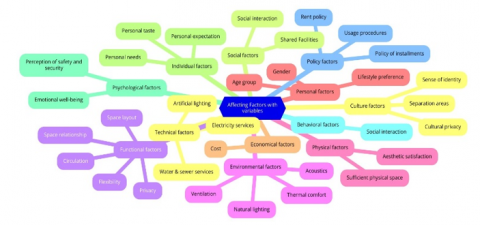
This theoretical framework systematically analyzes residential satisfaction by first defining its key concepts, dimensions, and measurement methods, followed by categorizing factors that influence residential satisfaction (refer to Figure 1).
Figure 1. Affecting factors
Source: The researcher
2.1 Concept, dimensions, and measurement of residential satisfaction
Residential satisfaction is vital for overall life satisfaction, encompassing architecture, urban form, and social and functional elements [21]. It includes dimensions such as community connection, housing quality, and access to services, all influenced by residents' perceptions [22]. Quality of life, closely linked to residential satisfaction, is multidimensional, including physical, material, social, emotional, and developmental aspects [23]. Residential satisfaction is measured through theories like housing needs theory, housing deficit theory, and psychological construct theory, which assess how well housing meets residents’ needs and expectations. It also predicts broader life quality, housing evaluation, mobility, neighborhood change, and housing perceptions [24]. A four-dimensional framework helps to understand the factors affecting residents' contentment [25].
2.2 Factors influencing residential satisfaction
Various studies highlight factors enhancing residential satisfaction and space activation. This review covers essential factors, though findings vary by objective, site, and culture. To systematically understand residential satisfaction, factors influencing it are categorized as follows:
Functional Factors: Behloul [26] examined Algeria's housing shortage, recommending design improvements based on resident feedback to better meet functional needs. His study emphasizes the importance of understanding resident experiences for effective functional design. Manum [27] found older Norwegian apartment layouts more adaptable than modern ones, highlighting flexible design’s role in enhancing residential satisfaction.
Environmental Factors: Adalberth [28] analyzed energy use in Swedish buildings, introducing an efficiency tool to improve sustainability and comfort. Ogunkah [29] promoted sustainable housing in developing countries with a green material selection system, linking environmental sustainability with increased satisfaction.
Economic Factors: Kim [11] analyzed satisfaction factors in Korean public rental housing, finding that economic factors like rent and maintenance fees significantly impact satisfaction. Daroudi et al. [30] assessed economic influences on satisfaction in Tehran, emphasizing the need to improve housing quality and services.
Technical Factors: Mat Noor [31] assessed resident satisfaction in Malaysian high-rises, focusing on building age and location to highlight technical quality’s importance. Javanmardi et al. [12] explored historical wall attributes, finding that technical elements like uniform proportions enhance satisfaction.
Individual Factors: Isa et al. [32] analyzed factors influencing housing occupancy in Malaysia, emphasizing personalization as key to satisfaction. Gao et al. [13] studied urban community renewal in Chinese cities, identifying governance and participation as crucial to enhancing satisfaction.
Behavioral Factors: Raviz et al. [9] studied spatial attributes in traditional Mashhadi housing, recommending their integration into modern housing to preserve cultural continuity. Mridha [14] reviewed structured models in satisfaction studies, proposing a framework to refine both practical and theoretical applications.
Cultural Factors: Oluwole [1] stressed integrating cultural needs into housing policies in Ajegunle, Lagos, advocating for community-specific strategies. Haliloğlu Kahraman [15] analyzed housing conditions for Syrian refugees in Ankara, revealing how cultural values impact satisfaction despite challenges.
Social Factors: Mullin et al. [33] found that housing improvements significantly impact health and education but have limited effects on broader social issues. Haliloğlu Kahraman [34] identified six satisfaction dimensions for rural migrants in Ankara, providing a framework for understanding migrant housing needs.
Personal Factors: Smith [22] found that social and physical factors significantly impact satisfaction in Ellenbrook, while personal factors like marital status and income also play a role. Kazemi and Soheili [17] showed that architectural components in Tabriz complexes affect privacy and satisfaction, varying by gender, age, and cultural background.
Physical Factors: Cham [35] found that household interventions improve housing satisfaction in Kissy, Freetown, particularly for owner-occupiers. Lui [36] revealed that housing quality, amenities, and neighborhood features significantly impact satisfaction in Hong Kong’s private housing sector.
Psychological Factors: Phillips et al. [37] found that interior dwelling conditions significantly impact elderly satisfaction and well-being in Hong Kong. He et al. [38] showed that physical perception, aesthetics, and psychological factors strongly influence satisfaction with urban green spaces in Xiamen, China.
Policy Factors: Galster [39] introduced 'marginal residential improvement priority' as a better policy indicator than satisfaction, focusing on preferences for low-income and elderly households. Zyed [18] recommended shared ownership and rental options to address housing affordability for young working households in Kuala Lumpur.
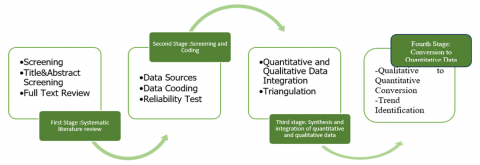
The research employed a systematic literature review (SLR) approach, structured according to the PRISMA (Preferred Reporting Items for Systematic Reviews and Meta-Analyses) statement, ensuring rigor and standardization. The multi-staged process examined selectability, criteria standardization, and the housing environment's impact on residential satisfaction. Figure 2 illustrates the complex interactions through which variables indirectly affect residential space.
Figure 2. Research methodology
Source: The researcher
3.1 The methodology stages
A four-stage systematic data collection and analysis approach was utilized to ensure thoroughness and reliability. A multi-source strategy validated the trustworthiness of the information and identified key factors influencing user satisfaction.
3.1.1 First stage: Systematic literature review
A systematic literature review was conducted using keywords like "residential satisfaction," "housing quality," and "influencing factors" to search databases such as Google Scholar, Scopus, and Web of Science. Inclusion criteria focused on studies published within the last 30 years, peer-reviewed, and relevant to residential satisfaction, while exclusion criteria removed non-peer-reviewed studies, those outside the specified time range, and unrelated topics. The screening process involved title and abstract reviews, followed by full-text assessments to ensure relevance and quality.
3.1.2 Second stage: Data extraction, screening, and coding
Secondary data were sourced from selected studies and systematically extracted using standardized forms. Screening criteria ensured data relevance and reliability, focusing on accuracy and credibility. Data were then coded into categories related to residential satisfaction, such as architectural design and socio-economic factors. A reliability test was conducted to confirm the consistency of coding, ensuring the credibility of the findings.
3.1.3 Third stage: Synthesis and integration of quantitative and qualitative data
Data were synthesized to identify trends and patterns, with an analytical review of methodologies and data-collection techniques. Quantitative and qualitative analyses were integrated, with qualitative insights contextualizing quantitative data, ensuring a robust and comprehensive understanding.
3.1.4 Fourth stage: Conversion to quantitative data
Qualitative findings were converted into quantitative metrics, enabling trend analysis and enhancing the precision of conclusions. The integration of both data types provided a well-rounded perspective, supporting the study’s conclusions.
3.2 Observing related studies
Content analysis involves systematically gathering and analyzing qualitative data from secondary sources to draw useful conclusions. Table 1 lists 12 key factors affecting home happiness and efficiency identified through research. These criteria provide valuable insights into residential satisfaction and productivity.
3.3 Highlighting and abstracting variables
Secondary data analysis helps identify key elements affecting an occurrence. Understanding characteristics contributing to space satisfaction and efficiency is vital. This study relies on Table 2, which lists key topics, variables, and explanations. This comprehensive list provides a sophisticated and insightful approach to the research.
3.4 Related studies’ analysis
Forty studies on flat dwellers' happiness and living space effectiveness were analyzed in this phase. The research organized and evaluated the papers using an on-off system and matrix technique. Variables were examined in four areas: time, technique, data analysis, and trends. Trends were further classified into scope, objective, perspective, and types, while methodology was observed in aim, evaluation elements, and approach. Data analysis was categorized into case study, data, and data types, with sub-themes detailed in Figure 3. The studies were organized into 12 groups based on factors: Functional, Environmental, Economic, Technological, Individual, Behavioral, Cultural, Social, Personal, Physical, Physiological, and Policy. This categorization provided meaningful insights into factors affecting satisfaction and efficiency in residential spaces.
Figure 3. The measuring of the documents according to the matrix of (factors - Variables)
Table 1. The observed factors of satisfaction and efficiency in residential space are abstracted from related studies
|
Factor |
Ref. No. |
Explanation |
|
Function |
[26] |
It explores "Enhancing the design of Algerian mass housing." |
|
[27] |
It examines "How changes in Norwegian apartment layouts reveal the versatility of older designs and the influence of space syntax on daily life." |
|
|
[3] |
It indicates "The enhancement of affordable housing in developing nations through user-centric design." |
|
|
[9] |
It examines "Improving global affordable housing through user-centric design." |
|
|
[40] |
It explores "Space Syntax Analysis: The era of optimal design in Erbil City (1930-1960)." |
|
|
[41] |
It is "Exploring user-driven adaptations for Ataköy housing in Istanbul." |
|
|
Environment |
[42] |
It examines "Energy consumption, behavioral models, and the thermal benefits of insulation in South Korean high-rises." |
|
[23] |
It examines "Sustainable design in English high-rises, focusing on social interaction and family-friendly challenges." |
|
|
[28] |
It explores "Sustainability in Swedish housing: A life-cycle energy analysis and user-friendly prediction tool." |
|
|
[10] |
It indicates "Insights into sustainable design through BIM simulations, featuring Fallingwater and Villa Savoye." |
|
|
[29] |
It examines "Low-cost sustainable housing in developing countries: A Nigerian decision support system and early integration of sustainability." |
|
|
Economics |
[11] |
It explores "Factors affecting satisfaction in Korean public housing, with an emphasis on economic aspects." |
|
[30] |
It determines "The impact of economic factors on satisfaction and relocation in Tehran's Yaftabad Neighborhood, focusing on housing quality and community services." |
|
|
Technic |
[12] |
It examines "The impact of historical textured walls on resident satisfaction and their role in urban planning and architecture." |
|
[31] |
It explores "Improving Johor high-rise properties through life-cycle costing for floors." |
|
|
Individual |
[13] |
It examines "Chinese urban community renewal and the impact of governance on satisfaction." |
|
[43] |
It indicates "The impact of personalization on vertical living and urban planning." |
|
|
[32] |
It determines "Housing efficiency in Malaysia: Satisfaction, personalization, and occupier intentions." |
|
|
Behaviour |
[14] |
It explores "Structured models in residential satisfaction, assessing and emphasizing clarity." |
|
[44] |
It examines "Housing satisfaction in urban redevelopment: Insights from prospect theory." |
|
|
[9] |
It explores "The influence of spatial attributes in traditional housing on behavior and cultural preservation." |
|
|
Culture |
[1] |
It examines "Cultural housing policies for sustainable development in Ajegunle, Lagos." |
|
[45] |
It determines "Sustainable high-rise apartments in Australian cities: Design and resident satisfaction." |
|
|
[15] |
It explores "Housing satisfaction factors for Syrian urban refugees in Ankara." |
|
|
Society |
[33] |
It examines "The social impact of housing: Causality, health, education, and homelessness." |
|
[16] |
It indicates "Socio-cultural changes and housing design in Gaza for sustainable development." |
|
|
[21] |
It explores "Architecture's role in future housing: Comfort, satisfaction, and social diversity." |
|
|
[46] |
It determines "Factors contributing to housing satisfaction and well-being in Spain." |
|
|
[34] |
It examines "Housing satisfaction among rural migrants in Ankara: Six dimensions and 25 attributes." |
|
|
Person |
[22] |
It explores "Residential satisfaction in Ellenbrook: Community and physical factors." |
|
[17] |
It indicates "The role of architecture in privacy and satisfaction in the Tabriz complex." |
|
|
Physical |
[35] |
It explores "Housing decay and satisfaction among low-income residents in Kissy, Freetown." |
|
[36] |
It examines "Private housing satisfaction and intentions in Hong Kong." |
|
|
[47] |
It determines "Housing features and renter satisfaction: Insights from the 2005 survey." |
|
|
psychological |
[37] |
It explores "Elderly well-being and dwelling conditions in Hong Kong." |
|
[38] |
It examines "Satisfaction with urban green spaces in Xiamen and their design." |
|
|
[48] |
It indicates "The impact of architectural design on resident satisfaction in Nigeria." |
|
|
Policy |
[18] |
It examines "Urban housing affordability in Kuala Lumpur: Challenges and solutions." |
|
[49] |
It determines "Psychosocial factors affecting satisfaction in Madrid council housing." |
|
|
[39, 50, 51] |
It explores "A new indicator for housing policy: Improvement priorities." |
Table 2. The main themes and variables as an instrument to measure the selected studies
|
Main |
Determinates |
Variables |
Explanation |
|
Trends |
Scope |
Urban |
Integration with city fabric. |
|
Architecture |
Design depth and breadth in structures. |
||
|
Interior |
Design, layout, finishes, lighting, furnishings. |
||
|
Exterior |
Visible aesthetics, landscaping, facades. |
||
|
Objective |
Indicative |
Assess architectural elements' predictive value. |
|
|
Investigative |
Analyze design impact for improvement. |
||
|
Diagnostic |
Analyze design's outcome impact. |
||
|
Preventive |
Mitigate risks for safety and durability. |
||
|
Perspective |
Satisfaction |
Comfort, function, and well-being in space. |
|
|
Performance |
Evaluate sustainability in residential design. |
||
|
Values |
Influence on inclusive design and sustainability. |
||
|
Types |
Single |
Diverse research on single-household units. |
|
|
Apartments |
Multi-unit living with shared amenities, vertical. |
||
|
Multi-story |
Vertical units: efficient land use, more occupants. |
||
|
Aim |
Renovation |
Enhance housing through architectural upgrades. |
|
|
New Construction |
Innovate for housing needs and sustainability. |
||
|
Methodology |
Elements of evaluation |
Technical |
Impact on resident contentment. |
|
Functional |
Elements and features impacting satisfaction. |
||
|
Behavioral |
Resident actions and satisfaction variables. |
||
|
Physical |
Layout, design, and structural comfort impact. |
||
|
Policy |
Regulations' effectiveness on resident satisfaction. |
||
|
Psychological |
Emotions and perceptions in living environments. |
||
|
Social |
Social factors' impact on satisfaction. |
||
|
Economical |
Financial factors influencing contentment. |
||
|
Environmental |
Surroundings' impact on contentment. |
||
|
Personal |
Subjective experiences affecting contentment. |
||
|
Aesthetical |
Visual and design impact on satisfaction. |
||
|
Cultural |
Influence on perceptions and experiences. |
||
|
Approach |
embedded |
Studying architecture's environmental interaction. |
|
|
Explanatory |
Analyzing architectural variables for understanding. |
||
|
Convergent |
Synthesizing design elements for unified solutions. |
||
|
Exploratory |
Flexible investigation for architectural insights. |
||
|
Data and analysis |
Case Study |
Buildings |
Optimizing design, sustainability, and user metrics. |
|
Occupants |
User insights guide space design for comfort. |
||
|
Build. and occ. |
Analyzing buildings and occupants for better design. |
||
|
Data |
Subjective |
Gathering qualitative data for design insights. |
|
|
Objective |
Systematic collection of empirical data. |
||
|
Sub. and Obj. |
Combining subjective and objective design assessment. |
||
|
Types of data |
1D |
Single linear measurement or parameter. |
|
|
2D |
Two-dimensional floor plans or elevations. |
||
|
3D |
Three-dimensional building analysis. |
||
|
4D |
Time-inclusive building data. |
||
|
Time |
Evaluation time |
On the spot |
Real-time architectural evaluation. |
|
Short term |
Immediate design impact assessment. |
||
|
Long term |
Extended performance assessment. |
||
|
Continuous |
Ongoing design refinement. |
The analysis of diverse factors and variables highlights their crucial roles in shaping residential satisfaction and efficiency. The results presented in Figure 4, which detail the interactions between these factors and variables, provide insights into how they influence residential satisfaction. The discussion is structured by systematically examining each factor, delving into the reasons behind their varied effects, and connecting these insights to the wider contexts of housing satisfaction and sustainable development.
Figure 4. The percentage of the factors and variables depending on the analysis of the secondary data
4.1 Functional factors
Research indicates that 83% of studies emphasize functional factors within architectural plans, with 66% focusing on urban scope and interior design, and a notable absence of studies addressing exterior scope (0%). Functional aspects, including the design and layout of interior spaces, are crucial for enhancing usability and comfort, thereby directly impacting residents' satisfaction. The emphasis on involving residents long-term (83.3%) underscores the importance of user feedback in refining design efficiency. From a theoretical perspective, this approach aligns with user-centered design principles, which posit that spaces tailored to meet the specific needs of occupants result in higher satisfaction. This relationship highlights how well-designed, adaptable spaces can significantly improve daily living experiences and promote sustainable residential satisfaction.
4.2 Environmental factors
Recent research trends show a 100% focus on environmental factors in architectural plans, with 66.6% considering urban aspects, but little exploration of exterior (0%) or interior environments (33.3%). Environmental factors—such as energy efficiency, natural lighting, and ventilation—are critical for residential satisfaction and sustainability. These factors enhance the quality of life by reducing energy costs and improving indoor environmental quality. The causal mechanism here lies in the positive feedback loop between environmental quality and occupant well-being, where sustainable practices in housing design not only promote higher satisfaction but also contribute to broader sustainability goals. Theoretical frameworks in sustainable design suggest that integrating environmental considerations into housing can lead to more resilient and health-promoting living environments.
4.3 Economic factors
Studies on economic impacts focus 50% on urban planning, design, and interior/exterior aspects, with a significant emphasis on apartments and single dwellings (80%) and less on multipurpose buildings (20%). Economic factors, including affordability, cost efficiency, and economic stability, are essential for residential satisfaction. The findings suggest that the economic context shapes housing choices, with residents prioritizing cost-effective solutions that maintain quality. The causal mechanism involves the trade-off between financial pressures and the ability to secure a desirable living environment. Theoretical models of housing economics emphasize that affordability is a key determinant of housing satisfaction and is also critical for sustainable urban development, as it ensures that a wider range of residents can access high-quality housing.
4.4 Technical factors
Research on technological factors in urban planning and architecture focuses on improving apartment quality (100%) to ensure residential satisfaction. These studies emphasize technical, behavioral, and functional aspects, using both explanatory and exploratory methods. Technological advancements—such as smart home systems, durable construction materials, and efficient building designs—are pivotal in enhancing satisfaction. The causal mechanism is driven by the integration of technologies that increase the functionality, safety, and comfort of living spaces. From a theoretical standpoint, this aligns with the concept of smart and sustainable housing, where technological innovations contribute to both enhanced living experiences and broader environmental sustainability by reducing resource consumption and increasing energy efficiency.
4.5 Individual factors
Recent studies in urban planning and architectural design have shown a surprising oversight of both interior and exterior spaces, with no focus on these areas (0%) and concentrating exclusively on residential satisfaction within apartment settings (100%). Individual factors such as personal preferences, lifestyle, and demographic characteristics play a crucial role in shaping residents' perceptions and interactions with their living environments. The causal mechanism at play is the alignment of individual needs with the design of the living space. Spaces that offer customization options enhance satisfaction by allowing residents to tailor their environments to feel more at home. Theoretical perspectives on personalization in housing suggest that when residents have control over their environment, it not only promotes greater psychological well-being and satisfaction but also contributes to individual happiness and social sustainability.
4.6 Behavioral factors
Research on behavioral influences in urban planning and architectural design predominantly focuses on these fields, accounting for 66.6% and 33.3% respectively, while notably neglecting both interior and exterior aspects (0% attention to each). Behavioral factors, such as daily routines, social interactions, and lifestyle choices, are pivotal in shaping residential satisfaction. The causal mechanism at work involves the dynamic interaction between residents' behaviors and their living environments. Spaces that are thoughtfully designed to support daily activities and accommodate social needs typically foster a more harmonious and efficient living experience, thereby enhancing resident satisfaction. Theoretically, this concept is aligned with the behavior-environment fit theory, which posits that environments tailored to support and reinforce desired behaviors result in improved outcomes in terms of both satisfaction and sustainability.
4.7 Cultural factors
Cultural influences in urban planning and architecture account for 66.6% of studies, focusing on residential satisfaction (66.6%) and cultural values (33.3%). Cultural factors, such as traditions, social norms, and community values, significantly determine satisfaction. The causal mechanism is based on the alignment of housing design with cultural expectations. When residential spaces reflect cultural identities, they foster a stronger sense of belonging and satisfaction. Theoretical frameworks on cultural sustainability emphasize that preserving cultural heritage within housing design not only enhances individual satisfaction but also contributes to the broader goal of sustainable development by maintaining cultural diversity and social cohesion.
4.8 Social factors
In recent research, about 20% of studies focus on social influences, emphasizing residential satisfaction (40%) and performance (40%) in various housing types, such as single dwellings (60%): apartments (60%): and multi-story buildings (60%). Social factors, including community interactions, social networks, and neighborhood cohesion, are pivotal in residential satisfaction. The causal mechanism is rooted in the social support and sense of community provided by the living environment. Positive social dynamics contribute to greater satisfaction by creating a supportive and secure atmosphere. Theoretical perspectives on social sustainability suggest that strong community bonds and social infrastructure are essential for both individual well-being and the resilience of urban environments.
4.9 Personal factors
Studies on personal influences in urban planning primarily assess urban and architectural aspects, focusing on satisfaction in multi-story developments (100%). Personal factors, including age, gender, health, and life stage, are crucial in shaping residential experiences. The causal mechanism involves the match between personal characteristics and the living environment. Spaces that cater to the specific needs of different demographic groups enhance satisfaction by improving quality of life. Theoretically, this aligns with the concept of inclusive design, which advocates for environments that accommodate diverse needs, thereby promoting both individual satisfaction and social sustainability.
4.10 Physical factors
Research on physical factors in building design focuses on apartments, single dwellings, and multi-story buildings (66.6%): assessing residential satisfaction and renovation needs (33.3%). Physical factors, such as space, layout, and infrastructure, are critical in determining satisfaction. The causal mechanism involves the direct impact of physical attributes on daily living conditions. Well-designed spaces that are spacious, well-organized, and aesthetically pleasing contribute to comfort, usability, and overall satisfaction. Theoretical frameworks in environmental psychology suggest that the physical environment plays a crucial role in influencing mood, behavior, and satisfaction, supporting the idea that well-designed physical spaces are integral to both residential satisfaction and sustainable living.
4.11 Psychological factors
Recent studies show that 33.3% of research focuses on resident satisfaction in new housing developments, emphasizing psychological factors and architectural design. Psychological factors, such as mental well-being, stress levels, and emotional attachment, significantly influence satisfaction. The causal mechanism is based on the psychological impact of the living environment. Spaces that promote mental well-being, through elements like natural light and tranquility, reduce stress and enhance emotional connection to the home. Theoretical perspectives on environmental psychology emphasize that environments designed to support mental health not only improve individual well-being but also contribute to sustainable development by fostering healthier, more resilient communities.
4.12 Policy factors
Most policy studies, which account for 66.6% of the research, focus on urban housing satisfaction but often omit specific indicators or preventive measures. Incorporating residential satisfaction into policy not only enhances the quality of life but also boosts the appeal of urban housing. These studies equally address apartments, single dwellings, and multi-story buildings, with each housing type receiving 33.3% focus.
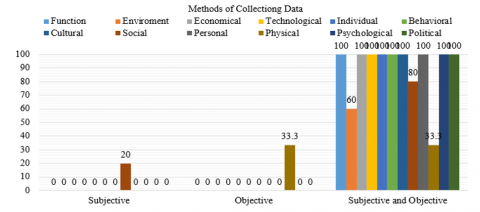
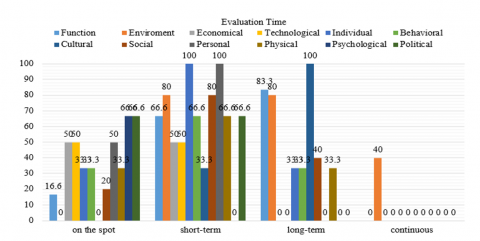
The frameworks in these studies primarily emphasize policy and social aspects, while less attention is given to other dimensions. Methodologically, the studies are largely explanatory and exploratory in nature. Analysis of the data reveals that policy factors are pivotal, with one-third of the focus (33.3%) dedicated exclusively to the perspectives of occupants. The data collection integrates both subjective and objective elements, predominantly through one-dimensional surveys that capture short-term and on-site evaluations (Figures 5-15).
Figure 5. The scope of the study
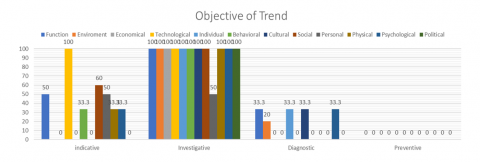
Figure 6. The objective of the study
Figure 7. The perspective of studies
Figure 8. The housing type used in the study
Figure 9. The aim of conducting the study
Figure 10. The evaluation elements
Figure 11. The methodology approach
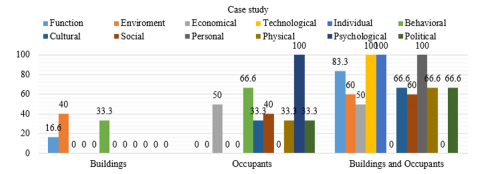
Figure 12. Data and analysis case study
Figure 13. The collecting data method
Figure 14. The types of data used in data analysis
Figure 15. The time of evaluation of the data
This paper analyzes key determinants of residential satisfaction, drawing from architectural and urban planning studies, and provides insights into how functional, environmental, economic, and social factors influence the design of living spaces. The study contributes to existing theories by highlighting the role of architectural design in shaping satisfaction, supporting and extending classical environmental psychology theories, while also identifying a research gap regarding external factors and calling for future research to incorporate these dimensions, enriching the theoretical framework. Environmental factors, particularly sustainable design, are increasingly important due to climate change, reinforcing sustainability theories; however, economic and technological factors require more exploration, suggesting a need for further research to enhance classical theories in these areas. The analysis emphasizes the importance of residents' active participation in design, supporting user-centered theories and advocating for inclusive, participatory processes, while also underscoring the significance of social and cultural factors in creating diverse, harmonious living environments. Despite its contributions, the study has limitations, including potential sample biases, the cross-sectional design, and measurement challenges. Future research should explore cross-cultural and longitudinal studies to better understand variations and changes in residential satisfaction, while refining measurement tools to enhance the accuracy of findings. By addressing these areas, future studies can provide a more comprehensive understanding of residential satisfaction and its role in sustainable development. Overall, this paper refines classical theories and emphasizes the importance of holistic, user-centered approaches in design, highlighting the need for collaboration among researchers, practitioners, and policymakers to create sustainable, livable homes that meet diverse needs.
The author extends profound thanks to the Department of Architectural Engineering at the University of Mosul for their steadfast support and guidance during this research. Special thanks are also given to the scientific committee for including this study in the 2023-2024 scientific agenda. The author is immensely grateful for the collaborative environment and valuable feedback that significantly enriched the research.
[1] Oluwole, O.A. (2011). The urban housing crisis and a cultural framework for housing policy: The Ajegunle community case study. Doctoral Dissertation, Nottingham Trent University (United Kingdom).
[2] Henilane, I. (2016). Housing concept and analysis of housing classification. Baltic Journal of Real Estate Economics and Construction Management, 4(1): 168-179. https://doi.org/10.1515/bjreecm-2016-0013
[3] Kisnarini, R. (2015). Functionality and adaptability of low-cost apartment space design: A case of Surabaya, Indonesia. Doctoral Thesis, Technische Universiteit Eindhoven.
[4] Remali, A.M., Salama, A.M., Wiedmann, F., Ibrahim, H.G. (2016). A chronological exploration of the evolution of housing typologies in Gulf cities. City, Territory and Architecture, 3(1): 1-15. https://doi.org/10.1186/s40410-016-0043-z
[5] Shirwani, R.K., Kamran, M., Malik, A.M. (2019). A literature review of early housing units: History, evolution, economy, and functions. Journal of Art Architecture and Built Environment, 2(2): 53-79. https://doi.org/10.32350/jaabe.22.04
[6] Alhubashi, H.H.M. (2012). Housing sector in Saudi Arabia: A study of challenge and opportunities of homeownership for the middle and low income. Master's Thesis, Universitat Politècnica de Catalunya.
[7] Elsayed, M., Romagnoni, P., Pelsmakers, S., Castaño-Rosa, R., Klammsteiner, U. (2023). The actual performance of retrofitted residential apartments: Post-occupancy evaluation study in Italy. Building Research and Information, 51(4): 411-429. https://doi.org/10.1080/09613218.2022.2121908
[8] Ameen, Y., Al-Yozbaky, O., Al-Hafidh, M. (2021). Energy efficiency enhancement for residential sector: Case study of lighting in Iraq. Al-Rafidain Engineering Journal, 26(1): 53-62. https://doi.org/10.33899/rengj.2020.127999.1056
[9] Raviz, S.R.H., Eteghad, A.N., Guardiola, E.U., Aira, A.A. (2015). Flexible housing: The role of spatial organization in achieving functional efficiency. ArchNet-IJAR: International Journal of Architectural Research, 9(2): 65-76.
[10] Sherzad, R., Imamzada, A. (2021). Re-evaluation of functionalist houses: A passive energy efficiency and daylight analysis using BIM tools. Master Thesis, Jönköping University.
[11] Kim, J. (2017). Residential satisfaction of long-term public rental housing. Doctoral Dissertation, KDI School.
[12] Javanmardi, M.H., Keshmiri, H., Shaban, G., Razmara, M. (2021). Sense of satisfaction: How physical elements of historical texture walls could affect residents’ satisfaction in the neighborhoods? International Journal of Architecture and Urban Development, 11(2): 41-52.
[13] Gao, H., Wang, T., Gu, S. (2022). A study of resident satisfaction and factors that influence old community renewal based on community governance in Hangzhou: An empirical analysis. Land, 11(9): 1421. https://doi.org/10.3390/land11091421
[14] Mridha, M. (2023). Looking through the models: A critical review of residential satisfaction. Buildings, 13(5): 1183. https://doi.org/10.3390/buildings13051183
[15] Haliloğlu Kahraman, Z.E. (2022). Subjective evaluations of Syrian refugees on residential satisfaction: An exploratory study in an ethnic enclave in Turkey. Journal of Housing and the Built Environment, 37(2): 747-775. https://doi.org/10.1007/s10901-021-09867-4
[16] Shehab, A.M. (2018). Influences of socio-cultural values to community housing design in the Gaza strip Palestine. Doctoral Dissertation, Universiti Teknologi Malaysia.
[17] Kazemi, M., Soheili, J. (2019). Effects of architectural components on the satisfaction rate of residents with different ages and genders in relation to privacy: A case study of a residential complex in Tabriz. International Journal of Architecture and Urban Development, 9(3): 39-50.
[18] Zyed, Z.A.S. (2014). Assessment of housing affordability problems among younger working households in greater Kuala Lumpur. University of Malaya (Malaysia).
[19] Attarbashi, D.M., Al-Kazzaz, D.A. (2021). The use of computerized parametric typology in the generation of single-family housing designs. Al-Rafidain Engineering Journal, 26(1): 19-36. https://doi.org/10.33899/rengj.2021.129156.1077
[20] Attarbashi, D.M., Al-Kazzaz, D.A. (2021). Parametric customization of single-family housing designs: Ain Al-Iraq housing complex as a case study. Al-Rafidain Engineering Journal, 26(2): 1-17. https://doi.org/10.33899/rengj.2021.129519.1083
[21] Zadeh, M.G. (2017). Living core of the future: Proposing new approach for the future of residential complex in metropolitan areas. Master Thesis, University of Massachusetts Amherst.
[22] Smith, K.M. (2011). The relationship between residential satisfaction, sense of community, sense of belonging and sense of place in a Western Australian urban planned community. Doctoral Thesis, Edith Cowan University.
[23] Kalcheva, E.S. (2018). Enhancing quality of life in residential high-rises by sustainable design responses. Doctoral Dissertation, De Montfort University, Leicester, United Kingdom.
[24] Abidin, N.Z., Abdullah, M.I., Basrah, N., Alias, M.N. (2019). Residential satisfaction: Literature review and a conceptual framework. IOP Conference Series: Earth and Environmental Science, 385(1): 012040. https://doi.org/10.1088/1755-1315/385/1/012040
[25] Aydoğan, A. (2005). Residential Satisfaction in High-Rise Buildings. Master Thesis, Izmir Institute of Technology (Turkey).
[26] Behloul, M. (2018). Post-occupancy evaluation of five-storey walk-up dwellings: The case of four mass housing estates in Algiers. In Housing Provision and Bottom-up Approaches, pp. 77-116.
[27] Manum, B. (2006). Apartment layouts and domestic life; the interior space and its usability: A study of Norwegian apartments built in the period 1930-2005. Doctoral Thesis, The Oslo School of Architecture and Design.
[28] Adalberth, K. (2000). Energy use and environmental impact of new residential buildings. Doctoral Thesis, Division of Building Physics, Lund University.
[29] Ogunkah, I. (2015). Rethinking low-cost green building material selection process in the design of low-impact green housing developments. Doctoral Dissertation, University of Westminster.
[30] Daroudi, M., Jahanshahloo, L., Shahriyari, K. (2017). Assessment of economic components on residential satisfaction and its impact on household’s residential relocation: Case study of Yaftabad, Tehran. International Journal of Social Sciences, 7(1): 67-77.
[31] Mat Noor, N.A. (2013). Whole life cycle costing and quality satisfaction: Public housing floor material. Advanced Materials Research, 717: 877-883. https://doi.org/10.4028/www.scientific.net/AMR.717.877
[32] Isa, A.A. (2016). End-users' personalization potentials and factors towards effective housing occupancy. Doctoral Dissertation, Universiti Teknologi Malaysia.
[33] Mullins, P., Western, J., Broadbent, B. (2001). The links between housing and nine key socio cultural factors: A review of the evidence positioning paper. AHURI Positioning Paper No, 4.
[34] Haliloğlu Kahraman, Z.E. (2013). Dimensions of housing satisfaction: A case study based on perceptions of rural migrants living in Dikmen. METU Journal of the Faculty of Architecture, 30(1): 1-27. https://doi.org/10.4305/METU.JFA.2013.1.1
[35] Cham, L.J. (1992). Household intervention and residential satisfaction in low-income housing in kissy, Freetown. University of London, University College London (United Kingdom).
[36] Lui, L. (2023). Residential satisfaction and behavioral intentions: A study of private housing in Hong Kong. Doctoral Thesis, University of Wales.
[37] Phillips, D.R., Siu, O.L., Yeh, A.G., Cheng, K.H. (2005). The impacts of dwelling conditions on older persons’ psychological well-being in Hong Kong: The mediating role of residential satisfaction. Social Science and Medicine, 60(12): 2785-2797. https://doi.org/10.1016/j.socscimed.2004.11.027
[38] He, S., Chen, D., Shang, X., Han, L., Shi, L. (2022). Resident satisfaction of urban green spaces through the lens of land senses ecology. International Journal of Environmental Research and Public Health, 19(22): 15242. https://doi.org/10.3390/ijerph192215242
[39] Galster, G.C. (1985). Evaluating indicators for housing policy: Residential satisfaction vs marginal improvement priorities. Social Indicators Research, 16: 415-448. https://doi.org/10.1007/BF00333289
[40] Mzoori, F.A. (2014). Spatial Configuration and Functional Efficiency of House Layouts. LAP LAMBERT Academic Publishing.
[41] Altaş, N.E., Özsoy, A. (1998). Spatial adaptability and flexibility as parameters of user satisfaction for quality housing. Building and Environment, 33(5): 315-323. https://doi.org/10.1016/S0360-1323(97)00050-4
[42] Jang, H. (2016). Modelling of existing high-rise apartment buildings for energy-efficient refurbishment in South Korea. Doctoral Dissertation, University of Sheffield.
[43] Astuti, S.B., Setijanti, P., Soemarno, I. (2017). Personalization of space in private and public settings within vertical housing as sustainable living. Journal of Architecture and Built Environment, 44(1): 37-43. https://doi.org/10.9744/dimensi.44.1.37-44
[44] Yan, J., Bao, H.X. (2018). Behavioral analysis of housing satisfaction with relocations: Field evidence from China. Working Paper Series. https://www.landecon.cam.ac.uk/sites/default/files/2023-05/rerc-wp_18-01-bao.pdf.
[45] Kennedy, R.J. (2015). [Dense, subtropical, sustainable] The liveable multi-storey apartment building. Doctoral Dissertation, Queensland University of Technology.
[46] Vera-Toscano, E., Ateca-Amestoy, V. (2007). The relevance of social interactions on housing satisfaction. Social Indicators Research, 86(2): 257-274. https://doi.org/10.1007/s11205-007-9107-5
[47] James, R.N. (2007). Multifamily housing characteristics and tenant satisfaction. Journal of Performance of Constructed Facilities, 21(6): 472-480. https://doi.org/10.1061/(ASCE)0887-3828(2007)21:6(472)
[48] Dimuna, K.O., Olotuah, A.O. (2019). A critical appraisal of residents’ level of satisfaction with architectural designs in public housing estates in Benin City, Nigeria. Academic Journal of Interdisciplinary Studies, 8(3): 318-329. https://doi.org/10.36941/ajis-2019-0030
[49] Amérigo, M., Aragonés, J.I. (1990). Residential satisfaction in council housing. Journal of Environmental Psychology, 10(4): 313-325. https://doi.org/10.1016/S0272-4944(05)80031-3
[50] Al-Chalabi, O. (2024). The colour theme preferences for elegant residential interior design in Mosul City, Iraq. Al-Rafidain Engineering Journal (AREJ), 29(1): 85-93. https://doi.org/10.33899/rengj.2023.144199.1297
[51] Raswol, L.M. (2019). Neighborhood sustainability evaluation based on UN-habitat … Principles: Case study Masike and Avro city in Duhok. Al-Rafidain Engineering Journal (AREJ), 24(1): 26-34. https://doi.org/10.33899/rengj.2019.163124