Dedy Hermawan* | Simon Sumanjoyo Hutagalung
© 2024 The authors. This article is published by IIETA and is licensed under the CC BY 4.0 license (http://creativecommons.org/licenses/by/4.0/).
OPEN ACCESS
This study explores the development of a sustainable tourism management model in Lampung Province, Indonesia, emphasizing stakeholder participation, particularly during and after the COVID-19 pandemic. The research utilizes an exploratory qualitative approach to identify and reconstruct an adaptive co-management model that enables stakeholders to share responsibilities and learn collaboratively within the tourism sector. The study’s findings offer insights into the importance of adaptive participation and provide a foundation for future policy and practice in sustainable tourism management. The outcome involves redesigning adaptive co-management models, emphasizing a continuous process that allows stakeholders to collaboratively assume responsibilities within a framework where they can pursue their objectives, identify shared interests, gain insights from their institutions and methods, and adjust them for future iterations. At the same time, similar to adaptive management, the emphasis remains on experiential learning, recognizing the variety of knowledge systems.
tourism management, adaptive management, adaptive participation, sustainable tourism
The COVID-19 pandemic significantly impacted the global tourism sector, causing a drastic decline in tourist activities and leading to socio-economic challenges. In Indonesia, the pandemic halted foreign and domestic tourism, resulting in reduced workforce engagement and economic instability [1]. The provincial government of Lampung responded with policies aimed at closing tourist destinations temporarily, which highlighted the need for an adaptive approach to managing tourism in the face of such disruptions [2]. This condition affects the level of tourist visits in Indonesia which then results in a reduction in the workforce, causing new unemployment [3]. Furthermore, it has an impact on the regional economy which is experiencing a dilemma, where regional income decreases while still having to maintain the stability of the community's economy [4].
Data from the Tourism and Creative Economy Office of Lampung Province revealed that there were six regions that issued policies to close tourist destinations from December 30, 2020 to January 4, 2021; Bandar Lampung, Metro, South Lampung, Tanggamus, Pesawaran, Pesisir Barat. Data from the Tourism and Creative Economy Office of Lampung Province stated that foreign tourists experienced a drastic decline from 2019 as many as 298,063 people and in 2020 only 1,531 people. Meanwhile, domestic tourists in 2019 were 10,445,855, decreasing in 2020 to 2,548,394. The dilemma that occurs in handling the pandemic is very much felt in this sector. The impact of damage to the tourism sector must be overcome by the government through policy interventions that can return the condition to its original state [5]. The local government is the spearhead who can design intervention strategies according to the scope of impact and the types of stakeholders involved in managing the tourism sector in the region, therefore the best approach in the recovery of the tourism sector is a participatory approach [6]. The participatory approach in managing tourist destinations is indeed more appropriate at the level of regional tourist destinations [7]: but if it is associated with the context of a pandemic, participation must be adaptive. Participation is an approach that is able to summarize all resources to focus on a common goal by producing acceleration and benefits that can be enjoyed together [8].
A possible challenge in the context of tourism recovery policies is to provide a medium to reactivate the potential for participation that has grown, but also to adjust directions and instruments that are more adaptive in nature [9]. The urgency to pay more attention to aspects of adaptive capacity becomes important when faced with the challenges of change that can be triggered by various events or phenomena [10]. This challenge to strengthen adaptive capacity is increasingly needed given the changes in the digital era and its highly disruptive nature in various sectors. The combination of participatory and adaptive concepts is a potential idea to be explored as a potential to build a model that can be implemented as a solution in the regions. This study intends to explore what model is most suitable to be built as a participatory and adaptive tourism management solution, especially during the pandemic and post-pandemic period. Therefore, this article will describe the research findings in several important points: (1). Analysis of potential participation and adaptive factors in the development of community tourism destination management models in Lampung, and (2). Component analysis and design of the model so that it can be applied to the areas that are the target group. This study aims to develop a participatory and adaptive tourism management model that can effectively respond to crises like the pandemic. The research focuses on analyzing stakeholder participation and adaptive capacity within the tourism sector in Lampung, with the goal of designing a model that can enhance the resilience and sustainability of tourism destinations.
The concept of adaptive management is often misunderstood or used incorrectly. In several papers found, a research result or case study stated as part of the adaptive management concept often has a collaborative component or community involvement substance, in which the scope should be called adaptive co-management. In contexts where the term alludes to different types of collaborations between public and private entities, the idea of connectedness can also be used interchangeably with collaborative or communal spaces [11]. The identification that has been carried out by various scholars has found that the definition of adaptive co-management that is most widely used is its understanding as a process in which institutional and knowledge management is tested and revised in a collaborative learning process that is managed dynamically, sustainably, and organized [12, 13].
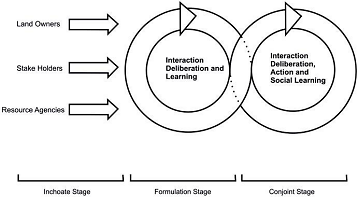
In the context of sustainable tourism, the adaptive co-management approach offers a framework for integrating diverse knowledge systems and fostering collaboration among stakeholders. This study builds on the work of Plummer and Baird [14]: who propose a model of adaptive co-management that is particularly relevant for managing tourism in regions facing environmental and socio-economic changes. According to a model put out by Plummer and Baird [14]: there are three steps to the adaptive co-management process: (1). the pre-interaction, or inchoate, stage, where no interaction has yet taken place but when players with common issues or resources do exist; (2). In the first step, known as formulation, players start interacting and negotiating; in the second stage, called exploration of collective opportunities, players continue to communicate and bargain while taking action, keeping an eye on progress, and making adjustments as needed; (3). Conjoint stage, where the actors involved are already actively interacting, learning together and taking action together. The model and the process is dynamic and continuous in principle. Some research on adaptive co-management principles has generally centered around five core elements; interaction, deliberation, action and social learning [14, 15].
Since adaptive co-management typically tackles a group of common issues, it is important to back efforts to establish institutional frameworks for cooperation and stakeholder engagement while implementing a partnership. "Wicked problems" to three basic planning dilemmas may arise in this situation. The dilemma stems from the current institutional setup, which means that it is difficult to solve the dilemma through a better management framework or approach. Instead, social issues should be incorporated into the decision-making process, for example viewing social resistance as an opportunity to learn how to deal with planning dilemmas [16]. Therefore, the opinions and knowledge of all stakeholders must be identified and monitored early and intensely. The right forum to manage these interactions is very important. The description of this model can be illustrated in Figure 1.
Figure 1. The adaptive co-management model [14]
The basic tenet of adaptive management is the endeavor to consistently solicit feedback from stakeholders. In order to better understand the intricacies, interests, and differences among stakeholders, it is best to take a more accommodating stance that permits them to reevaluate shared objectives [17, 18] that allows for redefining common goals by stakeholders to become more aware of their complexities, interests and differences [19]. Digital spaces, social media, and web platforms facilitate knowledge exchange in addition to in-person meetings for communicating and exchanging information and data throughout the interaction process [20]. Understanding that this process will differ among stakeholders and can overcome the inertia associated with social learning is equally crucial, as is determining the threshold that will trigger change and adaptation [21, 22]. Then, as more data becomes available, revise and overhaul the systems of governance and decision-making [23].
Adaptive management, if optimally institutionalized, has the potential to encourage the acceleration of good governance in the form of various values, including participation, representation, deliberation, accountability, empowerment, social justice, and polycentricity [24]. Adaptive management systems' resilience features, such as dealing with uncertainty, maintaining diversity, combining knowledge from many sources, and detecting the threshold of collaboration, must be paired with these value traits [25]. The feedback built between governance attributes and adaptive resilience attributes can then affect the system's capacity to self-regulate, implement learning and develop adaptability which is a measure of system resilience. When the adaptive co-management concept is put into practice, all parties involved will eventually see the system as a whole, with users, resources, ecosystems, governance, and public infrastructure all interacting and feeding back into it [26]. Learning and continually assessing and understanding interactions, not only on a focal scale but also vertically is at the core of adaptive co-management. According to Ostrom [26] the components of a system are better understood than the social variables that highlight their interactions [27]. Drugs with just one remedy and diagnostic framework are dangerous, say Ostrom and Cox [28] who stress that social systems' rules are based on institutional complexity. The use of many frameworks is recommended, and they provide a multi-tiered approach. Seven components make up the IAD (Institutional Analysis and Development) framework: institutions and actors, their positions and responsibilities, acceptable actions, the 'level of control' each actor has, the outcomes for each actor, the information each actor possesses, and the incentives, costs, and benefits linked to their behavior. The Millennium Ecosystem Assessment, a community-based evaluation served as the basis for the design framework that Fabricius and Cundill [22] created [29]. All of these approaches essentially aim to lay the groundwork for an adaptive management process within society's institutional framework by fostering interaction.
There are three types of adaptive communities that are trying to be built through strengthening adaptive capacity and governance capacity [30]. To start with, the community of listeners has zero say because they are helpless due to a lack of resources, knowledge, leadership, institutions, and networks as well as a lack of financial and technological possibilities. Second, there's the coping community; they can adjust to most situations, but they can't run society. Due to a dearth of leadership, direction, and inspiration, they are unable to govern effectively, and their solutions are often temporary. Third, the adaptive management group already possesses the governing abilities necessary to sustain and absorb the change, and they are generally capable of adapting. Because of this, the community is prepared to deal with the danger and ensure its survival in the long run [30]. This community change is expected to occur from the process of introducing and adopting adaptive management models in any sector related to community.
This research aims to conduct a focused analysis and develop new ideas through exploratory qualitative research. Two areas, South Lampung Regency and Pesawaran Regency, were purposively selected as the locations for the analysis due to their backgrounds in managing tourism at marine tourism destinations. The development of the model will involve identifying and analyzing several aspects: (1) Analysis of potential factors in model development, and (2) Component analysis and model design to ensure applicability in the target areas. This qualitative research employed three data collection techniques: document studies related to tourism management policies, snowball interviews with informants, and observations. A total of 27 informants from various backgrounds participated in this study, providing a diverse range of data for analysis (refer to Table 1).
The interviews data were recorded in clippings of interview transcripts, labeled and then categorized so as to produce data that can be interpreted and produce certain conclusions. Meanwhile, the results of observations in the form of behavioral observation notes, observation notes on the condition and situation of tourist destinations are also processed together with interview data. To back up the analysis of the two data kinds, document data is utilized. In sum, Miles and Huberman's [31] interactive analytical approach is employed in this investigation with working procedures for data reduction, data presentation, data verification and conclusion drawing. In the implementation of this data analysis using triangulation tables in order to maintain the adequacy of the data and the quality of the data to be analyzed and concluded. Because of its strength in organizing and processing complicated qualitative data, the interactive analytical model was selected for this data set's investigation. To construct a thorough comprehension of adaptive management in tourism, this model incorporates data reduction, data display, and conclusion drawing. This model is ideal for our study because it will help us find commonalities and trends in stakeholder involvement and adaptive management. The findings are guaranteed to be reliable and valid because the model prioritizes triangulation.
Table 1. Research informants
|
No. |
Category Informants |
Quantity |
Origin |
|
1 |
Government Official |
5 |
South Lampung and Pesawaran |
|
2 |
Tourist Destination Managers |
7 |
South Lampung and Pesawaran |
|
3 |
Traders at tourist sites |
10 |
South Lampung and Pesawaran |
|
4 |
Tourism Community |
5 |
Bandar Lampung, South Lampung and Pesawaran |
4.1 Adaptive management based on stakeholder participation
Both adaptive management and co-management emerged on their own paths before coming together to form adaptive co-management. In actuality, adaptive co-management is a common outcome of combining the two methods through iterative cycles of involvement, learning, and action. Adaptive co-management, adaptive management, and co-management have all been compared and contrasted by Berkes (2009) in terms of their connections, duration, organizational level, and capacity building emphasis. The adaptive co-management process has four supporting factors (refer to Table 2).
Thus it can be understood that the first important factor for adaptive management activities refers to the carrying capacity of a supportive environment. This factor is related to the continuous collaboration process that allows stakeholders in various organizations to share responsibilities, then creates an organizational culture in a large system that can explore common goals and foundations, then is able to create leadership synergy from each institution in their environment and at the same time. The process is capable of adapting and then modifying it in a co-managed cycle [32].
Table 2. Identification of factors and components
|
No. |
Factors |
Components |
|
1 |
Supporting environment |
(a). Relations between organizations, (b). work culture, and (c). leadership that is owned by each organization and determine the interaction |
|
2 |
Willingness to learn |
(a). Initiative to try, (b). ability to rise from bad conditions, and (c). courage to take alternative steps |
|
3 |
Willingness to collaborate |
(a). Open-mindedness, (b). Good prejudice against other parties, and (c). Ability to see opportunities |
|
4 |
Consistency in carrying out the process |
(a). Ability to cooperate, (b). Ability to maintain commitment, and (c). Ability to build trust |
Learning by doing, with an eye toward incorporating many perspectives, is the second aspect of adaptive management that is thought to be significant. This paves the way for the interchange of formal scientific information with informal, local, and traditional knowledge, as well as the distribution of authority, responsibility, and power among the many parties involved [33]. Such entities, NGOs, and local stewardship groups are all examples of stakeholders [34].
The next factor is the willingness to collaborate. In this section, organizations and leadership that provide space for openness and exchange of insights can lead to opportunities to understand the changes that are taking place. If supported by good prejudice against change and other parties, the organization will be able to identify and select values that develop in change. It does not necessarily reject reactively to extreme ideas. At the next stage will develop the ability to see opportunities that can be exploited for the benefit of the organization and leadership. If these factors are well absorbed by each organization involved in tourism management, the opportunities for collaboration can be more optimal. The adaptive management cycle encompasses a range of stages, each of which may see a varied level of cooperation [33].
Then there is the consistency factor in carrying out the process. Organizations that already have the ability to collaborate will move to this stage where they take the initiative to share functional roles with other organizations and work together to achieve a common interest. In addition, consistency is needed to ensure that common goals are not disrupted and actually cause harm. The organization at this stage will develop a common mechanism that maintains these commitments. It is not only ceremonial but also organic in a common structure that shares its functional roles with each other. At a longer stage, the system that is managed together will create a relationship based on trust, where functional roles then create a shared culture on the basis of which is a long-term relationship.
In adaptive co-management, the organization or management authority, the people who use the resources, and other non-profits work together as a team to control the company [35]. The principles of adaptive governance include three major points; (1) the degree of interaction between the organizations involved and the level of governance that occurs; (2) the process of learning and adaptation that had previously begun to be used as shared ideas; (3) reach a common understanding of the goals and vision of the initiatives of organizations involved in tourism management. The result of adaptive management activities is the integration of social capital and human capital in cross-organizational interactions that provide learning opportunities, liaison organizations that have a more dominant role intensity have a key role. A shared perspective and comprehension will emerge in due time as a result of this. Using these guidelines, Clark and Clarke [36] evaluated five case studies of effective adaptive governance in national parks across the United Kingdom. Researchers discovered that using adaptive governance concepts was positively correlated with local sustainability metrics. The authors went on to say that national park authorities play a significant role as liaison organizations in the fight for sustainability by fostering trust and increasing capability. Given its mandate, the Tourism Office can serve as a go-between when it comes to the region's efforts to boost tourism. They are able to do a better job in these positions because of the power and resources they possess.
4.2 Tourism adaptive co- management model
The model that can be built is a partnership combined with adaptive management where the main substance is to combine various organizational resources related to the management of tourist destinations, experts or academics, the government as a regulatory authority and private business organizations around tourist destination locations. Furthermore, consulting groups, sponsors, and community agencies can all lend a helping hand [30]. The use of local resources is the main characteristic of the model, where stakeholders and their contributions will have a dominant influence. Whenever a problem arises, all parties involved in the adaptive co-management model are entitled to share information, take part in decision-making, and work together to find a solution. In more detail, the components of the model can be presented in Table 3.
Table 3. Functional roles and contributions of actors involved
|
No. |
Type of Actor |
Functional Role |
Main Contribution |
|
1 |
Organizational leaders |
a) Legitimate representatives of a constituency b) Acting in the interests of groups and communities c) Do not create new vulnerabilities and conflicts |
Transformers who build strategic readiness to implement adaptive management. This category includes: tourism awareness groups, youth groups, tourism village business entities. |
|
2 |
Liaison |
a) Facilitates communication and knowledge building b) Scientists and facilitators are well suited for these roles c) Requiring time commitment |
Change mediator that stimulates transformation of insight and readiness for change skills. This category includes: tourism facilitators, academics, and tourism NGOs. |
|
3 |
Users |
a) Key stakeholder b) Depend on the resource base for their well-being c) Using resources to directly d) Regulate or support services |
Transformers who together with organizational lead actors forge adaptive strategic partnerships. This group seeks to achieve prosperity together with the leading actors of the organization. The scope is: business people in tourist destinations, entrepreneurs supporting tourism, and owners of private tourist destinations. |
|
4 |
Regula-tory |
a) Officials and their organizations in charge of implementing regulations b) Benefit from adaptive co-management by reducing transaction costs, managing c) learning resources from local communities, and reducing conflict |
Supporting adaptive management models through regulatory tools that bridge the collaborative process and serve as supervisors. Scope: Local Government, Village and Central Government. |
The adaptive management model relies heavily on vertical linkages amongst actors to facilitate the sharing of information and expertise, which in turn can mediate or enhance interactions between them [14]. In more detail, Adger and Vincent [37] uncovered five distinct forms of adaptive co-management: (a) as a platform for collaborative management; (b) as a source of vertical connections for participation; (c) as a means of connecting users of local resources with users of resources elsewhere; (d) as a means of managing channels that link actors to information; and (e) as a way of formulating regulations and policies. In the process of knowledge production and absorption, this connection is crucial [38]: especially in efforts to bridge the various organizations involved [36]. Resource management systems will greatly benefit from the adaptive management model's emphasis on cross-actor connections [38]. The inability to follow and participate in the process of such interactions which then has the potential to produce unwanted or unwanted impacts [37].
Knowledge exchange, interpretation of complicated data, and application of information are all interactive processes in the adaptive management model that rely on mutual respect and confidence [39]. When other forms of mediation are emerging to build trust and communication, it makes more sense for actors to accommodate each other's views rather than contradict them [40]. To lay the groundwork for a common goal, inspiration, and the ability to work together to find answers, it is essential to be aware of the players involved. This includes both monetary and non-monetary incentives [14]. As a result, people are more likely to be motivated and have the skills necessary to work together productively to decide what to do next [41]. This model can be illustrated in Figure 2.
Figure 2. Design of stakeholder cooperation model based on adaptive management
This model in principle summarizes the support of various factors needed in the formation of cooperative management based on adaptive management and the form of involvement of actors that is expected to occur in the process. It can be seen that there are four main actors who have functional roles and contributions as described in the previous table. In addition, there are also four main factors that are prerequisites for managing adaptive management for the tourism sector. The process that is emphasized in this model is the existence of a cyclical process that rotates continuously in order to maintain the commitment of the actors and the consistency of achieving the goals that are expected together. This process will always follow the impetus for changes that occur in the organizational environment involved. Including the transformation process caused by the pandemic, it will be in the common interest to manage adaptive management for the sustainability.
The findings of this study highlight the importance of stakeholder participation in adaptive management. The adaptive co-management model developed in this research emphasizes the convergence of adaptive management and co-management, where stakeholders share responsibilities and engage in continuous learning. The model identifies four key factors that support adaptive management: a supportive environment, willingness to learn, willingness to collaborate, and consistency in carrying out processes.
The analysis reveals that a supportive environment is critical for fostering collaboration among stakeholders, which in turn enhances the adaptability and resilience of tourism management systems. The willingness to learn and collaborate further strengthens the capacity of stakeholders to respond to changes and challenges in the tourism sector. Consistency in implementing adaptive management practices ensures the sustainability of these efforts over time.
Adaptive co-management in tourism management thus refers to an ongoing process that enables stakeholders to share responsibilities within a system where they can explore their goals, find common ground, learn from their institutions and practices, and adapt and modify them for the next cycle. Learning by doing while considering different knowledge systems is still the key focus, just as it is with adaptive management. State or regulatory agencies, research institutions, media outlets, resource users, and "other civil society groups" work together in adaptive co-management, a method of ecological governance. "Participation, representation, deliberation, accountability, empowerment, social justice, and organizational characteristics such as multi-layered and polycentric" are aspects that promote effective leadership. Along with these qualities, a resilient system must have the following: the ability to scale appropriately, to adjust to uncertainty, to be diverse, to incorporate different sources of knowledge, and, most crucially, to identify impending thresholds.
The following suggestions for practice and policy are made in light of the results: To improve sustainability and resilience, local governments should include adaptive co-management principles into their tourism policies. Maintaining adaptive capacity in tourist management requires continuous stakeholder involvement. Improving Stakeholders' Adaptive Capacity via Training Programs That Emphasize Collaborative Learning and Information Sharing. Promoting the use of digital platforms to enhance communication and collaboration among stakeholders is an important aspect of technology adoption. These suggestions are an attempt to help achieve the larger objective of sustainable tourism development by facilitating the actual use of adaptive co-management in the tourist industry.
Adaptive co-management, according to the results, can make tourist hotspots more resilient and sustainable, which is especially important in times of crisis like the COVID-19 epidemic. Constant stakeholder participation and the incorporation of different knowledge systems into tourist management are two policy and practice implications of the study. Research in the future should look at how digital technology might help with adaptive management and whether this paradigm can be applied to other places.
The authors extend their gratitude to the Ministry of Education, Culture, Research, and Technology (Kemdikbud Ristek) and the Institute for Research and Community Service (LPPM) at Universitas Lampung for their support through the PTUPT research scheme in 2022. Special thanks are also due to the leadership of the University of Lampung and all contributors involved in this research.
[1] Hanoatubun, S. (2020). Dampak COVID - 19 terhadap Prekonomian Indonesia. EduPsyCouns: Journal of Education, Psychology and Counseling, 2(1): 146-153.
[2] Soehardi, S., Purnamaasih, L., Rapitasari, D. (2020). Dampak pandemik COVID-19 terhadap kunjungan turis asing dan domestik serta tingkat hunian kamar hotel bintang di indonesia. Jurnal Kajian Ilmiah, 20(3): 291-308. https://doi.org/10.31599/jki.v20i3.287
[3] Wirawan, P.E., Pujiastuti, S., Astuti, N.N.S. (2020). Strategi bertahan hotel di Bali Saat pandemi COVID-19. Jurnal Kajian Bali, 10(2): 579-602. https://doi.org/10.24843/JKB.2020.v10.i02.p11
[4] Kartiko, N.D. (2020). Insentif pajak dalam merespons dampak pandemi COVID-19 pada sektor pariwisata. Jurnal Pajak Dan Keuangan Negara, 2(1): 124-137. https://doi.org/10.31092/jpkn.v2i1.1008
[5] Solemede, I., Tamaneha, T., Selfanay, R., Solemede, M., Walunaman, K. (2020). Strategi pemulihan potensi pariwisata budaya di provinsi maluku (suatu kajian analisis di masa transisi kenormalan baru). NOUMENA: Jurnal Ilmu Sosial Keagamaan, 1(1): 69-86. https://doi.org/10.37196/nojisok.v1i1.177
[6] Jufra, A.A. (2020). Studi pemulihan dan pengembangan ekonomi kreatif sub-sektor kuliner pasca pandemi (COVID-19) dalam menunjang pertumbuhan ekonomi di provinsi sulawesi tenggara. Mega Aktiva: Jurnal Ekonomi Dan Manajemen, 9(2): 116-131.
[7] Hermawan, D., Hutagalung, S.S. (2019). Development of community participation based on behaviour in managing participative programs. Masyarakat, Kebudayaan Dan Politik, 32(3): 312-322. https://doi.org/10.20473/mkp.V32I32019.312-322
[8] Hermawan, D., Hutagalung, S.S. (2020). Coopetition as a model of tourism participation management in South Lampung Indonesia. Journal of Environmental Management and Tourism, 11(6): 1571-1580. https://doi.org/10.14505/jemt.v11.6(46)27
[9] Bagwell, J. (2020). Leading through a pandemic: adaptive leadership and purposeful action. Journal of School Administration Research and Development, 5(S1): 30-34. https://doi.org/10.32674/jsard.v5iS1.2781
[10] Bui, H.T., Jones, T.E., Weaver, D.B., Le, A. (2020). The adaptive resilience of living cultural heritage in a tourism destination. Journal of Sustainable Tourism, 28(7): 1022-1040. https://doi.org/10.1080/09669582.2020.1717503
[11] Carlsson, L., Berkes, F. (2005). Co-management: Concepts and methodological implications. Journal of Environmental Management, 75(1): 65-76. https://doi.org/10.1016/j.jenvman.2004.11.008
[12] Folke, C., Carpenter, S., Elmqvist, T., Gunderson, L., Holling, C.S., Walker, B. (2002). Resilience and sustainable development: Building adaptive capacity in a world of transformations. AMBIO: A Journal of the Human Environment, 31(5): 437-440. https://doi.org/10.1579/0044-7447-31.5.437
[13] Plummer, R., Armitage, D. (2007). A resilience-based framework for evaluating adaptive co-management: Linking ecology, economics and society in a complex world. Ecological Economics, 61(1): 62-74. https://doi.org/10.1016/j.ecolecon.2006.09.025
[14] Plummer, R., Baird, J. (2013). Adaptive co-management for climate change adaptation: considerations for the Barents region. Sustainability, 5(2): 629-642. https://doi.org/10.3390/su5020629
[15] Miles, J.D.P. (2013). Designing collaborative processes for adaptive management: Four structures for multistakeholder collaboration. Ecology and Society, 18(4): 5. https://doi.org/10.5751/ES-05709-180405
[16] Pesch, U., Vermaas, P.E. (2020). The wickedness of Rittel and Webber’s dilemmas. Administration & Society, 52(6): 960-979. https://doi.org/10.1177/0095399720934010
[17] Cundill, G., Cumming, G.S., Biggs, D., Fabricius, C. (2012). Soft systems thinking and social learning for adaptive management. Conservation Biology, 26(1): 13-20. https://doi.org/10.1111/j.1523-1739.2011.01755.x
[18] Flood, R.L. (2000). A brief review of peter B. Checkland’s contribution to systemic thinking. Systemic Practice and Action Research, 13(6): 723-731. https://doi.org/10.1023/A:1026423411383
[19] Collins, K., Blackmore, C., Morris, D., Watson, D. (2007). A systemic approach to managing multiple perspectives and stakeholding in water catchments: Some findings from three UK case studies. Environmental Science & Policy, 10(6): 564-574. https://doi.org/10.1016/j.envsci.2006.12.005
[20] Tulloch, A.I.T., Possingham, H.P., Joseph, L.N., Szabo, J., Martin, T.G. (2013). Realising the full potential of citizen science monitoring programs. Biological Conservation, 165: 128-138. https://doi.org/10.1016/j.biocon.2013.05.025
[21] Allen, C.R., Gunderson, L.H. (2011). Pathology and failure in the design and implementation of adaptive management. Journal of Environmental Management, 92(5): 1379-1384. https://doi.org/10.1016/j.jenvman.2010.10.063
[22] Fabricius, C., Cundill, G. (2014). Learning in adaptive management: insights from published practice. Ecology and Society, 19(1): 29. https://doi.org/10.5751/ES-06263-190129
[23] Klein, A.S., Wallis, J., Cooke, R.A. (2013). The impact of leadership styles on organizational culture and firm effectiveness: An empirical study. Journal of Management & Organization, 19(3): 241-254. https://doi.org/10.1017/jmo.2013.34
[24] Frost, J.S., Hammer, D.P., Nunez, L.M., et al. (2019). The intersection of professionalism and interprofessional care: Development and initial testing of the interprofessional professionalism assessment (IPA). Journal of Interprofessional Care, 33(1): 102-115. https://doi.org/10.1080/13561820.2018.1515733
[25] Lebel, L., Tan, S.B., Nikitina, E. (2010). Adaptive governance of risks: Climate, water, and disasters. In Climate Change Adaptation and Disaster Risk Reduction: Issues and Challenges, pp. 115-142. https://doi.org/10.1108/S2040-7262(2010)0000004012
[26] Anderies, J.M., Janssen, M.A., Ostrom, E. (2004). A framework to analyze the robustness of social-ecological systems from an institutional perspective. Ecology and Society, 9(1): 18. http://doi.org/10.5751/ES-00610-090118
[27] Svendsen, G.T., Svendsen, G.L.H. (2009). Handbook of Social Capital: The Troika of Sociology, Political Science and Economics. Edward Elgar Publishing.
[28] Ostrom, E., Cox, M. (2010). Moving beyond panaceas: A multi-tiered diagnostic approach for social-ecological analysis. Environmental Conservation, 37(4): 451-463. https://doi.org/10.1017/S0376892910000834
[29] Schultz, L., Duit, A., Folke, C. (2011). Participation, adaptive co-management, and management performance in the world network of biosphere reserves. World Development, 39(4): 662-671. https://doi.org/10.1016/j.worlddev.2010.09.014
[30] Fabricius, C., Folke, C., Cundill, G., Schultz, L. (2007). Powerless spectators, coping actors, and adaptive co-managers: A synthesis of the role of communities in ecosystem management. Ecology and Society, 12(1): 29.
[31] Miles, M.B., Huberman, A.M. (1994). Qualitative Data Analysis: An Expanded Sourcebook (2nd ed.). Sage Publications, Inc.
[32] Armitage, D.R., Plummer, R., Berkes, F., et al. (2009). Adaptive co-management for social-ecological complexity. Frontiers in Ecology and the Environment, 7(2): 95-102. https://doi.org/10.1890/070089
[33] Ruitenbeek, J., Cartier, C. (2010). The invisible Wand: Adaptive Co-Management as an Emergent Strategy. In Complex Bio-Economic Systems. CIFOR Occasional Paper No 34.
[34] Olsson, P., Folke, C., Berkes, F. (2004). Adaptive comanagement for building resilience in social-ecological systems. Environmental Management, 34(1): 75-90. https://doi.org/10.1007/s00267-003-0101-7
[35] Adger, W.N., Vincent, K. (2005). Uncertainty in adaptive capacity. Comptes Rendus Geoscience, 337(4): 399-410. https://doi.org/10.1016/j.crte.2004.11.004
[36] Clark, J.R.A., Clarke, R. (2011). Local sustainability initiatives in English National Parks: What role for adaptive governance? Land Use Policy, 28(1): 314-324. https://doi.org/10.1016/j.landusepol.2010.06.012
[37] Adger, W.N., Vincent, K. (2005). Uncertainty in adaptive capacity. Comptes Rendus Geoscience, 337(4): 399-410. https://doi.org/10.1016/j.crte.2004.11.004
[38] Berkes, F. (2009). Evolution of co-management: Role of knowledge generation, bridging organizations and social learning. Journal of Environmental Management, 90(5): 1692-1702. https://doi.org/10.1016/j.jenvman.2008.12.001
[39] Armitage, D., Berkes, F., Dale, A., Kocho-Schellenberg, E., Patton, E. (2011). Co-management and the co-production of knowledge: Learning to adapt in Canada’s Arctic. Global Environmental Change, 21(3): 995-1004. https://doi.org/10.1016/j.gloenvcha.2011.04.006
[40] Monroe, M.C., Plate, R., Oxarart, A. (2013). Intermediate collaborative adaptive management strategies build stakeholder capacity. Ecology and Society, 18(2): 24. https://doi.org/10.5751/ES-05444-180224
[41] Bryce, R., Oliver, M.K., Davies, L., Gray, H., Urquhart, J., Lambin, X. (2011). Turning back the tide of American mink invasion at an unprecedented scale through community participation and adaptive management. Biological Conservation, 144(1): 575-583. https://doi.org/10.1016/j.biocon.2010.10.013