Endang Surahman* | Vita Meylani
© 2024 The authors. This article is published by IIETA and is licensed under the CC BY 4.0 license (http://creativecommons.org/licenses/by/4.0/).
OPEN ACCESS
Water pollution is part of the topics that have been widely studied and published in several academic journals. This is due to the importance of water to human life and the existence of different pollution issues capable of affecting human health negatively. Therefore, this research aims to map water pollution-related articles published in the dimensions.ai database from 2018 to 2022. "Water pollution" keyword used for the search produced 2,488 documents and the application of R Studio for bibliometric analysis showed that Environmental Science and Pollution Research was the most relevant journal. The Science of the Total Environment Journal had the most influence and the highest contribution was from Wang and Zhang even though Liu Y had the greatest impact. China was the country with the most international collaboration compared to other countries. The analysis also showed that water pollution and water quality were the most discussed topics during the last 10 years. In 2022, environmental and surface water pollution were observed to be the most prevalent topics and were predicted to be developed further in the future.
water pollution, R biblioshiny, bibliometric
Water pollution is part of the important issues continuously being discussed internationally, specifically in developing countries. This is due to the pollution often caused by human activities through business, electricity, mining, and even agriculture with subsequent influence on lives [1]. Livestock and poultry farming have also been identified as part of the sources polluting water objects [2-5]. Moreover, watersheds which are considered to be hygienic due to importance for different activities such as fisheries, agriculture, and others are experiencing environmental pollution [6]. The river flows needed for several functions in urban areas are also observed to have been polluted by dense industrial activities, leading to a reduction in water quality [7].
According to Dharwal et al. [8], some factors polluting water from the ground and other sources include waste materials, chronic organics, and heavy metals. UNESCO reports [9] further showed that the main type of pollution often found in groundwater was arsenic with an effect on approximately 70 million people worldwide [1]. This has led to research on the impact of water pollution on the health of living things as a contribution to scientific development and provision of relevant solutions for practitioners Dash and Chakraborty [10]. The focus is on the process of handling water pollution problems in the fields of biology, physics, chemistry, and environmental health. However, the efforts are in the testing stage and only a few have been implemented directly in water bodies.
The main environmental issue currently trending is that the quality of groundwater is projected to worsen in 2050. This is because 3000 basins of rivers in the world are unsuitable for use, threatening the safety of living things and the surrounding environment [11]. Therefore, there is a need to manage the waste dumped into rivers and improve treatment facilities in order to reduce the risk of clean water shortages. This is more important in developing countries without water treatment technologies that are present in industrial countries. The urgency is to determine the contribution of previous research related to water pollution and implementation in aquatic ecosystems as well as the current subtopic trends.
The recent mapping research was observed not to have been properly conducted, leading to a lack of appropriate development and conclusion. The trend is despite the importance of mapping in the world of academia to describe prevailing issues and the solutions required. Therefore, this research aimed to map the articles conducted on water pollution through a bibliometric method which had been applied widely in several fields such as social [12, 13], medicines [14], technology [15], education [16, 17], and science [18]. The questions formulated to be answered are stated as follows:
The results are expected to provide a clear picture, specifically for researchers and academics in universities, to ensure future relevant research is conducted properly.
Bibliometric method was applied to map the research on water pollution. The method was adopted due to its ability to provide an overview of publication performance and science maps related to the authors, sources, impact, words that often appear, topics, countries, and others. The map is often constructed through visualization accompanied by interpretation. The biggest attention of this research was to construct the map using different methods because less attention was on bibliometric method with previous efforts observed to have used graphs [19, 20] for the representations through software.
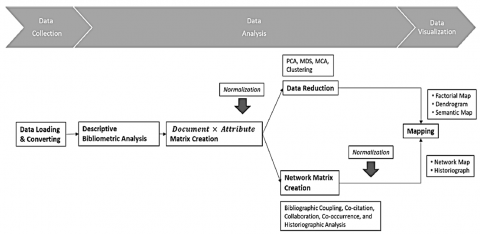
The data used were retrieved from the Scopus database using the keyword "water pollution" which was limited to the Environmental Science area and a period of 2013 to 2022. The preference for Scopus is because it is superior to other abstract and citation databases by offering more comprehensive research metrics, covering approximately twice the number of publications subjected to the peer-review process [21]. The metrics can also show the impact of the research results conducted by some researchers interested in topic of water pollution. Therefore, a total of 1,580 documents consisting of articles, books, book chapters, conference papers, conference reviews, data papers, editorials, erratum, letters, notes, retracted, reviews, and short surveys were retrieved. The search process was limited to the environmental science subject area to avoid water pollution research outside the scientific field. The data collected were processed using Microsoft Excel and R Studio software to facilitate mapping through simple visualization. The documents retrieved were quite numerous and the level of accuracy in bibliography was not as good as using VOSviewer and bibliometrix R-package. The biblioshiny software used was able to present simple outputs to ensure an easier analytical process. The stages of bibliometric analysis using R biblioshiny software are presented in Figure 1.
Figure 1. Stages of bibliometric analysis using R biblioshiny
The publications retrieved from the database are presented in Table 1 based on document type, supplemented by number and percentage. It was observed that the majority were journal articles at 65.63%, followed by conference paper 19.24%, book chapter 5.70%, review 5.44%, editorial 0.95%, note 0.95%, erratum 0.70%, book 0.63%, letter 0.25%, conference review 0.19%, retracted 0.13%, short survey 0.13%, and data paper 0.06%. In this case, the articles provided several water pollution handling insights considered more relevant to the real conditions in the surrounding environment.
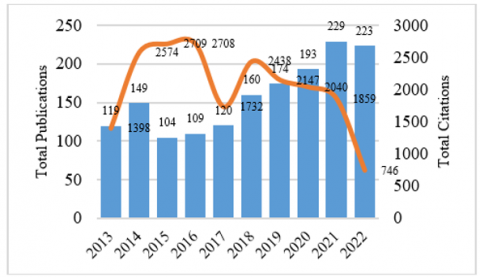
The development of publications and citations are presented through the combination of a blue bar chart and an orange line respectively in Figure 2. It was observed that the number of publications tended to increase from 2013 to 2022 but there was a decline in 2015. Meanwhile, the number of citations fluctuated significantly as represented by the continuous decline from 2019 to 2022 and a peak of 2,709 and 2,708 in 2015 and 2016, respectively. The trend further influenced the citations in the following year. The decline recorded possibly showed that despite the increasing diversity in water pollution research, there was a risk of the results not being fully integrated into the broader scientific discussion. This can reduce the visibility and influence of water pollution research and limit the scientific and practical impact on environmental policy development. The inference was that the increasing research focus was possibly followed by suboptimal effectiveness and contribution to knowledge and development of solutions to address water pollution issues.
Table 1. Number of documents collected
|
Documents |
Amount |
Percentage |
|
Article |
1037 |
65.63% |
|
Book |
10 |
0.63% |
|
Book Chapter |
90 |
5.70% |
|
Conference Paper |
304 |
19.24% |
|
Conference Review |
3 |
0.19% |
|
Data Paper |
1 |
0.06% |
|
Editorial |
15 |
0.95% |
|
Erratum |
11 |
0.70% |
|
Letter |
4 |
0.25% |
|
Note |
15 |
0.95% |
|
Retracted |
2 |
0.13% |
|
Review |
86 |
5.44% |
|
Short Survey |
2 |
0.13% |
Figure 2. Development of publications and citations
3.1 Relevance and growth of sources
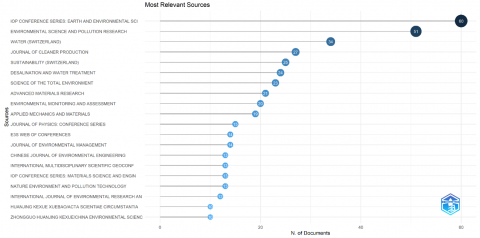
The number of documents published by each journal based on the level of relevance to the water pollution theme is presented in Figure 3. This was achieved using a blue bar chart with the darker color showing more quantity and relevance. The top 20 journals observed to be most relevant are presented in the figure with Institute of Physics (IOP) Conference Series: Earth and Environmental Science as well as Environmental Science and Pollution Research identified as the most prominent. IOP Conference Series: Earth and Environmental Science serves as a platform for publishing the latest research in different disciplines, including environmental issues such as water pollution. The publications often cover cutting-edge results related to technological innovations and scientific methods to address water pollution, both from a prevention and mitigation perspective. The articles are also generally practical and applicable to nature, with a focus on new technologies to reduce the negative impacts of water pollution on ecosystems and human health. Meanwhile, Environmental Science and Pollution Research is a leading scientific journal that covers different aspects of environmental science and pollution with more focus on water pollution. The journal is popular for publishing comprehensive research conducted to explore the impacts of water pollution on ecosystems and human health as well as analyze effective environmental policies and management strategies. The trend shows that the Institute of Physics (IOP) Conference Series: Earth and Environmental Science as well as Environmental Science and Pollution Research are very important in disseminating knowledge and understanding about water pollution. Several other journals also have a fairly large role as presented in Figure 3.
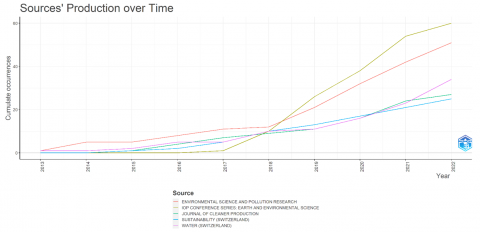
The most relevant source was found to be IOP Conference Series: Earth and Environmental Science which published 90 articles related to water pollution. Moreover, it has been consistently developed from 2017 to 2022 as presented in Figure 4. The second-place source was Environment Science and Pollution Research with 51 articles. The journal started publication in 2013 but the development was observed to be slow up to 2018 followed by a significant growth from 2019 to 2022. The third was Water (Switzerland) with a lesser number of 34 articles and observed to have been publishing articles on water pollution since 2013 but observed significant development from 2020 to 2022.
Figure 3. Most relevant sources
3.2 Sources impact
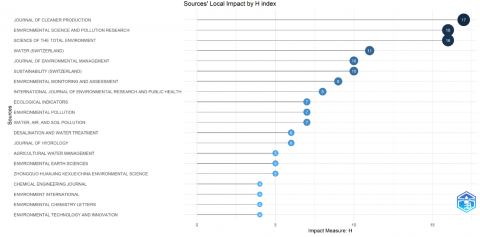
The contributions of journals were not based only on the quantity because the impact was found to be more meaningful. This was calculated using the h-index of each journal that published articles related to water pollution theme. The results are presented in the blue bar chart presented in Figure 5.
Journal of Cleaner Production was ranked as the most impactful in the field of environmental and sustainability research. This was evident from the number of citations received which was significantly higher compared to other journals. The h-index of 17 showed that the journal had a large number of articles with a broad influence and wide recognition by the academic community. The observation led to its preference as the primary source for researchers seeking high-quality references related to cleaner production and sustainable practices.
Environment Science and Pollution Research and Science of the Total Environment were observed to be the next with the h-index of 16. The small difference in the h-index compared to Journal of Cleaner Production showed the importance of the two journals disseminating scientific knowledge on the environment and pollution.
"Chemical Engineering Journal", "Environment International", "Environmental Chemistry Letters", and "Environmental Technology and Innovation" were all included in the top 20 journals but had the lowest h-index scores of 4. The journals were considered influential but the significant difference in the h-index scores suggested the articles published were possibly less cited or not as widely influential compared to those ranked higher.
3.3 Most relevant author
The development of publications related to water pollution is inseparable from the role of authors. This often leads to the mapping of authors in bibliometrics based on the relevance to the theme by determining the number of articles published. The analysis conducted showed that 20 authors detected were prolific but the most relevant was Liu Y with 29 articles related to water pollution, as presented in Figure 6. Liu is also the most impactful writer because the articles published were widely cited. The trend led this author combined with Wang Y to have the highest h-index score of 9, as presented in Figure 7. The next set were Zhang Y, Li Y, and Li J with a sizable number of publications reported to be 26, 25, and 24, respectively. Moreover, Li Y was also found to have the h-index score of 8, ranking the author as the individual with the publications considered to have the second most impact on water pollution.
Figure 6. Most relevant author
Figure 7. Author impact
Table 2. Top 20 publication performance by article title
|
No |
Author(s) |
Title |
Source Title |
TC |
C/Y |
|
1 |
Lu et al. [22] |
Impacts of soil and water pollution on food safety and health risks in China |
Environment International |
731 |
81.22 |
|
2 |
Greenstone and Hanna [23] |
Environmental regulations, air and water pollution, and infant mortality in India |
American Economic Review |
407 |
40.70 |
|
3 |
Wang and Yang [24] |
Industrial water pollution, water environment treatment, and health risks in China |
Environmental Pollution |
391 |
48.88 |
|
4 |
Chen et al. [25] |
The consequences of spatially differentiated water pollution regulation in China |
Journal of Environmental Economics and Management |
334 |
55.67 |
|
5 |
Han et al. [26] |
Deep challenges for China's war on water pollution |
Environmental Pollution |
296 |
37.00 |
|
6 |
Quesada et al. [27] |
Surface water pollution by pharmaceuticals and an alternative of removal by low-cost adsorbents: A review |
Chemosphere |
283 |
56.60 |
|
7 |
Vasudevan and Oturan [28] |
Electrochemistry: As cause and cure in water pollution-an overview |
Environmental Chemistry Letters |
278 |
27.80 |
|
8 |
Mekonnen and Hoekstra [29] |
Global Gray Water Footprint and Water Pollution Levels Related to Anthropogenic Nitrogen Loads to Fresh Water |
Environmental Science and Technology |
245 |
27.22 |
|
9 |
Rafiq et al. [30] |
Photocatalytic degradation of dyes using semiconductor photocatalysts to clean industrial water pollution |
Journal of Industrial and Engineering Chemistry |
244 |
81.33 |
|
10 |
Cheng et al. [31] |
A critical review on antibiotics and hormones in swine wastewater: Water pollution problems and control approaches |
Journal of Hazardous Materials |
237 |
59.25 |
|
11 |
Kisi and Parmar [32] |
Application of least square support vector machine and multivariate adaptive regression spline models in long-term prediction of river water pollution |
Journal of Hydrology |
235 |
29.38 |
|
12 |
Zamora-Ledezma et al. [33] |
Heavy metal water pollution: A fresh look about hazards, novel and conventional remediation methods |
Environmental Technology and Innovation |
232 |
77.33 |
|
13 |
Hobbie et al. [34] |
Contrasting nitrogen and phosphorus budgets in urban watersheds and implications for managing urban water pollution |
Proceedings of the National Academy of Sciences of the United States of America |
224 |
32.00 |
|
14 |
Jiang et al. [35] |
Constructing graphite-like carbon nitride modified hierarchical yolk-shell TiO2 spheres for water pollution treatment and hydrogen production |
Journal of Materials Chemistry A |
213 |
26.63 |
|
15 |
Smith and Siciliano [36] |
A comprehensive review of constraints to improved management of fertilizers in China and mitigation of diffuse water pollution from agriculture |
Agriculture, Ecosystems and Environment |
208 |
23.11 |
|
16 |
Mekonnen and Hoekstra [37] |
Global Anthropogenic Phosphorus Loads to Freshwater and Associated Grey Water Footprints and Water Pollution Levels: A High-Resolution Global Study |
Water Resources Research |
202 |
33.67 |
|
17 |
Kahn et al. [38] |
Water pollution progress at borders: The role of changes in China's political promotion incentives |
American Economic Journal: Economic Policy |
183 |
20.33 |
|
18 |
Chen et al. [39] |
A deep learning CNN architecture applied in smart near-infrared analysis of water pollution for agricultural irrigation resources |
Agricultural Water Management |
171 |
42.75 |
|
19 |
Evans et al. [40] |
Agricultural water pollution: key knowledge gaps and research needs |
Current Opinion in Environmental Sustainability |
160 |
32.00 |
|
20 |
Liquete et al. [41] |
Integrated valuation of a nature-based solution for water pollution control. Highlighting hidden benefits |
Ecosystem Services |
149 |
18.63 |
Liu Y was identified as the most relevant and influential author on the topic of water pollution, standing out among others through substantial and widely recognized contributions. This is observed from the research focus that consistently explores and provides in-depth insights into air pollution issues. The author has used several scientific publications to show the impact of air pollution on the environment and human health as well as present innovative methods for mitigating and managing air quality. This consistency shows the dedication and expertise of Liu Y, leading to the status as an important reference for others in the same field.
The impact of Liu Y in the scientific community is reinforced by the high number of citations the articles received. This showed the wide recognition and subsequent application for further research. The trend showed that the research published by Y was relevant at the time of publication and continued to be influential to scientific development in the field of air pollution. Moreover, the results have made important contributions for other researchers to build theories, conduct further experiments, or even influence environmental policies.
In terms of scientific influence, Liu Y shares the position with Wang Y as the authors with the h-index score of 9, which is a strong indicator of the long-term impact of the research published. The h-index score reflects the authors have produced several research articles with high quality and influence.
In addition to sources and authors, the performance of publications can be determined based on the articles. Therefore, Table 2 presents information on the names of the authors, publication years, titles, sources, total citations, and average citations per year. The articles widely cited are presented as TC. The "Impacts of soil and water pollution on food safety and health risks in China" published in Environment International in 2015 was found to have the most impact on the development of publications related to water pollution. The article had been cited 731 times and contributed to the peak citations in 2015 and 2016 as presented in Figure 2.
3.4 Word and thematic analysis
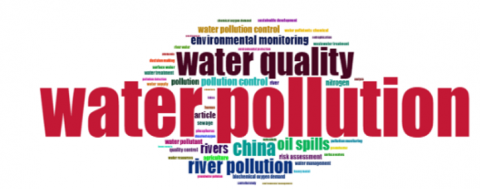
Words that often appear in the articles collected can be analyzed using the Word Cloud. This is necessary because the appearance of words in an article is mostly in line with the topic of research.
The word cloud in Figure 8 describes the different sizes and colors of the words according to the level of occurrence in the articles analyzed. The placement of the words tends to be random but the dominating ones are in the middle with a larger size to ensure more visibility [42]. Therefore, water pollution was identified as the most appeared word followed by water quality, and river pollution. It is observed that the word appeared from 2013 to 2022 but the trend of the topic development is presented in Figure 9.
Figure 8. Word cloud
The frequent occurrence of the term “water pollution” shows there is a great concern for the negative impacts of contamination on both the ecosystems and human health. This term is a central keyword that defines the field of research and reflects the global urgency to address the issue. Moreover, “water quality” also appears frequently and is placed in the second position. This shows the importance of understanding pollution as well as measuring and maintaining water quality, leading to the focus on specific parameters such as pH levels, heavy metal content, and the presence of pathogenic microorganisms which are important indicators in assessing water conditions and safety. The presence of the term in several articles shows a shift in focus from simply detecting pollution to more proactive and sustainable quality management.
The term “river pollution” appeared as a keyword that is quite widely used even though at a lower frequency compared to the previous two. The trend shows there is a special concern for pollution in rivers, which are often the main source of water for human consumption, agriculture, and industry. Rivers are also an important part of the ecosystem considered very vulnerable to pollution from domestic, industrial, and agricultural waste. This is the reason the research focus has been on “river pollution” to understand specific sources of pollution, impact on aquatic life, and effective mitigation methods.
The topics are another important part of the research as presented in Figure 9 which shows the trends over the years. The topics used for a long time and those introduced recently were both described based on the frequency of appearance. The larger blue circle shows the topics that have been used more and the movement towards the right represents the recency. Moreover, the length of the line is an indication of the continuous usage of the topic.
Figure 9. Trend of topics related to water pollution
The figure shows that the topics introduced in recent years have become current issues. An example was “environmental pollutants" which was the latest introduced and considered trending up to 2022. This showed the impacts of environmental pollutants, specifically in the context of climate change, ecosystem health, and human well-being. Moreover, the introduction of the topic showed a shift in the focus of research towards a deeper understanding of the sources, distribution, and long-term effects of pollutants. The "surface water pollution" and "human health" topics were also observed in the public space recently. The increasing interest in these topics showed the continuous awareness of the scientific community about the serious consequences of water pollution on important freshwater sources and the influence on public health at large.
The latest topics reflect current research trends and provide challenges to be continuously explored and addressed based on the recent increasingly complex problems. As a reference for future research, these topics serve as a foundation for innovation in pollution mitigation and environmental health improvement strategies, which are considered very important in facing global environmental challenges.
3.5 Co-occurrence network
The next stage was the application of co-occurrence network which showed the words in colored round shapes based on relationship. Clusters of the same color represent words that are interconnected and presented together while the size of the circle shows the magnitude of the relationship Figure 10 shows water pollution as the word with the most appearance and relationship with others, specifically water quality as observed from thick line size and oil spills. Water quality also has a fairly close relationship with river pollution as presented in red color clusters. However, there are no exceptional words in the blue cluster.
The trend shows that “water pollution” is the most frequently occurring word and closely related keyword to other words, reflecting the importance of the concept in the context of related research. The strong relationship the word has with others such as “water quality” and “oil spills” shows that water pollution is a problem and found to be significantly caused mainly by quality issues and oil spills. Furthermore, the fairly strong relationship between “water quality” and “river pollution” is an indication rivers are part of the main sources of water often polluted by human activities. The quality of river water is also often used as a general indicator in environmental research. The relationship confirms water quality can be significantly influenced by pollution in rivers with subsequent effects on the ecosystems that depend on clean water.
Figure 10. Co-occurrence network
3.6 Publication map by country
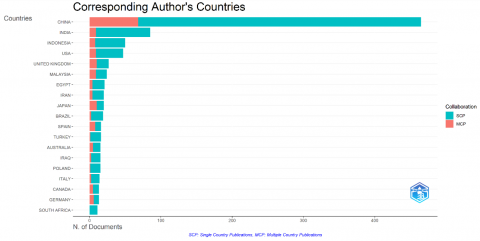
The role of the state in developing publications related to water pollution was determined based on the country of origin of the authors. The results showed that the country with the highest contribution from 2013 to 2022 was China with 601 articles representing 38.04% of the total analyzed as presented in Table 3. The trend in Figure 11 confirmed that China had the most correspondence on water pollution publications. The second was India, another country from Asia, with 142 articles representing 8.99% followed by the United States with 129 publications at 8.16%. However, overall, the majority of water pollution articles, represented by 40% were published in Europe followed by 35% from Asia, 15% from America, 5% from Oceania, and 5% from Africa.
Table 3. Water pollution publication map by country
|
Institution |
Continent |
TP |
% |
|
China |
Asia |
601 |
38.04% |
|
India |
Asia |
142 |
8.99% |
|
United States |
North America |
129 |
8.16% |
|
Indonesia |
Asia |
76 |
4.81% |
|
United Kingdom |
Europe |
64 |
4.05% |
|
Russian Federation |
Europe |
55 |
3.48% |
|
Malaysia |
Asia |
44 |
2.78% |
|
Germany |
Europe |
39 |
2.47% |
|
Canada |
North America |
35 |
2.22% |
|
Australia |
Oceania |
33 |
2.09% |
|
Iraq |
Asia |
33 |
2.09% |
|
Japan |
Asia |
33 |
2.09% |
|
Egypt |
Africa |
32 |
2.03% |
|
Brazil |
South America |
28 |
1.77% |
|
Poland |
Europe |
27 |
1.71% |
|
France |
Europe |
26 |
1.65% |
|
Spain |
Europe |
26 |
1.65% |
|
Iran |
Asia |
24 |
1.52% |
|
Italy |
Europe |
24 |
1.52% |
|
Turkey |
Europe |
24 |
1.52% |
In addition to the number of publications, the role of the state was also determined through several collaborations between countries as observed from the correspondence. The red part of the bar chart in Figure 11 represents the collaboration between different countries while the green bar is for the collaboration between authors in a country. The result showed that China had the most correspondence and was significantly different from the second-placed India. The two countries had a series of collaborations with each other and several others.
The dominance of China was in terms of the number of publications and extensive collaborations, both domestically and internationally. The significant difference from India was ranked second showed the strong position of China in the global research landscape. This was mainly due to the proactive policy of the government in motivating collaborations, both domestically and with international institutions.
China actively established active partnerships with countries around the world, spanning a wide range of disciplines, allowing for a more effective exchange of knowledge and resources. These international collaborations broadened the reach of research and increased the global visibility of Chinese scientists, which consequently increased the number of publications and citations. Furthermore, domestic collaboration was very strong in the country as observed through a large number of researchers and supported by huge investments to improve research infrastructure. Chinese universities and institutions have also collaborated frequently to produce significant research volumes. This was in contrast to other countries, including India, which despite having a high number of transmissions, still lagged far behind. The trend showed that the strength of China was based on the ability to collaborate internationally as well as the solidity and productivity of the domestic research ecosystem.
Figure 11. Countries of corresponding authors
In conclusion, water pollution was an important theme for scientific development. This was evident through the continuous increase in the articles published in the Scopus database, specifically in the last 10 years from 2013 to 2022. A total of 1,580 documents were retrieved from different publications and the mapping process showed a gap between the number and frequency of citations which reduced, specifically since 2019.
IOP Conference Series: Earth and Environmental Science had the highest number of publications after the establishment in 2017. The rapid growth experienced propelled the journal to the top position in terms of publication volume. This success was attributed to the organization of conferences centered on relevant themes, which promoted increased publication output. Meanwhile, Environmental Science and Pollution Research published by Springer had only 29 relevant documents by 2022. The journal was popular for the focus on environmental issues, including water pollution, which attracted researchers due to its specialized nature. The growth was observed to be steady after experiencing a slower progress until 2018.
The articles published significantly influenced scientific advancement, especially when cited by others. The Journal of Cleaner Production had the most impact, with the highest h-index score of 17 in the field, despite ranking fourth in terms of publication volume. The quality of the articles was found to be exceptional, leading to the preference as a reference by researchers. The journal, published by Elsevier and ranked in Quartile 1 by the Scopus Indexer, was highly regarded for its influence.
Authors are very important in advancing research on water pollution. The contributions made through the latest results could be used to determine the progress in scientific knowledge. It was observed that Liu Y, Zhang Y, Li Y, and Li J, were the lead contributors and most originated from China. The high-impact authors produced highly cited work that showed the significant quality and relevance of the research conducted. Moreover, China was the first in publication volume, accounting for 38.04% of the total articles published. The prominence was further bolstered by international research collaborations.
Bibliometric analysis showed that water pollution was the topic most frequently discussed followed by water quality. The trend showed the recent importance of water pollution research, particularly in relation to Sustainable Development Goal 6, which focused on Clean Water and Sanitation. Furthermore, water quality was considered significant for health due to its effect on humans, animals, and plants. It was confirmed to be influenced by several factors such as chemicals, climate, geology, vegetation, and human activities.
Recent trends showed that environmental pollution, including water pollution, remained a major focus of research. This was confirmed by the fact that environmental pollution was the most discussed topic in 2022. The phenomenon reflected concerns about maintaining a healthy environment due to widespread pollution. Specific topics, such as surface water pollution, also gained attention since 2021 and offered promising avenues for future research.
The authors are grateful to the support provided by Researchers Supporting Project Universitas Siliwangi, Tasikmalaya, Jawa Barat, Indonesia.
[1] Sivasami, K. (2021). Bibliometric analysis of water pollution research. International Journal of Research in Engineering and Science, 9(7): 97-110.
[2] D'antonio, R.G., Winn, R.E., Taylor, J.P., Gustafson, T.L., Current, W.L., Rhodes, M.M., Gary, G.W., Zajac, R.A. (1985). A waterborne outbreak of cryptosporidiosis in normal hosts. Annals of Internal Medicine, 103(6): 886-888.
[3] Hayes, E.B., Matte, T.D., O'Brien, T.R., et al. (1989). Large community outbreak of cryptosporidiosis due to contamination of a filtered public water supply. New England Journal of Medicine, 320(21): 1372-1376. https://doi.org/10.1056/NEJM198905253202103
[4] Smith, H.V., Patterson, W.J., Hardie, R., Greene, L.A., Benton, C., Tulloch, W., Gilmour, R.A., Girdwood, R.W.A., Sharp, J.C.M., Forbes, G.I. (1989). An outbreak of waterborne cryptosporidiosis caused by post-treatment contamination. Epidemiology & Infection, 103(3): 703-715. https://doi.org/10.1017/S0950268800031101
[5] Centers for Disease Control. (1987). Cryptosporidiosis--New Mexico, 1986. MMWR. Morbidity and Mortality Weekly Report, 36(33): 561-563.
[6] Al-Badaii, F., Shuhaimi-Othman, M., Gasim, M.B. (2013). Water quality assessment of the Semenyih river, Selangor, Malaysia. Journal of Chemistry, 2013(1): 871056. https://doi.org/10.1155/2013/871056
[7] Kurniadi, B., Hariyadi, S., Adiwilaga, E.M. (2015). Kualitas perairan sungai buaya di Pulau Bunyu Kalimantan Utara pada kondisi pasang surut. Jurnal Ilmu Pertanian Indonesia, 20(1): 53-58.
[8] Dharwal, M., Parashar, D., Shuaibu, M.S., Abdullahi, S.G., Abubakar, S., Bala, B.B. (2022). Water pollution: Effects on health and environment of Dala LGA, Nigeria. Materials Today: Proceedings, 49: 3036-3039. https://doi.org/10.1016/j.matpr.2020.10.496
[9] World Water Assessment Programme (United Nations), & UN-Water. (2009). Water in a changing world, 9781849773. Paris: UNESCO Publishing Group, 2012.
[10] Dash, G., Chakraborty, D. (2021). Digital transformation of marketing strategies during a pandemic: Evidence from an emerging economy during COVID-19. Sustainability, 13(12): 6735. https://doi.org/10.3390/su13126735
[11] Wang, M., Bodirsky, B.L., Rijneveld, R., Beier, F., Bak, M.P., Batool, M., Droppers, B., Popp, A., van Vliet, M.T.H., Strokal, M. (2024). A triple increase in global river basins with water scarcity due to future pollution. Nature Communications, 15(1): 880. https://doi.org/10.1038/s41467-024-44947-3
[12] Chiu, V., Liu, Q., Muehlmann, B., Baldwin, A.A. (2019). A bibliometric analysis of accounting information systems journals and their emerging technologies contributions. International Journal of Accounting Information Systems, 32: 24-43. https://doi.org/10.1016/j.accinf.2018.11.003
[13] Merigó, J.M., Yang, J.B. (2017). Accounting research: A bibliometric analysis. Australian Accounting Review, 27(1): 71-100. https://doi.org/10.1111/auar.12109
[14] Kumar, M., George, R.J., PS, A. (2023). Bibliometric analysis for medical research. Indian Journal of Psychological Medicine, 45(3): 277-282. https://doi.org/10.1177/02537176221103617
[15] Xu, Z., Ge, Z., Wang, X., Skare, M. (2021). Bibliometric analysis of technology adoption literature published from 1997 to 2020. Technological Forecasting and Social Change, 170: 120896. https://doi.org/10.1016/j.techfore.2021.120896
[16] Gao, Y., Wong, S.L., Md. Khambari, M.N., Noordin, N. (2022). A bibliometric analysis of online faculty professional development in higher education. Research and Practice in Technology Enhanced Learning, 17(1): 17. https://doi.org/10.1186/s41039-022-00196-w
[17] Raman, A., Thannimalai, R., Don, Y., Rathakrishnan, M. (2021). A bibliometric analysis of blended learning in higher education: Perception, achievement and engagement. International Journal of Learning, Teaching and Educational Research, 20(6): 126-151.
[18] Masitoh, P.N.A., Latifah, S., Saregar, A., Aziz, A., Jamaluddin, W. (2021). Bibliometric analysis of physics problem solving. Journal of Physics: Conference Series, 1796(1): 012009. https://doi.org/10.1088/1742-6596/1796/1/012009
[19] Börner, K., Chen, C., Boyack, K.W. (2003). Visualizing knowledge domains. Annual Review of Information Science and Technology, 37(1): 179-255.
[20] Firmansyah, I., Rusydiana, A.S. (2021). Bibliometric analysis of articles on accounting and Covid-19 during the pandemic. Library Philosophy and Practice.
[21] Schoombee, L. (2023). Why Scopus is essential for your literature review. Scopus, Rabat Maroko. https://researcheracademy.elsevier.com/system/files/workshop/14240/related-downloads/scopus-literature-search.pdf.
[22] Lu, Y., Song, S., Wang, R., Liu, Z., Meng, J., Sweetman, A.J., Jenkins, A., Ferrier, R.C., Li, H., Luo, W. (2015). Impacts of soil and water pollution on food safety and health risks in China. Environment International, 77: 5-15. https://doi.org/10.1016/j.envint.2014.12.010
[23] Greenstone, M., Hanna, R. (2014). Environmental regulations, air and water pollution, and infant mortality in India. American Economic Review, 104(10): 3038-3072. https://doi.org 10.1257/aer.104.10.3038
[24] Wang, Q., Yang, Z. (2016). Industrial water pollution, water environment treatment, and health risks in China. Environmental Pollution, 218: 358-365. https://doi.org/10.1016/j.envpol.2016.07.011
[25] Chen, Z., Kahn, M. E., Liu, Y., Wang, Z. (2018). The consequences of spatially differentiated water pollution regulation in China. Journal of Environmental Economics and Management, 88: 468-485. https://doi.org/10.1016/j.jeem.2018.01.010
[26] Han, D., Currell, M.J., Cao, G. (2016). Deep challenges for China's war on water pollution. Environmental Pollution, 218: 1222-1233. https://doi.org/10.1016/j.envpol.2016.08.078
[27] Quesada, H.B., Baptista, A.T.A., Cusioli, L.F., Seibert, D., de Oliveira Bezerra, C., Bergamasco, R. (2019). Surface water pollution by pharmaceuticals and an alternative of removal by low-cost adsorbents: A review. Chemosphere, 222: 766-780. https://doi.org/10.1016/j.chemosphere.2019.02.009
[28] Vasudevan, S., Oturan, M.A. (2014). Electrochemistry: As cause and cure in water pollution—An overview. Environmental Chemistry Letters, 12: 97-108. https://doi.org/10.1007/s10311-013-0434-2
[29] Mekonnen, M.M., Hoekstra, A.Y. (2015). Global gray water footprint and water pollution levels related to anthropogenic nitrogen loads to fresh water. Environmental Science & Technology, 49(21): 12860-12868. https://doi.org/10.1021/acs.est.5b03191
[30] Rafiq, A., Ikram, M., Ali, S., Niaz, F., Khan, M., Khan, Q., Maqbool, M. (2021). Photocatalytic degradation of dyes using semiconductor photocatalysts to clean industrial water pollution. Journal of Industrial and Engineering Chemistry, 97: 111-128. https://doi.org/10.1016/j.jiec.2021.02.017
[31] Cheng, D., Ngo, H. H., Guo, W., Chang, S.W., Nguyen, D.D., Liu, Y., Wei, Q., Wei, D. (2020). A critical review on antibiotics and hormones in swine wastewater: Water pollution problems and control approaches. Journal of Hazardous Materials, 387: 121682. https://doi.org/10.1016/j.jhazmat.2019.121682
[32] Kisi, O., Parmar, K.S. (2016). Application of least square support vector machine and multivariate adaptive regression spline models in long term prediction of river water pollution. Journal of Hydrology, 534: 104-112. https://doi.org/10.1016/j.jhydrol.2015.12.014
[33] Zamora-Ledezma, C., Negrete-Bolagay, D., Figueroa, F., Zamora-Ledezma, E., Ni, M., Alexis, F., Guerrero, V.H. (2021). Heavy metal water pollution: A fresh look about hazards, novel and conventional remediation methods. Environmental Technology & Innovation, 22: 101504. https://doi.org/10.1016/j.eti.2021.101504
[34] Hobbie, S.E., Finlay, J.C., Janke, B.D., Nidzgorski, D.A., Millet, D.B., Baker, L.A. (2017). Contrasting nitrogen and phosphorus budgets in urban watersheds and implications for managing urban water pollution. Proceedings of the National Academy of Sciences, 114(16): 4177-4182. https://doi.org/10.1073/pnas.1618536114
[35] Jiang, Z., Zhu, C., Wan, W., Qian, K., Xie, J. (2016). Constructing graphite-like carbon nitride modified hierarchical yolk–shell TiO2 spheres for water pollution treatment and hydrogen production. Journal of Materials Chemistry A, 4(5): 1806-1818. https://doi.org/10.1039/C5TA09919F
[36] Smith, L.E., Siciliano, G. (2015). A comprehensive review of constraints to improved management of fertilizers in China and mitigation of diffuse water pollution from agriculture. Agriculture, Ecosystems & Environment, 209: 15-25. https://doi.org/10.1016/j.agee.2015.02.016
[37] Mekonnen, M.M., Hoekstra, A.Y. (2018). Global anthropogenic phosphorus loads to freshwater and associated grey water footprints and water pollution levels: A high-resolution global study. Water Resources Research, 54(1): 345-358. https://doi.org/10.1002/2017WR020448
[38] Kahn, M.E., Li, P., Zhao, D. (2015). Water pollution progress at borders: The role of changes in China's political promotion incentives. American Economic Journal: Economic Policy, 7(4): 223-242. https://doi.org/10.1257/pol.20130367
[39] Chen, H., Chen, A., Xu, L., Xie, H., Qiao, H., Lin, Q., Cai, K. (2020). A deep learning CNN architecture applied in smart near-infrared analysis of water pollution for agricultural irrigation resources. Agricultural Water Management, 240: 106303. https://doi.org/10.1016/j.agwat.2020.106303
[40] Evans, A.E., Mateo-Sagasta, J., Qadir, M., Boelee, E., Ippolito, A. (2019). Agricultural water pollution: Key knowledge gaps and research needs. Current Opinion in Environmental Sustainability, 36: 20-27. https://doi.org/10.1016/j.cosust.2018.10.003
[41] Liquete, C., Udias, A., Conte, G., Grizzetti, B., Masi, F. (2016). Integrated valuation of a nature-based solution for water pollution control. Highlighting hidden benefits. Ecosystem Services, 22: 392-401. https://doi.org/10.1016/j.ecoser.2016.09.011
[42] Firmansyah, I. (2021). Ten years of Jurnal Akuntansi dan Keuangan Indonesia: A bibliometric study. Jurnal Akuntansi Dan Keuangan Indonesia, 18(1): 6. https://doi.org/10.21002/jaki.2021.05