Regina K. Okorigba* | Isidore C. Ezema | Eghosa Noel Ekhaese
© 2024 The authors. This article is published by IIETA and is licensed under the CC BY 4.0 license (http://creativecommons.org/licenses/by/4.0/).
OPEN ACCESS
The hotel sub-sector is fast implementing ESP to preserve the natural environment and meet the needs of green-conscious guests. In a developing country like Nigeria, hotel operators’ knowledge of awareness and adoption of green practices is unknown. This study investigated the awareness level and adoption extent of ESP for energy reduction (ER), water conservation (WC) and waste minimisation (WM) using data from 130 managers in 20 LSH in Lagos, Nigeria. The data were subjected to descriptive analysis and the results revealed that participants were aware of and adopted ER, WM and WC practices in hotel buildings. However, the practices with the highest awareness and adoption levels are occupancy sensors, energy-saving bulbs, sorting of wastes and low-flush toilets. The least adopted practices were wind turbines, covering swimming pools and waste composting. Therefore, hotel managers’ knowledge of green practices should be improved with a growing emphasis on ER practices in hotels.
adoption, awareness, energy reduction (ER), green practices, hotels managers, water conservation (WC), waste minimization (WM)
Globally, the building and construction sector accounts for over one-third of global energy consumption and nearly 40% of carbon emissions [1] and is the largest contributor to greenhouse gas (GHG) emissions [2, 3]. It was also responsible for over 34% of energy demand in 2021 [4]. Given these, it has been argued that if no decisive measures were taken to reduce the current trends of CO2 emissions, this will rise by about 52% between 2005 and 2050 [5].
Research has shown that hotel buildings are among the commercial buildings that consume a large amount of energy [6, 7] and thus contribute significantly to GHG emissions [7-9] and climate change [10]. According to the World Tourism Organisation (WTO) and the International Tourism Federation (ITF), hotels contribute to about 21% of the carbon footprint [11]. As a result, the hotel sub-sector has been described as an energy-intensive component of the tourism industry [12] and a huge waste generator [13]. Given this narrative, the International Tourism Partnership (ITP) has charged hotel operators to ensure that hotel buildings significantly reduce greenhouse gas emissions in their operations [14, 15].
The literature is replete with different environmental sustainability or environmentally/eco-friendly/green strategies aimed at reducing curb carbon emissions and environmental degradation in the design [16-21], construction [22, 23], and operational stages of buildings, including hotels [24-28]. Among the most common practices include energy-saving, water-saving, and waste management practices [17, 29]. The review of empirical literature reveals that some research works have been done on awareness of some aspects of environmental sustainability practices in hotels [25], guests’ knowledge towards environmental practices [30], energy conservation in large-sized hotels [31] and sustainability practices in different categories of hotels [32, 33]. Several studies [20, 24, 34-36] have shown that most of the existing studies on sustainability practices in hotel buildings are outside Nigeria and other developing economies in sub-Saharan Africa and that many of these practices were yet to be adequately understood and implemented in many developing countries. This is due to limited research [37], lack of stakeholder awareness and knowledge of new technology on sustainable practices, and absence of green management policies in the hotel sub-sector [35, 38].
In Nigeria, despite the growing number of hotel buildings, very little research has been done to explore the levels of awareness and adoption of environmental sustainability practices in this sub-sector. The few studies identified have examined the predictors of the likelihood of adoption of green practices [37], sustainable development practices [39], awareness of sustainable waste management methods in hotels [25] and the role of organisational culture in sustainability practice and awareness among hotel practitioners in Ghana and Nigeria [40]. However, no other study known to the authors has attempted to investigate the levels of awareness and adoption of environmental sustainability practices in hotels in this country.
The foregoing suggests that the issues of awareness and adoption of environmental sustainability practices in the hotel sub-sector are very critical in changing the narrative of hotel buildings as major contributors to carbon emission and global warming [1-3]. In the context of this research, the level of awareness of sustainability practices refers to the extent to which hotel operators know about the existence of these practices [19], while the level of adoption refers to the extent to which they have implemented or put them to use in the hotel buildings [41].
Given the paucity of research on the levels of awareness and adoption of environmental sustainability practices in the hotel sub-sector in Nigeria, and other developing countries as reported by previous authors [40], the current study sought to investigate the levels of awareness and adoption of environmental sustainability practices among operators of large-sized hotels in Lagos, Southwest Nigeria. The two key objectives pursued in this study were to (1) examine the level of awareness of environmental sustainability practices among hotel managers in Lagos, Nigeria, and (2) to determine the extent to which environmental sustainability practices have been adopted in the operation of large-size hotels in the study area. The focus on awareness and adoption of ESP is important because environmental sustainability can be achieved in hotel operations if stakeholders in the industry are aware of such practices and adopt them in their operations. Moreover, Rogers [41] revealed that awareness and adoption are the most critical aspects of technology innovation by individuals and organisations. Hence, a study of this nature is important in deepening our understanding of how hotel operators know about practical measures for addressing climate change and related issues and implementing them. Large-sized hotels were chosen in the current study because a previous study [34] indicates that they are more disposed to adopting innovative strategies than small-sized hotels. Lagos was also chosen for the study because it is a commercial nerve centre and has the highest concentration of large-sized hotels in Nigeria.
This study is based on a survey of operators of 20 large-sized hotels in Lagos, Southwest Nigeria. The findings are expected to inform policymaking and operational strategies for enhancing the hotel sub-sector’s contribution to the attainment of the environmental sustainability goals, especially, in combating climate change in the study area and beyond.
2.1 Concept of environmental sustainability
Generally, the concept of sustainability deals with issues relating to the conservation of natural resources and ecosystems, reduction of pollution, and promotion of social equity and economic development [6, 42, 43]. The current study is on environmental sustainability, which connects the social and economic aspects of sustainability [44] in pursuit of natural capital conservation [45]. In other words, it deals with preventing harmful and irreversible effects on the environment by human activities by ensuring efficient use of natural renewable and non-renewable resources, and protection of the ecosystem [46, 47].
The foregoing indicates that environmental sustainability has become very important in ensuring that both social and economic activities are conducted in a manner that will conserve our natural resources and enhance the capacity of the natural ecosystem to continuously provide life-supporting services such as such as food, medicine, clean air, water, and land, good ambient temperature, and others [46]. Environmental sustainability calls for a judicious use of our natural resources to meet the needs of current and future generations. This has become necessary because if the current trend in the exploitation of natural resources continues unabated, it will get to a point when the natural ecosystem may not be able to provide these life-supporting services on the planet Earth.
2.2 Environmental sustainability/Green practices (ESP)
Environmental sustainability or green practices are actions, strategies, and processes implemented to enhance the capacity of the ecosystem to provide vital life-supporting services [48] such as food, water, air, energy, and waste management [44]. They include a wide range of practices targeted at energy use reduction, water conservation, waste minimization, emission control [24] and promotion of the health and comfort of building occupants [49]. In this research, the focus are practices associated with energy reduction [26], water conservation, and waste minimization in hotel buildings [23, 50, 51]. Table 1 is a summary of environmental sustainability practices for energy use reduction, water conservation, and waste minimization in hotel buildings as gleaned from the published literature. A careful examination of Table 1 will reveal that the principal energy use reduction practices are energy-efficient HVAC and lighting systems, daylighting, renewable energy sources, smart technology, and intelligent building envelope. The water conservation practices are the use of low-flow sanitary installations, wastewater recycling and reuse, water meters, and intelligent taps and showers, while the key waste minimisation practices are reuse programme/recycling waste, waste separation, and composting plant and staff training programmes.
Table 1. Environmental sustainability practices for ERP, WCP, and WMP in hotel buildings
|
S/N |
Environmental Sustainability Practices for Energy Use Reduction in Hotel Buildings |
Sources |
|
1. |
Energy-efficient lighting and appliances |
[39] |
|
2. |
Solar, wind, and water energy, efficient HVAC, insulation, shading, daylighting |
[23] |
|
3. |
Day-lighting, LED, reflective windows, renewable energy |
[52] |
|
4. |
Occupancy sensors, solar energy panels, eco-materials, building envelope and form |
[53] |
|
5. |
Energy-efficient HVAC, LED, staff education, solar panel |
[12] |
|
6. |
Solar energy, motion sensors, daylighting |
[54] |
|
7. |
Solar energy, green roof, insulation, materials daylighting, eco-friendly materials |
[55] |
|
8. |
Daylight, green roofs, building orientation, solar, biomass, and wind energy, eco-materials |
[19] |
|
9. |
Daylighting, key cards, occupancy sensors, as well as solar and wind energy sources. |
[21] |
|
10. |
LED, energy-efficient equipment, and appliances |
[56, 57] |
|
11. |
Solar energy, Daylighting, HVAC, eco-materials, landscaping, building form, and envelope |
[20] |
|
12. |
Energy efficiency appliances, reuse programme, staff training |
[19, 58] |
|
Environmental Sustainability Practices for Water Conservation |
Sources |
|
|
13. |
Low flow toilet/sink, shower heads, reuse programmes |
[59] |
|
14. |
Low flow taps and efficient water appliances, water recycling |
[60] |
|
15. |
Dry composting toilets, low flow taps, showerheads, and flushing urinals, wastewater recycling and reuse |
[53] |
|
16. |
Water-efficient fittings, pedal-operated taps, greywater recycling |
[61] |
|
17. |
Low-flow taps and showerheads, reuse programmes |
[24] |
|
18. |
Storm-water recycling, and reuse |
[62] |
|
19. |
Reuse programme, dual-flush toilet, destain powder |
[63] |
|
20. |
Dual flush toilets and toilet tanks, low flow sink aerators, low-pressure showers recycled, water, reuse programme rain harvesting |
[64] |
|
21. |
Low flow taps and showers, water green spaces at night, water re-used programme |
[65] |
|
22. |
Rainwater/snow recycling and re-use, wastewater treatment plant |
[66] |
|
23. |
Low flow shower heads, double-flush toilets; reduced tank volume, waterless urinals, sink e |
[21] |
|
Environmental Sustainability Practices for Water Conservation |
Sources |
|
|
24. |
Aerators, reuse programme, Xerogardening, wastewater treatment plant: greywater reuse, recycl |
[21] |
|
25. |
Low flow taps and shower heads, reuse programme |
[67] |
|
26. |
Low flow showers, toilets and sinks, water conservation, |
[36] |
|
27. |
Monitor water use, efficient water fittings, low-flow shower heads and taps, tap aerators, and electronic |
[32] |
|
Environmental Sustainability Practices for Waste Minimisation |
Sources |
|
|
28. |
Biodegradable, reuse programme/ recycling waste |
[68] |
|
29. |
Reuse programme/recycling waste, waste separation, and composting plant |
[17] |
|
30. |
Reuse programme/recycling waste, sorting of waste, and waste reduction |
[23] |
|
31. |
Reuse programme/recycling waste, and use of recycling bins |
[59] |
|
32. |
Reuse programme/recycling waste, and waste reduction |
[60] |
|
33. |
Reuse programme/recycling waste, staff education, and training. waste treatment, composting plant, paperless operations, waste bins |
[25] |
|
34. |
Recycling sorting and re-use of waste, composting |
[69] |
|
35. |
Reuse programme/recycling waste, staff education, dry composting toilets, waste reduction |
[53] |
|
36. |
Reuse programme/recycling waste, waste reduction |
[54] |
|
37. |
Recycling waste, material reuse programme, and waste composting |
[62] |
|
38. |
waste sorting and recycling, composting, and waste reuse programme |
[32] |
|
39. |
Waste reduction, waste reuse programme, waste recycling |
[63] |
|
40. |
Waste separation waste reduction, waste recycling, employee training, re-used programme |
[32] |
|
41. |
Waste reduction, reuse programme, waste treatment plant: recycling bins; waste sorting; waste recycling |
[21] |
|
42. |
Reuse programme, staff training, waste treatment plant, waste recycling, waste sorting, use of dumpsite |
[19] |
|
43. |
Recycling wastes, bulk purchasing, recycling food left over to animals, biodegradable, reuse programme |
[64] |
|
44. |
Reuse programme and waste recycling |
[20] |
Sources: Complied by the authors
2.3 Concepts of awareness and adoption of environmental sustainability practices
The concept of awareness as a psychological construct has been defined in various ways by different authors. For example, Gupta et al. [70] conceived of it as the state or ability to perceive, feel, or be conscious of events, objects, or sensory patterns, while Gafoor [71] defined awareness as public or common knowledge or understanding about a social, scientific or political issue. These two definitions suggest that knowledge or being conscious of any event, object, or process is key to understanding awareness. Therefore, in the context of the current research, the definition of awareness used is that offered by Rogers [42], which views it as having knowledge and understanding of anything, in the context of environmental sustainability/green practices.
According to Rogers [42], awareness is the first stage in the process of innovation adoption, which has four stages. The first is awareness–knowledge, which deals with having or acquiring knowledge about a new idea, product, or process. The second is how-to-use knowledge, which deals with having the information necessary to use a new idea, product, or process properly. The last is the principles -knowledge, which deals with having information about the functioning principles underlying how to use a new idea, product, or process. Having access to information about innovation has been identified to play a mediating role in awareness and the extent to which innovation, in this case, environmentally sustainable practices is adopted [28, 65]. Despite the diversity of knowledge of various aspects of environmental sustainability practices [19, 72], the focus of the current research is on awareness of green practices for energy use reduction, water conservation, and waste minimisation at the operational stage of hotel buildings.
Regarding the concept of adoption, Chiu [73] defined it as the process of selecting a technology for use by an individual or an organisation. Put succinctly, adoption occurs when an individual, or organisation makes use of a new technology, idea, or process [74]. Even though Rogers [42] identified five stages in the innovation-decision process: knowledge (awareness), persuasion, decision, implementation, and confirmation, the actual adoption takes place at the implementation stage when the adopting unit puts an innovation into use. This implies that the implementation stage is the adoption stage. Adoption as used in the current research refers to the implementation of environmental sustainability practices at the operational stage of hotel buildings. In this context, we are referring to practices for reducing energy use, conserving water, and minimising waste generation in the operation of hotel buildings.
2.4 Review of empirical studies on levels of awareness and adoption ESP in hotels
The review of published literature reveals that sustainability practices for the mitigation of environmental impacts of hotel buildings have been categorised into energy reduction, water conservation, waste minimization practices (WMP) [75], and emission control practices [17]. Those that can be adopted at the design stage are referred to as environmental sustainability design practices [18-21] and include passive strategies (design and orientation, building envelope, ventilation) building envelope, shading, orientation, ventilation, daylighting, windows/glazing [53]. At the construction stage, green construction practices include the use of sustainable building materials and construction techniques [22, 23], while at the operational stage the possible green practices include energy management, waste reduction [24, 26-28], waste recycling initiatives [76, 77] and staff training on eco-friendly practices [19, 25].
Regarding studies on the levels of awareness of ESP in hotels, the extant literature reveals that some studies have been done on this. For example, in India, Mathur, Khanna, and Saxena [52], investigated guest awareness and satisfaction with the sustainability practices in hotels in New Delhi and found that there was an extremely low level of awareness of sustainability practices amongst hotel guests. This study was not specific about the sustainability practices investigated and the focus was on the guests. Wan et al. [78] explored the levels of environmental awareness, and initiatives in the hotel industry of Macau, China. The authors reported that hotel operators in that city had a high level of environmental awareness. However, the study did not capture awareness of ESP in the hotel industry in that city. Gabarda-Mallorquí et al. [79] examined awareness of water-saving practices among hotel guests and reported that a higher level of environmental awareness was not necessarily associated with water-saving practices. Notably, this study was focused on water conservation only and did not examine energy use reduction and waste minimisation practices. Abdou et al. [25] investigated the level of awareness of sustainable waste management practices across different categories of hotels in Bauchi State, Nigeria. That study reported that hotel operators in that State had a moderate level of awareness of sustainable waste management practices with a greater level of awareness reported among larger hotels. That study also reported that the levels of awareness did not correspond to the extent of adoption of waste management practices. Despite the insight provided, it focused only on waste management practices and did not include energy use reduction and, water conservation practices.
Concerning the levels of the adoption of ESP in hotel operations, some empirical studies have also been identified. For example, Khatter et al. [80] investigated the environmentally sustainable policies and practices of hotels in Australia and reported that whereas environmental protection policies were prominently displayed by the hotels sampled, there was no evidence of adoption of ESP by independent non-chain affiliated hotels. In Portugal, Pereira, Silva, and Dias [65] reported that luxury hotels had implemented environmental practices targeted at energy and water use reduction, waste, and carbon emissions and control, and protection of biodiversity. The study, however, did not identify the specific practices implemented. Elsewhere in Chennai, India, Sangeetha [81] reported that most of the seven four-star hotels sampled were involved with energy conservation practices including the use of LED lighting, electronic communication, thermal protection windows, energy star appliances and solar panels, two-sided printing, reusable drinking cup, turning off their computers at night. Other practices adopted were recycling disposable wares, and water, and using phosphate-free cleaning materials, partial flush tanks, smaller bathtubs, and rainwater harvesting.
In Zimbabwe and South Africa, Mbasera, Du Plessis, Saayman, and Kruger [6] reported that in eight 3- to 5-star-graded hotels, some of the green practices implemented were switching off electricity whenever possible, using solar energy, recycling waste materials such as plastics, using energy-saving bulbs, key cards, boilers with timing switches, thermostat technology for fryers, and energy savers. Others were using borehole water, reducing waste, sorting solid waste, using vegetables grown in their gardens and reusing wastewater. In Egypt, Abdou, Hassan, and El Die [24] sampled 48 environmental management representatives in four and five Green Star Certified Green Star hotels and found that the hotels adopted water conservation practices such as collecting rainwater and using it in garden irrigation and flushing toilets, using low-flow toilets and showerheads, installing water-efficient devices and appliances. They were also involved in recycling the grey water (water from washing vegetables and fruits) for grass irrigation. For energy use reduction, they were using energy-efficient light bulbs (LED), timers and energy-efficient appliances and environmental awareness campaigns.
Lammi and Tesfaye [22] reported that among hotels in Addis Ababa Ethiopia, the top ESP were the use of energy-efficient bulbs and appliances, key cards for light, dual toilets, low-flow water technologies, placement of dustbins, sorting and disposing of solid wastes, and buying of local products. Still in Ethiopia, Kassim [34] found that in six core hotel outlets in Bishoftu, the environmental protection practices were water-saving, energy-saving, and waste management. Similar to the situation in Addis Ababa, Ethiopia, the use of energy-efficient bulbs and appliances, key cards/sensors for light, dual toilets, and other low-flow water technologies, and the reuse of wastewater for gardening were the practices implemented at significant levels in sampled hotels. In Kampala, Uganda, Barakagira and Paapa [81] sampled 197 employees of five-star hotels on green practices they have implemented. The authors reported that the most implemented green practices were energy conservation, waste management, and water conservation, respectively. However, the specific practices were not identified in the study.
In Nigeria, Nwokorie and Obiora [40] surveyed 350 employees of 15 hotels and residents of the host community to ascertain the level of involvement of the hotels in sustainable development practices in the Ilaro, Ogun State. The authors reported that the hotels were yet to embrace sustainable development practices. Abdou et al. [25] examined sustainable waste management awareness and practices in classified hotels in Bauchi State and found that the key practices were staff training, and displaying of their environmental policies publicly. However, that study was limited to waste management practices and did not consider energy use reduction and water conservation practices.
It is evident from the studies reviewed here that the number of existing studies on the level of awareness of ESP among hotel operators are very limited. The few existing studies tend to focus more on general environmental awareness than ESP with emphasis on water conservation and waste management practices. Compared to studies on ESP adoption, the existing research indicates that there is widespread adoption of energy use reduction practices, water conservation and waste management practices by hotel operators in the different countries. However, none of the existing studies reviewed investigated the levels of awareness and adoption of energy use reduction, water conservation and waste minimisation practices from the perspective of hotel operators, especially in Nigeria. As a result, there is a gap in knowledge of the of the extent to which hotel operators know about EPS and have adopted them in developing countries, including Nigeria. This is part of the research gap the present study attempted to fill.
The research design adopted for this study was a cross-sectional survey involving questionnaire administration. The choice of this research design was informed by its merits in allowing the authors to collect a large volume of data from a diverse population at the same time, within a short period; and the nature of the research objectives. Moreover, most of the studies reviewed here adopted the same approach [16, 21, 24, 80, 81]. The sampling frame was the list of registered hotels in Lagos, Southwest Nigeria, published by the Lagos State Ministry of Hospitality, Tourism, Art and Culture, and published in 2020. A total of 808 registered hotels comprising 784 hotels with less than 100 guestrooms and 24 having 100 guestrooms and above. The criteria for sample selection were hotels with 100 guest rooms and above and provided round-the-clock hospitality services. Of the 24 hotels that met these criteria, 20 of them agreed to participate in the survey. Since participation in the survey was voluntary, the sample size for the hotels was limited to 20 hotels. Seven categories of hotel managers including lodging managers, guest relationship managers, facility managers, general managers, maintenance managers, human resource managers, and operation managers were purposively chosen as the key informants in this research. This was because they were believed to know the hotel's daily operations and practices. The sample size determination was based on the census method, which was used to select all employees in the aforementioned categories of managers in all the 20 large-sized hotels that agreed to participate in the survey. The hotel Human Resource Managers helped in the identification of these categories of their personnel employed in each of the 20 hotels included in the survey.
The data collection instrument used was a structured questionnaire designed by the authors. The questions included were framed based on the findings form the review of the literature, The questionnaire had four sections. Section A focused on the demographics of the participants in terms of their gender, age, educational qualification, and years of experience on the job, while section B covered hotel basic characteristics such as the hotel name, location, number of room accommodations, hotel’s age, and year of hotel retrofit. Section C had questions on the level of awareness of environmental sustainability practices (ESP) and section D was used to gather data on the extent of adoption of ESP among hotel managers. The ESP investigated were those for energy reduction, water conservation, and waste minimisation. A total of 29 of these practices comprising 15 for energy use practices (ERP), eight for water conservation strategies (WCP), and six for waste minimisation practices (WMP) as identified from the literature review were included in the questionnaire instrument.
In framing the questions, the participants were asked to rate their level of awareness of each of the ESP using a 5-point Likert-type scale ranging from 1 for ‘Not Very Aware’, 2 for ‘Not Aware’, 3 for ‘Not Sure’, 4 for ‘Aware’ to 5 for ‘Highly Aware’. On the level of adoption of 31 identified ESP in hotel buildings, a 5-point Likert-type scale of 1 for ‘Not at All’, 2 for ‘Little Extent’, 3 for ‘Not Sure’, 4 for ‘High Extent’ and 5 for ‘Very High Extent’ was the scale of measurement used. It is noteworthy that only the data generated using Sections A, C, and D are presented in this paper. The reliability test for the survey instrument was done using the Cronbach alpha test and the results returned Cronbach alpha coefficients of 0.830 and 0.921 for the level of awareness and extent of adoption of ESP, respectively. These are indications of the high reliability of the questionnaire used in the survey.
The survey was conducted in 2023. Before the survey, the questionnaire was reviewed by experts and thereafter pre-tested in different hotels not selected for investigation. The feedback from the pre-testing was used to fine-tune the questions before they were deployed in the survey. The survey involved the administration of a copy of the questionnaire by hand to 140 selected hotel managers in the 20 hotels in the study area. However, at the end of the survey 130 copies of completed and correctly–filled questionnaires were retrieved by the author, and 10 copies of the questionnaires were neither fully completed nor retrieved. This translates to a very high response rate of 92.86%.
The data were analysed using Statistical Package for the Social Sciences (SPSS). Based on the two research objectives, the data were subjected to descriptive analysis which involved the calculation of percentage and frequency distributions, item mean scores (IMS), standard deviation, and ranking of the IMS for each of the variables used to investigate levels of awareness and extent of adoption of ESP. The results are presented using texts, tables, and charts. It is noteworthy that as part of the ethical considerations, participation in the survey was voluntary and a high level of anonymity was maintained in reporting the findings of this research.
4.1 Profile of participants in the survey
The results of the descriptive analysis of the participants’ profiles are presented in Table 2. From the data in Table 2, it is evident that most of the participants in the survey were males within the age bracket of 26- 55 years and highly educated with more than 6 years of experience in the hotel sub-sector of Nigeria.
Table 2. Demographic characteristics of the hotel managers
|
Variable |
|
n = 130 |
% |
|
Gender |
Male |
77 |
59.2 |
|
Female |
53 |
40.8 |
|
|
Age Distribution |
< 26years |
12 |
9.2 |
|
26 – 40 |
62 |
47.7 |
|
|
41 – 55 |
48 |
36.9 |
|
|
56-70 |
8 |
6.2 |
|
|
Highest Educational Qualification |
OND |
12 |
9.2 |
|
HND |
29 |
22.3 |
|
|
Bachelor |
73 |
56,2 |
|
|
Masters |
15 |
11.5 |
|
|
Doctorate |
1 |
0.8 |
|
|
Years of Experience in the Profession |
Less than 6yrs |
28 |
21.5 |
|
6-10yrs |
41 |
31.5 |
|
|
11-15yrs |
37 |
28.5 |
|
|
16-20yrs |
10 |
7.7 |
|
|
Above 20yrs |
13 |
10.0 |
|
|
No response |
1 |
0.8 |
These findings suggest that managers of the hotels sampled are more males than females and are between 26 and 40 years old, have a tertiary level of education, and with a reasonable number of years of experience in hotel management. These imply that the participants in the survey are experienced and have adequate knowledge of the subject matter, qualified to provide reliable data to address the research objectives.
4.2 Level of awareness of ESP in hotel buildings
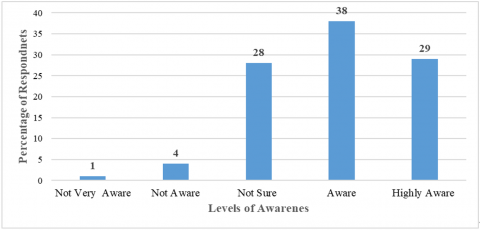
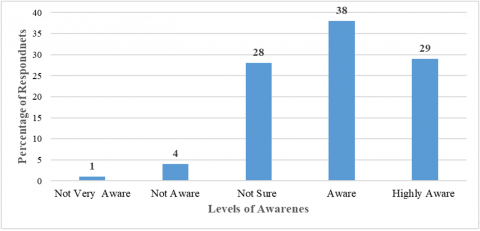
The results of the descriptive analysis of the participants’ level of awareness of energy use reduction practices show that a high majority (70%) reported that they were aware of EUP, 28% were not sure, and a small proportion (3%) claimed that they were not aware of these (Figure 1). This means that most of the hotel managers sampled know about energy use reduction practices in hotel buildings.
Figure 1. Level of awareness of energy use reduction practices
Table 3 shows the result of the level of awareness of each of the 15 energy use reduction practices investigated. The results indicate that the participants were highly aware of the use of occupancy sensors (key cards) (IMS = 4.41), energy-saving bulbs (IMS = 4.39), location of the building (IMS = 4.18), the use of natural ventilation (IMS = 4.15) and energy-efficient air-conditioning (IMS = 4.08). However, they were less aware of photovoltaic (solar) panels (IMS = 3.38), and green roofs (IMS = 3.28) (Table 3).
Table 3. Descriptive statistics of the level of awareness of ER
|
Energy Reduction Practices |
N |
Mean Score |
Std. Deviation |
Ranking |
|
Occupancy sensors (key cards) |
130 |
4.41 |
0.80 |
1 |
|
Use of energy-saving bulbs |
130 |
4.39 |
0.73 |
2 |
|
Natural ventilation |
130 |
4.15 |
0.96 |
4 |
|
Energy-efficient air-conditioning |
130 |
4.08 |
1.06 |
5 |
|
Energy-efficient laundry |
130 |
3.99 |
1.10 |
6 |
|
Use of trees |
130 |
3.98 |
1.05 |
7 |
|
Sustainable building materials |
130 |
3.95 |
1.14 |
8 |
|
Use of movement detectors |
130 |
3.92 |
1.21 |
9 |
|
Use of shading devices |
130 |
3.75 |
1.10 |
10 |
|
Use of water fountains |
130 |
3.52 |
1.30 |
11 |
|
Innovative building envelopes |
130 |
3.45 |
1.22 |
12 |
|
Use of double or triple glazing |
130 |
3.45 |
1.18 |
12 |
|
Photovoltaic (solar) panels |
130 |
3.38 |
1.27 |
13 |
|
Use of green roofs |
130 |
3.28 |
1.34 |
14 |
|
Use of wind turbine |
130 |
3.20 |
1.36 |
15 |
Regarding the participant's levels of awareness of water conservation practices, Figure 2 indicates that the highest proportion (47%) of the participants claimed that they were not aware of WCP, while 45% and 8% were aware and not aware of these, respectively. This result means that the proportion of those who are aware of WCP is less than those who are aware of these in the sample.
Figure 2. Level of awareness of WCP practices
Table 4 is a display of the descriptive statistics of the participants’ level of awareness of each of the eight water conservation practices investigated in this research. It is evident from Table 4 that the respondents were most aware of the use of low-flush toilets (MIS = 3.91), low-flow sinks (IMS = 3.84) and automated water meter and monitoring system (IMS = 3.63), respectively, but least aware of rainwater harvesting and covering of swimming pools.
Table 4. Descriptive statistics of levels of awareness of water conservation practices
|
Water Conservation Practices |
N |
Mean Score |
Std. Deviation |
Ranking |
|
Use of low-flush toilet |
130 |
3.91 |
1.12 |
1 |
|
Use of low-flow sink |
130 |
3.84 |
1.06 |
2 |
|
Automated water meter and monitoring system |
130 |
3.63 |
1.22 |
3 |
|
Watering of green spaces at night |
130 |
3.57 |
1.21 |
4 |
|
Use of waterless urinal |
130 |
3.46 |
1.25 |
5 |
|
Use of grey water recycling techniques |
130 |
3.15 |
1.33 |
6 |
|
Rainwater harvesting techniques |
130 |
3.11 |
1.32 |
7 |
|
Covering the swimming pool |
130 |
3.11 |
1.32 |
8 |
Regarding the distribution of the respondents according to their levels of awareness of waste minimisation practices in hotel buildings, the results show that most (67%) of the respondents were aware of the existence of these, 28% were not sure of this, while 5% were not aware of these practices (Figure 3). This result shows that the proportion of hotel managers who are aware of waste minimisation practices is greater than those who are not aware of these.
The results of the descriptive analysis of the respondents’ levels of awareness of each of the six waste minimisation practices investigated reveal that the respondents were highly aware of sorting of wastes separately (IMS = 4.30) and placement of recycling/dustbins (IMS = 4.20), but they were least aware of re-use materials (IMS = 3.58) and compositing of wastes (IMS = 3.57), respectively (Table 5). These results suggest that the participants have more knowledge of sorting wastes separately (IMS = 4.30) and recycling/dustbins than the other four practices investigated.
Figure 3. Levels of awareness of waste minimisation practices
Table 5. Descriptive statistics of level of awareness of waste minimisation practices
|
Waste Minimisation Practices |
N |
Mean Score |
Std. Deviation |
Ranking |
|
Sorting of wastes separately |
130 |
4.30 |
0.97 |
1 |
|
Placing of recycling/dustbin |
130 |
4.20 |
0.99 |
2 |
|
Treatment of wastewater |
130 |
3.91 |
1.19 |
3 |
|
local refuse dumpsites |
130 |
3.65 |
1.21 |
4 |
|
Re-use materials |
130 |
3.58 |
1.30 |
5 |
|
Compositing of wastes |
130 |
3.57 |
1.31 |
6 |
4.3 Extent of adoption of ESP in the hotel buildings
Results of the extent of adoption of ESP in the hotels also revealed that around 22% of the hotel managers indicated that energy reduction practices have been adopted to a very high extent, 43% claimed that they have been adopted to a high extent, 5% said they were adopted to a little extent. However, about 30% of them claimed that they were not sure of the extent of adoption of these practices. This suggests that a majority (65%) of the managers rated the extent of adoption of ERP high.
Table 6 shows the result of the extent of adoption of ESP as rated by the hotel managers sampled. It is evident from the results that the top three most adopted ESP in hotel buildings are the use of energy-efficient lights (IMS = 4.39) ranked 1, the use of key cards and occupancy sensors (IMS = 4.26) and ranked 2 and site location of the buildings (IMS = 4.12) and ranked 3, while the least adopted are the use of photovoltaic (solar) panels (IMS = 3.31), green roofs (IMS = 3.22) and wind turbine (IMS = 3.19) ranked 15, 16 and 17 positions (Table 6).
Regarding the extent of adoption of water conservation practices, the results revealed that about 18% of the respondents indicated that these practices have been adopted to a very high extent, 22% claimed that these have been adopted to a high extent and 19% said these practices have been adopted in a little extent. However, 39% of the respondents were not sure of the extent of adoptions of these practices. This means that about 40% of the respondents claimed that water conservation practices have been adopted in the hotels sampled. From the ranking of the adoption levels of the eight water conservation practices in Table 7, it is evident that the three practices adopted at a high extent and ranked 1, 2, and 3 are the use of low-flush toilets (IMS = 3.82), the use of low-flow sink (IMS = 3.76) and installation of the water meter and monitoring system (IMS = 3.58), respectively. Those adopted to a very small extent are rainwater harvesting and covering the swimming pool both of which have an IMS of 2.98. This means that the most adopted water conservation practices in hotels managed by the respondents are the use of low-flush toilets and sinks.
Table 6. Descriptive statistics of the extent of adoption of energy reduction practices
|
Energy Reduction Practices |
N |
Mean Score |
Std. Deviation |
Ranking |
|
Use of energy-efficient lights |
130 |
4.39 |
0.76 |
1 |
|
Cards and occupancy sensors |
130 |
4.26 |
0.96 |
2 |
|
Natural ventilation |
130 |
4.05 |
1.01 |
4 |
|
Energy-efficient air-conditioning |
130 |
4.02 |
1.14 |
5 |
|
Use of movement detectors |
130 |
3.90 |
1.11 |
7 |
|
Energy-efficient laundry |
130 |
3.82 |
1.15 |
8 |
|
Sustainable building materials |
130 |
3.76 |
1.20 |
9 |
|
Use of trees |
130 |
3.72 |
1.21 |
10 |
|
Use of shading devices |
130 |
3.72 |
1.11 |
11 |
|
Innovative building envelopes |
130 |
3.58 |
1.15 |
12 |
|
Use of double or triple glazing |
130 |
3.55 |
1.11 |
13 |
|
Use of water fountains |
130 |
3.44 |
1.39 |
14 |
|
Photovoltaic (solar) panels |
130 |
3.31 |
1.40 |
15 |
|
Use of green roofs |
130 |
3.22 |
1.44 |
16 |
|
Use of wind turbine |
130 |
3.19 |
1.42 |
17 |
Table 7. Descriptive analysis of the extent of adoption of WCP in hotel buildings
|
Water Conservation Practices |
N |
Mean Score |
Std. Deviation |
Ranking |
|
Use of low-flush toilet |
130 |
3.82 |
1.256 |
1 |
|
Use of low-flow sink |
130 |
3.76 |
1.160 |
2 |
|
Installation of water meter and monitoring system |
130 |
3.58 |
1.293 |
3 |
|
Watering of green spaces at night |
130 |
3.39 |
1.361 |
4 |
|
Use of waterless urinal |
130 |
3.05 |
1.488 |
5 |
|
Use of grey water recycling techniques |
130 |
3.01 |
1.406 |
6 |
|
Rainwater harvesting techniques |
130 |
2.98 |
1.403 |
7 |
|
Covering the swimming pool |
130 |
2.88 |
1.533 |
8 |
Further, the results of the extent of adoption of waste minimisation practices revealed that around 28% of the managers claimed that these have been adopted to a very high extent, 33% indicated that these have been adopted to a high extent, and 25% were not sure of this. However, about 11% and 3% indicated that these practices have been adopted to a very small extent and not adopted at all, respectively. These results suggest that most of the respondents believe that waste minimisation practices have been adopted to a high extent in the hotels sampled.
Table 8 shows the extent of adoption of each of the waste minimisation practices investigated. It is evident from the results that all the six practices investigated have been adopted to a high extent. However, from the ranking, the most adopted WMP was the provision for the treatment of wastewater, followed by the sorting of wastes separately (IMS = 3.79) and the provision of recycle /dustbins (IMS = 3.71). The least adopted was the composting of wastes with an IMS of 3.41 ranked in 6th position (see Table 8).
Table 8. Descriptive analysis of the extent of adoption of WMP in hotel buildings
|
Waste Minimisation Practices |
N |
Mean Score |
Std. Deviation |
Ranking |
|
Treatment of wastewater |
130 |
3.81 |
1.22 |
1 |
|
Sorting of wastes separately |
130 |
3.79 |
1.25 |
2 |
|
Provision of recycling/dustbins |
130 |
3.71 |
1.26 |
3 |
|
Local refuse dumpsites |
130 |
3.65 |
1.32 |
4 |
|
Re-use of materials |
130 |
3.58 |
1.31 |
5 |
|
Design for composting of wastes |
130 |
3.41 |
1.32 |
6 |
This research investigated the level of awareness and extent of adoption of environmental sustainability practices (ESPs) among operators of large-sized hotels in Lagos, Southwest Nigeria. The key findings associated with the two research objectives are discussed in the section of the paper. The results on the levels of awareness of energy use reduction, water conservation, and waste management practices revealed that most (70%) and (67%) of the participants reported that they were aware of energy use reduction and waste minimisation practices, while 45% of them were aware of water conservation practices. Based on this result, one can say that the hotel operators sampled are generally aware of ESP. This is similar to the findings of a previous study in Macau, China where it was reported that hotel operatives were very much aware of environmental sustainability initiatives [77]. Notably, the result is indicative that the respondents have more knowledge of energy use reduction and waste minimisation practices than water conservation practices. The possible explanation for this is that on the one hand electricity and waste management services in Lagos Metropolis are provided by the Ikeja Electricity Distribution Company (IEDC) and Lagos State Waste Management Agency (LAWMA), respectively, most large-sized hotels in the study area rely on private boreholes in their premises for water supply, hence, they may not need to worry about water conservation. On the other hand, given the epileptic electricity supply from the national grid and the rising cost of diesel for running portable electricity generators in Nigeria, hotel managers in the study area are expected to know the different practices for reducing electricity consumption in hotel buildings.
The results also revealed that for energy use reduction practices, the participants were highly aware of the use of occupancy sensors (key cards) and energy-saving bulbs, while the top three water conservation practices the respondents were aware of the use of low-flush toilets and sinks and automated water meter and monitoring system. In the same vein, the waste minimisation practices most of the participants in the survey were highly aware of sorting wastes separately and placement of recycling/dustbins. These findings resonate with those in seven 4-star hotels in Chennai, India, where it was reported that most hotel managers were aware of environmental sustainability practices and had implemented some of them [80]. In addition, these findings were expected because examination of the data in Table 1 will reveal that these practices are the most reported energy reduction, water conservation, and waste minimisation practices in the literature. As a result, they are considered very popular among hotel operators across the world. Notably, going by the assertion that awareness is the first stage in the innovation adoption process [41], it is expected that these findings on the levels of awareness of these practices will translate to a corresponding level of adoption of these practices in the hotels. sampled in this study.
The results on the extent of adoption of EPS practices in the hotels sampled showed that most of the Hotel Managers reported that energy use reduction and waste minimisation practices have been adopted to a high extent. This contradicts the findings among operators of hotels in Australia as previously highlighted [79]. Interestingly, whereas the highest proportion of the respondents indicated that energy use reduction and waste minimisation practices had been adopted in their hotels, around 50% claimed that water conservation practices have been implemented in their hotels. This finding seems to align with the previous study in 5-star hotels in Kampala district, Uganda, which reported that the most implemented environmental sustainability practices were energy conservation, followed by waste management, and the least was water conservation practices [81]. The emphasis on energy use practices by hotel operators over other environmental sustainability practices was expected for two reasons. The first is that evidence in the literature shows that hotel buildings consume a large quantum of energy [6, 7], and contribute significantly to GHG emissions and the attendant adverse consequences [8, 9, 58]. The second reason is that research has shown that energy use reduction practices can increase profitability by reducing spending on energy and improving brand elevation, and efficiency [17, 65]. However, the findings contradict that in Bishoftu, Ethiopia, indicating that the environmental protection practices in six core hotels in the order of priority were water-saving, energy-saving, and waste management. In any case, this study has confirmed the growing trend in energy reduction practices adoption in hotels as previously reported in the literature [6, 21, 24].
Regarding the extent of adoption of each of the 29 environmental sustainability practices, it was observed from the survey data that the most adopted energy use reduction practices are the use of energy-efficient lights key cards, and occupancy sensors. This aligns with previous studies in Addis Ababa [21] and Bishoftu, Ethiopia as previously highlighted [33]. The findings are also consistent with the evidence in the literature on the role of these two practices in reducing energy use in hotel buildings [39, 65] (Table 1). The findings on the extent of adoption of energy use reduction practices suggest that the hotel operators sampled are generally more aware of some practices such as occupancy sensors, and energy-saving bulbs among others that the design of the hotel buildings can accommodate than the adoption of green roofs, and a photovoltaic solar panel. Again, in support of previous studies in Bishoftu, Ethiopia [81], and other countries, as already presented (Table 1) [59, 32], the water conservation practices identified by the survey participants to have been implemented to a high extent were the installation of low-flush toilets and low-flow sinks, water meter and monitoring system. Again, this resonates with the global trend in water conservation in buildings [61, 62, 65]. Concerning waste minimisation practices, the study found that the most adopted practices reported by the informants were the treatment of wastewater, sorting of wastes separately, and recycling /dustbins. Notably, these practices were also identified in eight 3- to 5-star-graded hotels in Zimbabwe and South Africa [16] and most of the studies presented in Table 1. However, a lower level of adoption of specific energy reduction practices such as alternative energy sources such as wind turbines, photovoltaic (solar) panels, green roofs and others was reported in the survey (see Table 6). Similarly, even though previous studies have identified waterless urinals and covering swimming pools, rainwater harvesting and greywater recycling as vital water conservation practices in hotel buildings (Table 1) the survey data (Table 7).
Comparing the results on the levels of awareness and adoption of the three categories of ESPs investigated, it is evident that whereas 70% of the Hotel Managers claimed that they were aware of energy use reduction practices, 65% of them indicated that energy use reduction practices have been adopted. In the same vein the results also revealed that the respondents were most aware of occupancy sensors (key cards), while the most adopted was energy saving bulbs. Notably, the energy use reduction practices the participants were least aware was also the one they reported to have been adopted at small extent.
For water conservation practices (WCPs), it was found that 45% of Managers reported that they are aware of these practices and 40% claimed that they have been adopted in the hotels. Interestingly, as was observed for energy use reduction practices, the WCPs the participants were highly aware of, which is the use of low flush toilets, merged as the practice adopted at a very high extent. In the same vein, the covering of swimming pools that the participants were not very much aware of was also reported to have been adopted to a small extent. Similar results were reported on the level of awareness and extent of adoption of waste minimisation practices. Even though the results indicate that the distribution of participants according to their levels of awareness did not correspond with that of adoption of the ESPs, the general pattern of the results suggests that there could be a direct link between the levels of awareness and adoption of ESPs in the hotel sub-sector of Lagos, Nigeria. Following this line of thinking, it can be argued that the current research aligns with the assertion that awareness of a new idea, product, or process (innovation) is related to its adoption by an adopting unit [41]. Given the findings of this research, it is obvious that it has filled the knowledge gap on the levels of awareness and extent of adoption of the three key environmental sustainability practices in hotel buildings in Lagos Southwest Nigeria.
This study investigated the levels of awareness and adoption of environment sustainability practices for energy use reduction, water conservation, and waste minimisation from the perspective of hotel managers in 20 large-sized hotels in Lagos, Southwest Nigeria. The findings have led to two key conclusions and some policy, practice, and research implications. The first conclusion is that the hotel managers in the study area are generally aware of environmental sustainability practices in hotel buildings but have a higher level of awareness about energy use reduction and waste minimisation than water conservation practices. The second conclusion is that energy use reduction, waste minimisation and water conservation practices have been adopted in the operation of hotel buildings at varied extents in Lagos, Nigeria, but with more emphasis on energy use reduction practices than on water conservation and waste minimisation practices.
These findings have some noteworthy implications. First, the hotel managers demonstrated low awareness of ESPs such as the use of photovoltaic (solar) panels, green roofs, and wind turbines (ERP); grey water recycling techniques, rainwater harvesting and covering of swimming pools (WCP) and re-use of materials and composting of wastes (WMP). As a result, these practices were reported to be either not to have been adopted at all or adopted at a small extent. Given that previous research has shown that these practices are among the environmental sustainability practices in hotel buildings, there is a need to improve the knowledge base of hotel managers on these practices through continuous training, and briefing at staff meetings. In addition, hotel owners in the study area have to incorporate these less-known and less-adopted ESPs into their operations so that their employees can get to know them and derive the benefits they offer in promoting environmental sustainability goals.
The second implication is that there is a burgeoning emphasis on energy use reduction practices over water conservation and waste minimisation practices. Even though this seems to resonate with the need to curb Carbon emissions associated with energy consumption, hotel managers in the study area need to recognise that without successful implementation of water conservation, waste minimisation and energy use reduction practices at the same tempo, the environmental sustainability goals of the hotel-sub sector cannot be achieved holistically. Hence, they must strive to give equal attention to these three ESPs in their operations. Architects and other building design professionals should also take cognizance of the three ESPs in the design and construction of hotel buildings to ensure that each of them can easily be implemented during the operational phase of this building type.
Even though the current research has achieved its goal, it has some noteworthy limitations. First, the study is based on the views of 130 managers in 20 large-sized hotels in Lagos Metropolis, and thus its findings are limited to the biases of hotel managers selected and cannot be extended to those in other hotels in the study area not sampled. Second, the data used were derived through a cross-sectional survey involving questionnaire administration, and thus the findings are limited to the situation during the survey and not before or after it. Third, the study explored the levels of awareness and adoption of energy use reduction, water conservation, and waste minimisation and excluded other environmental sustainability practices such as environmental purchasing, and carbon footprint measurement and the factors that influenced the levels of awareness and adoption of these practices. Given these limitations, future research is suggested to extend its focus beyond the geographic and thematic coverage of the current study, and possibly adopt the mixed-method approach or longitudinal study for more robust findings.
The authors sincerely appreciate Covenant University for its financial support in publishing this article. We are also grateful to Prof. Eziyi O. Ibem for proofreading the initial and final versions of this manuscript. The Management of the 20 hotels for permitting their employees to participate in the survey are also appreciated. However, the authors take responsibility for every error and omission in this paper.
[1] Tettey, U.Y.A. (2017). Primary energy use of residential buildings: Implications of materials, modelling and design approaches. Doctoral dissertation, Linnaeus University Press.
[2] Shehu, A.I., Inuwa, I.I., Husseini, I.U., Yakubu, I. (2019). Hotel energy application practices in Abuja Nigeria. Journal of Sustainable Development, 12(6): 27-38. https://doi.org/10.5539/jsd.v11n6p236
[3] Chen, W.K. (1993). Linear networks and systems. Wadsworth, Belmont, 123-135.
[4] Ezema, I.C., Okorigba, R.K. (2022). Life circle energy and CO2 analysis for environmental sustainability of the Nigerian housing stock. Architecture Research, 12(2): 27-37. https://doi.org/10.5923/j.arch.20221202.01
[5] Uwaegbulam, C. (2022), Carbon emissions from buildings, and construction hit new high, sector off-track to decarbonise by 2050. The Guardian Newspaper. https://guardian.ng/news/carbon-emissions-from-buildings-construction-hit-new-high-sector-off-track-to-decarbonise-by-2050/.
[6] Olivier, J.G., Schure, K.M., Peters, J. (2017). Trends in global CO2 and total greenhouse gas emissions. PBL Netherlands Environmental Assessment Agency, 5: 1-11. https://www.pbl.nl/en/trends-in global-co2-emissions.
[7] Garbie, I.H., Shaqsi, R.A. (2019). Building sustainable models and assessments into petroleum companies: Theory and application. International Journal of Industrial and Systems Engineering, 33(4): 473. https://doi.org/10.1504/ijise.2019.104275
[8] Warren, C., Becken, S. (2017). Saving energy and water in tourist accommodations. A systematic literature review (1987-2015). International Journal of Tourism Research, 19(3): 289-303. https://doi.org/10.1002/jtr.2112
[9] Abeydeera, L., Karunasena, G. (2019). Greenhouse gas emission reporting mechanism for hotel industry: A case of Sri Lanka. International Journal of Environmental Sciences & Natural Resources, 20(4): 111-118. https://doi.org/10.19080/IJESNR.2019.20.556042
[10] Youssef, B.A., Zeqiri, A. (2022). Hospitality Industry 4.0 and climate change. Circular Economy and Sustainability, 2: 1043-1063. https://doi.org/10.1007/s43615-021-00141-x
[11] Leyva, E.S., Parra, D.P. (2021). The environmental approach in the hotel industry: Riding the wave of change. Sustainable Futures, 3: 100050. https://doi.org/10.1016/j.sftr.2021.100050
[12] WTO & ITF - World Tourism Organization and International Transport Forum. (2019). Transport-related CO2 Emissions of the Tourism Sector - Modelling Results, UNWTO, Madrid. https://doi.org/10.18111/9789284416660
[13] Mak, A.H.N., Chang, R.C.Y. (2019). The driving and restraining forces for environmental strategy adoption in the Hotel Industry: A force field analysis approach. Tourism Management, 73: 48-60. https://doi.org/10.1016/j.tourman.2019.01.012
[14] Son, L., Matsui, Y., Trang, D., Thanh, N. (2018). Estimation of the solid waste generation and recycling potential of the hotel sector: A case study in Hue City, Vietnam. Journal of Environmental Protection, (9): 751-769. https://doi.org/10.4236/jep.2018.97047
[15] World GBC. (2021). About green building what is green building? World Green Building Council. https://worldgbc.org/about-us/.
[16] Ojo-Fafore, E., Aigbavboa, C., Remaru, P. (2018). Benefits of green buildings. Proceedings of the International Conference on Industrial Engineering and Operations Management, pp. 2289-2297. http://ieomsociety.org/ieom2018/papers/581.pdf.
[17] Mbasera, M., Du Plessis, E., Saayman, M., Kruger, M. (2016). Environmentally-friendly practices in hotels. Acta Commercii, 16(1): 1-8. https://doi.org/10.4102/ac.v16i1.362
[18] Baratta, R., Vargas-Sánchez, A., Ugolini, M. (2018). Environmental sustainability and hospitality. An Exploratory Research on Modalities, Motivations and Barriers. In Environmental Sustainability and Hospitality. An Exploratory Research on Modalities, Motivations and Barriers, pp. 35-50.
[19] Cakir, H.K., Ovali, P.K., Atik, D. (2020). Evaluation of hotel buildings by users within the scope of environmental sustainability (Edirne). In Theory and Practice in Sustainable Planning and Design, pp. 101-113. Peterlang Publishing.
[20] Ardiansyah, I., Iskandar, H. (2021). Implementation of green hotel management 5-star hotel in Jakarta, case study: The dharmawangsa hotel Jakarta. In IOP Conference Series: Earth and Environmental Science, 704(1): 012034. https://doi.org/10.1088/1755-1315/704/1/012034
[21] Kitriniaris, A. (2022). Sustainable Hotel design strategies: Tourism as a tool for circular bioeconomy in fragile ecosystems. WIT Transactions on Ecology and the Environment, 256: 13-24. https://doi.org/10.2495/ST220021
[22] Lammi, D., Tesfaye, Z. (2021). An exploration of environmental practices in the hospitality industry. Evidence from Hotels in Addis Ababa, Ethiopia. Journal of Environmental Management and Tourism, 12(2): 357-370. https://doi.org/10.14505//jemt.v12.2(50).05
[23] Alagbe, O.A., Caiafas, M.A., Olayemi, B.O., Joel, O.O. (2019). Enhancing energy efficiency through passive design: A case study of halls of residence in Covenant University, Ogun State. IOP Conference Series: Materials Science and Engineering, 640(1): 012017. https://doi.org/10.1088/1757-899x/640/1/012017
[24] Ardiani, M., Shateri, M. (2018). Conceptual framework for sustainable design. Speciality Journal of Architecture and Construction, 4(2): 15-24.
[25] Abdou, A.H., Hassan, T.H., El Dief, M.M. (2020). A description of green hotel practices and their role in achieving sustainable development. Sustainability, 12(22): 9624. https://doi.org/10.3390/su12229624
[26] Adebitan, E.O. (2019). Sustainable waste management: Awareness and practices among classified hotels in Bauchi State, Nigeria. PhD Research Thesis, School of Hospitality, Tourism and Leisure Studies. Kenyatta University, Kenya.
[27] Hou, H., Wu, H. (2021). Tourists’ perceptions of green building design and their intention of staying in green hotel. Tourism and Hospitality Research, 21(1): 115-128. https://doi.org/10.1177/1467358420963379
[28] Karji, A., Namian, M., Tafazzoli, M. (2020). Identifying the key barriers to promote sustainable construction in the United States: A principal component analysis. Sustainability, 12(12): 5088. https://doi.org/10.3390/su12125088
[29] Teck, T., Karuppiah, N. (2020). Operation strategy as a competitive advantage in the hotel industry. International Business Research, 13(2): 1-35. https://doi.org/10.5539/ibr.v13n2p35
[30] Alonso-Almeida, M.M., Fernández-Robin, C., Celemín M.S., Astorga, P.S. (2017). Revisiting green practices in the hotel industry: A comparison between mature and emerging destinations. Journal of Cleaner Production, 140(1415): 1-14. https://doi.org/10.1016/j.jclepro.2016.10.010
[31] Mazhenova, S., Choi, J.G., Chung, J. (2016). International tourists' awareness and attitude about environmental responsibility and sustainable practices. Global Business & Finance Review (GBFR), 21(2): 132-146. https://doi.org/10.17549/gbfr.2016.21.2.132
[32] Salehi, M., Filimonau, V., Asadzadeh, M., Ghaderi, E. (2021). Strategies to improve energy and carbon efficiency of luxury hotels in Iran. Sustainable Production and Consumption, 26: 1-15. https://doi.org/10.1016/j.spc.2020.09.007
[33] Pereira, V., Silva, G.M., Dias, Á. (2021). Sustainability practices in hospitality: Case study of a luxury hotel in Arrábida Natural Park. Sustainability, 13(6): 3164. https://doi.org/10.3390/su13063164
[34] Kassim, M.A. (2023). Environmental sustainability practices in hotels: From attitudes to implementation case of resort hotels in bishoftu, ethiopia. IntechOpen, 1-35. https://doi.org/10.5772/intechopen.109433
[35] Calisto, M.D.L., Umbelino, J., Gonçalves, A., Viegas, C. (2021). Environmental sustainability strategies for smaller companies in the hotel industry: Doing the right thing or doing things right? Sustainability, 13: 10380. https://doi.org/10.3390/su131810380D
[36] Lammi, D. (2021). Environmental sustainability practices in industry: The case of Addis Ababa. Masters Research Thesis, College of Development Studies, Environmental and Development Studies Addis Ababa University, Ethiopia. https://www.academia.edu/66162929.
[37] Prakash, S., Sharma, V.P., Singh, R., Vijayvargy, L. (2022). Adopting green and sustainable practices in the hotel industry operations analysis of critical performance indicators for improved environmental quality. Management of Environmental Quality, 34(4): 1057-1076. https://doi.org/10.1108/MEQ-03-2022-0090
[38] Muazu, L., Rashid, B., Zainol, N.A. (2017). Predictors of likelihood of adoption of green practices in hotels: The case of Abuja and Lagos, Nigeria. Environmental Management and Sustainable Development, 6(1): 72-90. https://doi.org/10.5296/emsd.v6i1.10931
[39] Rheede, A., Blomme, R., Tromp, D., (2010). Sustainability in the dutch hospitality industry: A theoretical framework for the current state of affairs. Applied Economics Letters, 21(4): 24-36.
[40] Nwokorie, E.C., Obiora, J.N. (2018). Sustainable development practices for the hotel industry in Nigeria: Implications for the Ilaro area of Ogun State. Research in Hospitality Management, 8(2): 125-131. https://doi.org/10.1080/22243534.2018.1553383
[41] Oriade, A., Osinaike, A., Aduhene, K., Wang, Y. (2021). Sustainability awareness, management practices and organisational culture in hotels: Evidence from developing countries. International Journal of Hospitality Management, 92: 102699. https://doi.org/10.1016/j.ijhm.2020.102699
[42] Rogers, E. (2003). Diffusion of Innovations. 5th ed.; Free Press: New York, NY, USA.
[43] Purvis, B., Mao, Y., Robinson, D. (2018). Three pillars of sustainability: In search of conceptual origins. Sustainability Science, 14: 681-695. https://doi.org/10.1007/S11625-018-0627-5
[44] Alameeri, A., Ajmal, M.M., Hussain, M., Helo, P. (2018). Sustainable management practices in UAE hotels. International Journal of Culture, Tourism and Hospitality Research, 12(1): 440-466. https://doi.org/10.1108/ijcthr-10-2017-0100
[45] Goodland, R., Daly, H. (1996). Environmental sustainability: Universal and non-negotiable. Ecological Applications, 6(4): 1002-1017. https://doi.org/10.2307/2269583
[46] Goodland, R. (1985). The concept of environmental sustainability. Annual Review of Ecology and Systematics, 26: 1-24. https://doi.org/10.1146/annurev.es.26.110195.000245
[47] Morelli, J. (2011). Environmental sustainability: A definition for environmental professionals. Journal of Environmental Sustainability, 1(1): 1-10. http://doi.org/10.14448/jes.01.0002
[48] Zulu, S., Zulu, S., Chabala, M. (2022). Sustainability awareness and practices in the Zambian construction industry. Acta Structilia, 29(1): 112-140. http://doi.org/10.18820/24150487/as29i1.5
[49] Guruge, D. (2022). Environmental sustainability practices in the hotel industry in New Zealand. Management of Environmental Quality, 33(4): 991-1007. http://doi.org/10.1108/MEQ-09-2021-0228
[50] Mohammed, A.B. (2021). Sustainable design strategy optimizing green architecture path based on sustainability. HBRC Journal, 17(1): 461-490. https://doi.org/10.1080/16874048.2021.1990572
[51] Elkhwesky, Z., Salem, I.E., Varmus, M., Ramkissoon, H. (2022). Sustainable practices in hospitality pre and amid COVID‐19 pandemic: Looking back for moving forward post‐COVID‐19. Sustainable Development, 30(5): 1426-1448. https://doi.org/10.1002/sd.2304
[52] Sichali, M., Banda, L.J. (2017). Awareness, attitudes and perception of green building practices and principles in the zambian construction industry. International Journal of Construction Engineering and Management, 6(5): 215-220. https://doi.org/10.5923/j.ijcem.20170605.04
[53] Mathur, S. (2019). Sustainability practices as a competitive edge on five-star hotels of Delhi: A study on manager’s perception. International Journal of Business, Economics & Management, 2(1): 31-37. https://doi.org/10.31295/ijbem.v2n1.64
[54] Feria, M., Amado, M. (2019). Architectural design: Sustainability in the decision-making process. Buildings, 9(5): 135. https://doi.org/10.3390/buildings9050135
[55] Kumar, A., Mahajan, A., Sharma, S. (2020). Sustainable practices in hotels: A study of five star hotels in Northern India. Social Science Research Network. https://doi.org/10.2139/ssrn.3524171
[56] Floričić, T. (2020). Sustainable solutions in the hospitality industry and competitiveness context of “green hotels”. Civil Engineering Journal, 6(6): 1104 -1113. https://doi.org/10.28991/cej-2020-03091532
[57] Kuar, L.S., NG, L.P., Choong, Y.O., Chen, I.C., Teoh, S.Y., Tee, C.W. (2022). Hotels’ green practices adoption: Determinants and top managers’ environmental commitment. Advances in Hospitality and Tourism Research (AHTR), 10(2): 157-187. https://doi.org/10.30519/ahtr.937991
[58] Agarwal, S., Jain, J. (2022). A perceptual study on the impact of infused green practices carried in three to five star category hotels in Jaipur: With special reference to employees of hotel industry. Specialusis Ugdymas, 1(43): 6929-6937.
[59] Wu, Y., Xin, B., Zhu, H., Ye, Z. (2022). Energy-saving operation strategy for hotels considering the impact of COVID-19 in the context of carbon neutrality. Sustainability, 14(22): 14919. https://doi.org/10.3390/su142214919
[60] Popely, D., Moreno-Melgarejo, A. (2020). Water management strategies in hotels in arid regions: Results and implications from a case study on gran canaria island (Spain). Revista Espacios, 41(43): 242-256. https://doi.org/10.48082/espacios-a20v41n43p18
[61] Nthiga, R.W. (2018). Adoption of water conservation practices in hospitality establishments in Nakuru County, Kenya. Africa Environmental Review Journal, 3(1): 108-117. https://doi.org/10.2200/aerj.v3i1.196
[62] Han, H., Lee, M.J., Kim, W. (2018). Promoting towel reuse behaviour in guests: A water conservation management and environmental policy in the hotel industry. Business Strategy and the Environment, 27(8): 1302-1312. https://doi.org/10.1002/bse.2179
[63] Esfahani, G.S., (2020). Sustainability of interior design materials for 5-star hotels in the UAE. MSc. Dissertation, The British University in Dubai (BUiD). https://bspace.buid.ac.ae/buid_server/api/core/bitstreams/ce826239-49a3-49ee-9e7b-9a0a6cc9e29b/content.
[64] Choy, M., Cheng, J., Yu, K. (2021). Evaluating the environmental sustainability strategies of the housekeeping department: The case of an international hotel chain in Hong Kong, China. Tourism Critiques, 2(1): 115-132. https://doi.org/10.1108/TRC-01-2021-0001
[65] Osiako, P.O., Kummitha, H.R. (2020). Environmental management practices among coastal beach hotels in Kenya. African Journal of Hospitality, Tourism and Leisure, 9(1): 34.
[66] Vickers, A., Bracciano, D. (2014). Low-Volume plumbing fixtures achieve water savings. Opflow, 40(7): 8-9. https://doi.org/10.5991/OPF.2014.40.0047
[67] Tiwari, V., Thakur, S. (2021). Environment sustainability through sustainability innovations. Environment, Development and Sustainability, 23(5): 6941-6965. https://doi.org/10.1007/s10668-020-00899-4
[68] Omune, B., Kambona, O., Wadongo, B., Wekesa, A. (2021). Environmental management practices implemented by the hotel sector in Kenya. World Leisure Journal, 63(1): 98-108. https://doi.org/10.1080/16078055.2021.1888001
[69] Singjai, K., Winata, L., Kummer, T.F. (2018). Green initiatives and their competitive advantage for the hotel industry in developing countries. International Journal of Hospitality Management, 75: 131-143. https://doi.org/10.1016/j.ijhm.2018.03.007
[70] Gupta, V., Sajnani, M., Dixit, S.K., Mishra, A., Gani, M.O. (2023). Are consumers influenced by the use of green practices in five-star hotels: An assessment of guest's revisit intentions, inclusive ratings and hotel performance, International Journal of Tourism Cities, 9(1): 159-181. https://doi.org/10.1108/IJTC-05-2022-0131
[71] Gafoor, K. (2023). Considerations in the measurement of awareness. A paper for national level seminar on emerging trends in education. Department of Education, University of Calicut, Kerala, India 2012. https://doi.org/10.13140/2.1.2109.2643
[72] Okonoko, V.N., Eruvwe, U. (2020). Awareness of information and communication technology-based information resources in library user education programmes in colleges of education in Southern Nigeria. Journal of Information and Knowledge Management, 11(4): 156-171. https://doi.org/10.4314/iijikm.v11i4.15
[73] Chiu, C. (2023). The impact of environmental management on business performance: Evidence from the hotel industry. Research Square, pp. 1-18. https://doi.org/10.21203/rs.3.rs-2443441/v1
[74] Sharma, R., Mishra, R. (2014). A review of evolution of theories and models of technology adoption. International Journal of Management, 6(2): 17-28.
[75] Forman, C., Goldfarb, A., Greenstein, S. (2018). Technology Adoption. In The Palgrave Encyclopedia of Strategic Management. Palgrave Macmillan, London. https://doi.org/10.1057/978-1-137-00772-8_379
[76] Cherapanukorn, V., Focken, K. (2014). Corporate social responsibility (CSR) and sustainability in Asian luxury hotels: Policies, practices and standards. Asian Social Science, 10(8): 198-209. https://doi.org/10.5539/ass. v10n8p198
[77] Diamantis, D., Ladkin, A. (1999). “Green” Strategies in the Tourism and Hospitality Industries. In The International Marketing of Travel and Tourism, pp. 119-141. https://doi.org/10.1007/978-1-349-27486-4_4
[78] Wan, Y.K.P., Joanne, S.H., Lan, C.H., Huang, W., (2017). Environmental awareness, initiatives and performance in the hotel industry of Macau. Tourism Review, 72(1): 87-103. https://doi.org/10.1108/TR-06-2016-0016
[79] Gabarda-Mallorquí, A., Fraguell, R., Ribas, A. (2018). Exploring environmental awareness and behavior among guests at hotels that apply water-saving measures. Sustainability, 10(5): 1305. https://doi.org/10.3390/su10051305
[80] Khatter, A., McGrath, M., Pyke, J., White, L., Lockstone-Binney, L. (2019). Analysis of hotels’ environmentally sustainable policies and practices: Sustainability and corporate social responsibility in hospitality and tourism. International Journal of Contemporary Hospitality Management, 31(6): 2394-2410. https://doi.org/10.1108/IJCHM-08-2018-0670
[81] Sangeetha, R. (2020). Environmental sustainability practices for hotels in Chennai. Malaya Journal of Matematik, S(2): 1740-1745. https://doi.org/10.26637/MJM0S20/0463