Studying Factors in the Utilization of Sansevieria stuckyi God.-Leb. Fibers to Create Products with Environmentally Friendly Processes

Sudakan Yabdee | Thanate Piromgarn | Sirisyos Kijmongkolvanich | Songwut Egwutvongsa*
© 2024 The authors. This article is published by IIETA and is licensed under the CC BY 4.0 license (http://creativecommons.org/licenses/by/4.0/).
OPEN ACCESS
The objective of this research was to study the utilization and physical properties of Sansevieria stuckyi God.-Leb. This was a mixed-methods study conducted using a structured questionnaire having a high reliability score (Cronbach’s alpha = 0.936). According to the exploratory factor analysis (EFA) and confirmatory factor analysis (CFA), four significant factors were revealed, e.g., 1) utility, 2) perception, 3) sales motivation, and 4) eco-friendly materials. These factors affect the efficiency in the creation of fiber-based textile products. The results of this research generated a process for the recycling of numerous local wastes for economic value added of the involved communities and establishment of the guidelines on utilizing Sansevieria stuckyi God.-Leb. to create textile products with an eco-friendly process. This will generate a body of knowledge and understanding of how to develop textile products that meet consumer needs. In addition, the results of this research will motivate textile product designers to apply their local plants in textile product creation in order to meet the needs of community inhabitants appropriately and to demonstrate their collective responsibility for the global environment.
transformation, Sansevieria stuckyi God.-Leb. fiber, creativity, green products, environment
According to the continuously worsening climate crisis, there is an increasing release of greenhouse gases every year. Moreover, this has resulted in global temperatures continuing to rise, and temperatures will likely increase by about 1.1 degrees Celsius from before the industrial era. It is predicted that there is a chance of a 1.5-degree Celsius increase by 2035, leading to more severe disasters [1]. Moreover, the international community is concerned about resource use, which nature is increasing in the future environment [2]. In this case, according to the concept of sustainable development goals (SDGs), people worldwide give importance to them. Awareness of environmental issues shows the need for every human being, including reducing the use of natural resources and turning to resources that can be recycled (Renewable Resources). In this case, it can reduce production resources that may cause greenhouse gas emissions that impact the environment to promote highly efficient use of natural resources to preserve the environment [2, 3].
The policy to drive Thailand towards Thailand 4.0 is based on the BCG economic model for the period 2021 - 2027 with achieving holistic economic development from economic development of three economic aspects: 1) Bioeconomy, 2) Green Economy, and 3) Circular Economy with aiming at preserving the value of resources. Moreover, it shows nature today by reducing the use of natural resources for new uses. Then, we focused on using reuse to find renewable resources in various forms. Similarly, the reduction of the release of greenhouse gas emissions with pollution problems can also aid in creating a new type of economy that can grow and compete on an international level. At the same time, the BCG economic model will help distribute income to communities and help eliminate inequality. In this case, it has been shown that all development should aim to create sustainability that is friendly to the environment and aligns with the Sustainable Development Goals (SDGs) of the United Nations, leading to the vision of Thailand as a stable, prosperous, and sustainable developed country. This is based on the philosophy of a sufficiency economy [4].
In Thailand, there is a growing trend of cultivating Sansevieria stuckyi God.-Leb., a plant from the ASPARAGACEAE family, as an ornamental plant in residential homes. This trend has led to increased consumer demand for Sansevieria stuckyi God.-Leb. Moreover, it can help reduce carbon dioxide (CO2) levels day and night. The rate at which these plants emit carbon dioxide is low. This makes them popular for improving indoor air quality by helping to balance the atmosphere and absorb toxic pollutants. Additionally, they are known for their beautiful shapes and colors, making them popular as ornamental plants.
In this case, it is an ornamental plant with high economic value that can be exported to many countries, such as Japan, the Netherlands, and South Korea, with Nursery plots for growing Sansevieria stuckyi God.-Leb. In the central region of Thailand, many farmers have leftover leaves and stems from their planting plots, totaling more than 1 ton per day. They cannot be disposed of or used in time before they spoil, releasing gases. Moreover, the greenhouse generates significant waste from composting and manages the reuse of these waste products. In addition, it included studying research on transforming plant fibers to create higher economic value [5]. It was discovered that the ASPARAGACEAE family of trees has versatile properties that can be used to make jewelry, produce medicine for both humans and animals, and even provide food. One of the most promising applications is using the fibers from these trees to make soft clothing.
Environmental problems caused by the rapid expansion of the fast fashion model of the textile industry have led to severe impacts on the global environment [6, 7] on account of overproduction and huge discounts. This has resulted in the consumption of numerous resources that finally gives rise to the aforementioned environmental problems, the key cause of rapid environmental degradation [8]. Since the beginning of the 21st century, textile product designers worldwide have therefore started giving precedence to the search for new natural fibers in order to replace cotton as well as polymer fibers in the production process of the textile industry, which is regarded as the development of various natural fibers. Simultaneously, it demonstrates the status of the textile industry with regard to sustainable development. Thus, product designers and entrepreneurs in the textile industry in this modern age are making an effort to protect the environment by using eco-friendly materials and sustainable production processes. To do so, biodegradable natural fibers are used, thereby providing the production process with the least impact on ecosystems.
Undoubtedly, entrepreneurs in the textile industry in Thailand are paying attention to the use of fibers from Sansevieria stuckyi God.-Leb. because of their strength and durability, suitable for further development into eco-friendly products [9]. This concept conforms to the goal of the government policy in 2024 to support a large number of green innovations in Thailand. Tips and leafstalks of Sansevieria stuckyi God.-Leb. are considered as wastes, and must be disposed of from plots. If these parts of Sansevieria stuckyi God.-Leb. are processed into fibers for reuse, it can generate benefits for the farmers of this particular plant and also provide the guidelines on utilization of these new natural fibers for entrepreneurs in the textile industry. Furthermore, they are biodegradable fibers with low environmental impact, compared with synthetic fibers. However, for efficient use of these fibers in production, the research is mainly focused on several crucial factors, e.g., 1) the fiber separation process, 2) the physical properties of fibers from Sansevieria stuckyi God.-Leb., 3) environmental impacts, and 4) potential needs in the market, in order to apply these fibers to the fiber production process for fabric weaving that uses natural fibers from plant waste (zero waste agriculture). This practice conforms to the goal to apply utility in Thailand’s and the global textile and garment industries. In the research, the feasibility to develop eco-friendly products that can facilitate farmers with living a sustainable lifestyle is also suggested. To clarify, the knowledge obtained from this research can be applied to utilize waste materials in the agricultural sector and to generate sustainable extra income for farmers.
Using Sansevieria fibers left over from the trimming process before selling to farmers is an opportunity to manage natural resources by reducing waste and promoting the reuse of scrap materials according to circular economy principles.
Moreover, the Sansevieria plant can propagate well in the dry tropical landscape, contributing to the spread of the species in Thailand. The amount of leftover leaves and stems of Sansevieria plants is substantial and continues to increase. Methods are being developed to use this waste in fiber production for textiles. In addition, it will create opportunities and increase economic value for enterprises and communities to gain more economic growth [10]. Therefore, Sansevieria fibers obtained from the transformation process have the following properties: 1) strong fibers, 2) tough and durable fibers, and 3) moisture-resistant fibers. As a result, based on these three properties, fibers obtained from Sansevieria plants are suitable for producing composite materials [11] or textiles production [12].
The use of fibers from Sansevieria stuckyi is a process with low environmental impacts. This plant possesses high resistance to insects and plant diseases; thus, it rarely requires insecticides. In the past, wastes from trimming before cutting were buried or burned off. In this research, those wastes were studied in order to develop and reuse them for economic value added in order to generate benefits for farmers and ecosystems. As for the Sansevieria fiber extraction process, the fibers obtained must have the following properties, i.e., 1) strength, 2) resiliency and durability, and 3) resistance to moisture. Currently, the textile industry usually relies on only a few types of fibers. For this reason, the idea proposed in this research to utilize fibers from Sansevieria is likely to provide distinctive natural fibers for Thailand’s and the global textile industry in the future. Based on the results of the study on the types of fibers currently used in the textile industry, it was found that there are three common types as follows.
1) Composite fibers: These are synthesized fibers with strength and light weight, suitable for production/manufacturing of auto parts, construction materials, and furniture [11, 13].
2) Natural hemp fibers: These fibers contain high strength and the ability to bear tension. They are employed in textile and rope production [9].
3) Natural cotton fibers: These fibers are very fine, small, and can bear loads efficiently. They are usually used for spinning thread and weaving into cloth to produce clothing [12].
Figure 1. a. Pruning for cuttings, b. Remnants from pruning before planting, c. Landfill
Thus, using waste fibers from Sansevieria stuckyi God.-Leb. for fiber production in textile products is an option to replace synthesized fibers due to fibers from Sansevieria stuckyi God.-Leb. being a biodegradable material without negative impacts on ecosystems. This conforms to Thailand’s industrial development policy 2024, i.e., 1) waste reduction, 2) economic opportunities, 3) promoting access to sustainable materials, and 4) enhancing capabilities to use local materials for sustainable economic value added, as seen in Figure 1, which reveals a large amount of waste Sansevieria stuckyi God.-Leb. found in farming areas.
This is a mixed-methods research study, in which the implementation process included: 1) studying the data, 2) experimentation, 3) analysis, and 4) determining the factors for the guidelines on utilization of fibers from Sansevieria stuckyi God.-Leb. In this research, eight techniques of fiber separation processing were used, as shown in Table 1. Then, the obtained fibers were studied to identify opportunities for processing them to be used in the actual production as new textile products, which were subsequently assessed by farmers of Sansevieria stuckyi God.-Leb.
Research question: Which factors affect the chance of success in applying fibers from Sansevieria stuckyi God.- Leb. to design eco-friendly textile products?
3.1 Research objectives
1) Study the physical properties of fibers for Sansevieria stuckyi God.-Leb.
2) Study the guidelines for using Sansevieria stuckyi God.-Leb. fibers.
3.2 Research scope
1) Studying the physical properties of fibers for Sansevieria stuckyi God.-Leb.
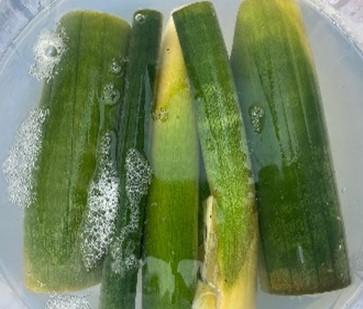
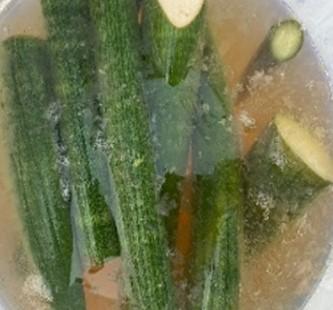
A) Raw materials for extracting fibers consist of the following: 1) fresh leaves of Sansevieria stuckyi God.-Leb. with a diameter of 1 centimeter, cut into lengths of 20 centimeters and a weight of 1 kilogram per set in each experiment, 2) five liters of clean water for use in dissolving, and 3) 0.05 liters of Effective Microorganisms (EM).
B) The equipment used in the experiment was as follows) a tape measure to measure the length of Sansevieria stuckyi God. plants and leaves - Leb before processing - after processing, 1) a pH meter for measuring the acidity or alkalinity of the solvent, 2) a digital scale to weigh the fibers before and after processing, 3) a glass bottle of solvent for measuring the pH, 4) a plastic bucket and lid for fermentation, 5) stainless steel pot for boiling Sansevieria stuckyi God.-Leb. leaves, 6) a gas stove for cooking, set at 100℃ for 2 hours, 7) fiber drying grid, size 30 × 60 centimeters, for eight sets, 8) fiber brush for carding the dried fibers.
C) Steps for separating and extracting Sansevieria stuckyi God.-Leb. fibers were divided into four steps.
Step 1: Study the physical properties of Sansevieria stuckyi God.-Leb. to confirm suitability for separating fibers by measuring the length and diameter of leaves of mature plants.
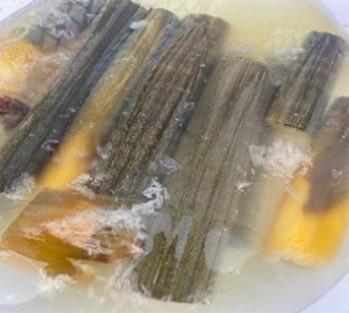
Step 2: Identify an appropriate solvent for separating the fibers from Sansevieria stuckyi God.-Leb. This involved determining the soaking time in the fermentation experimental sets 1-6, which will be 21 days. Additionally, experimental sets 7-8 will be conducted without soaking in fermentation. Further details are provided in Table 1.
At the fiber processing stage, there were several limitations of fiber processing that cut the experimental formulas down to only eight. Each of them was different in terms of the processing methods that farmers can employ in practice by using materials and equipment that are available in their own households. Thus, the results of this research are very useful but only to meet the needs of small industries or communities, due to the limitations for application to production in large industries.
Step 3: Check the physical properties of Sansevieria stuckyi God.-Leb. fibers after conditioning.
Step 4: Weigh the Sansevieria stuckyi God.-Leb. fibers after conditioning [14].
Table 1. Fiber separation experiment set for Sansevieria stuckyi God.-Leb.
|
Set |
Condition of Sansevieria stuckyi God.-Leb. (Weight 1 kilogram/trial set) |
Solvent Ratio |
|
Water : EM (liter) |
||
|
1 |
Fresh leaves were soaked in water |
5 : 0 |
|
2 |
Fresh leaves were soaked in EM |
5 : 0.05 |
|
3 |
Fresh leaves were boiled with 5 liters of water at 100℃ for 2 hours. |
5 : 0 |
|
4 |
Smashed fresh leaves were soaked in water |
5 : 0 |
|
5 |
Fresh leaves pounded and soaked in EM |
5 : 0.05 |
|
6 |
Fresh leaves pounded and boiled in 5 liters of water at 100℃ for 2 hours |
5 : 0 |
|
7 |
Fresh leaves pounded and dried in the sun |
- |
|
8 |
Fresh leaves pounded and boiled with 5 liters of water at 100℃ for 2 hours before drying |
5 : 0 |
2) Study the guidelines for making use of Sansevieria stuckyi God.-Leb. fibers to create environmentally friendly products by dividing the population as follows:
A) Population: A group of farmers who grow Sansevieria stuckyi God.-Leb. in the central region of Thailand, with 2,044 households (Ornamental plant cultivation areas in Thailand, 2022).
B) Sample group: 359 farmers cultivating Sansevieria stuckyi God.-Leb. At the planting site using stratified sampling. The sampling is divided based on the farmers' living areas. A random sampling method is employed with a confidence level of 9.5% and a margin of error of 5%, calculated using Taro's sample calculation formula with Yamane [15].
More specifically, for the limitations in terms of the data obtained from the samples, this research was conducted to obtain opinions from farmers of Sansevieria stuckyi God.-Leb. only. Their feelings toward fiber processing and its features were considered. Thus, the data obtained only describes the perspectives of farmers.
C) Research tool: Structured questionnaire that asks about guidelines for using Sansevieria stuckyi God.-Leb. fibers while the questions will be in the form of variables that can be observed and measured quantitatively, which is a 5-level Likert rating scale (Rating Scale) (Item-Objective Congruence Index = 0.862; Cronbach's Alpha = 0.949) including showing that the questionnaire is reliable to be used for collecting data with a sample group [16].
D) Data analysis: 1) Mean, 2) Standard Deviation: SD, 3) Exploratory Factor Analysis: EFA, 4) Confirmatory Factor Analysis: CFA with research statistics applied to analyze the research data by using the SPSS program [17].
E) The research is certified according to research ethics standards (Institutional Review Board: IRB) from the institution. IRB of King Mongkut's Institute of Technology Ladkrabang (EC-KMITL_67_011 / 11 /2023).
4.1 Physical properties
The physical properties of Sansevieria stuckyi God.-Leb. indicate that it is suitable for separating fibers. The leaves are round, slender, long, and arranged alternately along the stem. The leaves are suitable for cuttings up to fifteen months old, with a height of 1 meter and a trunk diameter of 3 centimeters, as shown in Figure 2.
Figure 2. (a) Stem, (b) Measuring of the size of an adult plant, (c) Fresh leaves, (d) Longitudinal section, (e) Transverse section
Table 2. Process of transformation of Sansevieria stuckyi God.-Leb.
|
Formula 1 |
Formula 2 |
Formula 3 |
Formula 4 |
|
Before Transforming |
Before Transforming |
Before Transforming |
Before Transforming |
|
After Transforming |
After Transforming |
After Transforming |
After Transforming |
|
Formula 5 |
Formula 6 |
Formula 7 |
Formula 8 |
|
Before Transforming |
Before Transforming |
Before Transforming |
Before Transforming |
|
After Transforming |
After Transforming |
After Transforming |
After Transforming |
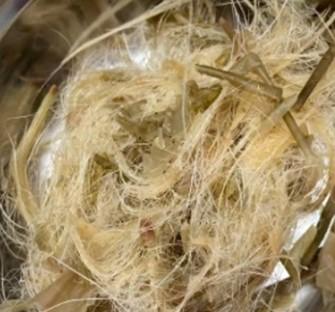
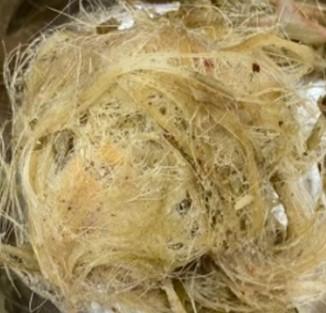
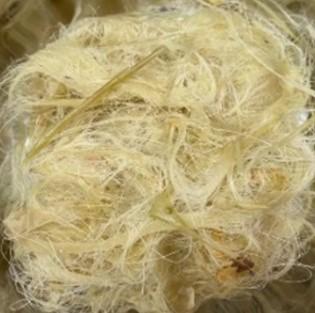
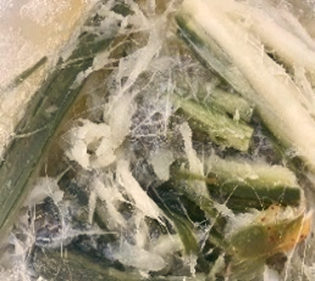
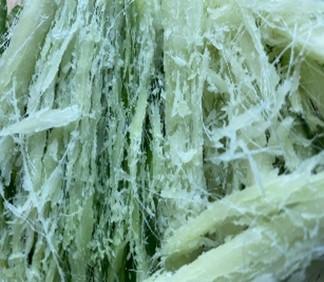
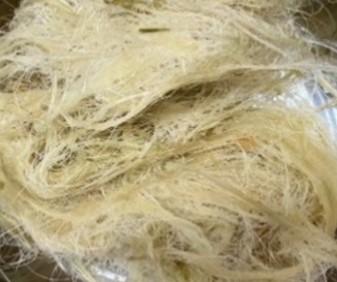
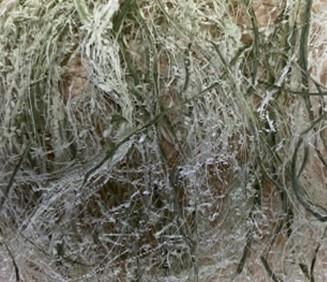
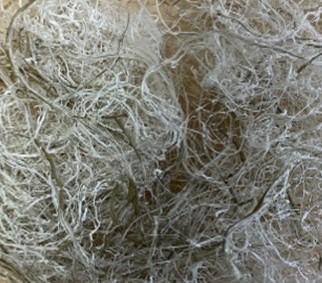
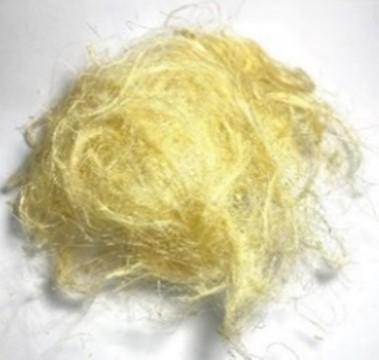
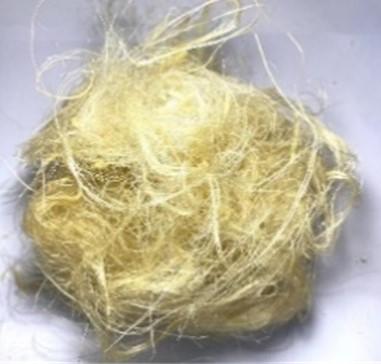
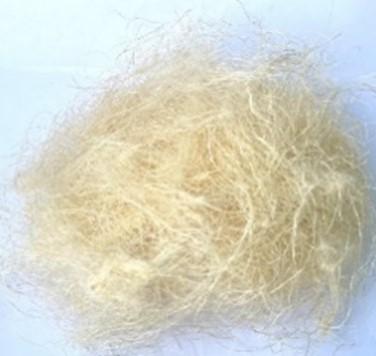
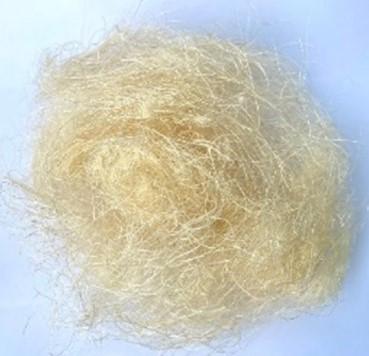
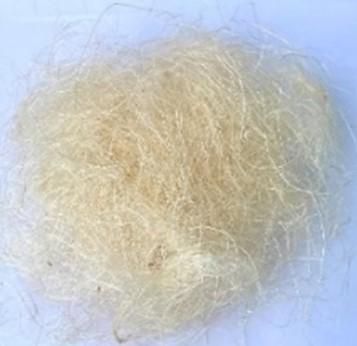
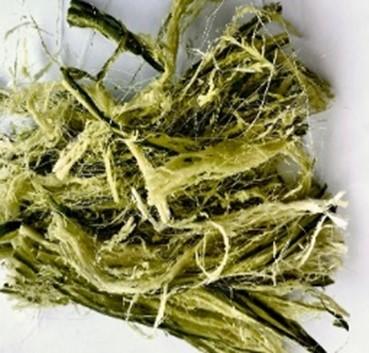
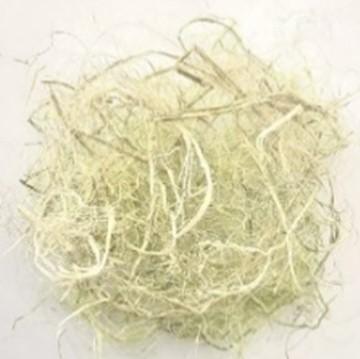
In experimenting with eight different transformation methods, as shown in Table 2, it was observed that the physical properties of the fibers obtained from fiber extraction varied depending on the method used. The properties that showed differences among the methods include 1) Color of the fibers, 2) Texture, 3) Strength, 4) Orderliness of the fibers, and 5) Orderliness of the fibers, as shown in Table 3.
According to Table 3, it was found that the color of the fibers in Experimental Sets 1, 2, 4, 5, 6, and 8 were brown, while Experimental Set 3 was light green mixed with brown, and Experimental Set 7 was light green. Moreover, the fibers had a weak point: the surface of the fibers of every experimental set was hard and rough, brittle, and easily broken. Then, the distinctive feature of the fibers was that they were grouped in an orderly manner by bare hands spreading them apart. All experimental methods required fiber carding equipment to align the fibers after fiber processing [14, 18].
The dry fiber weight was measured at 1 kilogram for each fiber sample formula during testing. The fibers were separated into eight experimental batches and then dried in the sun for 3 hours at 38 degrees Celsius. The characteristics of the fibers before and after sun drying are shown in Table 4.
According to the summarizing of the results for all eight sets of experiments, the best three results can be selected, including sets 5, 3, and 4, considering that the fibers' weight is not very heavy. When carding the fibers, the fibers can cling and gain a lot of weight. Therefore, it is considered to be suitable for producing fibers for textile products. as presented in Table 5.
Table 3. Physical properties of Sansevieria stuckyi God.-Leb. fibers after conditioning
|
Physical Properties of Fibers |
|||||
|
Set |
Fiber Color |
Contact Surface |
Strength |
Orderliness of the Fibers (before Drying) |
Orderliness of the Fibers (after Drying) |
|
1 |
Brown |
Hard mixed with rough |
Hard but brittle and easily broken |
Before drying, it is in an organized manner. Then, you can use your bare hands to spread it out |
They stick together and are difficult to spread out. Thus, you must use equipment to spread them apart |
|
2 |
Brown |
Hard, rough, has little lint |
Hard, rough, requires force to break |
It is in an organized manner, but mostly arranged in the same direction. Then, you can use your bare hands to spread it out |
You need to use a carding tool, and you must exert a little force to pull. Then, the fibers will line up in the same direction |
|
3 |
Light Green Mixed with Brown |
Rough, a little flaky |
Hard and slightly sticky to exert force for separating |
Before drying, it is organized; mostly, it is in the same direction, which you can spread out using your bare hands |
Need to use a tool to help detangle but do not have to pull too hard. Then, the fibers will then line up in the same direction |
|
4 |
Light Brown |
Rough mixed with soft |
The flaky part clings to most of the fibers, making it a little stickier, but when you use your hand to feel it, it breaks easily |
It is not organized, but you can use your bare hands to spread it out |
Need to use a tool to help with carding. However, you must forcefully pull the fibers to line them up in the same direction |
|
5 |
Light Brown |
Hard, rough, and little flaky |
It is a little sticky, but with gentle pulling, it breaks apart |
It is arranged in the same direction and easy to pull apart with your bare hands |
Need to use a tool for carding with little force |
|
6 |
Sugar |
Sticky, lumpy, and difficult to shake apart |
Hard but brittle and easily broken |
It can cling to the same point without lining up, and you must use a carding device to help spread |
When using a tool for carding, you must use force to pull it to line it up in the same direction |
|
7 |
Light Green |
Rough mixed with soft |
Slightly sticky |
It is arranged in the same direction, easy to spread by using bare hands |
Need to use a tool with carding without pulling too hard |
|
8 |
Sugar |
Rough mixed with soft |
Hard but brittle and easily broken |
It can cling like a raft for being easy to pull apart |
If they stick together, you must use a tool to pull them together in the same direction |
Table 4. Physical characteristics of the fibers before and after carding the fibers
|
Formula 1 |
Formula 2 |
Formula 3 |
Formula 4 |
|
Before carding the fibers |
Before carding the fibers |
Before carding the fibers |
Before carding the fibers |
|
After carding the fibers |
After carding the fibers |
After carding the fibers |
After carding the fibers |
|
Formula 5 |
Formula 6 |
Formula 7 |
Formula 8 |
|
Before carding the fibers |
Before carding the fibers |
Before carding the fibers |
Before carding the fibers |
|
After carding the fibers |
After carding the fibers |
After carding the fibers |
After carding the fibers |
Table 5. Physical characteristics and weight of the fibers
|
Measuring Fiber Lengthwise |
Transverse Fiber Measurement |
|||
|
Experimental Set at |
Dry Fiber Weight Before Carding (kg.) |
Weight of Dry Fiber after Carding (kg.) |
Fiber Length (cm.) |
|
|
Short |
Long |
|||
|
1 |
0.48 |
0.32 |
2 |
17 |
|
2 |
0.44 |
0.32 |
2 |
17 |
|
3 |
0.36 |
0.24 |
2.5 |
17. 6 |
|
4 |
0.44 |
0.32 |
2.1 |
17.5 |
|
5 |
0.40 |
0.32 |
2.6 |
18.1 |
|
6 |
0.44 |
0.32 |
2 |
17.5 |
|
7 |
0.60 |
0.24 |
1.5 |
16 |
|
8 |
0.50 |
0.16 |
1.8 |
16.5 |
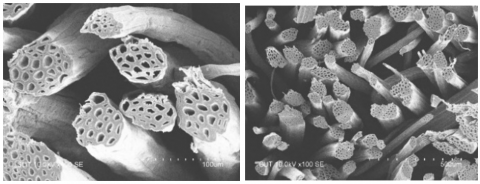
Note: The images (Longitudinal Fiber Measurement) and (Transverse Fiber Measurement) showing the size measurements with the SEM machine HITACHI S3400N program
4.2 Factors analysis
Factors impacting the utilization of Sansevieria stuckyi God.-Leb. fibers were identified through the use of farmer questionnaires to guide fiber utilization. The questionnaire data was then analyzed using exploratory factor analysis to determine the key factors. Steps to find factors affecting the utilization of Sansevieria stuckyi God.-Leb. fibers used the opinions of farmers who grow crops from questionnaires on the issue of fiber utilization guidelines to determine factors by applying for exploratory factor analysis. (Exploratory Factor Analysis) as follows:
Step 1: Exploratory Factor Analysis (EFA)
It involves a data storage questionnaire on fiber utilization guidelines to find variables affecting farmers' satisfaction, and it is based on exploring variables and identifying common factors to explain the relationship between all observed variables. Moreover, the researcher brought indicators to check as follows: 1) Preliminary agreement before research, 2) Steps for testing relationships and grouping relationships among observed variables [19] that rely on measuring values according to the specified indicators as follows:
1. Defining the twenty-two variables studied
2. Setting the minimum reliable sample size at 359 people
3. Checking the clustering value of the variables for being used to explain the factor (Communalities), which should have a value > .65 or higher. Moreover, it found that all variables were appropriate (Communalities = .651 - .918) in which all variables can be grouped together and lead to be a factor in the guidelines for utilization of fibers including KMO and Bartlett's Test values of .910; 6720.618 as shown in Table 6.
4. Step in factor analysis from data showing that the alpha coefficient is satisfactory (Cronbach's Alpha = 0.951) determined using group variables from the exploratory factor analysis (EFA).
The analysis indicates that the KMO and Bartlett's Test values meet the standard criteria. This information can be used to shape opinions about the suitability of using fiber, particularly for exploratory factor analysis. It also shows that all variables are related, as presented in Table 6.
Table 6. KMO and Bartlett's Test
|
KMO and Bartlett's Test |
|
|
Kaiser-Meyer-Olkin Measure of Sampling Adequacy. = .910 (>.500) |
df = 231 |
|
Bartlett's Test of Sphericity Approx. Chi-Square = 6720.618 |
Sig. = .000 |
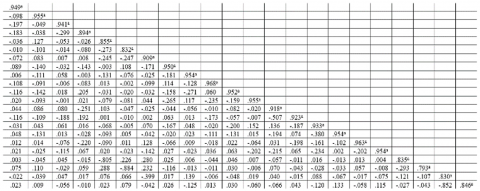
According to farmers' feelings, it relates to using fibers from fifteen variables, which can be combined into four factors, as shown in Figure 3.
Figure 3. Analysis of anti-image matrices (Measures of Sampling Adequacy: MSA)
Table 7. Value of spindle rotation weight factor, verimax method, and element weight set at 0.67 or higher
|
Number |
Variables |
Component |
Community |
|||
|
Factor 1 |
Factor 2 |
Factor 3 |
Factor 4 |
|||
|
D12 |
Processing fiber adds value to agricultural waste materials |
.792 |
|
|
|
.742 |
|
E16 |
Creating products from fiber to generate income |
.705 |
|
|
|
.670 |
|
F17 |
The use of fibers to be consistent with the lifestyle of farmers |
.701 |
|
|
.691 |
|
|
A3 |
Products made from fibers are unique and memorable |
.688 |
|
|
|
.633 |
|
C9 |
Utilizing fiber helps reduce the amount plantation of waste |
.679 |
|
|
.720 |
|
|
G3 |
The fiber is suitable for the production of home textiles |
|
.818 |
|
.777 |
|
|
B7 |
Fiber products should come in a variety of formats |
|
.786 |
|
|
.789 |
|
G2 |
The price of fiber products is reasonable |
|
.706 |
|
|
.686 |
|
B6 |
The fiber is suitable for the production of body jewelry |
|
.652 |
|
|
.710 |
|
G4 |
Naturally dyed products affect consumers' product purchasing decisions |
|
|
.918 |
|
.958 |
|
G5 |
Fibers when dyed naturally can create a unique identity that is memorable |
|
|
.914 |
|
.939 |
|
B8 |
The colors of fiber products must be diverse |
|
|
.840 |
|
.876 |
|
B5 |
Utilizing fibers is an expression of environmental protection |
|
|
|
.770 |
.663 |
|
A4 |
The fiber production process is environmentally friendly which affects satisfaction in purchasing the product |
|
|
|
.734 |
.634 |
|
A2 |
The use of the fibers increases their economic value |
|
|
|
.651 |
.541 |
|
Sum of Squares |
4.945 |
7.28 |
6.27 |
4.93 |
6.847 |
|
|
Percentage of Trace |
25.442 |
14.948 |
14.074 |
14.005 |
68.470 |
|
* Loadings are less than .67 without leading to factor determination.
The results show in Table 7 that all fifteen variables can be categorized into four factors, with the following weights for each factor: Factor 1 = 25.442, Factor 2 = 14.948, Factor 3 = 14.074, and Factor 4 = 14.005. The Scree Plot graph displays all 15 variables in a well-clustered manner, with a slope from Factor 1 to Factor 4 and loadings greater than .65. Together, these 15 variables can explain 68.470 percent of the data when grouped into four factors:
Step 2: Confirmatory Factor Analysis: CFA
In the Perform Analysis First & Second Order study, the researcher examined the connection between various observed variables that affect adherence to guidelines for using fibers in the inspection process. The statistical analysis indicated a strong agreement in terms of the likelihood of the data used in the factor analysis, as evidenced by the KMO (Kaiser-Meyer-Olkin) measure of .847 and Bartlett's Test of Sphericity value of 4691.241 (Sig. = .000). These findings confirmed that all fifteen variables were interrelated and suitable for further analysis using Confirmatory Factor Analysis (CFA). Additionally, Cronbach's Alpha value of .922 indicated that the questions used to gather information were appropriate and yielded reliable results, as presented in Table 8.
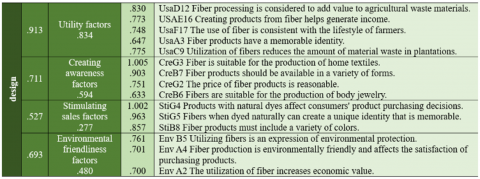
The results of the confirmatory component analysis using the Amos program (AMOS) yielded the following index values to check model consistency: chi squared = 27.982, df = 20, relative chi squared = 1.399, p = 0.030, RMSEA = 0.041, RMR = 0.040, GFI = 0.986, NFI = 0.992, TIL = 0.986, CFI = 0.997. According to the specified criteria [20], the consistency index met the required standards, indicating the potential to identify factors or guidelines for utilizing Sansevieria stuckyi God.-Leb. fibers. It can also be used to justify using research samples [20, 21]. Therefore, it can be concluded that guidelines for making use of Sansevieria stuckyi God.-Leb. fibers left over from cuttings will rely on four factors to stimulate satisfaction among farmers who grow this type of crop: 1) Usability factors, 2) Creating awareness factors, 3) Stimulating sales factors, and 4) Environmental friendliness factors. Moreover, when all four factors are considered in the design of textile products, they can serve as a resource management strategy for designers and farmers who grow this type of crop.
In this case, the four factors' average variance extraction (AVE) and composite reliability (CR) values indicate excellent and reliable information. Then, the information of all four factors can be representative of the elements: 1) Usability factors (AVE = 0.574, CR = 0.870), 2) Utility factors (AVE = 0.574, CR = 0.870), 2) Creating awareness factors (AVE = 0.681, CR = 0.892), 3) Sales stimulation factors (AVE = 0.889, CR = 0.960), 4) Environmental friendliness factors (AVE = 0.502, CR = 0.751) and others by AVE value and CR that meets the specified criteria [17]. In addition, all information has discriminant validity characteristics, which are different and unrelated, consisting of four factors from fifteen indicator variables, as shown in Table 8 and Figure 4, and how they differ.
Figure 4. Second Order: Standardized estimates and final structural equation model
Table 8. Second Order confirmatory factor analysis (Second Order)
|
Latent Variable, Observable Variable |
Utility |
Creating Awareness |
Stimulating Sales |
Environmentally Friendliness |
r2 |
||||||||
|
$b$ |
$\beta$ |
SE |
$b$ |
$\beta$ |
SE |
$b$ |
$\beta$ |
SE |
$b$ |
$\beta$ |
SE |
||
|
USAD12 |
1.000 |
.830 |
- |
- |
- |
- |
- |
- |
- |
- |
- |
- |
.689 |
|
UsaE16 |
.911 |
.773 |
.060** |
- |
- |
- |
- |
- |
- |
- |
- |
- |
.598 |
|
UsaF17 |
.839 |
.748 |
.056** |
- |
- |
- |
- |
- |
- |
- |
- |
- |
.560 |
|
UsaA3 |
.713 |
.647 |
.058** |
- |
- |
- |
- |
- |
- |
- |
- |
- |
.418 |
|
UsaC9 |
.937 |
.775 |
.060** |
- |
- |
- |
- |
- |
- |
- |
- |
- |
.600 |
|
CreG3 |
- |
- |
- |
1.000 |
1.002 |
- |
- |
- |
- |
- |
- |
- |
1.009 |
|
CreB7 |
- |
- |
- |
.920 |
.903 |
.048** |
- |
- |
- |
- |
- |
- |
.815 |
|
CreG2 |
- |
- |
- |
.725 |
.751 |
.075** |
- |
- |
- |
- |
- |
- |
.565 |
|
CreB6 |
- |
- |
- |
.619 |
.633 |
.051** |
- |
- |
- |
- |
- |
- |
.400 |
|
StiG4 |
- |
- |
- |
- |
- |
- |
1.000 |
1.002 |
- |
- |
- |
- |
1.004 |
|
StiG5 |
- |
- |
- |
- |
- |
- |
.943 |
.963 |
.016** |
- |
- |
- |
.928 |
|
StiB8 |
- |
- |
- |
- |
- |
- |
.826 |
.857 |
.026** |
- |
- |
- |
.735 |
|
EnvB5 |
- |
- |
- |
- |
- |
- |
- |
- |
- |
1.000 |
.761 |
- |
.579 |
|
EnvA4 |
- |
- |
- |
- |
- |
- |
- |
- |
- |
.901 |
.701 |
.105** |
.492 |
|
EnvA2 |
- |
- |
- |
- |
- |
- |
- |
- |
- |
.888 |
.700 |
.120** |
.490 |
|
Latent variable |
New Product Design |
R2 |
AVE |
CR |
MSV |
ASV |
|
|
|
|
|
||
|
$b$ |
$\beta$ |
SE |
|
|
|
|
|
||||||
|
Usai01 |
.976 |
.931 |
.093** |
.834 |
.574 |
.870 |
.229 |
.192 |
|
|
|
|
|
|
Cre02 |
1.000 |
.771 |
- |
.594 |
.681 |
.892 |
|
|
|
|
|
|
|
|
S ti03 |
.649 |
.527 |
.078** |
.277 |
.889 |
.960 |
|
|
|
|
|
|
|
|
Env04 |
.631 |
.693 |
.078** |
.480 |
.502 |
.751 |
|
|
|
|
|
|
|
|
Chi-Square = 38.561; df = 24, relative Chi-Square = 1.607, p-value = 0.30, GFI = 0.986, NFI = 0.992, TIL = .986, CFI = .997, RMSEA = 0.041, RMR = 0.040 [* P < .05; ** P < .01] |
|||||||||||||
Then, these four factors can work together to influence the level of satisfaction of the farmer group, arranged in order from most to most minor influence, as follows: 1] Utility factors, namely, UsaD12, UsaC9, UsaE16, UsaF17 and UsaA3 2] Creating awareness factors; namely, CreG3, CreB7, CreG2, and CreB6 3] Stimulating sales factors; namely, StiG4, StiG5, and StiB8 4] Environmental friendliness factor; namely, EnvB5, EnvA4, and EnvA2.
The evaluation from the farmer group results revealed satisfaction with the utilization method of Sansevieria stuckyi God.-Leb. fibers that were wasted from cuttings. It was found that 1) environmental friendliness factor had satisfaction at a high level (Mean = 3.812; SD = 0.718), 2) utility factor had a high level of satisfaction (Mean = 3.683; SD = 0.772), 3) stimulating sales factors had satisfaction at a high level (Mean = 3.644; SD = 0.881), 4) Creating awareness factors had satisfaction at a high level (Mean = 3.566; SD = 0.816) including the group of farmers who cultivated this type of crop to be satisfied with all four factors at a high level (Mean = 3.676; SD = 0.637), as presented in Table 9.
Table 9. Results of evaluating farmers' feelings towards all four factors (n = 359)
|
Number |
Satisfaction Assessment Items (n = 385) |
Mean |
SD |
Satisfaction Level |
|
1 |
Utility factors |
3.683 |
0.772 |
Very satisfied |
|
2 |
Creating awareness factors |
3.566 |
0.816 |
Very satisfied |
|
3 |
Stimulating sales factors |
3.644 |
0.881 |
Very satisfied |
|
4 |
Environmental friendliness factors |
3.812 |
0.718 |
Very satisfied |
|
|
Total |
3.676 |
0.637 |
Very satisfied |
1) A study on the physical properties of Sansevieria stuckyi God.-Leb. fibers cultivated by farmers in central Thailand has revealed that the trimmed leaves have stems before they are cut. Additionally, the researcher experimented with eight different formulas to transform the fibers. The colors of the fibers in each formula were tested, with formulas 1, 2, 4, 5, 6, and 8 resulting in brown fibers. In the case of formula 3, the fibers appeared light green mixed with brown; in formula 7, the fibers seemed to be light green. Then, all formulas have the physical characteristics of fibers with a rough surface, and the fibers are brittle and easily broken. However, the resulting fibers appear in an orderly, straight, beautiful fiber arrangement. and group together in an orderly manner [14, 18]. Therefore, the details of the research results are as follows:
After conducting the experiments, all eight sets of experimental formulas successfully identified the top three experimental results: experimental sets 5, 3, and 4. These sets demonstrated that the weight of the fibers was manageable and that the fibers could be effectively grouped. Additionally, the fibers gained a substantial weight after the carding process. All three experimental formulas indicated that farmers could utilize leaf waste for a cost-effective transformation process, providing an opportunity to generate income for farmers cultivating this type of crop in an environmentally friendly manner. Furthermore, the fibers are well-suited for blending with other materials [14] to produce textile products [12, 22].
2) Studying exploratory factors in search of elements that are variables affecting the satisfaction of farmer groups regarding the methods of utilization of Sansevieria stuckyi God.-Leb. fibers is based on data from twenty-two observable variables, with the results showing high predictive values from four factors that emerged from a combination of 15 variables that help textile product designers to apply them as design concepts.
Then, all four factors can be integrated into marketing to create a strategy to promote the use of local waste materials for transformation while creating additional economic value, a concept known as sustainable community product development [23]. Besides, it emphasizes the importance of using local materials to strengthen the community's economy, including promoting farmers to have direct and indirect income from the many resources available in the local area. Similarly, it also stimulates the creative thinking process [24, 25]. In presenting methods for developing waste in their farming areas, they rely on their potential in three aspects: 1) using technology appropriate for the community, 2) using one's skills, and 3) using local resources and others.
All four factors will reflect the need to develop agriculture for sustainable growth, both directly and indirectly, which will create career strength and sufficient income from the transformation of a large amount of local materials. Besides, it is concerned with an environmentally friendly production process [26]. In addition, the application of newly developed fibers to the production of home textiles is still necessary, relying on the development of quality fiber processing processes done by farmers, and it can produce quality fibers suitable for production into products to respond to consumers in the market effectively [27, 28]. In this case, it can be operated without using all future materials.
3) Results from the structural equation model of feelings represent a group of farmers who have taken advantage of Sansevieria stuckyi God.-Leb. fibers from four factors which can be summarized as factors affecting farmers who grow this type of crop satisfaction includes: factor 1 or utility, factor 2 or creating awareness, factor 3 or stimulating sales and factor 4 or environmental friendliness and others. Besides, 15 variables work together to influence, which appeared because of the newly developed structural equation model, which is consistent and can be used in design. Then, textile products are a strategy for making use of local materials [29]. As a result, there is a high chance of future success, which depends on four influencing factors as follows:
All four factors comprised 15 variables arose from the need to use agricultural wastes of Sansevieria stuckyi God.-Leb. to provide farmers with their own opportunities for sustainable development [8]. These four factors describe the opinions regarding the situation in which the Thai government will support farmers to process fibers from Sansevieria stuckyi God.-Leb. for use in the Thai textile industry. If so, it is required that the government sector as well as agencies promote the efficient utilization of these fibers, with the four factors as reinforcement. They offer an interesting choice to replace synthesized fibers in the textile industry because the innovative processing of Sansevieria stuckyi fibers relies on a biodegradable process, of which the advantages are as follows, i.e., 1) water consumption for processing is low, 2) the fibers obtained are strongly resistant to insects, and 3) the fibers obtained are biodegradable.
Thus, fibers from Sansevieria stuckyi God.-Leb. that are obtained by processing are very environmentally friendly due to the use of renewable materials, conforming to the concept of eco-friendly products [38]. The results of this research can therefore facilitate and encourage the development of natural fiber production processes using eco-friendly methods. Farmers can learn about fiber processing and production through self-learning. As this process mainly relies on basic technology, farmers will be able to process/transform their desirable fibers easily.
Moreover, the entire production process does not cause any negative impacts on the natural environment so that Thailand’s local nature and the global environment can recover as a result of the cooperation from all of us in the reduction of negative impacts on the global ecosystems. The proposed processing method is intended to help manage sustainable production chains for Thailand’s and the global textile industry. To do so, what is to be focused on includes the factors affecting the chance of success that farmers will pay attention to in order to take part in the primary stages of the production process. These factors must provide opportunities to utilize these fibers in the designs for producing eco-friendly textile products and also facilitate sustainability for farmers in terms of promoting the utilization of agricultural wastes in farming areas to bring value added, conforming to the concept of sustainable circular farming for 1) a sustainable agro-industry, 2) a sustainable textile industry, and 3) a sustainable green industry.
According to the results of this study on the physical properties of fibers from Sansevieria stuckyi God.-Leb., it was found that the top three experimental sets were selected out of eight, i.e., Sets 5, 3, and 4 because of heavy weight of the fibers obtained and the lower combing time. For the physical features of the fibers, they huddled perfectly. Additionally, this applied processing method uses basic technology and low production costs, which will generate more income for farmers of this particular plant. Thus, it is a worthy and very eco-friendly process for applied production.
Additionally, fibers from Sansevieria stuckyi God.-Leb. obtained from this process can be mixed with fibers from other types of plants. Mixed types of fibers can offer practical opportunities to apply the fibers from Sansevieria stuckyi God.-Leb. for various uses. This conforms to the concept of enhancing the efficient use of natural fibers from plants. The eco-friendly process can motivate entrepreneurs to apply these fibers in a broader range of forms. The anti-fungal anti-enzyme, and anti-bacterial properties can also be added because these pathogens may change the colors and textures of the fibers, resulting in negative effects on their properties. Thus, it is required to prevent fungi, enzymes, and bacteria from causing any damage to the fibers. If this prevention stage is efficient, the textile industry may accept and focus on the use of fibers from Sansevieria stuckyi God.-Leb. in large industrial production systems [39].
For the suitability assessment of the fiber processing by the subject farmers, there were four factors that influenced their satisfaction and likelihood to process fibers from Sansevieria stuckyi God.-Leb. in the future, i.e., 1) utility, 2) perception, 3) sales motivation, and 4) eco-friendly materials.
According to the structural equation modelling from this research, the Thai government and its agencies can use all four of these factors for strategic planning to support farmers of Sansevieria stuckyi God.-Leb. with learning and developing their self-efficacy in terms of local waste-based fiber processing to produce textile products. This strategy can motivate the management of numerous local agricultural wastes in farming areas throughout Thailand to adapt processing into fibers by applying this eco-friendly method. Sustainable use of renewable resources will also occur, followed by sustainable environmental, economic, social, and human development for farmers of this plant. It can thus be said that the results of this research can provide sustainability for farmers, including a new innovation in the form of fibers from Sansevieria stuckyi God.-Leb., which can be included to produce eco-friendly textile products by both national and international textile industries with a high level of efficiency.
In this research, an experiment to process fibers from agricultural wastes in farming areas by eco-friendly methods was conducted. The fibers developed can be applied in the textile industry in various forms, e.g., woven fabrics, clothing, and home textiles. The body of knowledge from this research can promote sustainability within the textile industry, which is currently regarded as following a detrimental fast fashion trend. Designers and textile entrepreneurs can select the fibers from Sansevieria stuckyi God.-Leb. to apply as a material for clothing production that meets consumer needs worldwide. Using these natural fibers with low impacts on the world and the environment is one way to mitigate global warming. In the future, if the properties of the fibers from Sansevieria stuckyi God.-Leb. are analyzed in more detail, together with the development of fiber improvement methods that blend these fibers with natural fibers from other plants, the mixed fibers obtained will possess high efficiency and adequate properties that can be applied in the production processes of textile industrial plants.
Funding: The National Research Council (NRCT) is thanked for supporting this research through the Innovation in Graduate Researcher Development Grants for the fiscal year 2023 (Grant No.: N41A660544).
Institutional Review Board Statement: Approval for this study was provided by the IRB of King Mongkut's Institute of Technology Ladkrabang, according to document number EC-KMITL_67_011. with the project to be received by human research ethics certification with No. 11/2024.
Transparency: The authors state that the manuscript is honest, truthful, and transparent, that no key aspects of the investigation have been omitted, and that any differences from the study as planned have been clarified. This study followed all writing ethics.
|
SEM |
Structural Equation Model |
|
EFA |
Exploratory Factor Analysis |
|
CFA |
Confirmatory Factor Analysis |
|
E.M. |
Effective Microorganisms |
[1] United Nations. (2023). The sustainable development goals report, special edition. https://unstats.un.org/sdgs/report/2023/The-Sustainable-Development-Goals-Report-2023.pdf.
[2] Christensen, T.B. (2021). Towards a circular economy in cities: Exploring local modes of governance in the transition towards a circular economy in construction and textile recycling. Journal of Cleaner Production, 305: 127058. https://doi.org/10.1016/j.jclepro.2021.127058
[3] Leal Filho, W., Tripathi, S.K., Andrade Guerra, J.B.S.O.D., Giné-Garriga, R., Orlovic Lovren, V., Willats, J. (2019). Using the sustainable development goals towards a better understanding of sustainability challenges. International Journal of Sustainable Development & World Ecology, 26(2): 179-190. https://doi.org/10.1080/13504509.2018.1505674
[4] National Science and Technology Development Agency. (2021). Bio-circular-green economy action plan 2021-2027. https://www.bcg.in.th/eng/wp-content/uploads/2022/07/BCG_Action_Plan_-Eng_Small.pdf.
[5] Nyenya, R.T., Stedje, B. (2011). Ethnobotanical studies in the genus Sansevieria Thunb. (Asparagaceae) in Zimbabwe. Ethnobotany Research and Applications, 9: 421-443.
[6] Lee, K.E. (2017). Environmental sustainability in the textile industry. Sustainability in the Textile Industry, 17-55.
[7] Sarkar, A.N. (2013). Promoting eco-innovations to leverage sustainable development of eco-industry and green growth. European Journal of Sustainable Development, 2(1): 171-171. https://doi.org/10.14207/ejsd.2013.v2n1p171
[8] Farhana, K., Kadirgama, K., Mahamude, A.S.F., Mica, M.T. (2022). Energy consumption, environmental impact, and implementation of renewable energy resources in global textile industries: An overview towards circularity and sustainability. Materials Circular Economy, 4(1): 15. https://doi.org/10.1007/s42824-022-00059-1
[9] Wantahe, E., Bigambo, P. (2023). Review of sansevieria ehrenbergii (SE) leaf fibers and their potential applications. Cellulose, 30(15): 9241-9259. https://doi.org/10.1007/s10570-023-05481-5
[10] Aarseth-Hansen, M., Dahl Møller, J., Damgaard, J., Skytt Andersen, A. (2005). Sansevieria stuckyi potential as potted plant. Acta Horticulturae, (683): 259-264. https://doi.org/10.17660/ActaHortic.2005.683.30
[11] Adeniyi, A., Adeoye, S. Ighalo, J. (2020). Sansevieria trifasciata fibre and composites: A review of recent developments. International Polymer Processing, 35(4): 344-354. https://doi.org/10.3139/217.3914
[12] Widyasanti, A., Napitupulu, L.O.B., Thoriq, A. (2020). Physical and mechanical properties of natural fiber from Sansevieria trifasciata and Agave sisalana. In IOP Conference Series: Earth and Environmental Science, 462(1): 012032. https://doi.org/10.1088/1755-1315/462/1/012032
[13] Widodo, E., Mulyadi, M., Tjahjanti, P.H., Kirom, F.S. (2021). The sansevieria trifasciata fiber compatibility analysis for biocomposite reinforcement. Turbo: Jurnal Program Studi Teknik Mesin, 10(1). http://doi.org/10.24127/trb.v10i1.1542
[14] Lindsley, C.H. (1951). Measurement of fiber orientation. Textile Research Journal, 21(1): 39-46. https://doi.org/10.1177/004051755102100109
[15] Yamane, T. (1973). Statistics: An Introductory Analysis. New York, N.Y. (USA) Harper and Row. https://doi.org/10.3/JQUERY-UI.JS
[16] Peterson, R.A. (1994). A meta-analysis of cronbach’s coefficient alpha. Journal of Consumer Research, 21(2): 381-391. https://doi.org/10.1086/209405
[17] Hair, J.F., Black, W.C., Babin, B.J., Anderson, R.E. (2019). Multivariate Data Analysis (8th.). Cengage Learning.
[18] Montgomery, N. (2022) Preparing fibre for spinning. Thread collective. https://threadcollective.com.au/blogs/fibre-preparation-carding/preparing-fibre-for-spinning.
[19] Joreskog, K.G., Sorbom, D. (1996). LISREL 8: User’s Reference Guide (L. Stam, Ed.; LISREL 8). Scientific Software International.
[20] Schumacker, R.E., Lomax, R.G. (2004). A Beginner’s Guide to Structural Equation Modeling. P. Smolenski, Ed.; Taylor & Francis. Lawrence Erlbaum Associates, Inc.
[21] Suksawang, P. (2014). Principles of structural equation model analysis. Journal of Narathiwat Rajanagarindra University, 6(2). http://southpus.pnu.ac.th/ojs/index.php/pnujr/article/view/301/649.
[22] Abdullah, A.B.M., Abony, M., Islam, M.T., Hasan, M.S., Oyon, M.A.K., Rahman, M.B. (2020). Extraction and proximate study of Sansevieria trifasciata L. as fibre source for textile and other uses. Journal of the Asiatic Society of Bangladesh, Science, 46(2): 155-162.
[23] Egwutvongsa, S. (2023). Principles of Future Thought: Industrial Product Design. Min Service Supply Ltd., Bangkok (Thailand).
[24] Egwutvongsa, S. (2021). Influence factors on industrial handmade products designed from sugar palm fibers. Strategic Design Research Journal, 14(2): 456-470. https://doi.org/10.4013/SDRJ.2021.142.06
[25] Egwutvongsa, S., Seviset, S. (2021). Ideas for creation: A comparison of the learning results of three-dimensional images between active learning and child-centered education of product design students. International Journal of Emerging Technologies in Learning (IJET), 16(11): 273-288. https://doi.org/10.3991/IJET.V16I11.21597
[26] Kijmongkolvanich, S., Seviset, S., Egwutvongsa, S. (2023). Development of geometric shape wood joint technique into the creation of Thai Lanna teak furniture with an environmentally friendly process in Thailand. Kurdish Studies, 11(2): 1473-1492. https://doi.org/10.58262/ks.v11i02.102
[27] Jourabchi Amirkhizi, P., Pourtalebi, S., Anzabi, N. (2023). Emotional effects of product form in individualist and collectivist cultures. Journal of Marketing Communications, 29(5): 476-490. https://doi.org/10.1080/13527266.2022.2037009
[28] Kijmongkolvanich, S., Sevisat, S., Egwutvongsa, S. (2023). Properties of 12-year low thinning teak wood for furniture production of communities in Thailand. International Journal of Design & Nature and Ecodynamics, 18(2): 301-312. https://doi.org/10.18280/IJDNE.180207
[29] Egwutvongsa, S. (2023). Eco-economy: Utilization of sapwood scraps for sustainable economic value in communities. Academic Journal of Interdisciplinary Studies, 12(1): 102. https://doi.org/10.36941/ajis-2023-0009
[30] Ramanaiah, K., Prasad, A.R., Reddy, K.H.C. (2013). Mechanical, thermophysical and fire properties of sansevieria fiber-reinforced polyester composites. Materials & Design, 49: 986-991. https://doi.org/10.1016/j.matdes.2013.02.056
[31] Rwawiire, S., Tomkova, B. (2015). Morphological, thermal, and mechanical characterization of Sansevieria trifasciata fibers. Journal of Natural Fibers, 12(3): 201-210.
[32] Karimah, A., Ridho, M.R., Munawar, S.S., Ismadi, Amin, Y., Damayanti, R., Lubis, M.A.R., Wulandari, A.P., Nurindah, Iswanto, A.H., Fatriasari, W., Nawawi, D.S., Rangappa, S.M. (2021). A comprehensive review on natural fibers: Technological and socio-economical aspects. Polymers, 13(24): 4280. https://doi.org/10.3390/polym13244280
[33] Grace Annapoorani, S. (2018). Sustainable textile fibers. Sustainable Innovations in Textile Fibres, 1-30. https://doi.org/10.1007/978-981-10-8578-9_1
[34] Ramanaiah, K., Ratna Prasad, A.V., Chandra Reddy, K.H. (2011). Thermal and mechanical properties of sansevieria green fiber reinforcement. International Journal of Polymer Analysis and Characterization, 16(8): 602-608. https://doi.org/10.1080/1023666X.2011.622358
[35] Panjwani, M., Rapolu, Y., Chaudhary, M., Gulati, M., Razdan, K., Dhawan, A., Sinha, V.R. (2023). Biodegradable sanitary napkins—A sustainable approach towards menstrual and environmental hygiene. Biomass Conversion and Biorefinery, 1-16. https://doi.org/10.1007/s13399-023-04688-7
[36] Kaur, J., Dhar, S.K., Chauhan, A., Yadav, S., Mudgal, G., Lyudmila, A., Atuchin, V., Abdi, G. (2023). GC-MS validated phytochemical up-leveling with in vitro-raised Sansevieria trifasciata [Prain]: The mother-in-law’s tongue gets more antibacterial. Current Plant Biology. https://doi.org/10.1016/j.cpb.2023.100308
[37] Afrasiabian, H., Hododi, R., Imanieh, M.H., Salehi, A. (2017). Therapeutic effects of Sansevieria trifasciata ointment in callosities of toes. Global Journal of Health Science, 9(2): 265-268. http://doi.org/10.5539/gjhs.v9n2p264
[38] Gedik, G., Avinc, O. (2020). Hemp fiber as a sustainable raw material source for textile industry: can we use its potential for more eco-friendly production? Sustainability in the Textile and Apparel Industries: Sourcing Natural Raw Materials, 87-109. https://doi.org/10.1007/978-3-030-38541-5_4
[39] Kalia, S., Thakur, K., Celli, A., Kiechel, M.A., Schauer, C.L. (2013). Surface modification of plant fibers using environment friendly methods for their application in polymer composites, textile industry and antimicrobial activities: A review. Journal of Environmental Chemical Engineering, 1(3): 97-112. https://doi.org/10.1016/j.jece.2013.04.009