Khaled Alomari* | Batool AlTal | Osama Ayadi
© 2023 IIETA. This article is published by IIETA and is licensed under the CC BY 4.0 license (http://creativecommons.org/licenses/by/4.0/).
OPEN ACCESS
Jordan imports 94% of its oil and gas (fossil fuel) to meet its energy needs, making the country vulnerable to fluctuations in fuel prices. Jordan's energy demand is growing by 3% annually mainly because of the growth of the residential sector, the government has set a target of meeting 10% of energy demand from renewable energy sources. We proposed a design solution of four floors of housing consisting 2 flats each, using the facades of a building as a Building Integrated Photovoltaic (BIPV), and evaluate the energy that a Photovoltaic(PV) system could yield by new facades design, we take an example of a real house designed here in Amman, Jordan using Cells as integrated elements on facades and roofs, We will use simulation to determine energy yielded for each intended elevation, by taking the most traditional sample of apartment housing in Jordan, then using Revit Architecture for 3d modeling the two-dimensional design by AutoCAD program, to get plans for the house in one of the 3D modeling programs, in an exact copy of the building with the same spaces, heights, and technical factors. Then assuring the location of newly designed PV Panels by skelion application that approve distances between PV panels on the roof, then using Solar GIS to calculate the radiation for all orientating to facades according to selected location, and lastly using equations to get the results. The results of the simulations indicate that the efficiency of using PV panels in an integrated way is more efficient in winter than in summer, covering the need for an apartment which has an area of 170,175 m2 as an energy source through solar panels, and part of the roof was also used. The result was that we can generate about 18,648 kWh per year, which is 42% of the total energy, if the integrated PV panels in the railing elements on the south facade are used, and about 9,720 kWh, which is 22% of the total energy, if the integrated PV panels on the west or east facades are used.
Jordan multistory building, solar cells, PV cells, building integrated photovoltaic, overall energy consumption, apartment facades
Jordan faces two significant challenges in its energy sector, rising energy demand and limited domestic resources to meet the country's needs, Jordan imports most of its energy needs, and the high cost of imported oil created challenges for Jordan's economic growth and social development.
The residential housing sector is expanding, accounting for 21.5% of total energy consumption and 46% of electricity usage. A questionnaire was developed for 400 apartments in Amman, reflecting the housing properties and structural characteristics for cooling, heating, electricity, and the use of electrical machines. The Energy Use Intensity (EUI) was determined to be 94.1 KW/h [1]. Many people are becoming aware of the importance of using their homes as a source of energy.
The residential housing sector is expanding, accounting for 21.5% of total energy consumption and 46% of electricity usage. A questionnaire was developed for 400 apartments in Amman, reflecting the housing properties and structural characteristics for cooling, heating, electricity, and the use of electrical machines. The Energy Use Intensity (EUI) was determined to be 94.1 KW/h [1]. Many people are becoming aware of the importance of using their homes as a source of energy.
The significance of the research paper stems from the fact that it investigates the possibility of providing energy through BIPV in a country that lacks energy sources such as oil and gas, which must be imported, by proposing a design solution in multi-story buildings using PV panels in BIPV method also we can reduce the use of rooftop as an energy surface source, so it can be a very successful investment for solar energy to cover residential purposes. Jordan has plenty of solar radiation ranging from 5-7 kWh per m2 and 330 sunny days per year, which is a huge number globally, so solar energy to cover dwelling uses can be a very successful investment [2].
1.1 Building integrated photovoltaic (BIPV)
Photovoltaic's is one of the most promising renewable energy technologies. PV is a truly elegant way to generate electricity on-site, directly from the sun, without having to worry about energy supply or the environment. These solid-state devices generate electricity from sunlight with no maintenance, pollution, or material consumption. Depending on the tilt angle and location of the properties, electricity production from PV systems installed on single houses and villas can cover [3].
A BIPV system is made up of photovoltaic modules that are integrated into the building envelope, such as the roof or façade. BIPV systems can save material and electricity costs by acting as both a building envelope material and an electricity generator [4]. They can also reduce the consumption of fossil fuels and the emission of ozone-depleting gases.
Installing PV systems on residential rooftops can be a strategy for mitigating future energy consumption increases and can play an important role in the development of clean and sustainable energy sources [5]. Because Jordan is located within the world's solar belt, with average solar radiation ranging between 5 and 7 (kWh/m2), PV technology is critical to achieving a significant increase in the use of renewable solar energy sources for achieving sustainable development goals [6, 7]. Furthermore, global power generation from solar photovoltaic (PV) panels exceeded 627 GW in 2019, compared to less than 23 GW in 2009 [7].
1.2 Jordan context
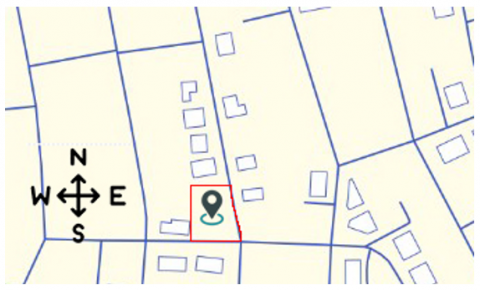
Jordan's population is expected to reach 12.9 million people by 2030. This will increase energy demand in the residential building sector [1]. Jordan currently imports 94% of its oil and natural gas from abroad to meet its energy needs [8], making fuel prices volatile; Jordan's energy demand is increasing by 3% per year. As a result, one of Jordan's most pressing challenges is the energy crisis. Jordan's debt accounts for 97% of its national income, with the majority of this debt owing to an increase in energy consumption caused primarily by regional conditions in Jordan in recent years [9]. Because of its significant environmental and societal impact, the construction industry is critical [10]. According to Jordan's results, Amman had the highest annual yield of the PV system due to high solar radiation and moderate ambient temperatures. The performance of the PV system, however, decreases during the summer months due to the effect of high temperatures on the performance of the PV panels [11]. Jordan has four and a half solar hours per day, for a total of 130 solar hours per month and 1560 solar hours per year [1]. The amount of energy required in our apartment complex is (total annual energy for the residential complex / annual solar hours) =49296/1560=31.6. Take, for example, an existing house in Amman, specifically in Sports City and belonging to housing category in location as (Figure 1) C, as a large proportion of houses in Amman do. The ratio of the building's area to the area of the land on which it is built is 51%, the front setback is 4 meters, and the side and rear setbacks are 3 meters [12].
Figure 1. Suggested project location, by Google Earth eaearthEarthlatitude31.9931504, longitude 35.9087747
The amount of energy required in our apartment complex is (total annual energy for the residential complex / annual solar hours) =49296/1560=31.6. Take, for example, an existing house in Amman, specifically in Sports City and belonging to housing category C, as a large proportion of houses in Amman do. The ratio of the building's area to the area of the land on which it is built is 51%, the front setback is 4 meters, and the side and rear setbacks are 3 meters [12].
We will use simulation to determine energy yielded for each intended elevation, by taking the most traditional sample of apartment housing in Jordan, then using Revit Architecture for 3d modeling the two-dimensional design by AutoCAD program, to get plans for the house in one of the 3D modeling programs, in an exact copy of the building with the same spaces, heights, and technical factors. Then assuring the location of newly designed PV Panels by skelion application that gives approve to distances between PV panels on the roof, then using Solar GIS to calculate the radiation for all orientating to facades according to selected location, the lastly using equations to get the results. The simulation results show that the efficiency of using PV panels in an integrated way is higher in winter than in summer, because the sun shines directly on the angel, which is more perpendicular to the façade in winter, as opposed to using panels on the roof. We will suggest a possibility and locations for pleasing and placing solar cells, either on the architectural facades or on the roof, Wider glass windows are preferred in Jordan, particularly on the main facades of houses, to achieve an ethical and modern appearance; as designers, we take this into account, particularly if the façade faces south, as most clients rely on this to sell their flat or private home. Also, building orientation is a very specific detail for clients and designers; specifically, it is useful to reduce energy consumption by using new technology to explain the behavior of electricity consumption per unit area (EUI).
The EUI is used to determine whether a dwelling's actual annual energy consumption exceeds the standard (average) energy consumption required for its size. It can be used as a starting point (benchmark) to calculate the amount of energy savings that should be realized for the home [13].
This study investigates a variety of scenarios integrating PV systems on south-facing façades, alone or in combination with east and west-facing façades, to increase the potential of electricity generation from multi-story buildings. The basic PV system is assumed to cover 50% of the south façade from the third floor and 80% of the east and west facades. The combined area of the east and west façades accounts for roughly two-thirds of the total area of the south façade. Because the east and west façades have smaller windows, the total BIPV area is comparable to that of the south façade [14]. Three major factors must be determined in order to increase the energy yield of a PV system: Location (solar radiation), PV cell technology or types, and orientation (tilt angle, azimuth, control method) about the position of the sun throughout the year; As a result, the proper matching of the most advantageous solutions has a significant impact on the PV system's payback period, the value of the initial investment costs, and the stability of the electricity system (by determining the variability of energy production). A preliminary assessment of the energy generation potential for each case should be made to select the most appropriate installation mode solution for each case [4].
The efficiency with which solar radiation is converted into electricity in PV cells varies greatly depending on the PV technology. High-efficiency solar cells, if economically feasible, should be used to increase the energy yield of photovoltaic systems. Since the 1980s, the rates of converting solar radiation into electricity in PV technologies have more than doubled, with current efficiencies ranging from 10 to 46% [15]. When multiple cells (two or more connections, gallium arsenide - with or without concentrator) are used, the highest values (28-46%) can be obtained. The efficiency of crystalline Si cells (single or multi-crystalline, with silicon heterostructures) is 21-28%. Thin-film technologies produce slightly less energy (14-24% of solar radiation) (copper indium gallium selenide, cadmium telluride ,or stabilized amorphous silicon).
Finally, when one of the low-cost, constantly evolving technologies (dye, perovskite, organic, copper-zinc-tin-sulphide, or quantum-dot solar cells) is used, the least amount of energy (up to 10-14%) is collected in PV systems [16, 17]. Nowadays, crystalline silicon cells account for the majority of PV panels on the market, owing to the favorable efficiency-to-total-investment-cost ratio and the widespread infrastructure (Si wafer-based PV cells account for approximately 94% of total global production [18, 19]. This situation is likely to change in the future if less expensive methods of producing high-efficiency PV cells are adopted or non-traditional (e.g. perovskite) units become more popular [17, 20]. Importantly, PV system efficiency can be increased by properly implementing maximum power point tracking (MPPT) systems or reducing energy losses in cables and control devices (inverters, batteries) [4]. The recent significant reduction in the capital cost of solar thermal collectors (SC) and photovoltaic (PV) panels, as well as the concurrent increase in sustainable energy policies adopted by most governments worldwide, are encouraging an increase in the use of small-scale solar systems. One of the goals of established energy policies in European Union countries is to achieve widespread adoption of small SC and PV systems to increase the use of renewable energy sources [21]. According to a study conducted by a researcher among students at the University of Jordan, the majority (77.3%) of students live in Amman, with approximately 57.6% living in flats. Because 95.5% of the responses were from the Jordanian Electricity Company (JEPCO) service area, the calculated average energy consumption intensity (EUI) is used as a benchmark to study residential electricity consumption in this area. The average annual EUI for flats is 31.6 kWh/m2 and 22.5 kWh/m2 for houses. Residential buildings that consume more electricity than these limits are considered inefficient and should undergo an energy audit [13].
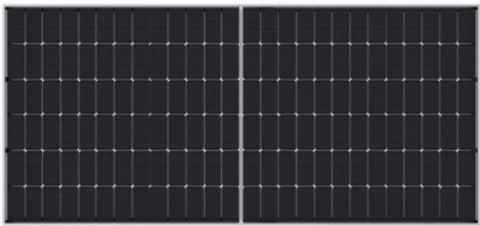
Figure 2. Tiger Neo N-type PV panels characteristics, the panel size is 2465mm*1134mm, every panel power is between (595-615 watt)
2.1 Calculations of the dwellings
From the literature mentioned earlier, the annual average EUI for dwellings is 31.6 kWh/m2 and in a normal situation, the annual demand is 31.6 kwh/m2. To select PV panels for our project, after searching for PV panels from Jinko, a company specializing in solar panels as (Figure2), we found a model Worldwide, the buildings sector accounts for approximately 40% of total final energy consumption and around 1/3 of greenhouse gas (GHG) emissions [22, 23].
To calculate the energy demand of a single flat, if the flat is 170m2 and 175m2, as in my case, the demand in the year is (consumption in the year /m2) *(area of the flat) = For 175m2 is 3.61*175 = 5530kwh for 4 flats is 5530*4 = 22,120 kwh.
3.61*170 = 5372kwh for 170m2; 5372*4 = 21,488kwh (22120+21488 = 43,608kwh) for the entire building annually .In our case we will rely on placing the cells in different ways and not only on the roof of the building:
1- On the south façade through an integrated element such as a railing
2- On the east façade as an ethical and design element
3- On the west façade as an ethical and design element
4- On the roof
2.2 Discussion and analysis
1-First case railing PV cells elevation by an integrated method: In this case, we plan to use PV panels as an integrated railing element on the south façade. We can put about 25 panels on both sides of the balcony and three panels on the glass wall of the staircase, depending on the size of the panels, which is 2.4m*1.13m, as shown in (Figures 3, 4).
Figure 3. Front south elevation PV panels 3d max distribution
Figure 4. Front south elevation PV panels 3d max distribution
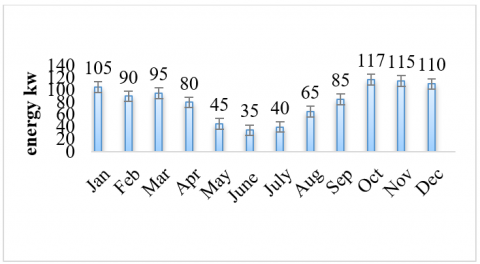
Figure 5. Monthly energy output and by PV Grid program for Slope angle: 90° Azimuth0
The result is inverse to the optimal case,as (Figure 5) the top solar radiation occurs in October, November, December, and January, and this is due to a solar angle that is drawn near 90 because the sun is lower in winter but higher in summer, so the solar radiation angle is drawn near zero. The slope angle is 90 degrees. The azimuth angle is 0 degrees. PV energy production per year: 996.05 kWh Annual in-plane irradiation:1332.11 kWh/m² Variability from year to year: 26.27 kWh. That means the efficiency of the panels is 74%. And we have about 28 panels perpendicularly hung on the south elevation as an integrated railing element, so we can gain energy of about: 18,648kwh, and the calculation equation used to find this number is below (Energy yield = power of one panel in one hour*solar hours of the year*a number of panels*efficiency) ratio, depending on PV grid application ratio in the desired location (600kw/h*1500*.74*28 = 18,648kwh) represents 42% of total requested energy.
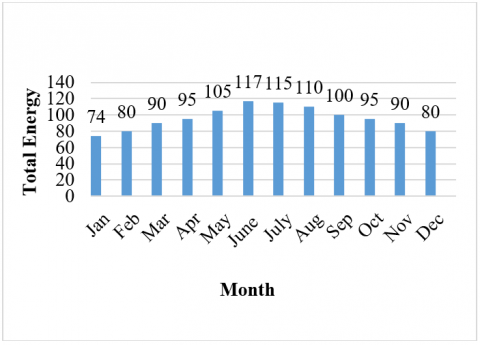
2-Second case: PV cells on west elevations by an integrated method: In this case, the panels are fixed to the west, so the PV grid simulation output is: Outputs The slope angle is 90 degrees. 90° azimuth angle PV energy production per year: 789.3kWh Annual in-plane irradiation as pv grid info in (Figure 6): 1074.69 kWh/m2 Variability from year to year: 31.99 kWh and we've installed about 13 as (Figures 7, 8) panels on the west elevation to gain energy using the same equation we used for the first case calculation: (600*1500*.72*13 = 9,720 kw) account for 22% of total energy requested.
Figure 6. Monthly energy output and by PV Grid program for Slope angle: 90° Azimuth90
Figure 7. West elevation by 3d max program
The panel size is 2465mm*1134mm
Every panel power is between (595-615 watt)
Figure 8. West elevation by 3d max program
3-Third case: PV cells on east elevations by an integrated method: In this case, the panels are fixed East so in this case the simulation output by PV grid as (Figure 9) is: Outputs Slope angle: 90° Azimuth angle: -90° Yearly PV energy production: 814.43 kWh Yearly in-plane irradiation: 1089.47 kWh/m² Year-to-year variability: 31.99 kW.
Figure 9. Monthly energy output and by PV Grid program for Slope angle: 90° Azimuth-90
Figure 10. East elevation by 3d max program
Figure 11. East elevation by 3d max program
And we have about 13 panels on the east elevation as (Figures 10, 11) so we can gain energy by the same equation used for the first case calculation:(600*1500*.72*13= 9,720 kwh) represents 22% of the total requested energy.
So, the total energy yielded is the summation of energy from the three cases South railing, West elevation, and East that equal (Energy = 18,648+9,720+9,720 = 38,088 kWh), this number represents 87.3 of energy needed and this is a perfect result.
We have the option to recover total energy needs by adding PV panels on the roof surface and we should make the calculation to know how many panels should we use to cover our needs in the following step.
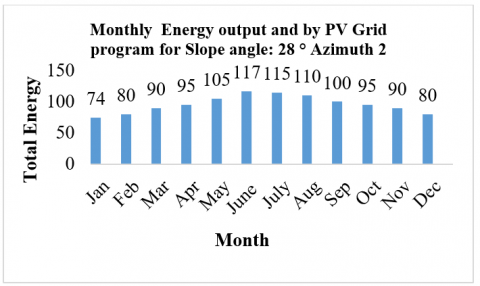
4-Forth case rooftop in optimal situation: Top roof panels are placed on the roof in their optimal case by this simulation by online (PV Grid application) as (Figure 12) : Slope angle: 28 (opt) ° Azimuth angle: 2 (opt) ° Yearly PV energy production: 1769.12 kWh Yearly in-plane irradiation: 2321.54kWh/m² Year-to-year variability: 28.77 kWh.
Now to calculate the number of PV panels in the beginning, we should know how much energy we must provide to cover the rest of our needs:
(43,608-38,088=5520kwh) the energy amount which should we supply the PV system with.
The yearly sun hours in Jordan are 1500 hours so (5520/1500= 3680kw) the power of the system should we use so the number of panels is: 3680/600= 6.6 panels so we need 7 panels, and the 7 panels yield about 7 panels as (Figures 13, 14).
Figure 12. Monthly Energy output and by PV Grid program for Slope angle: 28° Azimuth -2
Figure 13. Roof PV panels distribution
Figure 14. Roof PV panels distribution
Difficulty to work with one program that produce all information needed to complete the simulation to calculate solar energy led to use more than one program to find results.
[1] Amman regulation system. (2019). https://ammancity.gov.jo/site_doc/Bulding-2018.pdf.
[2] Abu-Rumman, G., Khdair, A.I., Khdair, S.I. (2020). Current status and future investment potential in renewable energy in Jordan: An overview. Heliyon, 6(2): e03346. https://doi.org/10.1016/j.heliyon.2020.e03346
[3] Ayadi, O., Abdalla, O., Hallaq, Y., Aldalabih, A. (2021, April). Developing an Energy Benchmark for Residential Buildings in Jordan. In 2021 12th International Renewable Engineering Conference (IREC), Amman, Jordan, pp. 1-5. https://doi.org/10.1109/IREC51415.2021.9427826
[4] Ayadi, O., Al-Dahidi, S. (2019). Comparison of solar thermal and solar electric space heating and cooling systems for buildings in different climatic regions. Solar Energy, 188: 545-560. https://doi.org/10.1016/j.solener.2019.06.033
[5] Badescu, V. (2008). Modeling Solar Radiation at the Earth’s Surface. SpringerVerlag, Berlin/Heidelberg. https://doi.org/10.1007/978-3-540-77455-6
[6] Buonomano, A., Calise, F., Vicidomini, M. (2016). Design, simulation and experimental investigation of a solar system based on PV panels and PVT collectors. Energies, 9(7): 497. https://doi.org/10.3390/en9070497
[7] Chen, J., Wang, X., Li, Z., Qiu, S., Wu, J. (2018). Deploying residential rooftop PV units for office building use: A case study in Shanghai. Energy Procedia, 152: 21-26. https://doi.org/10.1016/j.egypro.2018.09.053
[8] Cholewiński, M., Fąfara, J.M. (2022). Numerical assessment of energy generation from photovoltaic cells using the CM-SAF PVGIS database. Archives of Electrical Engineering, 71(1): 227-243. https://doi.org/10.24425/aee.2022.140207
[9] Fan, X., Sun, H., Yuan, Z., Li, Z., Shi, R., Ghadimi, N. (2020). High voltage gain DC/DC converter using coupled inductor and VM techniques. IEEE Access, 8: 131975-131987. https://doi.org/10.1109/ACCESS.2020.3002902
[10] Fraunhofer Institute for Solar Energy Systems. (2017). PSE AG, Photovoltaics Report, Materials of Fraunhofer ISE. https://www.ise.fraunhofer.de/en/publications/studies/photovoltaics-report.html.
[11] Hachem, C., Athienitis, A., Fazio, P. (2014). Energy performance enhancement in multistory residential buildings. Applied Energy, 116: 9-19. https://doi.org/10.1016/j.apenergy.2013.11.018
[12] International Renewable Energy Agency (IRENA), 4/5 (2012). SolarPhotovoltaics, Renewable Energy Technologies: Cost Analysis Series, 1: Power Sector, iss.
[13] Juaidi, A., Abdallah, R., Ayadi, O., Salameh, T., Hasan, A.A., Ibrik, I. (2021). Solar cooling research and technology. Recent Advances in Renewable Energy Technologies, 1-44. https://doi.org/10.1016/B978-0-323-91093-4.00005-6
[14] Khan, J., Arsalan, M.H. (2016). Solar power technologies for sustainable electricity generation–A review. Renewable and Sustainable Energy Reviews, 55: 414-425. https://doi.org/10.1016/j.rser.2015.10.135
[15] Liu, B., Pouramini, S. (2021). Multi-objective optimization for thermal comfort enhancement and greenhouse gas emission reduction in residential buildings applying retrofitting measures by an Enhanced Water Strider Optimization Algorithm: A case study. Energy Reports, 7: 1915-1929. https://doi.org/10.1016/j.egyr.2021.03.044
[16] Mengi, O.Ö., Altaş, İ.H. (2012). Fuzzy logic control for a wind/battery renewable energy production system. Turkish Journal of Electrical Engineering and Computer Sciences, 20(2): 187-206. https://doi.org/10.3906/elk-1104-20
[17] Monna, S., Abdallah, R., Juaidi, A., Albatayneh, A., Zapata-Sierra, A.J., Manzano-Agugliaro, F. (2022). Potential electricity production by installing photovoltaic systems on the rooftops of residential buildings in Jordan: An approach to climate change mitigation. Energies, 15(2): 496. https://doi.org/10.3390/en15020496
[18] Monna, S., Abdallah, R., Juaidi, A., Albatayneh, A., Zapata-Sierra, A.J., Manzano-Agugliaro, F. (2022). Potential electricity production by installing photovoltaic systems on the rooftops of residential buildings in Jordan: An approach to climate change mitigation. Energies, 15(2): 496. https://doi.org/10.3390/en15020496
[19] Nazer, H. (2019). Developing an Energy Benchmark for Residential Apartments in Amman. Jordan Green Building Council.
[20] Qasaimeh, A. (2012). Solar energy optimization through seasons: case study in Jordan. Smart Grid and Renewable Energy, 3(4): 275-281. https://doi.org/10.4236/sgre.2012.34038
[21] Saga, T. (2010). Advances in crystalline silicon solar cell technology for industrial mass production. NPG Asia Materials, 2(3): 96-102. https://doi.org/10.1038/asiamat.2010.82
[22] Sandri, S., Hussein, H., Alshyab, N. (2020). Sustainability of the energy sector in Jordan. Challenges and opportunities. Sustainability, 12(24): 10465. https://doi.org/10.3390/su122410465
[23] Ye, H., Jin, G., Fei, W., Ghadimi, N. (2020). High step-up interleaved dc/dc converter with high efficiency. Energy Sources, Part A: Recovery, Utilization, and Environmental Effects, 1-20. https://doi.org/10.1080/15567036.2020.1716111