Henny Pasandang Nari* | Mahadir Sirman | Muhammad Ivan | Rombe Allo
© 2026 The authors. This article is published by IIETA and is licensed under the CC BY 4.0 license (http://creativecommons.org/licenses/by/4.0/).
OPEN ACCESS
The increasing demand for energy-efficient building materials has accelerated the development of lightweight composites derived from agricultural waste. This study investigated the thermal conductivity of rice husk–cement composite particleboards fabricated from untreated whole rice husks with different mixing ratios. Thermal conductivity was evaluated using a custom-built modified steady-state apparatus operated under controlled laboratory conditions with distributed incandescent heaters and a water-cooling circulation system to maintain stable thermal boundary conditions. Composite boards (25 × 25 × 2 cm) were prepared with rice husk-to-cement mixing ratios of 1:2, 1:1, 3:2, and 2:1, after which thermal conductivity, density, and compressive strength measurements. The 2:1 rice husk-to-cement mixture exhibited the lowest thermal conductivity, approximately 0.39–0.40 W·m⁻¹·K⁻¹. The improved insulation performance was attributed to the greater volume of interconnected pores created by the higher rice husk content, which disrupted conductive heat-transfer pathways within the cement matrix. Increasing the rice husk proportion increased compressive strength due to optimal particle packing and enhanced effective water-to-cement ratio, while the composites retained sufficient mechanical integrity for non-structural applications. These findings indicate that rice husk–cement composites represent promising candidates for future non-structural thermal insulation applications. Further investigations addressing durability, moisture resistance, and compliance with relevant building-material standards are required before practical implementation.
rice husk–cement composite, thermal insulation, thermal conductivity, compressive strength, particleboard
The construction sector continues to face increasing pressure to reduce carbon emissions while improving the thermal efficiency of the building envelope. Conventional cement-based materials, although mechanically reliable, generally exhibit relatively high thermal conductivity, which contributes to greater cooling and heating energy demand in residential and industrial buildings. In tropical regions, where thermal loads are strongly influenced by solar radiation and ambient humidity, the development of low-conductivity construction materials is particularly important. Simultaneously, the accumulation of agricultural waste has emerged as a parallel environmental concern, especially in rice-producing countries where rice husks are generated in large quantities during milling. Rice husks account for approximately 20% of the total weight of harvested rice, and large volumes are often disposed of through open burning or uncontrolled landfilling, practices that can contribute to air pollution and waste management problems [1].
In recent years, rice husks and rice husk ash (RHA) have attracted considerable attention as sustainable constituents of cement-based composites owing to their low density, porous morphology, and high silica content. Previous studies have indicated that rice husk-derived materials can modify the microstructure of the cement matrix and reduce heat transfer by increasing pore discontinuity and reducing solid-phase conduction. Yu and Sun [2] reported that the incorporation of rice husk fibers significantly improved the insulation performance of wallboard composites, with the thermal conductivity decreasing as the rice husk content increased. Similar observations have been reported in plaster, mortar, and lightweight concrete systems, where thermal conductivity reductions ranging from 12% to nearly 70% were documented depending on the mixing proportion and curing conditions [3, 4].
The reduction in thermal conductivity is generally associated with the intrinsic characteristics of the rice husk particles. Rice husks contain amorphous silica and lignocellulosic constituents with relatively low thermal diffusivity. When incorporated into a cement matrix, these particles introduce internal voids and tortuous heat transfer pathways, thereby restricting conductive heat flow. The experimental work conducted by Hadipramana et al. [5] showed that aerated concrete containing RHA as a partial sand replacement experienced a reduction in thermal conductivity of up to 62% at higher replacement levels. Similarly, Chabi et al. [6] observed that the incorporation of rice husks improved insulation capacity while simultaneously reducing composite density. These findings suggest that rice husk–cement composites may serve as a feasible alternative to lightweight and energy-efficient building materials.
Beyond their thermal insulation capability, rice husk–cement composites have also been explored for multifunctional building applications. Marques et al. [7] reported that rice husk–cement composites simultaneously improved thermal insulation and acoustic performance owing to their heterogeneous pore structure, which effectively disrupted heat and sound transmission. Mohapatra [8] reported that the thermal conductivity of rice husk (200 μm mesh size) filled epoxy composites was studied experimentally and numerically. Meanwhile, Mahapatra et al. [9] reported that rice husk–cement plaster applied to different masonry substrates reduced heat transfer while maintaining sufficient mechanical performance for building applications.
Although thermal enhancement has been widely reported, increasing the rice husk content frequently leads to reductions in the compressive and flexural strengths due to higher porosity and weaker interfacial bonding between the organic particles and cement hydrates. Several investigations have indicated that the optimum replacement level generally ranges from 5% to 10% RHA in order to maintain a balance between insulation performance and mechanical integrity. Silva et al. [10] reported that moderate RHA incorporation improved microstructural densification through pozzolanic reactions, whereas excessive replacement reduced strength owing to insufficient cementitious bonding. A similar trend was identified by Cavalcante et al. [11], who emphasized that silica extracted from RHA could enhance hydration products when applied in controlled proportions.
To address these limitations, many researchers have focused on treatment and processing methods intended to improve the compatibility between rice husk derivatives and cement matrices [10, 12, 13]. Controlled combustion at temperatures near 600 ℃ has been reported to produce highly reactive amorphous silica with enhanced pozzolanic activity [14]. Alkali treatment has also been shown to improve surface roughness and interfacial adhesion by removing hemicellulose and impurities from rice husk fibers. Yiga et al. [15] and Choudhary et al. [16] found that alkaline modification enhanced thermal stability and morphological uniformity, which may contribute to more stable thermal performance under elevated temperatures.
Experimental investigations of the thermal conductivity of rice husk–cement composites have also progressed substantially in terms of testing methods and analytical approaches. Most studies employ guarded hot plate techniques or steady-state thermal conductivity measurements, whereas microstructural characterization is commonly performed using scanning electron microscopy (SEM), X-ray diffraction (XRD), and thermogravimetric analysis (TGA). Recently, predictive approaches based on machine learning and equivalent thermal conductivity models have been introduced to estimate the thermal behaviour of materials under various environmental conditions [17, 18]. These developments indicate that the field is gradually shifting from descriptive experimentation to predictive and performance-oriented material design.
However, several unresolved issues remain in the literature. First, many studies focus primarily on either mechanical performance or thermal insulation, whereas an integrated evaluation of both properties under identical experimental conditions remains limited. Second, substantial variability exists in the rice husk origin, particle size, combustion method, and water absorption behaviour, making cross-study comparisons difficult. Mendes et al. [19] reported that the physical variability of rice husks significantly affects the consistency and durability of composite materials. Third, long-term durability under cyclic humidity, thermal aging, and environmental exposure has not been adequately investigated, despite its importance in practical building applications. Pachla et al. [20] observed that lightweight cement composites containing rice husks may experience performance degradation under acidic and alkaline aging environments, although silica-rich matrices appear capable of partially mitigating the damage. Another issue is the absence of standardized experimental procedures for evaluating the thermal conductivity of rice husk composites. Variations in the curing duration, specimen geometry, moisture content, and testing temperature frequently produce inconsistent conductivity values across different studies. Reported thermal conductivity values vary considerably, ranging from approximately 0.037 W·m⁻¹·K⁻¹ in highly porous composite systems to more than 1.0 W·m⁻¹·K⁻¹ in denser cement formulations. This inconsistency suggests that further experimental verification using controlled material preparation and reproducible testing procedures is required [21-23].
Based on these considerations, this study investigates the thermal conductivity behaviour of rice husk–cement composite materials through an experimental evaluation, focusing on the influence of rice husk composition on the thermal conductivity characteristics and their relationship with heat transfer behaviour. In addition, this study aims to identify mixture conditions capable of improving insulation performance while maintaining acceptable material integrity for potential building applications and developing sustainable cement-based composites with enhanced thermal efficiency and reduced environmental impact.
2.1 Research design
This study employed an experimental laboratory-based design to investigate the thermal conductivity characteristics of rice husk–cement composite particleboards produced with different rice husk-to-cement mixing ratios. An experimental approach was selected because the primary objective required direct observation of the heat transfer behavior under controlled thermal exposure while simultaneously evaluating the physical properties of the resulting composites. In this study, the rice husk-to-cement mixing ratio was treated as the independent variable, whereas thermal conductivity, compressive strength, and density were evaluated as outcome variables.
The research was conducted at the Mechanical Engineering Laboratory of Hasanuddin University and the Industrial Research and Standardization Laboratory, Makassar. Thermal conductivity measurements were performed using a custom-built modified steady-state apparatus operated under controlled laboratory conditions. The apparatus was developed for comparative evaluation of rice husk–cement composites and was not intended to replicate a standardized guarded-hot-plate configuration. The four-lamp heating system and water-cooling arrangement were introduced to establish stable thermal boundary conditions and reduce temperature fluctuations during prolonged testing. Several modifications were introduced to improve thermal stability during testing, including the addition of a water-cooling circulation system and the replacement of a single high-power heat source with four distributed incandescent lamps. These modifications were intended to reduce localized overheating and achieve a more uniform heat distribution across the entire specimen surface. Such methodological adjustments were considered essential because the thermal conductivity measurements are highly sensitive to temperature gradients and unstable heat flow conditions [24].
2.2 Equipment and materials
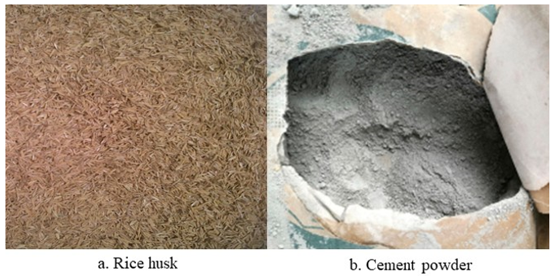
The primary biomass material used in this study was untreated whole rice husk collected from a local rice milling facility. No RHA, powdered rice husk, or chemically treated rice husk was used in the experimental investigation. Portland cement served as the sole binder throughout the study. The primary materials are shown in Figure 1.
Figure 1. Untreated whole rice husk and Portland cement were used as raw materials for composite board fabrication
Several insulation and structural materials were used during the fabrication of the thermal conductivity chamber, including 12 mm plywood, styrofoam insulation, aluminum foil-coated glass wool, aluminum plates, copper sheets, and silicone adhesive. These materials were selected to minimize heat leakage from the testing chamber and maintain a quasi-stable thermal environment during long-duration measurements.
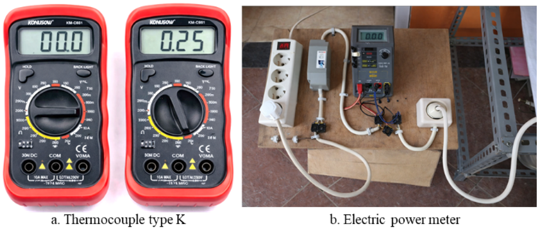
Figure 2. Measuring instruments
Thermal measurements were conducted using a Krisbow KW06-271 digital multimeter, as shown in Figure 2, integrated with thermocouple sensors capable of measuring temperatures ranging from 0 ℃ to 750 ℃ with an accuracy of ±1.0% for temperatures below 400 ℃. This instrument was selected because of its compatibility with multipoint thermocouple recording and its relatively stable sensitivity during prolonged testing periods. The electrical power consumption of the heating system was monitored using a digital wattmeter with an accuracy of ±1% and an operational range of up to 6000 W.
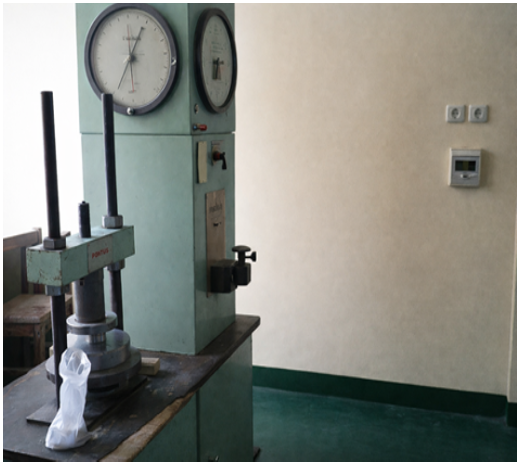
Additional equipment included a hydraulic press machine, compression testing machine, mechanical balance, mesh sieve, cutting tools, drying trays, digital camera, submersible water pump, thermocouple terminal switch, graduated cylinder, and manual mixing tools. A hydraulic press machine was required to maintain a uniform specimen thickness and compaction ratio, whereas a submersible pump ensured continuous cooling circulation to stabilize the external specimen temperature during thermal exposure.
2.3 Research procedures
The mixture proportions reported throughout this study represent the rice husk-to-cement ratio on a dry mass basis (wt.%). Four formulations were prepared, namely 1:2, 1:1, 3:2, and 2:1 (rice husk-to-cement ratio). For all specimens, the total dry mass of the solid constituents was maintained constant at 1500 g to ensure that the effect of composition could be evaluated independently of specimen size. To ensure uniform workability and mixing conditions, a constant volume of 300 mL of water (equivalent to 300 g) was added to all formulations. The corresponding masses used for each formulation are summarized in Table 1.
Table 1. Mixture proportions for rice husk–cement composite particleboard specimens
|
Ratio |
Rice Husk (g) |
Cement (g) |
Water (g) |
Total Mass (g) |
|
1:2 |
500 |
1000 |
300 |
1800 |
|
1:1 |
750 |
750 |
300 |
1800 |
|
3:2 |
900 |
600 |
300 |
1800 |
|
2:1 |
1000 |
500 |
300 |
1800 |
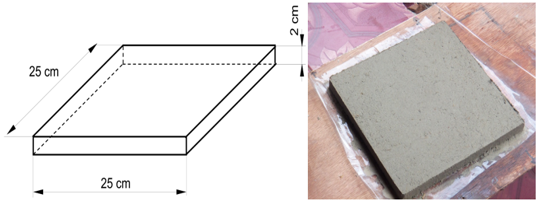
Figure 3. Dimensions and specimens of the composite board
The experimental procedure began with the preparation of the untreated rice husk, which was dried under direct sunlight for three consecutive days to reduce its moisture content and minimize moisture-related variability during composite fabrication. After drying, the rice husk was mixed with ordinary Portland cement using four rice husk-to-cement mixing ratios of 1:2, 1:1, 3:2, and 2:1 (by mass). For all mixture formulations, a constant volume of 300 mL of water (equivalent to 300 g) was added to ensure uniform workability and mixing conditions across all specimens. These formulations were selected based on preliminary fabrication trials, which demonstrated satisfactory particle bonding, dimensional stability, and ease of specimen preparation while avoiding excessive cement consumption. Each mixture was manually blended until a homogeneous distribution of rice husk, cement, and water was achieved before being placed into a mold measuring 25 cm × 25 cm × 2 cm, as illustrated in Figure 3.
The composite specimens were compacted using a hydraulic pressing system until a final thickness of 2 cm was achieved from an initial thickness of 5 cm, corresponding to a compaction ratio of 5:2. The selected dimensions followed previous thermal insulation studies, indicating that a 2 cm particleboard thickness provides measurable thermal resistance while maintaining structural rigidity during testing. After pressing, all specimens were air-cured under ambient laboratory conditions (uncontrolled temperature and humidity) until dimensional stability was visually confirmed. The specimens were tested in their air-dried state, and residual moisture content was not explicitly measured prior to testing.
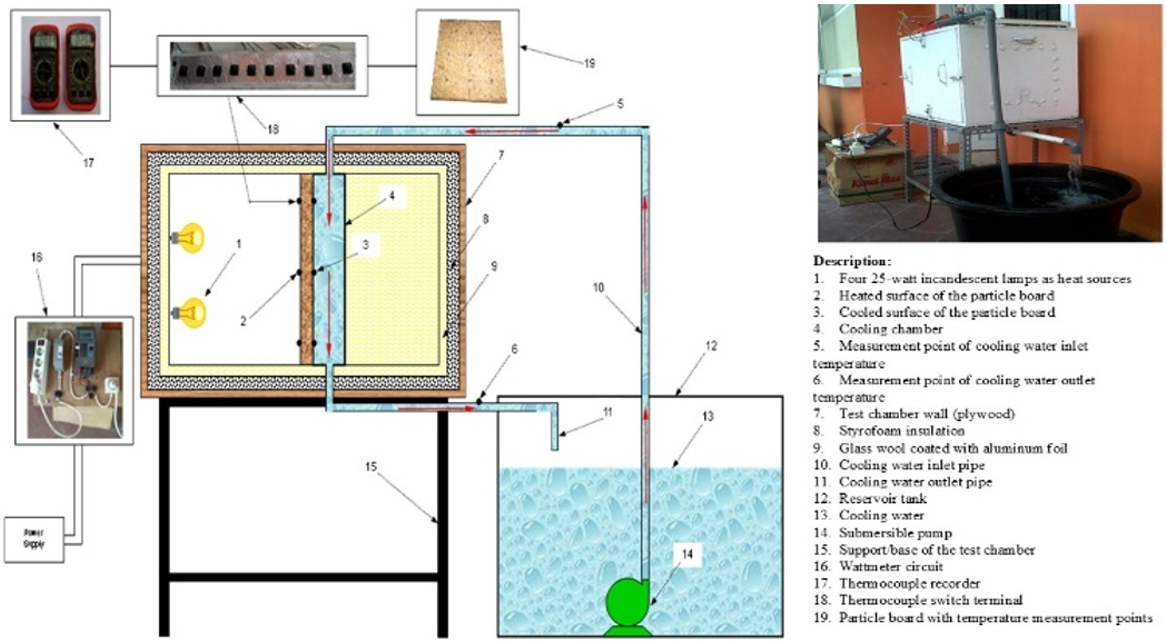
Thermal conductivity testing was performed using a modified insulated chamber equipped with four 25-W incandescent lamps as internal heat sources to distribute heat more uniformly across the specimen surface. The test specimen was positioned between the heated chamber and a water-cooled aluminum plate, with circulating flow provided by a submersible pump. Nine thermocouple sensors were attached to the heated surface, and an additional nine sensors were positioned on the cooled surface to monitor the temperature distribution across the composite panel. Further thermocouples were installed at the inlet, outlet, reservoir, and surrounding environment of the cooling-water system. The complete configuration of the thermal conductivity chamber is shown in Figure 4.
Figure 4. Schematic configuration of the modified thermal conductivity testing apparatus equipped with a water-cooling circulation system
Figure 5. Compressive strength testing apparatus
Before the testing phase commenced, all measuring instruments were calibrated according to the manufacturers' specifications. The heating lamps and water-cooling pump were then operated simultaneously, and temperature measurements were recorded at 30-min intervals over a total testing period of 10 h. The extended testing duration allowed the system to reach steady-state heat transfer conditions while the electrical power supplied to the heating system was continuously monitored. Steady-state conditions were considered achieved when the temperatures recorded at all thermocouple locations varied by less than ±0.5 ℃ during two consecutive 30-min intervals (1 h), and the electrical power supplied by the four incandescent lamps remained constant within ±1% of the wattmeter reading. Once these criteria were satisfied, the temperature distribution across the specimen was deemed sufficiently stable for thermal conductivity calculations based on Fourier's law.
Following the thermal testing, a portion of each composite board specimen was cut into dimensions of 3.6 cm × 3.6 cm × 2 cm for physical property evaluation. The density was determined using the mass-to-volume ratio method, and compressive strength testing was conducted using a hydraulic compression apparatus, as shown in Figure 5, until the maximum load failure occurred. The compressive strength was calculated as the ratio of the maximum applied load to the cross-sectional area of the specimen.
2.4 Outcome measurements
The primary outcome variable investigated in this study was the thermal conductivity of the rice husk–cement composite, expressed in W·m⁻¹·K⁻¹. Thermal conductivity was selected because it directly represents the material's resistance to conductive heat transfer and its suitability as a thermal insulation material under controlled steady-state conditions. The thermal conductivity was determined from the temperature difference between the heated and cooled specimen surfaces, together with the heat-transfer rate across the composite, following Fourier's law of heat conduction. Rather than being calculated from the electrical power supplied to the heating lamps, the conductive heat-transfer rate was determined from the thermal energy absorbed by the circulating cooling water. This approach was adopted because the electrical input included unavoidable radiative and convective losses within the test chamber, rendering it an inaccurate representation of the heat conducted through the specimen. Under quasi-steady-state conditions, the heat conducted across the composite was assumed to be equal to the heat gained by the cooling water. Accordingly, the conductive heat-transfer rate was calculated under steady-state conditions, as expressed in the following equation:
$\dot{Q}=\dot{m} C_p\left(T_{ {out }}-T_{{in}}\right)$ (1)
where, $\dot{m}$ is the cooling-water mass flow rate (kg s-1), Cp is the specific heat capacity of water (4186 J kg-1 K-1), and Tout and Tin denote the outlet and inlet cooling-water temperatures, respectively.
The thermal conductivity of the specimen was subsequently obtained using Fourier's law:
$k=\frac{\dot{Q} L}{A\left(T_h-T_c\right)}$ (2)
where, k is the thermal conductivity (W·m⁻¹·K⁻¹), L is the specimen thickness (m), A is the effective heat-transfer area (m2), and Th and Tc are the average temperatures measured from the nine thermocouples installed on the hot and cold specimen surfaces, respectively.
To reduce lateral heat losses, the testing chamber was insulated using plywood, styrofoam, and aluminum-foil-coated glass wool surrounding all specimen edges (Figure 4). Heat losses through the chamber walls were assumed negligible because the insulation thickness was substantially greater than the specimen thickness and the measurements were collected only after quasi-steady-state conditions had been established.
The density was measured because the pore structure and material compactness strongly influence the thermal transport mechanisms in porous composites. Compressive strength testing was performed to evaluate whether reductions in thermal conductivity were accompanied by unacceptable mechanical deterioration. The inclusion of both thermal and physical parameters allowed for a broader interpretation of the material suitability for building insulation applications.
3.1 Temperature distribution and steady-state heat transfer
Temperature monitoring conducted during the 10-hour heating cycle indicated that all specimens experienced a gradual increase in surface temperature until they approached steady-state thermal conditions. Temperature stabilization was reached after approximately 6–7 h of continuous heating. At this stage, all monitored temperatures exhibited fluctuations smaller than ±0.5 ℃ during two successive 30-minute recording intervals, while the electrical power input remained constant within ±1%. The use of circulating cooling water on the opposite surface of the specimens contributed substantially to the thermal stability and reduced fluctuations during the measurement period.
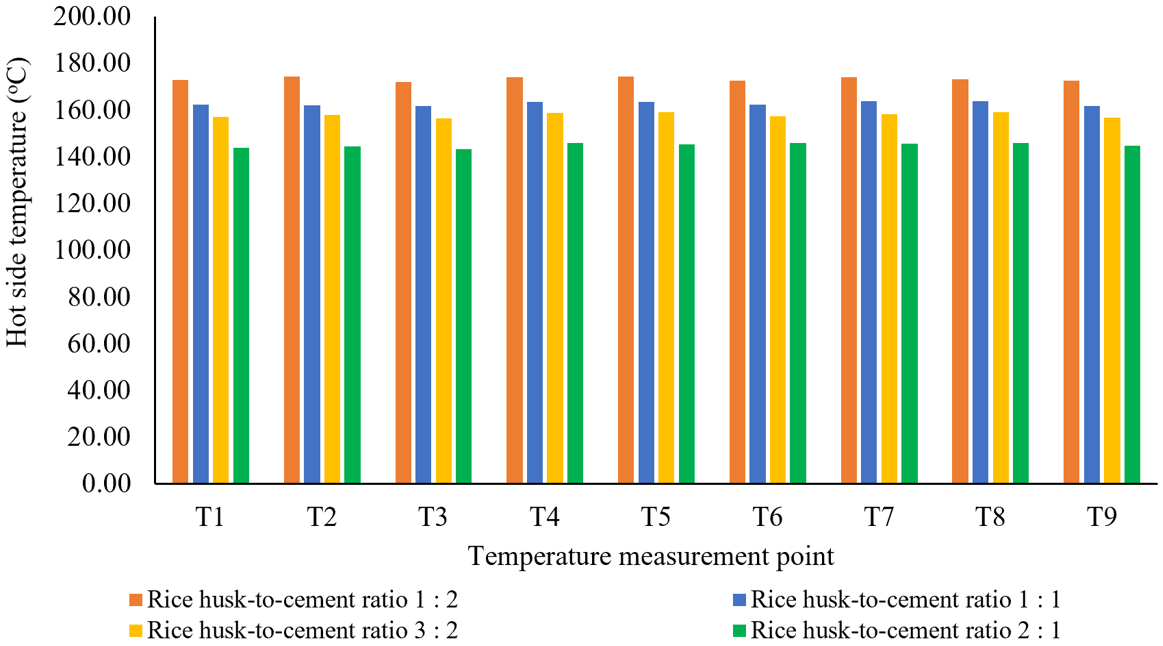
The temperature distribution on the hot-side surface measured at nine thermocouple points in Figure 6 indicates that the modified four-lamp heating arrangement produced a relatively uniform thermal exposure across the entire specimen surface. Previous thermal box studies frequently relied on a single high-power incandescent lamp, which often generated localized hot spots and unstable thermal gradients. In the present configuration, four 25-W incandescent lamps distributed thermal radiation more evenly, resulting in smaller temperature deviations among the measurement points.
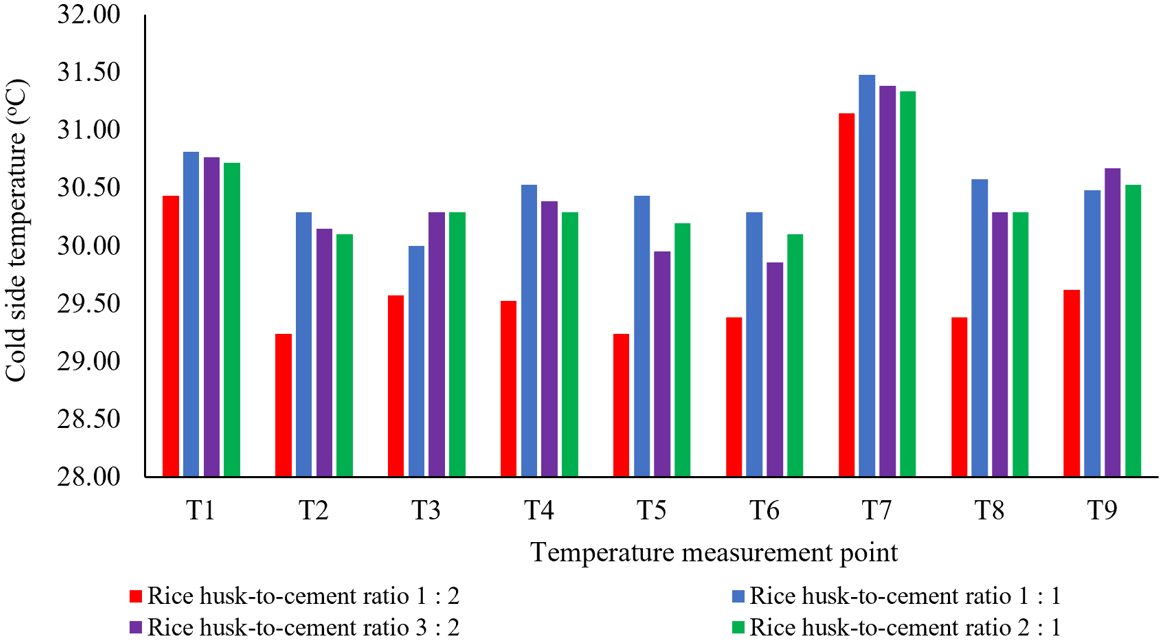
The cooled surface shown consistently in Figure 7 exhibited a lower temperature gradient in rice husk composite particleboards. This behaviour indicates that the rice husk composites delayed heat propagation more effectively, likely because of the increased pore discontinuity and reduced solid-contact area. These findings reinforce the argument that pore morphology strongly governs the conductive resistance of lightweight bio-composites.
Figure 6. Temperature measurements on the hot side composite particleboard
Figure 7. Temperature measurements on the cold side composite particleboard
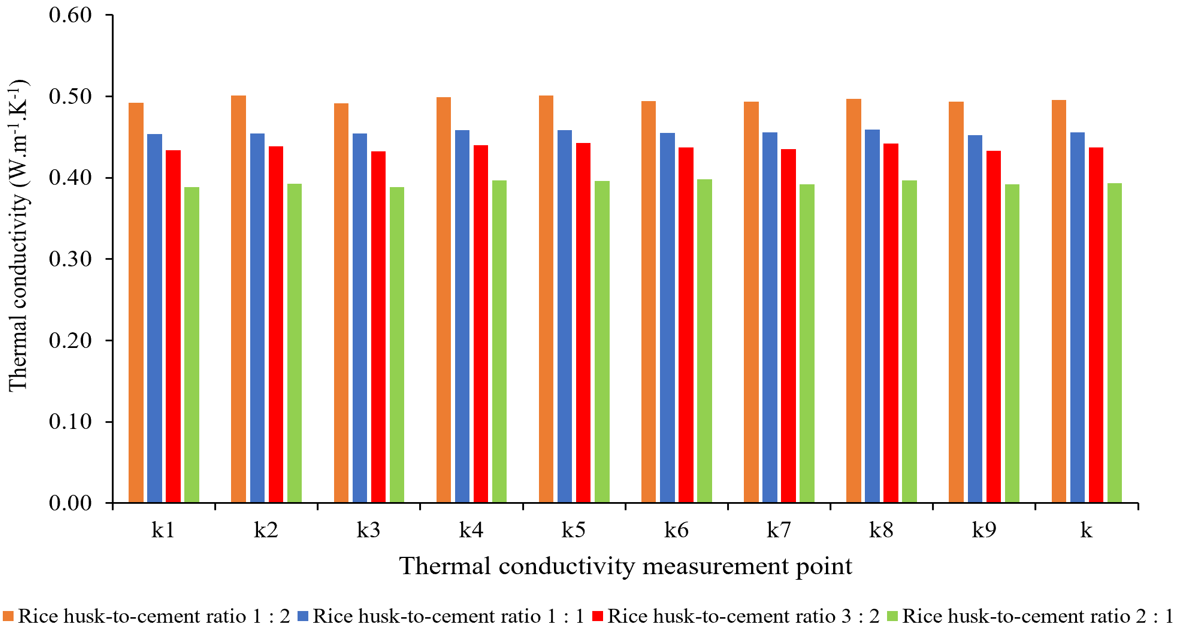
Figure 8. Thermal conductivity of composite particleboards for different rice husk-to-cement mixing ratios
The heat-transfer mechanism observed in the present study agrees well with the findings reported by Antunes et al. [25], who investigated bio-based composite panels reinforced with rice husks. They reported that increasing the rice husk content reduced the thermal conductivity from 0.197 to 0.102 W·m⁻¹·K⁻¹, accompanied by a decrease in bulk density from 1021.6 to 650.8 kg·m-³. The authors attributed this behaviour to the larger volume of interconnected air-filled pores, which increased the tortuosity of conductive heat-transfer pathways within the composite. A comparable mechanism was observed in the present rice husk–cement composites, where the reduction in thermal conductivity was associated with increased internal porosity rather than changes in the intrinsic thermal properties of the cement matrix. Consequently, this increased porosity impacted the mechanical performance. Specimens with the lowest thermal conductivities exhibited the lowest compressive strengths. This inverse relationship is difficult to avoid because thermal insulation in porous composites is inherently associated with reduced material compactness and weaker interparticle cohesion.
3.2 Thermal conductivity characteristics
The thermal conductivity values presented in Figure 8 and Table 2 correspond to the average thermal conductivity obtained after steady-state conditions had been established. For each specimen, the average hot-side and cold-side surface temperatures were calculated from the nine thermocouple measurements shown in Figures 6 and 7. These average temperatures were subsequently used in Fourier's law to determine a single representative thermal conductivity for each mixture. Consequently, the local temperature measurements were used only for the thermal conductivity calculation and are not presented individually in Figure 8.
As shown in Figure 8, the rice husk-to-cement ratio significantly influenced the thermal conductivity of the composite particleboards. Specifically, the composite prepared with a 2:1 rice husk-to-cement ratio exhibited the lowest thermal conductivity among all specimens. Because this formulation contains the highest proportion of rice husk, it inherently promotes greater internal tortuosity. Although the 2:1 mixture exhibited the highest bulk density (963.11 kg·m-³), a consistent reduction in thermal conductivity was observed as the rice husk proportion increased within the matrix. Conversely, composites with a higher cement content (e.g., the 1:2 formulation) exhibited relatively higher thermal conductivity. This behaviour did not correlate with bulk density; as presented in Table 2, the cement-rich 1:2 formulation demonstrated the lowest density. Rather, the elevated thermal conductivity was attributed to the higher intrinsic thermal conductivity of the cementitious phase relative to rice husk particles. Even in a poorly compacted state, the continuous cement matrix facilitated more efficient solid-phase conductive heat transfer compared to the highly tortuous, air-filled pathways characteristic of the rice husk-rich formulations.
The relationship between density and thermal conductivity was not strictly linear. The composite prepared with a rice husk-to-cement mixing ratio of 2:1 exhibited the lowest thermal conductivity (0.39–0.40 W·m⁻¹·K⁻¹), despite having the highest density (963.11 kg·m-3) among the investigated formulations. This finding indicates that bulk density alone did not control heat transport within the composite. Instead, the effective thermal conductivity was governed by the combined influence of pore morphology, pore connectivity, particle distribution, and the continuity of the cementitious phase. At the 2:1 ratio, the larger amount of rice husk increased the tortuosity of the matrix and reduced the formation of interconnected solid conduction paths, while the cementitious matrix preserved sufficient closed pores that trapped stagnant air. Consequently, the composite achieved a lower effective thermal conductivity even though its bulk density increased. Similar behaviour has been reported in cementitious composites where microstructural characteristics, particularly pore tortuosity and interfacial transition zones, became more influential than bulk density in determining effective thermal conductivity [22, 23].
The measured behaviour is consistent with the findings reported by Mahapatra et al. [9], who observed that replacing sand with rice husks in cement mortar reduced the thermal conductivity by approximately 12% at only a 7% replacement level. Their study reported a decrease in conductivity from 1.20 W·m⁻¹·K⁻¹ to approximately 0.97 W·m⁻¹·K⁻¹ after rice husk incorporation. A similar trend was identified by Selvaranjan et al. [3] in mortar systems containing RHA, where the reduction reached nearly 62% with a 30% sand replacement. Although the present investigation employed a particleboard geometry rather than mortar or concrete block systems, the underlying thermal mechanism appears comparable: namely, the formation of micro-voids and the disruption of continuous solid-phase conduction pathways.
Table 2. Bulk density, thermal conductivity and compressive strength of rice husk–cement composite particleboards
|
Ratio |
Density (kg·m-³) |
Thermal Conductivity (W·m⁻¹·K⁻¹) |
Compressive Strength (MPa) |
|
1:2 |
540.12 |
0.50 |
2.90 |
|
1:1 |
681.58 |
0.46 |
8.33 |
|
3:2 |
835.91 |
0.44 |
16.65 |
|
2:1 |
963.11 |
0.39 |
26.49 |
Table 2 shows that increasing the rice husk fraction increased the composite density while simultaneously decreasing thermal conductivity. Despite the increase in bulk density, the larger volume of rice husk created a highly tortuous matrix with interconnected air-filled pores that interrupted continuous heat-conduction pathways through the cement matrix. Consequently, the 2:1 rice husk-to-cement ratio exhibited the lowest thermal conductivity among the investigated formulations.
The superior thermal resistance observed in the composite particleboard with a 2:1 rice husk-to-cement ratio is consistent with the high silica content and porous morphology of the husks. Rice husks contain a substantial amount of amorphous silica, often exceeding 80%, which contributes to low thermal diffusivity and weak conductive heat transfer within cement-based systems. Furthermore, the natural lignocellulosic structure of the raw rice husks provides a lightweight and highly porous framework, which further reduces the bulk density of the composite.
Another important observation was the influence of the rice husk-to-cement ratio on heat-transfer behaviour. The experimental results showed that increasing the rice husk fraction progressively reduced the thermal conductivity of the composite boards, with the 2:1 rice husk-to-cement mixture exhibiting the lowest value among the investigated formulations. This behaviour reflects the competing effects of matrix continuity and internal porosity. Increasing the cement fraction (1:2 and 1:1 ratios) resulted in lower bulk densities (Table 2) due to insufficient water volume available for complete cement hydration under the constant water-addition protocol, which produced poorly compacted matrices with macro-voids. However, the cementitious phase that formed exhibited relatively high intrinsic thermal conductivity and greater solid-phase continuity, thereby facilitating conductive heat transfer despite the reduced density. In contrast, increasing the rice husk fraction (3:2 and particularly the 2:1 ratio) yielded specimens with higher bulk density, as the higher effective water-to-cement ratio enabled superior hydration, particle packing, and matrix consolidation. Nevertheless, the larger volume of rice husk particles generated a highly tortuous matrix with interconnected air-filled pores, which interrupted continuous solid-phase heat-transfer pathways and consequently lowered the thermal conductivity.
This finding is consistent with Marques et al. [7], who reported that rice husk–cement composites exhibited improved insulation performance owing to their low apparent bulk density and porous internal geometry. Their investigation indicated that thermal insulation performance increased with increasing aggregate porosity, although excessive porosity eventually weakened the structural integrity. In contrast to previous studies, a unique relationship was identified in the present study; composites containing a higher rice husk content (2:1 ratio) exhibited improved thermal insulation while simultaneously showing the highest compressive strength.
3.3 Compressive strength characteristics
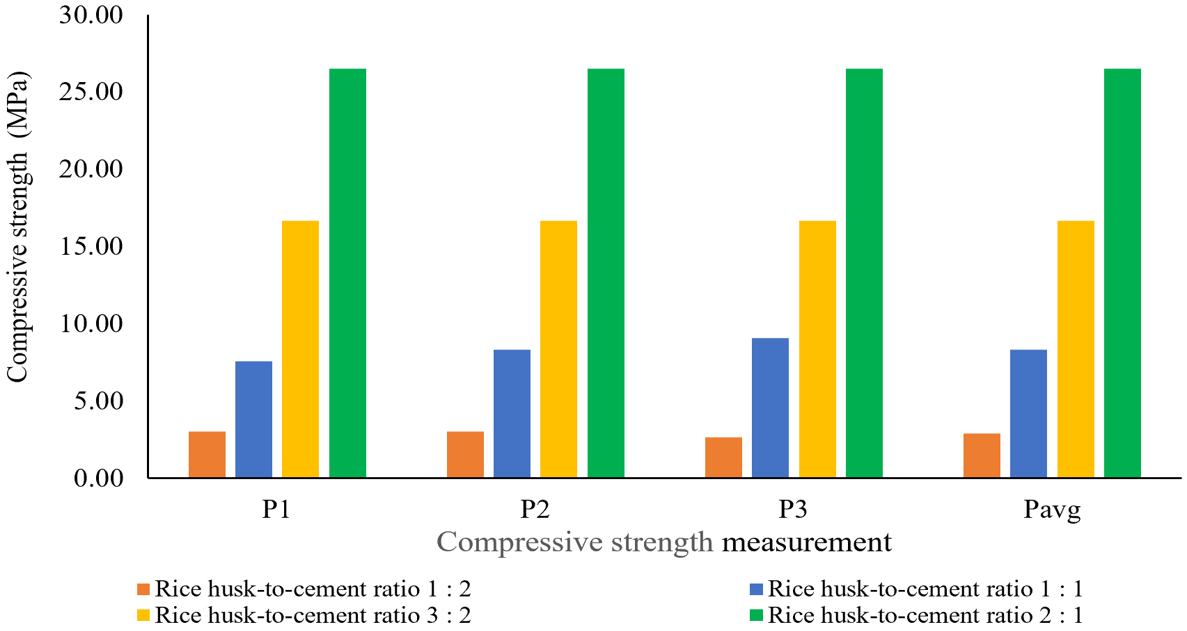
Table 3 and Figure 9 present the compressive strength of the rice husk–cement composite particleboards. Compressive strength testing was conducted on three individual specimens (n = 3) for each mixture ratio. The results are reported as the mean ± standard deviation (SD). For the 3:2 and 2:1 mixtures, the individual specimen readings (P1, P2, P3) were identically recorded by the testing apparatus, resulting in a standard deviation of 0.00. This uniformity is attributed to the resolution limit of the compression machine's load display combined with the highly consistent specimen density achieved through the controlled hydraulic pressing procedure. The data reveal a counterintuitive trend: compressive strength increased progressively as the rice husk-to-cement ratio increased. The 2:1 mixture exhibited the highest mean compressive strength (26.49 MPa), whereas the cement-rich 1:2 formulation yielded the lowest value (2.90 MPa).
Table 3. Measured compressive strength data for rice husk–cement composite particleboards
|
Ratio |
Sample |
Mean ± SD (MPa) |
||
|
P1(MPa) |
P2(MPa) |
P3(MPa) |
||
|
1:2 |
3.03 |
3.03 |
2.65 |
2.90 ± 0.22 |
|
1:1 |
7.57 |
8.33 |
9.08 |
8.33 ± 0.76 |
|
3:2 |
16.65 |
16.65 |
16.65 |
16.65 ± 0.00 |
|
2:1 |
26.49 |
26.49 |
26.49 |
26.49 ± 0.00 |
This mechanical behaviour can be elucidated by examining the interaction between the constant water addition (300 mL for all mixtures) and the resulting effective water-to-cement (w/c) ratios. In the cement-rich 1:2 formulation, the fixed volume of water resulted in a very low w/c ratio. While low w/c ratios typically yield high strength in pure concrete, the insufficient water volume in this composite mixture severely compromised the workability and hydration kinetics of the cement paste. Consequently, the cement failed to uniformly coat the rice husk particles, leading to poor interfacial bonding, localized dry spots, and the formation of macro-voids within the matrix. Consequently, the 1:2 specimens exhibited a brittle, poorly compacted structure with the lowest density and compressive strength.
Conversely, in the 2:1 formulation, the lower volume of cement relative to the rice husk meant that the constant 300 mL of water provided a significantly higher effective w/c ratio. This optimal water availability facilitated complete cement hydration and enhanced the flowability of the paste, allowing it to effectively encapsulate the larger volume of rice husk particles. The higher bulk density observed in the 2:1 composite (Table 2) indicates a highly consolidated microstructure. In this state, the rice husk particles, which possess inherent stiffness and a tough siliceous outer layer, acted as a rigid structural filler. The continuous cement paste formed a strong bridge between these particles, generating an efficient load-transfer network. Therefore, rather than acting as a weakening defect, the high volume of rice husk in the 2:1 mixture contributed to a robust particle-packing density, significantly enhancing the load-bearing cross-sectional area.
Figure 9. Compressive strength of individual specimens (P1, P2, P3) and their average (PAvg) for rice husk–cement composite particleboards at various mixing ratios
Despite the distinct mechanical variations, all formulations retained sufficient rigidity for non-structural insulation applications, such as partition panels, ceiling boards, and wall insulation systems. This aligns with Marques et al. [7], who concluded that rice husk–cement composites are viable for acoustic barriers and thermal insulation layers even with moderate mechanical variability.
Interestingly, these results contrast with the findings of Narattha et al. [26], who reported that increased rice husk fractions in geopolymer systems invariably caused a compressive strength reduction exceeding 90%. This disparity highlights the critical role of the binder system and water proportioning; in the present cementitious system, the higher water availability in the 2:1 ratio prevented the formation of a dry, porous matrix, instead leveraging the rice husk as a structural reinforcing filler rather than a mere lightweight aggregate.
Furthermore, the composite with a 2:1 rice husk-to-cement ratio exhibited superior dimensional stability during prolonged heat exposure. This aligns with Silva et al. [10], who reported that rice husk composites maintain stable mechanical behaviour at elevated temperatures due to the delayed thermal decomposition of the silica-rich matrix.
Overall, the experimental results demonstrate that the 2:1 formulation successfully achieved a dual benefit: maximizing thermal insulation characteristics while concurrently providing adequate mechanical integrity under the investigated laboratory conditions. These observations suggest that rice husk–cement composites, particularly the 2:1 mixture, are highly promising candidates for further evaluation as non-structural insulating materials. However, additional studies addressing long-term durability, water absorption, and conformity with relevant building-material standards are necessary before practical construction applications can be recommended.
The present investigation demonstrated that the thermal conductivity of rice husk–cement composite particleboards is strongly influenced by the rice husk-to-cement mixing ratio. The composite prepared with a 2:1 rice husk-to-cement ratio exhibited the lowest thermal conductivity (0.39–0.40 W·m⁻¹·K⁻¹), indicating that increasing the rice husk content promotes pore formation and disrupts conductive heat-transfer pathways within the cement matrix. In contrast, the cement-rich formulations (e.g., 1:2 ratio) resulted in lower compressive strength due to insufficient water for optimal hydration under a constant water-addition protocol, while still exhibiting higher thermal conductivity. These observations suggest that the thermal and mechanical behavior of the composites is associated with the trade-off between internal porosity and matrix densification. Under the laboratory conditions adopted in this study, the fabricated composites maintained mechanical integrity throughout thermal conductivity and compressive strength testing. Although these findings suggest that rice husk–cement composites hold potential for future non-structural thermal insulation applications, further investigations involving dimensional stability, water absorption, long-term durability, and compliance with relevant building-material standards are required before practical implementation. A limitation of this study is that the exact ambient humidity and precise curing duration were not continuously monitored, and specimens were tested in their air-dried state without explicitly measuring residual moisture content prior to thermal testing.
The authors express their sincere appreciation to all parties who contributed to this study. Special thanks are extended to the laboratory staff and research assistants for their technical support during specimen preparation, experimental setup, and thermal conductivity measurements. The authors also acknowledge the institutional support and facilities provided during the research process.
[1] Sawasdee, V., Pisutpaisal, N. (2022). Rice husk ash characterization and utilization as a source of silica material. Chemical Engineering Transactions, 93: 79-84. https://doi.org/10.3303/CET2293014
[2] Yu, X., Sun, L. (2018). Strength, microstructure, and thermal conductivity of the insulation wallboards prepared with rice husk fiber and recycled concrete aggregates. PLoS One, 13(9): e0203527. https://doi.org/10.1371/journal.pone.0203527
[3] Selvaranjan, K., Gamage, J.C.P.H., De Silva, G.I.P., Navaratnam, S. (2021). Development of sustainable mortar using waste rice husk ash from rice mill plant: Physical and thermal properties. Journal of Building Engineering, 43: 102614. https://doi.org/10.1016/j.jobe.2021.102614
[4] Wan, D., Tian, C., Cai, Q., Zhang, X. (2024). Investigating the characteristics and thermal performance of plaster composites enhanced with paddy husk for sustainable residential construction. Case Studies in Thermal Engineering, 60: 104638. https://doi.org/10.1016/j.csite.2024.104638
[5] Hadipramana, J., Riza, F.V., Ali, N., Somad, A.A.A., Basri, N.H. (2019). Thermal conductivity of aerated concrete containing rice husk ash as partially sand replacement. IOP Conference Series: Materials Science and Engineering, 674(1): 012023. https://doi.org/10.1088/1757-899X/674/1/012023
[6] Chabi, E., Doko, V., Hounkpè, S.P., Adjovi, E.C. (2020). Study of cement composites on addition of rice husk. Case Studies in Construction Materials, 12: e00345. https://doi.org/10.1016/j.cscm.2020.e00345
[7] Marques, B., Almeida, J., Tadeu, A., et al. (2021). Rice husk cement-based composites for acoustic barriers and thermal insulating layers. Journal of Building Engineering, 39: 102297. https://doi.org/10.1016/j.jobe.2021.102297
[8] Mohapatra, R.C. (2018). Experimental and numerical study on thermal conductivity of rice husk filled epoxy composites. OALib, 5(7): 1-11. https://doi.org/10.4236/oalib.1104661
[9] Mahapatra, D., Madav, V., Talanki Puttaranga Setty, A.B. (2024). Mechanical and dynamic thermal performance evaluation of rice husk blended cement plaster when used with different bricks. Journal of Building Engineering, 82: 108120. https://doi.org/10.1016/j.jobe.2023.108120
[10] Silva, D.B., Pachla, E.C., Bolina, F.L., Graeff, Â.G., Lorenzi, L.S., Da Silva Filho, L.C.P. (2024). Mechanical and chemical properties of cementitious composites with rice husk after natural polymer degradation at high temperatures. Journal of Building Engineering, 85: 108716. https://doi.org/10.1016/j.jobe.2024.108716
[11] Cavalcante, D.G., Marques, M.G.D.S., Melo Filho, J.D.A., Vasconcelos, R.P.D. (2018). Influence of the levels of replacement of Portland cement by metakaolin and silica extracted from rice husk ash in the physical and mechanical characteristics of cement pastes. Cement and Concrete Composites, 94: 296-306. https://doi.org/10.1016/j.cemconcomp.2018.10.001
[12] Li, X., He, C., Lv, Y., et al. (2024). Preparation and properties of porous rice husk ash for internal curing of high performance cement pastes. Construction and Building Materials, 438: 137152. https://doi.org/10.1016/j.conbuildmat.2024.137152
[13] Conterosito, E., Paul, G., Toson, V., et al. (2024). Single step eco-efficient mild chemical process for the total valorisation of rice husk: A focus on the inorganics as a cement additive. RSC Advances, 14(49): 36314-36326. https://doi.org/10.1039/D4RA05263C
[14] Singh, M., Singh, A. (2024). Thermo-mechanical beneficiation and characterisation of rice husk ash. In Recent Advances in Building Materials and Technologies, Singapore: Springer Nature Singapore, pp. 283-291. https://doi.org/10.1007/978-981-99-9458-8_27
[15] Yiga, V.A., Lubwama, M., Olupot, P.W. (2022). Thermal stability of unmodified and alkali-modified rice husks for flame retardant fiber-reinforced PLA composites. Journal of Thermal Analysis and Calorimetry, 147(20): 11049-11075. https://doi.org/10.1007/s10973-022-11311-w
[16] Choudhary, M., Jain, S.K., Devnani, G.L., Sonawane, S.R.S., Singh, D. (2022). Thermal kinetics and morphological investigation of alkaline treated rice husk biomass. Journal of the Indian Chemical Society, 99(5): 100444. https://doi.org/10.1016/j.jics.2022.100444
[17] Zhang, H., Wang, X., Yan, C., Dong, Y. (2026). Prediction of thermal insulation performance of concrete lining with multi-component solid waste aggregate under freeze-thaw action based on machine learning. Construction and Building Materials, 512: 145396. https://doi.org/10.1016/j.conbuildmat.2026.145396
[18] Wang, J., Gong, J., Chen, P., Cao, G. (2025). Calculation model for thermal conductivity of cement-based materials in cold regions based on the principle of specific equivalent thermal conductivity. Thermal Science and Engineering Progress, 68: 104333. https://doi.org/10.1016/j.tsep.2025.104333
[19] Mendes, M.P., Raimundo, A., Bimbati, M., Nogueira, R., Flores-Colen, I., De Brito, J. (2024). The effect of rice husk on the variability of physical and mechanical properties of composites. Journal of Testing and Evaluation, 52(1): 674-688. https://doi.org/10.1520/JTE20230238
[20] Pachla, E.C., Silva, D.B., Bolina, F.L., et al. (2024). Durable lightweight cementitious composites incorporating rice husk: Accelerated aging studies with acidic and basic solutions. Journal of Building Engineering, 95: 110057. https://doi.org/10.1016/j.jobe.2024.110057
[21] Abolhasani, A., Samali, B., Aslani, F. (2022). Rice husk ash incorporation in calcium aluminate cement concrete: Life cycle assessment, hydration and strength development. Sustainability, 14(2): 1012. https://doi.org/10.3390/su14021012
[22] Feng, C., Liu, H., Hang, Z., Su, Y., Xia, X., Weng, G.J. (2025). Study on thermal conductivity of 0D/1D/2D carbon filler reinforced cement composites with phonon physical model. Cement and Concrete Composites, 157: 105917. https://doi.org/10.1016/j.cemconcomp.2024.105917
[23] Yang, Y., Wang, Y., Cao, J. (2023). Prediction and evaluation of thermal conductivity in nanomaterial-reinforced cementitious composites. Cement and Concrete Research, 172: 107240. https://doi.org/10.1016/j.cemconres.2023.107240
[24] Bergman, T.L., Lavine, A.S. (2017). Fundamentals of Heat and Mass Transfer (8th ed.). Hoboken, NJ: John Wiley & Sons.
[25] Antunes, A., Faria, P., Silva, V., Brás, A. (2019). Rice husk-earth based composites: A novel bio-based panel for buildings refurbishment. Construction and Building Materials, 221: 99-108. https://doi.org/10.1016/j.conbuildmat.2019.06.074
[26] Narattha, C., Wattanasiriwech, S., Wattanasiriwech, D. (2024). Sustainable, multifunctional fly ash geopolymer composite with rice husk aggregates for improved acoustic, hygric, and thermal performance. Construction and Building Materials, 445: 137743. https://doi.org/10.1016/j.conbuildmat.2024.137743