Danies Seda Yuseva | Muchammad* | Sulistyo | Syaiful | Reza Abdu Rahman
© 2024 The authors. This article is published by IIETA and is licensed under the CC BY 4.0 license (http://creativecommons.org/licenses/by/4.0/).
OPEN ACCESS
Increasing the operational aspect of heat storage system (HSS) contributes to significant positive influence on thermal system. As one fast-developing storage technology, modification of the material HSS (MHSS) has become crucial, specifically for organic-based MHSS. The drawbacks of poor phase transformation during energy intake and release (charging/discharging) of MHSS make undesirable performance for heat exchange and effective operation. To solve the problem, this work proposes modification of pure octadecanoic acid (POA) as MHSS by forming polymeric-embedded OA (PEOA). Evaluation is taken for the heating/cooling cycle operation of the HSS, showing positive contribution of the proposed method. The PEOA reduces the preheating duration by 14.8%, meaning the charging ratio can be improved effectively for the HSS. The effective energy ratio for PEOA is obtained with maximum value of 83.9%, which is higher than the POA with 74.8%. It is accounted for the application of PEOA since it allows a suitable solidification process on the heat release, making the maximum total heat loss drop to 17.9%. The profile observation using microscope electron demonstrates the stable formation of PEOA as a direct result of the presence of polymer structure of the composite. The result demonstrates the improvement in the operation of HSS unit, which is linked to the stabilized material, achieving a favorable energy ratio that potentially promotes better operation and control of HSS unit. Moreover, a consecutive discharge cycle for the heat storage tank (HST) using PEOA also brings positive outcomes and improves the heat discharge stage.
phase change, heat loss, stabilization, heat storage, energy
Many stakeholders performed numerous approaches to maximizing effective energy consumption as a scenario for mitigating the possibility of energy crisis. It becomes a serious task for global civilization since population growth requires tremendous consumption of energy [1]. High outcomes are achieved from renewable energy through continuous research and development involving many stakeholders. Wind energy technology is a good example for the efforts, making this sector has commercialized as a result of the massive research and technology modification [2-4]. The same process is currently being considered for solar-based energy since this source can be accessed evenly across the world and has a predictable cycle. Moreover, solar energy was developed massively to provide clean electricity and thermal sources, making it more favorable to harvest clean energy [5-7]. It contributes to widespread technology and high deployment rate for harvesting solar energy, accompanied by different storage methods, such as electricity and thermal.
Renewable heat is one interesting research sector, considering its high annual energy consumption in many different sectors. It can be supplied from solar power and combined with heat storage system (HSS) to ensure the operational level of the system and ensure continuous supply to overcome intermittent and weather interventions. Thus, HSS is an essential technology in the renewable heat sector, making this unit important to achieve the desired operational level. Research and development for HSS indicates that the current focus is on utilizing latent heat of material HSS (MHSS) [8], particularly for the organic MHSS. It has become a reliable option due to its low cost, high storage capacity, and technical suitability [9]. Despite that, several technical challenges still appear related to the MHSS, such as insufficient conductivity, poor energy transfer rate, and partial melting/solidification [10]. It brings negative outcome on the operation of HSS and is unable to reach the desired target for the given renewable heat system.
On the basis, modification to overcome the insufficient conductivity nature of MHSS is done using solid material. For example, employing volcanic ash (10 wt%) as solid material for paraffin-MHSS increases the conductivity to 1.9 W/m⸱K for the composite [11]. Different MHSS was also explored using the same approach. Li et al. [12] combined microcrystalline graphite (MG) with octadecanoic acid (OA), demonstrating that MG-OA has higher conductivity (90.9%) than OA. The eutectic mixture between OA-dodecanoic acid (DA) has an average conductivity of 0.22 W/m⸱K, which then modified using carbon-decorated diatomite to increase the value to 0.38 W/m⸱K [13]. The OA as MHSS is favorable for actual system since it can be produced from bio sources while the problem with conductivity can be solved using carbon foam as reported here [14]. The reported study shows that the approach is reliable in ensuring effective heat exchange for the operation of HSS.
The basic operation for HSS technology is extremely simple, based on heat exchange process. It transfers heat from and to the heat storage tank (HST), making suitable surface area and overall rating becomes essential parameter, similar to conventional heat exchanger unit [15]. Thus, increasing the contact area within the unit HST with the MHSS and working fluid is fundamental for optimizing the system. For example, the optimization here focused on adding extended surface (fin) within the HST unit, showing ideal configurations such as spacing and tilt angle are crucial to achieve a higher performance [16]. A different report, Jančík et al. [17] use a cylindrical HST unit, which allows the system to have a higher energy density (9%), indicating suitable configuration affects the effective capacity of the HST. The review article confirms that the mentioned aspect, including the modification of the storage material, can be focused on achieving stable phase transformation for the MHSS within the HST [18].
The typical MHSS utilizes latent heat, which experiences phase transformation in the operation. The transformation is generally unfavorable, which disturbs the effective heat exchange rate as a direct result of the shrinkage formation [19], partial solidification [20], and supercooling [21]. Those factors are also affected by the nature of the material, which depends on the temperature, making the critical aspect of the material alter simultaneously as the temperature changes in the operation of HST [22]. Thus, material modification is demanded by stabilizing the phase transformation of the MHSS, which can be done using additional supporting structures. For instance, the study [23] employs aerogel as the additional structure and graphene for conductivity enrichment. The outcome shows that the produced material has a higher rating heat absorption and temperature distribution than pure MHSS. Another work used carbon foam for the supporting matrix, resulting in an excellent energy conversion (67.4%) accompanied by suitable thermal stability for the produced MHSS [24].
Determining the suitable supporting structure is important for modifying MHSS material, mainly to ensure the applicability of the proposed method. It also merged with sustainability considerations for utilizing waste material such as thermoplastic polymer (TP). The review article indicated the suitability of TP as a supporting structure for organic MHSS, considering TP's high thermal stability and vast availability [25]. This work employed TP as phase stabilizer for MHSS, focusing on the heat transfer improvement, confirming a positive trend for the increment about 60% [26]. Another work applied a similar concept, showing that the leakage rate of polymeric-embedded MHSS decreased by 3.09%, indicating the positive role of the employed TP for the organic MHSS [27]. Li et al. [28] further developed the concept using low-density TP as a stabilizer and aluminum as conductivity enhancer, revealing that the combined approach reduces the leakage and simultaneously provides a higher thermal response for the composite MHSS. The summarized work indicated the positive contribution of using TP for MHSS. However, it brings another drawback due to decrement in the effective volumetric storage. Moreover, most of the previous work focused on material improvement with minimum discussion on the applicability of the proposed method to the actual operation of HST.
Further study is required by taking the positive result for using TP, primarily for providing a stabilized effect for the organic MHSS. It is also motivated for sustainable consideration since TP can be obtained from recycled waste [29]. To accommodate the technical consideration on the operation of modified MHSS for the HST, this work is performed by assessing the composite MHSS for active operation of HST without using additional solid additives. Thus, the objective of this work is specifically designed to observe the operational pattern for the modified MHSS with TP polymer on the HST. This work analyzes two different composites which compared with the pure MHSS. The critical aspect of the operation behavior related to the heating/cooling stage is compared to understand the key value for compositing with polymer. The result from this work is expected to provide essential consideration as a basis for determining suitable material for the HSS unit and the relation to the overall performance to develop a reliable HSS further.
This study employed pure octadecanoic acid (POA) as the base of MHSS. Phase stabilizer utilized polymer from plastic grade LDPE (Pl1) and LLDPE (Pl2). The processed material was taken as market grade obtained from a local supplier. The production method for modified MHSS was performed using direct blending process [30]. This approach was simple and highly relevant for the actual production method for large-scale operations. The process started by melting the base MHSS at 80 ℃ using electric oven, then at separated container the both TP were melted at 160℃. The molten material was mixed by pouring TP into the base MHSS and continuously stirred at the liquid phase by maintaining the mixture's temperature at 160℃. Once the mixture was dispersed properly, it was slowly cooled at room temperature to ensure the distribution of the TP within the base MHSS. In addition, the TP ratio was limited to 15% based on this reference [31]. The produced polymeric-embedded OA (PEOA) were identified as PEOA1 (Pl1) and PEOA2 (Pl2). The material was observed for its surface profile to understand the formation of the composite using electron microscope, while the thermal value of each sample was observed using calorimetry.
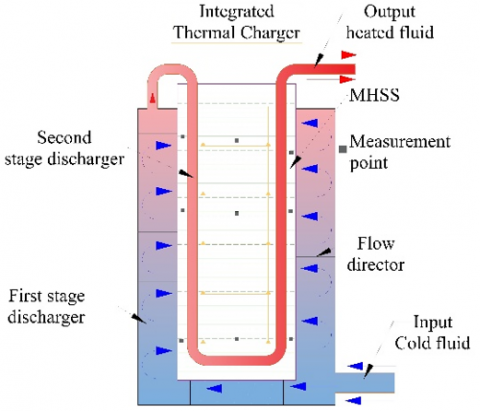
The operation characteristic of the produced material was observed using combined operation of the HST unit (Figure 1). The operation mode for this HST is in good relevance with the current trend of utilizing electricity as the heat source for charging MHSS [32-34]. The heating process was conducted using an integrated thermal charger, which consists of power regulator, monitor and temperature sensor. The upper temperature for the heating process was 95℃. It was obtained from the average temperature from nine measurement points at the MHSS side (Figure 1(a)). This work focused on the actual operation. Thus, the total mass of the MHSS was set at 6 kg to provide a reliable observation of the operation curve of the system using POA and PEOA. In addition, the MHSS was charged to the HST at the liquid phase to ensure the proper distribution of the material within the tank.
To accommodate the poor conductivity nature from the MHSS, this work employed consecutive discharge stages. The first stage discharge was conducted from the outer surface of the MHSS tank. The water flowed in the region where the fluid director (baffle) controlled the flow direction to improve the circulation at the outer surface and maximize heat uptake.
(a) Schematic assessment heating/cooling
(b) The 3D components of the system
Figure 1. The scheme for assessment process
The preheated water from outer tank flowed back to the inside of HST as the second discharge stage. It harvested the stored heat from the MHSS. The process (discharge) was started once the MHSS reached the upper temperature and the heating function was switched off. The application of integrated thermal charger also contributed to a better observation scheme, allowing the read of the supplied energy and temperature of the MHSS simultaneously [35]. It makes a detailed effective energy ratio can be analyzed to assess the operation characteristic of each MHSS. The discharged energy from the MHSS was analyzed according to the deviation of the water temperature at the discharge stage. In addition, the lower temperature of discharge cycle was 40℃ and taken as the cutoff value for starting the next cycle to reduce the potential heating loss. The detailed component was plotted in Figure 1(b).
The operation behavior of POA is shown in Figure 2. The curve behavior is divided into different sections which represent the actual model of unit HST. The heating stage consists of preheating and effective charge zone while the cooling stage is followed by effective discharge zone and cut off temperature. The slow operation of POA makes the initial heating stage longer, approximately 7 minutes, to reach temperature 61℃ before entering the effective charge region (63.5℃). The effective charge region shows a small fluctuates profile which relates to the solid-liquid transformation. It proves the heating stage is accompanied by direct phase transformation. The total duration for the given zone is 24 minutes, which accumulates the charge rating of 2.1%/minutes. The relative similar behavior is found for the cooling stage, while the phase transformation is likely appeared at higher temperature. The symptom is shown as a longer plateau line compared to the same temperature at heating stage. Thus, it indicates the operation behavior has unstable heat exchange for the POA.
Figure 2. The operation curve for POA under heating and cooling stage
Figure 3. The operation curve for composite POA/Pl1 (PEOA1) under heating and cooling stage
The direct outcome for using polymer is observed according to the operation curve. As observed in Figure 3, the heating/cooling stage for PEOA1 demonstrate several plateau lines which correspond to the phase transformation of the material. It appears notably for the heating stage which starts 64.9℃, confirming the benefit for embedding POA with plastic to improve the phase transformation behavior during heating stage. The started point for phase transformation is higher, which is advantageous for the unit HST. It also causes a higher effective charge rate for about 2.45%/minutes.
The benefit for PEOA1 signifies the urgency to synthesize composite for a better operation curve of unit HST. The benefit is also obtained for the cooling stage, which demonstrates a longer plateau line that correspond to the solidification zone. It makes the freezing rate for the composite becomes sufficient and practically ideal for the operation of HST. It results on the optimum heat releasement on the cooling stage which becomes more effective compared to POA.
Figure 4. The operation curve for composite POA/Pl2 (PEOA2) under heating and cooling stage
The impact for employs different plastic confirms the variation on the performance characteristic. The curve as shown in Figure 4 has a better transitional profile without indicating any fluctuation. The divided three temperature region becomes clearer for PEOA2, which principally related to the thermoplastic behavior of Pl2. The phase transition point for charging (61.5℃) is relatively identic with the discharge cycle (60.4℃). It proves obviously the phase stabilization is achieved for the synthesized PEOA. In specific, it makes the operational curve for the HSS becomes favorable since the intake and releasing energy in the effective region (phase change) occurs with minimum temperature variation. It also demonstrates the two-solidification step under cooling stage, confirming the direct effect of the polymer is observed as a same manner for improving the freezing behavior of POA. It makes the formation of PEOA using the polymers affect notably for ensuring steady operation of the unit HSS. It is extremely crucial for the typical system which demands steady operation.
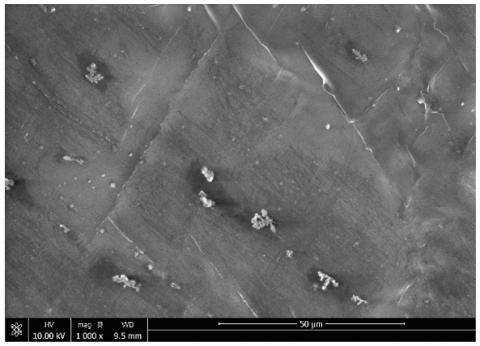
The initial assessment for the operational curve shows a favorable behavior for PEAO than POA. Further observation is performed to analyze the surface characteristic of the two composites. The mixing treatment of POA with plastic was directly performed under liquid state. It results as a significant variation on the profile of the mixture since each component has different phase change temperature. The phenomenon is observed distinctively as appear in Figure 5. As observed in Figure 5(a), there is boundary layer between the POA and Pl1. It appears as a large lump which surrounded by small crack at the edge of the flat profile. The crack indicates small void profile which exhibits the different melting rate. It probably affects the variation of initial solid liquid transition (Figure 3). Different profile is observed for using Pl2 (Figure 5(b)). It seems the plastic penetrate effectively to the POA structure, resulting in a flattened surface with sufficient distribution. The flattened surface for PEOA2 illustrates an adequate melting characteristic [36], since the POA can be embedded effectively on the structure of Pl2, making the initial phase change becomes smother with minimum temperature deviation (Figure 4). In general, the produced composite shows a typical profile for the embedded material with polymer which confirms the suitable formation between POA and the polymers.
(a) PEOA1
(b) PEOA2
Figure 5. Observation using electron microscope for the produced composite
Embedding the POA with the plastic contributes to a significant change on the curve behavior under heating/cooling stage. The main factor which causes this phenomenon is the change on the thermal properties of the composite.
The values are shown in Figure 6, showing the initial storage capacity which relates to the heat of fusion for POA is considerably high. It is one crucial factor which makes POA as the ideal material for HSS. The formation of PEOA causes the value to decrease, which correspond to the ratio of the polymer within the composite. However, the value varies between Pl1 and Pl2. The PEOA1 has a higher drop for the capacity for about 24.6%, while PEOA2 only decreases around 16.4%. As a result, the operational aspect for PEOA2 (Figure 4) becomes desirable which also followed by a suitable storage capacity.
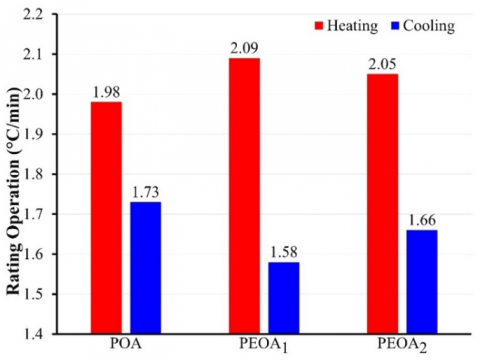
The rating comparison is shown to highlight the achievement for the synthesized MHSS according to the heating/cooling rate (Figure 7). It obtained according to the average temperature along with energy exchange within the system. The rating charge has a higher value for PEOA, with the maximum value is achieved with PEOA1 (2.09 ℃/min). It signifies the phase stabilization as one crucial method to alter the intake energy rate for the MHSS without adding any solid enhancer. It is achieved since stable phase change allows the MHSS to be heated effectively without causing any delay between the conduction stage (solid) to the natural convection (melting). Interestingly, the opposite result occurs for the releasing energy stage, making the cooling rate for PEOA becomes slower. In addition, the cooling rate for PEOA2 confirms the direct impact of flattened surface (Figure 5(b)) and higher liquid-solid (phase change) temperature (Figure 6). Therefore, the presence of solid enhancer is not a mandatory for large scale, since the outcome can be achieved by introducing phase stabilizer and modify the operation behavior of MHSS to be more favorable.
Figure 6. The variation of thermal properties for the evaluated material
Figure 7. The average rating operation for the evaluated material
Phase transformation occurs simultaneously on the operation of unit HSS. Thus, the temperature for the transition becomes crucial to ensure the effective energy exchange with the source and load. The POA has a higher liquid transition which becomes lower as the polymer added to the system. The opposite result is shown for the solid transformation, indicating the impact of polymer causes the solidification becomes favorable. It confirms the formation of two-stage solidification for PEOA which preceded by the freezing process for the polymer within the composite. It proves a stable freezing process is desirable for the heat releasing on the HSS unit.
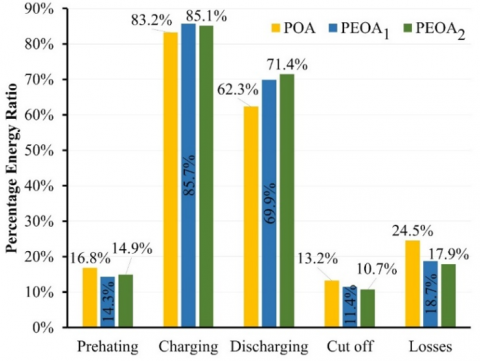
Figure 8. The comparison for energy ration from the operation of the evaluated HSS material
The comparison for energy ratio is plotted in Figure 8. The drawback of a longer preheating causes the effective energy ratio for POA becomes unfavorable. Also, the heat losses due to slow heat releasing (Figure 2) increases notably which makes some of the stored heat cannot be discharged. It makes the effective discharge ratio for PEO extremely low. The composite PEOA has a sufficient operation behavior (Figure 7), indicating a positive trend for the overall operation, especially for the effective discharge. It makes the maximum heat losses can be lowered to 17.9%, making more energy can be extracted from the material. It is advisable to ensure a higher discharge ratio to maintain the energy balance of the HSS unit, making the system more effective to store and release energy. Therefore, the synthesized composite material for HSS makes the operation of the system becomes effective and improving the net energy balance.
Improvement on the operation behavior of MHSS based on OA is done by embedding the material into the polymer structure. The method is specifically designed to achieve a better phase transformation characteristic during heating/cooling stage. The objective is achieved according to the effective energy ratio on the charge zone for PEOA can be elevated until 85.7%. It influences by significant decrement on the preheating stage for the composite which has the lowest value about 14.3%. Moreover, the cooling stage becomes more effective since the heat loss can be made lower which only 17.9%. The overall effective energy ratio indicates the composite has the highest value for the discharge stage, resulting on the effective energy up to 71.4%.
The general outcomes demonstrate the urgency for phase stabilization of MHSS. The higher effective energy ratio potentially improves the operation of HSS, making the economy-energy more advantageous, and lead to a reliable system. This work also indicates the benefit for implementing consecutive discharge HST and can be further developed for actual system such water and air heater. The combined result from MHSS and HST is expected to promote a higher technology level of HSS. Thus, future research is applicable on the techno-economic assessment of the combined model, including more detailed cycling assessment of PEOA for long-term operation, and integrating the model with renewable heat source. The numerical and simulation approach is advisable related to the improvement on the working fluid for the system. Eventually, the approach will contribute to improve readiness level and achieve commercialization of HSS technology.
[1] Skakov, M.K., Baklanov, V.V., Nurpaissova, G.S., Akaev, A.S., Bekmuldin, M.K., Toleubekov, K.O. (2024). Analysis of methods for simulating the decay heat in corium when modeling a severe accidents at nuclear power plant. Eurasian Physical Technical Journal, 1(47): 57-66. https://doi.org/10.31489/2024No1/57-66
[2] Ismail, I., Pane, E.A., Haryanto, G., Okviyanto, T., Rahman, R.A. (2021). A better approach for modified bach-type savonius turbine optimization, International Review of Aerospace Engineering, 14(3): 159-165. https://doi.org/10.15866/irease.v14i3.20612
[3] Liu, S., Zhang, L., Lu, J., Zhang, X., Wang, K., Gan, Z., Liu, X., Jing, Z., Cui, X., Wang, H. (2025). Advances in urban wind resource development and wind energy harvesters. Renewable and Sustainable Energy Reviews, 207: 114943. https://doi.org/10.1016/j.rser.2024.114943
[4] Ismail, John, J., Pane, E.A., Maulana, R., Rahman, R.A., Suwandi, A. (2021). Experimental evaluation for the feasibility of test chamber in the open-loop wind tunnel. WSEAS Transactions on Fluid Mechanics, 16: 120-126. https://doi.org/10.37394/232013.2021.16.12
[5] Buonomo, B., Golia, M.R., Manca, O., Nardini, S. (2024). A 3D model of a photovoltaic thermal panel with the heat transfer fluid tube embedded in a layer of phase change material and metal foam. Revue des Composites et des Matériaux Avancés-Journal of Composite and Advanced Materials, 34(5): 541-547. https://doi.org/10.18280/rcma.340501
[6] Suyitno, B.M., Rahman, R.A., Sukma, H., Rahmalina, D. (2022). The assessment of reflector material durability for concentrated solar power based on environment exposure and accelerated aging test. Eastern-European Journal of Enterprise Technologies, 6(12): 22-29. https://doi.org/10.15587/1729-4061.2022.265678
[7] Alkahdery, L.A., Yurchenko, A.V., Mohammed, J.A.K., Neshina, Y.G. (2023). Automated temperature and humidity control and monitoring system for improving the performance in drying system. Eurasian Physical Technical Journal, 20(2): 32-40. https://doi.org/10.31489/2023No2/32-40
[8] Rashid, F.L., Basem, A., Khalaf, F.A.A., Abbas, M.H., Hashim, A. (2022). Recent breakthroughs and improvements in phase change material melting in a triple-tube thermal storage unit. Revue des Composites et des Matériaux Avancés-Journal of Composite and Advanced Materials, 32(6): 295-304. https://doi.org/10.18280/rcma.320605
[9] Kumar, A., Kumar, R. (2024). Enhancement and estimation of thermo-physical properties of organic-phase change materials (O-PCMs) and their applications in solar thermal technologies: A review. Journal of Energy Storage, 101: 113741. https://doi.org/10.1016/j.est.2024.113741
[10] Zahir, M.H., Irshad, K., Shafiullah, M., Ibrahim, N.I., Kausarul Islam, A.K.M., Mohaisen, K.O., Sulaiman, F.A.A. (2023). Challenges of the application of PCMs to achieve zero energy buildings under hot weather conditions: A review. Journal of Energy Storage, 64: 107156. https://doi.org/10.1016/j.est.2023.107156
[11] Suyitno, B.M., Rahmalina, D., Rahman, R.A. (2023). Increasing the charge/discharge rate for phase-change materials by forming hybrid composite paraffin/ash for an effective thermal energy storage system. AIMS Materials Science, 10(1): 70-85. https://doi.org/10.3934/matersci.2023005
[12] Li, C., Liao, J., Xie, B., Cao, P., Long, Y. (2023). Three dimensional hybrid microcrystalline graphite-silica sol stabilized stearic acid as composite phase change material for thermal energy storage. Journal of Energy Storage, 72: 108328. https://doi.org/10.1016/j.est.2023.108328
[13] Li, C., Wang, M., Xie, B., He, Y.L. (2024). Carbon-decorated diatomite stabilized lauric acid-stearic acid as composite phase change materials for photo-to-thermal conversion and storage. Renewable Energy, 229: 120731. https://doi.org/10.1016/j.renene.2024.120731
[14] Mei, W., Zheng, W., Zeng, J., Bi, T., Lin, Q., Zhou, Y. (2024). Mesoporous surface dual-scale carbon foam/stearic acid composite as desirable shape-stabilized phase change material with excellent thermal storage and photo-thermal conversion performance. Journal of Energy Storage, 100: 113642. https://doi.org/10.1016/j.est.2024.113642
[15] Mehrjardi, S.A.A., Khademi, A., Said, Z., Ushak, S., Chamkha, A.J. (2023). Effect of elliptical dimples on heat transfer performance in a shell and tube heat exchanger. Heat and Mass Transfer, 59: 1781-1791. https://doi.org/10.1007/s00231-023-03367-7
[16] Ali, S., Mehrjardi, A., Khademi, A., Fazli, M. (2024). Optimization of a thermal energy storage system enhanced with fins using generative adversarial networks method. Thermal Science and Engineering Progress, 49: 102471. https://doi.org/10.1016/j.tsep.2024.102471
[17] Jančík, P., Schmirler, M., Hyhlík, T., Bláha, A., Sláma, P., Devera, J., Kouba, J. (2021). Experimental investigation and modelling of a laboratory-scale latent heat storage with cylindrical PCM capsules. Scientific Reports, 11: 23267. https://doi.org/10.1038/s41598-021-02705-1
[18] Diaconu, B.M., Cruceru, M., Anghelescu, L. (2023). A critical review on heat transfer enhancement techniques in latent heat storage systems based on phase change materials. Passive and active techniques, system designs and optimization. Journal of Energy Storage, 61: 106830. https://doi.org/10.1016/j.est.2023.106830
[19] Janghel, D., Karagadde, S., Saha, S.K. (2023). Measurement of shrinkage void and identification of solid-liquid phases in phase change materials: Ultrasound-based approach and simulated predictions. Applied Thermal Engineering, 223: 120048. https://doi.org/10.1016/j.applthermaleng.2023.120048
[20] Barz, T. (2021). Paraffins as phase change material in a compact plate-fin heat exchanger - Part II: Validation of the “curve scale” hysteresis model for incomplete phase transitions. Journal of Energy Storage, 34: 102164. https://doi.org/10.1016/j.est.2020.102164
[21] Shamseddine, I., Pennec, F., Biwole, P., Fardoun, F. (2022). Supercooling of phase change materials: A review. Renewable and Sustainable Energy Reviews, 158: 112172. https://doi.org/10.1016/j.rser.2022.112172
[22] Li, Z., Gariboldi, E. (2021). Review on the temperature-dependent thermophysical properties of liquid paraffins and composite phase change materials with metallic porous structures. Materials Today Energy, 20: 100642. https://doi.org/10.1016/j.mtener.2021.100642
[23] He, M., Xie, D., Yin, L., Gong, K., Zhou, K. (2023). Influences of reduction temperature on energy storage performance of paraffin wax/graphene aerogel composite phase change materials. Materials Today Communications, 34: 105288. https://doi.org/10.1016/j.mtcomm.2022.105288
[24] Wang, Z., Zhang, X., Xu, Y., Chen, G., Lin, F., Ding, H. (2021). Preparation and thermal properties of shape-stabilized composite phase change materials based on paraffin wax and carbon foam. Polymer, 237: 124361. https://doi.org/10.1016/j.polymer.2021.124361
[25] Gandhi, M., Kumar, A., Elangovan, R., Meena, C.S., Kulkarni, K.S., Kumar, A., Bhanot, G., Kapoor, N.R. (2020). A review on shape-stabilized phase change materials for latent energy storage in buildings. Sustainability, 12(22): 9481. https://doi.org/10.3390/su12229481
[26] Qu, Y., Wang, S., Zhou, D., Tian, Y. (2020). Experimental study on thermal conductivity of paraffin-based shape-stabilized phase change material with hybrid carbon nano-additives. Renewable Energy, 146: 2637-2645. https://doi.org/10.1016/j.renene.2019.08.098
[27] Qu, Y., Wang, S., Tian, Y., Zhou, D. (2019). Comprehensive evaluation of Paraffin-HDPE shape stabilized PCM with hybrid carbon nano-additives. Applied Thermal Engineering, 163: 114404. https://doi.org/10.1016/j.applthermaleng.2019.114404
[28] Li, C., Wang, W., Zeng, X., Liu, C., Sun, R. (2023). Emerging low-density polyethylene/paraffin wax/aluminum composite as a form-stable phase change thermal interface material. International Journal of Minerals, Metallurgy and Materials, 30: 772-781. https://doi.org/10.1007/s12613-022-2565-6
[29] Al-Mohammedi, A.A.S., Seyedi, M. (2023). Enhancing geotechnical properties of clayey soil with recycled plastic and glass waste. Revue des Composites et des Matériaux Avancés-Journal of Composite and Advanced Materials, 33(6): 363-369. https://doi.org/10.18280/rcma.330603
[30] Rahman, R.A., Sulistyo, Utomo, M.S.K.T.S., Putra, R.D.D. (2024). The optional approach in recycling plastic waste for energy storage application: A detailed evaluation of stabilized – hexadecanoic acid / plastic. Case Studies in Chemical and Environmental Engineering, 9: 100751. https://doi.org/10.1016/j.cscee.2024.100751
[31] Rahmalina, D., Zada, A.R., Soefihandini, H., Ismail, I., Suyitno, B.M. (2023). Analysis of the thermal characteristics of the paraffin wax/high-density polyethylene (HDPE) composite as a form-stable phase change material (FSPCM) for thermal energy storage. Eastern-European Journal of Enterprise Technologies, 1(6): 6-13. https://doi.org/10.15587/1729-4061.2023.273437
[32] Szajding, A., Kuta, M., Cebo-Rudnicka, A., Rywotycki, M. (2023). Analysis of work of a thermal energy storage with a phase change material (PCM) charged with electric heaters from a photovoltaic installation. International Communications in Heat and Mass Transfer, 140: 106547. https://doi.org/10.1016/j.icheatmasstransfer.2022.106547
[33] Rahman, R.A., Sulistyo, S., Utomo, M.S.K.T.S., Ragil, D., Suyitno, B.M. (2024). Experimental evaluation on the power characteristic of direct-photovoltaic charging for thermal storage equipment. Mechanical Engineering for Society and Industry, 4(1): 115-122. https://doi.org/10.31603/mesi.11493
[34] Pardillos-Pobo, D., González-Gómez, P.A., Laporte-Azcué, M., Santana, D. (2023). Thermo-economic design of an electric heater to store renewable curtailment in solar power tower plants. Energy Conversion and Management, 297: 117710. https://doi.org/10.1016/j.enconman.2023.117710
[35] Ode, L., Firman, M., Rahmalina, D., Rahman, R.A. (2023). Hybrid energy-temperature method (HETM): A low-cost apparatus and reliable method for estimating the thermal capacity of solid - liquid phase change material for heat storage system. HardwareX,16: e00496. https://doi.org/10.1016/j.ohx.2023.e00496
[36] Pandey, K., Ali, S.F., Gupta, S.K., Saikia, P., Rakshit, D., Saha, S. (2021). Facile technique to encapsulate phase change material in an amphiphilic polymeric matrix for thermal energy storage. Applied Energy, 292: 116917. https://doi.org/10.1016/j.apenergy.2021.116917