Hamza Ennadafy* | Mustapha Jammoukh | Youssef Hilali | Naoual Belouaggadia
© 2024 The authors. This article is published by IIETA and is licensed under the CC BY 4.0 license (http://creativecommons.org/licenses/by/4.0/).
OPEN ACCESS
Polyvinyl chloride remains one of the most prevalent polymers in the industry, yet its substantial environmental impact, attributed to its fossil origin, prompts the exploration of innovative solutions. Composites, particularly bio-composites, emerge as promising alternatives to mitigate the ecological footprint of PVC while enhancing its characteristics. This study addresses this concern by presenting the development of a bio-composite comprising 90% PVC and 10% biological filler derived from bovine horn, renowned for its high keratin content. The primary objective was to create an innovative, environmentally friendly, and sustainable material. To rigorously assess the properties and thermal stability of this bio-composite, a comparative thermogravimetric analysis was conducted against virgin PVC. The results reveal the superior thermal stability of the bio-composite compared to virgin PVC, particularly beyond 280℃. This enhancement is attributed to the substantial presence of keratin in the biological filler, constituting nearly 90% of the horn biomass. Notably, the observed mass loss in the bio-composite is lower than that of virgin PVC at temperatures exceeding 280℃. This research underscores the potential of bio-composites, specifically those incorporating bovine horn-derived filler, as promising alternatives to mitigate the ecological footprint of PVC while concurrently improving its thermomechanical characteristics. The innovative material developed in this study holds promise for sustainable applications in various industries, aligning with the growing demand for environmentally conscious alternatives.
natural resources, biodiversity, biomaterials, innovative composites, BIOLOADS, thermogravimetric analysis
For any specific requirement, there exists a polymer that meets these demands [1]. In everyday life and industrial applications, polymers originate from various sources [2], with notable distinctions between natural polymers such as plant fibers, leather, animal tendons, and wool, and fossil-based polymers like polyethylene, polypropylene, polyvinyl chloride, and polystyrene [3-5]. Each type of these polymers presents advantages [6] but also drawbacks and limitations in application. The concept of composite materials allows for the creation of alliances between multiple polymers to harness their diverse advantages, resulting in materials tailored to specific needs [7-10].
In line with this concept, our research project aims to contribute to the development of eco-composites using polymers like polyvinyl chloride (PVC) and reinforcing them with an animal-origin biological filler (bovine horn) [11]. This innovative bio-composite material combines the thermomechanical and physicochemical performances of both materials. The bovine horns used as biological fillers are composed of nearly 90% keratin, endowing them with naturally high thermomechanical and physicochemical performance [12-14].
To create this bio-composite, the biomass undergoes a drying process, followed by grinding to achieve a powder solution. This powder, along with rigid PVC grains, is fed into an extruder to produce bio-composite specimens [15].
This contribution focuses on a thermogravimetric analysis to study material degradation characteristics as a function of varying temperature. JAMMOUKH et al.'s innovative initiative paved the way for exploring PVC bio-loading with an animal-origin biological filler, particularly bovine horn. Their inaugural contribution focused on valorizing horn waste, aiming to assess the potential improvement in the environmental impact of PVC, a fossil-origin polymer, through bio-loading incorporation [11]. This initial study highlighted the positive effect of bio-loading on the mechanical properties of PVC, emphasizing responsible use of natural resources.
Continuing their work, the research group shifted its focus to the extrusion production and in-depth characterization of the mechanical properties of an innovative bio-composite. This bio-composite, comprising 90% PVC and 10% biomass from bovine horn, underwent thorough analyses, including tensile tests to elucidate the mechanical characteristics of this revolutionary material [15-17].
Additionally, Moumen et al. enriched this exploration by adopting a numerical simulation approach based on finite element method. This methodology numerically determined the mechanical properties of the biomass and bio-composite. Importantly, the results of this numerical model were experimentally validated, reinforcing the credibility of the obtained conclusions [18-20].
Furthermore, the additional contributions of Moumen et al. pushed the boundaries of research by exploring the mechanical characteristics of the bio-composite using an artificial intelligence approach. The use of neural networks to predict the mechanical properties of the bio-composite by varying bio-loading and PVC percentages demonstrates an innovative and multidisciplinary approach [21, 22].
These successive advancements demonstrate a systematic progression, evolving from waste valorization to the creation and thorough characterization of a potentially revolutionary bio-composite, marking a significant step in environmentally responsible polymer material research.
However, despite the scope and relevance of JAMMOUKH et al. and Moumen et al.'s contributions, it is essential to highlight some remaining gaps in the explored research field. Particularly, existing works do not seem to comprehensively address the thermal characteristics and thermal degradation of the developed bio-composite [23-26]. These crucial aspects hold particular importance in the design of new materials, as they directly influence stability and performance under varied thermal conditions [25, 26].
Characterization of thermal degradation is crucial to assess the resistance of the bio-composite to high temperatures and understand its behavior under extreme environmental conditions [25]. A comprehensive understanding of these thermal parameters would not only refine the formulation of the bio-composite but also determine its potential applications in specific environments [27-29]. The neglect of these aspects in previous works underscores the importance of this study in advancing the development of these new materials.
The main objective of this study lies in implementing an environmentally responsible approach for preparing raw biomass. This process includes crucial steps such as bactericidal treatment, drying, grinding, and screening to ensure clean handling of the biomass. The focus is on manufacturing specimens through extrusion, incorporating 90% polyvinyl chloride (PVC) and 10% biomass, aiming to develop an innovative eco-composite [16].
Subsequently, our study focused on an experimental evaluation of the thermal degradation of rigid PVC under the influence of temperature, utilizing the thermogravimetric technique. This in-depth analysis was extended to the newly developed eco-composite. By making comparisons between the thermogravimetric results for both materials, we seek to elucidate variations in their thermal degradation profiles.
This systematic approach, from biomass preparation to material thermal characterization, aims to provide essential data on the thermal performance of the developed bio-composite. The obtained results will have significant implications for understanding the thermal stability of this innovative material, thereby shedding light on potential applications and practical limitations of its use [30].
This study will be structured into four main sections to achieve a comprehensive thermogravimetric characterization of the two materials in question. In the first section, a detailed presentation of both materials, namely polyvinyl chloride (PVC) and biomass, will be provided. The second part will focus on a detailed description of the method used for the fabrication of the bio-composite. The third section of our study will be devoted to the thermogravimetric analysis of a sample of virgin rigid polyvinyl chloride, highlighting mass changes as a function of temperature. Subsequently, in the fourth section, we will delve into the thermogravimetric study of a sample of the bio-composite, also analyzing its thermal characteristics and stability under the influence of temperature. In conclusion, we will synthesize the observations and results obtained during these two analyses, providing a detailed comparison of the thermal properties of PVC and the bio-composite. The fundamental objective of this study lies in the in-depth characterization of the thermal properties of these two polymers through thermogravimetry, contributing to a deeper understanding of their respective performances. This work aligns with an eco-design approach, aiming to illuminate potential pathways to reduce the environmental footprint of polymers, especially PVC, within a more sustainable framework.
2.1 Polyvinyl chloride
In the context of an eco-design approach aimed at developing a high-performance and economically viable bio-composite, rigid polyvinyl chloride (PVC) has been selected as the main matrix. Despite the availability of various polymers such as Polyethylene Terephthalate, Low-Density Polyethylene, Polypropylene, and even High-Density Polyethylene as alternatives in the market, our choice gravitated towards rigid PVC due to its typological advantages and physico-chemical performance [25]. Despite its relatively high economic cost compared to other polymers, rigid PVC remains predominant in a multitude of applications across various sectors, including the automotive and food industries, among others [31-33].
Figure 1. Rigid polyvinyl chloride
However, rigid PVC presents certain limitations such as limited chemical resistance to solvents [34], susceptibility to discoloration when exposed to high UV levels, and low thermal resistance [35]. In terms of its physico-chemical properties, the PVC utilized in our experiment, as illustrated in Figure 1, distinguishes itself through its remarkable chemical stability when exposed to various aggressive agents. and ease of transformation through methods such as extrusion [14, 36]. Its recyclability opens perspectives for a circular economy, but our study will particularly focus on the often-neglected aspect of thermal degradation [37, 38]. The goal is to improve the understanding of its limits and optimize its application in the design of sustainable bio-composites. In doing so, we aim to contribute to the evolution of eco-design practices in the field of polymers, Table 1 summarizes all the general, thermal, and ecological characteristics of PVC.
Table 1. Properties of rigid polyvinyl chloride [39]
|
Property |
Value |
Units |
|
General |
||
|
Density |
1.3e3-1.49e3 |
kg/m3 |
|
Mechanical |
||
|
Yield Strength |
4.14e7-5.27e7 |
Pa |
|
Tensile Strength |
4.14e7-5.27e7 |
Pa |
|
Elongation |
0.4-0.8 |
% strain |
|
Hardness (Vickers) |
1.22e8-1.55e8 |
Pa |
|
Impact Strength (un-notched) |
1.9e5-2e5 |
J/m2 |
|
Fracture Toughness |
3.63e6-3.85e6 |
Pa/m0.5 |
|
Young's Modulus |
2.48e9-3.3e9 |
Pa |
|
Thermal |
||
|
Max Service Temperature |
50-65 |
℃ |
|
Insulator or Conductor |
Insulator |
|
|
Specific Heat Capability |
1e3-1.1e3 |
J/kg ℃ |
|
Thermal Expansion Coefficient |
9e-5-1.8e-4 |
strain/℃ |
|
Eco |
||
|
CO2 Footprint |
1.85-2.04 |
kg/kg |
|
Recyclable |
Yes |
|
Polyvinyl chloride has the following chemical formula: —(CH2—CHCl)n—(the structure of which is shown in Figure 2).
This material, classified as organic, is produced through a radical polymerization process of the vinyl chloride monomer (abbreviated as VCM, with the formula CH2=CHCl).

Figure 2. The structure of polyvinyl chloride
2.2 The biomass (Bovine horn)
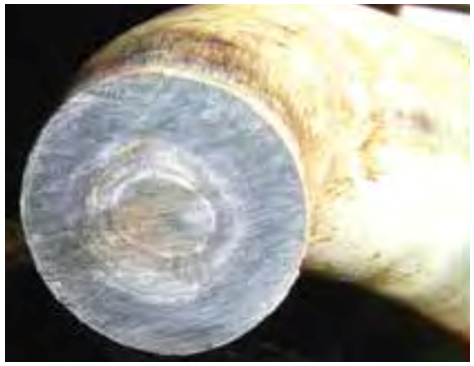
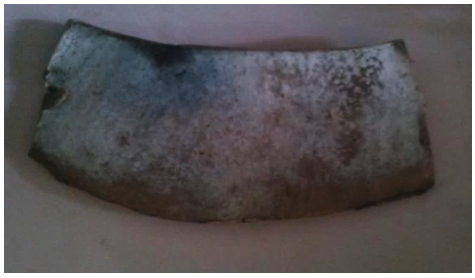
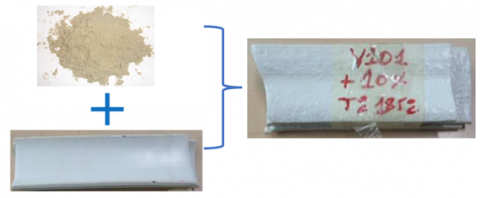
In our endeavor to enhance the physico-chemical and thermomechanical characteristics of rigid polyvinyl chloride (PVC), we have innovated by developing a bio-composite. This material is predominantly composed of PVC, representing 90% of the total composition, and also incorporates a biological filler derived from bovine horn, constituting 10% (Figure 3 and Figure 4) [15, 16]. Our bio-loading approach aims to harness the intrinsic properties of bovine horn, rich in keratin [38], to reinforce and diversify the characteristics of PVC. This strategy aligns with our ongoing quest to create a hybrid material, combining the environmental benefits of using biomass with improved performance. This innovation opens new perspectives for sustainable applications in the field of polymer materials, thereby aligning our research with current concerns regarding material sustainability and efficiency.
In its raw state, the use of horn as a bio-filler proves impractical, necessitating a crucial pre-processing stage. The initial step involves sun-drying the horns to eliminate surface residues. Subsequently, the sheath, which exhibits the most favorable characteristics and constitutes the outer part of the horn, is meticulously separated from the cornet, the extension originating from the frontal bone of the animal [11, 13]. The isolated sheath then undergoes a grinding process, transforming the material into a fine powder ready to be utilized as a bio-filler for rigid polyvinyl chloride [40]. This meticulous process ensures the optimal quality of the bio-filler, thereby contributing to maximizing the performance of the resulting composite material (see Figure 5).
Figure 3. The cross-section of the horn has a concentric structure [41]
Figure 4. The horn sheath after separation from the horn
Figure 5. (a): Biomass in the form of CHIPS; (b): Biomass in the form of POWDER
3.1 Extrusion process
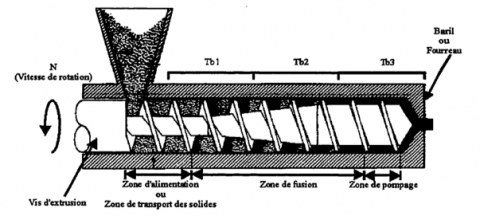
In order to obtain the bio-composite, we chose the extrusion process, which is carried out using a machine called an extruder. The extruder is equipment used to transform plastic materials into precise and continuous forms. The polymer extrusion process (see Figure 6) involves heating the polymer until it becomes malleable, then passing it through a die that imparts the desired final shape to the finished product [42]. Polymer extrusion is widely used in various industrial sectors, including automotive, food packaging, and electronics.
The selection of the extruder for the production of the PVC-based bio-composite and the bio-fill made from bovine horn is based on several crucial considerations related to the specific properties of the material and the requirements of the processing [43, 44]. Firstly, the extruder was chosen due to its ability to efficiently process loaded polymer blends, providing essential mixing homogeneity to ensure uniform mechanical properties of the final product [43]. The unique nature of bovine horn as a bio-fill also influenced the choice of the extruder. Since the horn is introduced in powder form after a grinding process [16], it was imperative to opt for an extruder capable of effectively handling solid charges. The selection of a suitable extruder also considered the need to maintain specific temperatures, due to the thermal characteristics of PVC and the bio-fill. The design of the extruder screw was adapted to ensure homogeneous mixing and optimal dispersion of the bio-fill in the polymer matrix [44, 45].
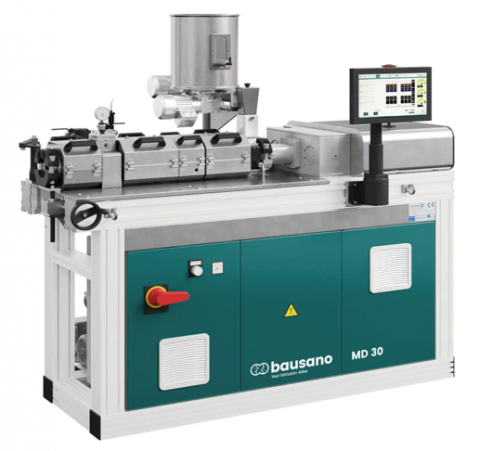
For our experiment, the laboratory at the Technical Center for Plastics and Rubber (CTPC) provided us with an extruder of the Bausano & Figli S.p.A brand, type MD-30/19-30 (Figure 7). This machine is equipped with a multi-stage thermostated screw with variable speed, along with a series of pressure transducers. For material feeding, it features a rotating stainless-steel hopper and a screw feeder [46].
To create a bio-composite with optimal performance, the results of multiple experiments conducted by JAMMOUKH et al. suggest that a dosage of 90% PVC and 10% bio-filler leads to improved characteristics [11, 14, 17, 47, 48]. Following this recommendation, we manufactured our bio-composite using rigid PVC.
It is crucial to emphasize that the machine's heating temperature plays a crucial role in determining the properties of the bio-composite. A previous study conducted by JAMMOUKH et al. concluded that a mixing temperature of 130°C offers a better compromise between mechanical and physicochemical performance [41, 49, 50].
Figure 6. Principle of the extrusion process [42]
After configuring the BAUSANO MD-30/19-30 PVC extruder, we proceed with the transformation of the PVC/bio-filler mixture into flat profiles. This step is crucial to meet the requirements of our experimental plan aimed at characterizing the physicochemical properties of this bio-composite for optimal utilization, as shown in the Figure 8.
Figure 7. Extruder for PVC type MD-30/19-30 from BAUSANO
Figure 8. Rigid bio-composite (10% bio-mass+90% rigid PVC)
3.2 Analysis device
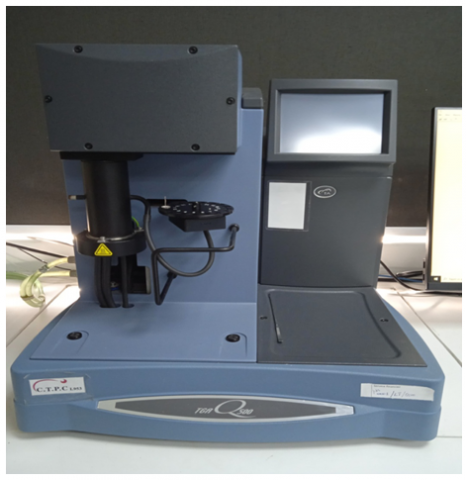
Thermogravimetric Analysis (TGA) is a technique that enables us to measure the mass changes of a sample as a function of temperature. This technique employs an instrument called a Thermogravimetric Analyzer, consisting of a sensitive balance known as a "Microbalance" and a furnace that can be controlled for both heating and cooling [51]. In this experiment we used a TG Q500 thermogravimetric analyser supplied by CTPC, shown in Figure 9. TGA is utilized to investigate the decomposition and thermal stability of a sample, especially to identify decomposition temperatures and decomposition products. It can be applied to study a wide range of materials, including polymers, biomasses, and composites [52]. TGA is often employed in conjunction with other laboratory techniques, such as infrared spectroscopy or chromatography, to gain a more comprehensive understanding of the chemistry and physics of materials [53].
Data from Thermogravimetric Analysis (TGA) plays a crucial role in the overall assessment of the bio-composite material, providing crucial information about its thermal stability and degradation properties [51, 54]. TGA allows monitoring the mass variation of a sample as a function of temperature, offering a detailed insight into the thermal changes undergone by the material [38, 52].
Figure 9. The thermogravimetric analyzer "TGA Q500"
In the context of the PVC and bovine horn-based bio-composite, TGA data are particularly relevant for several aspects. They provide information about the temperature range at which the material's thermal degradation occurs. This range can reveal critical thresholds where significant changes in the molecular structure or composition of the bio-composite occur. TGA data allow quantifying the thermal stability of the material by identifying the temperatures at which degradation processes start and end. These parameters are essential for determining the resistance of the bio-composite to high temperatures, which is crucial in various industrial applications. TGA analysis can also reveal the relative composition of the bio-composite's constituents by distinguishing the degradation of PVC from that of the bovine horn. This provides an in-depth understanding of the individual contributions of the components to the overall thermal degradation of the material [38, 55].
4.1 Experimental results of thermogravimetric analysis of polyvinyl chloride
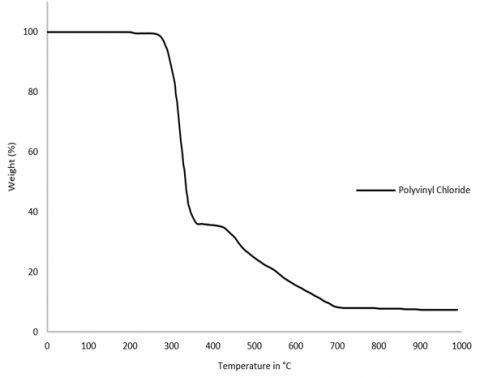
The result of the thermogravimetric analysis of polyvinyl chloride is presented in Figure 10. Examination of the thermal degradation characteristics of PVC reveals no mass loss observed up to 280℃. Beyond this temperature, the PVC's thermal degradation process is divided into two distinct stages: the first extends from 280 to 370℃, followed by the second from 370 to 700℃ [56, 57]. These findings align with literature results that have also highlighted this division into two main stages of the PVC degradation process [52, 58, 59]. This observation reinforces the validity and consistency of the results obtained in our study, confirming the robustness of the thermogravimetric analysis applied to PVC.
Figure 10 highlights the cascade reaction of PVC subjected to the temperature effect, revealing a complex degradation in several distinct phases. This detailed chronological sequence provides an essential insight into the structural changes of PVC in response to increasing temperature.
Initiation of degradation
At initial temperatures, PVC remains stable, marking the preliminary stage before the initiation of the degradation process. This initial phase attests to the polymer's robustness under moderate thermal conditions.
Figure 10. Results of the thermogravimetric analysis of polyvinyl chloride
First phase (280-370℃)
The first phase of degradation begins around 280℃, marked by a significant mass loss, primarily due to the decomposition of C-Cl bonds in PVC. This initial stage extends to approximately 370℃, revealing a cascade reaction that profoundly alters the material's molecular structure [52, 57].
Second phase (370-700℃)
The second phase of degradation starts at 370℃ and ends at nearly 700℃. This stage experienced a mass loss of almost 28% of the remaining mass from the previous stage (36%). This mass loss is assumed to correspond to the breaking of C-Cl bonds during the first phase. This reaction also results in the creation of various volatile elements; namely anthracene, naphthalene, and benzene, which are polyene chains of toluene [60, 61].
Carbonization and residues (700℃ and beyond)
Beyond 700℃, the cascade reaction culminates in the formation of carbonized residues. Approximately 8% of the initial mass is preserved in this form, indicating a final carbonization of the PVC's organic matrix. This step provides insight into the material's resistance to high temperatures [59, 60].
This cascade analysis underscores the complex dynamics of PVC degradation under the influence of temperature, providing crucial information for understanding and modulating the material's properties in various application contexts.
4.2 Interpretation of the results of the derivative mass curve of polyvinyl chloride
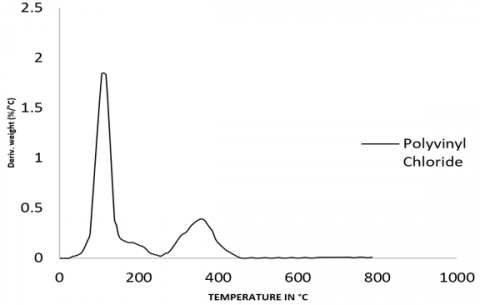
Interpretation of the derivative mass curve of polyvinyl chloride, derived from the differential thermal analysis, illustrated in Figure 11, consistently confirms the thermal decomposition of the polymer in two distinct stages, as previously outlined. The curve provides significant details regarding the quantitative and qualitative changes associated with these specific phases.
First decomposition phase (64% Mass loss)
The first phase, characterized by the highest mass loss (approximately 64%), is clearly identified on the mass derivative curve. The mass derivative, representing the amount of material lost per unit temperature, reaches a remarkable peak of about 2 (%/℃) during this stage. This peak reflects the intensity of thermal decomposition at this stage, highlighting the high reactivity of polyvinyl chloride in breaking C-Cl bonds [52, 57].
Second decomposition phase (28% Mass loss)
The second phase, characterized by a lower mass loss (approximately 28%), is also clearly defined on the mass derivative curve. The mass derivative during this stage is significantly reduced, reaching about 0.5 (%/℃). This reduction reflects lower thermal reactivity compared to the first phase, indicating a more progressive decomposition of the remaining bonds.
The analysis of the polyvinyl chloride mass derivative curve not only confirms the validity of the two phases of thermal decomposition but also provides quantitative insights into the intensity of each phase. This information is crucial for a comprehensive understanding of the polymer's thermal reactivity, thereby guiding the design and application of the material in specific environments.
Figure 11. Results of the differential thermal analysis of polyvinyl chloride
4.3 Experimental results of thermogravimetric analysis of the bio-composite
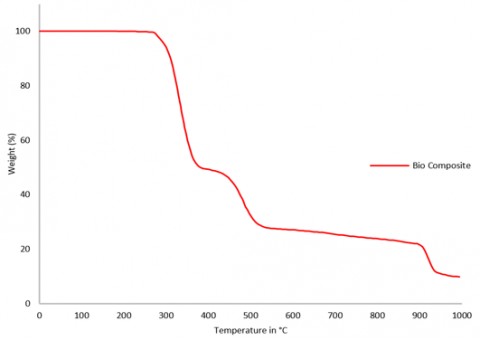
The bio-composite is synthesized by mixing 90% rigid polyvinyl chloride (PVC) with 10% biomass derived from recycled cattle horns [47]. Figure 12 depicts the result of the thermogravimetric analysis of the bio-composite. The thermal degradation characteristics of the bio-composite in the temperature range of 0℃ to 1000℃ show a three-phase degradation with mass loss, indicating a cascading degradation process [62]. The thermal decomposition process of the bio-composite is subdivided into three main phases with mass loss. The first phase starts at around 284℃ and ends at 388℃, the second phase of degradation begins at 420℃ and ends at 540℃, and the third phase starts at 900℃ and ends at 990℃.
First degradation phase (284-388℃)
The first phase, starting at approximately 284℃ and ending at 388℃, results in a significant mass loss of nearly 51%. This degradation arises from the decomposition of C-Cl bonds in PVC (representing 90% of the bio-composite) and the removal of water associated with keratin, a predominant component of the bovine horn. This phase demonstrates the preservation of 32% of the mass before transitioning to the next degradation phase [63].
Second degradation phase (420-540℃)
The second phase, ranging from 420℃ to about 540℃, induces an additional mass loss of nearly 20%, representing 49% of the remaining mass from the previous phase. This complex step results primarily from the degradation of C-Cl and C-C bonds in PVC [60, 61], as well as the denaturation of the molecular helix of keratin present in the biomass [63]. The denaturation of the molecular helix of keratin in the biomass refers to a process in which the distinctive helical structure of keratin undergoes modifications, leading to an alteration of its original configuration. In this particular case, denaturation was initiated by external factors related to temperature, resulting in a modification of the helical structure. It is noteworthy that, in the context of the thermal degradation of the bio-composite, the denaturation of keratin specifically occurs during the second degradation phase, ranging from 420 to 540℃. This observation underscores the significant influence of temperature on the behavior of keratin in the thermal degradation process of the composite material. Volatile elements [60, 61] such as anthracene, naphthalene, and benzene (from PVC), as well as carbon dioxide (CO2), hydrogen sulfide (H2S), and hydrogen cyanide (HCN) from keratin are generated [56, 63-65]. This phase concludes with relative mass stability, with a slight mass loss of about 5% between 540℃ and 900℃.
Third degradation phase (900-990℃)
The third phase, beginning around 900℃ and ending at approximately 990℃, causes an additional mass loss of about 11%. This mass reduction is attributed to carbonization and the evaporation of elements formed during the previous phase. The sudden decrease in mass observed from 911℃ onwards could also be influenced by instrumental artifacts, requiring further evaluation.
Figure 12. Results of the thermogravimetric analysis of the Bio-composite
4.4 Interpretation of the results from the mass derivative curve of the bio-composite
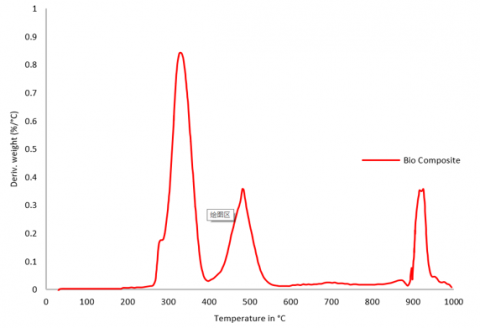
Figure 13 depicts the curve of the differential thermal analysis of the bio-composite. This representation conclusively confirms that the polymer undergoes a staged decomposition in three distinct phases of thermal degradation.
First phase (51% Mass loss)
The first phase is characterized by the highest mass loss, reaching approximately 51%. The corresponding mass derivative is about 0.8 (%/℃). This initial phase demonstrates an intensive material decomposition, highlighted by a significant mass loss.
Second phase (20% Mass loss)
The second phase shows a lower mass loss, estimated at around 20%. The associated mass derivative for this stage is about 0.3 (%/℃). This reduction in mass loss indicates a less pronounced decomposition compared to the first phase.
Third phase (11% Mass loss)
The third phase is also characterized by a relatively low mass loss, nearing 11%. The mass derivative for this phase is about 0.3 (%/℃). This final stage of decomposition contributes to an additional mass loss, though less significantly than the preceding phases.
Figure 13. Results of the differential thermal analysis of the Bio-composite
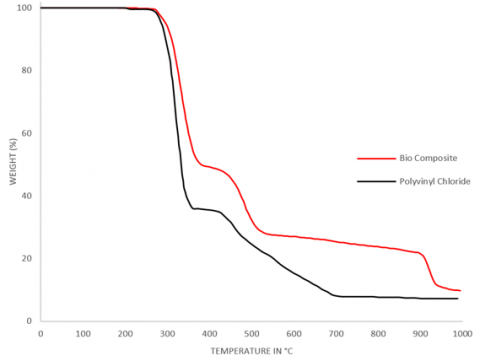
The comparison of thermogravimetric curves between virgin rigid PVC and the bio-composite, illustrated in Figure 14, reveals striking similarities up to 280℃, indicating equivalent thermal stability between the two materials. During this temperature range, both materials exhibit nearly identical thermal behaviors, with a very slight mass variation of PVC observed around 210℃.
Figure 14. Overlay of thermogravimetric analysis results for rigid polyvinyl chloride and Bio-composite
However, beyond 280℃, the trajectories of the two materials diverge significantly. This divergence indicates different levels of thermal stability between rigid PVC and the bio-composite. From this critical temperature onward, the red curve representing the TGA of the bio-composite consistently positions itself above the black curve of rigid PVC throughout subsequent phases of thermal degradation, up to 900℃. It is at this stage that both curves stabilize, albeit with different remaining masses.
This continuous higher positioning of the bio-composite beyond 280℃ clearly underscores its improved thermal stability compared to rigid PVC. This persistent observation across various phases of thermal degradation demonstrates the substantial advantages of integrating keratin derived from biomass into the bio-composite [16, 17], thereby imparting superior thermal performance across the studied temperature range.
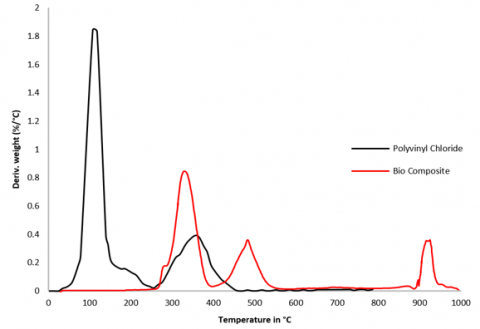
By incorporating mass derivative results, as shown in Figure 15, the conclusion is reinforced: The bio-composite exhibits superior thermal stability to rigid PVC. These results highlight the environmental benefits and extended application opportunities of bio-composites, while emphasizing the crucial role of keratin in these enhanced thermal performances.
Figure 15. Overlay of differential thermal analysis results for polyvinyl chloride and Bio-composite
Keratin, the predominant component of biomass (over 90%), emerges as a key player in this thermal superiority [47, 63]. Alpha-grade keratin, rich in carbon, oxygen, nitrogen, a small proportion of hydrogen, and approximately 5% sulfur [13, 66, 67], reinforces the molecular bonds of the bio-composite. This unique composition contributes to its increased thermal stability, making the bio-composite more resistant to high temperatures.
The developed bio-composite, enriched with a biological load of bovine horn, exhibits interesting characteristics that make it potentially suitable for various applications, especially in the automotive industry.
Due to its enhanced thermal stability, the bio-composite could be used to manufacture interior components such as trim panels, dashboards, and other aesthetic elements. Its resistance to high temperatures would be advantageous, particularly in environments where heat exposure is frequent.
The combination of PVC and biomass in the bio-composite offers improved mechanical properties. This could be exploited for the production of lightweight structural components, such as body parts or chassis elements, contributing to vehicle weight reduction [14, 19].
The increased resistance to high temperatures of the bio-composite makes it suitable for exterior coatings, thus withstanding extreme weather conditions. This could include applications such as exterior trims, bumpers, or other components exposed to the elements. The thermal and acoustic insulation characteristics of the bio-composite could be utilized in designing elements such as door panels, contributing to improving thermal and acoustic comfort inside the vehicle [30].
Although the bio-composite enriched with bovine horn presents notable advantages, some limitations persist and require particular attention. The imperative to preserve the thermal and mechanical stability of the material in diverse environmental conditions poses a crucial challenge. The ability of the bio-composite to maintain its optimal properties under the influence of external factors such as temperature and humidity variations must be rigorously evaluated [68, 69].
Simultaneously, constraints may arise related to the supply of raw materials, namely bovine horn. The availability and quality of this organic resource may vary, leading to potential fluctuations in the properties of the bio-composite. Raw material suppliers must be able to consistently meet demand, posing a logistical challenge [41, 70].
Moreover, in specific applications requiring exceptional chemical resistance, the bio-composite may face limitations. The material's reaction to aggressive chemical agents, such as certain industrial chemicals, requires thorough evaluation. Some industrial environments may involve repeated exposure to potentially corrosive substances, highlighting the need for adequate chemical compatibility of the bio-composite.
This study thoroughly explored the potential of the PVC and bovine horn-based bio-composite, highlighting significant advances in the field of innovative materials. The integration of keratin, present in substantial quantities in bovine horn biomass, was a decisive feature in improving the physico-chemical and thermomechanical properties of rigid PVC.
Our analysis demonstrated that the thermal degradation of the bio-composite occurs in three distinct phases, marked by significant mass losses. The denaturation of the molecular helix of keratin during the second phase was identified as a crucial point, positively influencing the material's thermal stability.
This study is reinforced by the graphical results of thermogravimetric analysis, illustrating that rigid PVC and the bio-composite initiate their degradation similarly in the first temperature interval, ranging from 0℃ to nearly 280℃. However, beyond this critical temperature, the bio-composite distinguishes itself by exhibiting superior thermal stability compared to virgin PVC. This significant improvement can be attributed to the substantial presence of keratin, representing 10% of the bio-composite. This finding underscores the crucial importance of keratin as a key component in enhancing the material's thermal properties. The more controlled degradation of the bio-composite beyond 280℃ offers promising prospects for applications requiring increased resistance to high temperatures. However, challenges persist, especially in terms of maintaining stability in various environmental conditions and managing the supply chain for bovine horn. Applications requiring exceptional chemical resistance may also pose specific challenges.
To advance in this field, it is essential to clarify the exact role and quantity of keratin in the bio-composite. Ongoing attention to optimizing parameters that enhance thermal stability, along with continuous evaluation of material performance in real conditions, is necessary. This study provides a promising perspective for the development of innovative bio-composites. The findings pave the way for future research aimed at refining formulations, overcoming identified limitations, and expanding the potential applications of these eco-friendly and high-performance materials.
We would like to thank the Laboratory of the Centre Technique des Plastiques et du Caoutchouc (CTPC) for their reception and the means made available to complete this work. Our thanks also go to the staff of this establishment for their availability and collaboration.
[1] Patel, R.M., et al. (2010). Polymères éthylènes et leur utilisation. Chemistry, juill. https://api.semanticscholar.org/CorpusID:104340342.
[2] Chisholm, B.J., Alam, S. (2010). Polymères issus d’une huile végétale. Chemistry. https://api.semanticscholar.org/CorpusID:102984195.
[3] Carantino, S. (2004). Polymères d'emballage la source de toutes les innovations. Revue Laitière Française, 638: 34-36. https://api.semanticscholar.org/CorpusID:193491801.
[4] Walker, S., Rothman, R. (2020). Life cycle assessment of bio-based and fossil-based plastic: A review. Journal of Cleaner Production, 261: 121158. https://doi.org/10.1016/j.jclepro.2020.121158
[5] Kumar, R., Verma, A., Shome, A., Sinha, R., Sinha, S., Jha, P.K., Kumar, R., Kumar, P., Das, S., Sharma, P., Vara Prasad, P.V. (2021). Impacts of plastic pollution on ecosystem services, sustainable development goals, and need to focus on circular economy and policy interventions. Sustainability, 13(17): 9963. https://doi.org/10.3390/su13179963
[6] Schmaucks, G., Roszinski, J.O. (2006). Matériau plastique composite. Chemistry, févr.
[7] Calderon, V., Horgnics, M. (2014). Utilisation de polymères recyclés dans les mortiers et bétons. Technique de l’Ingénieur. https://doi.org/10.51257/a-v1-am3600
[8] Dessarthe, A. (1998). Usinage des polymères. Plast. Compos, janv, https://doi.org/10.51257/a-v1-am3780
[9] Bureau, J.M. (2016). Propriétés diélectriques des polymères. Plast. Compos, févr, https://doi.org/10.51257/a-v4-e1850
[10] Zwawi, M. (2021). A review on natural fiber bio-composites, surface modifications and applications. Molecules, 26(2): 404. https://doi.org/10.3390/molecules26020404
[11] Jammoukh, M., Mansouri, K., Salhi, B. (2018). From the promotion of biodiversity to the Recovery of organic waste. In E3S Web of Conferences. EDP Sciences, 37: 02009. https://doi.org/10.1051/e3sconf/20183702009
[12] Bories, M.F., Martini, M.C., Et, M.B., Cotte, J. (1984). Influence des variations thermiques sur la structure du cheveu. International Journal of Cosmetic Science, 6(5): 201-211. https://doi.org/10.1111/j.1467-2494.1984.tb00378.x
[13] Jacques, C. (2003). Etude de la valorisation des déchets d'origine kératinique par voie thermo-mécano-chimique en vue de l'obtention de filaments continus: Cas spécifique de la laine. Doctoral Dissertation.
[14] Jammoukh, M., Mansouri, K., Salhi, B. (2018). Influence of temperature on thebiocompatibility and mechanicalbehavior of a biosourced polymer. International Journal of Mechanical Engineering and Technology (IJMET), 9(6): 555-565.
[15] Jammoukh, M., Mansouri, K., Salhi, B., Abtal, E. (2021). Bio-charge elastic characterization for a qualitative perspective of innovative bio-composite materials. Iraqi Journal of Science, 90-95. https://doi.org/10.24996/ijs.2021.SI.1.12
[16] Jammoukh, M., Mansouri, K., Salhi, B. (2019). Industrial and ecological effect of a bio-load on polymers. Materials Today: Proceedings, 13: 939-948. https://doi.org/10.1016/j.matpr.2019.04.058
[17] Jammoukh, M. (2018). Contribution à la caractérisation expérimentale et à la modélisation numérique du comportement d’un matériau composite à base de biocharge. [Contribution to the experimental characterization and numerical modeling of the behavior of a bio-filled composite material]. Université Hassan II de Casablanca.
[18] Jammoukh, H.C.A.M.M., Mansouri, K. (2021). Numerical modeling of the mechanical characteristics of polypropylene bio-loaded by three natural fibers with the finite element method. International Journal on Technical and Physical Problems of Engineering (IJTPE), 13(4): 45-50.
[19] Moumen, A., Jammoukh, M., Zahiri, L., Mansouri, K. (2020). Numerical modeling of the thermo mechanical behavior of a polymer reinforced by horn fibers. International Journal of Advanced Trends in Computer Science and Engineering, 9(4). https://doi.org/10.30534/ijatcse/2020/342942020
[20] Lakhdar, A., Jammoukh, M., Zahiri, L., Mansouri, K., Moumen, A., Salhi, B. (2020). Numerical and experimental study of the behavior of PVC material subjected to aging. In 2020 1st International Conference on Innovative Research in Applied Science, Engineering And Technology (IRASET), IEEE, pp. 1-6. https://doi.org/10.1109/IRASET48871.2020.9091998
[21] Laabid, Z., Moumen, A., Lakhdar, A., Mansouri, K. (2021). Towards the numerical implementation of neural network to predict the mechanical characteristics of bio composites. IOP Conference Series: Materials Science and Engineering. IOP Publishing, 1126(1): 012010. https://doi.org/10.1088/1757-899X/1126/1/012010
[22] Moumen, A., Laabid, Z., Lakhdar, A., Mansouri, K. (2021). Prediction of the mechanical properties of polypropylene reinforced with snail shell powder with a deep neural network model and the finite element method. IOP Conference Series: Materials Science and Engineering, 1126(1): 012009. https://doi.org/10.1088/1757-899X/1126/1/012009
[23] Candelier, K. (2013). Caractérisation des transformations physico-chimiques intervenant lors de la thermodégradation du bois. Influence de l'intensité de traitement, de l'essence et de l'atmosphère. Doctoral dissertation, Université de Lorraine.
[24] Hannouz, S. (2014). Développement d’indicateurs pour la caractérisation mécanique et la durabilité des bois traités thermiquement. Doctoral Dissertation, Paris, ENSAM.
[25] Biasi, V. (2014). Modélisation thermique de la dégradation d’un matériau composite soumis au feu. Doctoral Dissertation, Institut Superieur De L'aeronautique Et De L'espace (ISAE)).
[26] Loiselle, L. (2013). Influence des produits de dégradation sur la stabilité thermique et diélectrique des fluides isolants pour les transformateurs de puissance. Université du Québec à Chicoutimi. https://doi.org/10.1522/030617331
[27] Félix, V. (2011). Caractérisation thermique de matériaux isolants légers. Application à des aérogels de faible poids moléculaire. Doctoral dissertation, Institut National Polytechnique de Lorraine.
[28] Tlaiji, T. (2018). Développement et caractérisation du comportement thermomécanique des matériaux composites TRC. Doctoral Dissertation, Université de Lyon.
[29] Tlijani, M. (2016). Contribution à la caractérisation thermophysique de matériaux bio-isolants: valorisation des déchets de bois de palmier. Doctoral Dissertation, Université Paris-Est.
[30] Ennadafy, H., Jammoukh, M., Belouaggadia, N. (2023). Comparative analysis of the thermomechanical properties of soft PVC used in the automotive industry and bio-composite: A sustainable alternative. In 2023 3rd International Conference on Innovative Research in Applied Science, Engineering and Technology (IRASET), IEEE, pp. 1-5. https://doi.org/10.1109/IRASET57153.2023.10152934
[31] Ausseur, D. (1990). Poly (chlorure de vinyle) PVC. Tech. Ing., févr. https://doi.org/10.51257/a-v1-a3325a
[32] Bekele, S. (2002). Composition et feuille de chlorure de polyvinylidene constituant une barrière efficace. Composition and Sheet of Polyvinylidene Chloride Constituting an Effective Barrier.
[33] G'sell, C., Jonas, J.J. (1979). Determination of the plastic behaviour of solid polymers at constant true strain rate. Journal of Materials Science, 14(3): 583-591. https://doi.org/10.1007/BF00772717
[34] Reegen, S.L., Frisch, K.C. (1967). The effect of chemical structure on thermal, hydrolytic, and solvent resistance of polyurethane films. In Journal of Polymer Science Part C: Polymer Symposia. New York: Wiley Subscription Services, Inc., A Wiley Company. 16(5): 2733-2749. https://doi.org/10.1002/polc.5070160527
[35] Belhaneche-Bensemra, N., Belaabed, B., Bedda, A. (2003). Caractérisation des mélanges PVC-PMMA rigides et plastifiés. II-Etude de la dégradation thermique. In Annales de Chimie Science des Matériaux. No longer published by Elsevier, 28(4): 25-42. https://doi.org/10.1016/S0151-9107(03)00093-X
[36] Wang, S., Deltour, J. (1999). Studies on thermal performances of a new greenhouse cladding material. Agronomie, 19(6): 467-475. https://doi.org/10.1051/agro:19990604
[37] Czarnecka-Komorowska, D., Kanciak, W., Barczewski, M., Barczewski, R., Regulski, R., Sędziak, D., Jędryczka, C. (2021). Recycling of plastics from cable waste from automotive industry in Poland as an approach to the circular economy. Polymers, 13(21): 3845. https://doi.org/10.3390/polym13213845
[38] Ennadafy, H., Jammoukh, M., Nissabouri, S., Belouaggadia, N. (2022). Towards a numerical simulation of the thermogravimetric behaviour of a recyclable biomaterial. In 1ST International Conference on Physical and Engineering Sciences (ICPES’22) 29th-30th, Istanbul, Turkey, p. 134. https://doi.org/10.2478/9788367405249-022
[39] Dielectric Manufacturing. (Consulté le 26 décembre 2022). Material Properties of PVC and Suitable Applications. En ligne. Disponible sur: https://dielectricmfg.com/knowledge-base/pvc-polyvinyl-chloride/
[40] Baijal, M.D., Kauppila, K.M. (1971). Physico‐chemical characterization of poly (vinyl chloride). I. Solution properties. Polymer Engineering & Science, 11(3): 182-186. https://doi.org/10.1002/pen.760110303
[41] Neff, A.S. (2015). L'importance des cornes chez la vache. FiBL Hrsg IMPROVE-P Consort. Univ. Hohenh. ITAB, (1691): 16. https://www.fibl.org/fr/boutique/1691-cornes.
[42] Thibodeau, C. (1998). Optimisation des vis d'extrusion à l'aide de logiciels de simulation. École Polytechnique de Montréal.
[43] Van den Broek d'Obrenan, G. (2011). Adaptation du procede RTM (moulage par transfert de resine) a la mise en œuvre de materiaux composites a matrice thermoplastique. Doctoral Dissertation, INSA de Lyon.
[44] Durin, A. (2012). Modélisation du mélange de polymères chargés et de la casse de fibres rigides en extrusion bivis. Doctoral dissertation, Ecole Nationale Supérieure des Mines de Paris.
[45] Gaudin, S., Commereuc, S., Verney, V., Guyonnet, R., Govin, A. (2007). Durabilité de composites bois-polymères biodégradables. Matériaux & Techniques, 95(2): 143-148. https://doi.org/10.1051/mattech:2007039
[46] MD-30/19-30-Extrudeuse pour PVC by Bausano & Figli S.p.A. | DirectIndustry. (Consulté le: 4 janvier 2023). En ligne. Disponible sur: https://www.directindustry.fr/prod/bausano-figli-spa/product-73694-758235.html.
[47] Jamoukh, M., Mansouri, K., Salhi, B. (2018). Elasticity characteristics of a bio-load of renewable Resources. Periodicals of Engineering and Natural Sciences, 6(2): 338-344. http://dx.doi.org/10.21533/pen.v6i2.547
[48] Jammoukh, M., Zahiri, L., Mansouri, K., Abtal, E. (2020). Numerical characterization of a bio-charge at 45 of its fibers for a qualitative perspective of durable materials. In 2020 IEEE International conference of Moroccan Geomatics (Morgeo), pp. 1-4. https://doi.org/10.1109/Morgeo49228.2020.9121905
[49] Jorgensen, S.E., Mitsch, W.J. (Eds.). (1989). Ecological Engineering: An Introduction to Ecotechnology. John Wiley & Sons.
[50] Marchal, J. (1990). Contraintes post-récolte et perspectives d'amélioration de la manipulation, du stockage et de la transformation du plantain et des autres bananes à cuire en Afrique de l'Ouest. Semantic Scholar.
[51] Escalante, J., Chen, W.H., Tabatabaei, M., Hoang, A.T., Kwon, E.E., Lin, K.Y.A., Saravanakumar, A. (2022). Pyrolysis of lignocellulosic, algal, plastic, and other biomass wastes for biofuel production and circular bioeconomy: A review of thermogravimetric analysis (TGA) approach. Renewable and Sustainable Energy Reviews, 169: 112914. https://doi.org/10.1016/j.rser.2022.112914
[52] Zhu, H.M., Jiang, X.G., Yan, J.H., Chi, Y., Cen, K.F. (2008). TG-FTIR analysis of PVC thermal degradation and HCl removal. Journal of Analytical and Applied Pyrolysis, 82(1): 1-9. https://doi.org/10.1016/j.jaap.2007.11.011
[53] Bertrand, A. (1968). Utilisation de la chromatographie en phase gazeuse pour le dosage des constituants volatils du vin. OENO One, 2(2): 175-270. https://doi.org/10.20870/oeno-one.1968.2.2.1937
[54] Borrel, M., Pâris, R. (1950). Analyse thermogravimétrique des principaux oxinates métalliques. Analytica Chimica Acta, 4: 267-285. https://doi.org/10.1016/0003-2670(50)80040-5
[55] Duval, C. (1956). Sur la stabilité thermique des étalons analytiques. III. Analytica Chimica Acta, 15: 223-225. https://doi.org/10.1016/0003-2670(56)80040-8
[56] Brebu, M., Spiridon, I. (2011). Thermal degradation of keratin waste. Journal of Analytical and Applied Pyrolysis, 91(2): 288-295. https://doi.org/10.1016/j.jaap.2011.03.003
[57] Bi, W., Chen, T., Zhao, R., Wang, Z., Wu, J., Wu, J. (2015). Characteristics of a CaSO4 oxygen carrier for chemical-looping combustion: Reaction with polyvinylchloride pyrolysis gases in a two-stage reactor. Rsc Advances, 5(44): 34913-34920. https://doi.org/10.1039/C5RA02044A
[58] Chipara, M., Cruz, J., Vega, E.R., Alarcon, J., Mion, T., Chipara, D.M., Ibrahim, E., Tidrow, S.C., Hui, D. (2012). Polyvinylchloride-single-walled carbon nanotube composites: Thermal and spectroscopic properties. Journal of Nanomaterials, 2012: 15-15. https://doi.org/10.1155/2012/435412
[59] Yu, J., Sun, L., Ma, C., Qiao, Y., Yao, H. (2016). Thermal degradation of PVC: A review. Waste Management, 48: 300-314. https://doi.org/10.1016/j.wasman.2015.11.041
[60] Miranda, R., Yang, J., Roy, C., Vasile, C. (1999). Vacuum pyrolysis of PVC I. Kinetic study. Polymer Degradation and Stability, 64(1): 127-144. https://doi.org/10.1016/S0141-3910(98)00186-4
[61] Ephraim, A., Pozzobon, V., Lebonnois, D., Peregrina, C., Sharrock, P., Nzihou, A., Pham Minh, D. (2020). Pyrolysis of wood and PVC mixtures: thermal behaviour and kinetic modelling. Biomass Conversion and Biorefinery, 1-15. https://doi.org/10.1007/s13399-020-00952-2
[62] Yu, J., Wang, P., Ni, F., Cizdziel, J., Wu, D., Zhao, Q., Zhou, Y. (2019). Characterization of microplastics in environment by thermal gravimetric analysis coupled with Fourier transform infrared spectroscopy. Marine Pollution Bulletin, 145: 153-160. https://doi.org/10.1016/j.marpolbul.2019.05.037
[63] Kakkar, P., Madhan, B., Shanmugam, G. (2014). Extraction and characterization of keratin from bovine hoof: A potential material for biomedical applications. SpringerPlus, 3: 1-9. https://doi.org/10.1186/2193-1801-3-596
[64] Pourjavaheri, F., Mohades, F., Jones, O., Sherkat, F., Gupta, A., Shanks, R.A. (2017). Avian keratin fibre-based bio-composites. World Journal of Engineering, 14(3): 183-187. https://doi.org/10.1108/WJE-08-2016-0061
[65] Thiry-Muller, A. (2018). Modélisation de la décomposition thermique des solides. Doctoral Dissertation, Université de Lorraine.
[66] Christou, N., Fitzer, E., Kalka, J., Schäfer, W. (1969). Étude de la carbonisation des composés organiques et des polymères. Journal de Chimie Physique, 66: 50-59. https://doi.org/10.1051/jcp/196966s1050
[67] Laffont, C., Capdeville, B., Roques, H. (1979). Etudes des transformations des formes du carbone, azote, phosphore, soufre, et des principaux elements mineraux au cours de la mesure de la demande totale en oxygene-I. Transformation des formes du carbone et des principaux cations. Water Research, 13(2): 167-175. https://doi.org/10.1016/0043-1354(79)90088-5
[68] Amadji, T.A., Jean, G., Codjo, A., Daniel, G., Valéry, D.K. (2021). Valorisation de déchets plastiques et d'industrie du bois en composite moule à froid: Effet des paramètres de fabrication sur les propriétés mécaniques. Environnement, Ingénierie & Développement. https://doi.org/10.46298/eid.2021.7210
[69] Ennassih, H., Bouferra, R., Zoubir, A., Essaleh, L., Elhassri, S. (2020). Caractérisation mécanique et thermique d’un biomatériau à base de terre et des fibres végétales. Academic Journal of Civil Engineering, 38(1): 29-32. https://doi.org/10.26168/ajce.38.1.8
[70] Aujoulat, N. (févr. 2009). Vache à la corne tombante. En ligne. Disponible sur: https://www.semanticscholar.org/paper/Vache-%C3%A0-la-corne-tombante-Aujoulat/264ccb26550ced33fe73daccff8561d3f31ec9f8.