Dian Retnasari | Asri Andarini Nurlita | Putri Marganing Utami*
© 2025 The authors. This article is published by IIETA and is licensed under the CC BY 4.0 license (http://creativecommons.org/licenses/by/4.0/).
OPEN ACCESS
Shopping bags play a crucial role in daily life, especially for carrying items when shopping for necessities like food, clothing, or other goods. In Indonesia, the use of single-use plastic shopping bags remains high. These plastics often end up in oceans, rivers, or landfills, causing pollution and harming ecosystems. This research aims to develop Denim Eco Bags (DECOBAG) from used denim, combining patchwork, smocking, and macramé techniques. The research method is a development study adopting the 4D procedure by Thiagarajan, Semmel, and Semmel, consisting of four stages: define, design, develop, and disseminate. The research data includes quantitative data collected through questionnaires distributed to users and qualitative data from interviews with main subjects. The results showed that the shopping bag made had excellent aesthetic value, with a percentage of 82%, excellent functionality value, with a percentage of 93%, and excellent suitability value, with a percentage of 88% after revision and modification. The results indicate that the shopping bag is aesthetically pleasing, functions well, and meets user needs after revisions and modifications. This study focuses only on aspects of functionality, aesthetics, and suitability perceived by users. Therefore, future research should focus on other quality aspects that have not been examined, such as durability against washing and sunlight.
Denim Eco Bags (DECOBAG), shopping bag, sustainable development
Since 2016, plastic waste has constituted over 12 percent of global waste composition, making it the third most common type of waste after food and paper. Geyer et al. estimate that by 2050, there will be 12,000 million tons of plastic waste on Earth if current plastic consumption trends continue [1]. Although plastic bags are practical and cheap, they have caused severe environmental impacts due to their difficulty in decomposition [2-4]. The production process of plastic bags requires raw materials from petroleum and large amounts of energy, resulting in adverse environmental effects. The rapid growth in the use of single-use plastic bags for packaging has led to resource depletion and severe environmental pollution [5]. The Ministry of Environment and Forestry (KLHK) has issued a circular encouraging the public to bring alternative shopping bags. If individuals do not bring alternatives, retailers will charge for plastic bags requested during shopping. This policy has been successfully implemented in several countries, significantly reducing plastic bag usage [6].
Shopping bags play a vital role in daily life, particularly in terms of practicality. They are used to carry items while shopping, whether for everyday needs like food, clothing, or other goods. In Indonesia, plastic shopping bags are readily available and often accessible in most stores or traditional markets, leading people to rely on single-use plastic for shopping. The use of single-use plastic bags remains very high in Indonesia, with many ending up in oceans, rivers, or landfills, causing pollution and harming the ecosystem [2, 7].
To address this issue, many alternatives to single-use bags have emerged, with one of the most popular being shopping bags made from durable and recyclable materials such as polypropylene (PP) or fibers [8]. There is a variety of shopping bag types, including tote bags, foldable bags, and woven bags made from rattan or synthetic materials, which serve as replacements for single-use plastic bags [9]. Based on direct observations by researchers in shopping centers like supermarkets and fashion stores, as well as reviews through online media, the models of shopping bags available show a wide range in terms of shape, color, and decorative elements, allowing for more unique and stylish options. Beyond functionality, shopping bags have become a part of lifestyle and fashion [10]. Thus, it can be concluded that shopping bags play a significant role in daily life, encompassing economic, environmental, and social aspects, far beyond just being a tool for carrying items.
The use of eco-friendly shopping bags is part of a sustainable lifestyle, as it helps protect the environment and fosters more responsible habits in consumption and resource management. A sustainable lifestyle that includes the use of eco-friendly shopping bags is critical to successfully combating climate change and environmental degradation [11]. In line with this, there is a viewpoint that reusable bags were created to raise awareness among the public, encouraging them to adopt the habit of using reusable shopping bags while shopping and ensuring that these bags remain stylish and trendy for the Indonesian community [12]. Many shopping bags come with attractive designs and stylish colors, allowing individuals to express their personalities through their choice of bags.
Interventions in textile waste management can reduce the impact of global warming by up to 22.3 million tons of CO2 per year, translating to an 18% impact reduction in the sector by 2035 [13]. Textile waste has become a significant environmental issue, both globally and in Indonesia. The rapid growth of the fashion industry, or speedy fashion, has led to a substantial increase in the production and consumption of textiles, resulting in a growing amount of textile waste. One primary source of textile waste is denim; according to Nadia, a practitioner in upcycling, denim textile waste is as concerning as plastic waste [14]. Clothes that are no longer used due to consumer patterns accumulate significantly. Upcycling is one method to minimize textile waste, and it can also help save costs [15].
Utilizing denim textile waste as the primary material for creating unique shopping bags is a creative idea that not only supports textile waste reduction but also produces functional, sustainable, and aesthetically appealing products. Denim is known for its strength and high durability, making it well-suited for items like shopping bags that need to be long-lasting and robust. One common type of denim waste is in the form of old jeans. Therefore, upcycling used denim jeans into an alternative material for making shopping bags not only reduces textile waste but also provides a unique and stylish appearance [16].
Researchers are innovating the creation of shopping bags from denim material, named DECOBAG (Denim Eco-Bag). The selected denim pants are high-quality branded jeans, enhancing aesthetic value in the eyes of consumers, as some consumers tend to feel more confident using branded items even if they are secondhand [17, 18]. The production of DECOBAG involves combining patchwork, smocking, and macramé techniques. This research is essential to developing DECOBAG using these techniques and assessing its feasibility in terms of functionality, aesthetics, and suitability.
This research is a type of development study. The development model adopted the 4D procedure developed by Thiagarajan, Semmel, and Semmel, which consists of four stages: define, design, develop, and disseminate (Thiagarajan). In product development research, the 4D model developed by Thiagarajan is particularly suitable. Its systematic approach allows researchers to effectively define user needs, design appropriate solutions, develop testable prototypes, and disseminate improved products based on feedback. By following the structured steps shown in Figure 1, researchers can ensure that the resulting product not only meets high-quality standards but is also relevant and useful to end users.
In the define stage, also known as the needs analysis, this study involves analyzing the materials and models of shopping bags, user characteristics, and the objectives of developing the shopping bag.
The design stage of making this shopping bag is done through several stages, namely: a) making a shopping bag design with a length of 35 cm, width of 10 cm, and height of 35cm, b) grouping the types of used jeans fabric that will be used, c) making patchwork, d) making smocking, e) making macrame, f) sewing the components into a complete shopping bag, and g) finishing. Design principles in developing DECOBAG include aspects of a) functionality, b) aesthetics, and c) compatibility with trends/fashion. These principles become an important foundation in the development of DECOBAG to ensure the product is not only visually appealing but also meets the needs of users and remains relevant to the development of the latest fashion trends.
The development stage is focused on producing the developed product. This stage involves the following steps: a) Validation of the shopping bag development results by experts (expert appraisal); b) Revising the shopping bag based on suggestions from the experts during validation if the developed bag is still deemed unsuitable or unfit for testing with potential users; c) Conducting a limited trial with a small group (5 people) to assess students' responses to the developed shopping bag; d) Revising the shopping bag based on the trial results; e) Conducting a trial with a larger group (30 people) to understand user responses to the developed shopping bag; and f) Revising the shopping bag based on the results from the large group trial. Large-scale and small-scale test subjects were determined based on age, gender, and a habit of shopping at offline stores using bags with a high shopping frequency.
The shopping bag that has been tested and deemed feasible will then enter the dissemination stage. This stage involves promoting the shopping bag through limited distribution to women who frequently shop at offline stores in Yogyakarta city so that they are aware of the benefits of using the shopping bag. In addition to building awareness, it also forms interest and desire to buy in target consumers so that the product can expand to a larger market.
Figure 1. Product development flow with 4D model
The data analysis technique in this research is descriptive quantitative, presenting an overview of existing data, such as frequency distribution, mean, median, mode, and value range. This helps to see the patterns that exist in the data, then the data is interpreted. Data interpretation aims to understand the information obtained from the data and draw relevant conclusions based on the results.
3.1 Define
The definition stage is crucial for establishing and defining the development requirements. In this research, a thorough analysis of existing shopping bag materials and models, user characteristics, and the objectives of developing the shopping bag is necessary. From observations, the researcher found that the commonly used shopping bags include tote bags, woven bags, plastic bags, and foldable bags. Tote bags are typically made from fabric such as canvas or cotton, usually have two handles, and are generally white. Woven bags are made from natural materials like rattan, bamboo, or pandan leaves. These bags have a traditional appearance, are suitable for shopping in markets or casual activities, and are not resistant to extreme weather conditions [19]. Plastic bags are widely used and readily available in stores, minimarkets, and supermarkets, usually made from non-biodegradable plastic [20]. Foldable bags are generally made from lightweight materials such as nylon, polyester, or parachute fabric, which can be less stylish when used as a primary bag.
The open interviews with users aimed to explore in depth the shopping bags they use without external pressure or intervention. To obtain more detailed answers, the researcher asked what, why, and how questions, followed by deeper inquiries to ensure reliable responses. Generally, the researcher asked about the current shopping bags used, their shortcomings, and the need to develop shopping bags from recycled materials.
The interviews revealed that, on average, people use plastic bags, citing their availability and the fact that they are often accessible in most stores or traditional markets, leading them to rely on single-use plastic for shopping. Some participants also use shopping bags made from canvas, cotton, or synthetic materials, which typically have two long handles and are often open at the top. Shopping bags are practical for everyday needs, making it easier to carry items when shopping at markets, supermarkets, or stores, typically for lightweight purchases like toiletries, cooking ingredients, snacks, clothing, and more. Using shopping bags also improves time efficiency for mothers, helping to speed up shopping activities and minimize travel time back and forth to the store. Other participants expressed a desire for strong and durable shopping bags that can be reused, thereby saving on expenditures for single-use bags. Although eco-friendly bags may be more expensive initially, their long-term use is more economical compared to continuously purchasing plastic bags [21].
Based on the studies and direct observations in the field, the aim of developing this shopping bag is to reduce the large amounts of denim waste that are difficult to decompose. Additionally, some old jeans that are torn from use can also be repurposed. Another model that allows for reducing old jeans is to create fashionable, stylish shopping bags that are functional and meet user needs. Besides functionality, shopping bags have now become part of lifestyle and fashion. Many shopping bags come with attractive designs and stylish colors and can be personalized, allowing individuals to express their personalities through their choice of bags.
Using reusable shopping bags helps cultivate more responsible habits in waste management and consumption. This can inspire others to join the eco-friendly movement. Shopping bags play a much more significant role than just a tool for carrying items; they encompass economic, environmental, and social aspects. Using eco-friendly shopping bags is a simple yet significant step in helping to preserve the environment and create more responsible habits in terms of consumption and resource management.
3.2 Design
3.2.1 Shopping bag designing
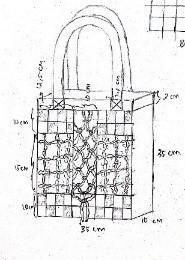
In this process, the researcher prepares design guidelines for the layout of patchwork, smocking, and macramé on the shopping bag. The design of the shopping bag can be seen in Figure 2.
Figure 2. Design of shopping bag
Figure 3. Cutting used jeans according to the pattern
3.2.2 Classification of used jeans
Classify the used jeans by separating them based on thickness, color, and size. Select larger-sized jeans to create the flower pattern. Additionally, the pockets are utilized as embellishments, and the waistband is used as the strap for the shopping bag. The pattern-cutting process can be seen in Figure 3. The jeans are then soaked in hot water to kill any bacteria or germs [22]. Following this, the denim from the used jeans is cut according to the pattern.
3.2.3 Patchwork square pattern making
Arrange the cut square pieces based on their color differences to create a harmonious color scheme, then sew the patchwork according to the arrangement. The arrangement of the patchwork pattern can be seen in Figure 4.
Figure 4. Patchwork square pattern
3.2.4 Smock flower pattern making
Measure and mark the fabric with a pencil and ruler, creating a grid of 1-inch x 1-inch squares, totaling 12 inches x 9 inches. Mark an "X" for the stitching points and leave one square empty for the gathering. Stitch around the squares and pull the opposing points on the grid to create a gathered effect, forming a flower shape. The process of making the smock flower pattern can be seen in Figure 5.
Figure 5. Smock flower pattern
3.2.5 Makrame square knot making
Prepare four strands of cotton thread, with two strands as the center threads and two strands as the knot threads. Fold each strand in half and attach them to the wooden handle. Then, create a left half knot, followed by a right half knot. Repeat these steps to create a series of square knots to the desired length. The process of making makrame square knot can be seen in the Figure 6.
Figure 6. Makrame square knot
3.2.6 Seewing the shopping bag
It combines all the components that have been created—square patchwork, smock flower pattern, and macramé square knot—according to the design by sewing them together to form a shopping bag as envisioned by the researcher. The results of the shopping bag can be seen in Figure 7.
Figure 7. Results of the shopping bag
The shopping bag is designed with attention to both aesthetics and functionality. The final design includes various decorative elements that utilize patchwork (the addition of denim pieces in varied patterns), smocking (a technique for gathering fabric to create texture), and macramé. The type of denim used is from discarded clothing. Denim classification is conducted to ensure quality and suitability with the planned design [22]. Using recycled denim in the creation of shopping bags contributes to the reduction of textile waste. Upcycling denim not only reduces waste but also avoids the use of new materials that require additional production processes and resources. The design stage is critical to creating a shopping bag that is not only functional but also visually appealing. The integration of design techniques such as patchwork, smocking, and macramé aims to enhance the aesthetic value of the bag while maintaining functionality. The selection of recycled denim as the primary material addresses the issue of textile waste and provides a sustainable alternative.
3.3 Development
In the context of developing the shopping bag, the development activities are carried out with the following steps:
3.3.1 Expert appraisal
Material validation data analysis aims to test the quality of shopping bags based on feedback from textile, design, and pattern experts.
Table 1. Results expert appraisal
|
Expert Panelists |
Mean Value of the Indicator |
Product Mean Value |
Category |
||
|
Aesthetic |
Functionalists |
Conformity |
|||
|
Expert 1 |
3.5 |
3.25 |
3.75 |
3.5 |
Very High Quality |
|
Expert 2 |
3.75 |
3.25 |
4 |
3.67 |
Very High Quality |
|
Expert 2 |
3.25 |
3 |
3.75 |
3.33 |
Very High Quality |
(Source: Personal documents)
Based on Table 1, the results indicate that the evaluations from three expert panelists fall into the "Very High Quality" category in terms of aesthetics, functionality, and suitability. Feedback from Expert Panelist 1 emphasizes that when selecting thread, its thickness and strength should match the type of fabric used. Stitching tests on fabric samples are recommended before starting the main project to ensure optimal results. This is important because denim fabric has characteristics that differ from other materials. Denim thread is typically more robust and thicker, designed to withstand high pressure and friction. Using an unsuitable thread can lead to suboptimal final results, such as thread breakage or an uneven stitching appearance. Additionally, inappropriate threads can affect the comfort and durability of the product.
Feedback from Expert Panelist 2 suggests considering and planning storage capacity according to needs. If the bag design is intended for carrying large quantities, it is essential to ensure that the shopping bag has enough space to accommodate all the items flexibly. Storage capacity in a shopping bag is a crucial factor to consider when planning the creation of the product.
Expert Panelist 3 highlights the importance of adding value to the visual appeal; ensuring that fabric cuts are made with precision and care is essential. Experimenting with various arrangement techniques can help identify what best fits the design. Proper cutting and arrangement can enhance the product's visual appeal and convey a professional impression. Poor arrangement or uneven cuts can make the product appear less attractive and lower in quality. Therefore, it is essential to pay attention to details such as symmetry, balance, and overall aesthetics when cutting and arranging the materials.
Based on the feedback from the expert panelists, the shopping bag was then improved by enhancing the stitching strength with denser thread, increasing the bag size, and tidying up the stitching. Figure 8 is the result of the improvement of the shopping bag according to the input from the expert panelists.
Figure 8. Improvement results from experts
Small-scale testing was conducted after expert validation. This small-scale trial involved five users of the shopping bag. The users not only filled out a questionnaire but also provided suggestions.
Table 2. Results of a small-scale trial
|
Respondent |
Mean Value of the Indicator |
Additional Notes |
||
|
Aesthetic |
Functionalists |
Conformity |
||
|
1 |
4.5 |
4 |
5 |
Attractive and very useful design |
|
2 |
3 |
4 |
3 |
Aesthetics are less good and less appropriate, but functional |
|
3 |
4.5 |
5 |
4 |
Functional, but not suitable |
|
4 |
4 |
5 |
4.5 |
Very good functionality, quite attractive design |
|
5 |
5 |
5 |
4.5 |
Very good with all aspects of the product |
(Source: Personal documents)
Based on the small-scale testing, the researcher obtained the following quantitative data. For the aesthetics indicator, the average score was 4.2, indicating that most respondents considered the bag's aesthetics to be quite good. Three respondents gave high scores (4 or 5), suggesting that the design and appearance of the product were generally regarded as attractive. However, one respondent gave a score of 3, indicating there is room for improvement in terms of design (refer to Table 2).
For the functionality indicator, the average score was 4.6, suggesting that the shopping bag was generally considered very functional. Four respondents rated it a 5, showing high satisfaction with the bag's functionality, while one respondent rated it a 4. This indicates that the bag effectively meets functional needs.
The average score for the suitability indicator was 4.2, indicating that the bag was generally seen as suitable for its intended purpose. However, one respondent rated it a 3, indicating some shortcomings in terms of suitability for their specific needs.
Based on the results of the small-scale testing, DECOBAG was revised according to the feedback received. Several suggestions included the use of solid stitching techniques, such as double stitching or reinforcement stitching in the handle area, to enhance strength. The stitching on the bag's handle is critical because it bears the primary load when the bag is in use. Solid and durable stitching on the handle ensures that the bag can support weight without the risk of damage or breakage. Strength testing should be conducted on the handle by applying varying weights to ensure that the stitching is indeed strong and not easily damaged.
Another suggestion was to select high-quality lining materials such as polyester, satin, or durable non-woven fabric that are easy to clean while avoiding materials that are too thin or prone to tearing. If necessary, additional pockets or functional features could be added to the lining to assist in organizing items within the bag. Additionally, adopting a minimalist design with fewer embellishments and focusing on essential elements is recommended. Design elements that do not add to functionality or comfort should be avoided. A simple design is more versatile and can be used for various situations, from shopping to everyday use.
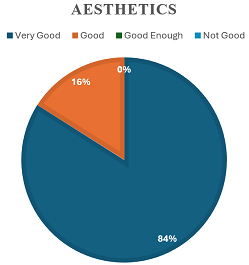
After the revisions, a large-scale DECOBAG test was conducted to assess user responses to the developed product. Based on the large-scale testing, the researcher obtained results that can be seen in the diagram.
Based on Figure 9, it can be described that in terms of aesthetics, out of 100 potential product users, the highest score = 94, the lowest score = 77, the average value (mean) = 84.07, the median (Me) = 84, the mode (Mo) = 86.60, and the standard deviation (SD) = 4, 08. The frequency distribution shows that 84 people (84%) rated “very good”, 16 people (16%) rated “good”, and no one rated “bad” or “not good”. This shows that the aesthetic aspect of the shopping bag falls into the “very good” category.
Regarding functionality, out of 100 potential product users, the highest score = 110, the lowest score = 55, the mean = 92.62, the median (Me) = 92, the mode (Mo) = 99, and the standard deviation (SD) = 10.27. The frequency distribution shows that 93 people (93%) rated this shopping bag as “very good”, 7 people (7%) rated this shopping bag as “good”, and no one rated this shopping bag as “bad” or “not good”. This shows that the functionality applied to this shopping bag also falls into the “excellent” category.
For the suitability aspect, the highest score = 94, lowest score = 78, mean = 88.19, median = 84.17, mode = 79, and standard deviation = 4.25. The frequency distribution shows that 88 people (88%) rated “very good”, 12 people (12%) rated “good”, and no one rated “bad” or “not good”, which indicates that the suitability of the shopping bag is classified as “very good”.
Based on the results of the large-scale testing, the shopping bag was revised according to the feedback received. There were several positive responses from users, including that the chosen material felt very sturdy, the design was very stylish, and the handle was solid and comfortable, allowing it to carry heavy items without the worry of tearing. The lining inside the bag was also very well received; it not only enhanced the appearance but also greatly assisted in organizing items within the bag. Additionally, there is a need for a competitive pricing strategy in the market.
Figure 9. Large-scale trial diagram
Source: Personal documents
The results indicate that the developed shopping bag is suitable for shopping and meets its users' needs. In the context of sustainability, DECOBAG offers significant advantages over plastic bags and regular fabric bags. First, in terms of sustainability, DECOBAG directly contributes to reducing textile waste, which is one of the major causes of environmental pollution [23]. Each bag made from used denim jeans not only decreases the amount of waste that goes to landfills but also reduces the need to produce new materials [24], which often involves excessive use of natural resources. In contrast, single-use plastic bags often end up in oceans or landfills, taking hundreds of years to decompose. While regular fabric bags are better than plastic bags in terms of sustainability, they still require resources for production and often do not utilize recycled materials.
In terms of cost, although the upcycled shopping bag has a higher price compared to plastic bags, DECOBAG offers better value in the long run. DECOBAG is designed for repeated use and has good durability, reducing the need to continuously purchase new bags [25]. On the other hand, cheap plastic bags often can only be used once or twice before they tear, ultimately adding to costs for consumers [26]. In terms of durability, DECOBAG has a clear advantage. Denim is known for its strength, and when transformed into a bag, it can withstand heavier loads and last longer compared to plastic bags, which are prone to tearing and damage. Fabric bags can also vary in durability depending on the materials used, but they often do not match the strength of bags made from denim [27].
DECOBAG showed positive results in terms of user acceptance. The trials conducted show that users appreciate the combination of aesthetics, functionality, and sustainability offered by DECOBAG. Many users feel more confident using a bag made from high-quality materials with an attractive design, which is a plus compared to other eco-friendly shopping bags that may be less visually appealing.
In addition, DECOBAG is designed for repeated use and has better durability than plastic bags and some other fabric bags. Users report that DECOBAG can withstand heavier loads and last longer, reducing the frequency of purchasing new bags and providing better economic value in the long run.
Thus, DECOBAG is not only more environmentally friendly but also more economical, durable, and uniquely distinct compared to plastic bags and regular fabric bags. Regarding production costs, bags made from denim waste offer a more economical solution than bags made from new materials. Making these bags relies heavily on using existing materials, such as pieces of used denim or unused denim fabric left over from previous productions. This denim waste, usually considered worthless and often thrown away, has excellent potential to be reprocessed into functional and attractive products. Thus, the output of DECOBAG only requires additional materials such as sewing thread and a zipper.
The main advantage of using denim waste in bag-making is reducing the need to purchase new raw materials. In this case, the basic materials for the bag are mostly readily available, so the cost of purchasing new fabric can be minimized or even eliminated. This makes the production cost of denim waste-based bags lower than those produced using new denim materials that require additional spinning, dyeing and finishing processes.
The process of recycling denim waste needs to be maximized to minimize the waste generated by selecting denim materials that are strong and suitable for use; fashion elements such as pockets, zippers, and buttons can be used as design accents. Choosing DECOBAG is an innovative initial step for consumers who wish to contribute to sustainability and reduce environmental impact. Utilizing upcycled denim to create shopping bags is a tangible example of how innovation in design and the use of recycled materials can provide effective solutions for the future [28, 29]. DECOBAG offers an appealing combination of sustainability, unique design, and high functionality. By focusing on the use of recycled denim, this brand not only creates eco-friendly products but also contributes to waste reduction and community empowerment [30, 31]. This makes DECOBAG an attractive choice for environmentally conscious consumers who still prioritize style and quality.
3.4 Disseminate
Dissemination is carried out by socializing DECOBAG through limited distribution to users, particularly mothers who frequently shop using shopping bags. The success in receiving positive feedback from users indicates that DECOBAG is well-accepted and can contribute to changing consumer behavior towards more sustainable product usage.
This article highlights the importance of transitioning from single-use plastic bags to more environmentally friendly alternatives. The innovative approach of developing shopping bags from upcycled denim using techniques such as patchwork, smock, and macrame not only reduces textile waste but also creates stylish and functional products. The quality of DECOBAG, utilizing a combination of patchwork, smock, and macrame techniques, demonstrates that the shopping bag possesses aesthetics, functionality, and suitability. This shopping bag not only meets attractive design standards but also effectively serves the practical needs of consumers. Additionally, this product supports sustainability goals by utilizing recycled materials and reducing textile waste. This assessment shows that these upcycled shopping bags are an effective and beneficial alternative to single-use plastic bags. This research recommends that further research is needed regarding the strength and durability of recycled denim fabric compared to other materials commonly used for shopping bags to ensure the product is suitable for long-term use.
Based on the research conducted, a suggestion that can be made is to be more selective in choosing used jeans to get materials that are still of good quality and strength. Also, pay attention to additional materials that support the durability of the bag, such as the inner lining and zipper.
Using recycled jeans has limitations, such as hygiene issues and material variability. Recycled denim comes from used clothing that can be contaminated with dirt or bacteria, so the cleaning and sanitization process maintains quality and user safety. In addition, recycled denim comes from different types of clothing with different elasticity, thickness, and material quality, leading to different bag product variability.
Scalability for mass production DECOBAG needs to have the right strategy in finding raw materials with consistent quality, so it is necessary to have a stable channel for obtaining raw materials, such as cooperating with used clothing collectors, thrift stores or individuals who have denim waste.
In some cultures, there is a stigma against the use of second-hand goods, while in other cultures, it is considered a smart and sustainable action. These perceptions may affect the acceptance of DECOBAG made from second-hand denim. Education and marketing campaigns that emphasize the benefits of sustainability and the uniqueness of the product can help change these negative perceptions.
Research implications for policymakers can include imposing hefty taxes on producers and consumers who use disposable plastic bags, conducting campaigns through educational programs to raise awareness about the importance of using sustainable shopping bags and making policies on textile waste treatment. Implications for retailers can increase the attractiveness of product value by highlighting sustainable products that are still of high quality and fashionable by the development of fashion trends. It can also increase the positive image of DECOBAG products.
[1] Chen, H.L., Nath, T.K., Chong, S., Foo, V., Gibbins, C., Lechner, A.M. (2021). The plastic waste problem in Malaysia: Management, recycling and disposal of local and global plastic waste. SN Applied Sciences, 3: 437. https://doi.org/10.1007/s42452-021-04234-y
[2] Zaini, N., Kasmuri, N., Mojiri, A., Kindaichi, T., Nayono, S.E. (2024). Plastic pollution and degradation pathways: A review on the treatment technologies. Heliyon. 10(7): e28849. https://doi.org/10.1016/j.heliyon.2024.e28849.
[3] Cudjoe, D., Zhu, B. (2024). Gasification of medical plastic waste into hydrogen: Energy potential, environmental benefits and economic feasibility. Fuel, 371: 132150. https://doi.org/10.1016/j.fuel.2024.132150
[4] Erickson, E.D., Tominac, P.A., Ma, J., Aguirre-Villegas, H., Zavala, V.M. (2024). Evaluating the economic and environmental benefits of deploying a national-scale, thermo-chemical plastic waste upcycling infrastructure in the United States. Computers & Chemical Engineering, 189: 108800. https://doi.org/10.1016/j.compchemeng.2024.108800
[5] Tan, Q., Yang, L., Wei, F., Chen, Y., Li, J. (2023). Is reusable packaging an environmentally friendly alternative to the single-use plastic bag? A case study of express delivery packaging in China. Resources, Conservation and Recycling, 190: 106863. https://doi.org/10.1016/j.resconrec.2022.106863
[6] Wang, Q., Tweedy, A., Wang, H.G. (2022). Reducing plastic waste through legislative interventions in the United States: Development, obstacles, potentials, and challenges. Sustainable Horizons, 2: 100013. https://doi.org/10.1016/j.horiz.2022.100013
[7] Okorigba, R.K., Ezema, I.C., Ekhaese, E.N. (2024). Assessment of awareness and adoption levels of environmental sustainability practices (ESP) in large-sized hotels (LSH) in Lagos, Nigeria. International Journal of Sustainable Development and Planning, 19(9): 3431-3442. https://doi.org/10.18280/ijsdp.190913
[8] Coelho, P.M., Corona, B., ten Klooster, R., Worrell, E. (2020). Sustainability of reusable packaging–Current situation and trends. Resources, Conservation & Recycling: X, 6: 100037. https://doi.org/10.1016/j.rcrx.2020.100037
[9] Singh, J., Cooper, T. (2017). Towards a sustainable business model for plastic shopping bag management in Sweden. Procedia CIRP, 61: 679-684. https://doi.org/10.1016/j.procir.2016.11.268
[10] Chatrakamollathas, S., Nuengchamnong, T. (2024). Emerging market's consumer intention towards the use of eco-friendly shopping bags in retail stores. Transnational Corporations Review, 16(3): 200050. https://doi.org/10.1016/j.tncr.2024.200050
[11] Schwarzinger, S., Brenner-Fliesser, M., Seebauer, S., Carrus, G., De Gregorio, E., Klöckner, C.A., Pihkola, H. (2024). Lifestyle can be anything if not defined. A review of understanding and use of the lifestyle concept in sustainability studies. Heliyon, 10(12): e32697. https://doi.org/10.1016/j.heliyon.2024.e32697
[12] Siedl, S.M., Mara, M. (2024). Am I still human? Wearing an exoskeleton impacts self-perceptions of warmth, competence, attractiveness, and machine-likeness. Computers in Human Behavior: Artificial Humans, 2(2): 100073. https://doi.org/10.1016/j.chbah.2024.100073
[13] Solis, M., Tonini, D., Scheutz, C., Napolano, L., Biganzoli, F., Huygens, D. (2024). Contribution of waste management to a sustainable textile sector. Waste Management, 189: 389-400. https://doi.org/10.1016/j.wasman.2024.08.037
[14] Grappi, S., Bergianti, F., Gabrielli, V., Baghi, I. (2024). The effect of message framing on young adult consumers’ sustainable fashion consumption: The role of anticipated emotions and perceived ethicality. Journal of Business Research, 170: 114341. https://doi.org/10.1016/j.jbusres.2023.114341
[15] Park, H.J., Lin, L.M. (2020). Exploring attitude–behavior gap in sustainable consumption: Comparison of recycled and upcycled fashion products. Journal of Business Research, 117: 623-628. https://doi.org/10.1016/j.jbusres.2018.08.025
[16] Yang, J., Al Mamun, A., Reza, M.N.H., Yang, M., Abd Aziz, N. (2024). Predicting the significance of consumer environmental values, beliefs, and norms for sustainable fashion behaviors: The case of second-hand clothing. Asia Pacific Management Review, 29(2): 179–194. https://doi.org/10.1016/j.apmrv.2024.01.001
[17] Adıgüzel, F., Donato, C. (2021). Proud to be sustainable: Upcycled versus recycled luxury products. Journal of Business Research, 130: 137-146. https://doi.org/10.1016/j.jbusres.2021.03.033
[18] Bai, Y., Chen, J., Geng, L. (2024). Beyond buying less: A functional matching perspective on sustainable fashion product purchasing. Journal of Environmental Psychology, 95: 102283. https://doi.org/10.1016/j.jenvp.2024.102283
[19] Cazan, B., Iordache, O.G., Mihai, C., Perdum, E., Dinca, L. (2024). Ganoderma lucidum leather as a sustainable alternative potential for fashion industry. Technium Sustainability, 7: 85-89.
[20] Surana, D., Patel, P., Ghosh, P., Sharma, S., Kumar, V., Kumar, S. (2024). Microplastic fibers in different environmental matrices from synthetic textiles: ecotoxicological risk, mitigation strategies, and policy perspective. Journal of Environmental Chemical Engineering, 12(2): 112333. https://doi.org/10.1016/j.jece.2024.112333
[21] Hossain, M.N., Rahman, M.M., Afrin, S., Akbor, M.A., Siddique, M.A.B., Malafaia, G. (2023). Identification and quantification of microplastics in agricultural farmland soil and textile sludge in Bangladesh. Science of The Total Environment, 858: 160118. https://doi.org/10.1016/j.scitotenv.2022.160118
[22] Radhakrishnan, S. (2017). Textiles and Clothing Sustainability. Springer Science+Business Media Singapore. https://doi.org/10.1007/978-981-10-2185-5
[23] Meng, X., Fan, W., Ma, Y., Wei, T., Dou, H., Yang, X., Gao, L. (2020). Recycling of denim fabric wastes into high-performance composites using the needle-punching nonwoven fabrication route. Textile Research Journal, 90(5-6): 695-709. https://doi.org/10.1177/0040517519870317
[24] Ferdous, W., Manalo, A., Siddique, R., Mendis, P., Zhuge, Y., Wong, H.S., Schubel, P. (2021). Recycling of landfill wastes (tyres, plastics and glass) in construction–A review on global waste generation, performance, application and future opportunities. Resources, Conservation and Recycling, 173: 105745. https://doi.org/10.1016/j.resconrec.2021.105745
[25] Nabila, Y., Nurcahyo, R. (2020). The key factors in reducing the use of plastic bags. In 2020 IEEE 7th International Conference on Industrial Engineering and Applications (ICIEA), Bangkok, Thailand, pp. 197-201. https://doi.org/10.1109/ICIEA49774.2020.9102102
[26] Wiefek, J., Steinhorst, J., Beyerl, K. (2021). Personal and structural factors that influence individual plastic packaging consumption-Results from focus group discussions with German consumers. Cleaner and Responsible Consumption, 3: 100022. https://doi.org/10.1016/j.clrc.2021.100022
[27] Javadzadeh, Y., Hamedeyaz, S. (2014). Floating drug delivery systems for eradication of helicobacter pylori in treatment of peptic ulcer disease. Trends in Helicobacter pylori Infection, 1: 13. http://doi.org/10.5772/57353
[28] Reddygari, J.R. (2022). Developing an innovative business model of denim in upcycling and thrifting an analysis of improving the sustainability of denim in fast fashion. https://www.researchgate.net/publication/358408298.
[29] Polyportis, A., Mugge, R., Magnier, L. (2024). To see or not to see: The effect of observability of the recycled content on consumer adoption of products made from recycled materials. Resources, Conservation and Recycling, 205: 107610. https://doi.org/10.1016/j.resconrec.2024.107610
[30] Ya, M.C., Jamaluddin, M.A.S. (2024). Transforming a discarded denim jeans into crafted products: A zero-waste approach. Politeknik & Kolej Komuniti Journal of Social Sciences and Humanities, 9(1): 58-67.
[31] Barros, M.V., Salvador, R., do Prado, G.F., de Francisco, A.C., Piekarski, C.M. (2021). Circular economy as a driver to sustainable businesses. Cleaner Environmental Systems, 2: 100006. https://doi.org/10.1016/j.cesys.2020.100006