
Anizah Mohd Salleh* | Nor Zalina Harun | Sharina Abdul Halim
© 2026 The authors. This article is published by IIETA and is licensed under the CC BY 4.0 license (http://creativecommons.org/licenses/by/4.0/).
OPEN ACCESS
Urban agriculture is increasingly recognized for its potential to enhance community well-being beyond its primary role in local food production. This study explores the capacity of urban agriculture to function as a medium for fostering community resilience within low-cost stratified housing communities. Employing a qualitative phenomenological approach, the research gathered data through semi-structured interviews with 25 informants, including urban agriculture participants, housing leaders, and urban agriculture development officers. These interviews were complemented by direct non-participant observations of urban agriculture activities practiced by three low-cost stratified housing communities at Seri Bakawali Apartment, Ukay Indah Apartment, and AU2 Apartment. The findings reveal that the perceived success of urban agriculture initiatives among low-cost stratified housing communities is intrinsically linked to how effectively these initiatives function as a socio-ecological system, which manifests in tangible well-being outcomes. This is articulated through three primary themes: (i) the cultivation of neighbourhood social bonds and rural cultural values; (ii) the perceived physical, mental, and spiritual health benefits; and (iii) the development of practical knowledge and skills in agriculture and landscape management. Consequently, these themes indicate that urban agriculture, when focused on community development, serves as a catalyst for building community resilience by preserving local wisdom and sustaining agricultural traditions within an urban context. Rather than establishing a well-being model, this study provides qualitative insights that highlight the potential contribution of urban agriculture to community well-being in low-cost stratified housing settings.
community development, community resilience, community well-being, local food production, local wisdom, socio-ecological system, urban agriculture
Food, clothing and shelter are basic needs required by every individual. The fulfillment of these basic needs can improve the standard of living and thus contribute to well-being. Well-being can be achieved in the long term through stable jobs based on the knowledge and skills possessed by each individual [1]. To date, various efforts have been introduced by the government through relevant policies to ensure the continuity of well-being, especially through programs aimed at developing communities. The programs developed cover the process of increasing community resilience by emphasizing knowledge and skills that have the characteristics of local wisdom. For example, the Healthy City Program, the Safe City Program, the Solid Waste Separation at Source Program and 3R Practices (Reduce, Reuse and Recycle), the 3R Community Program, the Urban Agriculture Program, and the Mompreneur Program [2, 3].
In line with the community development programs carried out and adapted by the Malaysian government, the benefits of the Urban Agriculture Program are increasingly receiving attention and being explored by various groups of individuals and urban communities. Previous studies have shown that the implementation of sustainable urban agriculture is able to improve social, economic and environmental outcomes [4-7]. In detail, motivational factors for urban agriculture participation in the state of Selangor, Malaysia, were led by physical and mental health (mean: 4.24) as the highest, followed by environmental factors (mean: 4.06), social factors (mean: 4.00), and economic factors (mean: 3.84) [5]. In contrast, satisfaction with volunteering in urban agriculture was driven more by enjoyment (mean: 5.84) than by reward (mean: 5.63), a finding that aligns with the social aspects of the activity [7]. It showed that the positive roles demonstrated by urban agriculture participants, housing leaders, and related agencies have, in turn, contributed to the successful implementation of urban agriculture in Malaysia.
However, urban sprawl, particularly into agricultural reserve areas, is increasingly undermining agricultural productivity by impacting food supply system output. This situation is closely linked to rapid urbanization. The percentage of built-up areas continued to rise, reaching 3.32% in 2005, 5.76% in 2010, and 8.91% in 2013 [8]. This projected increase indicates that 3.36 million hectares of agricultural land will be required for food production by 2040. The disparity between urban growth and the presence of agricultural areas creates a need to develop a food supply system that is acceptable to and implementable by urban communities [1]. Given these circumstances, the community's capacity to secure adequate food supplies through various initiatives is seen as linked to the resilience and coping capabilities of the community. More importantly, little is known about how community resilience contributes to the sustainability of urban agriculture initiatives in Malaysia, as resilience theory has rarely been applied in this context. Most studies on urban agriculture in Malaysia have focused primarily on the theory of planned behavior [9], expectancy theory of motivation [5], social capital theory [4], sustainable development principles [6], and the volunteer satisfaction model [7]. These studies concentrate on community awareness and participation in urban agriculture activities but do not address the potential of urban agriculture from the perspective of a socio-ecological system for community well-being.
At the same time, the implementation of urban agriculture needs to encompass the organizational structures of individuals, households, and communities, viewed through the lens of community resilience. Community resilience in agricultural activities is evident in the ability to practice urban agriculture within unused or limited spaces [10-14]. Such initiatives can be implemented by leveraging knowledge and skills, even in the face of various obstacles. This need arises from rising food costs driven by factors such as limited food supplies and transportation expenses. Such conditions restrict low-income urban communities from accessing food through formal channels [12]. In contrast, these rising costs can be mitigated through the positive step of implementing urban agriculture, which serves as a source of food and supplementary income alongside primary employment [15]. Consequently, daily expenses can be reduced through the availability and accessibility of fresh, safe, and nutritious food sources that can be harvested directly.
The capacity of the urban agriculture participants to respond to implementation obstacles depends on the interaction between social factors (community cohesion, local knowledge) and ecological factors (urban ecosystem, ecosystem health), which jointly underpin sustainable community development. However, the interaction between social and ecological factors within urban communities engaged in agricultural activities remains underexplored in the context of low-cost stratified housing areas. Therefore, this study aims to explore the capacity of urban agriculture to function as a medium for fostering community well-being within low-cost stratified housing communities, in addition to acting as a source of local food resources from the perspective of a socio-ecological system. Comprehensively, this study explores the potential of urban agriculture as a community-based and nature-based solution that focuses on locally driven as well as day-to-day agricultural practices through the integration of social and ecological factors.
The contributions of this study can be categorized into three aspects. First, it offers a qualitative exploration of the socio-ecological system of urban agriculture in low-cost stratified housing, a research context involving vulnerable communities that has received limited attention in Malaysia. Second, the study contributes to the advancement of knowledge by proposing a new definition of urban agriculture as a community-driven and nature-based solution. Third, it examines urban agriculture through the lens of community resilience, thereby addressing a theoretical gap in Malaysian urban agriculture research. By integrating the concepts of community resilience and socio-ecological systems, the study provides an interpretive account of how local wisdom, social capital, and ecological design elements interact to support community well-being, particularly within the context of low-cost stratified housing. Employing a qualitative phenomenological research design, this study explored the lived experiences of stakeholders involved in urban agricultural initiatives. Data were collected through semi-structured in-depth interviews with urban agriculture participants, residential community leaders, and municipal development officers. To triangulate and contextualize the interview findings, the research was supplemented by direct non-participant observations of ongoing urban agriculture activities, thereby enhancing the richness and credibility of the interpretive analysis.
2.1 Resilience theory
Resilience theory is a body of theory that studies the ability of an entity to deal with disturbances, threats or obstacles. Entities in the context of this study are referred to as systems (urban agriculture) and communities (urban agriculture participants, housing leaders and related agencies). Next, obstacles to these systems and communities consist of external and internal obstacles. External obstacles refer to those from natural disasters [16]. Meanwhile, equipment or system failures that do not adopt good practices are categorized as internal obstacles caused by human activities [17]. This study focuses on obstacles from human activities, namely activities that cause system failure and affect community development. In the meantime, the impact of these obstacles includes understanding stress, adaptation, well-being, and dynamic resource use [18].
Meanwhile, resilience from a socio-ecological system perspective highlights the combination of complex adaptive systems and sustainable development. This system gives a balanced emphasis between social (individual, community, economic and cultural) and ecological (ecosystem and biosphere) factors in adapting ecosystem functions from local to global scales [19]. Thus, resilience from a socio-ecological system perspective is referred to as the ability of systems and communities to adapt and absorb obstacles by maintaining or improving the function, structure, identity and responses of systems and communities [18-20]. The socio-ecological system maintains existing adaptive components, namely adaptability, and increases their capacity by adding variability [21]. Adaptability refers to the ability of social components to manage systems that are influenced by social actions, intentionally or unintentionally, to achieve a desired system or vice versa [18, 19, 22]. Meanwhile, variability is the ability to create a new, more dynamic system when the ecological, economic, or social conditions of the existing system are no longer manageable [21]. As such, adaptability and variability are complementary components to the recovery component [18]. This is said to be so because the adaptability and variability of a system can only be ensured and improved when the system has recovered from obstacles.
In detail, community resilience is the ability and duration of a community to respond to obstacles by leveraging existing resources through community existence, engagement, and development. The existing resources refer to the interactions between domains that involve the adaptive process by connecting the network of adaptive capacities, namely economic development, social capital, information and communication, and community competence in the interaction of the resilience domain [22, 23]. This adaptive capacity is closely related to anthropogenic changes for sustainable development by maintaining the nature of social and ecological balance [12]. Thus, the interactions between domains that occur in community resilience are divided into four elements, namely environmental, social, economic and infrastructure. However, in the context of this study, the element that is the focus is the social element. The social element is defined as a group of individuals involved in continuous social interaction that occurs at various scales, such as neighborhood communities, municipalities and organizations.
In the interim, ecological resilience refers to an ecosystem's capacity to absorb, withstand, adapt to, and recover from obstacles [16, 17]. It is considered a crucial aspect of sustainability, biodiversity, and effective management in the face of environmental changes [18, 22]. The processes of absorption and recovery enable the ecosystem to return to a stable state or adjust to new conditions without losing its core functions [21, 22]. This dynamic fosters adaptation and transformation, allowing the ecosystem to evolve and change in response to environmental shifts, including climate change [21, 24]. However, ecosystems remain vulnerable to a decline in resilience, where minor changes within the system can lead to significant impacts [22]. In the context of this study, ecological resilience centers on biodiversity and sustainability within urban agriculture. High biodiversity in terms of crop types and functions can enhance resilience by establishing an ecological balance suited to the urban ecosystem. Furthermore, ecological resilience can be maintained through the sustainable functioning of urban agriculture in providing services such as food production and microclimate regulation.
2.2 Urban ecosystem and urban agriculture
An urban ecosystem is defined as a complex and open system that does not exist in a state of equilibrium, because it is influenced by social, economic, and environmental factors, and is characterized by intricate structures, functions, and processes that depend on the specific local environment [25]. For example, urban ecosystems need to rely on surrounding areas, namely rural regions and forests, for resource supplies, waste disposal, and pollution control. Nevertheless, urban ecosystems also refer to interactions within a socio-ecological system comprising humans, the built environment, and natural elements involved in urban development [26]. It is regarded as an artificial ecosystem constructed and modified through processes of environmental adaptation, processing, and transformation. Human ability to shape and modify this ecosystem serves to meet needs regarding housing, transportation, and the economy for the well-being of urban communities.
In this regard, urban agriculture is viewed as a strategy for establishing sustainable urban ecosystems due to its capacity to enhance the value of ecosystem services, support biodiversity, contribute to climate resilience, and integrate with green infrastructure [27-32]. Ecosystem services in urban areas are manifested through soil and water conservation, waste recycling, climate regulation, and the provision of habitats for flora and fauna. The creation of this multifunctional green infrastructure further supports sustainable agricultural production and urban ecological health. Consequently, it is seen as a strategy to build resilient urban communities by strengthening household-level food systems to achieve food self-sufficiency [12, 33]. In a broader context, urban agriculture can strengthen urban communities by providing access to fresh food, supporting the local economy, and enhancing food security [1, 4, 34]. Thus, these services are grounded in ecological functions that directly or indirectly benefit urban sustainability and human well-being [25]. This situation demonstrates that the resulting ecosystem services are shaped by the socioeconomic and cultural factors of the urban population.
In detail, urban agriculture is the production of agricultural products, namely crops and livestock, in urban areas without a specific site size, but is more focused on planting activities than animal husbandry [35]. Recent scholarly advancements in the domain of urban agricultural development have precipitated the proliferation of diverse typologies, alongside a broadening semantic application of the term "urban agriculture" itself. The terms used for urban agriculture include kitchen gardens [31], community gardens or neighborhood gardens [36], urban gardens [37], market gardens [32], plot gardens [38], urban horticulture [39], roof gardens [40], demonstration gardens [41], institutional gardens [42], and vertical gardens [11]. These typologies can be distinguished based on four factors, which are location, scale, crop selection, and the purpose of implementation. First, the location factor indicates that urban agriculture activities can be carried out outdoors, indoors, or on rooftops. These locations include residential, institutional, office, school, industrial, or religious buildings. In an effort to create a food source, this activity can be carried out either in private or public areas and individually or in groups [36].
Second, the scale factor is closely linked to the third and fourth factors, namely crop selection and the purpose of implementation. For instance, small-scale urban agriculture focuses primarily on vegetables and herbs intended for personal consumption [10, 12, 31]. Diverse and suitable crop types are selected to improve the production of daily food sources needed by each household. Thus, the production of this informal food source involves the process of planting, processing, packaging and distribution of fresh and downstream food products. It is for private household use, donations to neighbors, or markets to the local community [32]. In addition to crop diversity, urban agriculture must be compatible with the local environment. The use of agricultural space must be able to complement and create a systematic urban design. Most studies highlight the use of limited vacant space to be developed as small-scale urban agriculture sites, especially in residential areas [29, 30]. In contrast, medium- or large-scale urban agriculture involves cultivating single or multiple types of crops such as vegetables, fruits, or herbs for commercial purposes, as well as for use as sites for education and training. It is practiced in areas that have been reserved for agriculture and requires permission from the authorities.
Urban agriculture, whether small, medium, or large scale, is different in terms of the application of modern technology as implemented in agriculture for commercial purposes [10]. As such, previous studies have found that urban agriculture is often referred to as a livelihood strategy for low-income groups in an effort to improve the quality of life of households [12]. Middle-income groups engage in medium-scale commercial urban agriculture to generate side income. The agricultural products obtained are focused on producing food sources from types of vegetables that are easy to market in the local market [43]. Meanwhile, the ability of urban agriculture to green residential environments is more of a priority for high-income groups. This is said to be so because this group is able to obtain food sources formally and is not focused on generating income from urban agricultural activities [44]. It is subjected to different categories of urban agriculture, either subsistence, semi-commercial, or commercial [33]. Therefore, it can be concluded that the purpose of implementing urban agriculture is influenced by the diversity of crop or livestock types, the scale of urban agricultural sites and the standard of living of the population, whether low-, middle-, or high-income groups.
3.1 Qualitative approach
This study was conducted in the form of a qualitative approach through a phenomenological research design. A qualitative approach is a study that focuses on exploring, understanding, and explaining the meaning of social problems [45]. Social problems are analyzed by considering experiences, meanings and perspectives through the identification of study elements from the perspectives of individuals and communities [46]. In this regard, a qualitative approach is a study conducted to develop an understanding of human behavior, including feelings, attitudes, views and thoughts, based on knowledge and experience. It is complemented by the use of a phenomenological research design, which is a study that explains the daily life experiences of an individual. Therefore, this explanation can be achieved by focusing on understanding the essence and meaning of experience and personal views of a phenomenon experienced [45]. The understanding of the phenomenon is studied in detail by emphasizing two questions, namely what phenomenon is experienced and how individuals deal with the phenomenon [47].
This phenomenon refers to urban agricultural activities carried out in residential areas. The study area chosen for data collection to achieve the research objectives is low-cost stratified housing in the state of Selangor, Malaysia, that implements urban agriculture. Low-cost stratified housing is defined as housing with a selling price of RM42,000 (USD 10,143: exchange rate of 0.2415 USD per 1 MYR in 2016) and below [48]. This type of housing is developed through the programmes of Low-Cost Housing, Affordable Housing, Selangorku Housing and the People’s Housing Programme (PPR). This housing program is an initiative to provide opportunities for low-income groups, especially young people, to own comfortable homes. The efforts of this housing program are to ensure the continued well-being of vulnerable communities to own and live in comfortable housing, a conducive environment and good access to the surrounding area.
3.2 Sampling strategy
The sampling strategy used for this study is purposive sampling for two data collection methods, which are semi-structured interviews and non-participant observation. The selection of informants for the semi-structured interview and housing types for the non-participant observation is based on recommendations by two government agencies that are directly involved in urban agriculture development within residential areas (the Selangor State Department of Agriculture and the Selangor Housing and Property Board). The justification for these inclusion criteria is based on the factors: (i) housing areas that provide positive feedback and active participation throughout the urban agriculture process, from initial introduction through to implementation; (ii) housing areas that demonstrate consistent improvement in knowledge, economic conditions, and social interaction through urban agriculture activities; (iii) a collaborative, committed, and resilient housing community that is dedicated to bringing about change in the area and within the community itself; and (iv) the commitment shown by urban agriculture participants in agreeing to serve as study informants and in granting permission for their housing area to be used as the study site.
In the interim, the exclusion criteria are based on the factors: (i) housing areas that were inactive or had discontinued urban agriculture activities; (ii) areas that did not demonstrate consistent improvement in knowledge, economic conditions, or social interaction while practicing urban agriculture; (iii) urban communities that lacked active participation or collaborative commitment; and (iv) urban communities that declined to serve as informants or to grant permission for their housing area to be used as the study site. The selection of informants through this sampling strategy relied on the researcher’s assessment of each informant and was guided by the study domain and by the informant’s practical knowledge of the phenomenon under study [49, 50]. The sample size was guided by the concept of information mastery in achieving saturation [51] and was determined by thematic saturation, which means no new themes are obtained during data analysis [52]. This saturation was achievable because the data collection and analysis processes were carried out in parallel.
Hence, a total of 25 informants were selected for semi-structured interviews consisting of three categories, namely urban agriculture participants (17 informants), housing leaders (4 informants) and urban agriculture development officers (4 informants). These three categories of informants are directly involved in three low-cost stratified housing areas that actively implement urban agriculture, namely Seri Bakawali Apartment, Ukay Indah Apartment and AU2 Apartment, which are also chosen as study areas for non-participant observation.
3.3 Seri Bakawali Apartment
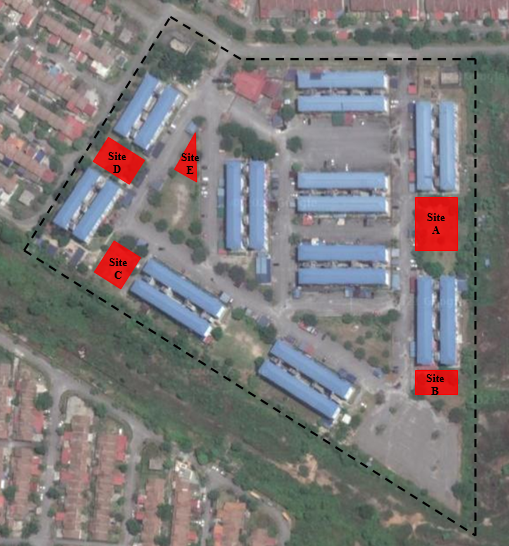
Seri Bakawali Apartment is located within the Hulu Selangor Municipal Council area. This housing area consists of 10 building blocks with 748 housing units that were built in 1998 and occupied in 2000. The current status of the total units occupied is 146 housing units with a total of 486 residents consisting of Malays (445 people), Indians (33 people) and Chinese (8 people). Meanwhile, the Joint Management Bodies were established in April 2015 after taking over from the management agent who had managed Seri Bakawali Apartment for 15 years. Committee members in the Joint Management Bodies are the owners of the housing units, with appointments agreed upon by the housing residents during the annual housing meeting. After two years of the establishment of Joint Management Bodies, Seri Bakawali Apartment has begun to actively implement agricultural activities equipped with three existing urban agricultural sites (Site A: 0.2 acres, Site C: 0.1 acres and Site E: 0.06 acres) and two future urban agricultural sites (Site B and Site D) (Figure 1).
Figure 1. Urban agriculture site at Seri Bakawali Apartment
3.4 Ukay Indah Apartment
Ukay Indah Apartment is administered by the Ampang Jaya Municipal Council. This housing area is equipped with two 15-storey building blocks consisting of 330 housing units per building block. A total of 594 housing units have been occupied, with an estimated population of 2376 people. Ukay Indah Apartment is a low-cost stratified housing built for the purpose of resettling eight urban squatter housing units around Ampang Jaya, which began to be occupied in 2012. Therefore, the majority of residents in Ukay Indah Apartment are residents who know each other, while the remaining vacant housing units are sold to external buyers. Joint Management Bodies were established in 2013, but began to operate actively in 2015 through the implementation of urban agriculture under the leadership of Joint Management Bodies committee members in the second cycle.
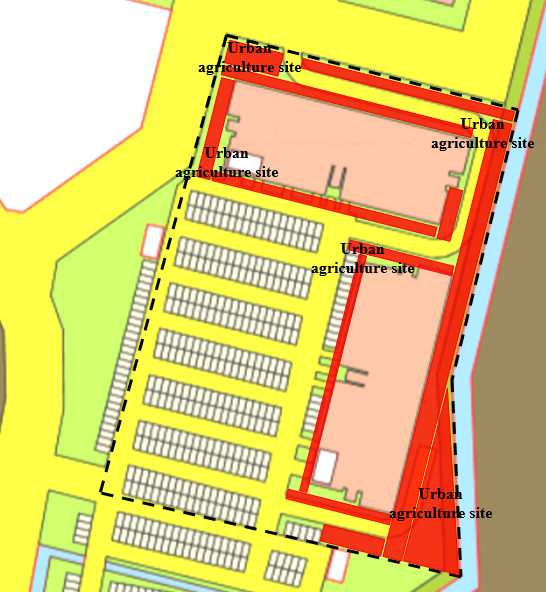
Urban agriculture activities at Ukay Indah Apartment began at the end of 2015 through the organization of the K-Innovation competition by the Ampang Jaya Municipal Council. Ukay Indah Apartment's participation in the competition, using the theme of urban gardens as the innovation that was contested, involved cooperation between Joint Management Bodies and housing residents. This is said to be so because the space used for the implementation of urban agriculture is a space maintained by the Joint Management Bodies. Following this, a total of 18 spaces around the housing area and within the maintenance area of the Joint Management Bodies have been developed for the purpose of implementing urban agriculture using the theme of urban gardens (Figure 2).
Figure 2. Urban agriculture site at Ukay Indah Apartment
3.5 AU2 Apartment
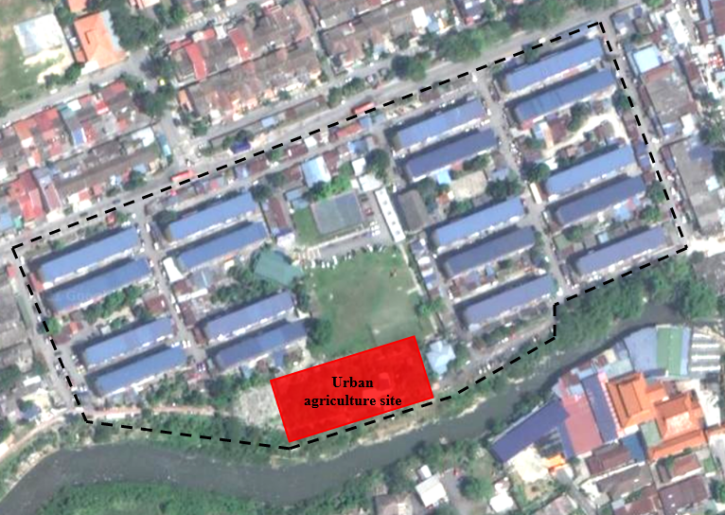
AU2 Apartment is a low-cost stratified housing located within the Ampang Jaya Municipal Council administrative area. This housing was built in 1969 for the purpose of resettling urban squatters and began to be occupied in 1974. The surplus vacant housing units were opened for sale and rental to outsiders. AU2 Apartment comprises 18 building blocks consisting of 688 housing units. The estimated population in AU2 Apartment is 2,300 people, with a majority of 96% Malay. AU2 Apartment is managed by each block head, causing this housing area to not have Joint Management Bodies. However, any activities that require community involvement are organised as activities of the Residents' Association or the Neighborhood Community. The same practice is applied for urban agriculture activities carried out in AU2 Apartment (Figure 3).
Figure 3. Urban agriculture site at AU2 Apartment
3.6 Data collection
This study was granted ethical exemption by the relevant housing authority (the Selangor Housing and Property Board) and by the designated representatives of low-cost stratified housing (Seri Bakawali Apartment, Ukay Indah Apartment and AU2 Apartment). All informants were provided with an informed consent form containing comprehensive information about the study and noting that participation was voluntary. The informed consent process serves to protect the rights, dignity, and well-being of the participants, while simultaneously enhancing the credibility and integrity of the study. The information covered the study objectives, interview procedures, confidentiality and privacy, participants' rights, risks and benefits, and the requirement for written or verbal consent. For observational data, where photographs or recordings included identifiable individuals, permission was obtained from those individuals. No identifying information is reported in this manuscript, and all participants are referred to by anonymised informant codes.
For data collection purposes, semi-structured interviews allow informants to answer interview questions openly, but the researcher still uses the interview sheet as a reference throughout the duration of the interview [49]. The development of the interview sheet is based on the study domains established within the theoretical aspect and is aligned with the research objectives. Consequently, the interview sheet is structured into four sections to avoid the duplication or repetition of questions. These four sections are: (i) introduction to urban agriculture in low-cost stratified housing; (ii) resilience aspects of urban agriculture activities; (iii) resilience aspects of community engagement; and (iv) resilient urban agriculture. The interview process was conducted face-to-face and orally, entirely in the Malay language, to ensure accurate research data and to encourage informants to respond in a more natural and conversational manner. Audio recordings were made to facilitate the subsequent note-taking and transcription of the information provided by the informants. Each interview lasted between one and two hours, depending on the informant category. As these were semi-structured interviews, the process employed easily understood language, with an interview guide serving as a reference for the researcher to ensure the session proceeded smoothly and within the allotted time.
These interviews were also supported by non-participant observations of urban agriculture activities by the low-cost stratified housing community. Non-participant observation involves the researcher as an observer without interfering with the activities being carried out and being able to record the actual behavior of the informant to obtain authentic and accurate data [53]. This is because the observation method requires researchers to observe actions and understand conversations in order to access the implicit knowledge of the phenomenon under study [54]. As such, non-participant observations conducted in the three study areas involved observations of (i) the use of space for urban agricultural site purposes and (ii) collaboration between urban agriculture participants, housing leaders and related agencies in any agricultural activities. The observation process was carried out during the time when urban agriculture participants were carrying out agricultural activities, namely in the morning (8:00–10:00 a.m.) and in the evening (5:30–7:00 p.m.). The observation checklists were used for note-taking by clearly stating the descriptive and reflective information.
3.7 Data analysis
The data analysis for this qualitative phenomenological approach employed thematic analysis to extract the essence and meaning of the informants' experiences and personal views [45]. Thematic analysis involves a systematic process of searching for themes to form explanations and is suitable for summarizing findings for large qualitative data sets [55]. This data analysis comprised three phases of analysis, namely (i) documentation, (ii) coding, categorization and theme development, and (iii) triangulation. First, the documentation phase involved transcribing data obtained from the semi-structured interviews method; audio recordings were transcribed verbatim into written copies in the form of interview transcripts. Data from the non-participant observations were recorded through field notes, photographs and videos, which were subsequently converted into field notes for analysis.
In the second phase, NVivo R1 software was used to manage and analyze the interview transcripts and field notes. This software is used to explore data in order to establish connections and examine differences across research domains. The initial coding process was conducted by the principal researcher, who has expertise in qualitative data analysis and familiarity with the study context. The second and third researchers independently reviewed the coding, and any discrepancies were resolved through consensus discussion among all researchers. The coding process involves two stages, which are first-cycle coding (coding) and second-cycle coding (categorization and theme construction) to address the research questions and explore new research findings. The first-cycle coding represents the actual situation of the fieldwork, without involving the generation of codes related to the theory used in the study. It involves five coding techniques: descriptive coding, in vivo coding, emotion coding, process coding, and value coding. Meanwhile, the second-cycle coding refers to codes derived from the process of pattern coding for category formation and theme construction. This pattern coding process involves consolidating first-cycle codes specifically, grouping several codes that convey similar meanings into a single new code.
In order to control research bias, the principal researchers: (i) documented interpretive decisions, (ii) discussed emerging interpretations with co-researchers, (iii) conducted member checking with all participants to verify the accuracy of interpretation, and (iv) maintained the audit trail of coding decisions, code definitions and theme development. Third, the data obtained from interviews and observations were triangulated to compensate for the limitations of each individual method and to enhance the reliability of the findings. Triangulation was performed by comparing themes derived from interview transcripts with those derived from observational field notes gathered during the first and second phase of data analysis. The themes were retained, whereas discrepancies between the two sources were examined and reported in the findings.
Exploring the potential of urban agriculture as a platform for the well-being of low-cost stratified housing communities in urban areas is influenced by the socio-ecological system. The socio-ecological system, from the perspective of urban agriculture, refers to satisfaction factors that are closely related to the local wisdom of urban communities, especially the continuity of agricultural traditions that are able to create community resilience for better well-being. The capacity of urban agriculture to function as a medium for fostering community resilience within low-cost stratified housing communities can be explained in three themes, namely (i) the cultivation of neighbourhood social bonds and rural cultural values, (ii) the perceived physical, mental, and spiritual health benefits, and (iii) the development of practical knowledge and skills in agriculture and landscape management (Table 1).
Table 1. Themes, subthemes and supporting evidence for urban agriculture as a socio-ecological system
|
Theme |
Subtheme |
n |
Interview Quotation |
Observational Evidence |
|
Social bonds and rural cultural values |
Recipe sharing; gathering spaces; outside visitors; spiritual activities |
4 |
"There are many friends in the garden" (Informant 12) |
Huts used as gathering spaces; Surah Yasin recitation |
|
Physical, mental, and spiritual health |
Herbal plants; recreation during COVID-19; spiritual well-being |
4 |
"The masseur also comes here to buy my herbal plants" (Informant 11) |
Herbal plant plots at Ukay Indah Apartment and AU2 Apartment |
|
Knowledge and skills |
Agricultural courses; modern methods; hardscape construction; landscape aesthetics |
5 |
"If they start with conventional... then we upgrade to the fertigation method" (Informant D) |
Fertigation system; pergola; waterfall pool |
4.1 The cultivation of neighbourhood social bonds and rural cultural values
The implementation of urban agriculture as a socio-ecological system in residential areas can provide social benefits for urban agriculture participants and the low-cost stratified housing communities. Active involvement and close cooperation between urban agriculture participants can form neighborhood social bonds and rural culture as practiced by rural communities. For example, urban agriculture participants in Seri Bakawali Apartment share cooking recipes, as is often practiced in rural communities. This practice was shared by Informant 06:
"When there are a lot of vegetables, there are also recipes to share...There are 1 or 2. Because some people ask how to make kerabu, cook that, cook this. Some also give tips on how to eat the chili. Some like it that way; just squeeze it... the filling is soft. That's the point of eating budu... just squeeze the chili."
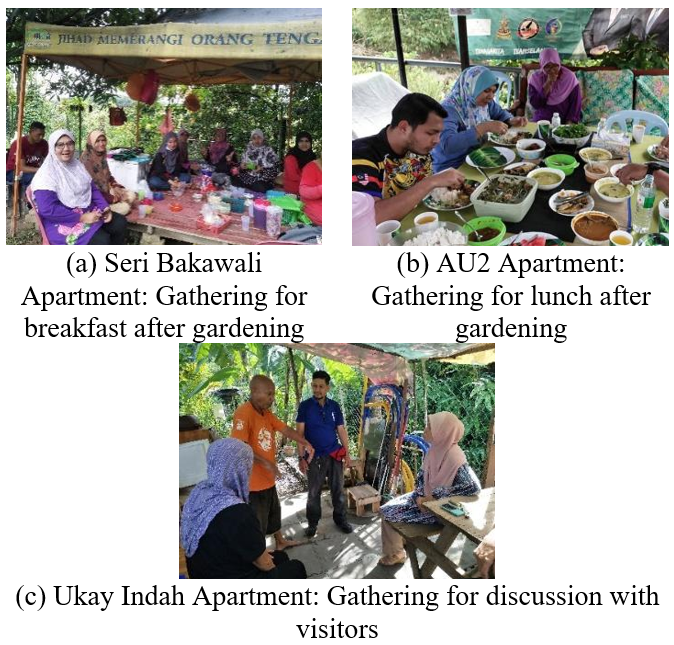
Next, based on observations, urban agricultural sites equipped with landscape elements, namely small huts, become gathering spaces for urban agricultural participants after carrying out agricultural activities. It is a relaxing space used for various social activities, whether daily or monthly. This situation directly aims to create community unity among urban agricultural participants (Figure 4).
Figure 4. Small huts on urban agricultural sites are used as gathering places
The liveliness of this social activity showcases the culture and atmosphere of a village that is difficult to find in urban areas. Moreover, this small hut is not only for agricultural activities, but also for small-scale spiritual activities such as the recitation of Surah Yasin. This ability to unite the community was agreed upon and narrated by Informant 12, a housewife who often spends her free time with agricultural activities:
"Even here, in the evenings, it's a place to chat. When we're done gardening, we chat first, and then we come back at 7 o'clock. Before the garden was there, we only chatted with our neighbors. Now, there's a place to sit and have a drink and chat. There are many friends in the garden. When there's this place, you can get to know new friends. Before joining, you didn't know everyone around here in this area."
At the same time, the rural atmosphere that can be created at the urban agricultural site can attract the presence of various groups of visitors. For example, Informant 15 repeatedly emphasized that the urban agricultural site at AU2 Apartment has not only become a focus among urban agricultural participants and the housing community, but is also frequently visited by outsiders. The social bonds between urban agricultural participants and visitors are displayed through the traditional food served every time an agricultural program is organized at the agricultural site. The happiness resulting from agricultural activities was narrated by Informant 15, who is also a full-time housewife:
"We only know the people here. But when there is a garden, we have more fun. Because this is also considered a place of leisure...working in the evenings is fun, right? It's really fun here. It's close to home. Anyone who comes here must say they want to come again. It's really fun to come here. It's really fun. Because no matter how small our event is, there's always lunch. Lunch is rural dishes. Eating with a group of people. It's really fun."
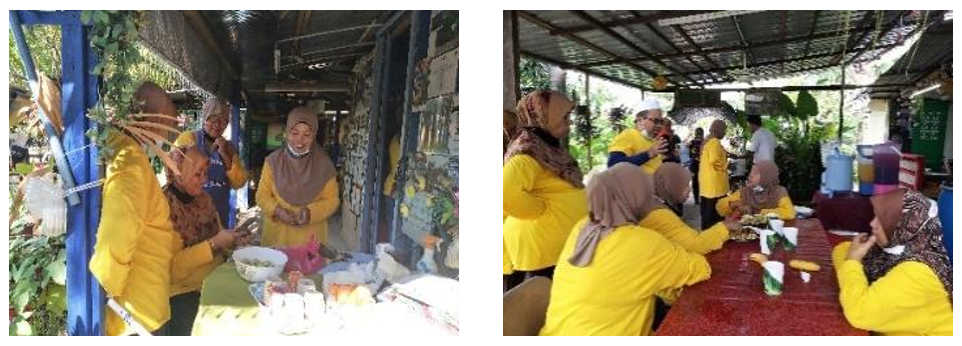
Figure 5. Mutual agreement and cooperation in wearing themed clothes
More interestingly, the food served was prepared jointly by the urban agriculture participants who worked together to prepare the traditional food. For example, observations at AU2 Apartment showed that urban agriculture participants agreed to prepare lunch when activities were organized at the agricultural site (Figure 5). This agreement was further evident through the use of the same clothing color theme among urban agriculture participants.
In this context, the practice of cooperation that can bring together neighborhood kinship is the culmination of the benefits of urban agriculture as a social ecosystem platform, through the provision of social space during the COVID-19 pandemic. Agricultural sites are being developed as an alternative to urban community places to experience the village atmosphere, following movement restrictions that limit the distance of travel back to their hometowns. This situation was agreed by Informant 17 regarding the beginning of her involvement in urban agriculture:
"I want to make this garden. It's fun to be able to mix. When there's an event here, we cook together. So the brotherhood is close. It's fun to have the village atmosphere. This is the place to cook, in this garden."
The actions highlighted above show that urban agricultural sites can be used as a medium of social capital that highlights the culture of neighborhood spirit. Social capital is identified as an indicator of community resilience, encompassing elements of unity, solidarity, and interconnectedness among vulnerable urban communities [56]. Community resilience, when taking into account these three elements from an urban agriculture perspective, is influenced by ethnic factors that are likely to cause intercultural tension [28]. However, such tensions did not arise in this study, as all urban agriculture participants and housing leaders shared the same ethnic background, predominantly Malay. While this homogeneity should be understood as a contextual circumstance rather than a generalizable advantage, it contributes to a stronger sense of belonging regarding both the agricultural site and the housing area as a whole. Social cohesion and integration are further reinforced by the compatibility among participants, a dynamic influenced by race and gender factors [57].
Interestingly, this social potential is fostered through the ecological design and spatial utilization of the urban agricultural sites [29]. Situated within residential areas, the design of three urban agricultural sites prioritizes a social environment that is welcoming and easily accessible. This setup helps sustain the urban agriculture participants' engagement and commitment to agricultural activities. Small huts and sheltered seating areas at the Seri Bakawali Apartment and AU2 Apartment serve as central gathering points. This initiative transforms underutilized residential open spaces into communal areas that facilitate interaction among urban agriculture participants and local residents. In this context, the spatial configuration of the site is not merely a secondary factor in building social capital; rather, it is a key physical element that determines the sustainability of the spatial design [37].
In addition, the design of this space is also closely related to the type of crops cultivated in the urban agricultural site. Vegetables and herbs are types of productive plants that fulfill the function of self-sufficiency as well as culture, as illustrated through the sharing of meal recipes by the urban agriculture participants. Therefore, the selection of plants that can be eaten directly and used as a cooking ingredient reflects a cultivation strategy rooted in culture. This is because the selection of plant types is not just based on production results, but also takes into account their role in maintaining traditional eating practices. At the same time, these plants contribute to the ecological characteristics of the residential landscape by providing ground cover and influencing the microclimate of the surrounding area, although this study did not measure those ecological effects directly.
Overall, the spatial, botanical, and design dimensions of this urban agriculture site show that urban agriculture in this context operates as a coupled socio-ecological system, where ecological features and social processes mutually reinforce each other. It is seen as a form of nature-based solution, where ecological features are deliberately arranged to provide environmental and social benefits. Ironically, the cultivation of neighbourhood social bonds and rural cultural values through the implementation of urban agriculture can preserve local wisdom externally in terms of neighborhood culture, which is increasingly difficult to find in urban areas. At the same time, it regenerates ecological functions internally, which are also threatened by the compaction of urban areas.
4.2 The perceived physical, mental, and spiritual health benefits
The selection of plant types in urban agriculture can influence the socio-ecological system in terms of perceiving the quality of physical, mental and spiritual health benefits. Herbal plants such as lemongrass and galangal leaves are used as the main ingredients in baths and massages. This situation is supported by observations showing that a housing community in Ukay Indah Apartment obtained herbal bath ingredients for his wife for a post-natal bath from one of the urban agriculture participants' plant plots. In addition, these plants are also mixed as an additional ingredient in massage oil to improve the quality of the oil. Informant 11 described the use of herbal plants for physical health purposes as follows:
"If you want to use a body scrub, you can use lemongrass leaves and galangal leaves. All the herbs for people giving birth are here. Some outsiders come to ask for lemongrass to use for bathing during abstinence. The masseur also comes here to buy my herbal plants; he makes desert goat oil and mixes it with lemongrass. The community here does come here, and outsiders also come."
Meanwhile, this herbal bath is also suitable for every woman to practice for the purpose of body freshness, as practiced by urban agriculture participants in AU2 Apartment. In the interim, based on participants’ traditional beliefs, neem leaves are often used to treat measles and Indian jujube leaves are believed to be able to protect children from the interference of evil spirits. This experience was conveyed by Informant 12, who explained the benefits of herbal plants from the aspect of physical and spiritual health:
"Some also come asking for fragrant lemongrass and pandan leaves for herbal baths. Bathing to break abstinence. Just taking a bath is fine. When you take a herbal bath, your body feels light and fresh because of the smell of the herbs. Boil the herbal leaves and take a bath in the morning and evening. Sometimes I also take a herbal bath when I have time. Neem leaves are for measles. People always say that Indian jujube leaves are used to prevent the devil from getting near small children. In the past."
From a different perspective, the existence of urban agriculture is receiving increasing attention, especially during the COVID-19 outbreak. This is said to be because of the implementation of movement control order that limits the travel distance of urban communities, which causes constraints in terms of stress management. The ability of the socio-ecological system is clearly seen in the perceived quality of mental health. Urban agricultural sites have become the focus of communities that are not only focused on agricultural activities, but also become a focal point for urban communities for recreation. Furthermore, travel restrictions have prevented urban communities from returning to their hometowns or going on vacation for the purpose of family activities and stress management. As an alternative, urban agricultural sites are chosen as recreational locations for individuals, families and communities. This statement is supported by Informant 02, who can relate the benefits from the aspects of physical, mental, and spiritual health:
"Health is also good; there is exercise. Sweating in the morning. There is no depression from sitting at home. We can meet friends; we can plant. Because we are Muslims, we talk to trees; they give us stimulation. Because we do dhikr... Subhanallah is like that. So we have fun."
In this regard, urban agriculture is recognized as a practice that can improve the quality of life of urban communities. Indicators for quality of life are categorized into physical, psychological, social relationships and environmental quality aspects that can basically be achieved in urban agriculture activities [58]. The ability to perceive the quality of life, especially physical and mental health, also influences the resilience of urban agriculture participants to continue carrying out agricultural activities in residential areas [14]. More importantly, the selection of plant types in the form of aromatic herb plants acts as a form of therapeutic plants for urban communities [59]. This therapeutic function is closely linked to the specific herbs cultivated at urban agriculture sites. Herbs such as lemongrass, galangal, neem, jujube, and pandan leaves are grown not merely as food crops but also as sources of medicine that hold cultural significance. These herbs represent a form of phytotherapy deeply rooted in culture, as the choice of plants reflects participants’ traditional knowledge regarding physical health maintenance, postpartum care, and spiritual well-being. Demand for these plants from both local communities and outsiders demonstrates that the presence of agricultural sites in residential areas serves as an informal repository for medicinal plant diversity within the urban landscape.
Furthermore, the availability of these therapeutic plants is shaped by the spatial characteristics of the urban agricultural site. The proximity of planting plots to urban agriculture participants' homes facilitates routine access to herbal materials for bathing, massage, and postpartum care. This accessibility transforms the agricultural site into a facility that functions as a neighborhood-level pharmacy and wellness center. During the COVID-19 pandemic, the role of these urban agricultural sites expanded significantly under movement control orders. The plots became recreational destinations for individuals, families, and the community, serving as accessible green spaces that offered an alternative to distant hometowns or holiday destinations [1]. These spatial and botanical dimensions are mediated by ecological design elements that shape communities' experiences of the urban agricultural site. An atmosphere defined by shade-providing plants and complemented by hardscape elements such as small huts and a central gathering area creates an environment conducive to relaxation, exercise, and contemplative practices [59]. This ecological setting serves as a venue for spiritual practices and mental restoration.
Overall, these findings indicate that the therapeutic benefits of urban agriculture in low-cost stratified housing areas stem from the interaction between specific plant types, easily accessible spatial configurations, and ecological design elements. Far from being merely aesthetic, these elements actively support the physical, mental, and spiritual health outcomes. It can provide peace of mind to urban communities who often face continuous pressure problems from the aspect of greenery. This interaction creates a socio-ecological mechanism that enables urban agriculture to foster quality of life and resilience. Consequently, this highlights the importance of incorporating local wisdom into urban agriculture, ensuring its implementation aligns with the needs and aspirations of urban communities within a socio-ecological framework.
4.3 The development of practical knowledge and skills in agriculture and landscape management
The ability to beautify low-cost stratified housing areas through urban agriculture activities is driven by the knowledge and skills gained from agricultural courses organized by the Department of Agriculture. The commitment of urban agriculture participants to attend courses, whether specifically in agriculture or landscaping, can help in the formation of creative and innovative urban agriculture participants. This statement was agreed by Informant 04:
"I become more exposed when I go to a course. Before, I didn't think about it like that. When doing agriculture, you have to be a little creative. The way farming works is not like it used to be, where you had to hoe in the morning and evening. Now there are many ways. You can use paper cups, punch holes, and put cotton in. You can even use egg trays. It doesn't cost any capital. Use what you have. You have to be creative. You get more enthusiasm when you go to a course."
The agricultural knowledge and skills acquired were not focused on the basics of crops alone, but rather included exposure to the production of organic fertilizers and pesticides. Informant 12 clearly tried various recipes for making organic pesticides for pest control after attending the agricultural course:
"When we went to the course, we gained more knowledge. For example, how to kill insects...because when spraying, sometimes some are successful, some are not. For example, you can use wood vinegar."
At the same time, based on observations, urban agriculture participants in Seri Bakawali Apartment were also exposed to modern methods, namely chilli cultivation by fertigation in the Strata Green Space Program 2.0, after successfully implementing conventional methods in the Green Space Program 1.0. Skills in implementing various modern methods such as hydroponics and vertical farming can produce large quantities of crops in a small space. Therefore, the increase in knowledge and skills is an indicator of the community's resilience to continue implementing urban agriculture as voiced by Informant D:
"In general, there are two concepts of urban agriculture. In fact, the concept of urban agriculture in a conventional way seems to be more sustainable than modern methods. Those who practice this conventionally can last a long time. One reason is the knowledge about the method that they are usually experts or have understood. Community gardens that can sustain for a long time are community gardens that are done conventionally. If we give them straight to modern methods, fertigation... there may be technical elements that they don't really understand. So it causes plants to die and so on, so they give up. But if they start with conventional, they are already skilled, then we upgrade to the fertigation method. Maybe later on, hydroponic methods, aeroponics and so on. So, the important thing is the basic knowledge of how plants grow and what they need to live. And in the end, the garden can continue to be sustainable."
The emphasis on landscape aspects in agriculture is clearly applied in the Green Space Program 1.0 and the Strata Green Space Program 2.0 at Seri Bakawali Apartment through the concept of garden and farm. This concept involves the selection and arrangement of plants that successfully beautify the low-cost stratified housing area physically and visually. This concept was explained in more detail by Informant C, an officer who monitors housing performance, as follows:
"A garden with the concept of integrating edible plants with the landscape. Even though it is a garden, we have included landscape elements. Even people who look at it see that the garden is beautiful; they just look at it. For example, during the Movement Control Order, they don't know where to go because there is no area to relax. That's why in the Green Space Program 1.0, we are trying to implement the concept of a farm and a garden. It is not only a place for gardening, but also for relaxation."
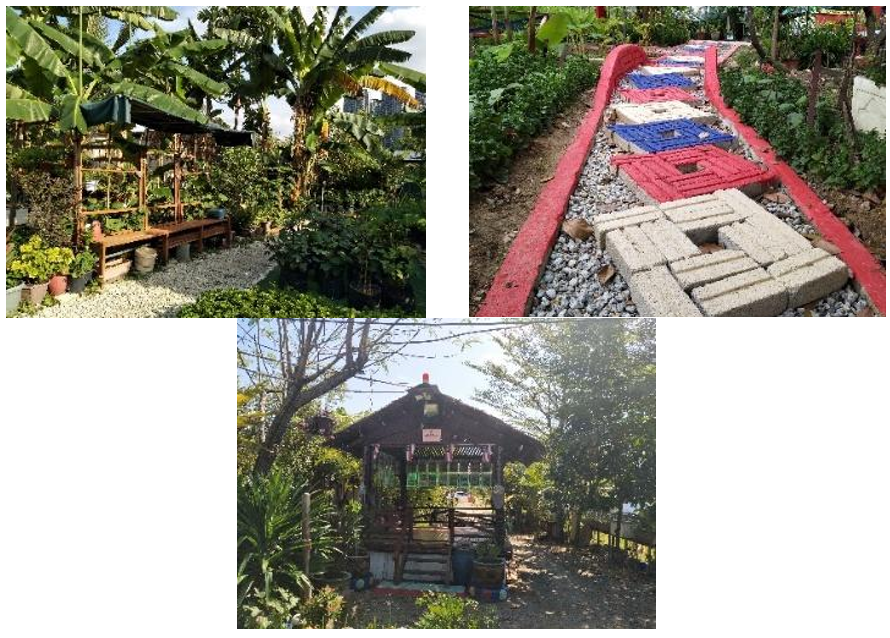
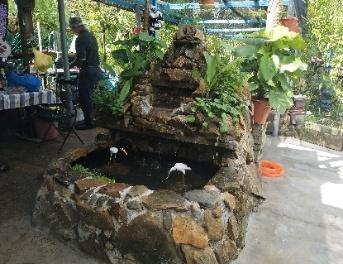
Meanwhile, the knowledge and skills in the construction of hardscape elements among the urban agriculture participants are clearly reflected in AU2 Apartment (Figure 6) and Ukay Indah Apartment (Figure 7). For example, a seating structure built individually by one of the urban agriculture participants at AU2 Apartment became a rest area after agricultural activities. Meanwhile, the walkways and gazebos were built collaboratively, led by urban agriculture participants who have experience in the field of construction. The decorative waterfall pool at Ukay Indah Apartment is designed by a husband and wife who are also urban agriculture participants. It becomes the focal point because there is only one natural landscape element built on the agricultural site.
Figure 6. Seating structures, walkways and gazebos at AU2 Apartment
As a result, the combination of agricultural and landscape aspects is able to create a more balanced visual quality of the urban agricultural site. Based on observations, the soft landscape focuses on vegetables and herbs that are adapted as crops for food and decoration purposes. Meanwhile, the hard landscape is built to support the growth structure of the soft landscape. Informant 12 explained that the covered path is processed as a pergola to support creeping plants at the AU2 Apartment agricultural site:
"The tunnel (covered passage) that we made, we planted with fruit trees...there are passion fruits, there are bottle nuts. When they bear fruit, they look like they are hanging down. When they are old, we throw them away. Recently, we have also planted trees. New trees are about to grow. When it is full, it will be as beautiful as before. Now, only betel trees are left."
Figure 7. Decorative waterfall at Ukay Indah Apartment
Based on the above research findings, the integration of agricultural and landscape aspects exposes urban agriculture participants to the uniqueness of urban agriculture. This situation demonstrates that agricultural activities must align with their urban location to reflect urban aesthetic values [44, 56]. These urban aesthetics are shaped by soft and hard landscape elements that attract the urban community to centralized community spaces [60]. Consequently, the urban landscape through these agricultural activities is a platform for the formation of sustainable, livable and healthy cities [39]. This is related to the ability of socio-ecological systems to provide various urban ecosystem products and services that are assessed from the aspect of resilience [40, 41]. Urban ecosystem services can be translated into provisioning, regulating, supporting, and cultural services [30, 61]. In this study, provisioning services are derived from agricultural elements, while landscape elements contribute to regulating, supporting, and cultural services.
This distinction is clearly evident in the choice of vegetation, in which the soft landscape is dominated by vegetables and herbs selected for both food and ornamental purposes. These botanical dimensions are further defined by ecological design elements constructed by the urban agriculture participants. Individually built seating structures at AU2 Apartment, collaboratively constructed walkways and gazebos, and a decorative waterfall designed by a couple who are urban agriculture participants at Ukay Indah Apartment demonstrate that ecological design in this context is a collective and incremental process rather than a top-down professional imposition. The waterfall holds particular significance as the site's sole natural landscape element. It serves as a focal point that draws both visual and social attention, thereby linking ecological design with community identity [44, 59]. Similarly, the pergola at AU2 Apartment illustrates how hardscape elements are designed to support softscape growth by creating a functional and aesthetic integration between the two. Climbing plants such as passion fruit and bottle gourd are cultivated to trail over the pergola structure, producing a harmonious blend of soft and hard landscape elements. These plant selections go beyond mere decoration, reflecting a carefully planned strategy that combines food production with visual appeal. The inclusion of betel plants further highlights a preference for culturally significant species, which offer traditional value alongside their ornamental function.
More importantly, the transition from the conventional cultivation methods used in the Green Space Program 1.0 to the fertigation system adopted in the Strata Green Space Program 2.0 at Seri Bakawali Apartment demonstrates the resilience of urban agriculture participants. Space constraints inherent in low-cost stratified housing, specifically limited land area and the need to share communal spaces, have driven the adoption of space-saving methods such as hydroponics and vertical farming. While conventional approaches tend to be more sustainable due to the urban agriculture participants' existing knowledge, modern methods risk failure if technical understanding is insufficient. These findings indicate that spatial limitations interact with knowledge and skills to shape the direction of urban agriculture, and the shift from conventional to modern methods constitutes a spatial adaptation strategy.
As such, this approach integrates edible plants with landscape elements, enabling the site to function simultaneously as a productive garden and a recreational space. This dual function aligns with the ecosystem services framework of provisioning services derived from the edible plants, while regulating, supporting, and cultural services arise from the overall landscape design. Consequently, integrating these four ecosystem services with an emphasis on local wisdom regarding agricultural and landscaping practices is crucial for creating holistic, locally grounded, and resilient urban agricultural sites that are well-suited to the urban ecosystem. This integration demonstrates that spatial characteristics, vegetation types, and ecological design elements are not isolated concerns but are mutually constitutive components of a socio-ecological system that sustains community resilience.
The implementation of urban agriculture that focuses on community development indirectly encompasses the process of strengthening community resilience, which helps preserve local wisdom, especially the continuity of agricultural traditions in urban areas. Within the three communities studied, the continuity of urban agricultural traditions from a socio-ecological system perspective is evidenced through the ability of urban agriculture to meet the needs and aspirations of the selected urban community. This continuity can be understood through three dimensions of local wisdom, namely external, internal, and lifelong. External local wisdom focuses on the function of urban agriculture as a medium of social capital, while internal local wisdom emphasizes physical, psychological, social relationships and environmental quality. On the other hand, lifelong local wisdom involves a combination of agricultural and landscape elements to form the locality of a residential area, particularly low-cost stratified housing. These three dimensions are closely linked to community capacity and urban agricultural practices within the studied communities, necessitating continuous attention to resilience. In this context, resilience serves as an indicator in determining the continuity of urban agriculture in the three low-cost stratified housing communities.
Consequently, this study presents three outcomes. First, it establishes that urban agriculture in low-cost stratified housing operates as a socio-ecological system, as social and ecological factors become crucial elements for vulnerable communities that mutually reinforce one another. Second, it demonstrates that urban agriculture in this context functions as a community-driven and nature-based solution. The urban agriculture communities in the Seri Bakawali Apartment, Ukay Indah Apartment, and AU2 Apartment are capable of designing, cultivating, and maintaining ecological features themselves, rather than relying on professionally planned interventions. Third, it shows that community resilience offers a productive perspective for understanding urban agriculture in low-cost stratified housing in Malaysia. In doing so, this study addresses a theoretical gap within a body of Malaysian urban agriculture research that predominantly employs frameworks such as the theory of planned behavior, expectancy theory of motivation, social capital theory, sustainable development principles, and the volunteer satisfaction model.
However, these findings must be interpreted within the study's scope, specifically qualitative research conducted across three low-cost stratified housing communities in Selangor, Malaysia. The identified dimensions of local wisdom are grounded in the authentic and in-depth experiences of urban agriculture participants in these communities. This study did not employ quantitative resilience indicators or direct ecological measurements. Instead, ecological dimensions were assessed through spatial characteristics, vegetation types, and ecological design elements. These limitations point to clear directions for future research. First, quantitative resilience indicators could be developed and tested to measure the social, economic, and ecological dimensions of urban agriculture resilience more systematically. Second, ecological measurements such as soil health, vegetation diversity, microclimate conditions, and the provision of ecosystem services could complement qualitative findings and substantiate claims regarding ecological aspects. Third, comparative studies involving diverse communities, housing types, and income categories would help assess whether the pattern observed in this study extends beyond low-cost stratified housing, and would strengthen the evidence base for urban agriculture as a socio-ecological system. Ultimately, integrating local wisdom with a resilience perspective may support the transformation of urban agriculture from its traditional role as a local food source into a broader platform for community well-being. Crucially, this transformation must be grounded in the socio-ecological relationships connecting people, plants, and places.
The authors thank Sultan Idris Education University and the Ministry of Education Malaysia (Higher Education) for financial assistance through the Bumiputera Academic Training Scheme (SLAB) (Reference No.: UPSI/PEND/SM4/751), and the National University of Malaysia is gratefully acknowledged for guidance and suggestions.
[1] Zainal, M., Hamzah, S.R., Rosmiza, M.Z. (2020). The role of social assets on community well-being in urban farming project. Journal of Asian Scientific Research, 10(4): 255-263. https://doi.org/10.18488/journal.2.2020.104.255.263
[2] Jabatan Perancangan Bandar dan Desa Semenanjung Malaysia. (2016). Dasar Perbandaran Negara Kedua. Semenanjung Malaysia & Wilayah Persekutuan Labuan. http://www.townplan.gov.my/dpn2.
[3] Kementerian Perumahan dan Kerajaan Tempatan. (2019). Pengenalan Dasar Komuniti Negara. Membentuk Komuniti dan Generasi Mampan.
[4] Zainal, M., Rosmiza, M.Z. (2021). The exploration of social assets condition among urban farmers of the community garden in Klang Valley, Malaysia. International Journal of Asian Social Science, 11(1): 56-64. https://doi.org/10.18488/journal.1.2021.111.56.64
[5] Othman, N., Latip, R.A., Ariffin, M.H. (2019). Motivations for sustaining urban farming participation. International Journal of Agricultural Resources, Governance and Ecology, 15(1): 45-56. https://doi.org/10.1504/IJARGE.2019.099799
[6] Ramaloo, P., Liong, C.Y., Siwar, C., Isahak, A. (2018). Perception of community residents on supporting urban agriculture in Malaysian city: Case study at Bukit Mertajam. Jurnal Pengurusan, 53: 83-91.
[7] Ramalingam, L., Sharifuddin, J., Mohamed, Z.A., Ali, F. (2019). Motivation and satisfaction of volunteers for community-based urban agriculture programmes. International Social Science Journal, 69(231): 49-62. https://doi.org/10.1111/issj.12196
[8] Jabatan Perancangan Bandar dan Desa Semenanjung Malaysia. (2016). Rancangan Fizikal Negara Ke-3. https://myplan.planmalaysia.gov.my/portal-main/publication-details?id=3.
[9] Tiraieyari, N., Krauss, S.E. (2018). Predicting youth participation in urban agriculture in Malaysia: Insights from the theory of planned behavior and the functional approach to volunteer motivation. Agriculture and Human Values, 35: 637-650. https://doi.org/10.1007/s10460-018-9854-8
[10] Giriwati, N.S.S., Citraningrum, A., Setyabudi, I. (2018). Urban farming: People preference towards verticulture model in small housing type-settlements in Malang as sustainable landscape movement. IOP Conference Series: Earth and Environmental Science, 179(1): 012025. https://doi.org/10.1088/1755-1315/179/1/012025
[11] Kalantari, F., Nochian, A., Darkhani, F., Asif, N. (2020). The significance of vertical farming concept in ensuring food security for high-density urban areas. Jurnal Kejuruteraan, 32(1): 105-111. https://doi.org/10.17576/jkukm-2020-32(1)-13
[12] Diehl, J.A., Oviatt, K., Chandra, A.J., Kaur, H. (2019). Household food consumption patterns and food security among low-income migrant urban Farmers in Delhi, Jakarta, and Quito. Sustainability, 11(5): 1378. https://doi.org/10.3390/su11051378
[13] Iskandar, Sabiq, M., Afrisal, A.F. (2025). Post-disaster urban and community resilience: The dynamics of indigenous communities maintaining environmental sustainability in Makassar City. International Journal of Sustainable Development and Planning, 20(12): 5341-5348. https://doi.org/10.18280/ijsdp.201225
[14] Yoshida, S., Yagi, H. (2021). Long-term development of urban agriculture: Resilience and sustainability of farmers facing the Covid-19 pandemic in Japan. Sustainability, 13(8): 4316. https://doi.org/10.3390/su13084316
[15] Yuan, G.N., Marquez, G.P.B., Deng, H.R., et al. (2022). A review on urban agriculture: Technology, socio-economy, and policy. Heliyon, 8(11): e11583. https://doi.org/10.1016/j.heliyon.2022.e11583
[16] Asian Development Bank. (2022). Disaster-resilient infrastructure: Unloacking opportunities for Asia and the Pacific. https://www.adb.org/publications/disaster-resilient-infrastructure-opportunities-asia-pacific.
[17] Rahman, F. (2019). Save the world versus man-made disaster: A cultural perspective. IOP Conference Series: Earth and Environmental Science, 235(1): 012071. https://doi.org/10.1088/1755-1315/235/1/012071
[18] Jesse, B.J., Heinrichs, H.U., Kuckshinrichs, W. (2019). Adapting the theory of resilience to energy systems: A review and outlook. Energy, Sustainability and Society, 9: 27. https://doi.org/10.1186/s13705-019-0210-7
[19] Preiser, R., Biggs, R., De Vos, A., Folke, C. (2018). Social-ecological systems as complex adaptive systems: Organizing principles for advancing research methods and approaches. Ecology and Society, 23(4): 46. https://doi.org/10.5751/ES-10558-230446
[20] Cinner, J.E., Barnes, M.L. (2019). Social dimensions of resilience in social-ecological systems. One Earth, 1(1): 51-56. https://doi.org/10.1016/j.oneear.2019.08.003
[21] Dornelles, A.Z., Boyd, E., Nunes, R.J., et al. (2020). Towards a bridging concept for undesirable resilience in social-ecological systems. Global Sustainability, 3: e20. https://doi.org/10.1017/sus.2020.15
[22] Franco-Gaviria, F., Amador-Jimenez, M., Millner, N., Durden, C., Urrego, D.H. (2022). Quantifying resilience of socio-ecological systems through dynamic Bayesian networks. Frontiers in Forests and Global Change, 5: 889274. https://doi.org/10.3389/ffgc.2022.889274
[23] Westling, E.L., Sharp, L., Scott, D., Tait, S., Rychlewski, M., Ashley, R.M. (2019). Reflexive adaptation for resilient water services: Lessons for theory and practice. Global Environmental Change, 57: 101937. https://doi.org/10.1016/j.gloenvcha.2019.101937
[24] Akamani, K. (2020). Integrating deep ecology and adaptive governance for sustainable development: Implications for protected areas management. Sustainability, 12(14): 5757. https://doi.org/10.3390/su12145757
[25] Pandey, B., Ghosh, A. (2023). Urban ecosystem services and climate change: A dynamic interplay. Frontiers in Sustainable Cities, 5: 1281430. https://doi.org/10.3389/frsc.2023.1281430
[26] LopezDeAsiain, M., Bonano, J.M.C., Borrallo-Jimenez, M., Esteban, R.M. (2024). Urban socio-ecosystem renewal: An ecosystem services assessment approach. International Journal of Environmental Science and Technology, 21: 2445-2464. https://doi.org/10.1007/s13762-023-05117-y
[27] Saprykina, N.A. (2022). Environmental strategies for the formation of urban agriculture in the context of the transition to sustainable development. IOP Conference Series: Earth and Environmental Science, 1010(1): 012064. https://doi.org/10.1088/1755-1315/1010/1/012064
[28] Bussell, M., Bliesner, J., Pezzoli, K. (2017). UC pursues rooted research with a nonprofit, links the many benefits of community gardens. California Agriculture: The Journal of UC Agriculture and Natural Resources, 71(3): 139-147. https://doi.org/10.3733/ca.2017a0029
[29] Gasperi, D., Pennisi, G., Rizzati, N., et al. (2016). Towards regenerated and productive vacant areas through urban horticulture: Lessons from Bologna, Italy. Sustainability, 8(12): 1347. https://doi.org/10.3390/su8121347
[30] Newell, J.P., Foster, A., Borgman, M., Meerow, S. (2022). Ecosystem services of urban agriculture and prospects for scaling up production: A study of Detroit. Cities, 125: 103664. https://doi.org/10.1016/j.cities.2022.103664
[31] Mohapatra, A., Verma, D., Sharma, S., Swain, A.R., Singh, A. (2024). Kitchen gardening: A dual solution for urban heat islands and nutritional security in India. International Journal of Environment and Climate Change, 14(4): 614-623. https://doi.org/10.9734/ijecc/2024/v14i44146
[32] Ouedraogo, R.A., Kambire, F.C., Cournac, L., Bielders, C.L. (2025). Urban market gardening improves soil health: A case study in Burkina Faso. Soil Systems, 9(2): 59. https://doi.org/10.3390/soilsystems9020059
[33] Safitri, K.I., Abdoellah, O.S., Suparman, Y., Mubarak, A.Z., Margareth. (2021). The existence of subsistence, semi-commercial and commercial urban agriculture in Bandung Metropolitan, Indonesia. International Journal of Sustainable Development and Planning, 16(8): 1425-1436. https://doi.org/10.18280/ijsdp.160803
[34] McDougall, R., Kristiansen, P., Rader, R. (2019). Small-scale urban agriculture results in high yields but requires judicious management of inputs to achieve sustainability. Proceedings of the National Academy of Sciences, 116(1): 129-134. https://doi.org/10.1073/pnas.1809707115
[35] Kumari, V., Shirisha, J. (2022). Urban farming practices among the urbanites of Hyderabad, Telangana. Journal of Community Mobilization and Sustainable Development, 2(Seminar Special Issue): 295-300.
[36] Jansma, J.E., Veen, E.J., Muller, D. (2024). Beyond urban farm and community garden, a new typology of urban and peri-urban agriculture in Europe. Urban Agriculture & Regional Food Systems, 9(1): e20056. https://doi.org/10.1002/uar2.20056
[37] Othman, N., Mohammad, S.Z., Abdul Malek, N., Razak, M.A.W.A. (2020). Deterrent factors in urban farming participation. Environment-Behaviour Proceedings Journal, 5(13): 353-358. https://doi.org/10.21834/e-bpj.v5i13.2066
[38] Ilieva, R.T., Cohen, N., Israel, M., et al. (2022). The socio-cultural benefits of urban agriculture: A review of the literature. Land, 11(5): 622. https://doi.org/10.3390/land11050622
[39] Congreves, K.A. (2022). Urban horticulture for sustainable food systems. Frontiers in Sustainable Food Systems, 6: 974146. https://doi.org/10.3389/fsufs.2022.974146
[40] Mithun, M.N.A.S., Rahman, S., Rahman, M.A., Sabit, M.H., Donaldson, J.L., Sheheli, S. (2026). Perceived barriers and determinants of rooftop gardening in urban agriculture. Urban Agriculture and Regional Food Systems, 11(1): e70054. https://doi.org/10.1002/uar2.70054
[41] Coyne, D., Nyambura, E.I., Atandi, J.G., et al. (2026). Quality seedling systems for sustainable urban agriculture: Evidence from four rapidly urbanizing cities in Africa and Asia. Frontiers in Sustainable Cities, 8: 1900209. https://doi.org/10.3389/frsc.2026.1900209
[42] Tajuddin, Z., Sum, S.M., Mohd Zainol, R., Jusoh, H. (2019). Penentu sosial penglibatan komuniti dalam projek kebun komuniti bandar: Social determinants of community involvement in urban community garden projects. Sarjana, 34(1): 56-68. https://ejournal.um.edu.my/index.php/SARJANA/article/view/19542.
[43] Burnod, P., Avadi, A., Fernandes, P., et al. (2022). Market gardening for African cities: Contributions, challenges and innovations towards food security. In Sustainable Food Systems for Food Security. Need for Combination of Local and Global Approaches, Éditions Quae, pp. 201-217. https://hal.science/hal-05179327v1/file/ID601392.pdf.
[44] Kingsley, J., Egerer, M., Nuttman, S., et al. (2021). Urban agriculture as a nature-based solution to address socio-ecological challenges in Australian cities. Urban Forestry & Urban Greening, 60: 127059. https://doi.org/10.1016/j.ufug.2021.127059
[45] Creswell, J.W., Creswell, J.D. (2017). Research Design. Qualitative, Quantitative, and Mixed Methods Approaches (Fifth Edition). Sage Publications.
[46] Duenas, A.N., Lazarus, M.D., Byram, J.N. (2025). There is a method to the madness, and a madness to the method: A beginner’s guide to qualitative research. Anatomical Sciences Education, 19(2): 166-180. https://doi.org/10.1002/ase.70055
[47] Neubauer, B.E., Witkop, C.T., Varpio, L. (2019). How phenomenology can help us learn from the experiences of others. Perspectives on Medical Education, 8(2): 90-97. https://doi.org/10.1007/s40037-019-0509-2
[48] Kementerian Perumahan dan Kerajaan Tempatan. (2016). KPKT Statistics 2016. In Ministry of Urban Wellbeing, Housing and Local Government. https://www.kpkt.gov.my/.
[49] Lebar, O. (2017). Penyelidikan Kualitatif: Pengenalan Kepada Teori dan Metode Edisi Kedua. Tanjong Malim, Perak. UPSI.
[50] Thomas, B. (2022). The role of purposive sampling technique as a tool for informal choices in a social sciences in research methods. Just Agriculture Multidisciplinary E-Newsletter, 2: 47.
[51] Lim, W.M. (2026). Sample size in qualitative research: Moving from data saturation to theoretical saturation. Journal of Global Marketing, 39(2): 224-234. https://doi.org/10.1080/08911762.2025.2590757
[52] DeJonckheere, M., Vaughn, L.M. (2019). Semistructured interviewing in primary care research: A balance of relationship and rigour. Family Medicine and Community Health, 7(2): e000057. https://doi.org/10.1136/fmch-2018-000057
[53] Eldh, A.C., Rycroft-Malone, J., van der Zijpp, T., McMullan, C., Hawkes, C. (2020). Using nonparticipant observation as a method to understand implementation context in evidence-based practice. Worldviews on Evidence-Based Nursing, 17(3): 185-192. https://doi.org/10.1111/wvn.12449
[54] Rajkumar, R.V. (2020). Prevalence of outward deviation of feet in human gait: A non-participant observation. International Journal of Physiotherapy and Research, 8(1): 3378-3387. https://doi.org/10.16965/ijpr.2020.101
[55] Naeem, M., Ozuem, W., Howell, K., Ranfagni, S. (2023). A step-by-step process of thematic analysis to develop a conceptual model in qualitative research. International Journal of Qualitative Methods, 22. https://doi.org/10.1177/16094069231205789
[56] Zutter, C., Stoltz, A. (2023). Community gardens and urban agriculture: Healthy environment/healthy citizens. International Journal of Mental Health Nursing, 32(6): 1452-1461. https://doi.org/10.1111/inm.13149
[57] Oktarina, S., Sumardjo, Purnaningsih, N., Hapsari, D.R. (2022). Participatory communication and affecting factors on empowering women farmers in the urban farming program at Bogor City and Bogor Regency. Nyimak Journal of Communication, 6(1): 77-93. https://doi.org/10.31000/nyimak.v6i1.5156
[58] Hassan, D.K., Hewidy, M., El Fayoumi, M.A. (2022). Productive urban landscape: Exploring urban agriculture multi-functionality practices to approach genuine quality of life in gated communities in Greater Cairo Region. Ain Shams Engineering Journal, 13(3): 101607. https://doi.org/10.1016/j.asej.2021.10.003
[59] Krzeptowska-Moszkowicz, I., Moszkowicz, Ł., Porada, K. (2022). Urban sensory gardens with aromatic herbs in the light of climate change: Therapeutic potential and memory-dependent smell impact on human wellbeing. Land, 11(5): 760. https://doi.org/10.3390/land11050760
[60] Ali, O.H., Ja’afar, N.H., Mat Sulaiman, M.K.A., Khalaf, O.A. (2019). Square as urban space in Iraq: The effectiveness of design attributes on social interaction. International Journal of Recent Technology and Engineering, 7(6S2): 305-310. https://www.ijrte.org/wp-content/uploads/papers/v7i6s2/F10480476S219.pdf.
[61] Abas, A., Arif Shah, J., Rosehan, N.S., Tambi, N., Mazlan, S.M. (2020). Enhancement of urban ecosystem services by urban agriculture: A Southeast Asian perspective. JATI-Journal of Southeast Asian Studies, 25(2): 86-108. https://doi.org/10.22452/jati.vol25no2.5