
Aisha Sulaiman Obaid* | Ghusoon A. A. Al-Maphregy | Rana Saheb Shalal
© 2026 The authors. This article is published by IIETA and is licensed under the CC BY 4.0 license (http://creativecommons.org/licenses/by/4.0/).
OPEN ACCESS
Misconceptions about self-medication with drugs persist to this day. This study aims to determine the prevalence of self-medication among biology students as a symptom-driven behavior. From February to May 2024, a cross-sectional survey was undertaken in the Biology Department of the College of Education for Pure Science at Ibn Al-Haitham University of Baghdad. The data were obtained via a questionnaire and analyzed using the Statistical Analysis System (SAS, 2018). A total of 860 undergraduate and postgraduate students were invited to participate; only 416 participated. The majority were female (73.8%) compared with males (26.2%); most were aged 20 to 30 (81.3%); 4th-year students had high participation (38.5%); and most were residents of central Baghdad (54.8%, p ≤ 0.01). Regarding food hygiene, 59.6% of participants washed their fruits and vegetables with running water only, while 47.8% used salt (p ≤ 0.01). The most common symptoms reported by participants were abdominal pain (66.8%), cravings for sweets (63.7%), loss of appetite (54.8%), and fever (50.7%, p ≤ 0.01). As for treatment, 62% of participants used prescription medications (p ≤ 0.01), while 55.5% relied on pharmacists (p ≤ 0.05). In contrast, only 33.7% used self-medication based on personal knowledge. The rate of self-administered stool analysis was low (16.8%, p ≤ 0.01). Stool analysis (self-reported) for intestinal parasitic infections, as a result of this analysis, was highly prevalent, with a rate of 50.2% among unique student participants (n = 209/416), resulting in 289 parasite detections (Pattern of single or multiple intestinal parasitic infections). Also, co-infections of ≥2 parasite species accounted for 16% of the total sample, where n = 67/416. Entamoeba histolytica was the predominant parasite, detected in 20.0% of all the student participants (n = 83/416). These results emphasize the critical necessity for targeted public health campaigns at the college level to encourage evidence-based sanitization techniques and discourage unsafe self-medication.
self-medication, prevalence, intestinal parasitic infections, a cross-sectional survey, questionnaire
Self-medication refers to taking medication without a prescription. It also includes administering medication to family members and dependents, particularly children and older adults [1]. Medicines used in self-medication, taken without a medical consultation, can lead to improper use [2]. The World Health Organization reported, based on a self-medication survey, that appropriate medication use may help prevent and treat diseases without a physician’s advice [3]. This practice is highly prevalent worldwide, particularly in many countries with insufficiently strict regulatory systems [4-6].
The misapprehension about drugs among students leads to the misuse of these drugs. Therefore, misuse of these drugs among university students remains a major problem in both developed and developing countries [7]. Reducing misapprehensions about medication use among these students is essential [8].
Practicing self-medication was widely reported in developed countries, especially by university students [9, 10]. The frequency of self-medication is globally high, with rates of 68.07% in European countries, but in Asia it was 75% [11]. In developing countries, such as Kuwait, it is 92%, in Nepal, 59.4%, and in India, 31.02%. A study in Pakistan reported a rate of 51.02% [12].
In the case of using self-medication properly, people need to have reliable and clear instructions about the drugs they use [13]. If self-medication is not done properly, there will be a risk of other side effects from improper drug use. Using self-medication to treat illnesses and symptoms that individuals often suffer, such as pain, fever, cough, influenza, diarrhea, intestinal parasitic infection, stomach ulcers, skin diseases, and others [13]. Among these conditions, intestinal parasitic infections represent one of the main public health challenges in Iraq. Several studies in Iraq showed that the prevalence of intestinal parasites remains widespread across various regions [14]. Recently, there have been several diagnostic techniques with high specificity and sensitivity for diagnosing intestinal parasitic infections, but they are too expensive to apply to many samples [15].
However, Intestinal parasitic infections are one of the most serious global health problems. In many developing areas, Intestinal parasites are endemic [16]. Lack of or insufficient knowledge could impede disease management, and the main intestinal parasite infections are caused by protozoan and helminth parasites [17].
Balantidium coli, Entamoeba histolytica, Cryptosporidium parvum, and Giardia lamblia are common human intestinal protozoans. In contrast, the common human intestinal parasitic helminths are Ancylostoma duodenale, Enterobius vermicularis, Ascaris lumbricoides, Hymenolepis nana, Strongyloides stercoralis, Trichuris trichiura, and Taenia saginata [14, 17].
Numerous studies conducted in different regions around the world have shown that each individual's circumstances influence the spread of intestinal parasitic infections in patients [18].
Due to the prevalence of self-medication, the use of over-the-counter medications is a common practice in Iraq. Therefore, a cross-sectional survey among university students was conducted on intestinal parasite infections (self-reported) as symptom-driven behavior. The current study aimed to determine the prevalence of self-medication against intestinal parasitic infections (self-reported) among biology student participants. To evaluate the prevalence of self-medication practices for parasitic infection symptoms. To analyze category behaviors (the specific self-medication and stool analysis self-reported style), sterilization methods, and Intestinal parasitic infection rates. Also, to determine their knowledge of using self-medication and identify the risk factors in the biology department (College of Education for Pure Science, Ibn Al-Haitham, University of Baghdad). The results may help to initiate effective interventions to decrease misconceptions about medicine use. Therefore, it is essential to provide the statistical associations between students' participant characteristics and these symptom-driven habits, including parasitic infections, personal hygiene practices, and participant characteristics that are associated with self-medication habits, to maintain public health. This may also offer hope of reducing this practice through awareness educational campaigns.
2.1 Sample selection
From February to May 2024, a cross-sectional survey was conducted. Where students (Department of Biology, College of Education for Pure Science Ibn Al-Haitham, University of Baghdad) were selected for this study. The sample size was calculated using Cochran’s formula:
n₀ = Z²p (1 - p) / e² = (1.96)² × 0.5 × 0.5 / (0.05)² ≈ 385 (As the minimum sample size) (1)
where,
n₀: The initial sample size.
Z: The Z critical value, 1.96 for the selected confidence level of 95%.
p: The estimated proportion, 0.5.
e: The margin of error, 0.05.
860 students from different stages of undergraduate and postgraduate studies were invited, and 416 participated, meeting the required minimum sample size.
2.2 Ethical approval
The present study was approved by the Biology Department and the Scientific Research Ethics Committee of the College of Education for Pure Sciences (Ibn Al-Haitham), University of Baghdad (Approval Reference Number: EC-12). Participants were informed that participation was entirely voluntary and would not affect their academic evaluation or grades in the department. All information related to students' identities as participants was protected.
2.3 Participants
A total of 860 undergraduate and postgraduate students were identified as the target population of this study. Verbal approval was obtained from the Biology Department and its students to start. The participants in the study were volunteers; there was no financial compensation to encourage participation, and the researchers did not include any information that might reveal the identity of the participants written in this survey. However, the faculty members sent the questionnaire form to their own students in the 1st, 2nd, 3rd, and 4th years and postgraduates via their online classes during their free time, but they couldn't participate or view the participants' responses. Reminders were sent to invite all students (including non-respondent students), who were issued 3 electronic reminders via student portals at 3-week intervals. Students were provided with a questionnaire form to complete. Only 416 students from the Biology Department, College of Education for Pure Science, Ibn Al-Haitham, University of Baghdad, participated.
2.4 Questionnaire
In this paper, a questionnaire was designed and developed based on published studies on self-treatment practices in universities. The form was developed in English, and then translated into Arabic (the primary and native language of the participants). Its validity was assessed by academic experts in parasitology, public health, and biostatistics. To prevent duplicate entries, Google Forms settings required the questionnaire to be submitted in a single session. This was restricted to students logging in with their university email addresses for verification. A mandatory setting requiring all questions to be answered was also enforced, preventing the submission of incomplete questionnaires (no missing answers). The answer rules (single choice or multiple choice) for each section were explicitly stated. The questionnaire was formed with six sections for biology department students. The first section had information related to this study, including gender, age, educational level, and residential area. The next section included questions about how to wash and sterilize vegetables and fruits. The third section contained questions about the symptoms that appeared. The fourth section was the decision to treat these symptoms according to the doctor's prescription (taking medicines according to the doctor's prescription issued after a clinical consultation), personal knowledge for self-medication (taking medications according to entirely their own personal decision based on their past experience and knowledge, without a doctor's prescription), a family member's knowledge (taking medications according to a family member's advice based on past family experiences), and the pharmacist's prescription (taking medications directly based on a pharmacist's advice without a clinical consultation). The fifth section was the decision to do a laboratory stool analysis (self-reported) within the past 6 months and during the study period based on the doctor’s diagnosis, self-diagnosis, a request from a family member, or advice from a pharmacist. The last section is the result of the stool analysis.
2.5 Statistical analysis
The Statistical Analysis System (SAS) statistical analysis software (2018) was used to determine the effect of various factors on the study parameters. The chi-square test was performed to compare percentages (at significance levels of 0.05 and 0.01) in the current study. The calculations were done depending on the equation below:
$\chi^2=\sum \frac{(O-E)^2}{E}$ (2)
where,
χ2: The chi-square test statistic.
Σ: Summation symbol.
O: Observed data.
E: Expected data.
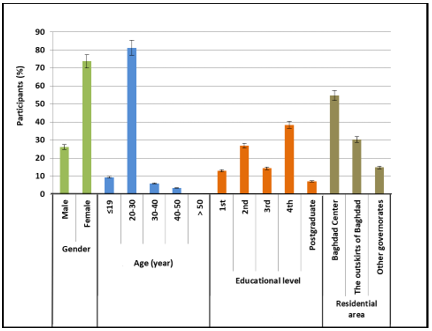
Only 416 participants completed the self-medication questionnaire. The first part of it was including the demographic distribution according to students’ gender 73.8% (n = 307) were female, while 26.2% (n = 109) were male at the age ≤19 years (9.4%, n = 39), 20–30 years (81.3%, n = 338), 30–40 years (6%, n = 25), 40–50 years (3.4%, n = 14), and >50 years (0%, n = 0). The educational level (Grade): 1st year (13%, n = 54), 2nd year (26.9%, n = 112), 3rd year (14.4%, n = 60), 4th year (38.5%, n = 160), and postgraduate PhD and MSc students (7.2%, n = 30). In contrast, the residential area was Baghdad Center (54.8%, n = 228), the outskirts of Baghdad (30.3%, n = 126), and other governorates (14.9%, n = 62), as illustrated in Figure 1.
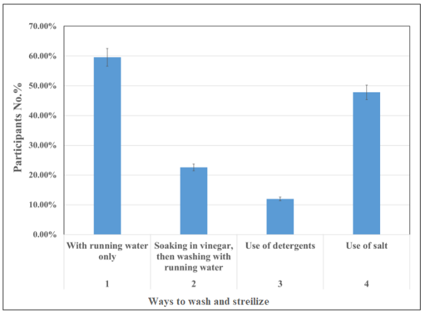
The second section of the questionnaire was about ways to wash and sterilize vegetables and fruits, including running water only (59.6%, n = 248), soaking in vinegar, then washing with running water (22.6%, n = 94), use of detergents (12%, n = 50), and use of salt (47.8%, n = 199) (Figure 2).
Figure 1. Demographic distribution of participants (gender, age, educational level, and residential area) (N = 416)
Figure 2. Ways to wash and sterilize vegetables and fruits (N = 416)
Table 1. Parasitic infections symptoms
|
No. |
Symptoms |
Answer’s Options |
Numbers |
Percentage (%) |
Chi-Square (χ2) |
|
1 |
Abdominal pain |
No |
138 |
33.2% |
47.12 ** |
|
Yes, I have experienced these symptoms |
278 |
66.8% |
|||
|
2 |
Strong diarrhea (5 times or more) |
No |
332 |
79.8% |
147.84 ** |
|
Yes, I have experienced these symptoms |
84 |
20.2% |
|||
|
3 |
Strong diarrhea accompanied by blood |
No |
393 |
94.5% |
329.08 ** |
|
Yes, I have experienced these symptoms |
23 |
5.5% |
|||
|
4 |
Nausea |
No |
222 |
53.4% |
1.88 NS |
|
Yes, I have experienced these symptoms |
194 |
46.6% |
|||
|
5 |
Vomiting |
No |
239 |
57.5% |
9.24 ** |
|
Yes, I have experienced these symptoms |
177 |
42.5% |
|||
|
6 |
Fever |
No |
205 |
49.3% |
0.09 NS |
|
Yes, I have experienced these symptoms |
211 |
50.7% |
|||
|
7 |
Sudden weight loss |
No |
294 |
70.7% |
71.12 ** |
|
Yes, I have experienced these symptoms |
122 |
29.3% |
|||
|
8 |
Loss of appetite |
No |
188 |
45.2% |
3.85 NS |
|
Yes, I have experienced these symptoms |
228 |
54.8% |
|||
|
9 |
Sudden craving for sweet foods |
No |
151 |
36.3% |
31.24 ** |
|
Yes, I have experienced these symptoms |
265 |
63.7% |
|||
|
10 |
Itching in the anal area |
No |
322 |
77.4% |
124.96 ** |
|
Yes, I have experienced these symptoms |
94 |
22.6% |
Moreover, the third section is the distribution of symptoms reported by the participants and their family members, along with the statistical significance evaluated using the Chi-Square test. The results revealed that all symptoms differed significantly across the response categories, as illustrated in Table 1.
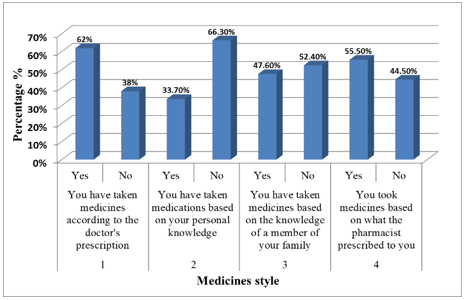
The fourth part of the data in Figure 3 illustrates the patterns and methods of drug consumption among the study participants, which were assessed using chi-square analysis. Most of the participants followed professional medical guidance, with 258 (62%) reporting taking medication as prescribed and 158 (38%) not. In contrast, strong resistance to relying solely on personal knowledge for self-medication. Only 140 (33.7%) reported taking medication based entirely on their own personal decision based on their past experience and knowledge, while 276 (66.3%) rejected this practice. 198 individuals (47.6%) took medication based on past family experiences or a family member's recommendation, while 218 individuals (52.4%) did not. More than half of the sample, a total of 231 participants (55.5%), took medication recommended by a pharmacist, compared to 185 participants (44.5%) who did not.
Figure 3. The kind of medical style taken by participants (N = 416)
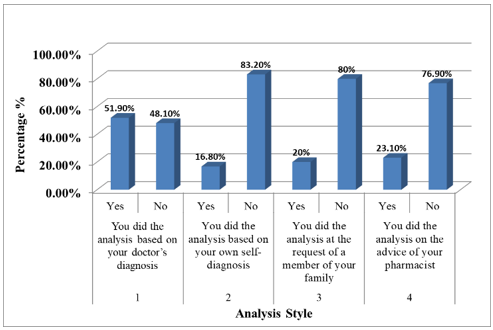
The provided data in Figure 4 show the motivating factors for patients undergoing stool analysis (self-reported) in laboratories. Clinical referral based on a physician's diagnosis was the most common factor, cited by 51.9% of participants. However, this distribution did not reach statistical significance (χ² = 0.615, p > 0.05). In contrast, non-clinical factors, including self-diagnosis (16.8%), family requests (20.0%), and pharmacist advice (23.1%), were significantly less common. When using chi-square, a highly significant difference (p < 0.01) was observed between yes and no responses across these three categories, with the vast majority of patients not initiating stool testing through these informal pathways.
The results in Table 2 represent the pattern of single and multiple intestinal parasitic infections among participants (N = 416).
The results in Table 3 represent the patterns of parasitic co-infections (specific combinations) among participants (N = 416).
The association between self-medication behaviors, methods of washing and sterilizing vegetables and fruits, and intestinal parasitic infection status, as self-reported (N = 416), is illustrated in Table 4.
Table 2. Pattern of single or multiple intestinal parasitic infections among participants (N = 416)
| Infection Category | No. of Parasites | Frequency | Total Sample % (N = 416) | Infected Cohort % (n = 209) | Parasite Species Combinations Observed |
| (n) | |||||
| No Infected | 0 | 207 | 49.80% | — | None |
| Single Infection | 1 | 142 | 34.10% | 68% | E. histolytica (n = 43), A. lumbricoides (n = 14), E. vermicularis (n = 32), H. nana (n = 6), G. lamblia (n = 10), A. duodenale (n = 12), C. parvum (n = 2), T. trichiura (n = 3), B. coli (n = 2), S. stercoralis (n = 5), T. saginata (n = 13) |
| Double Infection | 2 | 54 | 13% | 25.80% | E. histolytica + G. lamblia (n = 18), E. histolytica + B. coli (n = 12), A. lumbricoides + T. trichiura (n = 8) |
| Triple Infection | 3 | 13 | 3.10% | 6.20% | E. histolytica + G. lamblia + T. saginata (n = 6), E. histolytica + E. vermicularis + C. parvum (n = 4) |
| Total Infected | ≥1 | 209 | 50.20% | 100% | 289 total parasite detections |
Table 3. Patterns of parasitic co-infections (specific combinations) (N = 416)
|
Infection Category |
Specific Parasite Combination |
Frequency (n) |
Total Sample% (N = 416) |
Infected Cohort % (n = 209) |
|
Double Infections (n = 54) |
Entamoeba histolytica + Giardia lamblia |
18 |
4.3% |
8.6% |
|
Entamoeba histolytica + Balantidium coli |
12 |
2.9% |
5.7% |
|
|
Ascaris lumbricoides + Trichuris trichiura |
8 |
1.9% |
3.8% |
|
|
Balantidium coli + Taenia saginata |
16 |
3.8% |
7.7% |
|
|
Triple Infections (n = 13) |
Entamoeba histolytica + Giardia lamblia + Taenia saginata |
6 |
1.4% |
2.9% |
|
Entamoeba histolytica + Enterobius vermicularis + Cryptosporidium parvum |
4 |
1.0% |
1.9% |
|
|
Enterobius vermicularis + Taenia saginata + Cryptosporidium parvum |
3 |
0.7% |
1.4% |
|
|
Total Co-Infections |
All the multiple infection combinations (≥2 species) |
67 |
16% |
32% |
Table 4. Relationship between self-medication behaviors, methods of washing and sterilizing vegetables and fruits, and intestinal parasitic infection status (N = 416)
|
Factor Category |
Behavior Response Category |
Total Sample (N = 416) |
Infected Cohort (n = 209, 50.2%) |
Non-Infected Cohort (n = 207, 49.8%) |
Chi-Square (χ2) |
Degrees of Freedom (df) |
p-value |
Odds Ratio (OR) [95% CI] |
|
|
Medical Style |
Personal knowledge (self-medication) |
Yes |
140 (33.7%) |
85 (40.7%) |
55 (26.6%) |
8.64 |
1 |
0.00303** |
1.89 [1.25–2.87] |
|
No |
276 (66.3%) |
124 (59.3%) |
152 (73.4%) |
||||||
|
Pharmacist advice |
Yes |
231 (55.5%) |
125 (59.8%) |
106 (51.2%) |
2.78 |
1 |
0.0956 (NS) |
1.42 [0.96–2.09] |
|
|
No |
185 (44.5%) |
84 (40.2%) |
101 (48.8%) |
||||||
|
Doctor's prescription |
Yes |
258 (62.0%) |
110 (52.6%) |
148 (71.5%) |
14.92 |
1 |
0.0001** |
0.44 [0.30–0.66] |
|
|
No |
158 (38.0%) |
99 (47.4%) |
59 (28.5%) |
||||||
|
Family member recommendation |
Yes |
198 (47.6%) |
104 (49.8%) |
94 (45.4%) |
0.62 |
1 |
0.4295 (NS) |
1.19 [0.81–1.75] |
|
|
No |
218 (52.4%) |
105 (50.2%) |
113 (54.6%) |
||||||
|
Ways to Wash and Sterilize |
Running water only |
Yes |
248 (59.6%) |
138 (66.0%) |
110 (53.1%) |
6.65 |
1 |
0.0099** |
1.71 [1.15–2.55] |
|
No |
168 (40.4%) |
71 (34.0%) |
97 (46.9%) |
||||||
|
Soaking in vinegar |
Yes |
94 (22.6%) |
32 (15.3%) |
62 (30.0%) |
11.92 |
1 |
0.0006** |
0.42 [0.26–0.68] |
|
|
No |
322 (77.4%) |
177 (84.7%) |
145 (70.0%) |
||||||
|
Use of salt |
Yes |
199 (47.8%) |
88 (42.1%) |
111 (53.6%) |
5.08 |
1 |
0.0242* |
0.63 [0.43–0.93] |
|
|
No |
217 (52.2%) |
121 (57.9%) |
96 (46.4%) |
||||||
|
Use of detergents |
Yes |
50 (12.0%) |
31 (14.8%) |
19 (9.2%) |
2.63 |
1 |
0.1047 (NS) |
1.72 [0.94–3.16] |
|
|
No |
366 (88.0%) |
178 (85.2%) |
188 (90.8%) |
||||||
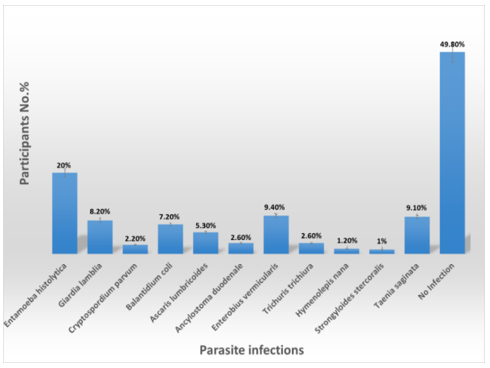
Student participants' infection rates with intestinal parasites: Entamoeba histolytica (20%, n = 83). While Giardia lamblia, (8.2%, n = 34), Cryptosporidium parvum (2.2%, n = 9) Balantidium coli (7.2%, n = 30), Ascaris lumbricoides, (5.3%, n = 22), Ancylostoma duodenale (2.9%, n = 12), Enterobius vermicularis (9.4%, n = 39), Trichuris trichiura (2.6%, n = 11), Hymenolepis nana (1.4%, n = 6), Strongyloides stercoralis (1.2%, n = 5), Taenia saginata (9.1%, n = 38), and no infection (49.8%, n = 207) (Figure 5). Student participants with multiple parasitic infections were counted under each identified species; therefore, species-specific percentages do not sum to the overall infection prevalence.
Figure 5. Intestinal parasitic infection prevalence among participants (N = 416)
This is the first study investigating the association between self-medication frequency and intestinal parasitic infections resulting from symptom-driven behavior among undergraduate and graduate biology students (College of Education for Pure Science Ibn Al-Haitham, University of Baghdad). The questionnaire was administered to 860 students. Of these, 416 responded, of whom 307 (73.8%) were female, and 109 (26.2%) were male. This disparity is highly significant. 416 students completed the questionnaire (48.4%). Non-response (51.6%, n = 444) was primarily driven by non-attendance and academic exam schedules on survey days. There are also students who are not interested in such a survey. The respondent demographics results were close to overall department enrollment records (73.8% female respondents versus 72% department-wide female enrollment; 38.5% 4th-year participants versus the highest department density in upperclassmen), showing that the sample is representative of the student category.
These results reflect the general enrollment trends in life sciences and biology departments at Iraqi universities, where the majority of students are female. In this study, this suggests that data on self-medication for intestinal parasites will largely reflect women's healthcare-seeking practices and behaviors. The high response rate among female students is consistent with findings from global, university-wide health surveys, in which female students typically exhibit higher participation rates in survey-based health research [7, 19]. This gender disparity in self-medication is often attributed to gender-specific healthcare needs, such as self-management of menstrual disorders (dysmenorrhea), associated headaches, and analgesic use, without direct clinical consultation.
The participants' ages range from ≤19 to >50 years. The majority of participants (81.3%, n = 338) fell within the 20–30-year age group, while younger students (under 19) comprised 9.4% (n = 39). The survey sample consists of highly educated undergraduate and postgraduate students. Furthermore, older age groups collectively represent less than 10%. This data indicates that the current study falls within the youth demographic, which has been identified as a high-risk group for medication misuse. Young adults often report a high level of health expertise, leading to greater confidence in self-diagnosing and treating minor ailments. In particular, as academic students, this age group (20–30 years old) is exposed to stress, long working hours, and demanding schedules, leading them time saving, such as self-medication, rather than seeking medical consultations at clinics.
The data also reveals a difference in distribution across educational levels, with fourth-year students comprising the largest group (38.5%), while postgraduate students were the smallest group (7.2%). The 1st-year group is 13%, the 2nd-year is 26.9%, and the 3rd-year is 14.4%. Also, the study [20] includes all educational levels; classes (4th and 5th) of medical students have a 47% rate of self‑medication compared to classes (1st, 2nd, and 3rd) (40%).
The high participation of 4th-year students may reflect awareness of the importance of scientific research as they prepare for graduation. Despite undergraduates having the most advanced biological knowledge, their inclusion provides a strong baseline for assessing whether academic maturity is associated with reducing self-medication practices.
In self-medication cases, educational status is very important to compare between participants using self-treatment. A study among Iraqi medical and pharmacy students [21, 22] showed that undergraduate students feel highly competent in altering dosages or repurposing old prescriptions, although they still require clinical training to avoid the dangers of self-medication.
Over half of the participants (54.8%) reside in Baghdad Center, followed by the outskirts (30.3%) and other governorates (14.9%). The significant concentration in the Baghdad Center suggests that most participants have easy access to pharmacies and healthcare facilities. This is a critical factor for this study. In urban centers, the ease of access to anthelmintic drugs often bypasses the need for a professional diagnosis, potentially increasing the rate of self-medication. This urban distribution is similar to previous studies conducted in the capital city, such as Al-Mustansiriya and Al-Nahrain Universities [23].
This geographical disparity is directly related to the high density and availability of private pharmacies in Baghdad; the lax enforcement of prescription drug lists allows volunteers to easily and readily take multiple medications without a prescription, making urban living a strong incentive for self-medication [24]. This study focuses on a university student, aged 20–30, in her fourth year, residing in central Baghdad.
In Figure 2, participants used traditional methods to sterilize vegetables and fruits. The first method reported by 248 (59.6%) participants was washing with running water. This high percentage aligns with the World Health Organization (WHO) recommendation to use ordinary tap water as the safest and most effective basic method for removing surface pathogens, physical dirt, and pesticide residues [25]. The second method used by participants (n = 199, 47.8%) was the use of salt. Previously published studies confirm that high-concentration sodium chloride (salt) solutions can effectively reduce parasitic contamination and fungi on vegetables [26].
In this research, a low frequency of using vinegar and detergents was observed among student participants; (n = 94, 22.6%) reported soaking food in vinegar and washing with running water. Only 12% of participants utilized detergents. However, its low usage rate in this study may be due to changes in food taste or vinegar cost. The differences between the washing methods and sterilizing vegetables and fruits were highly significant as a result of chi-square (χ² = 170.02, p ≤ 0.01). This result shows the preference for water and salt versus vinegar and detergents. Awareness campaigns should focus on using running water, appropriate concentrations of safe soaking solutions such as salt or vinegar, and warning against the dangerous use of detergents on vegetables and fruits.
Table 1 outlines the prevalence and statistical significance of ten systemic symptoms reported by respondents. The most prevalent symptoms are abdominal pain (66.8%), craving for sweet foods (63.7%), loss of appetite (54.8%), fever (50.7%), nausea (46.6%), vomiting (42.5%), weight loss (29.3%), itching (22.6%), and severe diarrhea (20.2%). The least prevalent symptom is bloody diarrhea, reported by only 5.5% of respondents. Previous studies on self-medication highlight consumer motivations for self-treatment due to the appearance of symptoms [27, 28]. All symptoms exhibit highly significant differences, with p < 0.01, except that 3 symptoms (Nausea, Fever, and Loss of appetite) were non-significant. Common gastrointestinal disturbances include abdominal pain and nausea; although these are typical initial indicators of general gastrointestinal disorders, they remain nonspecific, self-reported symptoms and do not definitively confirm a parasitic infection. The low incidence of bloody diarrhea 5.5% suggests that, while acute inflammation or infection is common, there is little evidence of severe infection associated with dysentery. Fever indicates an active immune response against an infection. Loss of appetite 54.8% correlates closely with the high rates of nausea and abdominal pain.
In spite of this, 29.3% of participants had sudden weight loss. While sudden weight loss and intense cravings for sweet foods may sometimes be associated with malabsorption or dietary changes during illness, they are nonspecific symptoms that require further clinical investigation. Anal itching was reported by 22.6% of individuals. However, this nonspecific and common symptom is associated with enterobiasis; it can also result from various non-parasitic conditions.
Student participants are shown in Figure 3 taking their medications as prescribed by the doctor (n = 258, 62%); however, (n = 158, 38%) did not [29]. When the chi-square test showed a highly significant difference (χ² = 24.038, p ≤ 0.01), this indicated that medical advice is the most important factor in medication adherence. However, looking at the other sources of medication guidance among the entire sample, pharmacist advice was a major factor. More than half of the participants (n = 231, 55.5%) obtained their medicines from a pharmacist, while (n = 185, 44.5%) did not. This result was also significant (χ² = 5.086, p ≤ 0.05). Similar results were observed in cross-sectional research across developing countries where patients take pharmaceutical advice. In contrast, when asked about relying purely on personal knowledge to self-medicate, most participants (n = 276, 66.3%) rejected self-medication, while only 33.7% (n = 140) who made their own personal decision based on their past experience admitted to this practice [29]. This variance was highly significant χ² = 44.461; p ≤ 0.01, showing a strong behavioral bias against self-medication without structured counseling. Finally, the sample was almost evenly split regarding medication use influenced by family knowledge, with 47.6% (n = 198) responding "yes" and 52.4% (n = 218) responding "no." This factor, χ² = 0.961, was not significant, indicating that family advice does not significantly influence overall medication use patterns in this sample.
In Figure 4, participants underwent stool testing based on a physician's diagnosis, self-diagnosis, family requests, and pharmacist advice. Among those with a physician's diagnosis, the distribution between "yes" (51.9%) and "no" (48.1%) was nearly equal. The resulting chi-squared value (χ² = 0.615) was not statistically significant compared with the critical value of 3.84 at 1 degree of freedom (p = 0.05). However, medical supervision remains a primary driver of diagnostic requests; it is not the sole or decisive motivator for the surveyed population [30]. In contrast, the results show highly significant statistical deviations (p ≤ 0.01). Across the three situations (self-diagnosis, family requests, and pharmacist advice), most participants answered "no." For self-diagnosis, 83.2% rejected it as a basis for stool testing, yielding a highly significant chi-squared value of 183.11. Similarly, 80% of respondents did not seek testing due to family influence (chi-squared = 150.24). Using Pharmacist advice, 76.9% answered "no," with chi-squared = 120.6. This result indicates high reliance on medical consultation for gastrointestinal infections. Stool analysis is a diagnostic tool used to detect many infection conditions, not only parasitic infections but also cases with occult bleeding or bacterial intestinal problems. In addition, students who answered yes for pharmacist advice were 23.1%, underscoring pharmacists' role limitations in the study area, where they are responsible for providing drugs or pain relief without authority for laboratory analysis.
In this survey, 209 participants 50.2%, n = 209/416 were infected with intestinal parasites (self-reported), while 207 participants 49.8%, n = 207/416 were not infected. More than one parasite was observed in 32% of those infected (n = 67/209), resulting in the isolation of 289 parasite samples. One parasite infection was recorded in 142 participants 68%, 142/209), two parasites were recorded in 54 participants 25.8%, 54/209, and three or more parasites were recorded in 13 participants 6.2%, 13/209. The main type of co-infection was Entamoeba histolytica with Giardia lamblia (n = 18) (Table 2), while Table 3 showed the patterns of parasitic co-infections (specific combinations), where N = 416. In 54 participants, double infections were recorded (12.9% of the total sample and the infected cohort about 25.8%), whereas triple infections occurred in 13 student participants (3.1% of the total sample and 6.2% of the infected cohort). The cumulative number of parasites (due to the multiple parasite species co-occurring within individual hosts) recorded 289 across the 209 infected participants. In double infections, the predominant combinations were E. histolytica and G. lamblia (n = 18), E. histolytica and Balantidium coli (n = 12), and Ascaris lumbricoides and Trichuris trichiura (n = 8). The other double combinations (n = 16). For triple infections, the most common combinations observed were E. histolytica and G. lamblia and Taenia saginata (n = 6) and E. histolytica and E. vermicularis and Cryptosporidium parvum (n = 4), with other triple combinations (n = 3). Participants were infected with self-reported intestinal parasites, showing a high prevalence in the population studied. These results align closely with previous studies done in developing countries and regions with compromised sanitation frameworks, where these intestinal parasites are diagnosed as a major public health problem [31]. There are two types of intestinal parasites: protozoa and helminths. The protozoan infections were dominant in this paper, mainly Entamoeba histolytica (n = 83, 20%) and Giardia lamblia (n = 34, 8.2%). The high frequency of E. histolytica causes amoebiasis, considered a highly predominant intestinal pathogen [32]. The high frequencies of both E. histolytica and G. lamblia [33] suggest a potential risk of fecal-oral transmission within the student participants. The previous literature describes ingestion of mature cysts due to treated drinking water, unwashed fruits and vegetables, or poor hand hygiene before eating as a classical transmission route for these protozoa. Giardia lamblia cysts [34] and Cryptosporidium parvum cysts (n = 9, 2.2%) had the ability to survive for weeks in moist or water supplies [35]. The presence of Balantidium coli (7.2%, n = 30) was associated with a zoonotic ciliate; however, the literature indicates infection typically occurs through ingestion of cyst-contaminated food or water resources [36]. Also, helminth infections were recorded among the participants. Enterobius vermicularis had the highest prevalence (n = 39, 9.4%), followed by Ascaris lumbricoides (n = 22, 5.3%), Ancylostoma duodenale (n = 11, 2.6%), and Trichuris trichiura (n = 11, 2.6%) [37]. The highest frequency of E. vermicularis might be due to easy transmission from person to person, or reinfection through contaminated surfaces. The investigations of soil-transmitted helminths such as A. lumbricoides and T. trichiura are frequently used in the literature to reflect general environmental sanitation strategies. The presence of both eggs in feces may be associated with open defecation practices that contaminate soil and lead to potential infection through unwashed vegetables [38]. The larvae of A. duodenale and Strongyloides stercoralis (n = 5, 1.2%) penetrate the skin, and this agrees with the previous study, where the infection prevalence is found in the fields, where individuals walk and work without footwear, where soil is contaminated with human waste [39]. In this study, Taenia saginata was highly prevalent (n = 38, 9.1%), while Hymenolepis nana was also detected (n = 6, 1.4%). These findings of T. saginata may suggest dual-specific dietary habits among the surveyed participants, such as potential consumption of undercooked beef containing infective cysticercus larvae; this is a well-reported transmission route for this kind of parasite, as shown in Figure 5.
Chi-square analysis showed the associations between medical behaviors, ways to wash and sterilize vegetables and fruits, and the prevalence of intestinal parasitic infections, self-reported (Table 4 with Figures 2, 3 and 4). Regarding medical style, student participants who practiced self-medication based on personal knowledge had significantly higher odds of parasitic infection compared to those who did not OR = 1.89, 95% CI: 1.25–2.87, chi-squared value (χ² = 8.64, p = 0.003). A doctor’s prescription is a strong protective factor, decreasing the odds of infection OR = 0.44, 95% CI: 0.30–0.66, chi-squared (χ² = 14.92, p = 0.0001). Although pharmacist advice (p = 0.0956) and family member recommendations (p = 0.4295) did not demonstrate a statistically significant association with infection status, using running water only for washing was significantly associated with increased risk of parasitic infection, OR = 1.71, 95% CI: 1.15–2.55, χ² = 6.65, p = 0.0099. While soaking in vinegar demonstrated a substantial protective effect OR = 0.42, 95% CI: 0.26–0.68, chi-squared value χ² = 11.92, p = 0.0006, the use of salt had OR = 0.63, 95% CI: 0.43–0.93, chi-squared value χ² = 5.08, p = 0.0242. Finally, the use of detergents did not show a statistically significant association with parasitic infection, OR = 1.72, 95% CI: 0.94–3.16, p = 0.1047.
First, other departments within the College of Education for Pure Sciences (Ibn Al-Haitham) were excluded according to the specified inclusion criteria, thus limiting the generality of this study. Second, this study used an online voluntary sampling method, which carries the inherent risk of non-response bias, as students who chose not to participate may have different self-treatment habits. Third, reports on the frequency of self-medication over days, months, or years were not available, and the recall period for self-treatment was not precisely defined. This lack of a defined timeframe may lead to recall bias, as participants may fail to accurately remember or report past behaviors. Fourth, the study did not consider the students' economic status or their access to health prediction data, both of which may influence self-medication behaviors. Fifth, because the data rely entirely on self-reported questionnaires, the results may be influenced by socially desirable responses, with students underreporting instances of irresponsible self-medication. Furthermore, the types of medications used and their specific dosages were not verified through medical records. Finally, this study did not assess how biological science curricula address the responsible use of medications. Academic programs could better integrate educational content on the risks and benefits of medications, overdoses, toxicity, side effects, and healthcare costs associated with medication-related hospitalizations. Future research should address these gaps to provide a more comprehensive analysis.
In this survey, the prevalence of self-medication among the sampled (biology students) remains moderate (33.7%). However, in comparison, the intestinal parasitic infections within this specific participant group are very high (50.2%), with Entamoeba histolytica (20.0%) as the highest parasite. While the behavioral risks were not directly tested for in this study, previous studies highlight that these infection rates can be linked to food hygiene practices, including the way to wash fruits and vegetables. Moreover, these results seek serious need for educational campaigns concentrating on the awareness of self-medication risks, especially alongside with parasites infections targeting these student populations directly. Thus, future investigation surveys have to focus on determining the socio-demographic and behavioral factors that affect this practice and its dangerous development among similar student cohorts.
The authors want to thank all the students who participated in this study and the Biology Department staff for their support in completing this work.
[1] Shah, S.J., Ahmad, H., Rehan, R.B., et al. (2014). Self-medication with antibiotics among non-medical university students of Karachi: a cross-sectional study. BMC Pharmacology and Toxicology, 15(1): 74. https://doi.org/10.1186/2050-6511-15-74
[2] Jose, J., Jimmy, B., Al Sabei, G.A. (2013). A study assessing public knowledge, belief and behavior of antibiotic use in an Omani population. Oman Medical Journal, 28(5): 324. https://doi.org/10.5001/omj.2013.95
[3] World Health Organization. (1998). The role of the pharmacist in self-care and self-medication: Report of the 4th WHO Consultative Group on the Role of the Pharmacist, The Hague, The Netherlands, 26-28 August 1998. https://iris.who.int/handle/10665/65860.
[4] Borg, M.A., Scicluna, E.A. (2002). Over-the-counter acquisition of antibiotics in the Maltese general population. International Journal of Antimicrobial Agents, 20(4): 253-257. https://doi.org/10.1016/s0924-8579(02)00194-2
[5] Morgan, D.J., Okeke, I.N., Laxminarayan, R., Perencevich, E.N., Weisenberg, S. (2011). Non-prescription antimicrobial use worldwide: A systematic review. The Lancet Infectious Diseases, 11(9): 692-701. https://doi.org/10.1016/S1473-3099(11)70054-8
[6] Laxminarayan, R., Heymann, D.L. (2012). Challenges of drug resistance in the developing world. British Medical Journal, 344: e1567. https://doi.org/10.1136/bmj.e1567
[7] Behzadifar, M., Behzadifar, M., Aryankhesal, A., et al. (2020). Prevalence of self-medication in university students: Systematic review and meta-analysis. Eastern Mediterranean Health Journal, 26(7): 846-857. https://doi.org/10.26719/emhj.20.052
[8] Lv, B., Zhou, Z., Xu, G., et al. (2014). Knowledge, attitudes and practices concerning self‐medication with antibiotics among university students in western China. Tropical Medicine & International Health, 19(7): 769-779. https://doi.org/10.1111/tmi.12322
[9] Buke, C., Hosgor-Limoncu, M., Ermertcan, S., et al. (2005). Irrational use of antibiotics among university students. Journal of Infection, 51(2): 135-139. https://doi.org/10.1016/j.jinf.2004.12.001
[10] Grigoryan, L., Burgerhof, J.G., Degener, J.E., et al. (2007). Attitudes, beliefs and knowledge concerning antibiotic use and self-medication: A comparative European study. Pharmacoepidemiology and Drug Safety, 16(11): 1234-1243. https://doi.org/10.1002/pds.1479
[11] Shahid, S., Zulfiqar, K., Butt, K., et al. (2024). Systematic review of the self-medication practice among medical students across South Asian countries. Medical Science, 28: e23ms3314. https://doi.org/10.54905/disssi.v28i145.e23ms3314
[12] Shahid, S., Ahmed, F., Khan, R., et al. (2022). Knowledge and attitude of self-medication among healthcare and non-healthcare students of Lahore, Pakistan. Universal Journal of Pharmaceutical Research, 7(6): 9-13. https://doi.org/10.22270/ujpr.v7i6.863
[13] Waqar, M.A., Riaz, T., Munir, M., et al. (2023). Self-medication in general ailments and its potential risks. Anaesthesia, Pain & Intensive Care, 27(4): 579-584. https://doi.org/10.35975/apic.v27i4.2089
[14] Alomashi, G.B., Al-Shabbani, A.H. (2019). Prevalence of intestinal parasitic infestation in anemic patients attended to Al-Diwaniyah Teaching Hospital at Al-Qadisiyah Province/ Iraq. International Journal of Pharmaceutical Quality Assurance, 10(3): 60-65. https://doi.org/10.25258/ijpqa.10.3.22
[15] Dąbrowska, J., Groblewska, M., Bendykowska, M., Sikorski, M., Gromadzka, G. (2024). Effective laboratory diagnosis of parasitic infections of the gastrointestinal tract: Where, when, how, and what should we look for? Diagnostics, 14(19): 2148. https://doi.org/10.3390/diagnostics14192148
[16] Al-Taie, L.H. (2009). Prevalence of intestinal parasitic infection in Baghdad city. Journal of the Faculty of Medicine Baghdad, 51(2): 187-191. https://doi.org/10.32007/jfacmedbagdad.5121209
[17] Ahmed, M. (2023). Intestinal parasitic infections in 2023. Gastroenterology Research, 16(3): 127. https://doi.org/10.14740/gr1622
[18] Salih, J.M., Hassan, A.O., Al-Saeed, A.T.M. (2022). Intestinal parasites and associated risk factors among primary school children in Duhok city-Kurdistan region/Iraq. Journal of Duhok University, 25(2): 50-56. https://doi.org/10.26682 /sjuod.2022.25.2.5
[19] Kasulkar, A.A., Gupta, M. (2015). Self medication practices among medical students of a private institute. Indian Journal of Pharmaceutical Sciences, 77(2): 178. https://doi.org/10.4103/0250-474x.156569
[20] Ghaieth, M.F., Elhag, S.R., Hussien, M.E., Konozy, E.H. (2015). Antibiotics self-medication among medical and nonmedical students at two prominent Universities in Benghazi City, Libya. Journal of Pharmacy and Bioallied Sciences, 7(2): 109-115. https://doi.org/10.4103/0975-7406.154432
[21] Al Shawi, A.F., Ali, A.F., Enad, M.M., Salih, J.A. (2018). Self-medication among medical students in Anbar and Fallujah Universities–Iraq. Journal of the Faculty of Medicine Baghdad, 60(3): 156-159. https://doi.org/10.32007/jfacmedbagdad.603606
[22] Ahmed, F.T., Ali, G.Y.M. (2019). Evaluation of self-medication among Iraqi pharmacy students. Journal of Ideas in Health, 2(2): 108-112. https://doi.org/10.47108/jidhealth.Vol2.Iss2.34
[23] Al Ameri, R.J., Abdal Badri, H.J., Lafta, R.K. (2017). Prevalence of self-medication among university students in Baghdad: A cross-sectional study from Iraq. EMHJ-Eastern Mediterranean Health Journal, 23(2): 87-93. https://doi.org/10.26719/2017.23.2.87
[24] Bzaiea, A., Alhusseini, A., Hussain, H., et al. (2025). Self-medication among patients with chronic conditions in Iraq: A cross-sectional analysis of prevalence and predictors in a resource-constrained setting. Al-Wataniya Journal of Medical Sciences, 1(1): 23-32. https://doi.org/10.66564/ajms.2025.10005
[25] World Health Organization. (2022). Guidelines for drinking-water quality: Incorporating the first and second addenda. World Health Organization. https://iris.who.int/server/api/core/bitstreams/69c17edd-ee26-425b-9d34-33799377e886/content.
[26] Maia, C.M.D.M., Damasceno, K.S.F.D.S.C., Seabra, L.M.A.J., et al. (2023). Effectiveness of sanitization protocols in removing or reducing parasites from vegetables: A systematic review with meta-analysis. Plos One, 18(9): e0290447. https://doi.org/10.1371/journal.pone.0290447
[27] Al Flaiti, M., Al Badi, K., Hakami, W.O., Khan, S.A. (2014). Evaluation of self-medication practices in acute diseases among university students in Oman. Journal of Acute Disease, 3(3): 249-252. https://doi.org/10.1016/S2221-6189(14)60056-1
[28] Moalim, S.A., Dirie, H.M., Mohamoud, J.H., Hashi, K.M., Ali, F.A., Abubakar, K.A. (2026). Assessment of self-medication practices and its associated factors among undergraduate students of private universities in Banadir region, Somalia. BMC Medical Education, 26(1): 491. https://doi.org/10.1186/s12909-026-08818-3
[29] Alshogran, O.Y., Alzoubi, K.H., Khabour, O.F., Farah, S. (2018). Patterns of self-medication among medical and nonmedical University students in Jordan. Risk Management and Healthcare Policy, 11: 169-176. https://doi.org/10.2147/RMHP.S170181
[30] Perrot, S., Cittée, J., Louis, P., et al. (2019). Self-medication in pain management: The state of the art of pharmacists’ role for optimal Over-The-Counter analgesic use. European Journal of Pain, 23(10): 1747-1762. https://doi.org/10.1002/ejp.1459
[31] Fletcher, S.M., McLaws, M.L., Ellis, J.T. (2013). Prevalence of gastrointestinal pathogens in developed and developing countries: Systematic review and meta-analysis. Journal of Public Health Research, 2(1): jphr-2013. https://doi.org/10.4081/jphr.2013.e9
[32] Roro, G.B., Eriso, F., Al-Hazimi, A.M., et al. (2022). Prevalence and associated risk factors of Entamoeba histolytica infection among school children from three primary schools in Arsi Town, West Zone, Ethiopia. Journal of Parasitic Diseases, 46(3): 776-784. https://doi.org/10.1007/s12639-022-01495-1
[33] Dhubyan Mohammed Zaki, Z. (2022). Prevalence of Entamoeba histolytica and Giardia lamblia associated with diarrhea in children referring to Ibn Al-Atheer Hospital in Mosul, Iraq. Archives of Razi Institute, 77(1): 73-79. https://doi.org/10.22092/ARI.2021 .356312.1820
[34] Mori, H., Makuuchi, R., Krokva, D., et al. (2026). Giardiasis in Japan, the United States of America, and Europe from 2007 to 2023, highlighting a decline during the COVID-19 pandemic. PLOS Neglected Tropical Diseases, 20(6): e0014428. https://doi.org/10.1371/journal.pntd.0014428
[35] Zhang, H., Guo, F., Zhou, H., Zhu, G. (2012). Transcriptome analysis reveals unique metabolic features in the Cryptosporidium parvum Oocysts associated with environmental survival and stresses. BMC Genomics, 13(1): 647. https://doi.org/10.1186/1471-2164-13-647
[36] Schuster, F.L., Visvesvara, G.S. (2004). Amebae and ciliated protozoa as causal agents of waterborne zoonotic disease. Veterinary Parasitology, 126(1-2): 91-120. https://doi.org/10.1016/j.vetpar.2004.09.019
[37] Wondimagegn, M.K., Hailu, L.T. (2024). Prevalence of intestinal parasitic helminths and its associated risk factors in Mekaneselam Town, South Wollo, Ethiopia. BMC Infectious Diseases, 24(1): 1283. https://doi.org/10.1186/s12879-024-10162-0
[38] Obaid, A.S., Al-Aubaidi, I.K., Abed, I.F. (2022). Some immunological aspects in sera of Iraqi patients infected with hydatid cysts. International Journal of Drug Delivery Technology, 12(2): 579-582. https://doi.org/10.25258/ijddt.12.2.19
[39] Husen, E.A., Tafesse, G., Hajare, S.T., et al. (2022). Cross-sectional study on assessment of frequency of intestinal helminth infections and its related risk factors among school children from Adola Town, Ethiopia. BioMed Research International, 2022(1): 5908938. https://doi.org/10.1155/2022/5908938