Altitude-Mediated Chemotypic Shifts in Piper aduncum Drive Differential Nano-Bioinsecticidal Activity Against Crocidolomia pavonana Fabricius (Lepidoptera: Crambidae)

Arneti Arneti | Zahlul Ikhsan* | My Syahrawati
© 2026 The authors. This article is published by IIETA and is licensed under the CC BY 4.0 license (http://creativecommons.org/licenses/by/4.0/).
OPEN ACCESS
Crocidolomia pavonana Fabricius (Lepidoptera: Crambidae) is a major defoliating pest of Brassicaceae crops, causing yield losses exceeding 90% under severe infestations. The increasing resistance to synthetic insecticides has stimulated interest in botanical nanoformulations as environmentally friendly alternatives. This study evaluated the effect of altitudinal variation on the secondary metabolite composition of Piper aduncum fruits and the insecticidal activity of their nanoemulsions against second-instar larvae of C. pavonana. Fruits were collected from lowland (5.72 metres above sea level (m a.s.l.)), midland (469 m a.s.l.), and highland (1,071 m a.s.l.) areas in West Sumatra, Indonesia. Nanoemulsions were prepared using a low-energy spontaneous emulsification technique and tested using a leaf-dip bioassay, while phytochemical profiles were analyzed by Gas Chromatography–Mass Spectrometry (GC–MS). Apiole was the dominant compound in all populations, with the highest abundance in highland samples (53.50%), followed by midland (49.32%) and lowland populations (45.18%). The highland-derived nanoemulsion showed the lowest LC₅₀ and reduced pupal biomass by 44.4% at 0.35%. Across all populations, the maximum antifeedant index was 76.99%, and larval development was prolonged by up to 2.30 days. Apiole abundance was strongly negatively correlated with LC50 values (r = −0.94). These findings demonstrate that altitude influences chemotypic variation in P. aduncum and support highland populations as promising sources of effective botanical biopesticides.
altitudinal gradient, Crocidolomia pavonana, nanoemulsion, Piper aduncum, biopesticide
Crops from the Brassicaceae family, including cabbage (Brassica oleracea var. capitata), mustard greens (Brassica juncea), and kale (Brassica oleracea var. alboglabra), are a major source of dietary micronutrients and are an important economic commodity for smallholder farmers in tropical and subtropical regions. In Indonesia alone, the cumulative annual production area of Brassicaceae vegetables exceeds 290,000 ha, yet yields remain chronically depressed below genetic potential due to arthropod pest pressure [1]. Among the lepidopteran complex colonizing these crops, Crocidolomia pavonana Fabricius (Lepidoptera: Crambidae), commonly known as the cabbage looper, is recognized as the most economically damaging leaf-destroying pest species throughout the Indo-Pacific region. Early instar larvae congregate in dense clusters and feed on leaf blades in concentric feeding rings, rapidly stripping the crown and, in later instars, hollowing out the developing seeds. Field studies conducted in West Sumatra and East Java have documented crop losses ranging from 30% at moderate infestation densities to total crop failure (>90%) during severe outbreaks, posing a continuing and increasing threat to food security [2]. Conventional management of C. pavonana has historically been dominated by synthetic insecticides from the organophosphate, pyrethroid, and diamide chemical classes, applied at intervals as short as two to three days during peak population pressure [3]. However, this calendar-based spraying strategy has resulted in a series of unintended agronomic and ecological consequences. Repeated sublethal exposure has driven selection for metabolic and target-site resistance mechanisms in field populations, including increased expression of cytochrome P450 monooxygenases (CYPs) and mutations in voltage-gated sodium channel genes, which progressively erode the effectiveness of the most widely used active ingredients [4]. Simultaneous disruption of natural enemy groups, particularly Hymenoptera parasitoids in the genera Cotesia and Diadegma, disrupts key biological regulation, creating favorable conditions for secondary pest outbreaks [5]. Environmental contamination of soil and water matrices through pesticide runoff further exacerbates the sustainability deficits of current management approaches [6].
These cascading consequences have increased global demand for biodegradable, plant-derived pest management alternatives that are compatible with integrated pest management (IPM) principles and meet increasingly stringent maximum residue limit (MRL) standards for export-oriented agricultural commodities. Botanical insecticides derived from crude extracts and plant extracts have attracted renewed scientific and commercial interest as low-risk alternatives in IPM tools [7]. Among the studied species, Piper aduncum L. (Piperaceae) has emerged as one of the most promising bioinsecticide taxa across its distribution range from the neotropics to the paleotropics. Its crude extract is characterized by a series of phenylpropanoid compounds, primarily apiole, dillapiol, and myristicin, that act synergistically on multiple physiological targets in insects. Apiole and dillapiol have been documented to inhibit acetylcholinesterase (AChE) activity and suppress cytochrome P450-dependent monooxygenases and carboxyl esterases, thereby disrupting neurotransmission and xenobiotic detoxification capacity [8]. Myristicin has demonstrated additional mechanisms of action, including disruption of oxidative phosphorylation and genotoxic effects on hemocytes at sublethal concentrations [9]. This multi-target bioactivity profile substantially reduces the likelihood of rapid resistance evolution compared to single-target synthetic insecticides.
Piper aduncum is native to tropical America but was introduced to the Indonesian archipelago through the Bogor Botanical Gardens in 1860 and has since adapted widely across various biogeographic zones, thriving at altitudes up to 2,000 metres above sea level (m a.s.l.) in ecosystems characterized by annual rainfall of 1,500–4,000 mm and temperatures of 22–30 ℃ [10, 11]. Despite this species' broad adaptation, striking phytochemical variability among populations has been documented. Reported apiole content in fruit crude extract ranges from 28.62% in populations sampled from the Brazilian Amazon to as high as 90.7% in specimens from Manaus, Brazil [12]. Similarly, dillapiol concentrations range from below the limit of quantification (<1%) in plants from the Federal District of Brazil to 73.40% in Atlantic Forest populations [13]. Population-level investigations have linked this intraspecific chemotypic differentiation to the interactive effects of genetic background, geographic origin, and prevailing abiotic conditions, but the relative contribution of each factor, especially altitude, remains poorly understood in the Indonesian context.
Altitude represents one of the strongest and most ecologically coherent environmental gradients known to modulate secondary metabolite biosynthesis in plants. With increasing altitude, plants experience a decrease in average temperature, an increase in UV-B radiation flux, a decrease in CO₂ partial pressure, and a shift in soil nutrient stoichiometry that collectively activate various stress response signaling cascades, thereby increasing the accumulation of phenolic acids, flavonoids, and terpenoids. The phenylpropanoid pathway, which underlies apiole and dillapiol biosynthesis, is limited by the activity of phenylalanine ammonia-lyase (PAL). PAL is transcriptionally regulated at low temperatures through a cold-responsive promoter element (COR), providing a mechanistic link between altitude-associated temperature decreases and increased phenylpropanoid accumulation [14]. Downstream, the enzyme O-methyltransferase (OMT) catalyzes the final methylation step that distinguishes apiole from dillapiol, and its differential expression under varying environmental signals may further explain the observed chemotypic differences along the altitudinal gradient. Supporting evidence from related Piper taxa is particularly informative; highland accessions of Piper nigrum L. at 1,134 m a.s.l. exhibited significantly higher monoterpene concentrations than lowland counterparts at 20 m a.s.l., and hypericin content in Hypericum perforatum L. increased 4.5-fold when plants were cultivated at 15 ℃ compared to 22 ℃ [15]. These findings collectively indicate that altitude-based sampling strategies are an important, yet underexplored, experimental variable in optimizing the bioinsecticidal potential of plant-derived pest control materials.
A persistent obstacle hindering the wider adoption of botanical insecticides in the field is their inherent physicochemical instability; crude extracts are susceptible to photodegradation, oxidation, and rapid evaporation, leading to unpredictable residual activity under environmental conditions [16]. Nanotechnology-based formulation platforms have substantially overcome these limitations. Nanoemulsions, thermodynamically or kinetically stable oil-in-water dispersions with average droplet diameters in the range of 10–200 nm, offer several important advantages over conventional emulsion concentrates: better penetration through the hydrophobic insect cuticle, increased solubility of lipophilic phytochemicals, protection against photodegradation, and improved resistance to rain [17]. The increased surface area-to-volume ratio at the nanoscale also accelerates the release of active ingredients at the target site, improving contact and fumigant toxicity. Importantly, nano-encapsulated P. aduncum crude extract has been shown to exhibit significantly greater acute toxicity to Spodoptera frugiperda larvae than standard emulsion formulations, providing direct proof of concept for nanoemulsion technology as a platform for this botanical active ingredient [18, 19]. Physical characteristics parameters, including droplet size, polydispersity index (PDI), zeta potential, and encapsulation efficiency, have emerged as key quality benchmarks that must be regularly optimized across source populations to ensure a consistent, field-ready product.
Despite growing evidence documenting the phytochemical variability of P. aduncum and the influence of altitude on secondary metabolite biosynthesis in plants, no study has systematically examined how the altitude gradient in West Sumatra a region extending from lowland river valleys (~100 m a.s.l.) to mountainous volcanic zones (~1,500 m a.s.l.) within a single biogeographic unit shapes the chemotypic composition and, indirectly, the bioinsecticidal activity of P. aduncum nanoemulsions at different altitudes against key pests in the region. This knowledge gap is crucial because any altitude-dependent chemotypic variation that results in significant differences in pesticide performance could inform targeted collection strategies to increase botanical biopesticide production in West Sumatra, where P. aduncum has been classified as an invasive species and represents an easily harvested and low-cost biomass resource. The design does not allow separation of altitude from site-specific edaphic and climatic factors; the findings should be interpreted as provenance-dependent variation rather than altitude-controlled effects. Therefore, this study aims to examine and investigate the effect of altitude variation on the phytochemical composition of Piper aduncum fruit crude extract and the bioinsecticide performance of its nanoemulsion against second-instar larvae of Crocidolomia pavonana, including its insecticidal, antifeedant, and sublethal effects, as well as the relationship between chemotype variation and biological efficacy.
2.1 Study area and plant collection
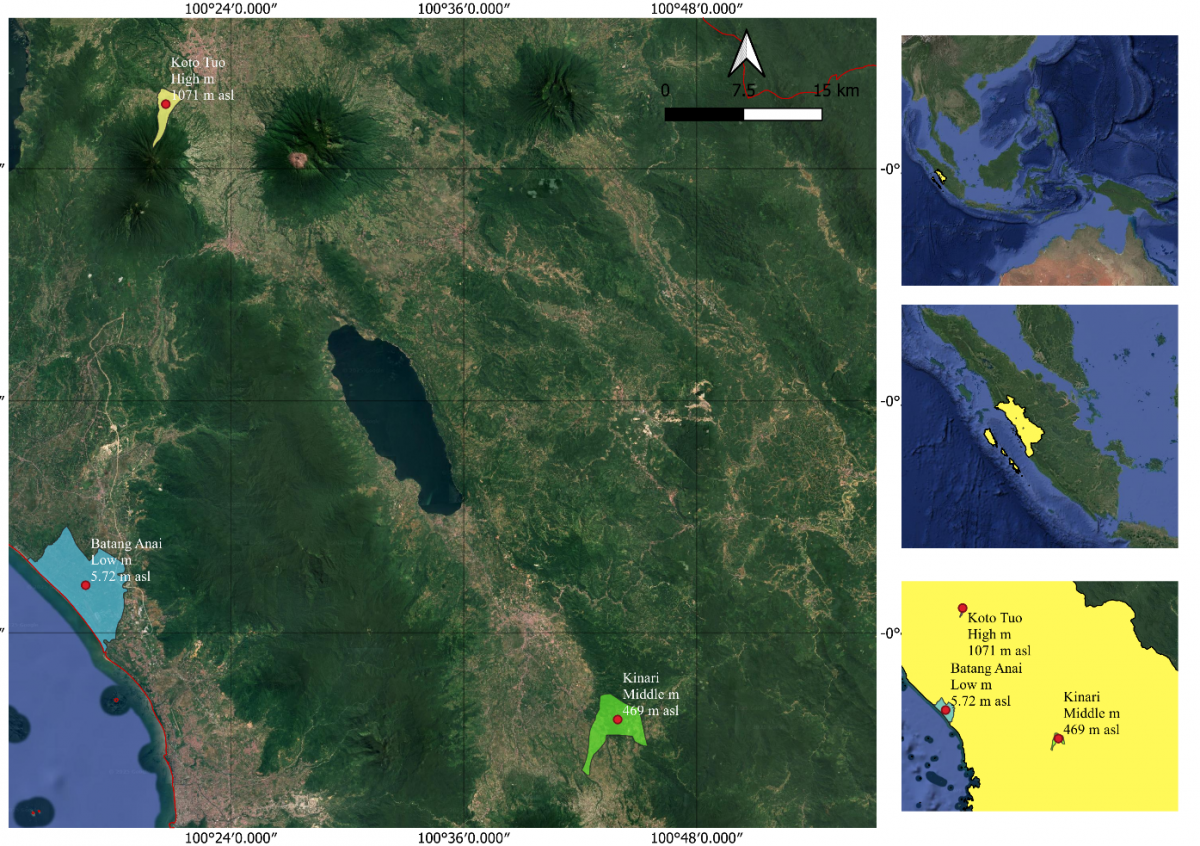
The Piper aduncum fruit was collected from three ecologically distinct altitudinal zones in West Sumatra, Indonesia (Figure 1), during the same phenological stage (the beginning of fruit ripening, indicated by yellowish inflorescences). To minimize daily fluctuations in volatile secondary metabolite content, harvesting was conducted between 7:00 and 8:00 a.m. At each location, approximately 5 kg of fresh fruit was randomly sampled from a minimum of 10 individual plants to capture intra-site phytochemical variability. Lowland samples were collected from Nagari Batang Anai, Padang Pariaman, West Sumatra, Indonesia (5.72 m a.s.l.; 0°11–049'S, 98°36–100°28'E), which is characterized by an average annual temperature of 25.1 ℃, a relative humidity (RH) of 86.75%, and an annual rainfall of 569.6 mm. The midland samples were collected from Nagari Kinari, Solok, West Sumatra, Indonesia (469 m a.s.l.; 0°32–1°46' S, 100°25–101°41' E), with an average temperature of approximately 26°C, an RH of 85–87%, and an annual rainfall of 2,098 mm. The highland samples were collected from Nagari Koto Tuo, Agam, West Sumatra, Indonesia (1,071 m a.s.l.; 0°01'34–28'43" S, 99°46'39–100°32'50" E), which is characterized by a lower average temperature (20–29 ℃), a higher RH (~88%), and a much higher annual rainfall (3,500–4,000 mm). Immediately after collection, samples were placed in sterile, tightly sealed containers and transported on ice to the Insect Bioecology Laboratory, Department of Plant Protection, Faculty of Agriculture, Andalas University, Padang, West Sumatra, Indonesia.
Figure 1. Geographic distribution of Piper aduncum sampling locations across three altitudinal zones in West Sumatra, Indonesia, representing distinct agroecological gradients characterized by contrasting climatic conditions and environmental variability
2.2 Plant material extraction
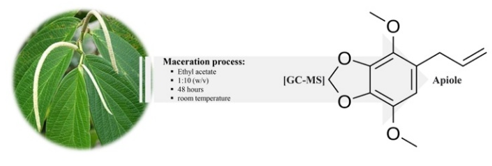
Upon arrival at the laboratory, the fruits were cut into ~1 cm segments and air-dried under ambient conditions (27 ± 2 ℃) in a shaded, well-ventilated room for 15 days to achieve constant moisture content while retaining thermolabile and volatile phenylpropanoid constituents. The dried material was ground into a fine powder using a laboratory blender (Philips HR2223/70). Extraction was carried out by maceration with 100 g of powder soaked in 1,000 mL of ethyl acetate (semi-polar solvent; Merck, analytical quality) in a ratio of 1:10 (w/v) in a closed Erlenmeyer flask for 48 hours at room temperature with periodic manual stirring. The maceration was vacuum-filtered through Whatman No. 1 filter paper 41. The filtrate was concentrated under reduced pressure using a rotary evaporator (Heidolph Laborota 4000, Germany) at 45 ℃ and 227 mbar. The P. aduncum extract was stored in amber glass vials at 4 ℃ in the dark until use.
2.3 Nanoemulsion preparation and physicochemical characterization
The nanoemulsion was prepared using a low-energy spontaneous emulsification technique. The formulation consisted of an aqueous phase (90% v/v) composed of distilled water (87% v/v) and Tween 80 (3% v/v; Sigma-Aldrich) as a nonionic surfactant, and an organic phase (10% v/v) consisting of P. aduncum extract (5% w/v) dissolved in absolute ethanol (5% v/v). The aqueous phase was homogenized at 2,500 rpm for 30 minutes using a magnetic stirrer. The organic phase was added dropwise into the aqueous phase with continuous stirring, and the mixture was further homogenized for 45 min to promote stable nanodroplet formation through interfacial turbulence and solvent diffusion. Physicochemical parameters, including mean droplet diameter (Z-average), PDI, and zeta potential, were determined using a Horiba Scientific Nano Particle Analyzer SZ-100 at the Central Laboratory of Andalas University. Three independent measurements per sample were recorded and averaged.
2.4 Insect colony maintenance
Crocidolomia pavonana starter larvae were collected from cabbage fields in West Sumatra and maintained under controlled laboratory conditions (25–27 ℃; 70–80% RH; 12L:12D photoperiod) for four generations before being used experimentally to eliminate field-derived variability. Broccoli (Brassica oleracea L. var. italica) was cultivated in a 2:1 (w/w) compost-soil mixture in polyethylene bags and served as the larval food source. Adults were reared in 50 × 50 × 50 cm mesh cages and provided with a 10% sucrose solution on absorbent cotton as a carbohydrate source. Fresh broccoli leaves in water-filled tubes served as the oviposition substrate. Egg masses were collected daily, surface-sterilized with 1% sodium hypochlorite for 60 seconds, rinsed with distilled water, and incubated in Petri dishes until hatching. Neonatal larvae were transferred to ventilated plastic containers (34 × 26 × 7 cm) filled with fresh broccoli leaves.
2.5 Bioassay design and larval mortality assessment
The insecticidal activity of Piper aduncum nanoemulsion was evaluated using a standard leaf dip bioassay against second-instar larvae of Crocidolomia pavonana. The experiment was arranged in a completely randomized design (CRD) consisting of six treatments, including five final nanoemulsion concentrations (0.16%, 0.20%, 0.24%, 0.29%, and 0.35% v/v) and a distilled water control (0% v/v), with five independent replications per treatment. The selected concentration range was determined based on preliminary dose-response tests designed to provide an estimated larval mortality range of approximately 15–90%, allowing for accurate determination of concentration-dependent insecticidal responses. Nanoemulsion treatments were prepared through serial dilutions using distilled water as the diluent. The stock volume of nanoemulsion required for each treatment concentration was calculated according to the dilution equation:
$C_1 V_1=C_2 V_2$ (1)
where, C1 is the concentration of the stock nanoemulsion (% v/v), V1 is the volume of the stock nanoemulsion used (mL), C2 is the desired final nanoemulsion concentration (% v/v), and V2 is the final volume of the diluted treatment solution (mL).
All treatment solutions were freshly prepared before bioassay application to maintain concentration consistency, while distilled water without nanoemulsion was used as a negative control. Broccoli (Brassica oleracea var. italica) leaf discs (4 × 4 cm) were prepared from fresh, healthy leaves, washed with distilled water to remove surface contaminants, and gently dried with sterile tissue paper to standardize initial humidity. Leaf discs were immersed individually in each nanoemulsion treatment solution for 30 seconds to ensure uniform coating of the leaf surface, followed by air-drying on sterile absorbent paper for 15 minutes to remove excess solution. Control leaf discs were treated using the same procedure with distilled water.
After drying, the treated leaf discs were transferred to 9-cm Petri dishes containing moistened filter paper to maintain leaf turgidity. Fifteen newly molted second-instar C. pavonana larvae were placed in each Petri dish and allowed to feed on the treated leaf discs for 48 hours under controlled environmental conditions. Surviving larvae were then transferred to fresh, untreated broccoli leaves and reared until the fourth instar to evaluate potential sublethal effects. Larval mortality, survival, and developmental responses were recorded according to a predetermined observation schedule. Larval mortality was recorded every 24 hours during the 96-hour observation period and calculated as:
$\operatorname{Mortality}(\%)=\frac{a}{A} \times 100$ (2)
where, a is the number of dead larvae, and A is the total number of exposed larvae.
When control mortality exceeded 5%, data were corrected using Abbott's formula [20]. Surviving larvae were monitored daily until pupation to record instar duration based on observed molt events. Pupae were weighed individually using an analytical balance (Mettler Toledo ME204) three days after pupation to assess the effect of the treatment on pupal biomass.
2.6 Antifeedant activity
Antifeedant activity was measured in a no-choice feeding assay. The leaf area consumed was measured by placing treated leaf discs on millimeter graph paper and recording the area consumed before and after a 48-hour feeding period. The antifeedant index (AI) was calculated using the equation [21]:
$A I(\%)=\frac{B_k-B_p}{B_k} \times 100$ (3)
where, Bk is the leaf area consumed by the control group (cm²), and Bp is the leaf area consumed by the treatment group (cm²).
2.7 Phytochemical analysis by Gas Chromatography–Mass Spectrometry
The chemical composition of the extract-based nanoemulsion of P. aduncum was determined by Gas Chromatography–Mass Spectrometry (GC–MS) using an Agilent 7890A gas chromatograph equipped with a 5975C mass-selective detector (Agilent Technologies, USA) and an Agilent ChemStation data system. Separation was achieved on an HP-5MS Ultra 2 capillary column (30 m × 0.20 mm i.d. × 0.33 μm film thickness). The injection volume was 5 μL in splitless mode; the injector temperature was 250 ℃. The oven temperature program was: initial temperature 80 ℃ (held for 2 min), increased at 10 ℃ min⁻1 to 280 ℃ (held for 5 min). Helium was used as the carrier gas at a constant flow rate of 1.0 mL min⁻1. Mass spectra were acquired in electron ionization (EI) mode at 70 eV. Compound identification was performed by comparing retention indices and mass spectra with the NIST 2017 Mass Spectrum Library (match quality ≥80%). Relative compound abundances were expressed as a percentage of the total ion chromatogram (TIC) peak area. All analyses were conducted at the Jakarta Regional Health Laboratory, Indonesia.
2.8 Data analysis
All quantitative bioassay parameters (larval development duration, pupal weight, and antifeedant activity) were analyzed using one-way analysis of variance (ANOVA). If the ANOVA showed a statistically significant difference (p < 0.05), means were separated using Fisher's Least Significant Difference (LSD) test at α = 0.05, implemented in SPSS Statistics v.26 (IBM Corp.). Larval mortality data were analyzed using probit to estimate lethal concentrations (LC₅₀ and LC₉₅) with 95% confidence intervals, using POLO Plus v.1.0 (LeOra Software). Pearson correlation coefficients (r) were calculated to measure the relationship between apiole content and LC₅₀ values across different elevation populations. Geospatial representations of sampling locations were created in QGIS v.3.44.0.
3.1 Phytochemical composition of Piper aduncum fruit extracts by Gas Chromatography–Mass Spectrometry
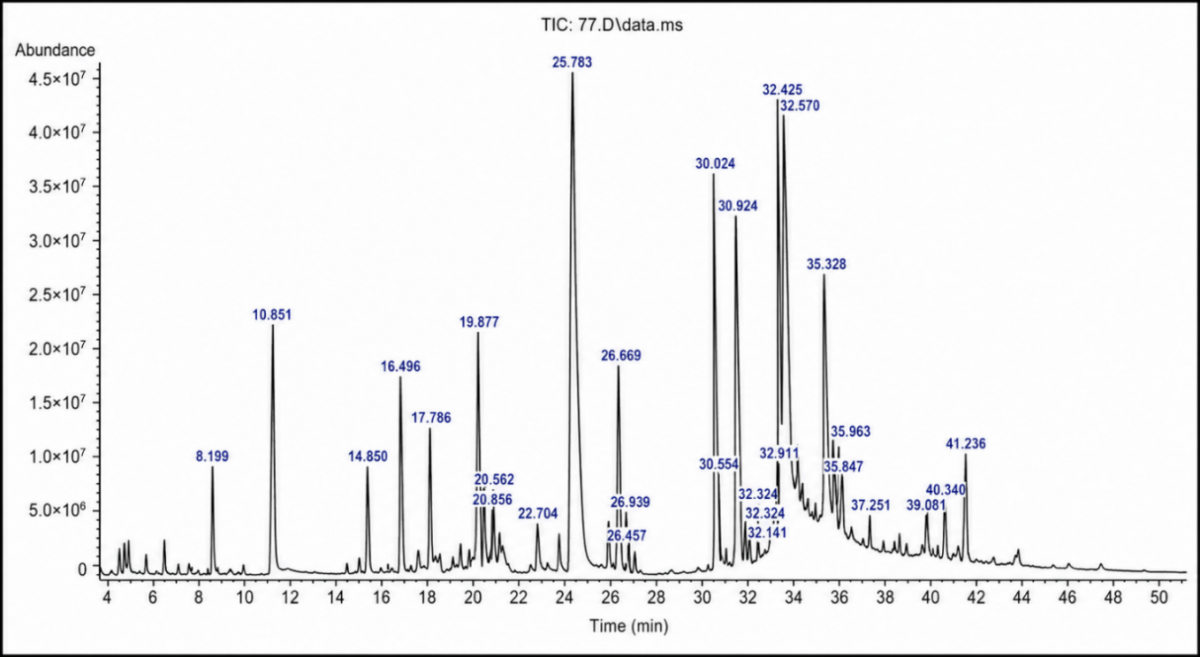
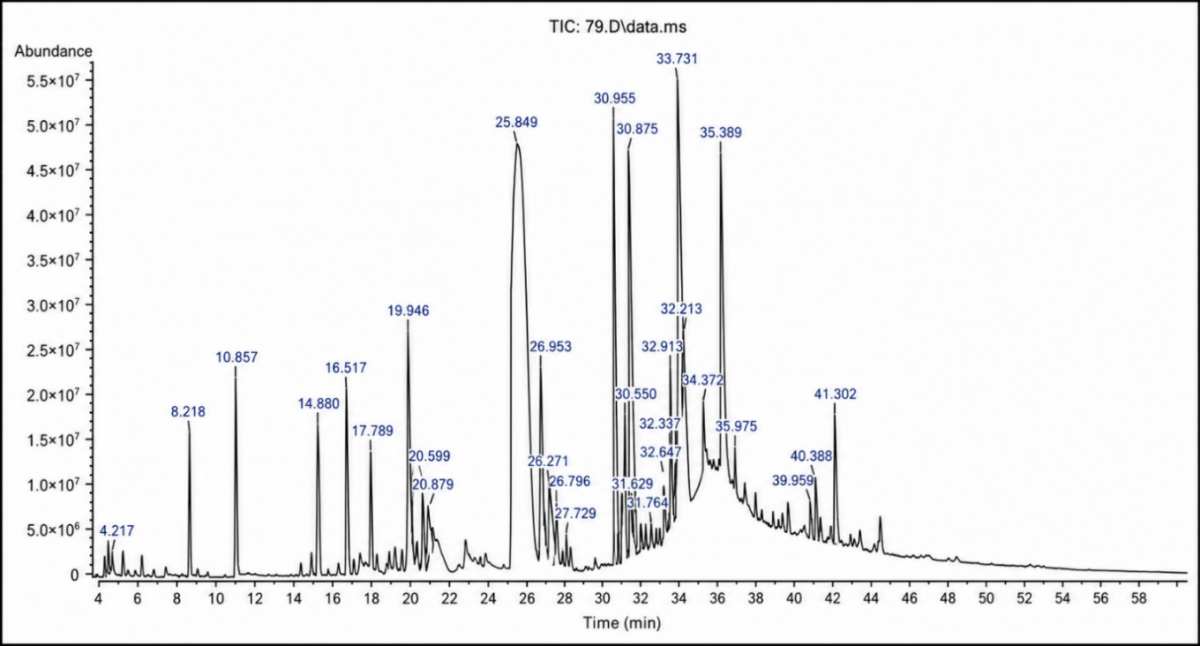
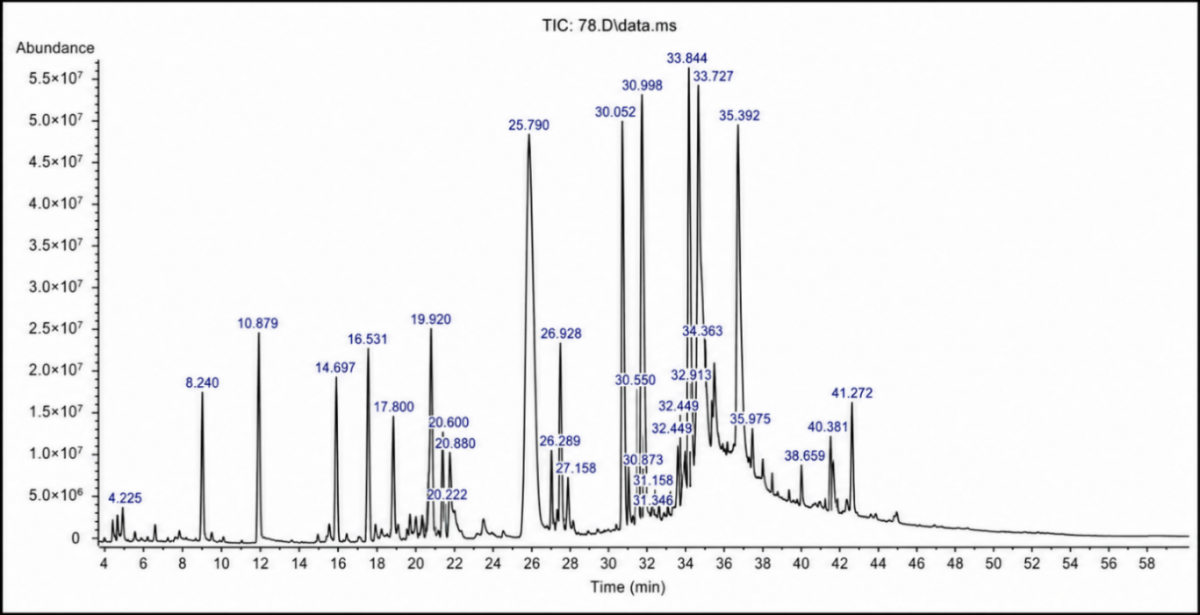
The GC–MS analysis of Piper aduncum fruit extracts from three altitudinal populations in West Sumatra, Indonesia, identified a total of 38 secondary metabolites, and the active compounds were not standardized (Table 1 and Figure 2). Apiole (retention time: 25.786 min) was the dominant bioactive constituent in all accessions, with relative abundances of 53.50%, 49.32%, and 45.18% in the highland (1,071 m a.s.l.), midland (469 m a.s.l.), and lowland (5.72 m a.s.l.) populations, respectively.
Table 1. Relative abundance of selected secondary metabolites identified by Gas Chromatography–Mass Spectrometry (GC–MS) in Piper aduncum fruit extracts from three altitudinal zones in West Sumatra, Indonesia
|
RT (min) |
Compound |
Highland (1,071 m a.s.l.) |
Midland (469 m a.s.l.) |
Lowland (5.72 m a.s.l.) |
|
% |
||||
|
4.218 |
1,3-Cyclohexadiene |
— |
0.20 |
0.19 |
|
8.196 |
Terpinen-4-ol |
0.71 |
0.85 |
1.00 |
|
10.851 |
3-Methyl-6-(1-methylethyl)-2-cyclohexen-1-one |
3.42 |
2.23 |
2.31 |
|
14.850 |
Copaene |
0.78 |
0.94 |
1.14 |
|
16.498 |
β-Caryophyllene |
1.87 |
1.49 |
1.66 |
|
17.788 |
Humulene |
1.16 |
0.72 |
0.88 |
|
19.877 |
Pentadecane |
3.40 |
3.40 |
2.82 |
|
20.139 |
α-Farnesene |
0.70 |
— |
— |
|
20.560 |
Naphthalene |
0.58 |
0.57 |
0.69 |
|
20.856 |
Myristicin |
1.07 |
0.97 |
3.60 |
|
22.704 |
Caryophyllene oxide |
0.73 |
— |
— |
|
25.786 |
Apiole* |
53.50 |
49.32 |
45.18 |
|
26.455 |
8-Heptadecene |
0.32 |
0.33 |
— |
|
26.669 |
9-Cyanophenanthrene |
2.04 |
1.82 |
2.02 |
|
26.938 |
Apiole (isomer) |
0.31 |
0.44 |
0.36 |
|
30.027–30.054 |
4-(Diethylamino)benzonitrile / Crotophene |
2.99 |
3.33 |
2.98 |
|
32.330 |
Phenol derivatives |
0.28 |
3.26 |
6.02 |
|
33.668 |
Silane (TMS derivative) |
10.69 |
13.27 |
— |
|
33.730 |
3-Methyl-1-phenyl-2-azafluorene |
— |
— |
12.06 |
|
36.000–41.239 |
Sterols (γ-sitosterol, stigmasterol, campesterol) |
2.21 |
2.42 |
2.11 |
Note: asterisk (*) denotes the dominant bioactive compound; (—) = not detected; RT = retention time; m a.s.l. = metres above sea level.
This positive monotonic relationship between altitude and apiole content indicates a strong chemotypic gradient, reflecting a 18.4% increase in apiole abundance from the lowest to the highest altitude. Two additional phenylpropanoids were detected at lower abundances: myristicin (0.97–3.60%) and β-caryophyllene (1.49–1.87%). Interestingly, myristicin showed the opposite altitudinal trend, reaching its highest relative abundance in lowland samples (3.60%), while β-caryophyllene did not show a consistent gradient across populations. Minor compounds included pentadecane (2.82–3.40%), trimethylsilyl (TMS) silane derivatives (10.69–13.27% only in highland and midland populations), 9-cyanophenanthrene (1.82–2.04%), and sterols consisting of γ-sitosterol, stigmasterol, and campesterol (2.11–2.42%). Phenolic derivatives were significantly more abundant in lowland extracts (6.02%) than in highland (0.28%) and midland (3.26%) populations. This study provides the first systematic evidence linking altitudinal gradients to chemotype differentiation and nano-bioinsecticide efficacy on P. aduncum from West Sumatra, Indonesia. Highland accessions (1,071 m a.s.l.) accumulated significantly higher apiole concentrations (53.50%) compared to lowland populations (45.18%), resulting in nanoemulsions that were approximately 37% more potent in terms of LC₅₀. This finding is consistent with the established ecological principle that abiotic stress at high altitudes promotes increased biosynthesis of plant secondary metabolites [22]. Similar altitudinal chemotype gradients have been documented in Piper nigrum from West Sumatra, where highland accessions (1,134 m a.s.l.) showed significantly increased alkaloid and flavonoid accumulation relative to lowland populations, and in Hypericum perforatum, where hypericin content increased 4.5-fold under lower temperature conditions. The observed chemotypic differences cannot be attributed solely to altitude; temperature, UV-B radiation, and precipitation are co-varying factors that likely contribute to the observed patterns. Future studies with controlled environmental conditions are required to disentangle these variables.
The mechanistic basis for altitude-driven apiole enrichment involves convergent regulatory effects on phenylpropanoid metabolism (Figure 3). At higher altitudes, decreasing ambient temperature increases the catalytic activity of phenylalanine ammonia lyase (PAL), the key gateway enzyme of the phenylpropanoid pathway, and promotes downstream methylation reactions mediated by OMT [23], which converts early pathway intermediates to apioles through sequential aromatic ring modifications [24, 25]. Concurrently, increased UV-B radiation at higher altitudes stimulates the formation of reactive oxygen species (ROS), which activate antioxidant enzyme cascades and induce phenolic biosynthesis as a UV-filtering strategy and a general stress response [26]. The inverse altitudinal gradient of myristicin, highest in lowland populations (3.60%) and lowest in highland populations (1.07%), likely reflects competitive metabolic flux at a shared enzymatic branch point in the methylenedioxyphenylpropanoid biosynthesis network, where low-temperature OMT activation favors the intermediate pathway to apiole over myristicin. The complete absence of dillapiol in the three West Sumatran accessions confirms that these populations belong to an apiole-dominant chemotype, distinct from the dillapiol-dominant and mixed chemotypes prevalent in Brazilian and some Southeast Asian populations [27]. The regional consistency of this chemotype suggests that OMT enzyme specificity is governed by the genetic background of P. aduncum West Sumatra and likely reinforced by local environmental selection pressures that reliably direct biosynthetic flux toward apiol, despite quantitative variation induced by altitude. From a biopesticide development perspective, this chemotype predictability provides a stable biochemical basis on which altitude-based origin selection strategies can be reliably implemented.
Figure 3. Chemical structure of apiole (chemical formula = C12H14O4; molar mass = 222.23 g mol-1, and density = 1.15 g mL-1) in Piper aduncum fruit extracts from three altitudinal zones in West Sumatra, Indonesia
3.2 Physicochemical characterization of nanoemulsions
Physicochemical characterization confirmed successful nanoemulsion formation for all three P. aduncum accessions (Table 2). Average droplet diameters ranged from 98.4 to 112.3 nm, consistent with operationally defined nanoemulsion size criteria (<200 nm). PDI values were below 0.25 for all formulations (0.18–0.24), indicating narrow size distribution and monodispersity. Zeta potential values ranged from -31.4 to -35.2 mV, universally exceeding the -30 mV threshold, indicating adequate electrostatic repulsion. All formulations exhibited near-neutral pH (6.8–7.0), reflecting compatibility with the surface chemistry of cruciferous leaf waxes. Nanoemulsions derived from the highland region exhibited the smallest average droplet diameter (98.4 ± 3.2 nm) and the most negative zeta potential (-35.2 ± 1.4 mV), suggesting that the high phenylpropanoid content in the highland extract, particularly apiole, modulates the interfacial layer properties during high-energy emulsification. The amphiphilic character of apiole, caused by its methylenedioxy and methoxy functionalities, likely enhances surfactant packing at the oil-water interface, thereby reducing droplet size and increasing surface charge density. These physicochemical differences, although modest, have practical implications for formulation stability, bioavailability, and cuticle penetration efficiency in field applications.
Table 2. Physicochemical properties of Piper aduncum nanoemulsions prepared from plant materials collected at three altitudinal zones in West Sumatra, Indonesia
|
Parameters |
Highland (1,071 m a.s.l.) |
Midland (469 m a.s.l.) |
Lowland (5.72 m a.s.l.) |
|
Mean droplet diameter (nm) |
98.4 ± 3.2 |
104.7 ± 4.1 |
112.3 ± 5.6 |
|
PDI |
0.18 ± 0.02 |
0.21 ± 0.03 |
0.24 ± 0.02 |
|
Zeta potential (mV) |
−35.2 ± 1.4 |
−33.6 ± 1.8 |
−31.4 ± 2.1 |
|
pH |
6.8 ± 0.1 |
6.9 ± 0.1 |
7.0 ± 0.2 |
Note: PDI = Polydispersity index; m a.s.l. = metres above sea level, and values represent means ± standard deviation (SD) (n = 3 samples).
The superior insecticidal potency of highland nanoemulsions against C. pavonana larvae is mechanistically consistent with the co-existing apiole and phenylpropanoid mechanisms of action. Apiole functions primarily as an inhibitor of CYP-mediated detoxification enzymes, thereby impairing the metabolic clearance of co-existing minor bioactives and increasing the net toxicity of extract-based nanoemulsion, an effect analogous to the synergistic interaction documented between dillapiol and pyrethroids in other Piper-derived formulations. The minor component myristicin exerts complementary neurotoxic effects through inhibition of AChE and carboxylesterase (CarE), inducing neuronal hyperexcitation and motor dysfunction, while β-caryophyllene contributes to contact toxicity and insect cannabinoid-like receptor agonism [9].
The steeper probit regression slope for the highland formulation (b = 7.42 ± 1.69) compared to the lowland formulation (b = 5.52 ± 1.59) indicates a narrower effective concentration range and a more uniform physiological response at the population level, a pattern characteristic of formulations where a single dominant mechanism of action governs mortality, consistent with the higher apiole content focusing toxicological activity on the CYP inhibitor target. The current LC₅₀ value of 0.18% for the highland nanoemulsion compares favorably with the 0.24% reported for an extract-based nanoemulsion of P. aduncum against Plutella xylostella and with recent findings on nanoemulsion-enhanced biopesticides. The advantages of nanoemulsion formulations that work through increased droplet surface area, enhanced cuticular dissolution, and enhanced transcutaneous bioavailability substantially reduce the minimum effective dose relative to contact-applied bulk or powder emulsions, directly resulting in lower field application rates and reduced environmental burden.
3.3 Insecticidal activity and probit analysis against Crocidolomia pavonana larvae
The C. pavonana larval mortality increased proportionally with nanoemulsion concentration and was significantly affected by P. aduncum altitude (Table 3). Probit analysis confirmed statistically significant and altitude-dependent differences in insecticidal potency, as evidenced by non-overlapping 95% confidence intervals for LC₅₀ values. The highland nanoemulsion showed the lowest LC₅₀ of 0.18% (95% CI: 0.12–0.21), reflecting the highest insecticidal activity. In comparison, the midland and lowland formulations showed 44% and 58% lower potency, with LC₅₀ values of 0.26% (95% CI: 0.23–0.31) and 0.29% (95% CI: 0.25–0.36), respectively. LC₉₅ values followed the same altitude ranking: 0.58% (highland), 0.73% (midland), and 0.82% (lowland). The probit regression slope (b) also decreased with altitude: 7.42 ± 1.69 (highland), 6.38 ± 1.61 (midland), and 5.52 ± 1.59 (lowland), indicating that the dose-response curve was steepest for the most bioactive formulation, a pattern consistent with greater homogeneity of pharmacological targets at the higher apiole concentrations found in the highland extract. At a supra-LC₅₀ concentration of 0.35%, 96-hour cumulative mortality reached 80.0%, 62.7%, and 56.0% for the highland, midland, and lowland nanoemulsions, respectively. Further Pearson correlation analysis revealed a strong inverse relationship between apiole content and LC₅₀ (r = −0.94, p < 0.05), which confirms that phenylpropanoid enrichment at higher altitudes is conducive to insecticidal potential.
Table 3. Probit analysis parameters and lethal concentration (LC) values for Piper aduncum nanoemulsions from three altitudinal populations against second-instar Crocidolomia pavonana larvae
|
Population |
Slope (b ± SE) |
LC₅₀ % (95% CI) |
LC₉₅ % (95% CI) |
Apiole (%) |
|
Highland (1,071 m a.s.l.) |
7.42 ± 1.69 |
0.18 (0.12–0.21) |
0.58 (0.47–0.86) |
53.50 |
|
Midland (469 m a.s.l.) |
6.38 ± 1.61 |
0.26 (0.23–0.31) |
0.73 (0.57–1.19) |
49.32 |
|
Lowland (5.72 m a.s.l.) |
5.52 ± 1.59 |
0.29 (0.25–0.36) |
0.82 (0.61–1.57) |
45.18 |
Note: CI = confidence interval; Apiole (%) = relative abundance by GC–MS; b = regression slope; SE = standard error; m a.s.l. = metres above sea level.
The concentration-dependent extension of larval development duration (up to +2.30 days at 0.35%; p < 0.001) and reduction in pupal biomass (up to 48.9%) across all populations are consistent with the established sublethal mechanism of phenylpropanoid action on insect endocrinology and intermediary metabolism. At sublethal doses, phenylpropanoids disrupt the hormonal cascade that regulates ecdysis and larval metamorphosis by suppressing ecdysone and juvenile hormone titers and by disrupting the activity of chitin synthase, an enzyme responsible for depositing the cuticular matrix during each larval molt [28]. This hormonal disruption prolongs the inter-molt interval and creates a developmental delay disproportionate to the concentration-mediated reduction in feeding.
The energetic cost of xenobiotic detoxification is a secondary mechanism for pupal biomass reduction. Larvae exposed to sublethal concentrations of phenylpropanoids divert metabolic resources from somatic growth toward Phase I and Phase II detoxification pathways, depleting lipid and protein reserves that would otherwise have been accumulated during the final larval instar for adult development [29, 30]. The convergence of reduced nutrient intake mediated by antifeedant activity with increased metabolic expenditure creates a dual biomass depletion mechanism culminating in energetically compromised pupae. Importantly, both larval development duration and pupal biomass were concentration-dependent but not altitude-dependent (p > 0.05), suggesting that this sublethal endpoint operates through a mechanism activated by a minimum threshold concentration attainable across all altitude populations, unlike the graded lethal response driven by apiole quantity.
The ecological implications of these sublethal effects extend beyond their direct impact on individual larvae. Smaller, energetically compromised pupae are associated with reduced adult emergence rates, reduced lifespan to adulthood, reduced fecundity, and altered sex ratios in lepidopteran populations [31]. These fitness penalties propagate across generations, reinforcing the pest management benefits of sublethal nanoemulsion exposure beyond the direct mortality measured in laboratory bioassays. From an IPM perspective, the combination of direct larval toxicity, developmental disruption, and antifeedant activity represents a multimodal suppression profile that reduces the likelihood of resistance development through any single mechanism.
3.4 Effects on Crocidolomia pavonana larval development duration
Exposure to P. aduncum nanoemulsion at all tested concentrations significantly prolonged the larval development period (2nd–4th instar) of C. pavonana compared to the untreated control (F₅,₂₄ = 47.3–52.1, p < 0.001). The control group showed an average larval duration of 4.02–4.05 days. At the highest sublethal concentration evaluated (0.35%), larval development was extended to 6.22 ± 0.44 days (highland), 6.17 ± 0.52 days (midland), and 6.35 ± 0.48 days (lowland), indicating an increase of 2.20, 2.12, and 2.30 days, respectively, compared to the control. The 0.29% and 0.35% concentrations were not significantly different from each other within each population group (same letter designations in Table 4), indicating an asymptotic threshold effect of bioactive compound exposure on larval developmental delay. Importantly, P. aduncum altitude had no statistically significant effect on larval developmental duration (p > 0.05), despite having a substantial effect on insecticidal potency. This separation suggests that developmental disruption operates through a concentration-threshold pathway activated even by the lower apiole content of the lowland formulation, in contrast to the lethal response that is graded by altitude [32]. This mechanistic separation between sublethal growth disruption and acute toxicity has important implications for understanding the pharmacodynamics of phenylpropanoids delivered via nanoemulsion [33].
Table 4. Duration of larval development of Crocidolomia pavonana following exposure to Piper aduncum nanoemulsions from three altitudinal populations
|
Concentration (%) |
Highland (1,071 m a.s.l.) |
Midland (469 m a.s.l.) |
Lowland (5.72 m a.s.l.) |
|
2nd–4th Instar, Days |
|||
|
0.00 (Control) |
4.02 ± 0.13 (75) a |
4.05 ± 0.22 (75) a |
4.05 ± 0.22 (75) a |
|
0.16 |
4.25 ± 0.43 (40) b |
4.35 ± 0.48 (50) b |
4.35 ± 0.47 (51) b |
|
0.20 |
5.03 ± 0.54 (35) c |
5.23 ± 0.62 (45) c |
5.27 ± 0.63 (47) c |
|
0.24 |
5.61 ± 0.49 (28) d |
5.54 ± 0.50 (40) d |
5.66 ± 0.47 (42) d |
|
0.29 |
6.08 ± 0.49 (25) e |
6.12 ± 0.52 (34) e |
6.21 ± 0.56 (35) e |
|
0.35 |
6.22 ± 0.44 (15) e |
6.17 ± 0.52 (28) e |
6.35 ± 0.48 (33) e |
Note: Different letters within each column indicate significant differences (Least Significant Difference (LSD) test, p < 0.05); () = live larvae, m a.s.l. = metres above sea level, and values represent means ± standard deviation (SD).
3.5 Effects on Crocidolomia pavonana pupal biomass
Pupal weight generally declined at the higher nanoemulsion concentrations, although the response was not strictly monotonic at the lower and intermediate concentrations (Table 5). Control pupae had an average weight of 0.045 ± 0.002 g. At the maximum concentration tested (0.35%), pupal weight was reduced to 0.025 ± 0.006 g (highland), 0.023 ± 0.006 g (midland), and 0.024 ± 0.006 g (lowland), representing reductions of 44.4%, 48.9%, and 46.7%, respectively, compared to the control. Post hoc comparisons identified that the 0.29% and 0.35% differed significantly from the lower concentration and the control, while differences in concentrations among the altitude populations were not significant. This pattern of concentration thresholds, which mirrors the pattern observed for larval duration, suggests that both developmental endpoints are governed by equivalent bioactive compound thresholds despite subtle differences in apiole concentrations among altitude populations [32].
Table 5. Pupal weight of Crocidolomia pavonana reared on broccoli leaves treated with Piper aduncum nanoemulsions from three altitudinal populations
|
Concentration (%) |
Highland (1,071 m a.s.l.) |
Midland (469 m a.s.l.) |
Lowland (5.72 m a.s.l.) |
|
g |
|||
|
0.00 (Control) |
0.045 ± 0.002 (75) a |
0.045 ± 0.002 (75) a |
0.045 ± 0.002 (75) a |
|
0.16 |
0.043 ± 0.001 (40) a |
0.038 ± 0.007 (50) b |
0.033 ± 0.010 (51) b |
|
0.20 |
0.038 ± 0.003 (35) b |
0.035 ± 0.005 (45) b |
0.036 ± 0.003 (47) b |
|
0.24 |
0.038 ± 0.002 (28) b |
0.038 ± 0.002 (40) b |
0.031 ± 0.010 (42) bc |
|
0.29 |
0.029 ± 0.005 (25) c |
0.027 ± 0.006 (34) c |
0.026 ± 0.005 (35) c |
|
0.35 |
0.025 ± 0.006 (15) d |
0.023 ± 0.006 (28) c |
0.024 ± 0.006 (33) d |
Note: Different letters within each column indicate significant differences (Least Significant Difference (LSD) test, p < 0.05); () = live larvae, m a.s.l. = metres above sea level, and values represent means ± standard deviation (SD).
The magnitude of the reduction in pupal weight (~45–49%) carries significant ecological implications, as reduced pupal reserves are associated with reduced adult emergence, reduced reproductive output, and suppressed growth rates of C. pavonana populations in field environments.
3.6 Effects on Crocidolomia pavonana antifeedant activity
The potent antifeedant activity elicited by P. aduncum nanoemulsions (up to 76.99% at 0.35%) acts through the disruption of gustatory receptor neurons in the insect's peripheral nervous system, specifically repellent receptor cells that, upon activation by phenylpropanoid ligands, suppress the feeding control center via inhibitory interneurons. The steep concentration response in antifeedant activity from approximately 25–30% at 0.16–0.20% to 67–77% at 0.29–0.35% reflects the observed concentration threshold for lethal activity, suggesting that the apiole-rich matrix responsible for the increased toxicity also provides high repellent power through direct sensory stimulation at the larval mouthparts–leaf surface interface.
Antifeedant activity increased with concentration in all three formulations. At 0.35%, the numerical AI values were 73.65%, 75.21%, and 76.99% for the highland, midland, and lowland formulations, respectively (Table 6). Comparable antifeedant indices have been reported for the apiole-rich ethyl acetate extract of Piper dillatatum against Myzus persicae (AI = 84.4%) and Rhopalosiphum padi (AI = 98.9%), confirming the broad antifeedant spectrum of apiole-type phenylpropanoids in various insect orders. This antifeedant mechanism is agriculturally significant because it reduces the volume of bioactive compounds required for effective plant protection and minimizes the possibility of accumulation of phytotoxic residues, thereby expanding the window of selectivity for application in systems with the goal of natural enemy conservation [34, 35].
From an applied perspective, the current findings establish a provenance-based selection strategy for botanical biopesticide development: plant material should be sourced from upland populations, specifically those above 1,000 m a.s.l. in the West Sumatra highlands, to maximize apiole content, insecticidal efficacy, and antifeedant potential. The 37.90% increase in LC₅₀ from lowland to upland accessions directly translates into proportionally lower field application rates, lower formulation costs, and a smaller ecological footprint per treatment cycle.
Table 6. Antifeedant index (AI) and mean leaf area consumed by Crocidolomia pavonana second-instar larvae exposed to Piper aduncum nanoemulsions from three altitudinal populations
|
Concentration (%) |
Highland (1,071 m a.s.l.) |
Midland (469 m a.s.l.) |
Lowland (5.72 m a.s.l.) |
|||
|
Leaf Area (cm²) |
AI (%) |
Leaf Area (cm²) |
AI (%) |
Leaf Area (cm²) |
AI (%) |
|
|
0.00 (Control) |
2.54 ± 0.09 a |
— |
2.54 ± 0.09 a |
— |
2.54 ± 0.09 a |
— |
|
0.16 |
1.84 ± 0.10 b |
27.55 a |
1.89 ± 0.10 b |
25.30 a |
1.84 ± 0.10 b |
27.55 a |
|
0.20 |
1.79 ± 0.08 b |
29.53 a |
1.76 ± 0.03 b |
30.37 a |
1.81 ± 0.06 b |
28.46 a |
|
0.24 |
1.38 ± 0.06 c |
45.42 b |
1.38 ± 0.06 c |
45.42 b |
1.35 ± 0.08 c |
46.77 b |
|
0.29 |
0.82 ± 0.11 d |
67.62 c |
0.77 ± 0.11 d |
69.68 c |
0.78 ± 0.10 d |
69.20 c |
|
0.35 |
0.67 ± 0.15 d |
73.65 c |
0.63 ± 0.10 e |
75.21 d |
0.59 ± 0.09 e |
76.99 d |
Note: Different letters within each column indicate significant differences (Least Significant Difference (LSD) test, p < 0.05); AI = antifeedant index; (—) = not calculated for control; m a.s.l. = metres above sea level, and values represent means ± standard deviation (SD).
Altitude gradient significantly affected the phytochemical composition and nano-bioinsecticidal activity of P. aduncum in West Sumatra, Indonesia. The GC–MS analysis confirmed apiole as the dominant phenylpropanoid in all populations, with highland accessions (1,071 m a.s.l.) accumulating the highest apiole content (53.50%), followed by midland (49.32%) and lowland (45.18%) populations. A strong negative correlation (r = -0.94) between apiole abundance and LC₅₀ values suggests a causal relationship between altitude-induced chemotypic enrichment and increased insecticidal potency. The highland-derived nanoemulsion exhibited the lowest LC₅₀ (0.183%, 95% CI: 0.124–0.214%) and the antifeedant activity (73.65% at 0.35%), along with significant sublethal effects including prolonged larval development (+2.20 days) and reduced pupal biomass (-44.4%) at 0.35%. These findings provide preliminary evidence supporting the potential of P. aduncum nanoemulsions as botanical insecticide candidates and warrant further investigation into the bioefficacy, mechanism of action, and performance of the formulations under more complex experimental conditions.
This research was self-funded by the authors. The authors sincerely acknowledge the assistance of their students in collecting field samples from three different altitudinal locations in West Sumatra, Indonesia, as well as their support during the preparation of this manuscript.
[1] Zhang, X., Jia, Q., Jia, X., et al. (2024). Brassica vegetables-an undervalued nutritional goldmine. Horticulture Research, 12(2): uhae302. https://doi.org/10.1093/hr/uhae302
[2] Ricar, W., Yunisman, Y., Darnetty, D. (2020). The effect of dishwashing detergent on crop caterpillar, crocidolomia pavonana fabricius (Lepidoptera: Crambidae): English. Jurnal Proteksi Tanaman (Journal of Plant Protection), 4(2): 91-98. https://doi.org/10.25077/jpt.4.2.91-98.2020
[3] Vermelho, A.B., Moreira, J.V., Akamine, I.T., Cardoso, V.S., Mansoldo, F.R. (2024). Agricultural pest management: The role of microorganisms in biopesticides and soil bioremediation. Plants, 13(19): 2762. https://doi.org/10.3390/plants13192762
[4] Andreazza, F., Oliveira, E.E., Martins, G.F. (2021). Implications of sublethal insecticide exposure and the development of resistance on mosquito physiology, behavior, and pathogen transmission. Insects, 12(10): 917. https://doi.org/10.3390/insects12100917
[5] Lankin-Vega, G., San-Blas, E., Hogendoorn, K., Keller, M. (2022). The combined foraging of a parasitoid and a predatory bug enhances mortality of Plutella xylostella larvae. Entomologia Experimentalis et Applicata, 170(9): 812-820. https://doi.org/10.1111/eea.13206
[6] Mitra, S., Verma, R., Singh, A., Saran, R.K., Lazar, S. (2026). Pesticide remediation in soil and aquatic systems: Comparative assessment of conventional and advanced treatment pathways. Next Sustainability, 7: 100281. https://doi.org/10.1016/j.nxsust.2026.100281
[7] Godlewska, K., Ronga, D., Michalak, I. (2021). Plant extracts-importance in sustainable agriculture. Italian Journal of Agronomy, 16(2): 1851. https://doi.org/10.4081/ija.2021.1851
[8] Liu, S., Carballo-Arce, A.F., Wang, Z., et al. (2026). Evaluation of novel dillapiol analogs as insect detoxification enzyme inhibitors and insecticide synergists. Insects, 17(3): 351. https://doi.org/10.3390/insects17030351
[9] Seneme, E.F., Dos Santos, D.C., Silva, E.M.R., Franco, Y.E.M., Longato, G.B. (2021). Pharmacological and therapeutic potential of myristicin: A literature review. Molecules, 26(19): 5914. https://doi.org/10.3390/molecules26195914
[10] Padmanaba, M., Sheil, D. (2014). Spread of the invasive alien species Piper aduncum via logging roads in Borneo. Tropical Conservation Science, 7(1): 35-44. https://doi.org/10.1177/194008291400700108
[11] Kumalasari, L., Sulyanti, E., Hamid, H. (2018). Activity of parts of the forest betel plant (Piper aduncum Linnaeus) originating from different locations in suppressing the growth of Colletotrichum gloeosporioides in vitro. Jurnal Proteksi Tanaman (Journal of Plant Protection), 2(1): 18-27. https://doi.org/10.25077/jpt.2.1.18-27.2018
[12] Ruiz-Vásquez, L., Andrés Yeves, M.F., Vela Mendoza, M.D.J., et al. (2026). Apiol-rich and caryophyllene-oxygenated essential oils from Amazonian Piper species as dual-action biopesticides: Broad-spectrum and selective antifeedant. Molecules, 31(12): 2177. https://doi.org/10.3390/molecules31122177
[13] Potzernheim, M.C., Bizzo, H.R., Silva, J.P., Vieira, R.F. (2012). Chemical characterization of essential oil constituents of four populations of Piper aduncum L. from Distrito Federal, Brazil. Biochemical Systematics and Ecology, 42: 25-31. https://doi.org/10.1016/j.bse.2011.12.025
[14] He, Y., Zhang, Y., Li, J., et al. (2024). Transcriptome dynamics in Artemisia annua provides new insights into cold adaptation and de-adaptation. Frontiers in Plant Science, 15: 1412416. https://doi.org/10.3389/fpls.2024.1412416
[15] Fitri, Y., Akmal, M., Khairan, K., Zahrial Helmi, T. (2025). Black pepper (Piper nigrum) at different altitudes in Aceh Province, Indonesia: Phytochemical profile and extract characterisation. IOP Conference Series: Earth and Environmental Science, 1510(1): 012023. https://doi.org/10.1088/1755-1315/1510/1/012023
[16] Soares, A.P., Zocolo, G.J., Bueno, A.D.F. (2026). The overlooked impact of botanical pesticides on non-target organisms. Plants, 15(6): 917. https://doi.org/10.3390/plants15060917
[17] Preeti, Sambhakar, S., Malik, R., et al. (2023). Nanoemulsion: An emerging novel technology for improving the bioavailability of drugs. Scientifica, 2023(1): 6640103. https://doi.org/10.1155/2023/6640103
[18] Oliveira, J.A., Figueiredo, K.G., Fernandes, L.A., et al. (2026). Toxicity of nanoemulsified Eugenia uniflora (Myrtaceae) essential oil to Spodoptera frugiperda (Lepidoptera: Noctuidae) and selectivity to Trichogramma pretiosum (Hymenoptera: Trichogrammatidae). Plants, 15(2): 248. https://doi.org/10.3390/plants15020248
[19] Afriyanita, A., Lina, E.C., Darnetty, D. (2019). Insecticidal activity of a mixture of water extract of piper aduncum fruit and Tephrosia vogelii leaves against Crocidolomia pavonana Fabricius (Lepidoptera: Crambidae). Jurnal Proteksi Tanaman (Journal of Plant Protection), 3(1): 34-46. https://doi.org/10.25077/jpt.3.1.34-46.2019
[20] Abbott, W.S. (1925). A method of computing the effectiveness of an insecticide. Journal of Economic Entomology, 18(2): 265-267. https://doi.org/10.1093/jee/18.2.265a
[21] Evelyn, M.N., Edgar, P.N., Soledad, Q.C., Carlos, C.A., Alejandro, M.V., Julio, A.E. (2024). Insecticidal, antifeedant and acetylcholinesterase inhibitory activity of sesquiterpenoids derived from eudesmane, their molecular docking and QSAR. Pesticide Biochemistry and Physiology, 201: 105841. https://doi.org/10.1016/j.pestbp.2024.105841
[22] Qaderi, M.M., Martel, A.B., Strugnell, C.A. (2023). Environmental factors regulate plant secondary metabolites. Plants, 12(3): 447. https://doi.org/10.3390/plants12030447
[23] Pan, L., Yang, N., Sui, Y., et al. (2023). Altitudinal variation on metabolites, elements, and antioxidant activities of medicinal plant Asarum. Metabolites, 13(12): 1193. https://doi.org/10.3390/metabo13121193
[24] Mu, D., Chen, L., Wang, H., et al. (2024). The identification of phenylalanine ammonia-lyase (PAL) genes from Pinus yunnanensis and an analysis of enzyme activity in vitro. Phyton, 93(3): 10-32604. https://doi.org/10.32604/phyton.2024.048786
[25] Harsita, W.D. (2025). Determination of flavonoids, phenolic and total antioxidant content from the leaves, stems and roots of betel plants. Jurnal Kimia Unand, 14(2): 25-31. https://doi.org/10.25077/jku.14.2.25-31.2025
[26] Lu, Z., Bao, H., Ren, S., Jin, B. (2026). Plant responses to UV-B radiation: Physiology, transcription, epigenetics, and secondary metabolism. Plant Physiology and Biochemistry, 234: 111309. https://doi.org/10.1016/j.plaphy.2026.111309
[27] Assunção, J.A., Oliveira, C.G., Felisberto, J.S., Machado, D.B., Ramos, Y.J., Moreira, D.D.L. (2026). Temporal variation in the essential oil production of Piper aduncum L.: Influence of circadian rhythms and insights into dillapiole production dynamics. Plants, 15(6): 976. https://doi.org/10.3390/plants15060976
[28] Yokoi, T. (2024). Design, synthesis, and biological evaluation of insect hormone agonists. Journal of Pesticide Science, 49(4): 303-310. https://doi.org/10.1584/jpestics.J24-02
[29] Ninkuu, V., Aluko, O.O., Yan, J., et al. (2025). Phenylpropanoids metabolism: Recent insight into stress tolerance and plant development cues. Frontiers in Plant Science, 16: 1571825. https://doi.org/10.3389/fpls.2025.1571825
[30] Vajri, I.Y., Rahma, H. (2024). Induction of resistance to larvae Crocidolomia pavonana F. (Lepidoptera: Crambidae) using rhizobacteria to the cabbage. Andalasian International Journal of Entomology, 2(1): 15-24. https://doi.org/10.25077/aijent.2.1.15-24.2024
[31] Yao, F.L., Wu, Y.Y., Lei, G.K., et al. (2025). Effects of multi-generational rearing on Job’s tears on the performance and host plant preference of Spodoptera frugiperda (Lepidoptera: Noctuidae). Insects, 16(8): 773. https://doi.org/10.3390/insects16080773
[32] Akinbuluma M.D, Deere J.A, Roessingh P, Groot A.T. (2025). Contact toxicity, electrophysiology, anti-mating, and repellent effects of Piper guineense against Spodoptera frugiperda (Lepidoptera: Noctuidae). Insects, 16(9): 908. https://doi.org/10.3390/insects16090908
[33] Begum, J.P., Sahu, P., Vinode, R., et al. (2024). Antimicrobial nanoemulsion: A futuristic approach in antibacterial drug delivery system. Journal of Saudi Chemical Society, 28(4): 101896. https://doi.org/10.1016/j.jscs.2024.101896
[34] Pavela, R., Kovaříková, K., Novák, M. (2025). Botanical antifeedants: An alternative approach to pest control. Insects, 16(2): 136. https://doi.org/10.3390/insects16020136
[35] Ikhsan, Z., Reflinaldon, R., Hidrayani, H., et al. (2026). Phytochemical screening, GC-MS profiling, and colloidal characterization of Toona sinensis and Carica papaya leaf-extract nanoemulsions for potential plant-extract nanoemulsion development. International Journal of Design & Nature and Ecodynamics, 21(3): 705-713. https://doi.org/10.18280/ijdne.210309