Wood Quality Assessment of 48-Month-Old Sungkai (Peronema canescens Jack) Based on the Stem Type Using Non-Destructive and Minimally Invasive Testing

Ratna Uli Damayanti Sianturi* | Yusuf Sigit Ahmad Fauzan | Ratu Mutiara Wulandari | Imam Wahyudi | Iskandar Zulkarnaen Siregar | Goh Mia Chun | Lina Karlinasari
© 2026 The authors. This article is published by IIETA and is licensed under the CC BY 4.0 license (http://creativecommons.org/licenses/by/4.0/).
OPEN ACCESS
This study aims to compare and evaluate the wood quality indicators between single-stem and multi-stem 48-month-old Sungkai (Peronema canescens Jack) trees using non-destructive and minimally invasive testing. The measurement parameters included diameter, total height, moisture content, wood density, specific gravity, Pilodyne penetration depth, stress wave velocity (SWV), and dynamic modulus of elasticity (MOEd). Field-based measurements were conducted using Pilodyn penetration and the Fakopp stress wave timer, while density, specific gravity, and moisture content were determined from increment core samples. The result showed that stem type significantly affected several growth and wood-quality indicators. Significant differences were observed in SWV (p = 0.0006), density (p = 0.0001), moisture content (p = 0.0021), and Pilodyn penetration (p = 0.0092). Single-stem trees had higher mean density and moisture content as well as lower SWV and Pilodyn penetration depth, indicating relatively denser and harder surface wood. In contrast, multi-stem trees exhibited higher SWV and Pilodyn penetration depth than single-stem trees. However, diameter, height, specific gravity, and MOEd were not significantly affected by stem type. These findings indicate that non-destructive and minimally invasive approaches can support early wood-quality assessment in young Sungkai trees and help distinguish wood-quality variation between stem types.
Peronema canescens, Pilodyn penetration, stem, stress wave, wood quality
Sungkai (Peronema canescens Jack) is a commercially important tree that grows naturally in Sumatra, Kalimantan, Malaysia, and Thailand. It has high economic potential due to its renowned wood quality. The tree is widely cultivated by the people in Java, Sumatra, Kalimantan, and Sulawesi through community forests due to its rapid growth and adaptability to various soil types [1]. Sungkai is used as a raw material for the furniture, doors, windows, walls, and crates industry due to its smooth texture, attractive color, and ease of processing [2]. Sungkai is classified as an elite wood, consumed domestically and exported internationally, making it a strategic resource in developing industrial plantation forests in Indonesia [3]. Sungkai also plays a crucial role in sustaining the wood raw material supply chain, especially as timber from natural forests declines [4].
Stem type is a crucial morphological indicator of a tree for evaluating wood quality. It is strongly influenced by genetic, environmental, and management factors, including pruning and thinning. Variations in stem type, such as straightness, cylindricity, and branching, relate close to the proportion of defect-free wood and its properties [5]. Straight and cylindrical stems typically produce wood with a more even stress distribution and regular grain. This feature is essential in the wood processing industry [6], particularly for carpentry. Conversely, curved stems or those with low branch-free heights often exhibit irregular grain patterns. This can reduce the wood's mechanical strength and result in significant waste during sawing [7]. Therefore, stem type is a crucial indicator in tree selection for felling and breeding. It significantly influences the final quality of wood products [1]. Linking stem type phenotypes with wood quality through scientific approaches supports more accurate management of plantation forests.
Conventional wood quality assessment methods use destructive testing. This approach involves felling trees and performing laboratory tests, which reduces the potential of forest resources. As efficient and eco-friendly technologies continue to develop, non-destructive testing (NDT) methods are emerging as viable alternatives in forestry. NDT enables the direct assessment of wood properties on living trees without damaging the stems or branches. Tools include stress wave timers, ultrasonics, resistor graphs, and pin penetration [8].
The development of NDT technology has created opportunities for rapid and accurate assessment of wood quality. The FAKOPP stress wave timer measures stress wave velocity (SWV) in the tree stem. This measurement correlates with the wood elastic modulus and mechanical strength [9]. The Pilodyn penetration method estimates wood density by recording the depth of metal pin penetration. It is a proven effective approach across various species [10, 11]. NDT data validation should be supported by minimal invasive sampling using an increment. This is particularly useful for collecting small samples for direct wood density measurement [12, 13].
Despite the increasing application of NDT and minimally invasive field testing technologies in forestry, little information is available regarding the relationship between stem architecture and wood quality in young tropical plantation species. Research on wood quality in tropical plantation species has predominantly focused on general physical and mechanical properties, with limited attention to tree structural and characteristics such as stem architecture, particularly in young stands [14]. Consequently, existing studies have not adequately explained how differences in stem type influence internal wood quality in juvenile trees. This limitation is critical because early-stage wood quality assessment is essential for improving selection efficiency in industrial forest plantation systems using science and technology-based approaches [14]. Stem architecture is known to affect internal stress distribution and fiber orientation, which are closely related to key mechanical properties such as stiffness and density [15]. This knowledge gap is particularly important for Sungkai, a high-value, fast-growing plantation species that plays a strategic role in supporting timber supply from community and industrial forests in Indonesia. Variations in stem architecture are frequently observed in young Sungkai stands and may influence growth allocation, fiber orientation, stem stiffness, and wood density, ultimately affecting timber quality. Understanding these relationships at an early growth stage is essential for improving tree selection, silvicultural management, and breeding programs.
Tools such as the FAKOPP stress wave timer, Pilodyn penetration, and increment borer can be used to quickly predict the elasticity, density, and structure of the stem. These methods do not damage the tree, enabling the efficient and economical selection of superior trees [16]. However, the application of NDT to evaluate wood quality differences associated with stem type in young Sungkai remains largely unexplored in the current scientific literature. Given the economic importance of Sungkai as a fast-growing plantation species in Indonesia, this gap limits the development of effective early wood-quality screening strategies. Therefore, this study aims to assess wood quality variation in young Sungkai based on stem type using non-destructive methods, providing a scientific basis for early selection and improved plantation management.
2.1 Research location and material sample tree selection
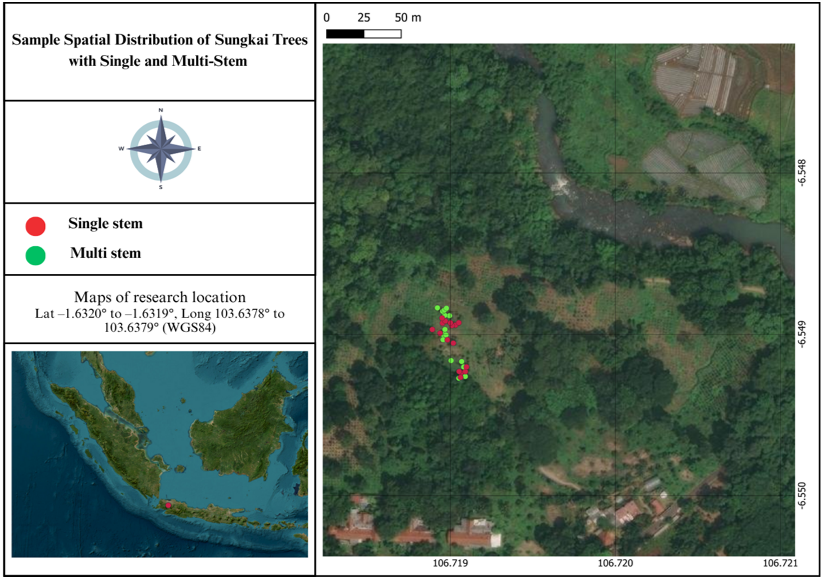
The study utilized 48-month-old Sungkai (Peronema canescens) clones from Jambi Province, cultivated at the IPB Darmaga Bogor research forest, located at an elevation of 145-195 meters above sea level on latosol soil (Figure 1).
Figure 1. Sampling location of 48-month-old Sungkai trees
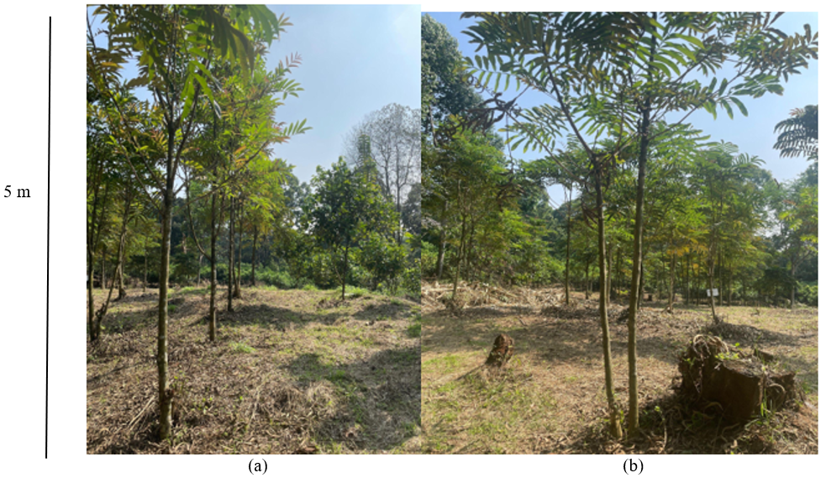
Figure 2. Stem type morphology of (a) single-stem and (b) multi-stem Sungkai plants (Peronema canescens)
Tree samples were randomly selected from three blocks, each containing five plants, differing in their single-stem or multi-stem form. Each block contained both stem types with a balanced number of individuals. In Block 1, five single-stem and five multi-stem trees were sampled; in Block 2, five single-stem and five multi-stem trees were sampled; and in Block 3, six single-stem and six multi-stem trees were sampled. In total, 32 trees were included, consisting of 16 single-stem and 16 multi-stem individuals. Trees were selected to represent comparable age and growth conditions within each block (Figure 2).
2.2 Growth characteristic measurement
Sungkai growth measurements included total height and stem diameter at breast height (DBH), approximately 1.3 m above the ground, using an NP-800 Laser Rangefinder and a measuring tape. SWV was measured using a FAKOPP Microsecond Timer (Hungary). Two sensors were installed longitudinally along the stem axis at heights of 0.6 m and 1.4 m above ground, with a fixed distance between sensors. The stress wave propagation was measured parallel to the grain (longitudinal direction), and each measurement was repeated three times. The average value was used as the representative value for each tree.
Wood hardness was assessed using a Pilodyn 6J Forest instrument. The device uses a steel pin (2.5 mm diameter) driven by a fixed impact energy of 6 J. Measurements were conducted at breast height (1.3 m) on the stem surface in three different directions, perpendicular to the stem axis. The average penetration depth from three measurements was used as the value for each tree. Wood samples were extracted using an increment borer (1–2 cm penetration depth) to determine specific gravity.
2.3 Statistical analysis
Statistical analysis was employed to assess the impact of stem type on Sungkai wood quality, utilizing a non-destructive approach. Quality parameters included moisture content, wood density, specific gravity, SWV, and MOEd. Differences in quality by stem type were analysed using analysis of variance (ANOVA). Correlation and regression tests were used to assess relationships between observed parameters. The aim was to identify morphological or phenotypic characteristics. Data were analysed using the following formula:
Moisture content (MC, %):
$M C(\%)=\frac{W_w-W_o}{W_o} \times 100$ (1)
where,
Ww = wet weight of wood (g or kg)
Wo = dry weight of wood (g or kg)
Wood density (g/cm³):
$\rho\left(g / c m^3\right)=\frac{M}{V}$ (2)
where,
M = wood mass (g or kg)
V = wood volume (cm³ or m³)
Specific gravity (SG):
$S G=\frac{M K T}{V}$ (3)
where,
MKT = furnace dry mass
V = wood volume
Stress-Wave Velocity (SWV, m/s):
$\operatorname{SWV}(\mathrm{m} / \mathrm{s})=\frac{L}{t}$ (4)
where,
L = length of wood or distance between sensors (m)
t = wave velocity time (seconds)
Dynamic modulus of elasticity (MOEd, GPa):
$(M O E d)^2=\rho \times S W V^2$ (5)
where,
$\rho$ = wood density (g/m³)
SWV = wave speed (m/s)
MOEd = N/m² (Pa) or GPa
All data analyses were conducted using RStudio software and Microsoft Excel. Prior to analysis, the data were inspected for missing values and potential outliers. Normality was evaluated using Shapiro-Wilk test (Table A1), while homogeneity of variance was assessed using Levene’s test (Table A2) the significant level was set at α = 0.05. Correlation and regression analyses were used to examine the relationship among growth traits, Pilodyn penetration, wood density, moisture content, SWV and MOEd. For each relationship, the correlation coefficient, coefficient of determination, regression equation, p-value and sample size were reported. The findings are intended to inform industrial forest plantation breeding and development programs that prioritize sustainable wood quality.
Descriptive statistics of growth characteristics and wood quality parameters are presented in Table 1.
Overall, the measured variables demonstrate moderate to high variability across the sampled trees, indicating substantial heterogeneity in both growth performance and wood properties. Growth-related parameters showed moderate variation, with diameter ranging from 3.50 to 11.46 cm and height from 3.10 to 7.40 m. Additionally, MOEd values ranged from 5.50 to 10.11 GPa, reflecting variability in the mechanical properties of the wood. SWV ranged from 2,374 to 3,376 m/s, with a mean value of 2,829 m/s. Wood density varied from 0.713 to 1.139 g/cm³, while specific gravity ranged between 0.373 and 0.556. Moisture content exhibited the highest variability among all parameters, ranging from 64.06% to 140.31%, indicating substantial heterogeneity in internal moisture conditions among the sampled trees.
Table 1. Descriptive statistics of growth and wood quality parameters
|
Parameter |
Min |
Mean |
Max |
|
Diameter (cm) |
3.500 |
6.857 |
11.460 |
|
Height (m) |
3.100 |
4.858 |
7.400 |
|
Stress wave velocity (m/s) |
2,374 |
2,829 |
3,376 |
|
Density (g/cm³) |
0.7130 |
0.9336 |
1.1390 |
|
Specific gravity |
0.3730 |
0.4609 |
0.5560 |
|
Moisture content (%) |
64.06 |
102.76 |
140.31 |
|
Pilodyn penetration (mm) |
14.33 |
17.15 |
22.00 |
|
MOEd (GPa) |
5.503 |
7.451 |
10.108 |
3.1 Analysis of variance in Sungkai wood quality
Growth characteristics such as diameter and height were measured in the field through direct morphometric assessment. SWV and Pilodyn penetration were obtained using field-based non-destructive or minimally invasive measurements, whereas density, specific gravity, moisture content, and MOEd were derived from increment core samples followed by laboratory-based measurements.
The comparison of mean values for each parameter between single-stem and multi-stem trees is presented in Table 2. In general, single-stem trees tend to exhibit higher mean values in diameter, height, wood density, specific gravity and moisture content, whereas multi-stem trees show higher SWV, Pilodyn penetration and dynamics of modulus elasticity.
Table 2. Comparison of wood quality in single and multi-stem parameters of diameter, height, stress wave velocity (SWV), density, specific gravity, moisture content, Pilodyn penetration, and MOEd
|
Stem Type |
Diameter (cm) Mean ± SD |
Height (m) Mean ± SD |
Stress Wave Velocity (m/s) Mean ± SD |
Density (g/cm³) Mean ± SD |
Specific Gravity Mean ± SD |
Moisture Content (%) Mean ± SD |
Pilodyn Penetration (mm) Mean ± SD |
MOEd (GPa) Mean ± SD |
|
Single |
7.30 ± 2.11 |
4.86 ± 1.22 |
2,692.38 ± 190.05 |
1.005 ± 0.081 |
0.476 ± 0.043 |
111.80 ± 17.40 |
16.44 ± 1.17 |
7.29 ± 0.95 |
|
Multi |
6.38 ± 1.40 |
4.85 ± 0.77 |
2,975 ± 214.62 |
0.857 ± 0.098 |
0.444 ± 0.045 |
93.13 ± 13.01 |
17.90 ± 1.66 |
7.62 ±1.41 |
Following the descriptive comparison presented in Table 2, the data were subjected to assumption testing prior to inferential analysis. Normality was evaluated using the Shapiro-Wilk test, while homogeneity of variance was assessed using Levene’s test. The results indicated that all variables were normally distributed and exhibited homogeneous variances (p > 0.05), thereby satisfying the assumptions required for parametric analysis. Subsequently, an independent t-test was conducted to evaluate the effect of stem type on each measured parameter. The results of this analysis are presented in Table 3.
The ANOVA in Table 3 indicates that stem type (single-stem versus multi-stem) has a highly significant effect on SWV (p = 0.0006), density (p = 0.0001), moisture content (p = 0.0021), and Pilodyn penetration (p = 0.0092). In contrast, diameter, height, specific gravity, and MOEd are not significantly affected. On average, single-stem trees exhibit superior values for SWV, wood density, moisture content, compared to multi-stem trees, as determined by NDTs. Table 3 further compares the wood quality of single-stem and multi-stem types.
Table 3. Independent t-test comparison of wood quality parameters between single-stem and multi-stem trees
|
Parameter |
Single-Stem |
Multi-Stem |
p-Value |
CI Lower |
CI Upper |
Cohen’s d |
Test |
Detail (α = 0.05) |
|
Diameter (cm) |
7.30 ± 2.11 a |
6.38 ± 1.41 a |
0.1610 |
-2.239 |
0.392 |
-0.512 |
t-test |
Not significant |
|
Height (m) |
4.86 ± 1.22 a |
4.85 ± 0.77 a |
0.9801 |
-0.759 |
0.741 |
-0.009 |
t-test |
Not significant |
|
Stress wave velocity (m/s) |
2,692.38 ± 190.05 b |
2,975.58 ± 214.62 a |
0.0006 |
133.677 |
432.716 |
1.400 |
t-test |
Significant
|
|
Density (g/cm³) |
1.01 ± 0.08 b |
0.86 ± 0.10 a |
0.0001 |
-0.215 |
-0.081 |
-1.643 |
t-test |
Significant |
|
Specific gravity |
0.48 ± 0.04 a |
0.44 ± 0.05 a |
0.0527 |
-0.065 |
0.000 |
-0.727 |
t-test |
Not significant |
|
Moisture content (%) |
111.80 ± 17.40 b |
93.13 ± 13.02 a |
0.0021 |
-29.930 |
-7.398 |
-1.209 |
t-test |
Significant |
|
Pilodyn penetration (mm) |
16.44 ± 1.17 b |
17.90 ± 1.66 a |
0.0092 |
0.395 |
2.530 |
1.026 |
t-test |
Significant |
|
MOEd (GPa) |
7.29 ± 0.95 a |
7.63 ± 1.42 a |
0.4448 |
-0.562 |
1.241 |
0.283 |
t-test |
Not significant |
The results showed that stem type significantly affected several wood properties, particularly SWV, wood density, moisture content, and Pilodyn penetration (Table 3). Multi-stem trees exhibited significantly higher SWV (2,975.58 ± 214.62 m/s) than single-stem trees (2,692.38 ± 190.05 m/s; p = 0.0006), with a large effect size (Cohen’s d = 1.40) and a positive confidence interval (133.68 to 432.72), indicating a strong and consistent difference. Similarly, Pilodyn penetration was significantly higher in multi-stem trees (17.90 ± 1.66 mm) compared to single-stem trees (16.44 ± 1.17 mm; p = 0.0092; Cohen’s d = 1.03), suggesting lower wood resistance in multi-stem individuals.
Single-stem trees showed significantly higher wood density (1.01 ± 0.08 g/cm³) than multi-stem trees (0.86 ± 0.10 g/cm³; p = 0.0001), with a large negative effect size (Cohen’s d = -1.64) and a confidence interval that did not cross zero (-0.215 to -0.081). Moisture content also differed significantly, with higher values observed in single-stem trees (111.80 ± 17.40%) compared to multi-stem trees (93.13 ± 13.02%; p = 0.0021; Cohen’s d = -1.21). These results indicate substantial differences in physical and resistance-related properties between stem types.
Conversely, diameter, height, specific gravity, and dynamic MOEd did not differ significantly between stem types (p > 0.05), with small to negligible effect sizes (|d| < 0.73) and confidence intervals overlapping zero. This suggests that general growth characteristics and elastic properties were relatively similar between single-stem and multi-stem trees.
Previous studies have shown that wood density is closely related to mechanical strength and overall wood quality [17], making it a key parameter in wood assessment. In addition, NDT methods such as SWV and Pilodyn penetration are widely used to estimate wood stiffness and density in standing trees, where SWV is positively associated with stiffness [11], while Pilodyn penetration is negatively correlated with wood density [17, 18].
Based on these relationships, the higher SWV and Pilodyn penetration observed in multi-stem trees, combined with their lower wood density, indicate that stem architecture may influence internal wood structure and resistance-related properties. However, the absence of significant differences in MOEd suggests that variations in stiffness at the structural level may not be strongly expressed, or that compensatory factors may exist. Overall, these findings demonstrate that stem type affects specific physical and mechanical properties of wood, while having limited influence on general growth and elastic characteristics.
3.2 Growth characteristics
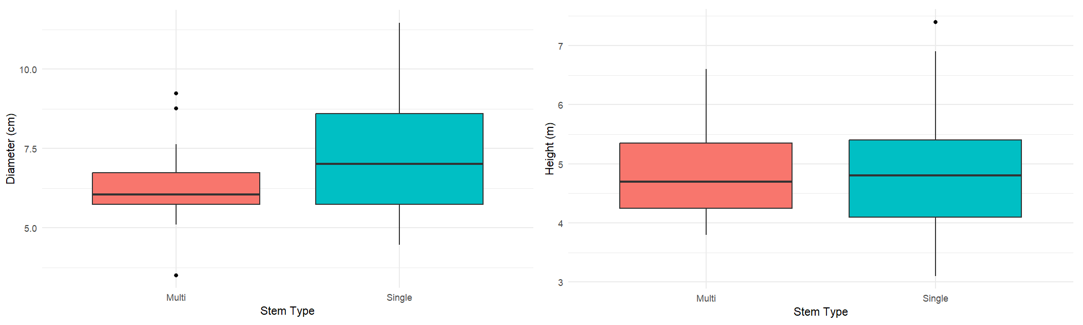
Stem type has a significant influence on stem growth characteristics. Single-stem plants generally develop larger diameters and heights than multi-stem plants, as illustrated in Figure 3.
Figure 3. Diameter and height comparison between single-stem and multi-stem types
This is thought to be due to the centralization of photosynthate flow and biomass allocation in the main stem, allowing optimal radial growth. Plants with multi-stem distribute photosynthate production across multiple stem axes [19]. Conversely, in multi-stem plants, growth is dispersed across various secondary stems, reducing the growth rate.
3.3 Physical properties of wood
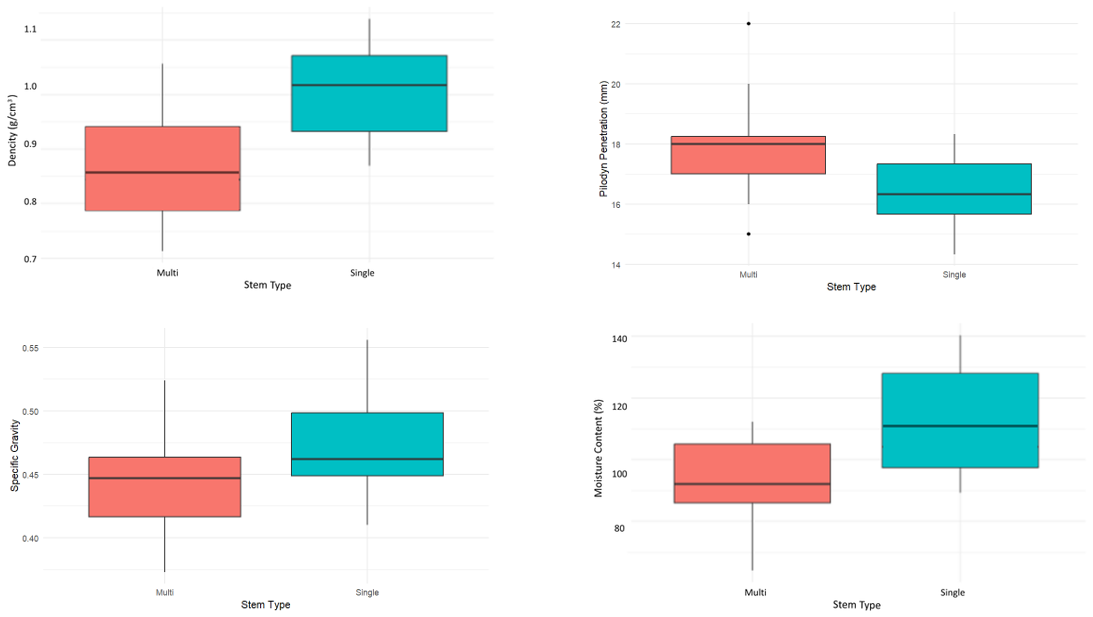
Density is a fundamental property of wood and is widely associated with mechanical strength, durability, and ecological function [20, 21]. In this study, wood density differed significantly between stem types, with single-stem Sungkai trees showing higher density (1.01 ± 0.08 g/cm³) compared to multi-stem trees (0.86 ± 0.10 g/cm³; p = 0.0001; 95% CI: -0.215 to -0.081; Cohen’s d = -1.643), indicating a strong effect of stem architecture on this property (Figure 4). Single-stem Sungkai trees exhibited higher wood density compared to multi-stem trees (Figure 4). Wood density is known to vary due to growth conditions and internal tree structure, including allocation patterns and anatomical composition [22].
The observed lower density in multi-stem trees may be associated with differences in biomass allocation and structural organization. Trees with multiple stems distribute growth across several axes, which can influence wood formation processes and result in less dense stem wood compared to a single dominant stem. This is consistent with studies showing that wood density varies among different parts of the tree and structural positions, with stem wood generally exhibiting higher density compared to branch wood [23, 24].
Figure 4. Density, moisture content, specific gravity, and phylodynamic comparison between stem types in Sungkai wood
Previous studies have also demonstrated that wood density is strongly influenced by anatomical traits such as fibre composition, vessel proportion, and parenchyma distribution, which vary both within and between trees [25, 26]. In addition, differences between stem and branch wood are linked to functional trade-offs between mechanical support and hydraulic efficiency, further explaining variation in density within tree architecture [23].
Pilodyn penetration was significantly lower in single-stem trees (16.44 ± 1.17 mm) compared to multi-stem trees (17.90 ± 1.66 mm; p = 0.0092), indicating relatively higher surface hardness in single-stem trees. Given that Pilodyn penetration is inversely related to wood density, this result is consistent with the higher density observed in single-stem trees. Pilodyn is widely used as rapid field-based tools to estimate wood quality in extending trees through an indirect wood-density, while lower penetration reflects greater resistance to surface indentation. A similar pattern was reported in Neolamarckia cadamba [26] where the average Pilodyn penetration decreased from 2.86 cm at 36 months to 2.73 cm at 42 months, indicating a possible increase in wood density as the trees become older. Study [27] also reported that Pilodyn penetration is negatively associated with wood density.
In the present study, this relationship supported the interpretation that single-stem Sungkai had relatively harder surface wood than multi-stem Sungkai. Nevertheless, Pilodyn measurement should be interpreted as an indirect indicator, and future direct density and mechanical tests are required to confirm the observed wood-quality differences.
Meanwhile, specific gravity values show no difference between single-stem and multi-stem wood (p = 0.0527). SG is an important measure, recognizing that absolute density can provide information about wood condition and response to environmental changes, particularly in dynamic ecosystems. SG has broadened its relevance in ecological studies, providing a reliable metric for assessing wood properties across various species and environments [28, 29].
Moisture content differed significantly between stem types, with single-stem trees showing higher values (111.80 ± 17.40%) compared to multi-stem trees (93.13 ± 13.02%; p = 0.0021; 95% CI: -29.930 to -7.398; Cohen’s d = -1.209). This indicates a strong effect of stem type on wood moisture status. Wood moisture content is influenced by wood structure, porosity, and the proportion of cell wall and lumen space, which determine the capacity of wood to store and transport water.
In general, moisture content is also affected by tree physiology and growth conditions, including water availability and internal transport processes. The higher moisture content observed in single-stem trees in this study may be associated with differences in internal water storage and transport efficiency. Trees with a single dominant stem may exhibit more centralized hydraulic pathways, potentially allowing greater water retention in stem tissues.
However, as anatomical and hydraulic traits were not directly measured in this study, this explanation should be interpreted cautiously. Variation in moisture content within trees has also been linked to differences in wood anatomy and functional roles related to water transport and storage, which may contribute to the observed differences between stem types.
3.4 Mechanical properties of wood
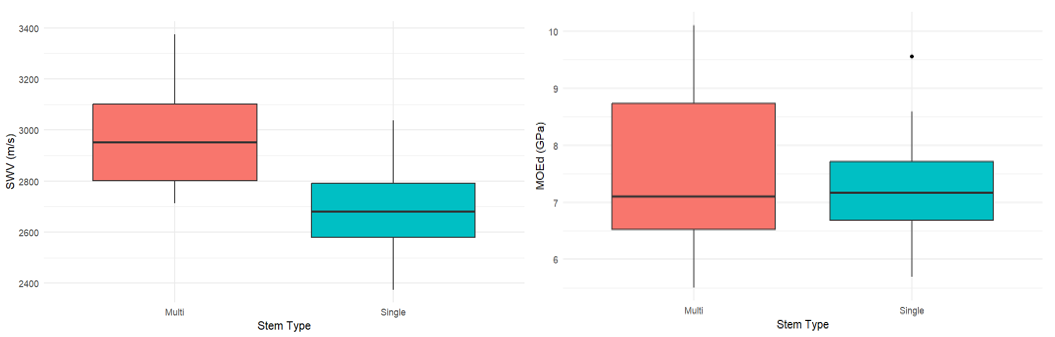
SWV differed significantly between stem types, whereas no significant difference was observed in the MOEd. Multi-stem trees exhibited higher SWV values than single-stem trees (Figure 5), with a narrower interquartile range indicating lower variability. SWV is commonly associated with wood stiffness and uniformity, suggesting differences in internal wood structure between stem types.
Figure 5. Stress wave velocity (SWV) and dynamic modulus of elasticity (MOEd) comparison between stem types
In contrast, the dynamic MOEd showed no significant differences depending on stem type. This insignificance suggests that, despite differences in physical properties such as density and hardness, the elastic properties of wood are relatively similar between single-stem and multi-stem types or are influenced by variables in grain direction and moisture content at the time of testing [8, 30]. Several studies have shown that SWV is more stable and sensitive in detecting variations in mechanical properties in fresh wood compared to MOEd, which requires correction for density and moisture content [13, 30].
3.5 The relationship between morphological parameters and physical-mechanical properties of Sungkai wood
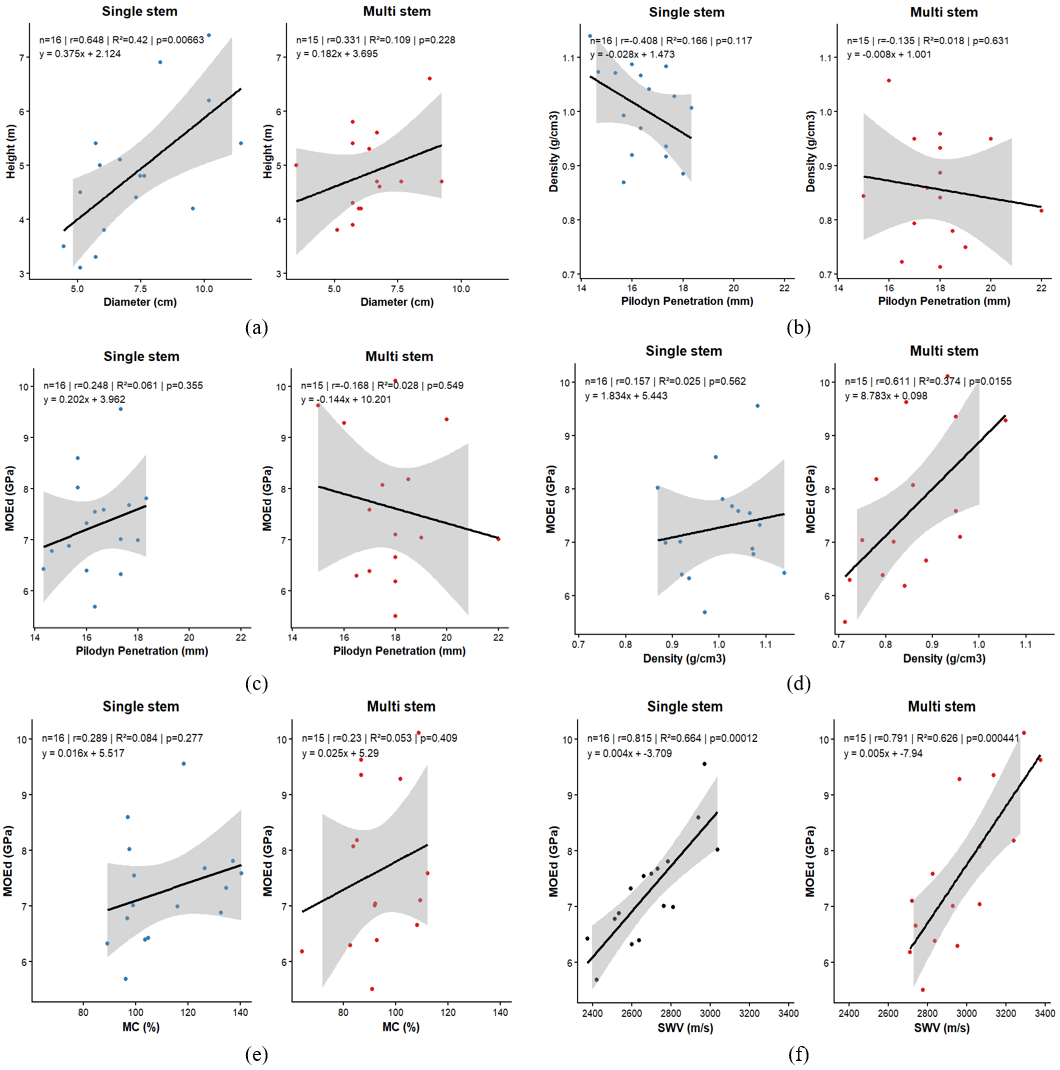
The relationship among selected growth and wood-quality parameters are further presented in Figure 6 and Table 4. These relationships include diameter-hight, Pilodyn penetration-wood density, Pilodyn penetration-MOEd, density-MOEd, moisture content-MOEd and SWV-MOEd. The patterns were compared between single-stem and multi-stem trees to evaluate whether stem type influenced the association among these parameters.
Table 4. Regression and correlation result among selected growth and wood-quality parameters
|
Stem Type |
Relationship |
Equation |
r |
R² |
p-Value |
n |
|
Multi |
Diameter and Height |
y = 0.182x + 3.695 |
0.331 |
0.109 |
0.2283 |
15 |
|
Single |
Diameter and Height |
y = 0.375x + 2.124 |
0.648 |
0.420 |
0.0066 |
16 |
|
Multi |
Pilodyn and Density |
y = -0.008x + 1.001 |
-0.135 |
0.018 |
0.6309 |
15 |
|
Single |
Pilodyn and Density |
y = -0.028x + 1.473 |
-0.408 |
0.166 |
0.1168 |
16 |
|
Multi |
Pilodyn and MOEd |
y = -0.144x + 10.201 |
-0.168 |
0.028 |
0.5487 |
15 |
|
Single |
Pilodyn and MOEd |
y = 0.202x + 3.962 |
0.248 |
0.061 |
0.3552 |
16 |
|
Multi |
Density and MOEd |
y = 8.783x + 0.098 |
0.611 |
0.374 |
0.0155 |
15 |
|
Single |
Density and MOEd |
y = 1.834x + 5.443 |
0.157 |
0.025 |
0.5621 |
16 |
|
Multi |
MC and MOEd |
y = 0.025x + 5.29 |
0.230 |
0.053 |
0.4090 |
15 |
|
Single |
MC and MOEd |
y = 0.016x + 5.517 |
0.289 |
0.084 |
0.2771 |
16 |
The scatter plot in Figure 6 illustrates the relationship among selected growth and wood-quality parameters. The relationship between diameter and height showed a positive trend, particularly in single-stem trees (Figure 6(a)), suggesting that diameter growth was generally accompanied by height in 48-month-old Sungkai. This result is consistent with previous study [1], which reported that Sungkai has good vertical growth and is adaptive to specific environmental conditions.
The relationship between Pilodyn penetration versus wood density (Figure 6(b)) shows a negative trend, indicating that greater penetration depth correlates with lower wood density. This finding supports the use of Pilodyn as a rapid field-base and minimally invasive indicator for estimating relative wood density. Similar relationships between Pilodyn penetration and wood density have also been reported in previous studies [12].
The scatter plot results show that Sungkai trees with lower Pilodyn penetration tend to have higher MOEd values (Figure 6(c)), especially in single stems, indicating a denser and stiffer wood structure. This correlation suggests that the Pilodyn tool is effective in non-destructively estimating wood stiffness, as reported by Williamson and Wiemann [31] in Pinus, Schimleck et al. [9] in teak. Conversely, the wider variation in the multi-stem type indicates internal heterogeneity, possibly due to the influence of stem type on grain direction and mechanical tissue distribution [4]. These findings support the importance of stem classification for the mechanical quality of Sungkai wood.
The significant positive correlation between wood density and MOEd (Figure 6(d)) in the multi-stem class indicates that increasing wood density is directly related to increased stiffness. This reflects the critical role of density as a primary mechanical predictor, as denser wood structures typically contain more cell walls and supporting fibers [32]. Conversely, the weaker relationship in the single-stem class indicates that other structural factors, such as grain direction and internal defects, may have a greater influence on MOEd values. This finding aligns with research [8], which found that wood density is a key determinant of elasticity in non-destructive evaluations of wood quality.
The relationship between moisture content and MOEd (Figure 6(e)) exhibits a weak positive trend, particularly in the multi-class setting, although it is not statistically significant. This contradicts the general expectation that increasing moisture content will decrease wood stiffness due to cell wall softening. This is explained by variations in free and bound moisture content between samples and the potential for accumulation at fiber saturation [32]. These findings provide insight into the fact that moisture content is not the sole determinant of wood stiffness and can interact complexly with the internal characteristics of the wood and its growth. Similar results have also been described in non-destructive studies of various species [30, 33].
MOEd values have a strong positive correlation with SWV (Figure 6(f)) in both stem types. This result indicates that wave velocity is a useful non-destructive indicator for estimating wood stiffness. In multi-stemmed trees, the relationship between the two parameters appears sharper, indicating an internal structure allowing faster and more efficient wave transmission. Studies on teak indicate that SWV correlates with elasticity and density [9], corroborating a finding by research [30], who stated that wave velocity in wood is a reliable parameter for predicting MOEd in living trees.
This study demonstrates that non-destructive and minimally invasive methods are effective for early wood-quality assessment in 48-month-old Sungkai (Peronema canescens Jack) trees. Stem type significantly influenced several key parameters, including SWV (p = 0.0006), wood density (p = 0.0001), moisture content (p = 0.0021), and Pilodyn penetration (p = 0.0092). Single-stem trees exhibited higher wood density (1.01 ± 0.08 g/cm³) and moisture content (111.80 ± 17.40%), along with lower Pilodyn penetration (16.44 ± 1.17 mm), indicating relatively denser and harder surface wood. In contrast, multi-stem trees showed higher SWV (2,975.58 ± 214.62 m/s) and Pilodyn penetration (17.90 ± 1.66 mm), suggesting differences in internal wood structure. Therefore, stem type may be used as a morphological consideration for early wood-quality screening in young Sungkai plantations, although further anatomical and mechanical testing is required.
The authors would like to express their appreciation to Mochammad Taufiqurrachman for his valuable assistance and support during the field data work.
|
D |
Tree diameter, cm |
|
H |
Tree height, m |
|
MC |
Moisture content, % |
|
ρ |
Wood density, g∙cm-3 or kg∙m-3 |
|
MOEd |
Dynamic modulus of elasticity, MPa |
|
P |
Pilodyn penetration depth, mm |
|
n |
Number of samples |
|
r |
Correlation coefficient |
|
R2 |
Coefficient of determination |
|
α |
Significance level |
|
SE |
Standard error |
|
SD |
Standard deviation |
|
CI |
Confidence interval |
|
Subscripts |
|
|
d |
Dynamic |
|
i |
Individual observation |
|
j |
Block |
|
m |
Multi-stem tree |
Table A1. Shapiro–Wilk normality test for all variables
|
Variable |
W |
p-Value |
(α = 0.05) |
|
Diameter (cm) |
0.93377 |
0.05558 |
Normal |
|
Height (m) |
0.96703 |
0.4412 |
Normal |
|
Stress wave velocity (m/s) |
0.98152 |
0.8534 |
Normal |
|
Pilodyn penetration (mm) |
0.95165 |
0.1734 |
Normal |
|
Density (g/cm³) |
0.96927 |
0.4993 |
Normal |
|
Specific gravity |
0.97505 |
0.6663 |
Normal |
|
Moisture content (%) |
0.9508 |
0.1643 |
Normal |
|
MOEd (GPa) |
0.94378 |
0.105 |
Normal |
Table A2. Levene’s test for homogeneity of variance
|
Parameter |
F Value |
p-Value |
(α = 0.05) |
|
Diameter (cm) |
3.2965 |
0.07978 |
Homogen |
|
Height (m) |
1.9481 |
0.1734 |
Homogen |
|
Stress wave velocity (m/s) |
0.2921 |
0.5930 |
Homogen |
|
Density (g/cm³) |
0.2190 |
0.6433 |
Homogen |
|
Specific gravity |
0.3171 |
0.5777 |
Homogen |
|
Moisture content (%) |
0.0041 |
0.9495 |
Homogen |
|
Pilodyn penetration (mm) |
1.6756 |
0.2057 |
Homogen |
|
MOEd (GPa) |
2.1203 |
0.1561 |
Homogen |
[1] Otsamo, A., Ådjers, G., Hadi, T.S., Kuusipalo, J., Vuokko, R. (1997). Evaluation of reforestation potential of 83 tree species planted on Imperata cylindrica dominated grassland–A case study from South Kalimantan, Indonesia. New Forests, 14(2): 127-143. https://doi.org/10.1023/A:1006566321033
[2] Bahtiar, E.T., Iswanto, A.H. (2023). Annual tree-ring curve-fitting for graphing the growth curve and determining the increment and cutting cycle period of Sungkai (Peronema canescens). Forests, 14(8): 1643. https://doi.org/10.3390/f14081643
[3] Wahyudi, A., Muttaqin, Z. (2016). Growth and yield analysis of Sungkai (Peronema canescens Jack.) in Kalimantan, Indonesia. Borneo Science, 37(1): 72-81.
[4] Wang, X., Ross, R.J., Carter, P. (2007). Acoustic evaluation of wood quality in standing trees. Part I. Acoustic wave behavior. Wood and Fiber Science, 28-38. https://wfs.swst.org/index.php/wfs/article/view/299/299.
[5] Kanedi, M. (2022). Therapeutic potentials of Sungkai (Peronema canescens Jack.) an Indonesian luxurious woody plant. World Journal of Biology Pharmacy and Health Sciences, 11(1): 069-071. http://repository.lppm.unila.ac.id/id/eprint/45432.
[6] Kang, K.S., Han, M.S., Kim, I.S., Nam, S.H. (2013). Estimation of genetic parameters for growth performance and survival rate in a clonal test of Peronema canescens. Plant Breeding and Biotechnology, 1(3): 245-252. https://doi.org/10.9787/PBB.2013.1.3.245
[7] Soerianegara, I., Lemmens, R.H.M.J. (1993). Plant Resources of South-East Asia No. 5 (1) Timber Trees: Major Commercial Timbers. PROSEA / Pudoc Scientific Publishers, Wageningen.
[8] Hatta, G.M. (1999). Sungkai (Peronema Canescens) A Promising Pioneer Tree: An Experimental Provenance Study in Indonesia. Wageningen University, Wageningen.
[9] Schimleck, L., Dahlen, J., Apiolaza, L.A., Downes, G., Emms, G., Evans, R., Wang, X. (2019). Non-destructive evaluation techniques and what they tell us about wood property variation. Forests, 10(9): 728. https://doi.org/10.3390/f10090728
[10] Hidayati, F., Ishiguri, F., Iizuka, K., et al. (2013). Variation in tree growth characteristics, stress-wave velocity, and Pilodyn penetration of 24-year-old teak (Tectona grandis) trees originating in 21 seed provenances planted in Indonesia. Journal of Wood Science, 59(6): 512-516. https://doi.org/10.1007/s10086-013-1368-9
[11] Nguyen, H. (2019). Genetics, Breeding and Deployment of Melaleuca and Norway Spruce. Acta Universitatis Agriculturae Sueciae, Umeå.
[12] Karlinasari, L., Fredisa, Y., Adzkia, U., Fauziyyah, S., Dwiyanti, F., Siregar, I.Z. (2021). Use of a pin-penetration wood density meter to determine the density of 25 Indonesian species. BioResources, 16(2): 3032. https://doi.org/10.15376/biores.16.2.3032-3045
[13] Güntekin, E., Aydin, T.Y., Niemz, P. (2015). Prediction of Young's modulus in three orthotropic directions for some important Turkish wood species using ultrasound. In Proceedings of the 19th International Nondestructive Testing and Evaluation of Wood Symposium, Rio de Janeiro, Brazil, pp. 22-25.
[14] Teder, M., Pilt, K., Miljan, M., Pallav, V., Miljan, J. (2012). Investigation of the physical-mechanical properties of timber using ultrasound examination. Journal of Civil Engineering and Management, 18(6): 795-801. https://doi.org/10.3846/13923730.2012.736233
[15] Nocetti, M., Brunetti, M., Bacher, M. (2015). Effect of moisture content on the flexural properties and dynamic modulus of elasticity of dimension chestnut timber. European Journal of Wood and Wood Products, 73(1): 51-60. https://doi.org/10.1007/s00107-014-0861-1
[16] Thibaut, B., Gril, J., Fournier, M. (2001). Mechanics of wood and trees: Some new highlights for an old story. Comptes Rendus de l'Académie des Sciences-Series IIB-Mechanics, 329(9): 701-716. https://doi.org/10.1016/S1620-7742(01)01380-0
[17] Japarudin, Y. (2022). Wood quality evaluation and tree improvement methods for eucalyptus pellita in Borneo. University of the Sunshine Coast, Queensland. https://doi.org/10.25907/00710
[18] Da Silva, D.B., Castilhori, M.F., Araújo, I., Callado, C.H., De Vasconcellos, T.J. (2025). Anatomical variation of wood between trunks and branches of tropical deciduous and evergreen species. IAWA Journal, 46(4): 594-611. https://doi.org/10.1163/22941932-bja10188
[19] Chen, Z.Q., Karlsson, B., Lundqvist, S.O., Gil, M.R.G., Olsson, L., Wu, H.X. (2015). Estimating solid wood properties using Pilodyn and acoustic velocity on standing trees of Norway spruce. Annals of Forest Science, 72(4): 499-508. https://doi.org/10.1007/s13595-015-0458-9
[20] Gola, E.M. (2014). Dichotomous branching: The plant form and integrity upon the apical meristem bifurcation. Frontiers in Plant Science, 5: 263. https://doi.org/10.3389/fpls.2014.00263
[21] Niklas, K.J., Spatz, H.C. (2010). Worldwide correlations of mechanical properties and green wood density. American Journal of Botany, 97(10): 1587-1594. https://doi.org/10.3732/ajb.1000150
[22] Muthumala, C.K., De Silva, S., Arunakumara, K.K.I.U., Alwis, P.L.A.G. (2020). Investigation of the Relationship Between Densities Versus Mechanical Properties of Sri Lankan Timber Species. In ICSECM 2019: Proceedings of the 10th International Conference on Structural Engineering and Construction Management, Singapore, pp. 111-120. https://doi.org/10.1007/978-981-15-7222-7_10
[23] Arnič, D., Krajnc, L., Gričar, J., Prislan, P. (2022). Relationships between wood-anatomical features and resistance drilling density in Norway spruce and European beech. Frontiers in Plant Science, 13: 872950. https://doi.org/10.3389/fpls.2022.872950
[24] Marasigan, O.S., Razal, R.A., Carandang, W.M., Alipon, M.A. (2022). Physical and mechanical properties of stems and branches of Falcata [Falcataria moluccana (Miq.) Barneby & JW Grimes] grown in Caraga, Philippines. Philippine Journal of Science, 151(2): 575-586.
[25] Malekabadi, R.A., Hafeez, G. (2026). From non-destructive to structural insights of heritage timber: A combined NDT and destructive testing approach. Wood Material Science & Engineering, 1-11. https://doi.org/10.1080/17480272.2026.2653805
[26] Zhao, X., Guo, P., Zhang, Z., Wang, X., Peng, H., Wang, M. (2018). Wood density and fiber dimensions of root, stem, and branch wood of Populus ussuriensis Kom. trees. BioResources, 13(3): 7026-7036.
[27] Hang, Y.J., Chen, Z.C., Wang, L., et al. (2024). Anatomical determinants of wood density of eight broad-leaved tree species in baotianman and their coordination and trade-off with leaf traits. https://www.cabidigitallibrary.org/doi/full/10.5555/20240365561.
[28] Anna, N., Supriyanto, K.L., Sudrajat, D.J., Siregar, I.Z. (2020). The growth, Pilodyn penetration, and wood properties of 12 Neolamarckia cadamba provenances at 42 months old. Biodiversitas, 21(3): 1091-1100. https://doi.org/10.13057/biodiv/d210332
[29] Dinh Kha, L., Harwood, C.E., Kien, N.D., Baltunis, B.S., Hai, N.D., Thinh, H.H. (2012). Growth and wood basic density of acacia hybrid clones at three locations in Vietnam. New Forests, 43(1): 13-29. https://doi.org/10.1007/s11056-011-9263-y
[30] Pati, P.K., Kaushik, P., Khan, M.L., Khare, P.K. (2025). Inventory of wood specific gravity for Indian forests. Trees, Forests and People, 19: 100775. https://doi.org/10.1016/j.tfp.2025.100775
[31] Williamson, G.B., Wiemann, M.C. (2010). Measuring wood specific gravity… correctly. American Journal of Botany, 97(3): 519-524. https://doi.org/10.3732/ajb.0900243
[32] Isik, F., Li, B. (2003). Rapid assessment of wood density of live trees using the Resistograph for selection in tree improvement programs. Canadian Journal of Forest Research, 33(12): 2426-2435. https://doi.org/10.1139/x03-176
[33] Bergman, B.A., Bobich, E.G., Davis, S.D., Utsumi, Y., Ewers, F.W. (2018). Dense but flexible wood–how leaf nodes impact xylem mechanics in Juglans californica. IAWA Journal, 39(4): 372-381. https://brill.com/view/journals/iawa/39/4/article-p372_2.xml.