Sabka Pashova
© 2026 The author. This article is published by IIETA and is licensed under the CC BY 4.0 license (http://creativecommons.org/licenses/by/4.0/).
OPEN ACCESS
The aim of the article was to compare the component composition of selected stone fruits: peach (Prunus persica L.), nectarine (Prunus persica var. nucipersica), and apricot (Prunus armeniaca L.). Fruits were obtained from conventional production in the Tutrakan, Silistra, and Varna districts of north-eastern Bulgaria during 2021-2024 and analysed at botanical ripeness. The measured indicators included dry matter, reducing sugars, total sugars, sucrose, total titratable acidity, tannins, vitamin C, and β-carotene. Under the conditions of this study, dry matter varied within 12.91-17.90% in peaches and 12.02-22.00% in nectarines, indicating a wider range of intervarietal variation in nectarines. In all studied groups, sugars were the main component of dry matter, with sucrose as the dominant carbohydrate fraction; in apricots, total sugars ranged from 6.00 to 15.68%. Total titratable acidity remained below 1.00% in peaches and nectarines, while apricots showed a higher acid range of 0.34-2.61%. Tannins were found at low levels: 0.033-0.052% in peaches and 0.012-0.035% in nectarines. Vitamin C ranged from 7.39 to 15.24 mg/100 g in peaches and from 7.72 to 8.60 mg/100 g in nectarines; β-carotene ranged from 11.57 to 17.23 mg/kg in peaches and from 11.17 to 19.93 mg/kg in nectarines, while apricots were distinguished by higher β-carotene representation. The results should be interpreted as characteristic of the studied varieties, batches, and growing conditions. Their practical relevance lies in supporting varietal selection and raw-material control for processing, especially where dry matter, sugar-acid ratio, and vitamin markers influence technological suitability.
apricot, chemical composition, intervarietal differences, nectarine, peach
Stone fruit production now combines the requirements for stable nutritional value, predicted technological suitability, and reproducibility of raw material quality within varieties and between species. For peaches, nectarines, and apricots, the indicators of dry matter, fractional composition of sugars, total titratable acidity, phenolic components, and vitamin markers directly determine the directions of use in the food industry, in particular in the technologies of juices, purées, compotes, jams, dried products, and concentrates. It is the ratio of “sugars-acid” and the concentration of the non-aqueous fraction that form the taste profile, stability of organoleptic characteristics, and technological behaviour of the fruit during processing. Given the trends in the development of food technologies, focused on advanced processing of raw materials and the creation of products with specified properties, comparative analysis of fruit composition becomes important not only within one species, but also between related species, since peaches, nectarines, and apricots are often considered as interchangeable or alternative types of raw materials for similar technological processes.
At the same time, the accumulated scientific data are mostly fragmented by species or focused on individual biochemical blocks, which complicates the formation of generalised compositional profiles suitable for practical use in breeding, commodity science, and food technologies. Therefore, it remains relevant to create a coordinated system of indicators that allows simultaneously comparing peaches, nectarines, and apricots by dry matter, carbohydrate, acid, phenolic, and vitamin blocks with the fixation of quantitative intervals and varietal rankings. This approach provides a holistic view of the compositional profiles of stone fruits and creates the basis for a scientifically sound choice of raw materials in accordance with the intended use.
The quality of peach, nectarine, and apricot fruits based on morphological indicators, which made it possible to identify varietal variability of external and structural characteristics, was studied by Pashova [1]. The study considered dimensional characteristics, shape, weight of fruits, pulp density, and other parameters related to the morphological and trade characteristics of varieties. This approach allowed tracing variations between varieties in a complex of external characteristics and outlining the morphological features of fruits within the studied crops. The biochemical block in this work was presented in the general characteristics of the composition of fruits in combination with the morphological parameters. The physicochemical composition, antioxidant activity, and sorption properties of nectarine powder of Bulgarian origin were analysed by Vasileva et al. [2]. The focus was on the indicators characterising the product of nectarine processing after dehydration and technological processing.
The work highlighted the composition of the powder, the concentration of individual components, the parameters of antioxidant activity, and the functional properties of the studied product. The obtained characteristics represented nectarines as a raw material for further technological use in the form of a powdered product. Mihaylova et al. [3] optimised the ultrasonic extraction of free phenolic compounds from peach fruits and evaluated the biological activity in vitro. The work considered the parameters of the extraction process associated with the production of phenolic components from peach raw materials, as well as the characteristics of the extracts in the context of biological activity. The main attention was focused on the phenolic complex of the fruits and the technological conditions for its isolation. The study reflected one of the directions of analysis of bioactive substances of peach fruits in connection with the possibilities of the extraction and further use.
The content of individual biologically active substances in peach fruits was determined by Mrázová et al. [4], who conducted a comprehensive study of the biochemical composition of 34 peach varieties. The work determined the content of basic sugars-sucrose, glucose, fructose, and sorbitol as well as organic acids, total phenolic compounds, flavonoids, anthocyanins, and carotenoids. Along with this, the antioxidant capacity of the fruits was characterised, which formed a multicomponent description of the varietal characteristics of the chemical composition. The results of the study reflected the difference between the varieties in terms of carbohydrate, acid, phenolic, and pigment blocks of the composition.
Alajil et al. [5] characterised the nutritional and phytochemical value of apricots from the standpoint of possible use in the nutraceutical and health industries. The work highlighted the composition of apricot fruits as a source of bioactive components, micronutrients, and compounds associated with the functional properties of food raw materials. The analysis was built around the nutritional profile of the fruits and phytochemical characteristics that determine the place in the structure of health-promoting products. The study represented apricot as a separate object of biochemical and nutritional analysis. Physicochemical indicators, antioxidant activity, and aromatic profile of seven peach varieties were investigated by Wu et al. [6].
The work combined the determination of basic fruit quality parameters with the analysis of the aromatic complex associated with the formation of sensory properties. The results covered the content of soluble solids, acidity, antioxidant activity indicators, and the spectrum of volatile compounds. This analysis format reflected the varietal specificity of peach fruits simultaneously at the physicochemical and aromatic levels. The nutritional composition of wild apricot fruits in the context of sustainable production was assessed by Karatas [7]. The study considered wild forms of apricot as carriers of a certain biochemical profile and as a component of systems for sustainable use of plant raw materials. The analysis covered the indicators of the nutritional composition of the fruits and reflected intraspecific variability within the studied material. The presented results characterised apricots in connection with the nutritional properties and agrobiological context.
Petruccelli et al. [8] performed a comprehensive assessment of the quality of fruits and phytochemical composition of peach and nectarine varieties. The work combined morphological, physicochemical, and phytochemical indicators that formed a detailed characteristic of two related crops. The analysis included parameters of the external quality of fruits, chemical composition, and content of individual phytochemical components. The presented approach outlined the features of peaches and nectarines within the framework of a common research scheme.
Differences in the carotenoid profile of yellow- and white-fleshed nectarines during low-temperature storage were analysed by Wang et al. [9]. The work focused on the dynamics of the pigment complex of fruits in the postharvest period, as well as the relationships between the carotenoid profile and carbohydrate components. The analysis allowed tracing the peculiarities of carotenoid accumulation in nectarines with different types of pulp under storage conditions. The study represented one of the directions of studying metabolic changes in fruits in the postharvest period. A comprehensive analysis of the quality of the main apricot varieties grown in Turkey, covering physicochemical and nutrient indicators, was carried out by Sarıdaş et al. [10]. The work provided a characterisation of dry soluble substances, acidity, nutritional components, and general indicators of fruit quality. The data obtained reflected the varietal characteristics of apricots in terms of a set of physicochemical and nutrient parameters. This approach formed a multicomponent description of the composition of apricot fruits within the studied assortment.
A generalisation of the analysis of references showed that the available studies described in detail individual aspects of the composition of peaches, nectarines, and apricots, but were mostly limited either to the boundaries of one species or to the analysis of individual groups of indicators without the integration into a single system. In works devoted to morphological assessment, important information was obtained about the varietal variability of external signs, but the internal compositional profile of fruits remained insufficiently disclosed. In biochemical and phytochemical studies, on the contrary, significant material was accumulated regarding sugars, organic acids, phenolic compounds, carotenoids, and antioxidant activity, but such results were most often presented fragmentarily, without moving towards a holistic interspecific synthesis.
Therefore, the interspecific comparison of the compositional profiles of stone fruits, taking into account dry matter, carbohydrate, acid, phenolic, and vitamin blocks in combination with the analysis of varietal variability, remained insufficiently systematised. The approach, in which peaches, nectarines, and apricots would be considered not in isolation, but as related crops with different models of chemical composition formation and a different structure of intraspecific fluctuations, also remained insufficiently developed. It was this analytical gap that created the need for a comprehensive comparative study capable of combining morphological, commodity, and biochemical characteristics within a single interpretative framework.
The aim of the study was to carry out a comparative characterisation of the composition of peach, nectarine, and apricot fruits by varieties and between species based on a coordinated set of indicators. The objectives of the study were: to establish the limits of intervarietal variation of key composition indicators in each species group and to identify varieties with extreme values in concentration and biochemical blocks; to compare peaches, nectarines, and apricots along the integral axes of “dry matter” and “organic acids” in combination with carbohydrate and vitamin blocks; to form applied guidelines for using the results for selecting raw materials for various processing technologies and for controlling the quality of batches based on the sugar-acid ratio and vitamin markers.
2.1 Study period, harvest maturity, and sampling regions
The research was conducted during the growing seasons of 2021-2024. Fruits were harvested at botanical ripeness, which for the studied varieties occurred from the third decade of June to the first decade of September, depending on varietal ripening time. The maturity standard was based on typical varietal size, colour, and external ripeness characteristics, and fruits with visible mechanical damage, disease symptoms, or atypical appearance were excluded. Laboratory analyses were performed immediately after receipt of fresh samples, from July to October in each study year. The sampling locations were the Tutrakan, Silistra, and Varna districts of north-eastern Bulgaria, which represent important areas of industrial stone-fruit cultivation in the country. The orchards belonged to conventional production systems. The regions differed in microclimatic conditions: Varna is influenced by the Black Sea, while Tutrakan and Silistra have more continental inland conditions. Exact tree age and detailed cultivation-management variables were not used as controlled experimental factors; therefore, the results are interpreted as applying to the studied varieties, batches, and production conditions.
2.2 Plant material and laboratories
The determination of dry matter, carbohydrate profile, total titratable acidity, tannins, and vitamin C was performed by the author in the laboratory of commodity science of the University of Varna, Bulgaria. The content of provitamin A, expressed as β-carotene, was determined in the accredited laboratory “Alimenti-Omnilab” of “D&V CONSULT” Ltd., Tsaratsovo, Plovdiv region, Bulgaria. The object of the study was stone fruit at botanical ripeness, obtained from conventional production in the Tutrakan, Silistra, and Varna districts, with varietal identification ensured at sampling. The following peach varieties were studied: “Royal Glory”, “Redhaven”, “Glohaven”, and “O’Henry”; nectarine varieties: “Sungrand”, “Goldengrand”, “Fantasia”, and “Morsiani 90”; and apricot varieties: “Ungarska”, “Delmast”, “Roksana”, and “Silistrenska Kompotna”.
2.3 Experimental design, sampling, and sample preparation
For each of the 12 varieties, three independent fruit batches were formed as biological replicates. Each batch was collected by random sampling from five trees of the same variety within one farm and contained at least 5 kg of fruit. From each batch, 30 fruits typical in size and colour were selected for laboratory analysis. Before analysis, fruits were visually inspected, washed, drained, separated from stones where required, and the edible part was homogenised to obtain a representative analytical sample. Each indicator was determined three times for each batch; therefore, the design included three biological replicates and three technical determinations per replicate, giving nine determinations per variety for each measured indicator.
2.4 Analytical methods
The analytical workflow included sample preparation, determination of water content and dry matter, determination of carbohydrate fractions, titratable acidity, tannins, vitamin C, and β-carotene, followed by calculation of descriptive statistics and comparison between varieties and species. Water content was determined by azeotropic distillation using xylene as the organic solvent, in accordance with ISO 1026:1982 [11]. Dry matter was calculated as the complementary non-aqueous fraction of the fruit sample and expressed as a percentage. The carbohydrate block included reducing sugars, total sugars, and sucrose. Sugars were determined by a chemical redox method with quantitative determination of residual copper after oxidation, in accordance with BDS 7169:1989 [12]. Sucrose was calculated within the carbohydrate profile, and the sugar-acid ratio was interpreted using total sugars and total titratable acidity as the main comparative indicators.
2.5 Determination of titratable acidity and tannins
Total titratable acidity was determined in an aqueous extract of the homogenised fruit sample by titration with 0.1 N sodium hydroxide solution to the phenolphthalein end point, in accordance with ISO 750:1998 [13] and BDS 6996:1993 [14]. The indicator was expressed as a percentage and used to compare the acid block within and between fruit groups. Tannins were determined by the Leventhal method in a cold medium using potassium permanganate in an acidic environment and indigo carmine as an indicator. Because potassium permanganate oxidises tannins and other oxidisable compounds, a differential approach was applied: the total extract was titrated, then tannins were adsorbed on activated carbon, and the extract was titrated again. Tannin content was calculated from the difference between the two titrations and expressed as a percentage.
2.6 Determination of vitamin C and β-carotene
Vitamin C was determined titrimetrically using 2,6-dichlorophenolindophenol as a redox indicator, according to BDS 11812:1991 [15], and expressed as mg/100 g. β-carotene was determined by high-performance liquid chromatography after extraction of carotenoids from the fruit matrix and saponification of the extract to remove lipid impurities. During saponification, the temperature was kept below 80 ℃ to reduce the risk of isomerisation and oxidation of β-carotene, and the procedure followed the operational requirements of BS EN 12823-1:2014 [16]. β-carotene values were expressed as mg/kg and used as a provitamin A marker for comparison between varieties and fruit groups.
2.7 Data handling and descriptive statistics
For each variety, three independent fruit batches were used as biological replicates (n = 3). For each biological replicate, each indicator was measured three times as technical replicates. The three technical determinations were averaged to obtain one value per biological replicate. The final values were then expressed as the arithmetic mean ± standard deviation for the three biological replicates. Descriptive statistics included mean, standard deviation, standard error of the mean, minimum, and maximum values. Normality was checked using the Shapiro-Wilk test, and homogeneity of variance was assessed using Levene’s test.
2.8 Inferential statistics
When the assumptions of normality and homogeneity of variance were met, one-way analysis of variance (ANOVA) was used to test differences between varieties within each species. Differences were considered statistically significant at p < 0.05. When ANOVA indicated significant differences, Tukey’s HSD test was applied for pairwise comparison. When the assumptions for parametric testing were not met, the Kruskal-Wallis test was used. For interspecific comparison of generalised indicators, an independent two-sample t-test was used for normally distributed data, while the Mann-Whitney U test was used for non-normal distributions. Statistical processing was carried out using Statistica 12.0 and Microsoft Excel 2016.
3.1 Comparison of the composition of peach, nectarine, and apricot fruits
The results are presented first by species and then through interspecific comparison so that each measured indicator can be linked directly to the study objective of identifying compositional differences between varieties and fruit groups.
In the group of peaches (Prunus persica L.), intervarietal variability of dry matter was recorded within 12.91-17.90%. The maximum belonged to the variety “Glohaven”, the minimum to “O’Henry”, while “Royal Glory” and “Redhaven” formed an intermediate level, which reflected the unequal concentration of non-aqueous components in the fruits of different varieties. The carbohydrate profile within the studied varieties showed that sugars remained the main component of dry matter and that sucrose was the predominant carbohydrate fraction. Total sugars ranged from 8.61 ± 0.17% in “O’Henry” to 13.69 ± 0.25% in “Glohaven”; reducing sugars ranged from 2.15 ± 0.13% to 3.27 ± 0.21%, and sucrose ranged from 6.37 ± 0.19% to 10.42 ± 0.31%. Titratable acidity was below 1.00% in all cultivars, but the distribution by varieties was uneven: total titratable acidity was 0.78 ± 0.02% in “O’Henry”, 0.68 ± 0.03% in “Redhaven”, 0.54 ± 0.02% in “Royal Glory”, and 0.50 ± 0.03% in “Glohaven”. This meant that the variations in acidity were mainly of a varietal nature and could change the “sugar-acid” ratio within the same species group. For the phenolic and vitamin blocks, varietal differences were established in tannins, vitamin C and β-carotene: tannins ranged from 0.033 ± 0.002% in “Glohaven” to 0.052 ± 0.003% in “O’Henry”, vitamin C ranged from 7.39 ± 0.23 to 15.24 ± 0.23 mg/100 g, and β-carotene ranged from 11.57 ± 0.15 to 17.23 ± 0.27 mg/kg (Table 1).
Table 1. Full composition indicators of peach fruits by cultivar (mean ± SD)
|
Cultivar |
Dry Matter, % |
Total Sugars, % |
Reducing Sugars, % |
Sucrose, % |
Total Titratable Acidity, % |
Tannins, % |
Vitamin C, mg/100 g |
β-Carotene, mg/kg |
|
Royal Glory |
14.38 ± 0.23ᵇ |
9.11 ± 0.35ᵇ |
2.74 ± 0.13ᵇ |
6.37 ± 0.19ᵃ |
0.54 ± 0.02ᵃ |
0.041 ± 0.003ᵇ |
8.55 ± 0.15ᵇ |
11.57 ± 0.15ᵃ |
|
Redhaven |
15.17 ± 0.23ᶜ |
11.77 ± 0.33ᶜ |
2.80 ± 0.17ᵇ |
8.97 ± 0.23ᶜ |
0.68 ± 0.03ᵇ |
0.046 ± 0.002ᶜ |
13.47 ± 0.35ᶜ |
14.52 ± 0.35ᶜ |
|
Glohaven |
17.90 ± 0.23ᵈ |
13.69 ± 0.25ᵈ |
3.27 ± 0.21ᶜ |
10.42 ± 0.31ᵈ |
0.50 ± 0.03ᵃ |
0.033 ± 0.002ᵃ |
15.24 ± 0.23ᵈ |
17.23 ± 0.27ᵈ |
|
O’Henry |
12.91 ± 0.23ᵃ |
8.61 ± 0.17ᵃ |
2.15 ± 0.13ᵃ |
6.46 ± 0.23ᵃ |
0.78 ± 0.02ᶜ |
0.052 ± 0.003ᵈ |
7.39 ± 0.23ᵃ |
12.31 ± 0.19ᵇ |
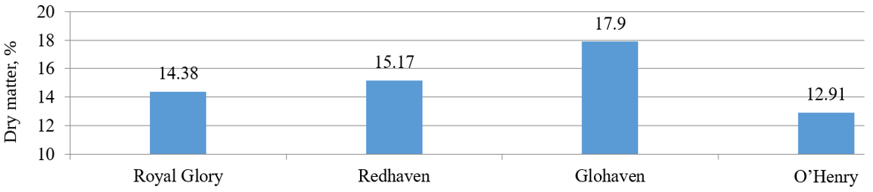
Figure 1 shows the intervarietal differentiation of peaches by dry matter as an integral characteristic of the concentration of the non-aqueous fraction. The graph shows that the highest level of dry matter was formed in the variety “Glohaven”, while the lowest was in “O’Henry”; therefore, the amplitude of variation within the group was 4.99 percentage points. The intermediate positions were occupied by “Redhaven” and “Royal Glory”, with “Redhaven” exceeding “Royal Glory” by 0.79 percentage points, and the gap between “Redhaven” and “Glohaven” was 2.73 percentage points. Thus, the graph showed not only the ranking of the varieties, but also that the main contribution to the overall range of values was provided by the contrast between “Glohaven” and “O’Henry”, while the other two varieties formed a central cluster. In the context of composition interpretation, this meant that inter-varietal differences in dry matter could determine different “density” of the compositional profile of the fruits and served as a background for further comparison of carbohydrate, acid, phenolic, and vitamin blocks.
The generalisation of the results for the peach group showed that the varietal affiliation determined the direction and scale of variations in the main components of the composition, primarily due to different concentrations of dry matter and uneven accumulation of sugars with sucrose dominance. Acidity remained low for the entire group, but retained differentiation between varieties, which changed the ratio of “sugars-acids” as an integral characteristic of the chemical profile of the fruit. Tannins were represented in small concentrations and formed a narrow interval between varieties, while the vitamin block demonstrated more pronounced differences in the content of vitamin C and β-carotene. Taken together, these observations showed that intervarietal differences within peaches were not manifested in a change in the set of components, but in a change in the relative levels, which created different compositional profiles of the fruits even while maintaining a common species affiliation.
In the nectarine group (Prunus persica var. nucipersica L.), varietal affiliation determined a different level of concentration of the non-aqueous fraction of the fruit, which was reflected in a wider amplitude of dry matter. The generalised interval of dry matter was 12.02-22.00%, and the extreme values were associated with the varieties “Morsiani 90” (maximum) and “Goldengrand” (minimum). These differences set the basic framework for interpreting further deviations in carbohydrate and acid blocks, since the change in dry matter was consistent with the change in the “density” of the chemical composition within the group.
The carbohydrate profile within the studied varieties was described by the dominance of sugars in the dry matter composition, with sucrose remaining the leading form: total sugars ranged from 8.71 ± 0.23% to 14.55 ± 0.35%, reducing sugars from 2.19 ± 0.15% to 2.89 ± 0.13%, and sucrose from 6.52 ± 0.25% to 11.66 ± 0.19%. In the acid block, a common feature for the group was preserved: total titratable acidity remained below 1.00%, with the highest value in “Goldengrand” (0.67 ± 0.03%) and the lowest value in “Fantasia” (0.29 ± 0.02%). In the phenolic and vitamin blocks, tannins were characterised by lower limits compared to peaches (0.012-0.035%), while vitamin C varied from 7.72 ± 0.25 to 8.60 ± 0.17 mg/100 g and β-carotene from 11.17 ± 0.39 to 19.93 ± 0.23 mg/kg (Table 2).
Table 2. Full composition indicators of nectarine fruits by cultivar (mean ± SD)
|
Cultivar |
Dry Matter, % |
Total Sugars, % |
Reducing Sugars, % |
Sucrose, % |
Total Titratable Acidity, % |
Tannins, % |
Vitamin C, mg/100 g |
β-Carotene, mg/kg |
|
Sungrand |
15.05 ± 0.25ᵇ |
10.79 ± 0.31ᵇ |
2.53 ± 0.18ᵇ |
8.26 ± 0.27ᵇ |
0.42 ± 0.02ᵇ |
0.025 ± 0.002ᶜ |
8.49 ± 0.33ᶜ |
11.17 ± 0.39ᵃ |
|
Goldengrand |
12.02 ± 0.23ᵃ |
8.71 ± 0.23ᵃ |
2.19 ± 0.15ᵃ |
6.52 ± 0.25ᵃ |
0.67 ± 0.03ᵈ |
0.035 ± 0.003ᵈ |
7.72 ± 0.25ᵃ |
16.15 ± 0.31ᶜ |
|
Fantasia |
18.89 ± 0.37ᶜ |
12.63 ± 0.15ᶜ |
2.37 ± 0.21ᵇ |
10.26 ± 0.27ᶜ |
0.29 ± 0.02ᵃ |
0.012 ± 0.002ᵃ |
8.60 ± 0.17ᶜ |
19.93 ± 0.23ᵈ |
|
Morsiani 90 |
22.00 ± 0.23ᵈ |
14.55 ± 0.35ᵈ |
2.89 ± 0.13ᶜ |
11.66 ± 0.19ᵈ |
0.53 ± 0.03ᶜ |
0.019 ± 0.002ᵇ |
8.20 ± 0.15ᵇ |
13.99 ± 0.15ᵇ |
The results obtained for nectarines showed that intervarietal differences were manifested primarily due to different levels of dry matter concentration and unequal intensity of sugar accumulation, with sucrose dominance. The acid profile remained within low values, but retained varietal differentiation, which changed the ratio of “sugars-acids” as an integral indicator of composition. The phenolic block was characterised by a lower level of tannins compared to peaches, and the vitamin block demonstrated relatively narrow limits for vitamin C and a wider interval for β-carotene, which was consistent with the morphological and colouristic differences of the fruits. Taken together, these observations indicated that the compositional profiles of nectarines were determined not by changes in the set of components, but by differences in the levels and ratios between varieties.
In the apricot group (Prunus armeniaca L.), it was recorded that the varietal affiliation determined the differences primarily at the level of the “concentration” characteristic of the fruit, i.e., the ratio of water and non-water fractions. Accordingly, changes in dry matter set the basic framework for further interpretation of the carbohydrate, acid, and vitamin blocks, since with higher dry matter, the proportion of total dissolved and structural components in terms of fruit mass was expected to increase. Within the compared varieties, “Silistrenska Kompotna” stood out most clearly, forming the upper limit in dry matter (21.49 ± 0.25%), while “Delmast” formed the lower limit (13.65 ± 0.13%). The carbohydrate block of apricots was characterised by the fact that sugars constituted the main part of the dry matter, and sucrose was the leading form among the identified carbohydrates. Total sugars ranged from 6.00 ± 0.19% in “Delmast” to 15.68 ± 0.39% in “Roksana”; reducing sugars ranged from 1.40 ± 0.12% to 3.05 ± 0.17%, and sucrose ranged from 4.60 ± 0.17% to 12.63 ± 0.23%. The varietal ranking according to indicators reflecting sugar content was reproducible: the highest accumulation of sugars was recorded in “Roksana”, followed by “Silistrenska Kompotna” and “Ungarska”, while “Delmast” formed the lower position in this row. Such a configuration meant that intervarietal differences in apricots were determined not by a change in the list of carbohydrate forms, but by different intensities of accumulation and different contributions of sucrose to the total sugar content.
Table 3. Full composition indicators of apricot fruits by cultivar (mean ± SD)
|
Cultivar |
Dry Matter, % |
Total Sugars, % |
Reducing Sugars, % |
Sucrose, % |
Total Titratable Acidity, % |
Tannins, % |
Vitamin C, mg/100 g |
β-Carotene, mg/kg |
|
Ungarska |
15.73 ± 0.21ᵇ |
10.47 ± 0.27ᵇ |
2.21 ± 0.16ᵇ |
8.26 ± 0.25ᵇ |
1.89 ± 0.07ᶜ |
0.035 ± 0.003ᶜ |
13.81 ± 0.29ᵃ |
22.91 ± 0.35ᵇ |
|
Delmast |
13.65 ± 0.13ᵃ |
6.00 ± 0.19ᵃ |
1.40 ± 0.12ᵃ |
4.60 ± 0.17ᵃ |
2.61 ± 0.09ᵈ |
0.029 ± 0.002ᵇ |
12.90 ± 0.21ᵃ |
18.83 ± 0.27ᵃ |
|
Roksana |
16.57 ± 0.33ᶜ |
15.68 ± 0.39ᵈ |
3.05 ± 0.17ᶜ |
12.63 ± 0.23ᵈ |
0.62 ± 0.05ᵇ |
0.050 ± 0.004ᵈ |
21.01 ± 0.13ᶜ |
26.75 ± 0.19ᶜ |
|
Silistrenska Kompotna |
21.49 ± 0.25ᵈ |
12.23 ± 0.31ᶜ |
2.47 ± 0.18ᵇ |
9.76 ± 0.20ᶜ |
0.34 ± 0.03ᵃ |
0.017 ± 0.002ᵃ |
19.67 ± 0.33ᵇ |
31.67 ± 0.39ᵈ |
The acid block in the composition of apricots differed from the other two groups of stone fruits in that organic acids were represented at a higher level, and varietal differentiation was clearly expressed. In the varietal breakdown, the top position in terms of acidity belonged to “Delmast”, followed by “Ungarska”, while “Roksana” and “Silistrenska Kompotna” were characterised by lower values. In a compositional sense, this meant that the “sugar-acid” ratio in apricots changed not only due to different sugar content, but also due to varietal differences in acidity, which could cause a different profile of organic acids within the group. The phenolic block, represented by tannins, remained low-concentrated in all studied varieties, which was consistent with the given literary framework. At the same time, varietal ranking was recorded: the highest values of tannins were associated with “Roksana”, and the lowest with “Silistrenska Kompotna”, which indicated intragroup differences in the phenolic component even at generally low concentrations. The vitamin block of apricots was described through two markers, vitamin C and β-carotene (provitamin A), with β-carotene being presented as a more indicative component for this group. The variety “Silistrenska Kompotna” formed the top position for provitamin A, while vitamin C demonstrated a different configuration: the highest values were attributed to “Roksana” and “Silistrenska Kompotna”, and the lowest to “Ungarska” and “Delmast”. Taken together, this showed that within apricots, different biochemical blocks (carbohydrate, acid, and vitamin) could change between varieties not synchronously, but along the trajectories, forming distinct compositional profiles (Table 3).
Varietal analysis of apricots showed that the leading source of intervarietal differences was changes in the concentration of dry matter and variability in the accumulation of sugars, with the dominance of sucrose, while the acid component appeared to be specifically important for this group and formed a clear ranking of varieties. Low concentrations of tannins were combined with the presence of varietal differences in the phenolic block, and the vitamin profile was characterised by a different distribution of vitamin C and provitamin A between varieties, which emphasised the different directions of varietal differentiation in different groups of nutrients. As a result, the compositional profiles of apricots were determined not by a change in the set of components, but by the ratios between the key blocks of the composition and the varietal ranking.
3.2 Interspecific comparison of compositional profiles of peaches, nectarines, and apricots
In the interspecific comparison, it was found that the most suitable “basic” feature for the primary differentiation of groups was the proportion of dry matter as an integral indicator of the concentration of the non-aqueous fraction of the fruit. For peaches, dry matter varied within 12.91-17.90%, while for nectarines, a wider interval of 12.02-22.00% was recorded, which reflected a greater amplitude of intervarietal fluctuations in this group. For apricots, dry matter varied from 13.65 ± 0.13% in “Delmast” to 21.49 ± 0.25% in “Silistrenska Kompotna”, which recorded the pronounced intragroup heterogeneity of this integral indicator. As a result, it was the differences in dry matter that set the “background” for further analysis of the carbohydrate, acid, phenolic, and vitamin blocks, since these components were interpreted as forming the total non-aqueous profile of the fruit.
The carbohydrate block in the three groups demonstrated a common structural feature: sugars were described as the leading component of dry matter, and sucrose remained the dominant form of carbohydrates. For nectarines, it was emphasised that in the presence of reducing sugars (glucose, fructose), the share was insignificant, and the main contribution to the total sugar content was provided by sucrose.
For peaches, the dominance of sucrose and intervarietal differences in total sugar content were also recorded, which were manifested as a difference in the intensity of sugar accumulation between varieties. For apricots, in addition to the qualitative dominance of sucrose, the interval of sugar variations was outlined as an indicator that reproducibly distinguished varieties by the level of “sugar” contribution to the compositional profile, and the ranking of varieties by total sugar content/sucrose was presented as constant. Thus, interspecific differences in the carbohydrate block were formed mainly not due to changes in the set of sugars, but due to different levels of accumulation and different ratios of “sugar” and “acid” components.
The acid block turned out to be key for distinguishing apricots on the one hand and peaches and nectarines on the other. In peaches, total titratable acidity ranged from 0.50 ± 0.03% to 0.78 ± 0.02%, and in nectarines from 0.29 ± 0.02% to 0.67 ± 0.03%, so both groups remained below 1.00%. For apricots, total titratable acidity was higher and ranged from 0.34 ± 0.03% in “Silistrenska Kompotna” to 2.61 ± 0.09% in “Delmast”. Thus, it was the acid block in the interspecific comparison that worked as one of the most expressive differentiating markers, along with dry matter.
The phenolic block represented by tannins was characterised by low concentrations in all three groups, but the limits of variation did not coincide. For nectarines, it was noted that the interval of tannins was lower compared to peaches, which reflected a systematic difference between the two close groups of stone fruits in the phenolic component. For apricots, the low level of tannins was confirmed by agreement with the literature framework, and was also accompanied by varietal ranking, which indicated intragroup differentiation even at generally small values. In a compositional sense, this meant that the phenolic block in the three groups did not form a “presence/absence contrast”, but manifested itself through a shift in the limits of variation and different severity of intervarietal differences.
The vitamin block demonstrated different configurations for vitamin C and β-carotene. For nectarines, a relatively narrow interval of vitamin C and a simultaneously wider interval of β-carotene were recorded: vitamin C varied within 7.72-8.60 mg/100 g, while β-carotene ranged from 11.17 to 19.93 mg/kg. For peaches, the content of vitamin C and β-carotene also showed intervarietal variability, with “Glohaven” having the highest vitamin C value (15.24 ± 0.23 mg/100 g) and “O’Henry” having the minimum value (7.39 ± 0.23 mg/100 g); β-carotene in peaches ranged from 11.57 to 17.23 mg/kg. For apricots, β-carotene showed higher representation under the conditions of this study, ranging from 18.83 to 31.67 mg/kg, while vitamin C showed clear varietal differentiation, including a difference of 7.20 mg/100 g between “Ungarska” and “Roksana”. These differences in vitamin C levels confirm its role not only as an indicator of nutritional value but also as a marker of fruit maturity and quality, which is reflected in the ability to accumulate antioxidants and maintain taste qualities. Taken together, this meant that the interspecific differentiation by vitamin block was determined not only by the levels of indicators, but also by which marker (vitamin C or β-carotene) showed stronger intervarietal differentiation within each group (Table 4).
Table 4. Interspecific comparison of key composition indicators
|
Indicator |
Peaches |
Nectarines |
Apricots |
|
Dry matter, % |
12.91-17.90% |
12.02-22.00% |
13.65-21.49%; highest in “Silistrenska Kompotna” |
|
Sugars (structure/role) |
Total sugars 8.61-13.69%; reducing sugars 2.15-3.27%; sucrose 6.37-10.42%; sucrose dominated |
Total sugars 8.71-14.55%; reducing sugars 2.19-2.89%; sucrose 6.52-11.66%; sucrose dominated |
Total sugars 6.00-15.68%; reducing sugars 1.40-3.05%; sucrose 4.60-12.63%; sucrose dominated |
|
Total titratable acidity, % |
0.50-0.78% |
0.29-0.67% |
0.34-2.61%; higher acid range than peaches and nectarines |
|
Tannins, % |
0.033-0.052% |
0.012-0.035% |
0.017-0.050% |
|
Vitamin C, mg/100 g |
7.39-15.24 mg/100 g |
7.72-8.60 mg/100 g |
12.90-21.01 mg/100 g; highest in “Roksana” and “Silistrenska Kompotna” |
|
β-carotene (provitamin A) |
11.57-17.23 mg/kg; lower than apricots under the conditions of this study |
11.17-19.93 mg/kg |
18.83-31.67 mg/kg; highest in “Silistrenska Kompotna” |
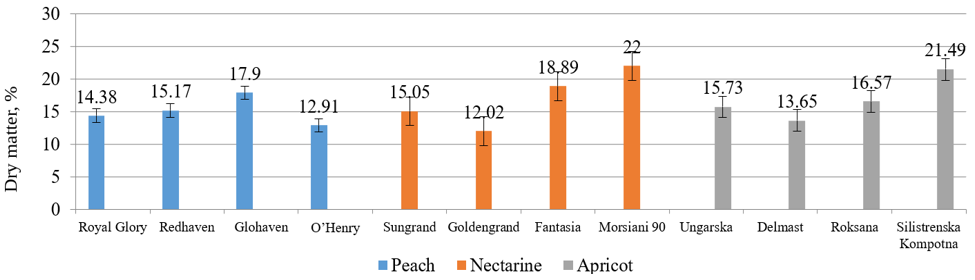
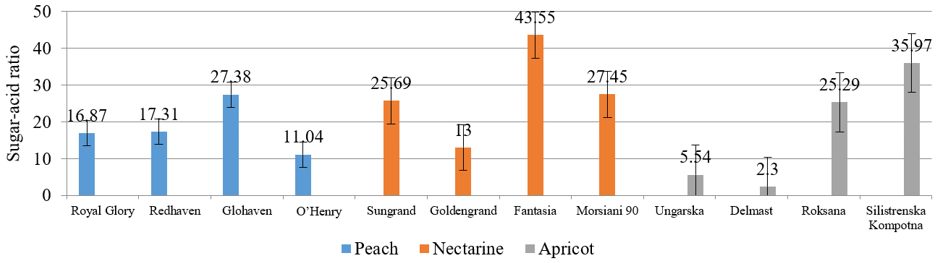
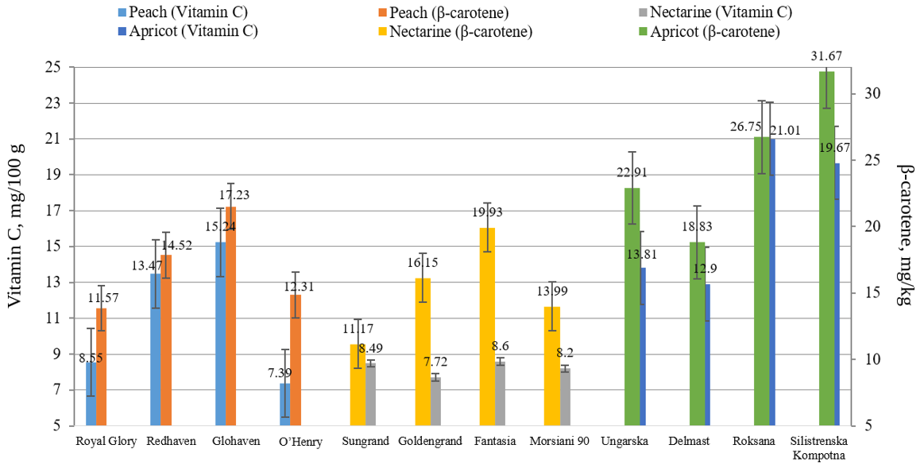
To strengthen the visual support for the interspecific comparison, Figures 2-4 summarise cultivar-level dry matter, sugar-acid distribution and vitamin markers for all three stone-fruit species. The figures use the same mean values and standard deviations as Tables 1-3.
Figure 3. Sugar-acid ratio of peach, nectarine and apricot cultivars
The added visualisations confirm that the three species differ not only by the numerical ranges presented in Tables 1-4, but also by the configuration of compositional markers. Dry matter separated high-concentration nectarine and apricot cultivars from lower peach and nectarine values; the sugar-acid plot showed the distinct high-acidity position of several apricot cultivars; and the vitamin-marker chart emphasised the stronger β-carotene representation of apricots together with cultivar-specific variation in vitamin C.
The generalisation of the interspecific comparison showed that the compositional profiles of the three groups of stone fruits were determined primarily within two interrelated coordinates: concentration, which reflected the proportion of dry matter as an integral background of the composition, and acidity, which characterised the level of organic acids. The combination of these coordinates determined the ratio of the main blocks of the composition and the spatial configuration of indicators within each group. The concentration component set the general level of accumulation of the non-aqueous fraction, while the acid component set the nature of the internal equilibrium between sugars and organic acids. It was through this ratio that both common features between individual species and differences within the limits of species and varietal variations were traced.
Peaches and nectarines were characterised by a similar structure of the carbohydrate block, with the dominance of sucrose and relatively low acidity; however, the limits of variations of individual components and the nature of intervarietal fluctuations in these groups did not coincide. This reflected a different configuration of the accumulation of dry matter, sugars, and accompanying components within the varietal spectrum. For apricots, a different ratio of sugar and acid blocks was recorded, in which organic acids occupied a more prominent place in the general compositional profile, which determined a different structure of the “sugar-acid” ratio. Under such conditions, apricots formed a separate type of combination of concentration and acid characteristics within the general system of stone fruits. The phenolic block in all three groups retained a low-concentrated character, and intergroup differentiation was manifested through the limits of variation and the order of intraspecific ranking of varieties. The vitamin block complemented this differentiation system: for nectarines, a combination of more compact variability of vitamin C with a wider differentiation of β-carotene was recorded, while in apricots, β-carotene and vitamin C formed a different configuration of varietal differences. As a result, interspecific features were determined not by isolated indicators, but by the structure of connections between the main blocks of composition, the limits of the variations, and the nature of the intragroup distribution of values.
The compositional profiles of peaches, nectarines, and apricots were differentiated by several interconnected groups of indicators: dry matter, carbohydrate fractions, total titratable acidity, tannins, vitamin C, and β-carotene. These differences should be interpreted not as evidence of the overall superiority of one fruit or variety, but as differences in compositional orientation under the conditions of this study. Dry matter reflects the concentration of the non-aqueous fraction and is important for processing yield and texture; sugars and acidity jointly shape taste and sugar-acid balance; tannins are related to the phenolic block; and vitamin C and β-carotene reflect nutritional markers with different stability during storage and processing [17-21]. Therefore, the same numerical direction does not have the same meaning for all uses: higher sugar content may be favourable for sweet taste or some processing purposes, higher acidity may be useful for products requiring pronounced acid balance, and higher β-carotene or vitamin C may indicate nutritional advantages without necessarily meaning better overall fruit quality.
The observed differences may be linked to varietal genotype, maturity stage, microclimatic conditions, and cultivation background. Since the samples were obtained from conventional production in north-eastern Bulgaria and the exact tree age and detailed cultivation management were not controlled as separate experimental factors, the results should be considered primarily applicable to the studied varieties, batches, years, and growing conditions. This interpretation is consistent with studies showing that stone-fruit composition is influenced by genotype, ripening stage, environmental conditions, and post-harvest or processing factors.
The accumulation of organic acids in peach in combination with metabolomic and transcriptomic characteristics was considered by Song et al. [22], where the acid profile of fruits was analysed in connection with the functioning of metabolic pathways that regulate the synthesis, transformation, and deposition of organic acids during fruit formation. The work showed that variations in acidity were accompanied by changes in the content of basic organic acids, as well as differences in the expression of genes associated with vacuolar transport, enzymatic reactions of the tricarboxylic acid cycle, and the redistribution of metabolites in fruit tissues. The acidity of peach fruits in the studied genotypes remained at a level below 1%, while differences were recorded between individual varieties both in terms of the general acid background and in the ratio of individual acids. This approach allowed considering acidity not only as an analytical indicator, but as the result of a combination of genotypic features with environmental regulation of metabolism. Within the framework of the conducted study, the organic acid block in peach was also characterised by variability within the species, and the varietal distribution of acidity indicators formed one of the axes of intraspecific differentiation. Comparison with the data of Song et al. [22] shows that variations in acidity in peach can be interpreted as a manifestation not only of quantitative differences between varieties, but also of different intensities of metabolic processes associated with the accumulation of organic acids.
Gómez-Martínez et al. [23] showed that for apricots, the carbohydrate profile was formed mainly by sucrose and glucose, while in the acid block, the leading place was occupied by malic and citric acids. Within the framework of this work, differences were observed between cultivars both in the total content of sugars and in the concentrations of individual organic acids, which reflected different types of intraspecific organisation of the chemical composition. Along with this, the analysis of ascorbic acid revealed intervarietal variation, which complemented the differentiation of apricot by carbohydrate and acid components. Thus, the authors’ results characterized apricot as a crop within which the sugar, acid, and vitamin blocks do not change in isolation, but within a common varietal configuration. This relationship is consistent with the results of the study, where for all three groups of stone fruits in the carbohydrate profile, the dominance of sucrose was recorded, and apricot was distinguished by a different position in the acid block. The varietal differentiation in vitamin C established for apricot also correlates with the data of Gómez-Martínez et al. [23], in which ascorbic acid varied between cultivars along with fluctuations in the sugar and acid profile. Taken together, this allows considering apricot as a separate compositional model within stone fruits, where the dominance of sucrose is combined with a more pronounced contribution of organic acids and with differentiation of the vitamin component.
The phenolic profile of apricot as a sign of genotypic differentiation was characterised by Morales et al. [24], where the content of individual groups of phenolic compounds was used to distinguish varieties and genotypes within the harvesting season. In this work, the analysis covered not only the total content of phenolic substances, but also the distribution of individual phenolic classes, which made it possible to trace which components formed intervarietal differences. It was shown that the phenolic profile of apricot changed depending on the genotype, and the ratio between individual phenolic compounds served as the basis for chemical differentiation of the studied material. With this approach, the phenolic block appeared not as a homogeneous indicator, but as a multicomponent system, within which varietal differentiation occurred through the quantitative ratios of individual substances. In the study, the phenolic component was represented by the content of tannins and the intraspecific ranking of varieties according to this indicator. Comparison with the results of Morales et al. shows that the integral representation of the phenolic block through tannins is consistent with the general logic of varietal differentiation, while the detailing to the level of individual phenolic classes reveals the internal structure of this variability at a deeper analytical level.
Meena et al. [25] summarised data on the chemical composition of stone fruits, focusing on carbohydrates, organic acids, vitamins, carotenoids, and phenolic compounds as the main components that determine the nutritional and biochemical characteristics of the fruits. Within the framework of the review analysis, it was shown that the variability of the composition of stone fruits is formed under the influence of genotype, growing conditions, degree of ripeness, post-harvest processes, and technological processing. Such a description scheme allows considering the composition of fruits as a system of interconnected blocks, where not only the absolute content of individual substances is important, but also the ratio between individual components. The results of the comparison of peaches, nectarines, and apricots correlate with this approach, since all three groups presented a common set of basic blocks: dry matter, sugars, organic acids, tannins, vitamin C, and β-carotene. The differences were manifested not in the set of components, but in the limits of the variations and in the nature of the combination of individual blocks within each species. In particular, the concentration component in peaches and nectarines formed a wider range of varietal fluctuations, while apricots were characterised by a different position of the acid block in the overall structure of the composition. Thus, the generalisation of Meena et al. [25] correlates with the data obtained at the level of a systematic description of the sources of variability of stone fruits.
Comparative analysis of composition and antioxidant characteristics at the level of cultivars of another fruit object was applied by Yasmin et al. [26], where intervarietal differences were traced by the set of nutrient and bioactive components, and the chemical profile of each cultivar was described as a combination of several interrelated indicators. Within the framework of this work, it was shown that varietal differentiation was not reduced to one dominant parameter, but was formed through a combination of sugars, organic acids, antioxidant components, and accompanying biochemical characteristics. This approach correlates with the results of the study of stone fruits, where each group also had its own configuration of the leading axes of variation. For peaches and nectarines, the central place in the differentiation system was occupied by dry matter and the carbohydrate block, while for apricots, the acid component and β-carotene were more clearly manifested. In this ratio, varietal variability was revealed as a structural distribution of indicators within the species, and interspecific differences were revealed as a different configuration of the same blocks within the comparative scheme. Therefore, the results of Yasmin et al. correlate with the logic of the analysis, where the compositional profile of each fruit group was described through a set of interconnected components, and not through a separate, isolated indicator.
Karaçelik [27] characterised apricot cultivars by phytochemical profiling and related bioactivity indicators, where the phenolic block was one of the parameters of intercultivar differentiation. Within the framework of this study, the analysis covered the composition of individual phytocomponents, the quantitative ratios, and the relationship with indicators of biological activity, which allowed considering the chemical profile of apricot as a multicomponent system. Intercultivar differences were traced through the unequal distribution of phenolic compounds, as well as through variations in indicators related to the antioxidant properties of fruits. This approach set a profile model of the phenolic block, within which the varietal differentiation was based on the structure of individual phytochemical components. In the study, the phenolic component of apricot was represented through the content of tannins, and the varietal ranking was based on this indicator. Comparison with the results of Karaçelik shows that the integral representation of the phenolic block through tannins is consistent with the general scheme of intervarietal differentiation, while the profiling of individual phytochemicals details the internal structure of this differentiation.
Núñez-Cárdenas et al. [28] analysed the carbon footprint of stone fruit production and showed that the final estimated values varied depending on the chosen life cycle approach and the boundaries of the assessment system. For nectarines from southeastern Spain, different quantitative indicators were obtained under alternative calculation schemes, reflecting the sensitivity of the environmental assessment to the methodology for accounting for production stages, logistics, packaging, and associated resource costs. In this context, the characteristics of the raw material can be considered as one of the background parameters accompanying the production scenarios. For peaches, nectarines, and apricots, the compositional profiles formed by dry matter, sugar-acid ratio, phenolic, and vitamin blocks set different parameters of the raw material organisation of the fruit [29-33]. With this approach, compositional indicators can be included in a broader model of describing fruit batches in processing, transportation, and storage systems, where the biochemical configuration of the raw material is correlated with the technological and logistical conditions of the agri-food chain.
The “variety-compositional profile-applied properties” approach was used by Perveen and Bokahri [34] when analysing the chemical and mineral composition of different date varieties with an additional definition of biological activity. Within the framework of this work, each variety was described through a combination of proximate indicators, mineral composition, and accompanying bioactive characteristics, which made it possible to trace how varietal affiliation correlates with a certain configuration of the nutrient profile. With this approach, the varietal level of analysis was combined with a characteristic of the potential applied properties of the fruits, which arose from the peculiarities of the composition. A similar logic was observed in the study of peaches, nectarines, and apricots, where varietal variability was manifested through the configuration of dry matter, sugars, acids, tannins, vitamin C, and β-carotene. At the same time, the comparative scheme was deployed simultaneously at two levels-intraspecific and interspecific, which allowed correlating the varietal structure of each group with the position of the species in the general space of stone fruits. Under such conditions, the compositional profile served as a form of description not only of varietal specificity but also of interspecific differentiation within related crops.
Sharma et al. [35] compared the proximate, mineral, and phytochemical composition of pomegranate separately for the peel, seeds, and powder of the whole fruit, where the key element of the analytical design was the differentiation of morphological parts of one fruit object. Within this approach, each matrix was characterised by its own combination of nutrient, mineral, and phytochemical indicators, which allowed tracing the intra-fruit heterogeneity of the composition. The distribution of components between the peel, seeds, and whole powder formed several profiles within one species, and the differences between these profiles were determined by the structure of the studied tissue and the method of sample preparation. In the study of stone fruits, the compositional profile was analysed at the level of the edible part without division into separate morphological fractions. Such a comparison fixes the difference between two schemes for describing fruit composition: matrix, focused on intra-fruit differentiation, and integral, within which the comparison is made between varieties and species according to a set of integral indicators.
The influence of different technologies for drying stone fruits on the physical, chemical, and biological properties of dry products was systematised by Vakula et al. [36]. Within the framework of the generalisation, it was shown that the final profile of dried raw materials changes depending on the temperature regime, the duration of the process, the type of drying, and the intensity of moisture removal. The changes covered both the concentration characteristics associated with dehydration and the redistribution of acids, sugars, phenolic compounds, and other components sensitive to thermal and technological action. In this context, the results for fresh peaches, nectarines, and apricots can be correlated with the initial state of the raw materials before technological transformation. Dry matter and the ratio of “sugars-acids” with this approach appear as initial parameters, relative to which the change in composition during drying can be traced. Therefore, the compositional profiles of fresh fruits form an analytical basis for further comparison with the profiles of dried products.
The mechanisms of stone formation in fruits of the genus Prunus with an emphasis on the regulation of endocarp lignification and the significance of these processes for breeding directions were described by Khan et al. [37]. In this work, attention was focused on fruit morphogenesis, tissue specialisation, and molecular biological mechanisms that determine the formation of a lignified layer around the seed. This approach characterised intrageneric variability at the level of structural organisation of the fruit and genetically controlled morphological traits. The study analysed the chemical composition of the edible part of the fruit and its varietal variability. Comparison with the work of Khan et al. shows that genotypic differentiation within Prunus manifests itself simultaneously at the morphogenetic and compositional levels: in one case, through the formation of the stone, in the second, through the ratio of dry matter, sugars, acids, phenolic components, and vitamin markers. Under such conditions, the morphological specialisation of the fruit and the biochemical configuration of the pulp can be considered as different planes of manifestation of species and varietal variability.
A comparative approach to assessing the polyphenol profile and nutritional value of non-traditional fruit species, focusing on interspecific and intersample differentiation in the content of bioactive compounds, was applied by Jurikova et al. [38]. Within the framework of this study, the phenolic block was considered as a multicomponent system in which the quantitative ratio of individual polyphenol classes formed the chemical specificity of each species. Along with phenolic components, nutritional value indicators were analysed, which allowed correlating the profile of bioactive substances with the overall composition of the fruit. This approach reflected the phenolic block as one of the central levels of interspecific differentiation. In the study of stone fruits, the phenolic component was represented through tannins as an integral indicator and through the intraspecific ranking of varieties. Comparison with the results of Jurikova et al. shows that the phenolic block can be described both in the form of a total indicator and through a detailed profile of individual polyphenolic groups, while the structure of intervarietal and interspecific differences is preserved in both analytical formats.
The influence of macronutrients on the growth, yield and quality parameters of stone fruits, linking mineral nutrition with the formation of morphological and physicochemical characteristics of fruits, was summarised by Lateef et al. [39]. Within the framework of this review, it was shown that the provision of nutrients affects the accumulation of dry matter, sugars, organic acids and accompanying components, as well as the intensity of the formation of productive and quality traits. With this approach, the compositional profile of fruits was considered as the result of the interaction of the genotype with the nutrition regime and growing conditions. In the conducted study, the main differentiation was recorded at the varietal level in terms of dry matter, acidity, and vitamin markers. Comparison with the work of Lateef et al. embeds these results in a broader agrobiological context, in which the varietal variability of composition indicators correlates with the action of soil and nutrient factors that accompany the formation of stone fruit quality.
Physicochemical analysis of apricot with the characteristics of the soil profile of the mid-mountain region, which allowed considering fruit quality indicators in connection with the conditions of the growing location, was combined by Thakur [40]. Within the framework of the study, sugars, organic acids, vitamin components and other physicochemical parameters of apricots were analysed in combination with a description of the soil properties that accompanied the cultivation of the crop. Such a scheme reflected the relationship between the composition of the fruit and the environmental characteristics of the growing location. The data of the study conducted on apricot, in particular on the acid block, sugar profile and vitamin markers, correlate with this approach in terms of considering physicochemical indicators through a combination of varietal structure and environmental conditions. Within the framework of the comparative scheme for apricots, the main place was occupied by intraspecific ranking of varieties according to the set of indicators that formed a separate configuration of the compositional profile within the species.
Cho et al. [41] performed cyanide profiling in stone fruit syrups using Prunus mume as an example using a comparison of distillation techniques and analytical derivatisation. In this study, the subject of analysis was processed products and specific safety indicators related to the content of cyanogenic compounds. This approach was focused on analytical control of components that are important for assessing the safety of finished products, as well as on comparing methodological schemes for the quantitative determination. In the study conducted for peaches, nectarines and apricots, the composition of fresh fruits was assessed in terms of dry matter, sugars, acidity, tannins, and vitamin markers. Comparison with the work of Cho et al. [41] distinguishes two planes of stone fruit characterisation: compositional, focused on the nutrient and biochemical profile, and safety, focused on the control of specific compounds in processed products.
The influence of different mulching materials on the microclimate and quality of apricot fruits, tracing changes in physicochemical indicators in connection with the modification of environmental conditions, was studied by Li et al. [42]. Within the framework of this work, parameters related to the temperature and moisture regime of the soil were analysed, as well as changes in fruit quality indicators that accompanied the use of different types of mulch. This research scheme combined agrotechnical influence with the physicochemical characteristics of apricot. In the comparison conducted, data on apricot, including the acid block and vitamin markers, correlate with the approach to considering fruit quality as a result of a combination of varietal and environmental factors. Within the framework of the comparison performed for apricots, the intraspecific configuration of indicators according to the ratio of “sugars-acid” and the vitamin block was traced.
Abdisa et al. [43] compared the proximate composition, phytochemical and antinutrient components in the pulp and seeds of another fruit object, clearly delimiting individual fruit matrices as sources of different composition profiles. Within this approach, the composition of the pulp and seeds was considered as a system of two distinct chemical spaces, each of which was characterised by its own ratios of nutrient, phytochemical and antinutrient indicators. This scheme made it possible to trace the intra-fruit heterogeneity of the composition and matrix differentiation of components. In the study of stone fruits, the compositional profile of the edible part was analysed without dividing it into pulp and seeds. Comparison with the work of Abdisa et al. [43] fixes the difference between the matrix approach, focused on the internal structure of one fruit object, and the holistic approach, within which the comparison is made between varieties and species according to the set of integral indicators.
Sample preparation methods for the quantitative determination of heavy metals in plum orchard systems, focusing on the analytical chemistry of contaminants and the methodological reproducibility of measurements, were compared by Rusu et al. [44]. Within the framework of this study, the key task was to compare laboratory procedures capable of providing a stable and comparable determination of the content of metals in plant material and related objects of the orchard system. This approach represented the sanitary-analytical direction of studying fruit raw materials. In the study conducted for peaches, nectarines and apricots, contaminants were not determined, and the quality profile was formed on the basis of dry matter, sugars, organic acids, tannins, vitamin C, and β-carotene. Comparison with the work of Rusu et al. [44] outlines the coexistence of two analytical levels in the characterisation of fruits: compositional and sanitary-chemical.
Redondo et al. [45] showed that the bulk of phenolic compounds of stone fruits are localised in the skin and pits, while in the pulp the concentration is lower and decreases during the ripening process. In this work, the spatial distribution of phenolic components in the fruit was considered as a result of tissue specialisation and ripening dynamics, which determines the differences between morphological fractions in terms of saturation with bioactive compounds. Such data correlate with the low concentrations of tannins recorded in the pulp of the studied peaches, nectarines, and apricots. With this comparison, the integral phenolic index obtained for the edible part of the fruit is consistent with the idea of an uneven distribution of phenolic compounds between the pulp, skin, and pit.
Martín-Diana et al. [46] found that varietal differences characteristic of fresh fruits were also reproduced in processed products, and some varieties retained elevated values of the phenolic profile also in by-products. In this work, the varietal specificity of the chemical composition was considered as one that preserves structural continuity when moving from fresh raw materials to processed products and secondary fractions. This approach allowed correlating the biochemical characteristics of fresh fruits with the parameters of products obtained in the technological cycle. In the study, varietal rankings for peaches, nectarines, and apricots were also formed through a combination of concentration, acid, phenolic, and vitamin blocks. Comparison with the results of Martín-Diana et al. [46] shows that the varietal structure of the compositional profile can retain analytical value for both fresh fruits and processed products.
From an applied point of view, the results are useful for separating fresh-consumption quality, processing suitability, and nutritional markers. For fresh consumption, the sugar-acid ratio is important because it affects taste balance [47-51]. For processing, dry matter can influence yield, concentration behaviour, and suitability for purées, jams, dried products, and concentrates. Acidity is relevant for recipe correction and product stability, while vitamin C and β-carotene are useful markers when selecting raw materials for products with nutritional positioning [52-56]. Therefore, varietal selection should be based on the intended use of the fruit rather than on a single indicator.
The generalisation of the comparisons showed that the established patterns corresponded to how the sources of variability in the composition of stone fruits were described in the literature, in particular, the leading role of genotypic differences in combination with the influence of environmental conditions, agrotechnical factors, and post-harvest processes. Within the framework of the comparison, interspecific differentiation was most clearly traced in the acid block, while the carbohydrate profile of all three groups was characterised by the dominance of sucrose and the preservation of the structure of basic sugars. The concentration component, represented by dry matter, acted as a background parameter that set the limits of variation for other blocks and reflected the peculiarities of the accumulation of the non-aqueous fraction within the varietal spectrum. At the same time, a comparison with works that used approaches to detailed phenolic profiling or carotenoid analysis in the post-harvest period outlined the possibility of deepening the interpretation by expanding the phenolic block from an integral indicator to the level of phenolic classes. Similarly, studies focused on the dynamics of pigment and vitamin composition during storage and processing have demonstrated the feasibility of testing the stability of vitamin markers under different growing, storage, and processing regimes. Under such conditions, the compositional profiles established for peaches, nectarines, and apricots can be considered as a basic comparative framework within which additional analytical levels of detail refine the structure of varietal rankings without changing the general system of blocks “dry matter-sugars-acids-phenolic component-vitamin markers”.
A comparative analysis of peach, nectarine, and apricot fruits was carried out at the varietal and interspecific levels using dry matter, carbohydrate profile, total titratable acidity, tannins, vitamin C, and β-carotene as the main composition indicators.
For dry matter, peaches ranged from 12.91 to 17.90%, with the highest value recorded in “Glohaven” and the lowest in “O’Henry”. Nectarines showed a wider range of 12.02-22.00%, with the highest value associated with “Morsiani 90” and the lowest with “Goldengrand”. In apricots, the highest dry matter level was recorded in “Silistrenska Kompotna”.
For sugars, sucrose was the dominant carbohydrate fraction in all three fruit groups. In apricots, total sugar content ranged from 6.00 to 15.68%, with the highest accumulation recorded in “Roksana”, followed by “Silistrenska Kompotna” and “Ungarska”, while “Delmast” occupied the lower position.
For acidity and sugar-acid balance, peaches and nectarines were characterised by total titratable acidity below 1.00%, while apricots showed a higher acid range of 0.34-2.61%. Therefore, apricots formed a different sugar-acid profile from peaches and nectarines under the conditions of this study.
For phenolic and vitamin indicators, tannins remained low in all groups: 0.033-0.052% in peaches, 0.012-0.035% in nectarines, and 0.017-0.050% in apricots. Vitamin C ranged from 7.39 to 15.24 mg/100 g in peaches and from 7.72 to 8.60 mg/100 g in nectarines. β-carotene ranged from 11.57 to 17.23 mg/kg in peaches and from 11.17 to 19.93 mg/kg in nectarines, while apricots were distinguished by higher β-carotene representation.
The practical implication of the study is that variety selection should depend on the intended use. Fruits with higher dry matter may be more suitable for processing where concentration and yield are important; varieties with a favourable sugar-acid ratio may be selected for fresh consumption or recipe balance; and varieties with stronger vitamin markers may be used for products positioned by nutritional value. The results should not be generalised as stable characteristics of all peaches, nectarines, or apricots, because they are limited to the studied varieties, batches, years, and production conditions. Further research should include a wider variety of spectra, full numerical rows for all indicators, and stronger control of yearly, orchard, and cultivation-management factors.
[1] Pashova, S. (2024). Study of the quality of peaches, nectarines and apricots based on morphological characteristics. Economics and Computer Science, 1: 18-35. https://eknigibg.net/Volume10/Issue1/spisanie-br1-2024_pp.18-35.pdf.
[2] Vasileva, A., Durakova, A., Kalaydzhiev, H., Dimitrova-Dicheva, M., Goranova, Z., Vasilev, V., Temelkova, M. (2024). Nectarine powder of Bulgarian origin: Physicochemical composition, antioxidant activity, microbiological and sorption characteristics. Heliyon, 10(1): e24059. https://doi.org/10.1016/j.heliyon.2024.e24059
[3] Mihaylova, D., Terziyska, M., Desseva, I., Popova, A., Lante, A. (2024). Optimization of ultrasound-assisted extraction of free phenolic compounds and in vitro biological activity from peach fruit using response surface methodology. Applied Sciences, 14(10): 4286. https://doi.org/10.3390/app14104286
[4] Mrázová, M., Rampáčková, E., Šnurkovič, P., Ondrášek, I., Nečas, T., Ercisli, S. (2021). Determination of selected beneficial substances in peach fruits. Sustainability, 13(24): 14028. https://doi.org/10.3390/su132414028
[5] Alajil, O., Sagar, V.R., Kaur, C., Rudra, S.G., Sharma, R.R., Kaushik, R., Verma, M.K., Tomar, M., Kumar, M., Mekhemar, M. (2021). Nutritional and phytochemical traits of apricots (Prunus armeniaca L.) for application in nutraceutical and health industry. Foods, 10(6): 1344. https://doi.org/10.3390/foods10061344
[6] Wu, H.M., Xu, Y.Y., Wang, H., Miao, Y.Y., Li, C.Y., Zhao, R.R., Shi, X.W., Wang, B. (2022). Physicochemical characteristics, antioxidant activities, and aroma compound analysis of seven peach cultivars (Prunus persica L. Batsch) in Shihezi, Xinjiang. Foods, 11(19): 2944. https://doi.org/10.3390/foods11192944
[7] Karatas, N. (2022). Evaluation of nutritional content in wild apricot fruits for sustainable apricot production. Sustainability, 14(3): 1063. https://doi.org/10.3390/su14031063
[8] Petruccelli, R., Bonetti, A., Ciaccheri, L., Ieri, F., Ganino, T., Faraloni, C. (2023). Evaluation of the fruit quality and phytochemical compounds in peach and nectarine cultivars. Plants, 12(8): 1618. https://doi.org/10.3390/plants12081618
[9] Wang, Y., Hao, Y.J., Zhou, D.D., Pan, L.Q., Tu, K. (2023). Differences in commercial quality and carotenoids profile of yellow- and white-fleshed nectarine fruit during low temperature storage and the regulation of carotenoids by sugar. Postharvest Biology and Technology, 197: 112206. https://doi.org/10.1016/j.postharvbio.2022.112206
[10] Sarıdaş, M.A., Ağçam, E., Ünal, N., Akyıldız, A., Kargı, S.P. (2024). Comprehensive quality analyses of important apricot varieties produced in Türkiye. Journal of Food Composition and Analysis, 125: 105791. https://doi.org/10.1016/j.jfca.2023.105791
[11] ISO 1026:1982. (1982). Fruit and vegetable products-Determination of dry matter content by drying under reduced pressure and of water content by azeotropic distillation. https://www.iso.org/standard/5498.html.
[12] BDS 7169:1989. (1989). Products from processed fruits and vegetables. Determination of sugar's content. https://bds-bg.org/bg/project/show/bds:proj:25761.
[13] ISO 750:1998. (1998). Fruit and Vegetable Products-Determination of Titratable Acidity. https://www.iso.org/standard/22569.html.
[14] BDS 6996:1993. (1993). Products from processed fruits and vegetables; meat-vegetable cans. Methods for determination of titratable acidity. https://bds-bg.org/en/project/show/bds:proj:25646.
[15] BDS 11812:1991. (1991). Products from processed fruits and vegetables. Determination of ascorbic acid (vitamin C) content. https://bds-bg.org/en/project/show/bds:proj:16308.
[16] BS EN 12823-1:2014. (2014). Foodstuffs. Determination of vitamin A by high performance liquid chromatography-Measurement of all-E-retinol and 13-Z-retinol. https://knowledge.bsigroup.com/products/foodstuffs-determination-of-vitamin-a-by-high-performance-liquid-chromatography-measurement-of-all-e-retinol-and-13-z-retinol.
[17] Turmukhambetov, A.Z., Buketova, G.K., Gafurov, N.M., Adekenov, S.M. (1999). Chrysartemin A and canin from Achillea nobilis. Chemistry of Natural Compounds, 35(1): 102. https://doi.org/10.1007/BF02238225
[18] Adekenov, S.M., Gafurov, N.M., Turdybekov, K.M., Lindeman, S.V., Struchkov, Yu.T. (1992). Transannular cyclization of the E,E-germacradienolide hanphyllin. Chemistry of Natural Compounds, 28(5): 444-451. https://doi.org/10.1007/BF00630647
[19] Nabiyev, A., Kazimova, İ., Mammadaliyeva, M., Maharramova, S., Nasrullayeva, G., Yusifova, M. (2024). Determining biochemical qualitative indicators of grapes during long-term storage. Eastern-European Journal of Enterprise Technologies, 2(11-128): 64-75. https://doi.org/10.15587/1729-4061.2024.302794
[20] Tkach, V.V., Kushnir, M.V., Kopiika, V.V., et al. (2023). Theoretical description for ibotenic acid and muscazone determination in mushroom pulp and biological liquids over conducting polymer-modified electrode. Biointerface Research in Applied Chemistry, 13(3): 275. https://doi.org/10.33263/BRIAC133.275
[21] Kozyatnyk, I., Świetlik, J., Raczyk-Stanisławiak, U., Dabrowska, A., Klymenko, N., Nawrocki, J. (2013). Influence of oxidation on fulvic acids composition and biodegradability. Chemosphere, 92(10): 1335-1342. https://doi.org/10.1016/j.chemosphere.2013.05.046
[22] Song, H.Y., Zhao, K., Wang, X.A., et al. (2024). Multi-omics analysis uncovers the mechanism for enhanced organic acid accumulation in peach (Prunus persica L.) fruit from high-altitude areas. Plants, 13(22): 3171. https://doi.org/10.3390/plants13223171
[23] Gómez-Martínez, H., Bermejo, A., Badenes, M.L., Zuriaga, E. (2021). Nutraceutical profiles of apricots (Prunus armeniaca L.) as a source of fruit quality traits for breeding. Spanish Journal of Agricultural Research, 19(4): e0703. https://doi.org/10.5424/sjar/2021194-18331
[24] Morales, J., Gómez-Martínez, H., Bermejo, A. (2025). Phenolic profiles of different apricot varieties grown in Spain: Discrimination among cultivars during the harvest season. Agronomy, 15(7): 1652. https://doi.org/10.3390/agronomy15071652
[25] Meena, N.K., Choudhary, K., Negi, N., Meena, V.S., Gupta, V. (2021). Nutritional composition of stone fruits. In Production Technology of Stone Fruits, pp. 227-251. https://doi.org/10.1007/978-981-15-8920-1_9
[26] Yasmin, A., Sumi, M.J., Akter, K., Rabbi, R.H., Almoallim, H.S., Ansari, M.J., Hossain, A., Imran, S. (2024). Comparative analysis of nutrient composition and antioxidant activity in three dragon fruit cultivars. PeerJ, 12: 17719. https://doi.org/10.7717/peerj.17719
[27] Karaçelik, A.A. (2023). Phytochemical profiling, antioxidant activities and in vitro/in silico enzyme inhibitory potentials of apricot cultivars grown in Igdir/Turkey. South African Journal of Botany, 156: 257-267. https://doi.org/10.1016/j.sajb.2023.03.038
[28] Núñez-Cárdenas, P., Miguel, G.S., Banales, B., Álvarez, S., Diezma, B., Correa, E.C. (2022). The carbon footprint of stone fruit production: Comparing process-based life cycle assessment and environmentally extended input-output analysis. Journal of Cleaner Production, 381(1): 135130. https://doi.org/10.1016/j.jclepro.2022.135130
[29] Mammadov, K. (2025). Relationship between soil fertility in foothills and inorganic components. BIO Web of Conferences, 151: 04010. https://doi.org/10.1051/bioconf/202515104010
[30] Bardule, A., Grinfelde, I., Lazdina, D., Bardulis, A., Sarkanabols, T. (2018). Macronutrient leaching in a fertilized juvenile hybrid aspen (Populus tremula L. × P. tremuloides Michx.) plantation cultivated in an agroforestry system in Latvia. Hydrology Research, 49(2): 407-420. https://doi.org/10.2166/nh.2017.054
[31] Kullaj, E., Shahini, S., Varaku, S., Çakalli, M. (2017). Evaluation of the efficacy for reducing copper use against downy mildew control in organic Mediterranean viticulture. International Journal of Pest Management, 63(1): 3-9. https://doi.org/10.1080/09670874.2016.1209252
[32] Rahimova, S.A., Novruzova, E.S. (2023). Anthosians of Morus Nigra L. fruit growing in the territory of Nakhchivan Autonomous Republic. International Journal of Bioscience and Biochemistry, 5(2): 17-19. https://doi.org/10.33545/26646536.2023.v5.i2a.45
[33] Novruzova, E. (2025). Biochemical composition and pharmacological potential of species of the genus Arenaria L. Scientific Horizons, 28(1): 85-99. https://doi.org/10.48077/scihor1.2025.85
[34] Perveen, K., Bokahri, N.A. (2020). Comparative analysis of chemical, mineral and in-vitro antibacterial activity of different varieties of date fruits from Saudi Arabia. Saudi Journal of Biological Sciences, 27(7): 1886-1891. https://doi.org/10.1016/j.sjbs.2019.11.029
[35] Sharma, K., Akansha, Chauhan, E.S. (2018). Comparative studies of proximate, mineral and phytochemical compositions of pomegranate (Punica granatum) in peel, seed and whole fruit powder. International Journal of Food Science and Nutrition, 3(2): 192-196. https://www.foodsciencejournal.com/archives/2018/3/2/3-2-49.
[36] Vakula, A., Horecki, A.T., Pavlić, B., Jokanović, M., Ognjanov, V., Milović, M., Teslić, N., Parpinello, G., Decleer, M., Šumić, Z. (2021). Application of different techniques on stone fruit (Prunus spp.) drying and assessment of physical, chemical and biological properties: Characterization of dried fruit properties. Journal of Food Processing and Preservation, 45(2): e15158. https://doi.org/10.1111/jfpp.15158
[37] Khan, M.K.U., Muhammad, N., Jia, Z.L., Peng, J.,Y. Liu, M.J. (2022). Mechanism of stone (hardened endocarp) formation in fruits: An attempt toward pitless fruits, and its advantages and disadvantages. Genes, 13(11): 2123. https://doi.org/10.3390/genes13112123
[38] Jurikova, T., Sochor, J., Rop, O., Mlček, J., Balla, Š., Szekeres, L., Žitný, R., Zitka, O., Adam, V., Kizek, R. (2012). Evaluation of polyphenolic profile and nutritional value of non-traditional fruit species in the Czech Republic-A comparative study. Molecules, 17(8): 8968-8981. https://doi.org/10.3390/molecules17088968
[39] Lateef, M.A.A., Noori, A.M., Abid, N.A., Saleh, Y.M. (2021). A review on macronutrients effect on growth and yield of stone fruit. European Journal of Agricultural and Rural Education, 2(12): 34-39. https://scholarzest.com/index.php/ejare/article/view/1536.
[40] Thakur, N. (2022). Physicochemical analysis and studies on soil profile of Prunus armeniaca collected from mid-hill of Himachal Pradesh. National Academy Science Letters, 45: 541-548. https://doi.org/10.1007/s40009-022-01167-x
[41] Cho, S.Y., Ko, H.R., Kim, H.S., Kim, Y.K., Lee, K.W. (2025). Cyanide profiling in stone fruit syrups: A comparative study of distillation techniques, a novel derivatization method, and cyanide composition in Maesil (Prunus mume) syrup. Food Chemistry, 463(2): 141200. https://doi.org/10.1016/j.foodchem.2024.141200
[42] Li, Y.X., Li, J.L., Ma, W.T., Guo, L. (2025). Comparative analysis of the effects of different mulching materials on microclimate and fruit quality in apricot orchards. Horticulturae, 11(4): 355. https://doi.org/10.3390/horticulturae11040355
[43] Abdisa, Z.K., Andersa, K.N., Tadesse, A.Y., Ahmed, E.H., Alemu, T.T., Mohammed, H.H. (2025). A comparative study of proximate compositions, phytochemical constituents, and anti-nutritional contents of pulps and seeds of Garcinia buchananii fruit. Heliyon, 11(1): e41283. https://doi.org/10.1016/j.heliyon.2024.e41283
[44] Rusu, M., Cara, I.G., Filip, M., Țopa, D., Jităreanu, G. (2025). Comparative analysis of digestion methods for quantifying heavy metals in plum orchards. Journal of Applied Life Sciences and Environment, 57(4): 701-721. https://doi.org/10.46909/alse-574159
[45] Redondo, D., Gimeno, D., Calvo, H., Venturini, M.E., Oria, R., Arias, E. (2021). Antioxidant activity and phenol content in different tissues of stone fruits at thinning and at commercial maturity stages. Waste and Biomass Valorization, 12: 1861-1875. https://doi.org/10.1007/s12649-020-01133-y
[46] Martín-Diana, A.B., Jiménez-Pulido, I.J., Aguiló-Aguayo, I., Abadías, M., Pérez-Jiménez, J., Rico, D. (2025). Comparative study of nutrient and antioxidant contents in by-products of peach and nectarine varieties. Discover Food, 5: 350. https://doi.org/10.1007/s44187-025-00649-3
[47] Bulgakov, V., Ivanovs, S., Adamchuk, V., Ihnatiev Y. (2017). Investigation of the influence of the parameters of the experimental spiral potato heap separator on the quality of work. Agronomy Research, 15(1): 44-54. http://elar.tsatu.edu.ua/handle/123456789/3775
[48] Kulazhanov, T., Baibolova, L., Shaprov, M., Tlevlessova, D., Admaeva, A., Kairbayeva, A., Azimova, S., Kizatova, M., Nazymbekova, A. (2021). Means of Mechanization and Technologies for Melons Processing. PC Technology Center. http://doi.org/10.15587/978-617-7319-39-8
[49] Taishykov, Z., Ibraimova, S.Z., Kuantkan, B., Auyezova, K., Bulakbay, Z. (2025). Management of agricultural innovations: A role for global food security. International Journal of Agriculture and Biosciences, 14(3): 395-402. https://doi.org/10.47278/journal.ijab/2025.026
[50] Tokar, A., Haidai, I., Voitsekhivskyi, V., Voitsekhivska, O. (2024). Ascorbic acid and phenolic substances in fruit and berry unforced wines. Scientific Reports of the National University of Life and Environmental Sciences of Ukraine, 20(3). https://doi.org/10.31548/dopovidi.3(109).2024.013
[51] Natalchuk, D., Rudnyk-Ivashchenko, O. (2024). Prerequisites for cultivating frost-resistant peach varieties in the Right-Bank part of the Western Forest-Steppe of Ukraine. Plant and Soil Science, 15(3): 9-19. https://doi.org/10.31548/plant3.2024.09
[52] Maharramova, S., Mammadaliyeva, M., Nasrullayeva, G., Maharramova, M., Yusifova, M. (2024). Assessment of nutritional value and safety of soft drinks enriched with berries growing in the Republic of Azerbaijan in comparison with traditional drinks. Scientific Horizons, 27(9): 98-109. https://doi.org/10.48077/scihor9.2024.98
[53] Tkach, V.V., Kushnir, M.V., Romaniv, L., et al. (2024). The theoretical description for ibotenic acid and muscimol electrochemical determination in mushroom pulp and mushroom-based alcoholic beverages on nano-cus composite with conducting polymer. Letters in Applied NanoBioScience, 13(1): 37. https://doi.org/10.33263/LIANBS131.037
[54] Petrenko, Y., Tlevlessova, D., Syzdykova, L., Kuzembayeva, G., Abdiyeva, K. (2022). Development of technology for the production of turkish delight from melon crops on a natural base. Eastern-European Journal of Enterprise Technologies, 3(11-117): 6-18. https://doi.org/10.15587/1729-4061.2022.258534
[55] Taishykov, Z., Tolysbayev, B., Kuantkan, B., Koichubayev, A., Baigabulova, K. (2023). Innovation management in agricultural production in Kazakhstan. CAB Reviews. https://doi.org/10.1079/cabireviews.2023.0022
[56] Bal-Prylypko, L., Nikolaienko, M., Omelian, A. (2023). Storage of apricots in a modified gas atmosphere after pre-treatment with chitosan. Scientific Reports of the National University of Life and Environmental Sciences of Ukraine, 19(1). https://doi.org/10.31548/dopovidi1(101).2023.009