Leaf Protein Concentrate of Ficus septica as a Plant-Based Aquafeed Ingredient for Nile Tilapia Oreochromis niloticus

R. Adharyan Islamy | Taufik Budhi Pramono | Syakir Ni'matullah | Najwa Lutfi Setyowati | Hadiana Hadiana | Andi Masriah | Nurul Mutmainnah | Fitri Sil Valen | Veryl Hasan* | Norshida Ismail | Ahmad Syazni Kamarudin
© 2026 The authors. This article is published by IIETA and is licensed under the CC BY 4.0 license (http://creativecommons.org/licenses/by/4.0/).
OPEN ACCESS
Leaf protein concentrate (LPC) is produced through a simple process that converts leafy biomass into a protein-rich material using extraction and coagulation. The study evaluates the potential of the LPC of Ficus septica as a Functional Ingredient in Aquafeed through its nutritional properties. Proximate composition, antioxidant activity, amino acid profile, and mineral content of the LPC were analyzed and compared with those of raw leaf powder. Feeding experiments were conducted using Nile tilapia (Oreochromis niloticus) to evaluate nutrient digestibility, growth performance, and feed utilization after dietary LPC inclusion. The LPC contained higher protein, amino acid, mineral, phenolic, and flavonoid levels than the original leaf material, while crude fiber content decreased after processing. The results indicate that LPC derived from F. septica has potential as a supplementary ingredient in tilapia feed. Antioxidant activity, including FRAP and ABTS values, was also higher after processing. Four experimental diets inclusion of 0%, 10%, 20%, and 30% F. septica LPC, were formulated and fed to fish for 60 days. Fish fed LPC diets generally showed higher digestibility and better growth performance than the control group. The FS-LPC20 diet produced the highest weight gain (WG), specific growth rate (SGR), and protein efficiency ratio (PER), together with lower feed conversion ratio (FCR) values. Growth performance decreased slightly at the 30% inclusion level. The results indicate that LPC derived from F. septica has potential as a supplementary ingredient in tilapia feed. Processing terrestrial leaf biomass into LPC provides an alternative plant-based resource for aquafeed development.
antioxidant activity, digestibility, life below water, Nile tilapia, plant protein, protein concentrate, terrestrial biomass
Global aquaculture production continues to increase each year, and this condition increases the demand for nutritionally balanced feed ingredients for cultured fish species. Feed remains the highest operational cost in aquaculture production because commercial feed formulations still depend heavily on conventional protein ingredients such as fishmeal and soybean meal [1]. The increasing demand for these ingredients has created pressure on raw material availability and feed production systems. Fishmeal production depends on capture fisheries resources, while soybean cultivation requires large agricultural land areas and intensive agricultural inputs. The increasing use of these ingredients in animal feed industries has also increased market competition and production costs. These conditions have encouraged the development of alternative feed resources that can support aquaculture production using locally available biomass and low-input processing methods. The use of non-conventional terrestrial biomass has therefore received increasing attention in aquaculture nutrition research within ecological engineering and circular bioeconomy frameworks [2]. Conversion of low-value plant biomass into aquafeed ingredients can improve biomass utilization efficiency and expand alternative protein resources for aquaculture production systems.
Plant materials have been widely evaluated as alternative protein sources in aquaculture feed formulations because they are widely available and can reduce dependence on conventional feed ingredients. Several terrestrial plants contain protein, minerals, pigments, and bioactive compounds that are useful for fish nutrition. Raw leaf biomass, however, commonly contains high crude fiber levels, low digestible protein fractions, unbalanced amino acid composition, and antinutritional compounds that reduce nutrient utilization efficiency in fish [3]. Structural carbohydrates and fibrous materials in untreated leaves can reduce feed digestibility and limit nutrient absorption during digestion. Some plant materials also contain secondary metabolites that interfere with feed utilization and growth performance when included at high dietary levels. Direct use of raw leaf meal in aquafeed formulations, therefore, often produces inconsistent nutritional responses. Processing treatments are needed to improve nutritional quality, reduce indigestible fractions, and increase the suitability of plant biomass as aquaculture feed ingredients.
Leaf protein concentrate (LPC) is a processed product obtained from leafy biomass through extraction, coagulation, and drying procedures. The process separates soluble protein fractions from structural fibrous materials and concentrates nutrients into a protein-enriched product [4]. Fresh leaves are mechanically disrupted to release intracellular contents into the liquid phase, followed by coagulation of soluble proteins through thermal and acid treatment. Fibrous residue is removed during extraction, and the resulting protein curd is collected and dried into powder form. This process increases crude protein concentration and reduces crude fiber levels compared with the original leaf material. LPC production also retains several bioactive compounds, including phenolics, flavonoids, pigments, vitamins, and antioxidant substances present in plant tissues [4]. These compounds are associated with antioxidant activity and improved feed utilization in aquaculture diets. LPC is derived from terrestrial plants; therefore functions not only as a protein ingredient but also as a source of bioactive compounds in aquafeed formulations. The use of LPC also increases the utilization value of underused terrestrial biomass and provides an alternative approach for the development of plant-based aquaculture feeds.
The use of underutilized terrestrial plants for LPC production has increased in aquaculture research. Converting low-value plant biomass into feed ingredients can reduce dependence on conventional protein sources and support more sustainable feed production [5]. This approach is particularly relevant in tropical regions where fast-growing wild plants are abundant but remain poorly utilized in aquaculture nutrition.
F. septica is a tropical shrub widely distributed in Southeast Asia and commonly found in unmanaged agricultural land, roadsides, and disturbed terrestrial areas [6]. The plant has traditionally been associated with medicinal applications because it contains various secondary metabolites and antioxidant compounds [7]. Despite its high availability and rapid biomass production, information about its use as a feed ingredient in aquaculture is still limited. Previous studies on terrestrial leaf biomass mainly focused on direct leaf meal use rather than protein concentration methods.
Nile tilapia (O. niloticus) is widely used as a model species for evaluating alternative plant-derived feed ingredients because of its omnivorous feeding habit and relatively high tolerance toward dietary plant materials [8]. Improving digestibility and nutrient utilization remains important to increase feed efficiency in plant-based aquaculture diets.
F. septica is a fast-growing and underutilized tropical plant that has received attention primarily for its medicinal and phytochemical properties, whereas its application as an aquafeed ingredient remains largely unexplored. Unlike conventional leaf meals, conversion into LPC may enhance protein density, reduce structural fiber, and retain bioactive compounds. However, information regarding the nutritional composition, digestibility, and growth-supporting potential of F. septica LPC in fish diets is currently unavailable. In addition, the presence of secondary metabolites raises questions regarding their suitability and optimal dietary inclusion level. Therefore, this study evaluated the nutritional composition, antioxidant properties, digestibility, and growth response of Nile tilapia fed diets containing graded levels of F. septica LPC.
2.1 Collection of plant materials
Fresh leaves of F. septica were collected from unmanaged agricultural land in Kediri, East Java, Indonesia, from October 2024 until February 2025. Leaves with mature size, green color and intact surface were selected manually during sampling. Leaves showing signs of disease, insect damage, yellowing, or physical injury were not used. The collected leaves were placed in clean polyethylene bags and transported directly to the laboratory on the same day. All samples were processed immediately after collection to avoid quality deterioration during storage. Before processing, the leaves were washed several times using running tap water to remove attached soil, dust, sand, and other foreign materials. Residual surface water was drained before the next processing step.
2.2 Preparation of leaf protein concentrate
Fresh leaves of F. septica were processed to produce LPC through extraction, coagulation, and drying procedures. Collected leaves were washed several times using running tap water to remove attached soil, dust, sand, and foreign particles from the leaf surface. Clean leaves were drained to remove excess surface water before thermal treatment. Fresh leaves were blanched in hot water at 70–80 ℃ for 2 min to reduce enzymatic activity in the leaf tissue and maintain the stability of the extracted material during processing. After blanching, the leaves were transferred immediately into ice water to stop further heat exposure. Surface moisture was removed before mechanical blending.
Blanched leaves were blended with distilled water at a ratio of 1:5 (w/v) using a laboratory blender until a homogeneous slurry was obtained. The blending process disrupted leaf tissue structure and released intracellular soluble components into the liquid phase. The slurry was filtered through muslin cloth and pressed manually to separate the liquid extract from fibrous residue. The remaining fibrous material was discarded after extraction, while the filtrate was collected as green leaf extract for the next coagulation process.
The collected extract was heated at 100 ℃ for 10 min under continuous observation. Protein precipitation began to appear during heating treatment. After heating, the extract temperature was reduced to approximately 75 ℃ before acidification. Glacial acetic acid was added slowly into the extract while pH was monitored continuously using a digital pH meter. Acid addition continued until pH 4.5–4.6 was reached to initiate protein coagulation. Calcium sulfate (CaSO₄) was added at a concentration of 0.75 g L⁻¹ during coagulation to support curd formation and improve separation of protein aggregates from the liquid fraction.
The coagulated mixture was left undisturbed for 15 min until protein curd formation became clearly visible. Protein curd was separated manually from the remaining liquid fraction by pressing through the filtration cloth. The resulting wet curd was collected and used for drying treatment. Wet curd was dried using a laboratory spray dryer operated at an inlet temperature of 160 ± 5 ℃ and outlet temperature of 80 ± 3 ℃. The liquid suspension entered the spray dryer through a peristaltic pump and two fluid nozzle system at a flow rate of approximately 5 mL min⁻¹. Drying continued until stable powder formation was obtained inside the collection chamber. The LPC production parameters are shown in Table 1.
Table 1. Leaf protein concentrate (LPC) production parameters
|
Parameter |
Value |
|
Fresh leaves processed |
10 kg |
|
Water ratio |
1:5 (w/v) |
|
Green leaf juice extracted |
50 L |
|
Blanching |
70-80 ℃, 2 min |
|
Coagulation pH |
4.5-4.6 |
|
CaSO₄ addition |
0.75 g L⁻¹ |
|
Wet protein curd yield |
4.24 kg |
|
Drying method |
Spray dryer |
|
Inlet temperature |
160 ± 5 ℃ |
|
Outlet temperature |
80 ± 3 ℃ |
|
Dry LPC obtained |
0.85 kg |
|
LPC yield (fresh-weight basis) |
8.5% |
The dried product was ground into fine powder using a laboratory grinder to improve sample uniformity before storage and feed preparation. Final LPC powder was stored in airtight containers at room temperature before nutritional analysis and experimental diet formulation. The present study focused on nutritional composition, antioxidant activity, amino acid profile, mineral composition, digestibility, and growth response of LPC in Nile tilapia diets. Protein recovery yield during LPC production was not evaluated in the present work.
2.3 Analysis of proximate composition
Proximate composition analyses of raw leaf powder, LPC, and experimental diets were conducted following published methods [9, 10]. All samples were dried before analysis to reduce moisture variation during measurement. Dried samples were ground using a laboratory grinder until a homogeneous fine powder was obtained. The powder was stored in airtight containers at room temperature before chemical analysis. Each parameter was analyzed in triplicate using separate sample portions to improve analytical consistency and reduce measurement variation between replicates.
Moisture content was determined using the oven drying method. Approximately 2 g of each sample was weighed using an analytical balance and transferred into pre-weighed moisture dishes. Samples were dried in a hot air oven at 105 ℃ until constant weight was obtained. Drying continued for several hours with repeated weighing intervals until no further reduction in sample weight was detected. Moisture percentage was calculated from the difference between the initial sample weight and the final dry weight after oven drying.
Crude protein content was analyzed using the Kjeldahl method based on total nitrogen determination. Approximately 0.5 g of the sample was digested using concentrated sulfuric acid in the presence of catalyst tablets under high temperature conditions until a clear digest solution was obtained. The digestion process converted organic nitrogen compounds into ammonium sulfate. After digestion, the solution was cooled and diluted with distilled water before distillation. Sodium hydroxide solution was added during distillation to release ammonia from the digested sample. Released ammonia was trapped in the boric acid receiving solution and titrated using standardized hydrochloric acid solution. Total nitrogen content was calculated from acid titration values and converted into crude protein using a nitrogen conversion factor of 6.25.
Crude lipid content was determined using Soxhlet extraction with petroleum ether as the extraction solvent. Approximately 2 g of dried sample was wrapped in filter paper and inserted into extraction thimbles. Samples were extracted continuously for several hours until lipid fractions were completely dissolved in the solvent system. Petroleum ether containing dissolved lipid fractions was evaporated after extraction, and the remaining lipid residue was dried before weighing. Crude lipid percentage was calculated based on the weight difference before and after the extraction procedures.
Ash content was measured using dry combustion in a muffle furnace. Approximately 2 g of dried sample was placed into pre-weighed porcelain crucibles and heated gradually before furnace combustion. Samples were combusted at 550 ℃ for several hours until all organic materials were completely removed and only mineral residue remained. Crucibles were cooled in a desiccator before final weighing. Ash content was expressed as a percentage of mineral residue remaining after complete combustion.
Crude fiber analysis was conducted using sequential acid and alkali digestion procedures. Defatted samples obtained after lipid extraction were boiled in sulfuric acid solution under controlled heating conditions. The remaining residue was filtered and washed repeatedly using distilled water to remove soluble materials. The residue was then subjected to sodium hydroxide digestion, followed by filtration and repeated washing procedures. The remaining indigestible material was dried in an oven and combusted in a muffle furnace. Crude fiber content was calculated from the weight difference between dried residue and ash residue after combustion.
Nitrogen-free extract content was calculated by difference using total proximate composition values, including moisture, crude protein, crude lipid, crude fiber, and ash content. Gross energy values were estimated using physiological fuel conversion factors based on protein, lipid, and carbohydrate fractions of each sample. All analytical data were expressed on a dry matter basis.
2.4 Antioxidant properties determination
Total phenolic content (TPC) was determined using the Folin–Ciocalteu method and expressed as mg gallic acid equivalent (GAE) g⁻¹ sample [11]. Sample extract was mixed with Folin–Ciocalteu reagent, followed by incubation before absorbance measurement using a spectrophotometer.
Total flavonoid content (TFC) was analyzed using the aluminum chloride colorimetric method and expressed as mg quercetin equivalent (QE) g⁻¹ sample. Formation of flavonoid complexes during the reaction was measured spectrophotometrically after incubation.
Antioxidant activity was evaluated using the 2,2-diphenyl-1-picrylhydrazyl radical scavenging assay (DPPH), Ferric Reducing Antioxidant Power assay (FRAP), and 2,2′-azino-bis(3-ethylbenzothiazoline-6-sulfonic acid) (ABTS) radical cation decolorization assay (ABTS). DPPH radical scavenging activity was expressed as IC₅₀ values (µg mL⁻¹). Lower IC₅₀ values indicated stronger antioxidant activity. Ferric reducing antioxidant power (FRAP) analysis was expressed as µmol Fe²⁺ g⁻¹ sample based on the reducing capacity of the extract.
ABTS radical scavenging activity was expressed as a percentage inhibition after reaction between the sample extract and ABTS radical solution. All measurements were performed in triplicate.
2.5 Amino acid and mineral analyses
Essential amino acid composition of leaf powder and LPC samples was determined using high-performance liquid chromatography (HPLC) following acid hydrolysis procedures. Amino acid concentrations were expressed as a percentage of total protein. Mineral composition, including calcium (Ca), phosphorus (P), potassium (K), magnesium (Mg), iron (Fe), zinc (Zn), manganese (Mn), and sodium (Na), was analyzed using atomic absorption spectrophotometry (AAS) after wet digestion of samples. Mineral concentrations were expressed as mg 100 g⁻¹ dry matter.
2.6 Experimental diets
Four isonitrogenous experimental diets were formulated to contain different inclusion levels of F. septica LPC: 0% (control), 10% (FS-LPC10), 20% (FS-LPC20), and 30% (FS-LPC30) (Table 2).
Table 2. Formulation of experimental diets containing different inclusion levels of F. septica leaf protein concentrate (LPC) (% dry matter basis)
|
Ingredient (%) |
Control (0%) |
FS-LPC10 |
FS-LPC20 |
FS-LPC30 |
|
Fish meal |
25.0 |
22.0 |
19.0 |
16.0 |
|
Soybean meal |
30.0 |
28.0 |
26.0 |
24.0 |
|
F. septica LPC |
0.0 |
10.0 |
20.0 |
30.0 |
|
Rice bran |
18.0 |
15.0 |
12.0 |
9.0 |
|
Corn meal |
12.0 |
10.0 |
8.0 |
6.0 |
|
Wheat flour |
8.0 |
7.0 |
6.0 |
5.0 |
|
Fish oil |
3.0 |
3.0 |
3.0 |
3.0 |
|
Vitamin-mineral premix |
2.0 |
2.0 |
2.0 |
2.0 |
|
Carboxymethyl cellulose (CMC) |
1.0 |
1.0 |
1.0 |
1.0 |
|
Dicalcium phosphate |
1.0 |
1.0 |
1.0 |
1.0 |
|
Total |
100 |
100 |
100 |
100 |
Diet ingredients were thoroughly mixed with water to obtain homogeneous dough, pelleted using a laboratory pelletizer, and dried at room temperature prior to storage. The proximate composition of the experimental diets was analyzed before feeding trials to ensure comparable nutritional quality among treatments.
Experimental diets were pelleted using a laboratory pelletizer equipped with a 2-mm die. Pellets were dried at room temperature for approximately 24 h until the moisture content fell below 10%. No obvious differences in pellet integrity or water stability were observed among treatments during feeding. Although water stability was not quantitatively determined, all diets maintained acceptable physical integrity during feeding and showed no visible differences in pellet durability or acceptance among treatments. For digestibility determination, chromic oxide (Cr₂O₃) was included at 0.5% of the diet as an inert marker. To maintain the total dietary formulation at 100%, Cr₂O₃ replaced an equivalent proportion of wheat flour in each experimental diet.
2.7 Fish and feeding trial
Nile tilapia (O. niloticus) (weight 5 g; total length of 7-10 cm) was purchased from a local hatchery in Kediri, East Java, Indonesia. Fish were transported to the laboratory using aerated plastic bags and transferred carefully into acclimatization tanks. The acclimatization period lasted for two weeks before the feeding trial started.
During acclimatization, the fish were maintained under laboratory culture conditions and fed a commercial diet three times daily. Fish condition, feeding response, swimming activity, and external body appearance were observed every day. Fish showing abnormal swimming, weak feeding response, body injury, fin damage, scale loss, discoloration, or disease symptoms were not used in the experiment. Only active fish with normal swimming behavior, stable feeding response, intact body surface, and uniform size were selected as experimental animals.
After acclimatization, the fish were distributed randomly into experimental tanks. Each treatment consisted of three replicates. One experimental unit used a 60 L fiberglass tank containing 15 fish. Continuous aeration was supplied in all tanks during the experimental period to maintain dissolved oxygen availability.
The feeding trial was conducted for 60 days. Water temperature was maintained at 27–29 ℃ during the experiment. Dissolved oxygen and pH were monitored regularly using portable water quality instruments. Fish were fed experimental diets three times daily until apparent satiation. Feeding activity was monitored during each feeding period. Uneaten feed, fecal materials, and organic residues were removed from the tanks every day to maintain water quality conditions. Approximately 30% of the water volume was replaced daily throughout the feeding period.
2.8 Apparent digestibility coefficients
Apparent digestibility coefficients (ADC) of dry matter, crude protein, crude lipid gross energy, and crude fiber were determined using the indirect digestibility method with chromic oxide (Cr₂O₃) as an inert marker in the experimental diets. Chromic oxide was incorporated into each diet formulation at 0.5% inclusion level before pellet preparation to allow the determination of nutrient digestibility based on marker concentration differences between diets and fecal samples. Experimental diets containing chromic oxide were mixed thoroughly to ensure uniform marker distribution before pelletizing and drying procedures.
Fecal samples were collected from each treatment group during the feeding trial for digestibility analysis. Feces were collected carefully from the tank bottom by siphoning approximately 1 h after feeding to reduce nutrient leaching into the water and minimize contamination from uneaten feed particles. Collection procedures were conducted slowly to maintain fecal integrity during sampling. Collected feces from each replicate tank were pooled and transferred into clean sample containers for further processing.
Fecal samples were rinsed gently using distilled water to remove attached debris and remaining impurities from the sample surface. Clean fecal samples were dried in a laboratory oven at 60 ℃ until a stable dry weight was obtained. Dried samples were ground into fine powder and stored in airtight containers before chemical analysis. Proximate composition analysis of fecal samples and experimental diets was conducted to determine dry matter, crude protein, crude lipid, crude fiber, and gross energy contents. Chromic oxide concentration in diets and fecal samples was also analyzed for digestibility calculation.
ADC of nutrients was calculated using conventional ADC equations based on the ratio of chromic oxide concentration and nutrient content between diet and feces. Dry matter digestibility was calculated using marker concentration values, while nutrient digestibility coefficients were determined from the relationship between nutrient concentration and marker levels in diets and fecal samples. All digestibility calculations were conducted separately for each replicate tank, and the obtained values were used for statistical analysis.
2.9 Growth performance and feed utilization
Growth performance and feed utilization parameters were evaluated at the end of the 60-day feeding trial using fish growth data and feed consumption records obtained from each experimental tank. Fish were not fed for 24 h before final sampling to reduce variation caused by gut content and digestive materials inside the gastrointestinal tract. At the beginning and end of the experiment, all fish from each tank were counted and weighed collectively to obtain total biomass values for each replicate unit. Individual body weight values were calculated from the average total biomass and total fish number in each tank. Fish handling during weighing procedures was conducted carefully to reduce physical stress and injury during sampling activities.
Water quality parameters were monitored throughout the experimental period. Water temperature ranged from 27-30 ℃, dissolved oxygen ranged from 6.6-7.5 mg L⁻¹, and pH ranged from 6.8-7.0. Water quality remained within acceptable ranges for Nile tilapia culture during the study.
Final weight (g) was determined from the average body weight of fish at the end of the feeding period. Weight gain (WG) was calculated from the difference between the final body weight and the initial body weight of fish during the experimental period using Eq. (1):
$WG(g)= Final \,weight - Initial \,weight$ (1)
Specific growth rate (SGR) was calculated using natural logarithm values of final and initial body weight divided by total culture duration. The obtained value was expressed as percentage growth per day using the Eq. (2):
$\begin{gathered}{SGR}\left(\%{day}^{-1}\right)= \frac{\ln ({Final \,weight })-\ln ({ Initial\, weight})}{{Culture \,period}} \times 100\end{gathered}$ (2)
Feed conversion ratio (FCR) was determined from the relationship between total feed intake and body WG during the feeding period. Feed intake was calculated as the difference between the feed offered and uneaten feed recovered after feeding. Total feed consumption in each tank was recorded throughout the experiment and used for calculation using the following Eq. (3):
$F C R=\frac{{ Feed \,intake }}{{ Weight\, gain }}$ (3)
Protein efficiency ratio (PER) was calculated to evaluate protein utilization efficiency based on body WG and total protein intake from experimental diets. Total protein intake was calculated from feed consumption data and dietary crude protein content using the following Eq. (4):
$P E R=\frac{{Weight \,gain}}{ {Protein \,intake}}$ (4)
Survival rate (SR) was determined from the number of fish remaining at the end of the experiment compared with the initial number of fish stocked in each tank. Dead fish were recorded daily throughout the feeding trial. Survival percentage was calculated using the following Eq. (5):
$S R(\%)=\frac{{Final \,fish \,number}}{{Initial \,fish \,number}} \times 100$ (5)
All calculations were performed for each experimental tank and used as replicate data for statistical analysis.
2.10 Data analysis
All data obtained from proximate composition, antioxidant activity, amino acid composition, digestibility, growth performance, and feed utilization analyses were expressed as mean ± standard deviation (SD). Statistical analyses were performed using Statistical Package for the Social Sciences (SPSS) version 25. Data normality and homogeneity of variance were evaluated using Shapiro–Wilk and Levene's tests, respectively, prior to further analyses.
Differences among dietary treatments were analyzed using one-way analysis of variance (ANOVA). When significant differences were detected, Tukey's multiple range test was applied to compare treatment means. Statistical significance was accepted at p < 0.05.
For proximate composition, amino acid composition, mineral composition, and antioxidant activity analyses, comparisons between F. septica leaf powder and LPC were performed using independent-samples t-tests. Statistical significance was accepted at p < 0.05.
For chemical analyses, n = 3 refers to three analytical replicates. For digestibility, growth performance, and feed utilization evaluations, n = 3 refers to three independent replicate tanks, with each tank considered the experimental unit. Values are presented as mean ± SD.
2.11 Ethics
The study followed institutional guidelines for the ethical use of experimental animals.
3.1 Proximate composition of F. septica leaf powder and leaf protein concentrate
The proximate composition of raw leaf powder and LPC produced from F. septica is shown in Table 3. LPC had higher crude protein, crude lipid ash and gross energy contents than the original leaf powder. Moisture, crude fiber, and nitrogen-free extract values decreased after the protein concentration process.
Table 3. Proximate analysis of F. septica leaf powder and leaf protein concentrate (LPC) (% dry matter basis)
|
Parameter |
Leaf Powder |
F. septica LPC |
|
Moisture (%) |
9.6 ± 0.3ᵃ |
6.4 ± 0.2ᵇ |
|
Crude Protein (%) |
18.7 ± 0.6ᵃ |
36.9 ± 1.1ᵇ |
|
Crude Lipid (%) |
4.5 ± 0.2ᵃ |
6.8 ± 0.3ᵇ |
|
Crude Fiber (%) |
16.3 ± 0.7ᵃ |
8.9 ± 0.4ᵇ |
|
Ash (%) |
10.2 ± 0.4ᵃ |
12.6 ± 0.5ᵇ |
|
Nitrogen-Free Extract (%) |
40.7 ± 1.1ᵃ |
28.4 ± 0.9ᵇ |
|
Gross Energy (kcal/100 g) |
312.8 ± 5.4ᵃ |
356.7 ± 6.2ᵇ |
Crude protein content increased after LPC production, while crude fiber content decreased. The lower crude fiber level indicated partial removal of structural carbohydrates and fibrous materials during extraction. The resulting LPC had higher nutritional value compared with the original plant material.
3.2 Antioxidant properties of F. septica leaf powder and leaf protein concentrate
The antioxidant characteristics of F. septica leaf powder and LPC are presented in Table 4. LPC showed higher TPC, total flavonoid concentration, FRAP, and ABTS radical scavenging activity than untreated leaf powder. The increase in antioxidant activity indicated that several bioactive compounds remained concentrated after the extraction and coagulation processes. Higher phenolic and flavonoid contents also contributed to stronger reducing activity and free radical scavenging capacity in the LPC product.
The DPPH IC₅₀ value of LPC was lower than that of the leaf powder, which indicated stronger free radical scavenging activity after protein concentration. The results showed that the LPC process increased not only protein content but also antioxidant-related bioactive compounds.
Table 4. Antioxidant properties of F. septica leaf powder and leaf protein concentrate (LPC)
|
Parameter |
Leaf Powder |
F. septica LPC |
|
Total Phenolic Content (mg GAE/g) |
33.5 ± 2.1ᵃ |
54.8 ± 2.7ᵇ |
|
Total Flavonoids (mg QE/g) |
28.7 ± 1.3ᵃ |
46.2 ± 2.0ᵇ |
|
DPPH IC₅₀ (µg/mL) |
4.45 ± 0.18ᵃ |
2.96 ± 0.14ᵇ |
|
FRAP (µmol Fe²⁺/g) |
182.4 ± 8.6ᵃ |
296.7 ± 11.2ᵇ |
|
ABTS Radical Scavenging (%) |
71.3 ± 2.8ᵃ |
86.5 ± 3.1ᵇ |
3.3 Essential amino acid composition
The essential amino acid profiles of leaf powder and LPC are shown in Table 5. All measured essential amino acids, including arginine, lysine, leucine, valine, isoleucine, threonine, phenylalanine, histidine, and methionine, were detected at higher levels in LPC than in the original leaf material. The increase in amino acid concentration indicated that the extraction and coagulation processes concentrated soluble protein fractions during LPC production. Reduction of fibrous components during extraction also contributed to higher relative protein and amino acid content in the final product.
Leucine and arginine were present at relatively high concentrations among the detected amino acids. Lysine and methionine also increased after processing. These amino acids are important in fish nutrition because they support protein synthesis, tissue development, and metabolic activity. Higher essential amino acid levels improved the nutritional quality of the LPC compared with untreated leaf material.
Table 5. Essential amino acid composition (% of total protein)
|
Amino Acid |
Leaf Powder |
F. septica LPC |
|
Arginine |
5.92 ± 0.18 |
6.71 ± 0.21 |
|
Histidine |
2.18 ± 0.08 |
2.63 ± 0.10 |
|
Isoleucine |
3.64 ± 0.12 |
4.21 ± 0.15 |
|
Leucine |
6.48 ± 0.20 |
7.56 ± 0.24 |
|
Lysine |
4.96 ± 0.16 |
6.11 ± 0.18 |
|
Methionine |
1.31 ± 0.05 |
1.52 ± 0.06 |
|
Phenylalanine |
3.92 ± 0.11 |
4.43 ± 0.14 |
|
Threonine |
3.45 ± 0.10 |
4.02 ± 0.12 |
|
Valine |
4.02 ± 0.13 |
4.66 ± 0.15 |
|
Total EAA |
35.88 |
41.85 |
LPC contained higher levels of lysine (6.11%) and leucine (7.56%) than the raw leaf powder. Lysine is frequently considered a limiting amino acid in plant-derived aquafeeds and is required at approximately 5-6% of dietary protein for Nile tilapia. The lysine concentration observed in F. septica LPC therefore compares favorably with many terrestrial plant ingredients. In contrast, methionine remained relatively low (1.52% of protein), suggesting that methionine supplementation may still be necessary when LPC is used at high inclusion levels. Compared with soybean meal, the amino acid profile of LPC appears particularly favorable for leucine and arginine but less balanced for sulfur-containing amino acids.
The amino acid composition obtained in this study showed that LPC processing not only increased crude protein content but also improved the balance of nutritionally important amino acids. The concentration of essential amino acids is important in plant-based aquafeed ingredients because several terrestrial plant materials often contain lower amino acid quality than conventional protein sources. The resulting LPC therefore provided a more concentrated protein fraction with improved nutritional characteristics for aquaculture feed formulations.
3.4 Mineral composition of F. septica leaf powder and leaf protein concentrate
Mineral composition data are summarized in Table 6. The LPC contained higher concentrations of calcium, phosphorus, potassium, magnesium, iron, zinc, manganese, and sodium compared with raw leaf powder.
Table 6. Mineral composition of F. septica leaf powder and leaf protein concentrate (LPC) (mg/100 g dry matter)
|
Mineral |
Leaf Powder |
F. septica LPC |
|
Calcium (Ca) |
842 ± 26 |
1124 ± 35 |
|
Phosphorus (P) |
286 ± 11 |
394 ± 14 |
|
Potassium (K) |
1246 ± 42 |
1568 ± 51 |
|
Magnesium (Mg) |
218 ± 9 |
304 ± 12 |
|
Iron (Fe) |
18.4 ± 0.8 |
27.1 ± 1.0 |
|
Zinc (Zn) |
4.6 ± 0.2 |
6.3 ± 0.3 |
|
Manganese (Mn) |
3.9 ± 0.2 |
5.1 ± 0.2 |
|
Sodium (Na) |
58 ± 3 |
74 ± 4 |
Potassium and calcium represented the dominant minerals detected in both materials. The enrichment of mineral content in LPC indicated that the concentration process retained substantial micronutrient fractions together with protein aggregates.
3.5 Proximate composition of experimental diets
The proximate composition of experimental diets containing different inclusion levels of F. septica LPC is presented in Table 7. All diets were relatively comparable in crude protein content, confirming that the experimental feeds were formulated as isonitrogenous diets.
Table 7. Proximate composition of experimental diets containing F. septica leaf protein concentrate (LPC) (% dry matter basis)
|
Parameter |
Control (0%) |
FS-LPC10 |
FS-LPC20 |
FS-LPC30 |
|
Moisture (%) |
8.4 ± 0.2 |
8.1 ± 0.2 |
7.9 ± 0.2 |
7.7 ± 0.2 |
|
Crude Protein (%) |
31.8 ± 0.7 |
32.1 ± 0.8 |
32.4 ± 0.6 |
32.0 ± 0.7 |
|
Crude Lipid (%) |
8.2 ± 0.3 |
8.5 ± 0.3 |
8.7 ± 0.2 |
8.9 ± 0.3 |
|
Crude Fiber (%) |
6.7 ± 0.3 |
7.2 ± 0.3 |
7.8 ± 0.4 |
8.5 ± 0.4 |
|
Ash (%) |
9.1 ± 0.4 |
9.5 ± 0.4 |
10.1 ± 0.4 |
10.8 ± 0.5 |
|
Nitrogen-Free Extract (%) |
44.2 ± 1.1 |
42.7 ± 1.0 |
41.0 ± 0.9 |
40.1 ± 1.0 |
|
Gross Energy (kcal/100 g) |
398.4 ± 5.6 |
402.7 ± 6.1 |
406.3 ± 5.8 |
409.1 ± 6.4 |
Increasing LPC inclusion slightly elevated crude lipid, crude fiber, ash, and gross energy contents, whereas nitrogen-free extract values gradually decreased. Moisture levels remained relatively stable among treatments.
3.6 Apparent digestibility coefficients
ADC of the experimental diets is presented in Table 8. Dietary inclusion of F. septica LPC increased dry matter, crude protein, lipid, and energy digestibility compared with the control diet (p < 0.05). Fish fed LPC-containing diets showed better nutrient utilization during the feeding trial.
Table 8. Apparent digestibility coefficients (ADC, %) of experimental diets containing F. septica leaf protein concentrate (LPC)
|
Parameter |
Control (0%) |
FS-LPC10 |
FS-LPC20 |
FS-LPC30 |
|
Dry Matter Digestibility |
71.8 ± 1.9ᵃ |
76.4 ± 1.7ᵇ |
79.1 ± 1.5ᶜ |
74.6 ± 1.8ᵇ |
|
Crude Protein Digestibility |
82.5 ± 1.4ᵃ |
86.7 ± 1.2ᵇ |
89.3 ± 1.1ᶜ |
84.8 ± 1.5ᵇ |
|
Lipid Digestibility |
84.1 ± 1.3ᵃ |
87.5 ± 1.1ᵇ |
89.8 ± 1.0ᵇ |
86.2 ± 1.4ᵃᵇ |
|
Energy Digestibility |
77.2 ± 1.6ᵃ |
81.4 ± 1.5ᵇ |
84.0 ± 1.3ᶜ |
79.6 ± 1.7ᵇ |
|
Fiber Digestibility |
48.3 ± 2.0ᵃ |
52.7 ± 1.8ᵇ |
55.1 ± 1.7ᵇ |
49.2 ± 1.9ᵃ |
The FS-LPC20 diet produced the highest digestibility values for most measured parameters. Higher digestibility indicated that nutrients from the diet were absorbed more efficiently at moderate LPC inclusion levels. That improvement was associated with lower crude fiber content and higher protein concentration in the LPC ingredient. Reduction of fibrous materials during extraction and coagulation also increased nutrient availability in the diet.
Digestibility values decreased slightly in the FS-LPC30 group, although the values remained higher than those of the control treatment. Higher LPC inclusion levels likely increased residual fiber mineral content or antinutritional compounds in the diet, which reduced nutrient utilization efficiency. Fiber digestibility also improved in fish fed moderate LPC inclusion levels, indicating better utilization of plant-derived feed components after LPC processing.
3.7 Growth performance and feed utilization
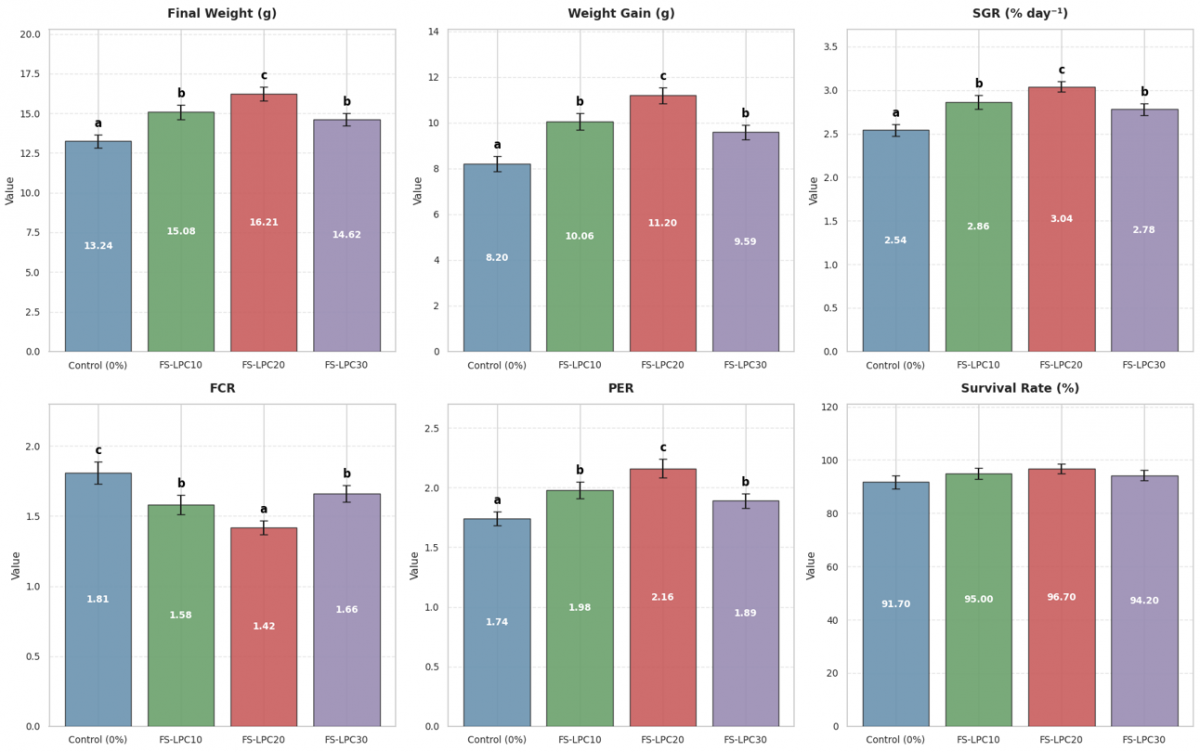
Growth performance and feed utilization parameters are presented in Table 9 and Figure 1. Fish fed diets containing F. septica LPC showed higher final weight, WG, SGR, and PER than fish fed the control diet (p < 0.05). Inclusion of LPC in the diet improved feed utilization and supported better fish growth during the feeding trial.
Table 9. Growth performance and feed utilization of fish fed diets containing F. septica leaf protein concentrate (LPC)
|
Parameter |
Control (0%) |
FS-LPC10 |
FS-LPC20 |
FS-LPC30 |
|
Initial Weight (g) |
5.04 ± 0.12 |
5.02 ± 0.13 |
5.01 ± 0.14 |
5.03 ± 0.11 |
|
Final Weight (g) |
13.24 ± 0.41ᵃ |
15.08 ± 0.46ᵇ |
16.21 ± 0.44ᶜ |
14.62 ± 0.40ᵇ |
|
Weight Gain (g) |
8.20 ± 0.33ᵃ |
10.06 ± 0.37ᵇ |
11.20 ± 0.35ᶜ |
9.59 ± 0.32ᵇ |
|
Specific Growth Rate (% day⁻¹) |
2.54 ± 0.07ᵃ |
2.86 ± 0.08ᵇ |
3.04 ± 0.06ᶜ |
2.78 ± 0.07ᵇ |
|
Feed Conversion Ratio (FCR) |
1.81 ± 0.08ᶜ |
1.58 ± 0.07ᵇ |
1.42 ± 0.05ᵃ |
1.66 ± 0.06ᵇ |
|
Protein Efficiency Ratio (PER) |
1.74 ± 0.06ᵃ |
1.98 ± 0.07ᵇ |
2.16 ± 0.08ᶜ |
1.89 ± 0.06ᵇ |
|
Survival Rate (%) |
91.7 ± 2.5 |
95.0 ± 2.1 |
96.7 ± 1.8 |
94.2 ± 2.0 |
The FS-LPC20 treatment produced the best overall performance among all experimental diets. Fish in this group showed the highest final weight, WG, SGR, and PER values, together with the lowest FCR. Lower FCR values indicated more efficient conversion of feed into body mass. Improved growth performance was associated with higher nutrient digestibility, improved protein concentration, and lower crude fiber content in the LPC ingredient.
Fish fed the FS-LPC30 diet still showed better growth than the control group, although performance values were slightly lower than those observed in the FS-LPC20 treatment. Higher inclusion levels did not increase growth proportionally and reduced feed utilization efficiency. Residual fiber mineral content or remaining antinutritional compounds in the diet likely affected nutrient utilization at higher LPC inclusion levels.
SR remained high in all dietary treatments throughout the experimental period. No abnormal behavior, mortality pattern, or visible signs of dietary stress were observed in fish receiving LPC-containing diets. The results indicated that dietary inclusion of F. septica LPC did not produce negative effects on fish survival under the present experimental conditions.
The results showed that processing F. septica leaves into LPC improved nutritional composition. Crude protein content increased after coagulation and drying, while crude fiber decreased. Similar results have been reported in LPC produced from other leafy plant materials, where soluble proteins become concentrated and fibrous materials are partially removed during extraction and coagulation [10, 12]. Lower fiber content can improve digestibility when the ingredient is used in aquafeed, especially for omnivorous fish such as Nile tilapia.
Ash and mineral content increased after LPC production. This increase was likely associated with the concentration of intracellular minerals during extraction and protein coagulation. The elevated calcium concentration observed in LPC should not be attributed solely to F. septica leaves because calcium sulfate (CaSO₄) was added as a coagulation aid during curd formation [13]. Therefore, the higher calcium content likely resulted from both mineral concentration during processing and the contribution of CaSO₄. Nevertheless, potassium, calcium, and phosphorus remained the dominant minerals detected in the final LPC product.
Antioxidant activity increased after LPC processing. Total phenolic and flavonoid contents were higher in LPC than in the original leaf material. LPC also showed lower DPPH IC₅₀ values together with higher FRAP and ABTS activities [14]. These results showed that antioxidant compounds remained present after extraction, coagulation, and drying processes.
Phenolic compounds function as reducing agents and free radical scavengers in plant materials. Flavonoids also contribute to antioxidant activity by neutralizing reactive compounds and protecting cellular components from oxidative damage [15]. The higher antioxidant activity detected in LPC indicated that the concentration process increased not only protein fractions but also several bioactive compounds. Therefore, LPC may serve as a source of antioxidant compounds in aquafeed formulations. However, the biological effects of these compounds in fish were not evaluated in the present study because antioxidant biomarkers and immune responses were not measured.
The amino acid composition of LPC differed from that of the raw leaf powder. Several essential amino acids, including lysine, leucine, arginine, and threonine, were detected at higher levels after processing. Lysine and methionine are commonly present at low levels in plant-based aquafeeds. Higher concentrations of these amino acids improved the protein quality of LPC [16]. The higher proportion of essential amino acids in LPC showed that the extraction process concentrated protein fractions with improved nutritional composition. Increased essential amino acid content has also been observed in LPC produced from terrestrial and aquatic plant materials [17, 18].
Dietary inclusion of LPC improved nutrient digestibility in Nile tilapia, particularly at the 20% inclusion level. Protein and energy digestibility were higher in fish fed LPC diets than in the control group. The lower fiber content of LPC has improved nutrient availability during digestion. Although dietary crude fiber increased progressively with LPC inclusion, the fiber content of LPC itself was substantially lower than that of the original leaf powder. Therefore, improved digestibility may be attributed to the concentration of soluble nutrients and reduced structural fiber in the processed ingredient rather than a reduction in total dietary fiber. In addition, the amino acid composition of LPC supported better protein utilization [19]. Bioactive compounds present in LPC could also have contributed to digestive performance [20]; however, no physiological indicators of antioxidant status, digestive enzyme activity, or immune function were measured. Therefore, their direct contribution to nutrient utilization cannot be confirmed.
Digestibility decreased at the 30% inclusion level, indicating that excessive LPC inclusion reduces feed utilization efficiency. This response is related to residual antinutritional compounds or increased mineral and non-starch polysaccharide content at higher inclusion levels. Similar patterns have been reported in studies using unconventional plant protein ingredients in aquafeeds, where moderate inclusion levels improve performance but excessive replacement reduces nutrient utilization [21].
Growth performance data followed the same pattern observed in digestibility results. Fish fed the FS-LPC20 diet produced the highest final weight, WG, SGR, and PER during the feeding trial. The same treatment also showed the lowest FCR, which indicated more efficient feed utilization during fish growth. Improved growth performance in fish receiving LPC diets was primarily associated with higher nutrient digestibility, improved amino acid composition, and the concentration of protein-rich fractions during LPC production. Although LPC contained elevated levels of phenolic and flavonoid compounds with antioxidant activity, their direct contribution to fish growth could not be confirmed because physiological antioxidant and immune parameters were not evaluated. The extraction and coagulation process concentrated soluble nutrients and reduced indigestible structural materials from the original leaf biomass. This condition increased nutrient availability during digestion and improved feed utilization efficiency in Nile tilapia. Tilapia also have a relatively high tolerance toward plant-derived ingredients and are capable of utilizing plant-based feed materials more efficiently than many carnivorous fish species [22]. Fish fed LPC diets, therefore, maintained stable growth performance and high survival throughout the experimental period.
Growth performance in the FS-LPC30 treatment was lower than that observed in the FS-LPC20 group, although the values still remained higher than those of the control treatment. Increasing LPC inclusion above moderate dietary levels did not improve growth further and reduced feed utilization efficiency. The decline in performance at a higher inclusion level indicated that excessive LPC incorporation still affected nutrient utilization during digestion. Residual crude fiber mineral fractions and antinutritional compounds remaining in the LPC material likely reduced feed utilization efficiency at excessive dietary inclusion levels. Higher inclusion of plant-derived materials can also increase non-starch polysaccharide fractions in the diet, which influence digestion and nutrient absorption in fish. The results showed that moderate LPC inclusion produced more efficient nutrient utilization and growth response than excessive dietary incorporation. Because all diets exhibited similar physical characteristics and pellet acceptance during the feeding trial, the reduced performance observed in the FS-LPC30 treatment was more likely associated with nutritional factors, such as increased dietary fiber, mineral fractions, or residual antinutritional compounds, rather than differences in pellet quality.
The present study was conducted under laboratory-scale conditions using controlled feeding and culture systems. Protein recovery efficiency during LPC production was not evaluated, and production cost analysis was not included in the present work. The scalability of LPC production under commercial processing conditions was also not examined. Specific antinutritional compounds present in the LPC material were not quantified during nutritional analysis. The present findings showed that LPC derived from non-conventional terrestrial biomass functioned as a supplementary protein ingredient in Nile tilapia diets and improved feed utilization at moderate inclusion levels. Conversion of terrestrial leaf biomass into LPC provides an alternative approach for the development of plant-based aquafeeds using locally available vegetation resources. In the present study, F. septica biomass was processed into a protein-enriched ingredient through extraction, coagulation, and spray drying procedures. The plant grows naturally in unmanaged terrestrial areas and does not directly compete with conventional food crops used for human consumption. Utilization of this biomass can expand alternative protein resources for aquaculture feed production systems. Antinutritional compounds such as tannins, phytate, oxalate, saponins, and alkaloids were not quantified in the present study. Consequently, the mechanisms underlying the reduced performance observed at 30% LPC inclusion remain speculative. Future studies should evaluate antinutritional-factor profiles and long-term safety.
The present study showed that processing F. septica leaves into LPC increased the nutritional quality of the material and improved its suitability as an aquafeed ingredient for Nile tilapia. The LPC contained higher crude protein, essential amino acids, minerals, phenolic compounds, flavonoids, and antioxidant activity than the original leaf powder. The concentration process also reduced crude fiber content, which improved the nutritional characteristics of the plant biomass. Potassium, calcium, and phosphorus remained dominant minerals in the LPC, while leucine, arginine, lysine, and valine were detected at higher levels after processing. The increase of FRAP and ABTS activity, together with lower DPPH IC50 values, indicated that antioxidant compounds remained stable during extraction, coagulation, and drying processes. However, the physiological effects of these antioxidant compounds in fish were not assessed in the present study and therefore require further investigation.
Dietary inclusion of LPC improved ADC of dry matter protein, lipid, and energy in Nile tilapia. Fish fed the FS-LPC20 diet produced the highest final weight, WG, SGR, and PER, together with lower FCR values. Growth performance at 30% inclusion level decreased compared with the FS-LPC20 treatment, although fish performance still remained higher than the control diet. SR remained high in all dietary treatments during the feeding period. The results showed that moderate inclusion of F. septica LPC improved nutrient utilization and feed efficiency in tilapia culture. The study also showed that terrestrial leaf biomass can be processed into a protein-enriched ingredient through simple extraction and coagulation procedures. F. septica grows naturally in unmanaged terrestrial areas and does not directly compete with conventional food crops. Utilization of this biomass provides an alternative approach for the development of plant-based aquafeed ingredients. Under the present laboratory conditions, dietary inclusion of 20% F. septica LPC produced the most favorable digestibility and growth responses. However, commercial-scale application, long-term safety evaluation, antinutritional-factor characterization, and economic feasibility analyses require further investigation.
Several limitations should be acknowledged. Antioxidant activity was evaluated only through in vitro assays (TPC, TFC, DPPH, FRAP, and ABTS), whereas physiological biomarkers such as superoxide dismutase, catalase, glutathione peroxidase, malondialdehyde, hematological indices, and immune responses were not assessed. Consequently, the present findings demonstrate the antioxidant potential of the ingredient itself but do not confirm biological antioxidant effects in Nile tilapia.
The authors acknowledge the support provided by the Off-Campus Study Program of Universitas Brawijaya in Kediri for laboratory facilities and institutional support during this study.
|
ABTS |
2,2′-azino-bis(3-ethylbenzothiazoline-6-sulfonic acid) |
|
ADC |
Apparent digestibility coefficient, % |
|
AAS |
Atomic absorption spectrophotometry |
|
ANOVA |
Analysis of variance |
|
AOAC |
Association of Official Analytical Chemists |
|
BW |
Body weight, g |
|
DPPH |
2,2-Diphenyl-1-picrylhydrazyl radical scavenging activity |
|
FCR |
Feed conversion ratio, dimensionless |
|
FRAP |
Ferric reducing antioxidant power, µmol Fe²⁺ g⁻¹ |
|
FW |
Final weight, g |
|
FS-LPC |
Ficus septica leaf protein concentrate diet |
|
GAE |
Gallic acid equivalent, mg g⁻¹ |
|
HPLC |
High-performance liquid chromatography |
|
IC₅₀ |
Concentration required to inhibit 50% radical activity, µg mL⁻¹ |
|
LPC |
Leaf protein concentrate |
|
NFE |
Nitrogen-free extract, % |
|
PER |
Protein efficiency ratio, dimensionless |
|
QE |
Quercetin equivalent, mg g⁻¹ |
|
SD |
Standard deviation |
|
SGR |
Specific growth rate, % day⁻¹ |
|
SR |
Survival rate, % |
|
TFC |
Total flavonoid content, mg QE g⁻¹ |
|
TPC |
Total phenolic content, mg GAE g⁻¹ |
|
WG |
Weight gain, g |
|
Greek symbols |
|
|
℃ |
Degree Celsius |
|
± |
Plus–minus variation |
|
% |
Percentage |
|
Subscripts |
|
|
i |
Initial value |
|
f |
Final value |
|
LPC10 |
Diet containing 10% leaf protein concentrate |
|
LPC20 |
Diet containing 20% leaf protein concentrate |
|
LPC30 |
Diet containing 30% leaf protein concentrate |
|
control |
Diet without LPC inclusion |
|
Superscripts |
|
|
Fe²⁺ |
Ferrous ion used in FRAP determination |
|
N × 6.25 |
Protein conversion factor used in Kjeldahl analysis |
[1] Macusi, E.D., Cayacay, M.A., Borazon, E.Q., et al. (2023). Protein fishmeal replacement in aquaculture: A systematic review and implications on growth and adoption viability. Sustainability, 15(16): 12500. https://doi.org/10.3390/su151612500
[2] Colombo, S.M., Turchini, G.M. (2021). 'Aquafeed 3.0': Creating a more resilient aquaculture industry with a circular bioeconomy framework. Reviews in Aquaculture, 13(3): 1156-1158. https://doi.org/10.1111/raq.12567
[3] Kalaiselvan, P., Devi, N.C., Deepti, M., et al. (2025). Solid-state fermentation—A sustainable future technology in aquafeeds? Frontiers in Marine Science, 12: 1669719. https://doi.org/10.3389/fmars.2025.1669719
[4] Yavuz, S.R., Alshaal, T., Suhartini, W., et al. (2025). Leaf protein concentrate as a nutrient-dense protein source from vetch and triticale mixture: A comparative analysis of fermentation techniques. Food Chemistry: X, 31: 103153. https://doi.org/10.1016/j.fochx.2025.103153
[5] Javourez, U., Rosero Delgado, E.A., Hamelin, L. (2022). Upgrading agrifood co-products via solid fermentation yields environmental benefits under specific conditions only. Nature Food, 3(11): 911-920. https://doi.org/10.1038/s43016-022-00621-9
[6] Putra, K.W.E., Pitoyo, A., Nugroho, G.D., Rai, M.A.H.E.N.D.R.A., Setyawan, A.D. (2020). Phytochemical activities of Ficus (Moraceae) in Java Island, Indonesia. International Journal of Bonorowo Wetlands, 10(2): 98-125. https://doi.org/10.13057/bonorowo/w100204
[7] Deli, J., González-Beiras, C., Guldan, G.S., et al. (2022). Ficus septica exudate, a traditional medicine used in Papua New Guinea for treating infected cutaneous ulcers: In vitro evaluation and clinical efficacy assessment by cluster randomised trial. Phytomedicine, 99: 154026. https://doi.org/10.1016/j.phymed.2022.154026
[8] Xiao, W., Li, D.Y., Zhu, J.L., Zou, Z.Y., Yue, Y.R., Yang, H. (2018). Dietary valine requirement of juvenile Nile tilapia, Oreochromis niloticus. Aquaculture Nutrition, 24(1): 315-323. https://doi.org/10.1111/anu.12562
[9] Islamy, R.A., Aisyah, D., Ramadhani, A.W., et al. (2025). Functional feed development from Alternanthera philoxeroides for herbivorous fish: Effects on growth performance, feed efficiency, and hematological response. International Journal of Design & Nature and Ecodynamics, 20(9): 2191-2199. https://doi.org/10.18280/ijdne.200922
[10] Islamy, R.A., Aisyah, D., Ramadhani, A.W., et al. (2026). Dried protein curd from invasive Alternanthera philoxeroides as a sustainable feed ingredient for Nile tilapia. International Journal of Design & Nature and Ecodynamics, 21(2): 537-546. https://doi.org/10.18280/ijdne.210222
[11] Islamy, R.A., Hasan, V., Poong, S.W., Kilawati, Y., Basir, A.P., Kamarudin, A.S. (2024). Antigenotoxic activity of Gracilaria sp. on erythrocytes of Nile tilapia exposed by methomyl-based pesticide. Iraqi Journal of Agricultural Sciences, 55(6): 1936-1946. https://doi.org/10.36103/5n7ygp68
[12] Fatima, A., Singh, P., Pandey, V.K., Singh, R., Rustagi, S. (2024). Exploring the significance of protein concentrate: A review on sources, extraction methods, and applications. Food Chemistry Advances, 5: 100771. https://doi.org/10.1016/j.focha.2024.100771
[13] Pawlos, M., Znamirowska-Piotrowska, A., Kowalczyk, M., Zaguła, G., Szajnar, K. (2023). Possibility of using different calcium compounds for the manufacture of fresh acid rennet cheese from goat’s milk. Foods, 12(19): 3703. https://doi.org/10.3390/foods12193703
[14] Prayitno, S.A., Utami, D.R., Putri, S.N.A. (2025). Phytochemicals analysis and antioxidant (IC50) value of dried and fresh mangrove (Rhizopora racemosa) leaves extract for herbal drink base. Journal of Tropical Food and Agroindustrial Technology, 6(1): 1-7. https://doi.org/10.21070/jtfat.v6i01.1643
[15] Susanti, I., Pratiwi, R., Rosandi, Y., Hasanah, A.N. (2024). Separation methods of phenolic compounds from plant extract as antioxidant agents candidate. Plants, 13(7): 965. https://doi.org/10.3390/plants13070965
[16] Awolumate, S., Agbo, A.N. (2025). Nutrient retention and feed utilization efficiency in Clarias gariepinus: The role of lysine and methionine in enhancing protein deposition and reducing nitrogen waste. Communication in Physical Sciences, 12(2): 686-695. https://doi.org/10.4314/cps.v12i2.3
[17] Calderon-Chiu, C., Calderón-Santoyo, M., Ragazzo-Sánchez, J.A. (2024). Protein fractions of jackfruit leaf flour and protein concentrate: Amino acid profile, functional properties and thermal analysis. Applied Sciences, 14(20): 9155. https://doi.org/10.3390/app14209155
[18] Gundersen, E., Christiansen, A.H.C., Jørgensen, K., Lübeck, M. (2022). Production of leaf protein concentrates from cassava: Protein distribution and anti-nutritional factors in biorefining fractions. Journal of Cleaner Production, 379: 134730. https://doi.org/10.1016/j.jclepro.2022.134730
[19] Puastuti, W., Tresia, G.E., Herliatika, A., et al. (2024). Leaf protein concentrate of Indigofera zollingeriana as a source of protein and branched-chain amino acids for ruminants. IOP Conference Series: Earth and Environmental Science, 1341(1): 012045. https://doi.org/10.1088/1755-1315/1341/1/012045
[20] Mota, J., Casimiro, S., Fernandes, J., et al. (2022). Lupin protein concentrate as a novel functional food additive that can reduce colitis-induced inflammation and oxidative stress. Nutrients, 14(10): 2102. https://doi.org/10.3390/nu14102102
[21] Aragão, C., Gonçalves, A.T., Costas, B., Azeredo, R., Xavier, M.J., Engrola, S. (2022). Alternative proteins for fish diets: Implications beyond growth. Animals, 12(9): 1211. https://doi.org/10.3390/ani12091211
[22] Magbanua, T.O., Ragaza, J.A. (2024). Selected dietary plant-based proteins for growth and health response of Nile tilapia Oreochromis niloticus. Aquaculture and Fisheries, 9(1): 3-19. https://doi.org/10.1016/j.aaf.2022.04.001