Budi Wardiman | Syahriani Syahrir* | Asmuddin Natsir
© 2025 The authors. This article is published by IIETA and is licensed under the CC BY 4.0 license (http://creativecommons.org/licenses/by/4.0/).
OPEN ACCESS
Interest in dietary fat supplementation in ruminant nutrition has significantly evolved in recent decades. However, a comprehensive bibliometric analysis of this field is lacking. To address this gap, this study analyzed documents published up to 2024 using specific search terms in the Scopus database. 450 publications were identified and analyzed using the bibliometrix R-package and VOSviewer software, incorporating key bibliometric techniques including co-authorship analysis, keyword co-occurrence, co-citation analysis, and thematic and topic evolution mapping. The analysis revealed that the majority of the literature consists of research articles, focusing on both fundamental biochemical studies and practical applications in dairy and meat production. Core journals such as the Journal of Dairy Science, Journal of Animal Science, and Animal Feed Science and Technology have been pivotal in shaping this field. The number of publications has steadily increased, particularly in recent years, reflecting a shift towards integrating nutritional strategies with environmental sustainability. Institutions from North America and Europe have dominated the research output. Emerging themes for future research include "alternative fat sources" and "methane mitigation," highlighting a growing focus on sustainable practices that reduce the environmental footprint of ruminant production while enhancing the health quality of animal products.
bibliometric analysis, Scopus, Biblioshiny, VOSviewer, co-occurrence, co-citation, dietary fat, ruminant nutrition
In recent decades, the importance of dietary fat supplementation in ruminant nutrition has gained significant recognition. The introduction of high-producing dairy and meat lines in the late 20th century increased the demand for all nutrients, especially fats. Since the mid-20th century, incorporating dietary fats into ruminant diets has been a common practice, primarily using traditional fat sources that were cost-effective and did not greatly affect feed expenses. Fats are crucial in the diets of ruminants like cattle and sheep as they provide concentrated energy [1], improve feed efficiency [2], and enhance the fatty acid profile of animal products by increasing beneficial fatty acids such as omega-3 [3, 4] and conjugated linoleic acid (CLA) [5-7]. High-producing ruminants require high-quality feed, making the bioavailability and quality of fats vital in their nutrition regimen. Although soybean oil and palm oil have traditionally been popular fat sources, recent research has shifted towards more sustainable alternatives to balance economic viability, animal health, and environmental sustainability [1, 8-12].
While early studies mainly focused on the prevention of nutrient deficiencies and the basic effects of fats on production traits, recent work recognizes the need for a deeper understanding of the complex interactions between fat types, absorption rates, and metabolic pathways in ruminants. An imbalance or insufficient supply of optimal fats can impact metabolic processes, leading to reduced growth, impaired milk composition, and lower feed efficiency. These inefficiencies often result from an imbalance in the types of fats provided in the diet or interactions with other dietary components [13].
Despite significant advancements in this field, several gaps in the research remain. First, there is a limited understanding of how alternative fat sources can be optimized for ruminant diets to improve both animal health outcomes and environmental sustainability. Additionally, while numerous studies have explored the physiological and production effects of dietary fats, there is a lack of comprehensive analyses that integrate these findings with emerging themes such as climate change mitigation and sustainable agriculture. The lack of clarity on these aspects creates an urgent need for a more holistic understanding that can guide future research and practical applications.
To address these gaps, a bibliometric analysis is highly valuable. Bibliometric analysis provides a quantitative and visual mapping of the research landscape, identifying key trends, influential studies, thematic clusters, and emerging areas of interest [14]. This approach allows for a systematic examination of the development and evolution of scientific knowledge in dietary fat supplementation for ruminants, highlighting areas that have been well-explored and those that require further investigation. By understanding the trends and dynamics of the literature, researchers and stakeholders can identify where the field is heading, which areas are becoming more critical, and how new research can fill existing gaps.
This review includes a comprehensive bibliometric analysis of scientific literature on dietary fat supplementation in ruminant nutrition. The key components analyzed include: 1) Scientific Production: Analysis of the number of publications over time to understand research growth and emerging trends; 2) Most Relevant Journals and Influential Papers: Identification of the top journals and highly cited papers to highlight core sources of knowledge; 3) Collaboration Networks: Examination of co-authorship, institutional, and country collaborations to map the global research landscape; 4) Thematic Evolution: Analysis of keyword co-occurrence and topic trends over time to identify shifting research focuses and emerging themes; 5) Research Gaps and Future Directions: Identification of less-explored areas and potential future research directions, particularly in the context of sustainable practices and alternative fat sources.
2.1 Scientific database selection
For this study, Scopus was selected as the primary database due to its global recognition and comprehensive coverage of scientific literature. Scopus is widely regarded as the most prevalent academic database, providing approximately 60% more coverage than Web of Science. Compared to other databases such as PubMed, Web of Science, and Google Scholar, Scopus stands out as the most extensive and inclusive repository of academic publications [15, 16]. The literature search in Scopus included all research articles, review articles, and books published in peer-reviewed journals indexed in the database. The advanced search function of the Scopus database was applied using the following keyword combinations: TITLE-ABS-KEY (“fat supplementation”) AND TITLE-ABS-KEY (“ruminant” OR “oil supplements” OR “dietary fatty acid” OR “high-fat diet”). The initial search retrieved 640 documents. A structured and multi-step filtering process was then conducted to ensure relevance and methodological rigor. First, documents were screened based on subject area and study focus, excluding publications that primarily investigated human nutrition, food science, human health outcomes, or non-ruminant animal models (e.g., rats and poultry), as identified through title and abstract examination. Second, studies were excluded if the target species was not a ruminant (cattle, sheep, or goats) or if dietary fat supplementation was not a central experimental or analytical variable. Third, publications addressing fat or oil use solely in food processing, human dietary interventions, or biomedical contexts were removed. Through this transparent screening process, 190 documents were excluded, resulting in a final dataset of 450 publications eligible for bibliometric analysis. The selected records were exported in BibTeX and CSV formats for subsequent analysis. To minimize potential bias arising from continuous database updates, the search and data extraction were conducted once, on September 11, 2024.
2.2 Data analysis
The filtered documents were analyzed using R software version 4.4.1 (R Development Core Team, R project, Vienna, Austria) with the Bibliometrix library version 4.1.3 (https://www.bibliometrix.org/home/) and VOSviewer version 1.6.20. The filtered documents were first imported into Biblioshiny, a web-based interface for the Bibliometrix package developed in R. Biblioshiny stands out among bibliometric tools for its comprehensive range of statistical methods and visualizations, particularly excelling at creating dynamic visualizations that illustrate changes over time. This capability makes it especially valuable for performance analysis and for understanding the conceptual, intellectual, and social structures within a research field. In this study, Biblioshiny was utilized to analyze various aspects, including publication and citation trends, journal performance, author productivity, institutional impact, and country-level contributions, along with the co-occurrence of keywords [14].
In addition to Biblioshiny, VOSviewer was employed to visualize collaborative networks among authors, institutions, and countries based on the Scopus dataset. VOSviewer is a widely used tool for creating bibliometric maps, particularly those that depict collaborative relationships. The analysis methodology included both ‘performance analysis’ and ‘science mapping.’ Performance analysis focuses on evaluating the contributions of authors, journals, countries, and institutions based on their publication records. In contrast, science mapping uses bibliometric techniques to identify and visualize trends and patterns in scientific research. Together, these methods add quantitative rigor to literature reviews and help to identify key thematic clusters in a field [17-19].
The analysis included the following specific indicators: (a) an overview that encompasses key information such as annual scientific output, average citations per year, and three-field plots; (b) analysis of sources, which included identifying the most relevant and most locally cited sources, applying Bradford’s law, and assessing the local impact of journals; (c) examination of authors, including metrics such as the most prolific authors, their production over time, Lotka’s law, and the local impact of individual authors; (d) analysis of the most relevant affiliations; (e) country-level analysis, which considered the corresponding authors' countries and the most cited countries; (f) document analysis, which focused on the most globally and locally cited documents, reference publication year spectroscopy, the most frequent keywords, and trending topics; (g) co-authorship analysis to explore collaboration patterns among authors, countries, and institutions; and (h) conceptual structure analysis to examine thematic evolution within the field.
One of the limitations of Biblioshiny and VOSviewer is that it does not distinguish between keywords with different spellings that have the same meaning, such as variations in British and American English, or between singular and plural forms of a word. To address this issue, a thesaurus file in .txt format was utilized to merge synonymous terms and ensure consistency in the analysis. Additionally, terms unrelated to the core topic of research, such as "control," "treatment," and similar non-specific terms, were manually removed to maintain the focus on relevant concepts in the visualization.
The bibliometric analysis of literature related to dietary fat supplementation in ruminant nutrition, based on data from the Scopus database, provides several insights into the research landscape on this topic (Table 1). The analysis covers a timespan from 1964 to 2024, and a total of 450 documents have been published across 104 different sources, including articles, books, and other scholarly outlets. This reflects a broad range of platforms that contribute to the dissemination of research on this subject. The dominant type of document is journal articles, with 413 entries, followed by 24 reviews, 12 conference papers, and one book chapter.
Table 1. Summary statistics of the articles collected (Source: Biblioshiny)
|
Description |
Results |
|
Timespan |
1964-2024 |
|
Sources (Journals, Books, etc.) |
104 |
|
Documents |
450 |
|
Annual growth rate (%) |
2.72 |
|
Mean age of the article (Year) |
22.8 |
|
Average citations per article |
48.09 |
|
References |
14198 |
|
Keywords plus |
1695 |
|
Author's keywords |
923 |
|
Authors |
1352 |
|
Authors of a single-authored article |
15 |
|
Single-authored article |
21 |
|
Co-Authors per article |
4.35 |
|
International co-authorships (%) |
20.44 |
|
Article |
413 |
|
Book chapter |
1 |
|
Conference paper |
12 |
|
Review |
24 |
The annual growth rate of publications is 2.72%, indicating steady interest and expansion of the field over time. The mean age of articles is 22.8 years, suggesting that much of the foundational work in this area is relatively old but remains relevant. Each article, on average, has been cited 48.09 times, which indicates a significant academic impact and relevance within the broader field of animal nutrition and livestock science. The analysis identifies 1,352 authors who have contributed to the literature. Of these, only 15 have produced single-authored works, contributing to 21 such articles. This highlights that research in this area is largely collaborative, as evidenced by an average of 4.35 co-authors per article. Furthermore, 20.44% of the publications involve international co-authorship, signifying a moderate level of global collaboration, which is important in addressing universal challenges in livestock nutrition.
3.1 Annual growth publication
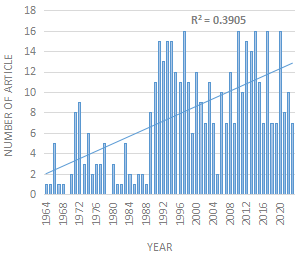
Figure 1 presents a detailed view of the annual scientific publications related to dietary fat supplementation in ruminant nutrition from 1964 to 2024, revealing several significant trends and phases in research activity. In the initial years (1964-1970s), the research output was minimal, averaging fewer than 2 articles per year. This is indicative of a nascent phase in the scientific exploration of dietary fat in ruminant nutrition. By the early 1980s, there was a noticeable rise, with some years producing 4 to 6 articles. During this 25-year period, publication rates increased by around 200% compared to the starting decade (1960s), but still remained relatively low in comparison to later years. The period from 1990 to 2000 marks a turning point, with a sharp increase in research output. This decade saw consistent publication rates, peaking at 16 articles in certain years, such as 1997 and 1999. Compared to the previous decade (1980s), there was an increase of over 300% in the number of annual publications. This rapid expansion can be attributed to several factors, such as growing awareness of the role of dietary fats in enhancing livestock productivity, advances in animal nutrition science and methodologies, and a global surge in the demand for efficient livestock production systems.
Figure 1. Trends in the annual number of publications on dietary fat supplementation in ruminant nutrition, retrieved from the Scopus database (1964-2024)
From 2000 onward, the trend became more complex. While the general trajectory still shows growth, the number of publications fluctuates more significantly. For instance, while there are consistent peaks of 16 articles per year in 2010, 2014, 2016, and 2019, some years like 2001 and 2021 witness a drop to 5 articles or fewer. This fluctuation could be tied to multiple factors: shifts in research funding and priorities, technological advancements in alternative areas of ruminant nutrition, and saturation of certain subtopics within the research field. However, despite these fluctuations, the overall trendline shows a positive slope, indicating that research in this area continues to grow, albeit at a more moderate rate than the sharp rise seen in the 1990s. For example, by the early 2020s, the number of publications still averaged 10–12 articles per year, representing a 100% increase compared to the 1980s average.
The trendline with an R² value of 0.3905 indicates that about 39% of the variance in annual publication output can be explained by the passage of time. This reflects a long-term commitment to the topic, with overall growth in scientific interest despite short-term fluctuations. The cumulative increase in publications over 60 years was dramatic, from just a handful of articles in the early years to consistent double-digit annual outputs in more recent decades, representing an approximate 800% increase since the 1960s. The years 1997, 2010, 2014, 2016, and 2019 each produced 16 articles, the highest observed in any single year. These peaks likely correspond to either important breakthroughs or increased global focus on food production due to demographic and economic shifts. For example, the peak in 2010 might be tied to global concerns about food security and the increasing demand for meat, driving research into optimizing ruminant nutrition through dietary fat supplementation.
3.2 The most influential contributors
3.2.1 Authors
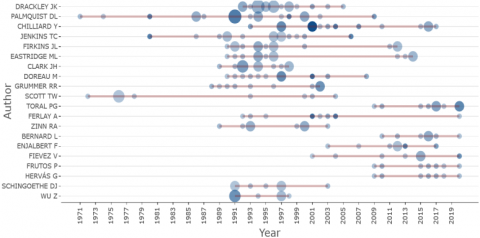
The data on the most prolific authors in the field of dietary fat supplementation in ruminant nutrition, presented through both Table 2 and the graphical timeline (Figure 2), displays a detailed overview of key contributors and their influence in this research area. Drackley JK and Palmquist DL emerge as the most impactful authors, each with an h-index of 18 and a g-index of 19, indicating their significant contribution to the field. Palmquist DL has the highest total citation count at 2,969, reflecting the foundational impact of his research since 1971 and continuing steadily over the decades. His larger dots in the 1990s and 2000s indicate periods of high productivity and impact. His work has been pivotal in understanding how different types of fats influence lactation and overall animal health, shaping both academic research and practical applications in the dairy industry. Drackley JK, starting in 1992, especially from the late 1990s to the 2010s, has also made substantial contributions, particularly in understanding the metabolism of fatty acids in dairy cattle and the nutritional requirements during various stages of lactation. His relatively high m-index of 0.545 signifies a consistent impact over time.
Figure 2. Timeline of key authors' publication activity and impact in dietary fat supplementation research, with dot size representing citations per year
Table 2. Authors' local impact
|
Author |
h-Index |
g-Index |
m-Index |
TC |
NP |
PYS |
|
Drackley, J.K. |
18 |
19 |
0.545 |
1128 |
19 |
1992 |
|
Palmquist, D.L. |
18 |
19 |
0.333 |
2969 |
19 |
1971 |
|
Chilliard, Y. |
14 |
14 |
0.438 |
2354 |
14 |
1993 |
|
Firkins, J.L. |
13 |
13 |
0.371 |
679 |
13 |
1990 |
|
Eastridge, M.L. |
12 |
12 |
0.343 |
573 |
12 |
1990 |
|
Jenkins, T.C. |
12 |
14 |
0.267 |
1655 |
14 |
1980 |
|
Clark, J.H. |
11 |
11 |
0.306 |
784 |
11 |
1989 |
Chilliard Y ranks third, with an h-index and g-index of 14 and 14, respectively, and a total citation count of 2,354. His research, starting in 1993, with a visible peak in research activity during the early 2000s, is evidenced by larger dots. His work focused on lipid metabolism in ruminants and how dietary supplementation affects milk quality and animal physiology. His work has been instrumental in advancing the understanding of the nutritional manipulation of milk fatty acid profiles, which is vital for both animal productivity and human health.
Firkins JL, with an h-index of 13 and a g-index of 13, has contributed significantly with 679 citations and 13 publications since 1990. Firkins' peaks around the late 1990s and early 2000s. His research revolves around microbial fermentation in the rumen and the role of dietary fats in modulating rumen microbial ecology and nutrient utilization. This work is crucial for optimizing feed efficiency and reducing methane emissions, which are critical for sustainable livestock management.
Eastridge ML, Jenkins TC, and Clark JH also play vital roles. Eastridge ML and Jenkins TC each have an h-index of 12, indicating their valuable contributions to understanding fat metabolism and its implications for dairy cow health and productivity. Jenkins TC, starting his research in 1980, has focused extensively on the chemical and metabolic processes involving fats and oils in dairy cow diets. Clark JH has contributed significantly to understanding dietary influences on lactation performance, starting his work in 1989, with his research being widely cited and highly regarded in the field.
Table 3. Lotka's law distribution
|
Documents Written |
NA |
PA |
|
1 |
1089 |
0.805 |
|
2 |
149 |
0.11 |
|
3 |
49 |
0.036 |
|
4 |
19 |
0.014 |
|
5 |
15 |
0.011 |
Table 3 provides an application of Lotka's law in the context of authorship productivity in the field of dietary fat supplementation research. Lotka's law states that the number of authors who produce n papers is inversely proportional to n2. This trend is clearly illustrated in the table, where the number of authors significantly decreases as the number of documents written increases.
For authors who have written only one document, there are 1,089 contributors, which constitutes 80.5% of the total authors. As the number of documents written increases to two, the number of contributing authors drops sharply to 149, representing only 11% of the total. This declining trend continues with three documents written by 49 authors (3.6%), four documents by 19 authors (1.4%), and five documents by only 15 authors (1.1%).
This distribution confirms Lotka's law by demonstrating that the majority of authors contribute only a single paper to the field, while a smaller number of highly prolific authors contribute multiple documents. This pattern is common in academic research and reflects how knowledge production is concentrated among a few highly active researchers, while many others contribute sporadically. Understanding this distribution is essential for identifying key contributors and understanding the dynamics of research productivity in the field.
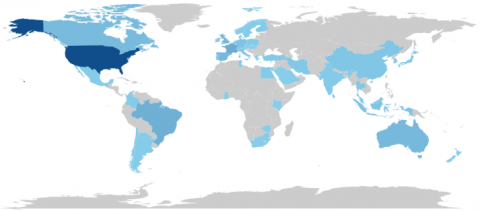
Figure 3. Worldwide scientific production of dietary fat supplementation in ruminant nutrition-related publications by country affiliations, measured by the number of author appearances
3.2.2 Countries
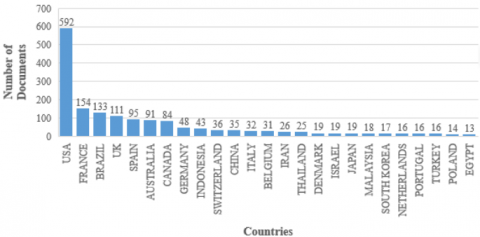
The analysis of countries' scientific production regarding dietary fat supplementation in ruminant nutrition shows a diverse geographical distribution of research contributions (Figure 3). Researchers from 58 different countries participated in producing the collected documents, indicating a broad international interest in this topic. The world map visualization highlights that countries with higher research output are shaded in darker colors, while those with lower output are represented in lighter shades. The bar chart provides a clearer quantitative depiction of each country's contribution (Figure 4).
Figure 4. Number of documents published by country
The United States stands out as the most prolific contributor, with 592 documents, accounting for approximately 41.8% of the total publications (Figure 4). This is a significant proportion, indicating the country's leading role in research on dietary fat supplementation in ruminant nutrition. France follows with 154 documents, making up about 10.9% of the total, while Brazil contributes 133 documents, representing around 9.4%. The United Kingdom and Spain each contribute 111 and 95 documents, respectively, equating to 7.8% and 6.7%. Other notable contributors include Australia (91 documents, 6.4%), Canada (84 documents, 5.9%), and Germany (48 documents, 3.4%). Indonesia and Switzerland have also made substantial contributions, with 43 (3.0%) and 36 (2.5%) documents, respectively.
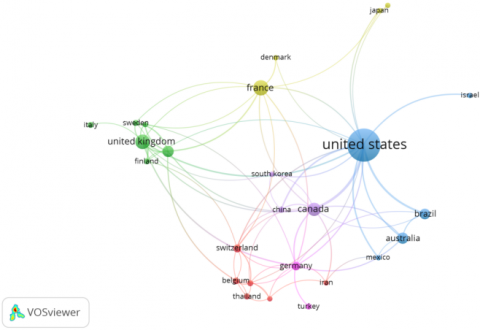
The clustering of countries based on their research collaboration patterns reveals six distinct groups (Figure 5). Cluster 1 (red nodes) includes six countries: Belgium, India, Iran, the Netherlands, Switzerland, and Thailand. This cluster represents about 11.8% of the total countries involved in the research, indicating a moderate level of collaboration. Cluster 2 (green nodes), also consisting of six countries—Colombia, Finland, Italy, Spain, Sweden, and the United Kingdom—similarly accounts for around 11.8% of the countries. These clusters indicate potential research networks or regional collaborations that could influence research output and focus.
Figure 5. Visualization of the international research collaboration network
Cluster 3 (blue nodes), which contains five countries—Australia, Brazil, Israel, Mexico, and the United States—accounts for 9.8% of the total countries. This cluster includes the leading contributor, the United States, suggesting strong collaborative links between these countries. Cluster 4 (yellow nodes) comprises four countries: Denmark, Egypt, France, and Japan, representing 7.8% of the countries. This cluster includes France, the second most prolific country, indicating substantial collaboration within this group.
Cluster 5 (purple nodes), containing three countries—Canada, China, and South Korea—represents 5.9% of the total countries. Cluster 6 (pink nodes), contains only two countries-Germany and Turkey. These countries have shown considerable research output, contributing collectively to the global body of knowledge on dietary fat supplementation. The clustering patterns suggest that research collaborations are often regionally focused, with significant partnerships observed between neighboring countries or those within the same economic or academic alliances.
The analysis reveals that while a few countries dominate the research output on dietary fat supplementation in ruminant nutrition, there is a significant level of international collaboration. This global scientific engagement is crucial for advancing the field, sharing diverse perspectives, and promoting the development of comprehensive and universally applicable findings. Understanding these geographical and collaborative dynamics can help researchers and policymakers identify key players, foster international partnerships, and guide future research directions in this critical area of animal nutrition.
3.2.3 Affiliations
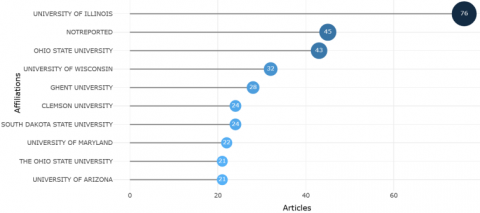
Figure 6 shows the cumulative number of articles produced by different institutions over a period extending from 1964 to 2024. Each line represents a different institution, and the growth in the number of articles over time highlights the research productivity of each affiliation. The graph reveals that the University of Illinois is the most prolific institution, showing a steep rise in publication numbers starting from the late 1980s and maintaining consistent output, reaching over 70 articles by the present day. The Ohio State University and the University of Wisconsin follow closely with 43 and 32 articles, respectively. The presence of a large "Not Reported" category, with 49 articles, suggests that a significant portion of research comes from unreported or possibly diverse global affiliations, highlighting the widespread interest and collaborative nature of this field. Other affiliations like Ghent University, Clemson University, and South Dakota State University are notable for their contributions but have fewer articles, ranging from 24 to 28.
Figure 6. Most relevant affiliations in dietary fat supplementation research
By integrating insights from both graphs, it is evident that a small number of institutions dominate research in dietary fat supplementation for ruminant nutrition. The steady rise in articles from top universities like the University of Illinois, Ohio State University, and the University of Wisconsin indicates sustained research interest and investment in this field. These institutions likely have specialized research programs, facilities, and funding that enable them to maintain high levels of productivity over decades. The visualization also suggests a strong presence of North American universities in leading research on this topic, with notable contributions from European institutions like Ghent University.
The graphs highlight not only the leading institutions but also the potential for collaborations and network-building among universities with aligned research interests. Researchers and stakeholders can use these insights to identify key academic hubs for collaboration, funding opportunities, and strategic partnerships to advance research on dietary fat supplementation in ruminant nutrition.
3.2.4 Interconnection between authors, countries, and affiliations
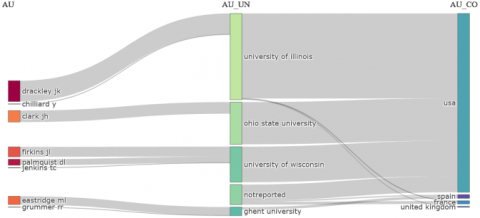
The three-field plot illustrates the interconnected relationships between affiliations, countries, and authors in dietary fat supplementation research (Figure 7). Leading universities like the University of Illinois and the Ohio State University are closely linked to key authors such as Drackley JK and Clark JH, indicating these institutions as major research hubs. These authors, in turn, connect multiple institutions and countries, showcasing their central roles in collaborative research efforts. Countries like the USA, Spain anf France are heavily involved. The USA is showing the most connections, highlighting its global leadership in this field. This is evident from authors like Palmquist DL and Firkins JL, whose work is associated with American universities and extends globally. Similarly, France and Spain have strong ties to authors like Chilliard Y and Toral PG, reflecting their contributions through national institutions such as INRAE (Institut National de Recherche pour l'Agriculture, l'Alimentation et l'Environnement) and CSIC (Consejo Superior de Investigaciones Científicas), which are central to their research communities. The connecting lines reveal how influential authors bridge institutions and countries, forming a network where strong academic centers and cross-border collaborations drive impactful research in dietary fat supplementation.
Figure 7. Tree-field plot visualizing the relationship between authors, affiliations, and countries in producing papers on dietary fat supplementation in ruminant nutrition research
3.3 Journal and citation
3.3.1 The most relevant journal
The data on the most relevant sources in dietary fat supplementation research highlights the pivotal roles of key journals (Table 4). The Journal of Dairy Science leads with the highest impact, evidenced by an h-index of 59, g-index of 94, and over 10,305 citations from 164 publications since 1967. The Journal of Animal Science follows with significant contributions across various livestock species, showing an h-index of 31 and 2,749 citations from 64 publications since 1966. The British Journal of Nutrition and Animal Feed Science and Technology also play crucial roles, focusing on the nutritional and feed technology aspects. Other journals like Animal, Meat Science, and Small Ruminant Research provide niche insights into lipid metabolism, meat quality, and specific animal management strategies. Together, these journals provide comprehensive coverage of the biochemical, physiological, and practical impacts of dietary fat supplementation in ruminant nutrition, guiding both scientific inquiry and practical applications.
Table 4. The most relevant journal
|
Source |
h-Index |
g-Index |
m-Index |
TC |
NP |
PYS |
|
Journal of Dairy Science |
59 |
94 |
1.017 |
10305 |
164 |
1967 |
|
Journal of Animal Science |
31 |
51 |
0.525 |
2749 |
64 |
1966 |
|
British Journal of Nutrition |
16 |
22 |
0.271 |
1456 |
22 |
1966 |
|
Animal Feed Science and Technology |
11 |
12 |
0.344 |
901 |
12 |
1993 |
|
Animal |
9 |
9 |
0.529 |
317 |
9 |
2008 |
|
Journal of Dairy Research |
7 |
7 |
0.13 |
230 |
7 |
1971 |
|
Meat Science |
7 |
7 |
0.467 |
478 |
7 |
2010 |
|
Lipids |
6 |
6 |
0.113 |
143 |
6 |
1972 |
|
Small Ruminant Research |
6 |
6 |
0.333 |
414 |
6 |
2007 |
|
Journal of the Science of Food and Agriculture |
5 |
9 |
0.083 |
158 |
9 |
1965 |

Figure 8. Co-citation network visualization of journals in dietary fat supplementation in ruminant nutrition research
The brown cluster, centered around the Journal of Dairy Science (J. Dairy Sci.), is the most prominent and includes journals like the Journal of Agricultural and Food Chemistry and the Journal of Lipid Research, emphasizing research focused on dairy science, lipid chemistry, and ruminant nutrition (Figure 8). The red cluster, featuring journals like the Journal of Animal Science (J. Anim Sci.) and the Journal of Nutrition (J. Nutr.), covers broader aspects of animal nutrition, general nutrition science, and meat production, indicating strong thematic connections in studies examining the impact of dietary fat on animal health and production. The purple cluster, including the British Journal of Nutrition (Br. J. Nutr.) and Animal Feed Science and Technology (Anim. Feed Sci. Technol.), focuses on nutritional biochemistry and feed formulations, highlighting research on dietary interventions across various animal species.
The blue cluster serves as a bridge between dairy-focused and general animal science research, integrating journals like the Journal of the Science of Food and Agriculture to reflect an interdisciplinary approach combining food science, agriculture, and animal nutrition. The green cluster, represented by PLOS One, captures a broader, multidisciplinary perspective that spans veterinary science, animal nutrition, and biological sciences. Finally, the orange cluster further emphasizes specialized topics in animal nutrition and feed science, indicating frequent co-citation among studies discussing specific nutritional strategies for milk and meat production. This visualization offers a comprehensive understanding of the interconnectedness of journals in the field, highlighting core research areas and potential opportunities for researchers to identify foundational sources, conduct literature reviews, and establish collaborative efforts across thematic boundaries.
Table 5. The top 20 globally most-cited papers in the field of Dietary Fat, based on data retrieved from the Scopus database
|
Tittle |
Authors |
Journal |
TC |
TCpY |
N-TC |
|
Fat in Lactation Rations: Review |
Palmquist and Jenkins [20] |
Journal of Dairy Science |
722 |
16,04 |
2,96 |
|
Effect of different types of forages, animal fat or marine oils in cow’s diet on milk fat secretion and composition, especially conjugated linoleic acid (CLA) and polyunsaturated fatty acids |
Chilliard et al. [21] |
Livestock Production Science |
503 |
20,96 |
4,31 |
|
Increasing the concentrations of beneficial polyunsaturated fatty acids in milk produced by dairy cows in high-forage systems |
Dewhurst et al. [22] |
Animal Feed Science and Technology |
455 |
23,95 |
3,74 |
|
Increasing the concentrations of beneficial polyunsaturated fatty acids in milk produced by dairy cows in high-forage systems |
Griinari et al. [23] |
Journal of Dairy Science |
443 |
16,41 |
5,44 |
|
Dietary lipids and forages interactions on cow and goat milk fatty acid composition and sensory properties |
Chilliard et al. [24] |
Reproduction Nutrition Development |
385 |
18,33 |
3,48 |
|
Major Advances in Nutrition: Impact on Milk Composition |
Jenkins et al. [25] |
Journal of Dairy Science |
317 |
16,68 |
2,61 |
|
Dietary Fat and Adipose Tissue Metabolism in Ruminants, Pigs, and Rodents: A Review |
Chilliard [26] |
Journal of Dairy Science |
287 |
8,97 |
4,54 |
|
Digestion and metabolism of dietary fat in farm animals |
Doreau and Chilliard [27] |
British Journal of Nutrition |
274 |
9,79 |
4,79 |
|
Dietary sources of unsaturated fatty acids for animals and their transfer into meat, milk and eggs: A review |
Woods and Fearon [28] |
Livestock Science |
265 |
16,56 |
2,87 |
|
Animal and Dietary Factors Affecting Feed Intake During the Prefresh Transition Period in Holsteins |
Hayirli et al. [29] |
Journal of Dairy Science |
252 |
10,96 |
2,28 |
|
Fatty Acids, Calcium Soaps of Fatty Acids, and Cottonseeds Fed to High Yielding Cows |
Sklan et al. [30] |
Journal of Dairy Science |
237 |
7,18 |
3,23 |
|
Ruminal Synthesis, Biohydrogenation, and Digestibility of Fatty Acids by Dairy Cows |
Wu et al. [31] |
Journal of Dairy Science |
233 |
6,85 |
3,31 |
|
Influence of type of diet on the fat constituents of goat and sheep milk |
Sanz Sampelayo et al. [32] |
Small Ruminant Research |
229 |
12,72 |
3,47 |
|
Enhancing the nutritional and health value of beef lipids and their relationship with meat quality |
Scollan et al. [33] |
Meat Science |
210 |
19,09 |
5,79 |
|
Microbial ecology of the rumen evaluated by 454 GS FLX pyrosequencing is affected by starch and oil supplementation of diets |
Zened et al. [34] |
FEMS Microbiology Ecology |
210 |
17,50 |
5,57 |
|
The effect of varying the amount of linseed oil supplementation on rumen metabolism in sheep |
Ikwuegbu and Sutton [35] |
British Journal of Nutrition |
194 |
4,51 |
1,00 |
|
Effect of Dietary Lipid Source on Conjugated Linoleic Acid Concentrations in Milk Fat |
Chouinard et al. [36] |
Journal of Dairy Science |
191 |
7,96 |
1,64 |
|
Milk Fat: Origin of Fatty Acids and Influence of Nutritional Factors Thereon |
Palmquist [37] |
Advanced Dairy Chemistry |
185 |
11,56 |
2,00 |
|
A decade of developments in the area of fat supplementation research with beef cattle and sheep |
Hess et al. [38] |
Journal of Animal Science |
185 |
10,88 |
4,15 |
|
Digestion and synthesis in the rumen of sheep given diets supplemented with free and protected oils |
Sutton et al. [39] |
British Journal of Nutrition |
184 |
4,38 |
4,20 |
3.3.2 The most cited papers and its caracteristics
The top 20 most cited papers on dietary fat supplementation in ruminant nutrition collectively provide a comprehensive understanding of the advancements in this field, ranging from foundational biochemical studies to innovative strategies that address both animal health and environmental sustainability (Table 5). The pioneering work by Palmquist and Jenkins [20] laid the groundwork for understanding the effects of dietary fat supplementation on milk production and milk fat composition in dairy cows, focusing on how different fat sources can alter lipid metabolism. This foundational knowledge was further built upon by Chilliard et al. [21], who explored how dietary fats, particularly conjugated linoleic acid (CLA), can be leveraged to modify the fatty acid profile of milk, making it healthier for human consumption. Meanwhile, Dewhurst et al. [22] expanded on this by comparing various fat sources and their impacts on rumen function and animal performance, emphasizing the need for sustainable fat supplementation strategies that maintain rumen health while enhancing productivity.
Studies [25, 26] delved deeper into the mechanisms of milk fat depression and biohydrogenation of unsaturated fatty acids within the rumen, providing insights into the interactions between dietary fats and rumen microorganisms. Their findings are critical in understanding how to manage these interactions to avoid negative effects on milk production while maximizing the benefits of fat supplementation. The physiological basis of these effects was further examined by Hayirli et al. [29], who focused on the lipid metabolism pathways influenced by specific fatty acids like CLA, contributing to a deeper understanding of the health benefits of dairy products for humans.
Woods and Fearon [28] provided a comparative analysis of the effects of different fat sources on ruminant growth, milk production, and feed efficiency, offering a foundation for optimizing feeding strategies based on specific production goals. Sanz Sampelayo et al. [32] took a novel approach by examining the effects of fat supplementation on methane emissions, addressing the environmental sustainability dimension of ruminant nutrition. This study aligns with current research trends that integrate nutritional strategies with climate change mitigation efforts. Similarly, Chilliard and Ferlay [24] investigated the molecular mechanisms underlying lipid metabolism affected by dietary fats, providing a molecular-level understanding that supports both animal health and human nutrition. The classic study by Doreau and Chilliard [27] on the microbial processes of biohydrogenation in the rumen is pivotal for comprehending the microbiological dynamics that influence fat metabolism and the overall efficacy of dietary fat supplementation strategies. This research serves as a fundamental reference for subsequent studies exploring the microbial ecology of the rumen in response to dietary interventions.
The next ten most cited papers continue to build on the foundational work in dietary fat supplementation by offering a mix of theoretical insights and practical applications. Many of these studies address the complex interactions between dietary fats, rumen microbiota, and animal metabolism. There is a clear emphasis on the molecular, metabolic, and environmental impacts of fat supplementation. Papers such as those by researcher [31, 33] are particularly significant for their contributions to understanding how dietary fat can be used strategically to manage both animal health and environmental impact—critical areas of focus as the industry moves towards more sustainable practices.
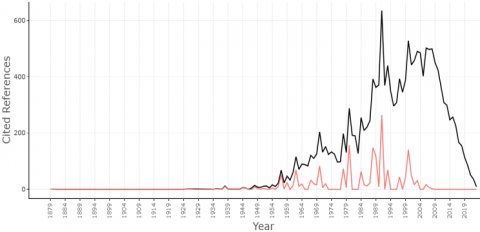
Figure 9 reveals that foundational research began to take shape in the 1970s, with significant growth in citations through the 1980s and 1990s, suggesting the establishment of key theories and methodologies. Notable peaks around the mid-1990s, early 2000s, and 2005 indicate the publication of influential studies or reviews that significantly impacted the field, likely representing breakthroughs or critical summaries of knowledge. The red line spikes in these years underscore the presence of pivotal works that deviated markedly from the citation norms, marking shifts in understanding. The decline in citations after 2010 suggests a reliance on more recent studies, signaling either a maturation of certain areas or a shift in research focus. The RPYS graph helps researchers identify key periods and influential works that have shaped the field, offering a roadmap for navigating its evolution and understanding current trends.
Figure 9. Reference Publication Year Spectroscopy (RPYS) shows the distribution of cited references over time in dietary fat supplementation research
3.4 Keywords analysis
3.4.1 The most frequent words
The analysis identifies the top five keywords with the highest frequencies and total link strengths: "fatty acids" appears 70 times with a total link strength of 98, making it the most frequently discussed topic in the literature (Figures 10 and 11). This is followed by "dairy cows," with 33 occurrences and a total strength of 42; and "dietary fat," which appears 28 times with a total strength of 33. The word "conjugated linoleic acids," appearing 27 times with a total strength of 43; "biohydrogenation," which occurs 24 times and has a total link strength of 43; These findings suggest that the research on dietary fat supplementation in ruminant nutrition is heavily focused on the biochemical processes of fatty acids, the role of biohydrogenation, and the impacts on dairy cows, particularly concerning milk production and composition. This clustering and frequency analysis provides a comprehensive understanding of the dominant themes and key areas of focus within the field, allowing researchers to identify significant trends, relationships, and potential gaps in the existing literature.

Figure 10. Word cloud representing the most frequently occurring keywords in research on dietary fat supplementation in ruminant nutrition

Figure 11. Tree map of the most frequent keywords in dietary fat supplementation research

Figure 12. Co-occurrence network visualization of keywords in dietary fat supplementation research
The visualization presented in Figure 12 was generated using VOSviewer software, utilizing a co-occurrence analysis to identify the most frequently occurring keywords in the literature on dietary fat supplementation in ruminant nutrition. The analysis was conducted by selecting "Co-occurrence" as the type of analysis and "Author Keywords" as the unit of analysis. The counting method used was "Full Counting," which considers the total frequency of each keyword across all documents. A threshold was set whereby only keywords with a minimum of five occurrences were included in the analysis. Out of the 968 keywords present in the dataset, 42 keywords met this threshold.
The keywords are divided into five distinct clusters, each represented by a different color: red, green, blue, yellow, and purple. The first cluster, represented by red nodes, consists of 11 items related to fat supplementation and ruminal processes: "calcium long-chain fatty acids," "ether extract," "fat," "fatty acid digestibility," "lactating cows," "long-chain fatty acids," "milk composition," "protein," "ruminal fermentation," "soybean meal," and "tallow." Within this cluster, the largest nodes are "fat" and "ruminal fermentation". This cluster shows strong linkages with both the blue and yellow clusters, suggesting that studies focusing on fat supplementation are closely connected to rumen-level mechanisms and dairy production outcomes.
The second cluster, represented by green nodes, is primarily associated with animal performance and specific fatty acid compounds contains 10 keywords: "beef," "cattle," "conjugated linoleic acid," "fish oil," "linoleic acid," "milk," "nutrition," "performance," "trans fatty acids," and "vaccenic acid." highlighted by "conjugated linoleic acids,". This cluster is moderately interconnected with the blue cluster, reflecting the dependence of fatty acid profiles and production traits on ruminal biohydrogenation pathways, but shows weaker direct links with the dairy-focused yellow cluster.
The third cluster, represented by blue nodes, includes 9 items: "biohydrogenation," "digestion," "forage," "in vitro," "lipids," "methane," "oil supplementation," "rumen," and "ruminants." The largest nodes in this cluster are "ruminants," "rumen," and "biohydrogenation. Its keywords demonstrate extensive co-occurrence links with multiple clusters, particularly the red cluster (fat digestion and fermentation processes) and the green cluster (fatty acid profiles and animal performance). This indicates that rumen metabolism and lipid transformation processes serve as a conceptual core connecting mechanistic, nutritional, and applied research streams. The fourth cluster, marked by yellow nodes, comprises keywords such as "dairy cows," "lactation," "linseed oil," "milk fat," "milk fat depression," and "milk fatty acid," with "dairy cows" being the most prominent node in this group. This cluster shows strong linkages with both the blue and yellow clusters, suggesting that studies focusing on fat supplementation are closely connected to rumen-level mechanisms and dairy production outcomes.
The fifth cluster, represented by purple nodes, contains the keywords "dietary fat," "digestibility," "fatty acids," "milk yield," "sheep," and "goat." Its weaker links to other clusters suggest that research on small ruminants forms a more distinct subfield, with less integration into the broader literature dominated by cattle- and dairy-oriented studies. Nevertheless, the prominence of “fatty acids” as the largest node in this cluster and across the entire network underscores its unifying role across species and research themes.
3.5 Thematic evolution
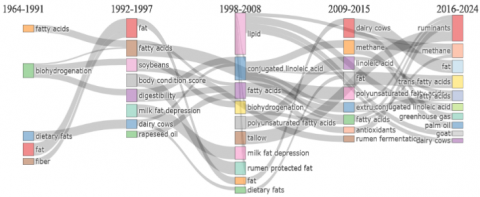
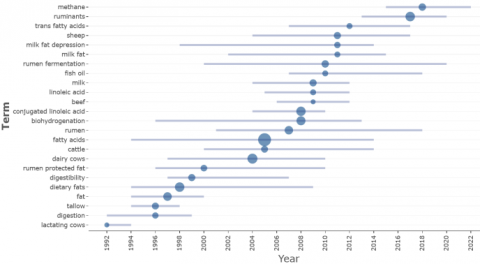
The visualization below represents the thematic evolution (Figure 13) and trend topics (Figure 14) of research on dietary fat supplementation in ruminant nutrition from 1992 to 2024. It shows how key research themes have developed and transformed over different time periods, reflecting shifts in research focus and advancements in scientific understanding.
Figure 13. Thematic evolution of research topics in dietary fat supplementation for ruminant nutrition from 1964 to 2024
Figure 14. Trend analysis of key research topics
During the early period from 1964 to 1991, research on dietary fat supplementation in ruminants primarily focused on foundational topics such as "fatty acids," "biohydrogenation," "dietary fats," and "fiber." The prominence of "fatty acids" indicates an early interest in understanding the basic role of fats in ruminant diets and how they impact animal metabolism and health. "Biohydrogenation," a process specific to the ruminant digestive system where unsaturated fatty acids are hydrogenated by microorganisms in the rumen, also emerged as a crucial area of study, highlighting the unique aspects of ruminant nutrition compared to monogastric animals. The presence of "fiber" in the thematic network suggests that initial studies were also concerned with balancing fat and fiber intake, given the importance of fiber in ruminant diets for optimal rumen function.
Between 1992 and 1997, research began to diversify with the introduction of new themes such as "soybeans," "body condition score," "digestibility," "milk fat depression," and "rapeseed oil." This period saw an increased focus on specific feed ingredients like "soybeans" and "rapeseed oil," likely driven by interest in the potential benefits and challenges of incorporating various oilseeds in ruminant diets. "Body condition score" and "milk fat depression" as emerging themes indicate a shift towards understanding the physiological and production-related responses of ruminants to dietary fat supplementation. The exploration of "digestibility" reflects a growing awareness of the importance of not just the type of fat, but also its digestibility and the subsequent effects on nutrient absorption and animal performance.
From 1998 to 2008, the thematic focus of research evolved further to include more specific types of fatty acids and their impacts. Notable themes like "conjugated linoleic acid (CLA)," "polyunsaturated fatty acids," "tallow," and "milk fat depression" indicate an increased interest in the functional properties of different fatty acids and their role in ruminant nutrition. "Conjugated linoleic acid" and "polyunsaturated fatty acids" suggest a deeper exploration of the health benefits and metabolic roles of specific fats, reflecting a period where functional foods and nutraceuticals gained prominence in nutritional science. The recurring theme of "milk fat depression" points to ongoing concerns regarding the negative impacts of certain dietary fats on milk production parameters, a critical issue for dairy farmers.
The period from 2009 to 2015 is characterized by an integration of environmental and health-related research themes. New topics such as "methane," "antioxidants," "greenhouse gas," and "extruded/conjugated linoleic acid" emerge, reflecting a shift towards a more holistic understanding of dietary fat supplementation in ruminant nutrition. The emphasis on "methane" and "greenhouse gas" production aligns with global concerns about the environmental footprint of livestock production and the search for dietary strategies to mitigate emissions. The introduction of "antioxidants" indicates an awareness of oxidative stress and the potential benefits of adding protective compounds to diets, especially when feeding higher levels of unsaturated fats. "Extruded/conjugated linoleic acid" suggests advanced processing techniques to improve fat utilization and maximize its beneficial effects.
In the most recent period, from 2016 to 2024, the thematic evolution continues with the prominence of topics like "dairy cows," "ruminants," "methane," "linoleic acid," "polyunsaturated fatty acids," "greenhouse gas," and "palm oil." This period reflects a sustained focus on optimizing dairy production ("dairy cows"), coupled with significant concern over environmental sustainability ("methane," "greenhouse gas"). The introduction of "palm oil" as a keyword indicates growing interest in alternative fat sources and their implications for both nutrition and sustainability. The recurring presence of "polyunsaturated fatty acids" and "linoleic acid" demonstrates continued efforts to understand and exploit the health benefits of specific fatty acids in ruminant diets.
The visualization of thematic evolution in research on dietary fat supplementation in ruminant nutrition reveals a clear progression from foundational studies on basic fat metabolism and fiber dynamics to more sophisticated explorations of specific fatty acids, their health benefits, and environmental impacts. This thematic trajectory reflects broader trends in nutrition science, animal production, and environmental sustainability, showcasing how research in this field has adapted to meet evolving scientific, industry, and societal needs. By understanding these trends, researchers can identify emerging gaps, align their studies with contemporary issues, and contribute to the ongoing advancement of ruminant nutrition science.
3.6 Shifting paradigms in ruminant fat supplementation: Towards healthier animal products and sustainable practices
The bibliometric analysis conducted on dietary fat supplementation in ruminant nutrition provides a foundation for understanding the evolving research trends, key themes, and future directions in this field. By identifying influential studies, core research clusters, and emerging topics through co-occurrence and co-citation networks, the bibliometric findings reveal a noticeable shift from traditional goals focused on maximizing productivity to more contemporary concerns surrounding human health benefits and environmental sustainability.
The current research landscape on dietary fat supplementation in ruminant nutrition is increasingly oriented towards producing healthier animal products—such as milk and meat—with improved fatty acid profiles for human health, while also focusing on environmentally sustainable practices. This shift represents a departure from the traditional objective of merely maximizing animal productivity, moving towards more holistic goals that balance economic viability, human health benefits, and ecological sustainability. The focus is now on sourcing alternative fats that are abundant, cost-effective, sustainable, and do not compete directly with human food resources.
One promising alternative source of fat for ruminant diets is insects, which are rich in both protein and fat. Insects such as black soldier fly larvae (Hermetia illucens), mealworms (Tenebrio molitor), and crickets (Acheta domesticus) are gaining attention as sustainable feed ingredients. These insects are highly efficient in converting organic waste into high-quality nutrients, including essential fatty acids like omega-3 and omega-6, which are beneficial for both animal and human health [40-42]. Studies suggest that incorporating insect meal into ruminant diets could enhance the nutritional quality of animal products without the environmental costs associated with conventional feed sources such as soybean oil or palm oil, which have higher land use and carbon footprints [43, 44]. Moreover, insect farming requires less land, water, and feed inputs, making it an attractive option for reducing the environmental impact of livestock production. The potential of insects as a sustainable fat source in ruminant nutrition is further strengthened by their rapid growth rates, ability to thrive on waste streams, and lower greenhouse gas emissions compared to traditional livestock [45].
Another innovative approach is the use of rumen-protected fats (RPFs) in ruminant diets, which has been shown to improve the fatty acid profile of milk and meat. RPFs are specially formulated fats that bypass the rumen's biohydrogenation process, ensuring that more unsaturated fats—such as omega-3 and omega-6 fatty acids—reach the small intestine for absorption [46-48]. Studies have demonstrated that RPFs can increase the content of beneficial fatty acids in milk, such as conjugated linoleic acid (CLA) and omega-3 [46, 49, 50], which are associated with reduced risks of cardiovascular diseases and improved overall human health [51]. Additionally, RPFs can enhance meat quality by increasing the proportion of healthy fats, making it a more attractive option for health-conscious consumers. The use of RPFs also supports sustainable livestock practices by potentially reducing methane emissions from enteric fermentation, as less fermentation occurs in the rumen when these fats are included in the diet [52-54].
The shift towards healthier and more sustainable fat sources in ruminant diets is not only driven by consumer demand for better nutritional quality but also by the agricultural sector's need to adapt to environmental challenges. The adoption of alternative fat sources like insects and advanced feed technologies such as RPFs offers a dual benefit: enhancing the nutritional profile of ruminant products and reducing the environmental footprint of livestock production. These strategies align with the broader goals of sustainable agriculture, which seeks to meet the growing global demand for animal products while minimizing negative impacts on ecosystems and natural resources [55].
In conclusion, the evolving focus on dietary fat supplementation in ruminant nutrition reflects a significant paradigm shift towards integrating health benefits and sustainability. The future prospects for using innovative fat sources, such as insect-based feeds and rumen-protected fats, are promising, as they address key challenges in livestock production, from improving human health outcomes to reducing environmental impact. Continued research and development in these areas will be crucial to fully realize their potential and achieve a more sustainable and health-conscious approach to ruminant nutrition.
The bibliometric analysis of dietary fat supplementation in ruminant nutrition reveals a multi-dimensional and evolving research landscape characterized by a diverse range of thematic focuses and interdisciplinary collaborations. Through the integration of data from Scopus, analyzed using advanced bibliometric tools such as R and VOSviewer, this study provides a detailed mapping of the intellectual structure and dynamic trends within this field. The co-citation network analysis highlights the pivotal role of journals such as the Journal of Dairy Science and Journal of Animal Science, indicating that research in this domain has traditionally been centered around dairy and general animal nutrition, with strong thematic overlaps across lipid chemistry, feed science, and environmental impacts.
The evolving thematic trajectory, visualized through co-occurrence and trend topic analyses, reflects a shift from foundational studies on fatty acid metabolism and fiber interactions in the early decades to more sophisticated investigations into specific fatty acids like conjugated linoleic acid and their broader implications for ruminant health, productivity, and environmental sustainability. Notably, recent trends show a marked increase in research addressing global challenges such as methane emissions and sustainable agriculture, signifying a shift towards integrating nutrition science with ecological and climate-conscious strategies. This underscores the increasing importance of developing dietary interventions not only to enhance ruminant productivity but also to mitigate environmental impacts—a dual focus that aligns with global sustainability goals.
Furthermore, the analysis of authorship, institutional productivity, and collaborations suggests that a relatively small group of institutions, predominantly from North America and Europe, dominate the field. This concentration of expertise presents both opportunities and challenges: while it facilitates the development of robust research networks and collaborative efforts, it also points to the potential underrepresentation of perspectives from regions where livestock farming is both economically vital and environmentally challenging. Addressing this imbalance could lead to more region-specific innovations and a more inclusive global understanding of dietary fat supplementation strategies.
The methodological framework presented in this study, involving the selection of Scopus for its comprehensive coverage and the application of rigorous bibliometric techniques, also demonstrates the utility of such approaches in synthesizing vast amounts of scholarly information. By visualizing knowledge networks, identifying influential works, and pinpointing emerging trends, bibliometric analyses provide valuable insights for researchers, policymakers, and industry stakeholders to guide future research, foster collaborations, and inform strategic decision-making.
At last, the research field of dietary fat supplementation in ruminant nutrition is at a critical juncture, where scientific inquiry is increasingly shaped by the need to balance animal productivity with environmental stewardship. As this field continues to evolve, it will benefit from more inclusive, multidisciplinary approaches that bridge gaps across geographies and integrate insights from nutrition science, ecology, and sustainable agricultural practices. This unique perspective on the interplay between productivity and sustainability not only advances the scientific discourse but also addresses broader socio-economic and environmental imperatives in the context of global food security and climate change.
This study was funded by Hasanuddin University.
[1] Annison, E.F., Bryden, W.L. (1999). Perspectives on ruminant nutrition and metabolism. II. Metabolism in ruminant tissues. Nutrition Research Reviews, 12(1): 147-177. https://doi.org/10.1079/095442299108728866
[2] Kalnitsky, B., Kharitonov, E. (2001). Modern approaches to estimation of feed value and to rationing in ruminant nutrition. Journal of Animal Feed Science, 10: 105-114. https://doi.org/10.22358/jafs/70015/2001
[3] Leduc, M., Létourneau-Montminy, M.P., Gervais, R., Chouinard, P.Y. (2017). Effect of dietary flax seed and oil on milk yield, gross composition, and fatty acid profile in dairy cows: A meta-analysis and meta-regression. Journal of Dairy Science, 100(11): 8906-8927. https://doi.org/10.3168/jds.2017-12637
[4] Petit, H.V. (2002). Digestion, milk production, milk composition, and blood composition of dairy cows fed whole flaxseed. Journal of Dairy Science, 85(6): 1482-1490. https://doi.org/10.3168/jds.S0022-0302(02)74217-3
[5] Roy, A., Ferlay, A., Shingfield, K.J., Chilliard, Y. (2006). Examination of the persistency of milk fatty acid composition responses to plant oils in cows given different basal diets, with particular emphasis on trans-C18: 1 fatty acids and isomers of conjugated linoleic acid. Animal Science, 82(4): 479-492. https://doi.org/10.1079/ASC200658
[6] Tsiplakou, Z.G., Zervas, E. (2013). Changes in milk and plasma fatty acid profile in response to fish and soybean oil supplementation in dairy sheep. Journal of Dairy Research, 80(2): 205-213. https://doi.org/10.1017/S0022029913000137
[7] Lock, A.L., Garnsworthy, P.C. (2002). Independent effects of dietary linoleic and linolenic fatty acids on the conjugated linoleic acid content of cows’ milk. Animal Science, 74(1): 163-176. https://doi.org/10.1017/S1357729800052334
[8] Lerch, S., Dufrasne, I., Hornick, J.-L., Istasse, L., Rollin, F. (2020). Undernutrition combined with dietary mineral oil hastens depuration of stored dioxin and polychlorinated biphenyls in ewes. 2. Tissue distribution, mass balance and body burden. PLoS One, 15(3): e0230628. https://doi.org/10.1371/journal.pone.0230628
[9] Vargas, J.E., Andrés, S., López, S., Newbold, C.J., Wallace, R.J. (2017). Effect of sunflower and marine oils on ruminal microbiota, in vitro fermentation and digesta fatty acid profile. Frontiers in Microbiology, 8: 1124. https://doi.org/10.3389/fmicb.2017.01124
[10] Bowen, J.M., Jenkins, T.C., Wallace, R.J., Newbold, C.J., McEwan, N.R. (2020). Links between the rumen microbiota, methane emissions and feed efficiency of finishing steers offered dietary lipid and nitrate supplementation. PLoS One, 15(4): e0231759. https://doi.org/10.1371/journal.pone.0231759
[11] Sun, X., Wang, Y., Ma, X., Li, S., Wang, W. (2022). Producing natural functional and low-carbon milk by regulating the diet of the cattle—The fatty acid associated rumen fermentation, biohydrogenation, and microorganism response. Frontiers in Nutrition, 9: 955846. https://doi.org/10.3389/fnut.2022.955846
[12] Foggi, G., Turini, L., Silvi, A., Mele, M. (2023). Dietary strategies aiming to reduce the environmental impact of ruminants. Agrochimica, 67: 137-144. https://doi.org/10.12871/000218572023012
[13] Ponnampalam, E., Priyashantha, H., Vidanarachchi, J., Kiani, A., Holman, B. (2024). Effects of nutritional factors on fat content, fatty acid composition, and sensorial properties of meat and milk from domesticated ruminants: An overview. Animals, 14(6): 840. https://doi.org/10.3390/ani14060840
[14] Aria, M., Cuccurullo, C. (2017). Bibliometrix: An R-tool for comprehensive science mapping analysis. Journal of Informetrics, 11(4): 959-975. https://doi.org/10.1016/j.joi.2006.12.001
[15] Pranckutė, R. (2021). Web of Science (WoS) and Scopus: The titans of bibliographic information in today’s academic world. Publications, 9(1): 12. https://doi.org/10.3390/publications9010012
[16] Norris, M., Oppenheim, C. (2007). Comparing alternatives to the Web of Science for coverage of the social sciences’ literature. Journal of Informetrics, 1(2): 161-169. https://doi.org/10.1016/j.joi.2006.12.001
[17] van Eck, N.J., Waltman, L., Dekker, R., van den Berg, J. (2010). A comparison of two techniques for bibliometric mapping: Multidimensional scaling and VOS. Journal of the American Society for Information Science and Technology, 61(12): 2405-2416. https://doi.org/10.1002/asi.21421
[18] Kirby, A. (2023). Exploratory bibliometrics: Using VOSviewer as a preliminary research tool. Publications, 11(1): 10. https://doi.org/10.3390/publications11010010
[19] Donthu, N., Kumar, S., Mukherjee, D., Pandey, N., Lim, W.M. (2021). How to conduct a bibliometric analysis: An overview and guidelines. Journal of Business Research, 133: 285-296. https://doi.org/10.1016/j.jbusres.2021.04.070
[20] Palmquist, D.L., Jenkins, T.C. (1980). Fat in lactation rations: Review. Journal of Dairy Science, 63(1): 1-14. https://doi.org/10.3168/jds.S0022-0302(80)82881-5
[21] Chilliard, Y., Ferlay, A., Doreau, M. (2001). Effect of different types of forages, animal fat or marine oils in cow’s diet on milk fat secretion and composition, especially conjugated linoleic acid (CLA) and polyunsaturated fatty acids. Livestock Production Science, 70(1-2): 31-48. https://doi.org/10.1016/S0301-6226(01)00196-8
[22] Dewhurst, R.J., Shingfield, K.J., Lee, M.R.F., Scollan, N.D. (2006). Increasing the concentrations of beneficial polyunsaturated fatty acids in milk produced by dairy cows in high-forage systems. Animal Feed Science and Technology, 131(3-4): 168-206. https://doi.org/10.1016/j.anifeedsci.2006.04.016
[23] Griinari, J.M., Dwyer, D.A., McGuire, M.A., Bauman, D.E., Palmquist, D.L., Nurmela, K.V.V. (1998). Trans-octadecenoic acids and milk fat depression in lactating dairy cows. Journal of Dairy Science, 81(5): 1251-1261. https://doi.org/10.3168/jds.S0022-0302(98)75686-3
[24] Chilliard, Y., Ferlay, A. (2004). Dietary lipids and forages interactions on cow and goat milk fatty acid composition and sensory properties. Reproduction Nutrition Development, 44(5): 467-492. https://doi.org/10.1051/rnd:2004052
[25] Jenkins, T.C., McGuire, M.A. (2006). Major advances in nutrition: Impact on milk composition. Journal of Dairy Science, 89(4): 1302-1310. https://doi.org/10.3168/jds.S0022-0302(06)72198-1
[26] Chilliard, Y. (1993). Dietary fat and adipose tissue metabolism in ruminants, pigs, and rodents: A review. Journal of Dairy Science, 76(12): 3897-3931. https://doi.org/10.3168/jds.S0022-0302(93)77730-9
[27] Doreau, M., Chilliard, Y. (1997). Digestion and metabolism of dietary fat in farm animals. British Journal of Nutrition, 78(1): S15-S35. https://doi.org/10.1079/BJN19970132
[28] Woods, V.B., Fearon, A.M. (2009). Dietary sources of unsaturated fatty acids for animals and their transfer into meat, milk and eggs: A review. Livestock Science, 126(1-3): 1-20. https://doi.org/10.1016/j.livsci.2009.07.002
[29] Hayirli, A., Grummer, R.R., Nordheim, E.V., Crump, P.M. (2002). Animal and dietary factors affecting feed intake during the prefresh transition period in Holsteins. Journal of Dairy Science, 85(12): 3430-3443. https://doi.org/10.3168/jds.S0022-0302(02)74431-7
[30] Sklan, D., Ashkenazi, R., Braun, A., Devorin, A., Tabori, K. (1992). Fatty acids, calcium soaps of fatty acids, and cottonseeds fed to high yielding cows. Journal of Dairy Science, 75(9): 2463-2472. https://doi.org/10.3168/jds.S0022-0302(92)78008-4
[31] Wu, Z., Ohajuruka, O.A., Palmquist, D.L. (1991). Ruminal synthesis, biohydrogenation, and digestibility of fatty acids by dairy cows. Journal of Dairy Science, 74(9): 3025-3034. https://doi.org/10.3168/jds.S0022-0302(91)78488-9
[32] Sanz Sampelayo, M.R., Chilliard, Y., Schmidely, P., Boza, J. (2007). Influence of type of diet on the fat constituents of goat and sheep milk. Small Ruminant Research, 68(1-2): 42-63. https://doi.org/10.1016/j.smallrumres.2006.09.017
[33] Scollan, N.D., Hocquette, J.F., Nuernberg, K., Dannenberger, D., Richardson, I., Moloney, A.P. (2014). Enhancing the nutritional and health value of beef lipids and their relationship with meat quality. Meat Science, 97(3): 384-394. https://doi.org/10.1016/j.meatsci.2014.02.015
[34] Zened, A., Combes, S., Cauquil, L., Mariette, J., Klopp, C., Bouchez, O., Troegeler-Meynadier, A., Enjalbert, F. (2013). Microbial ecology of the rumen evaluated by 454 GS FLX pyrosequencing is affected by starch and oil supplementation of diets. FEMS Microbiology Ecology, 83(2): 504-514. https://doi.org/10.1111/1574-6941.12011
[35] Ikwuegbu, O.A., Sutton, J.D. (1982). The effect of varying the amount of linseed oil supplementation on rumen metabolism in sheep. British Journal of Nutrition, 48(2): 365-375. https://doi.org/10.1079/BJN19820120
[36] Chouinard, P.Y., Corneau, L., Butler, W.R., Bauman, D.E., Chilliard, Y., Drackley, J.K. (2001). Effect of dietary lipid source on conjugated linoleic acid concentrations in milk fat. Journal of Dairy Science, 84(3): 680-690. https://doi.org/10.3168/jds.S0022-0302(01)74522-5
[37] Palmquist, D.L. (2006). Milk fat: Origin of fatty acids and influence of nutritional factors thereon. In Advanced Dairy Chemistry Volume 2 Lipids, Boston, pp. 43-92. https://doi.org/10.1007/0-387-28813-9_2
[38] Hess, B.W., Moss, G.E., Rule, D.C. (2008). A decade of developments in the area of fat supplementation research with beef cattle and sheep. Journal of Animal Science, 86(suppl_14): E188-E204. https://doi.org/10.2527/jas.2007-0546
[39] Sutton, J.D., Knight, R., McAllan, A.B., Smith, R.H. (1983). Digestion and synthesis in the rumen of sheep given diets supplemented with free and protected oils. British Journal of Nutrition, 49(3): 419-432. https://doi.org/10.1079/BJN19830051
[40] Jayanegara, A., Gustanti, R., Ridwan, R., Widyastuti, Y. (2020). Fatty acid profiles of some insect oils and their effects on in vitro bovine rumen fermentation and methanogenesis. Italian Journal of Animal Science, 19(1): 1310-1317. https://doi.org/10.1080/1828051X.2020.1841571
[41] Renna, M., Coppa, M., Lussiana, C., Le Morvan, A., Gasco, L., Maxin, G. (2022). Full-fat insect meals in ruminant nutrition: In vitro rumen fermentation characteristics and lipid biohydrogenation. Journal of Animal Science and Biotechnology, 13(1): 138. https://doi.org/10.1186/s40104-022-00792-2
[42] Hervás, G., Boussalia, Y., Labbouz, Y., Della Badia, A., Toral, P.G., Frutos, P. (2022). Insect oils and chitosan in sheep feeding: Effects on in vitro ruminal biohydrogenation and fermentation. Animal Feed Science and Technology, 285: 115222. https://doi.org/10.1016/j.anifeedsci.2022.115222
[43] Gasco, L., Biasato, I., Dabbou, S., Schiavone, A., Gai, F. (2019). Animals fed insect-based diets: State-of-the-art on digestibility, performance and product quality. Animals, 9(4): 170. https://doi.org/10.3390/ani9040170
[44] Makkar, H.P.S., Tran, G., Heuzé, V., Ankers, P. (2014). State-of-the-art on use of insects as animal feed. Animal Feed Science and Technology, 197: 1-33. https://doi.org/10.1016/j.anifeedsci.2014.07.008
[45] van Huis, A. (2013). Potential of insects as food and feed in assuring food security. Annual Review of Entomology, 58(1): 563-583. https://doi.org/10.1146/annurev-ento-120811-153704
[46] Kim, T.B., Lee, J.S., Cho, S.Y., Lee, H.G. (2020). In vitro and in vivo studies of rumen-protected microencapsulated supplement comprising linseed oil, vitamin e, rosemary extract, and hydrogenated palm oil on rumen fermentation, physiological profile, milk yield, and milk composition in dairy cows. Animals, 10(9): 1631. https://doi.org/10.3390/ani10091631
[47] Gulati, S.K., Garg, M.R., Scott, T.W. (2005). Rumen protected protein and fat produced from oilseeds and/or meals by formaldehyde treatment; their role in ruminant production and product quality: A review. Australian Journal of Experimental Agriculture, 45(10): 1189. https://doi.org/10.1071/EA04131
[48] da Cruz, W.F.G., Ladeira, M.M., Marques, J.A., Paulino, P.V.R., Fávaro, V.R., Ezequiel, J.M.B., Chizzotti, M.L. (2019). Effects of maternal protein supplementation and inclusion of rumen-protected fat in the finishing diet on nutrient digestibility and expression of intestinal genes in Nellore steers. Animal Science Journal, 90(9): 1200-1211. https://doi.org/10.1111/asj.13273
[49] Pereira, G., Lopes, F., Oliveira, R.L., Chizzotti, M.L., Silva, F.F., Rennó, F.P., Tedeschi, L.O. (2022). Effects of feeding rumen-protected linseed fat to postpartum dairy cows on plasma n-3 polyunsaturated fatty acid concentrations and metabolic and reproductive parameters. Journal of Dairy Science, 105(1): 361-374. https://doi.org/10.3168/jds.2021-20674
[50] Behan, A.A., Loh, T.C., Fakurazi, S., Kaka, U., Kaka, A., Samsudin, A.A. (2019). Effects of supplementation of rumen protected fats on rumen ecology and digestibility of nutrients in sheep. Animals, 9(7): 400. https://doi.org/10.3390/ani9070400
[51] Shingfield, K.J., Bonnet, M., Scollan, N.D. (2013). Recent developments in altering the fatty acid composition of ruminant-derived foods. Animal, 7: 132-162. https://doi.org/10.1017/S1751731112001681
[52] Beauchemin, K.A., McGinn, S.M., Benchaar, C., Holtshausen, L. (2009). Crushed sunflower, flax, or canola seeds in lactating dairy cow diets: Effects on methane production, rumen fermentation, and milk production. Journal of Dairy Science, 92(5): 2118-2127. https://doi.org/10.3168/jds.2008-1903
[53] Gomez-Insuasti, A.S., Granja-Salcedo, Y.T., Vargas, J.A.C., Messana, J.D., Sader, A.P.O., Berchielli, T.T. (2021). In vitro gas production and fatty acids biohydrogenation of diets containing different unsaturated fatty acids sources plus crude glycerin. Turkish Journal of Veterinary and Animal Sciences, 45(5): 944-954. https://doi.org/10.3906/vet-2101-67
[54] Behan, A.A., Chwen, L.T., Kaka, U., Muhammad, A.I., Samsudin, A.A. (2024). Effect of rumen-protected fat on in vitro rumen fermentation and apparent biohydrogenation of fatty acids. Journal of Indonesian Tropical Animal Agriculture, 49(3): 252-263. https://doi.org/10.14710/jitaa.49.3.252-263
[55] FAO. (2019). The State of Food and Agriculture 2019: Moving Forward on Food Loss and Waste Reduction. Food and Agriculture Organization of the United Nations, Rome.