Yusran Yusran* | Erniwati Erniwati | Rukmi Rukmi
© 2024 The authors. This article is published by IIETA and is licensed under the CC BY 4.0 license (http://creativecommons.org/licenses/by/4.0/).
OPEN ACCESS
Ethnomycological knowledge is still largely unknown compared to local plant and animal knowledge, despite the fact that wild mushrooms are an important component of healthy and well-functioning ecosystems. Wild mushrooms are also an integral part of many social and economic systems in various parts of the world. Pasangkayu District, West Sulawesi Province, Indonesia, is home to a diversity of edible wild mushrooms and an extensive human-mushroom relationship. Traditional knowledge of local ecology and mycology is essential to preserve ecological systems and promote sustainable livelihoods of local communities. This study aims to explore the ethnomycological practices regarding wild mushrooms among the indigenous Bunggu tribe, Pasangkayu Regency, Central Sulawesi Province, Indonesia. The results showed that there were 14 species of mushrooms used by the Bunggu ethnic community as food, medicine, lighting at night and shampoo/hair tonic. Mushrooms that have the highest Relative Frequency of Citation (RFC) value in this study are Schizophyllum commune, Auricularia auricular-judae, Auricularia polythrica, Termytomyces spp. and Cookeina spp., Volvariella volvaceae, Lentinus sp. Pleurotus sp. which are 1, while the lowest is Mycena spp. with an RFC value of 0.38. Mushroom species that have low RFC values require conservation efforts to prevent extinction and can be utilised sustainably. The highest Informant consensus factor (ICF) value of 0.98 was found in the use of mushrooms as a food source, followed by the use of mushrooms as medicine (0.94), and their use as lighting at night (0.90). This finding shows that the Bunggu tribe is rich in traditional knowledge in utilising wild mushroom species as food and medicine and helps to determine macro mushroom species that can be cultivated in the future, which is expected to improve the economy of the Bunggu tribe. This research also plays an important role in the conservation of these mushroom species by involving local communities.
utilization, edible mushroom, indigenous knowledge, conservation, Bunggu tribe
Fungi are a cosmopolitan group of organisms that are often widely utilized by people in different countries around the world due to their high economic, ecological and cultural impact. They are widely consumed, medicinal or used in ritual ceremonies, associated with myths, thus having an important sociocultural influence worldwide [1] and are one of the most economically valuable non-timber forest products [2].
It is estimated that there are about 3.5 million species of fungi worldwide, with about 140,000 species producing fruiting bodies of sufficient size and structure to be recognized as mushrooms. According to estimation by Tripathi et al. [3] that the number of mushroom species is only about 10,000 species of mushrooms in the world and only 2000 species are edible. But according to Dar et al. [4] that the number of species of fungi that have been documented today is more, which is about 14,000 species, and of these, only about 7000 species have a level of feasibility to be eaten and more than 3000 species are considered as the main food and 2000 species have medicinal properties.
Mushrooms are fungi that form fruiting bodies belonging to the Basidiomycetes and Ascomycetes classes that can be seen with the naked eye without the aid of a microscope and can produce sporocarps [5, 6]. All mushrooms are mushrooms, but not all mushrooms are mushrooms [7]. Edible wild mushrooms are one of the most important natural resources as they are an important source of nutrition for most of the world's people. In addition, they also play an important role in industry, agriculture, medicine, food industry, textiles, and bioremediation of polluted environments. Wild edible mushrooms are known to be historically valuable to humans due to their important biological and economic impacts on societies in various parts of the world [8-15].
Each tribe has local knowledge in utilising mushroom which is influenced by socio-culture, beliefs and perceptions of the community, environmental conditions and habits of the local community. Ethnomycology is the scientific study of the identification and documentation of people's indigenous knowledge regarding the use of wild mushrooms not only as food and medicine, but also in relation to some cultural traditions of the local people [4]. Ethnomycology is a relatively new science as part of ethnobiology, which specializes in studying the local knowledge of a particular community consisting of documenting the use of mushrooms as foodstuffs, their medicinal applications, as objects of recreation and art, consideration of beliefs and myths, and their contribution to household income generation [16, 17]. The study of ethnomycology in the world is of increasing interest to the scientific community, especially mycologists [18]. Ethnomycological studies of local communities can help us to know which mushroom species are consumed by certain communities in a region and of course also to avoid poisoning due to consumption of toxic and dangerous mushrooms.
The indigenous community known as the Kaili Inde, Bunggu ethnic group is one of the ethnic groups that inhabit Pasangkayu Regency, West Sulawesi. However, in general, people in Pasangkayu Regency recognize and refer to them as the Bunggu tribe or To Bunggu (Bunggu people). In the language of the Kaili Inde' or Kaili Da'a tribe, “Bunggu” refers to the mountains while “Binggi” refers to the coast. The Bunggu ethnicity is still part of the Kaili tribe that inhabits the mountainous region on the western side of the Palu Valley, namely the Gawalise mountains, Central Sulawesi, Indonesia. Furthermore, this tribe then moved to other areas, including Pasangkayu Regency, West Sulawesi. The nomadic lifestyle influenced the lifestyle of this tribe. Most of the people of this tribe only rely on agricultural food supplies and hunting results. The houses used to protect them from the sun, rain and wild animal attacks are always makeshift or non-permanent. They apply life with a pattern of shifting fields from one place to another, by building houses on trees with a height of 10 to 15 meters, called Sou Nggayu (tree houses) [19, 20].
Indonesia is very rich in local wisdom, especially in utilizing forest resources as a source of food and medicine. Macro fungus is one of the non-timber forest products that has great potential for this purpose, but very little research on its ethnomycology is known, including its domestication efforts. In Indonesia, the results of research on ethnomycology have been reported by several researchers such as the diversity of macro mushroom species as food and medicine by the Kaili tribe around Lore Lindu National Park, Central Sulawesi [13, 21-24] and by the Baduy tribe in Banten, Indonesia [25-27]. However, especially in Sulawesi Island, research on ethnomycology is still limited to certain ethnicities, while there are many other ethnicities spread throughout the island. Therefore, this study aims to determine the ethnomycology of wild mushrooms by the indigenous people of the Bunggu tribe in Pasangkayu district, Central Sulawesi province, Indonesia, in order to enrich information about the ethnomycology of Sulawesi Island and Indonesia in general.
2.1 Study location, time, ethnography and climate
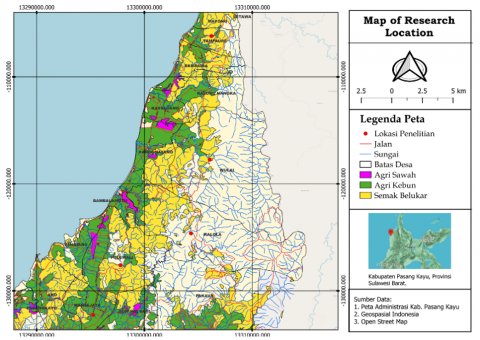
This research was conducted from March to July 2024 in Pasangkayu District, West Sulawesi, Indonesia (Figure 1). Astronomically, Pasangkayu Regency, which is included in the central Indonesian region, is located around the equator, with coordinates between 00°40'10'' to 10°50'12'' South latitude and 119°25'26'' to 119°50'20'' East longitude. Pasangkayu Regency is directly bordered by the Makassar Strait to the west, Mamuju Regency to the south and Central Sulawesi Province (Donggala Regency) to the north and east. Pasangkayu Regency is the second largest district in West Sulawesi Province after Mamuju Regency. Pasangkayu Regency has an area of 3,043.75 km2 or about 17.39% of the total area of West Sulawesi Province, which is divided into 12 sub-districts. The area of Pasangkayu is a land area of 3,043.75 km2. The population of Pasangkayu district is 193,098 people, with a density of 63 people/km2, and is divided into 100,129 men and 92,969 women. Like other regions in Indonesia, Pasangkayu Regency has a tropical climate with two seasons. In addition, the weather is characterized by high temperatures. In 2016, rainfall in Pasangkayu Regency varied with the highest rainfall occurring in October (402 mm3). While the highest number of rainy days in May, November and December reached 27 days [28, 29].
Figure 1. Map of research sites in several villages in Pasangkayu District, West Sulawesi, Indonesia
2.2 Respondent selection
A total of 150 respondents, with 30 respondents representing each village around the forest area, were interviewed about ethnomycological aspects of food and medicinal mushrooms. Respondents were randomly selected, both male and female, especially those who work as village shamans, traditional community leaders and mushroom sellers in traditional markets in villages around the forest in Pasangkayu district who are familiar with food and medicinal mushrooms.
Respondents were randomly selected in villages surrounding and directly adjacent to the forest area, namely Pakava, Polewali (Kalibamba Hamlet), Wulai (Pinora Hamlet), Kalola (Duria Sulapa Hamlet) and Tampaure (Saluwira and Bambarano Hamlets). The population in these villages is predominantly indigenous to the Bunggu tribe. Thirty questionnaires were distributed to respondents in each of these villages, followed by a discussion between the researcher and respondents. A total of 150 informants (97 men and 53 women) from several villages (the lowest administrative unit in Indonesia) were involved in this study. Representative general respondents and key respondents were selected by systematic and purposive randomisation. Information for the nomination of participants as key respondents was collected from the elderly and with the help of the village head and local village office staff. Thirty-six key informants were identified (24 males and 12 females) among the residents. Informed consent was obtained before starting each interview with general informants and key informants. Some of the questions asked to respondents were age, gender, type of work, migration history, land ownership status, number of family members and specific knowledge related to the utilization of known mushrooms such as names in local languages, descriptions, time of fruiting body emergence, growing habitats, methods and processes, parts of mushrooms used and species of diseases treated and how they are used). During the interviews and discussions, photos of food and medicinal mushrooms that had been collected from previous research were also shown to respondents along with samples of food fungi whose benefits were already known. Focus Group Discussions (FGDs) were also conducted related to the technology and utilization of food and medicinal mushrooms species that are often used by local communities through pictorial percentages. All species of food and medicinal mushrooms found in the field (forest, garden, agroforestry) were collected both for the purpose of the second year of research and for the purpose of species identification in the laboratory. Dried and/or fresh specimens and colour photographs of representative fungal specimens were used during interviews and discussions with key respondents and local field assistants. Morphological identification of specimens was conducted in the field. The mushroom sporocarps were then dried using an electric dryer at 40℃ for 15-20 hours and stored in plastic bags lined with silica gel at room temperature. Fungal collections were brought to the laboratory for microscopic characterization under a microscope and for identification based on the following taxonomic keys and references [30-35]. Microscopic features were observed using standard microscopy methods [36]. Dried fruiting body collections were also deposited at the Forestry Sciences Laboratory, Tadulako University, Indonesia.
Furthermore, Interviews were conducted to collect data on the number of mushroom uses recorded by informants/respondents which were then analysed using the Cultural Importance Index (CI) and factor informant consensus (Fic). According to Sharma et al. [37], the CI value is calculated as the total number of reported uses (UR) for one type of macro fungus used as food and medicine divided by the number of informants/respondents (N).
2.3 Data analysis
The data obtained in this study were analyzed qualitatively and quantitatively. Qualitative data from interviews were presented in the form of descriptions of morphological analysis. The description of each fungal species is tabulated in a table and some important information such as information about the vernacular name, scientific name, habitat, morphological characteristics, and utilisation is explained. Quantitative data were obtained from the value of utilization and then the data were analyzed based on the utilization of mushrooms by calculating the Botanical Index Relative Frequency of Citation (RFC). The RFC index is the number of respondents who mentioned a particular species of fungi (FC) divided by the total number of respondents involved in the survey (N). The RFC index varies from 0-1. The RFC index is 0 if no respondents refer to the use of certain species of mushrooms and is 1 if all respondents refer to the use of particular species of mushrooms. The formula used is based on Qwarse et al. [38]:
$\mathrm{RFC}=\frac{\mathrm{FC}}{\mathrm{N}}$ (1)
where, FC=The number of respondents who mentioned a particular species of mushroom, and N is the number of respondents interviewed.
Furthermore, FL is the ratio of respondents who mentioned the use of a particular species in the surveyed area. FL is calculated using the formula:
$\mathrm{FL}=\frac{\mathrm{Np}}{\mathrm{N}}$ (2)
where, Np is the number of respondents who reported using a particular species for a particular use and N is the total number of respondents who reported using that species for any use. ICF determines the homogeneity of respondents, which is calculated by the formula:
$\mathrm{IFC}=\frac{\mathrm{Nur}-\mathrm{Nt}}{(\mathrm{Nur}-1)}$ (3)
where, Nur is the number of respondents' reported uses for a particular mushroom use category and Nt is the number of taxa or species categories of mushroom species.
3.1 Species of mushrooms utilized by the Bunggu tribe
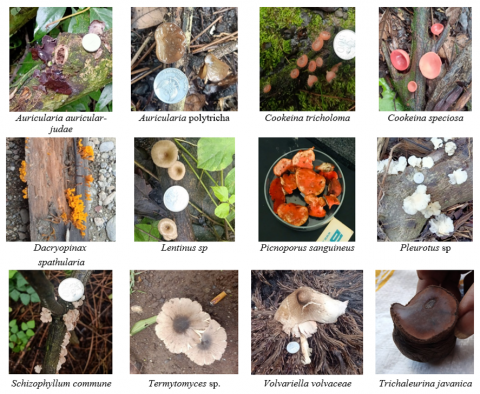
In this study, 14 species of wild mushrooms were found to be utilized by the indigenous people of the Bunggu tribe in Pasangkayu Regency, West Sulawesi, Indonesia (Table 1 and Figure 2). The results of this research are more when compared to the results of research by Sulastri et al. [39] which found as many as 12 species of mushrooms used by local people in the Sesaot forest, West Lombok, Indonesia, as well as research by Nurhayat et al. [40] in Eden 100 Park, Toba Region, North Sumatra, Indonesia, which also found 14 genus of mushrooms with potential as alternative ingredients for food, supplements, medicines, biofertilizers, bioherbicides, and bioremediation agents. These results are fewer when compared to research by Yusran et al. [24] who found as many as 21 species of wild mushrooms utilized by the Pamona tribe, Poso Regency, Central Sulawesi, Indonesia. However, a greater number of mushroom species were obtained in some previous studies as reported by Ahamdni et al. [41] who found as many as 33 species of mushrooms confirmed to be edible in Perlis State Park, Perlis, Malaysia, and 91 species of edible mushrooms found through surveys in markets in Southweast Yunan, China [42].
Like the Kaili tribe in the Palu Valley, Central Sulawesi, the Bunggu tribe generally also names mushrooms based on where they grow, namely if they grow on weathered wood or on trees that are still alive, they are called “Tambata”, except for the type of S. commune which they call “Tanggidi” while for mushrooms that grow on the ground they are called “Rava” [21, 22].
The results of this study also showed that some respondents had very good knowledge of the use of several species of mushrooms such as Schizophyllum commune, Auricularia auricular-judae, Auricularia polythrica, Termytomyces sp and Volvariella volvacaeae, because it has been known for generations as food, medicine and other uses for the people of the Bunggu Tribe. These species are very easily recognized among the community and are often collected to meet household needs or for sale.
Table 1. Species of mushrooms utilized by the indigenous people of the Bunggu tribe, in Pasangkayu Regency, West Sulawesi
|
No. |
Vernacular Name |
Species |
Family |
Substrate |
Mushrooms Parts Used |
Utilization and Processing Methods |
RFC |
FL |
|
1 |
Tanggidi/Tanggojo |
Schizophyllum commune |
Schizophyllaceae |
Deadwood |
Fruits bodies |
As a food ingredient, the method is mixed with coconut milk and smoked fish or sauteed with vegetables. |
1 |
1 |
|
2 |
Lungo/Lungo Ombe/Tambata Talinga |
Auricularia auricular-judae |
Auriculariaceae |
Deadwood |
Fruits bodies |
As a food source, the method is to make fresh fruit bodies directly into soup or dry them and then store, so that it can be processed again at any time. |
1 |
1 |
|
3 |
Lungo Anggo/Lungo Ibo |
Auricularia polythrica |
Auriculariaceae |
Deadwood |
Fruits bodies |
As a food source, the method is to make fresh fruit bodies directly into soup or dry them and then store, so that it can be processed again at any time. |
1 |
1 |
|
4 |
Ntolu Ntana/Ntolu Uja/Ntolu Anggo/Limo |
Trichaleurina javanica (Rehm) M. Carbone |
Pyronemataceae |
Soils |
The fluids and fruits bodies |
The liquid squeezed from the fruit body is used as a hair wash and shampoo/hairtonic. |
0.53 |
0.52 |
|
5 |
Tombe/Palindo/Tambata Sanjo |
Cookeina spp. (Red colour, white, orange), Cookeina trizholoma (Mont.) Kuntze (hairy) dan Cookeina speciosa (Fr.) Dennis (Hairless) |
Sarcoscyphaceae |
Deadwood |
Cups |
As a medicine, the method is to fill the hood with water and then drink it. Besides that, rub it on the back/waist when it hurts or because of fatigue. They also believe that pouring water from the hood on the baby’s makes it easy for the baby to sleep soundly and it is also used as eye drops. |
1 |
0.93 |
|
6 |
Rava/Rava Lalari/Rava Ntonji (if it grows in clusters) dan Pusa (if it grows individually) |
Termytomyces spp. |
Lyophyllaceae |
Soils |
All parts of fruits bodies |
As a food sources, it is stir-fried and cooked in clear water mixed with fish. Appeared 14 days after heavy rain accompanied by thunder and lightning and lots of moths flying. According to local customs it cannot be consumed by orphans (taboo). |
1 |
1 |
|
7 |
Tubikire/Ntondo/Tambata guni |
Dacryopinax spathularia |
Dacrymycetaceae |
Deadwood |
All parts of fruits bodies |
As medicine, the fruit body is rubbed over the eyebrows/on the forehead to relieve headaches (migraines). |
0.88 |
1 |
|
8 |
Mariada/Rada/Tambata Kalipopo |
Mycena spp. |
Mycenaceae |
Deadwood |
The fruits body and the wood where it grows |
Used as lighting tool when walking in the garden/forest at night. |
0.38 |
0.37 |
|
9 |
Tatingge |
Ganoderma sp. |
Ganodermatceae |
Trees, Deadwood |
All parts of fruits bodies |
As a medicine for headaches, the method is to rub it on the forehead. |
0.52 |
0.52 |
|
10 |
Tambata Sawit/Rava Loka |
Volvariella volvaceae |
Pluteaceae |
Empty palm oil bunches, Around banana trees |
All parts of fruits bodies |
As a food sources, it is stir-fried and mixed with vegetables and spoices then boiled in water |
1 |
1 |
|
11 |
Tambata duyu/Tambata Jou |
Lentinus sp. |
Polyporaceae |
Deadwood |
All parts of fruits bodies |
As a food source, it is mixed with spices and then stir-fried or boiled in water. Harvest them when they are young, because when they are old the taste chewy like rubber and are difficult to chew. |
1 |
1 |
|
12 |
Tambata Neira |
Favolus sp. |
Polyporaceae |
Deadwood |
All parts of fruits bodies |
All parts of the fruit body are dried and the powder is used as a seasoning to flavor food. |
0.45 |
0.64 |
|
13 |
Tambata puti/Betue |
Pleurotus sp. |
Pleurotaceae |
Deadwood |
All parts of fruits bodies |
Mixed with various kinds of vegetables, added spices then stir-fried or boiled in water |
1 |
1 |
|
14 |
Tambata tai |
Psilocybe sp. |
Hymenogastraceae |
Animal Dung |
Fruits bodies |
Roasted and mixed with drinks such as coffee, it is intoxicating and causes hallucinatory effects. |
0.65 |
0.58 |
Schizophyllum commune (Tanggidi) is the most common species of mushroom known by the people of the Bunggu tribe, in Pasangkayu Regency, West Sulawesi. The name “Tanggidi” is also the same as the name by the Kaili tribe in Sigi Regency and the Pamona tribe in Poso Regency, Central Sulawesi [22, 24]. This species has a good taste and is also easy to obtain and is well known in several provinces in Indonesia, with different names [25, 43, 44].
There is also a species of mushroom that is used by the people of Pamona tribe to have medicinal properties, namely Dacryopinax spathularia (local name: Tubikire/Ntondo/Tambata guni). This species of mushroom is believed by the community to cure headaches (migraines). The method of utilization is that the fruiting body is applied to the surface of the forehead on the head that hurts. Another species with medicinal properties is Cookeina sp. (local name: Tombe/Palindo/Tambata Sanjo). This mushroom is believed by the people of the Bunggu tribe to cure a sore waist (fatigue) by filling the hood with water and then drinking it, and the water is applied to the back or waist that is tired / sore. They also believe that water from the hood that is splashed on the baby's body makes the baby sleep easily and is used as eye drops. Generally, people in newly developing countries utilize mushrooms in order to maintain their health. Some of the reasons to consume edible wild Mushrooms frequently are that apart from their great taste, fragrant aroma they are also very rich in nutrients and are a good source of protein, minerals, carbohydrates, dietary fibre and contain little fat [45-47].
The Bunggu people also believe that Termitomyces spp. emergence time is 14 days after heavy rain accompanied by thunder and lightning, which is characterized by many flying larvae. And according to local customs, this species cannot be consumed by orphans (taboo) if only one fruiting body is found (not clumped). Furthermore, they also found Trichaleurina javanica (local name: Ntolu Ntana/Ntolu Uja/Ntolu Anggo/Limo) as a hair fertilizer/hair wash/shampoo/hair tonic, by squeezing the liquid from the fruiting body as a hair wash and fertilizer (shampoo/hair tonic). The same thing is also believed by the Pamona tribe, in Poso Regency, Central Sulawesi [24]. In general, the Bunggu people collect mushrooms with the aim of being consumed by family members, especially during the dry season when mushrooms grow very little. However, during the rainy season, when mushrooms grow abundantly, some of them sell them to the village liling or to traditional markets, especially for the species of Tanggidi (Schizophyllum commune) and Rava (Termytomyces spp.) at a price of 5000 K (Indonesian Currency) per bowl (equivalent to 0.5 kg), and the price increases to 10,000 K or 15,000 K when the dry season arrives, where these mushrooms rarely grow and are difficult to find. The process of collecting mushrooms does not really affect the increase in household income of the Bunggu community, because it is only a side job. The species of mushroom that is the main favorite for consumption by the Bunggu tribe community is Tanggidi (Schizophyllum commune) because it tastes very good and is easy to find not only in the rainy season but also in the dry season. This species has long been used by people in Asian countries, especially India and Southeast Asia [48, 49]. For the genus Termytomices is the most abundant macro fungus found especially during the rainy season with heavy intensity and for a long period of time, as described by previous researchers [24, 37, 50, 51].
Species of mushrooms utilized by the indigenous people of the Bunggu tribe can be seen in Table 1 and Figure 2.
Figure 2. Some species of mushrooms utilized by the indigenous people of the Bunggu tribe: 1) Auricularia auricula-judae, 2) Auricularia polythrica, 3) Cookeina tricholoma, 4) Cookeina speciosa, 5) Dacryopinax sp., 6) Lentinus sp., 7) Picnoporus sanguineus, 8) Pleurotus sp., 9) Schizophyllum commune, 10) Termytomyces sp., 11) Volvariella volvaceae, 12) Trichaleurina javanica
3.2 Preference rating for edible mushrooms
Mushroom species that have a low Relative Frequency of Citation (RFC) value have a greater possibility of extinction than other macro mushroom species because they are less known and utilized by the community. Macro mushroom species that have low RFC values require conservation efforts so that they do not experience extinction so that they can be utilized sustainably. The value of the RFC index varies from zero to one according to the informant's reference. The value is 0 if there are no informants who refer to certain species of mushrooms as beneficial mushrooms, and Value 1, if there is uniformity from all informants referring to the benefits of certain mushrooms as beneficial mushrooms. The value of macro mushroom recognition can increase if it is always introduced to the younger generation from generation to generation.
The mushrooms that have the highest RFC values in this research are Schizophyllum commune, Auricularia auricular-judae, Auricularia polythrica, Termytomyces spp. and Cookeina spp., Volvariella volvaceae, Lentinus sp., Pleurotus sp. namely 1, while the type of macro fungus that has the lowest RFC value is Mycena spp. at 0.38. Mushroom species that have low RFC values require conservation so that they do not experience extinction and can be utilized sustainably. Furthermore, high FL values can be used to validate the traditional potential of mushrooms for specific use purposes, and low values indicate a wide range of uses with disagreement on the specific use of certain species [52]. This is emphasized by Khastini et al. [25] that FL1 values indicate that all reports of the same macro mushroom use that are specific to the study area.
The preference for mushrooms species varies between tribes in the world. In this research, the most recognized and preferred mushroom species by the Bunggu tribe is the Schizophyllum commune species, similar to local communities in Tshopo province, Democratic Republic of Congo [9] and Gaddang communities in Nueva Vizcaya, Philippines [53]. However, in contrast to the local people of Selous-Niassa Corridor in Ruvuma Region, Tanzania, they prefer Agaricus species [38]. While in other countries it is also different, for example the mushroom genus Termytomyces in Menge district, Asossa Zone, Benshangul Gumuz Region, Ethiopia [51], the genus Cantharelus in ethnic groups in India, Cameroon, Burundi and Congo [54], and the genus Lactarius in India [55]. The species of mushrooms above are best known and favored by the public because they taste good as well as because of their high nutritional content. Schizophylllum commune, Auricularia sp. and Termytomyces sp. have sufficient nutritional content both before and after cooking [22].
The highest Informant consensus factor (ICF) value of 0.98 was found in the use of mushrooms as a food source. The same result was reported by Sharma et al. [37], who reported that mushrooms are mainly used as a food source in communities in Jammu district, India and local communities in The Selous-Niassa Corridor, Ruvuma Region, Tanzania [38]. The second highest IFC is on the use of mushrooms as medicines, namely 0.94, followed by their use as lighting at night (0.90). According to Yasin et al. [56], the ICF value for mushroom species is used to determine the agreement among informants living around Lake Poso for indigenous knowledge about wild macro mushrooms that are edible, inedible or other uses such as medicine. The ICF value reflects the homogeneity, reliability and level of knowledge of informants in the use of macro mushroom species for food, medicine and those considered inedible in the community.
Table 2. Percentage of respondents involved in food macro fungus collection
|
Parameters |
Informant Groups |
Engagement in Mushrooms Collection |
How Often Do You Collect Mushrooms? |
|||
|
Yes |
No |
Never |
Sometimes |
Always |
||
|
Sex |
Female |
48 (32.0%) |
5 (3.33%) |
5 (3.33%) |
8 (5.3%) |
40 (26.6%) |
|
Male |
88 (58.6%) |
9 (6.0%) |
9 (6.0%) |
12 (8.0%) |
76 (80.0%) |
|
|
Age |
Young (15-30 Years) |
36 (24.0%) |
5 (3.33%) |
5 (3.33%) |
4 (2.66%) |
29 (19.33%) |
|
Senior (>30 Years) |
92 (61.3%) |
17 (11.33%) |
17 (11.33%) |
9 (12.6%) |
86 (57.33%) |
|
|
Literacy level |
Illiterate |
20 (13.3%) |
4 (2.66%) |
4 (2.66%) |
7 (4.66%) |
13 (8,60%) |
|
Literate |
110 (73.3%) |
16 (10.6%) |
16 (10.6%) |
18 (12.0%) |
92 (61.3 %) |
|
|
Informant category |
Key |
19 (12.6%) |
17 (11.33%) |
17 (11.33%) |
4 (2.66%) |
15 (10.0%) |
|
General |
91 (60.6%) |
23 (15.55%) |
23 (15.55%) |
19 (12.6%) |
72 (48.0%) |
|
|
Family income |
Low (≤ 2.500.000) |
58 (38.6%) |
7 (4.66%) |
7 (4.66%) |
5 (3.33%) |
49 (32.6%) |
|
High (≥ 2.500.000) |
68 (45.3%) |
17 (11.3%) |
17 (11.3%) |
13 (8.60%) |
59 (39.3%) |
|
|
Distance from forest |
< 5 km |
112 (74.6%) |
8 (5.33%) |
8 (5,33%) |
7 (4.66%) |
105 (70.0%) |
|
> 5 km |
23 (15.33%) |
7 (4.66%) |
7 (4.66%) |
3 (2.0%) |
21 (14.0%) |
|
The number of edible mushroom species found in this study is less than that of Ríos-García et al. [1] in the municipality of Eloxochitlán de Flores Magón and the communities of San José Buena Vista and Agua Ancha, which belong to the state of Oaxaca, in southern Mexico. Twenty-seven species, all with Mazatec native names, were identified, among which Pleurotus, Auricularia, Cantharellus, and Schizophyllum spp. showed the highest cultural value index.
3.3 Preference rating for edible mushrooms
Ethnomycological knowledge of mushrooms in the Bunggu tribe community is passed down from parents from previous generations. The same thing happened to several tribes in other parts of the world [57-59]. No written documents on these matters were found. Schools or other formal educational institutions, social, religious, government institutions, biologists and agriculturalists have not played an important role in the transfer of ethnomycological knowledge within this tribal community.
The Bunggu people collect mushrooms mainly for food and medicinal purposes. They cook it by boiling, frying or cooking with coconut milk (gulai), mixed with grilled fish or other vegetables. Similar way is done by people in India [60] and in the Phillipines [53]. The Bunggu tribe trades certain macro mushrooms, especially during the rainy season when the mushrooms grow abundantly so that it is harvested in large quantities. Some are dried in the sun and then stored to be used again as needed. The same is also practiced by local communities in Tanzania [38, 61].
Respondents have knowledge of the timing of the emergence of macro mushrooms. According to them, the emergence of mushrooms fruiting bodies is strongly influenced by the rainy season. The macro fungus species Termytomyces spp. appears only during the rainy season accompanied by lightning. There are also species of macro mushrooms that appear in the dry season, for example S. commune and Lentinus sp. and Picnoporus sanguineus, while T. javanica mushrooms are often found in forests or new gardens, because they have a high nutrient content.
The results in Table 2 show that there are differences in terms of respondents' involvement in mushroom collection, namely out of 197 male informants (88 people/58.6%) who are involved and 9 people (6%) are not involved. While out of 53 female respondents (48 people/32%) were involved and the remaining 5 people (3.33%) were not involved in mushroom collection. In terms of age, 36 people (24%) of youth (15-30 years) are involved in mushroom collection, and the remaining 5 people (3.33%) are not involved in the mushroom collection, while for seniors (>30 years) as many as 92 people (61.3%) are involved in mushroom collection and the remaining 17 people (11.3%) are not involved. Furthermore, educated informants are more active in mushroom collection compared to those who are not educated, as well as informants with low income, are more active in mushroom collection compared to those with high income, because with high opinions they can meet the needs of their families, so they are rarely for the mushroom collection. The opposite is the case for local people in Menge district, Ethiopia, where the family's economy does not affect their desire to collect mushrooms, because they generally like to consume these mushrooms. The distance of the location where the mushroom grows also affects the desire of the community to collect the mushroom, where the closer the location, the informant is also more likely to collect the mushroom. The same thing was done by local people in Menge district, Ethiopia [51] and in Jammu district, India [37].
The results of this research also reveal that the children of the Bunggu tribe also play a very active role in hunting mushrooms, which are intended for consumption by their family members. And if the results of the hunt are many, especially in the rainy season, they sell mushrooms in traditional markets. They are proud that they do not want to always depend on their parents. The results of this study are consistent with the findings by Osarenkhoe's et al. [8] who reported that in West Africa, some children use their earnings from selling mushrooms to help their parents pay their school fees.
The ethnomycological study in this research will certainly provide and help determine which mushroom species have the potential to be cultivated in the future by disseminating information about the benefits of these mushrooms to local communities and also play an important role in the development and conservation of these mushroom species by involving local communities [58]. Wild edible fungi are a highly relevant and integral part of indigenous cultures around the world; their utilisation is part of forest resource management and conservation practices involving local communities. However, global bio-cultural diversity is threatened by socio-economic, political situations and cultural changes. Therefore, potential strategies for the conservation of wild edible mushrooms can be implemented through collaboration with local communities.
The results of this research show that the Bunggu tribe is rich in traditional knowledge in utilizing the species of wild macro mushrooms as food and medicine, so that it can be used as information not only for the community but also for the local government about edible macro mushrooms in order to improve nutritional status, to prevent stunting and treat certain diseases in the Bunggu tribe, Pasangkayu Regency, Central Sulawesi, Indonesia. As many as 14 species of mushrooms were found to be used by the indigenous people of the Bunggu tribe as food, medicine, lighting in the dark and fertilizing signs. Mushrooms that have the highest RFC value in this research are Schizophyllum commune, Auricularia auricular-judae, Auricularia polythrica, Termytomyces spp. and Cookeina spp., Volvariella volvaceae, Lentinus sp., Pleurotus sp. which are 1, while the type of macro fungus that has the lowest RFC value is Mycena spp. at 0.38. Mushroom species that have low RFC values require domestication (conservation) efforts so that they do not experience extinction and can be utilized sustainably. The highest Informant consensus factor (ICF) value of 0.98 is found in the use of macro mushrooms as a food source, the second highest IFC is in the use of macro mushrooms as medicines at 0.94, followed by their use as lighting at night (0.90). The ethnomycological studies in this research are pioneering and help determine which macro mushroom species can be cultivated in the future, hopefully improving the economy of the Bunggu people. Our results reinforce the need to extend the research to other communities in different regions and ethnicities to expand ethnomycological knowledge among different ethnicities. It also plays an important role in management and conservation plans to save these macro fungal species by involving local communities and can contribute to the appreciation and conservation of indigenous traditions and knowledge, as well as the biodiversity embedded in them.
Many thanks to the Indonesian National Research Agency (Badan Riset dan Inovasi Nasional/BRIN) for funding the Research and Innovation Program for Advanced Indonesia (RIIM) Wave IV, through the Cooperation Agreement between the Directorate of Research and Innovation Funding of the National Research and Innovation Agency and the Institute for Research and Community Service, Tadulako University, No.: 186/IV/KS/11/2023 and No.: 3310/UN.28.16/AL.04/2023. We also express our deepest gratitude to the Environmental Agency (Dinas Lingkungan Hidup), Pasangkayu Regency for research permission and the leaders and people of the Bunggu tribe for their participation and willingness to become objects in this research. We especially thank the students of Forestry Faculty, Tadulako University: Alif Bakhtiar, Moh Rafly Djumaldi, Febryan Sannu Patuli, Arif Imam Wahid, Moh Syarif, for their support in surveying and collecting data in the field during this study.
[1] Ríos-García, U., Carrera-Martínez, A., Martínez-Reyes, M., Hernández-Santiago, F., Evangelista, FR., Díaz-Aguilar, I., Olvera-Noriega, JW., Pérez-Moreno, J. (2023). Traditional knowledge and use of wild mushrooms with biocultural importance in the Mazatec culture in Oaxaca, Mexico, cradle of the ethnomycology. Forest Systems, 32(1): e007. https://doi.org/10.5424/fs/2023321-19884
[2] Pérez-Moreno, J., Guerin- Laguette, A., Rinaldi, A.C., Yu, F., Verbeken, Hernández-Santiago, F., Martínez-Reyes, M. (2021). Edible mycorrhizal fungi of theworld: What is their role in forest sustainability, food security, biocultural conservation and climate change? Plants, People, Planet, 3(5): 471-490. https://doi.org/10.1002/ppp3.10199
[3] Tripathi, N.N., Singh, P., Vishwakarma, P. (2017). Biodiversity of mushrooms with special reference to edible forms: A review. Journal of Indian Botanical Society, 96(3): 144-187.
[4] Dar, A.H., Wani, A.H., Bhat, M.Y., Sheikh, A.R., Talie M.D. (2023). Conspectus of traditional ethnomycological insights pertaining to wild mushrooms of South Kashmir, India. Phytomedicine Plus, 3(4): 100477. https://doi.org/10.1016/j.phyplu.2023.100477
[5] Al-Thani, R.F. (2010). Survey of macrofungi (including truffles) in Qatar. Atlas Journal of Biology, 1(2): 26-29. https://doi.org/10.5147/ajb.v1i2.5
[6] Vishwakarma P., Tripathi N.N. (2019). Ethnomacrofungal study of some wild mushrooms used by local peoples of Gorakhpur district, Uttar Pradesh. Indian Journal of Natural Products and Resources, 10(1): 81-89. http://nopr.niscpr.res.in/handle/123456789/50423
[7] Mgbekem, M.A., Lukpata, F., Ndukaku, N., Armon, M., Uka, V.K., Udosen, G.N., Pricilla, A.B. (2019). Knowledge and utilization of mushroom as a food supplement among families in selected local government areas of Cross River State, Nigeria. Food and Nutrition Sciences, 10(11): 1287-1299. https://doi.org/10.4236/fns.2019.1011093
[8] Osarenkhoe, O.O. John, O.A., Theophilus, D.A. (2014). Ethnomycological conspectus of West African mushrooms: An awareness document. Advances in Microbiology. 4(1): 39-54. http://doi.org/10.4236/aim.2014.41008.
[9] Milenge Kamalebo, H., Nshimba Seya Wa Malale, H., Masumbuko Ndabaga, C., Degreef, J., De Kesel, A. (2018). Uses and importance of wild fungi: Traditional knowledge from the Tshopo province in the Democratic Republic of the Congo. Journal of ethnobiology and ethnomedicine, 14: 1-12. http://doi.org/10.1186/s13002-017-0203-6
[10] Niego, A.G., Rapior, S., Thongklang, N., Raspé, O., Jaidee, W., Lumyong, S., Hyde, K.D. (2021). Mushrooms as a nutraceutical source: Promising bioactive compounds and market value. Journal of Fungi, 7(5): 397. https://doi.org/10.3390/jof7050397
[11] El-Ramady, H., Abdalla, N., Badgar. K., Llanaj X., Törős. G., Hajdú, P., Eid, Y., Prokisch, J. (2022). Edible mushrooms for sustainable and healthy human food: Nutritional and medicinal attributes. Sustainability, 14: 4941. https://doi.org/10.3390/su14094941
[12] Nteziryayo, V., Tibuhwa, D.D., Mshandete, A.M. (2022). Indigenous knowledge and utilization of wild mushrooms in communities around Kibira and Bururi mountain forests in Burundi. Asian Journal of Mycology, 5(2): 202-219. https://doi.org/10.5943/ajom/5/2/9
[13] Yusran, Y., Erniwati, E., Khumaidi, A., Pitopang, R., Jati, I.R.A.P. (2023). Diversity of substrate type, ethnomycology, mineral composition, proximate, and phytochemical compounds of the Schizopyllum commune Fr. in the area along Palu-Koro Fault, Central Sulawesi, Indonesia. Saudi Journal of Biological Sciences, 30(4): 103593. https://doi.org/10.1016/j.sjbs.2023.103593
[14] Gafforov, Y., Rašeta, M., Rapior, S., Yarasheva, M., Wang, X., Zhou, L., Wan-Mohtar, W.A.A.Q.I., Zafar, M., Lim, Y.W., Wang, M. (2023). Mushrooms as medicinal resources in Uzbekistan: Biodiversity, ethnomycology, and ethnomedicinal practices. Journal of Fungi, 9(9): 922. https://doi.org/10.3390/jof9090922
[15] Vicente-Pérez, K., Vasco-Palacios, A.M., Zurita-Benavides, M.G., Peñuela Mora, M.C. (2024). Edible mushrooms of peri-urban Kichwa communities in the Andes-Amazon piedmont, Ecuador. Journal of Ethnobiology, 44(2): 188-204. https://doi.org/10.1177/02780771241250116
[16] Buyck, B., Nzigidahera, B. (1995). Ethnomycological notes from western Burundi. Belgian Journal of Botany, 128: 131-138. https://www.jstor.org/stable/20794358.
[17] Reyes-López, R.C., Montoya, A., Kong, A., Cruz-Campuzano, E.A., Caballero-Nieto, J. (2020). Folk classification of wild mushrooms from San Isidro Buensuceso, Tlaxcala, Central Mexico. Journal of Ethnobiology and Ethnomedicine, 16: 1-21. https://doi.org/10.1186/s13002-020-00408-x
[18] Okigbo, R.N, Nwatu, C.M., Ramesh, P. (2012) A case study on fungal leaf spot diseases of orange plants. Elixir Journal of Applied Botany, 42: 6182-6186.
[19] Amrin., Sahabuddin, C., Baharuddin, S.M., Farida, U., Yusriadi, Y. (2019). The strategy of community empowerment for Bunggu isolated tribe in the Mamuju District. The Journal of Sciences Research, 5(4): 1229-1233. https://doi.org/10.32861/jssr.54.1229.1233
[20] Herianto, M., Lahae, K., Arisaputra, M.I. (2024). Eksistensi tanah ulayat suku Bunggu di Provinsi Sulawesi Barat. Widya Yurika: Jurnal Hukum. https://doi.org/10.31328/wy.v7i2.5012
[21] Yusran, Y., Erniwati, E., Wahyuni, D., Ramadhanil, R., Khumaidi, A. (2021) Diversity of macro fungus across three altitudinal ranges in Lore Lindu National Park, Central Sulawesi, Indonesia and their utilization by local residents. Biodiversitas, 22(1): 199-210. https://doi.org/10.13057/biodiv/d220126
[22] Yusran, Y., Erniwati, E., Maksum, H., Khumaidi, A., Setiarto, R.H.B. (2022). Effect of cooking on the proximate composition and minerals content of wild edible macro fungi from Lore Lindu National Park, Central Sulawesi, Indonesia. African Journal of Food, Agriculture, Nutrition and Development, 22(5): 20523-20541. https://doi.org/10.18697/ajfand.110.21660
[23] Yusran, Y., Erniwati, E., Khumaidi, A., Pitopang, R., Rahmawati, R., Korja, I.N., Labiro, E., Rukmi, R., Muthmainnah, M., Maksum, H., Setyawati, R. (2022). Diversity of macro fungus species in several species of land use around Lore Lindu National Park, Central Sulawesi, Indonesia. International Journal of Design & Nature and Ecodynamics, 17(3): 341-351. https://doi.org/10.18280/ijdne.170303
[24] Yusran, Y., Erniwati. E., Khumaidi, A., Rukmi, R., Sustri, S. (2023). Ethnomycological study of mushrooms utilized by Pamona community around lake Poso, Central Sulawesi Province, Indonesia. Jordan Journal of Biological Sciences, 17(1): 77-87. https://doi.org/10.54319/jjbs/170107
[25] Khastini, R.O., Wahyuni, I., Saraswati, I. (2018) Ethnomycology of bracket fungi in Baduy Tribe Indonesia. Biosaintifika. Journal of Biology & Biology Education. 10(2): 424-432. https://doi.org/10.15294/biosaintifika.v10i2.14082
[26] Khastini, R.O., Wahyuni, I., Lista, L. Saraswati, I. (2019). Inventory and utilization of mushrooms species for food in Cikartawana inner Baduy Banten. Biodidaktika, Jurnal Biologi dan pembelajarannya, 14(1): 7-13. http://doi.org/10.30870/biodidaktika.v14i1.4838
[27] Dewi, R. F., Ummah, N.R., Hidayat, N. (2022). Ethnomycology studies of edible and medicinal macroskopis fungi in Jember Indonesia. Jurnal Biotik, 2: 218-229. https://doi.org/10.22373/biotik.v10i2.12513
[28] Badan Pusat Statistik, Kabupaten Pasangkayu. (2021). - Kabupaten Poso Dalam Angka.
[29] Peraturan Daerah Kabupaten Pasangkayu No.6 Tahun 2018.
[30] Hemmes, D.E., Desjardin, D.E., (2002) Mushrooms of Hawai'I (An identification guide). Ten speed press. Berkeley, California. 212.
[31] Desjardin, D.E., Retnowati, A., Horak, E. (2000) Agaricales of Indonesia 2. A Preliminary monograph of Marasmius from Java and Bali. Sydovia, 52(2): 92-193.
[32] Desjardin, D.E., Flegel, T.W., Boonpratuang, T. (2004) Basidiomycetes. In: EGB Jones, M Tanticharoen and KD Hyde (eds.). Thai Fungal Diversity, Biotech Publishing, Thailand, 37-49.
[33] Stadler, M., Læssøe, T., Fournier, J., Decock, C., Schmieschek, B., Tichy, H.V. and Peršoh, D. (2014). A polyphasic taxonomy of Daldinia (Xylariaceae). Studies in Mycology, 77: 1-143. https://doi.org/10.3114/sim0016
[34] Index Fungorum. (2024). http://www.indexFungorum.org/names.
[35] Mushroom Expert. (2024). https://www.mushroomexpert.com/.
[36] Andrew, E.E., Kinge, T.R., Tabi, E.M., Thiobal, N., Mih, A.M. (2013). Diversity and distribution of macrofungal (mushrooms) in the Mount Cameroon Region. Journal of Ecology and the Natural Environment, 5(10): 318-334. https://doi.org/10.5897/JENE2013.0379
[37] Sharma, R., Sharma, Y.P., Hashmi, S.A.J., Kumar, S., Manhas, R.K. (2022). Ethnomycological study of wild edible and medicinal mushrooms in district Jammu, J&K (UT), India. Journal of Ethnobiology and Ethnomedicine, 18(1): 23. https://doi.org/10.1186/s13002-022-00521-z
[38] Qwarse, M., Moshi, M., Mihale, M.J., Marealle, A.I., Sempombe, J., Mugoyela, V. (2021) Knowledge on utilization of wild mushrooms by the local communities in the Selous-Niassa Corridor in Ruvuma Region, Tanzania. Journal of Yeast and Fungal Research. 12(1): 8-19. https://doi.org/10.5897/JYFR2020.0203
[39] Sulastri, M.P., Basri, H., Andini, A.S. (2024). Ethnomicological study of mushrooms in Sesaot Forest of West Lombok. Jurnal Penelitian Pendidikan IPA, 10(6): 3068-3074. https://doi.org/10.29303/jppipa.v10i6.5503
[40] Nurhayat, O.D., Putra I.P., Anita, S.H., Yanto, D.H.Y. (2021). Notes some mushrooms from Taman Eden 100, Kawasan Toba, Sumatera Utara, Indonesia: Description and its potency. Bioeduscience, 5(1): 30-39. https://doi.org/https://doi.org/10.22236/j.bes/515326
[41] Ahmadni, A.S.A., Kamar, N.A.S., Hadi, M.A., Terhem, R. (2024). Assessment of macrofungi diversity in Perlis State Park, Perlis, Malaysia. Journal of Wildlife and Biodiversity, 8(1): 298-307. https://doi.org/10.5281/zenodo.10206965
[42] Wang, W., Song, X., Zhang, J., Li, H., Liu, M., Gao, Z., Wang, X.X., Jia, L. (2019). Antioxidation, hepatic-and renal-protection of water-extractable polysaccharides by Dictyophora indusiata on obese mice. International Journal of Biological Macromolecules, 134: 290-301. https://doi.org/10.1016/j.ijbiomac.2019.05.028
[43] Nion, Y.S., Djaya, A.A., Kadie, E.M., Sumarlan L., Wijaya, C.H. (2012). Siklus Hidup Jamur Konsumsi Lokal Kulat Kritip (Schizophyllum commune) Pada Daerah Bergambut dan Daerah Bertanah Mineral serta Potensi Nutrisinya (Cycles life of local edible mushroom Kulat Kritip (Schizophyllum commune) on peat soil and mineral soil also its nutrition potency). Jurnal Biologi Indonesia, 8(20): 399-406. https://doi.org/10.14203/jbi.v8i2.3060
[44] Kusrinah, K., Kasiamdari, R.S. (2015). Morphological characteristics and kinship relationship of mushroom schizophyllum commune Fr. Journal of Natural Sciences and Mathematics Research, 1(2): 65-71. https://doi.org/10.21580/jnsmr.2015.1.2.1620
[45] Panda, M.K., Tayung, K. (2015). Documentation and ethnomedical knowledge on wild edible mushrooms among ethnic tribes of Northem Odisha, India. Asian Journal of Pharmaceutical and Clinical Research, 8(4): 139-143.
[46] Gogoi, I., Borthakur, A., Neog, B. (2023). Ethnomycological knowledge, nutritional and nutraceutical potential of wild edible mushrooms of Northeast India. Studies in Fungi, 8(1): 12. https://doi.org/10.48130/SIF-2023-0012
[47] Zhao, R.L. (2023). Edible and medicinal mushrooms. Journal of Fungi, 9(9): 908. https://doi.org/10.3390/jof9090908
[48] Waktola, G., Temesgen, T. (2018). Application of mushrooms as food and medicine. Advances in Biotechnology and Microbiology, 11(4): 555817. https://doi.org/10.19080/ AIBM.2018.11.555817
[49] Sande, D., de Oliveira, G.P., Moura, M.A., Martins, BA., Lima, M.T.N.S., Takahashi, J.A. (2019). Edible mushrooms as a ubiquitous source of essential fatty acids. Food Research International, 125: 108524. https://doi.org/10.1016/j.foodres.2019.108524
[50] Teke, N.A., Kinge, T.R., Bechem, E., Nji, T.M., Ndam, L.M., Mih, A.M. (2018). Ethnomycological study in the kilum-ijim mountain forest, northwest region, Cameroon. Journal of Ethnobiology and Ethnomedicine, 14: 1-12. https://doi.org/10.1186/s13002-018-0225-8
[51] Sitotaw, R., Lulekal, E., Abate, D. (2020). Ethnomycological study of edible and medicinal mushrooms in Menge District, Asossa zone, Benshangul Gumuz region, Ethiopia. Journal of Ethnobiology and Ethnomedicine, 16: 1-14. https://doi.org/10.1186/s13002-020-00361-9
[52] Dapar, M.L.G., Alejandro, G.I.D., Meve, U., Liede-Schumann, S. (2020). Quantitative ethnopharmacological documentation and molecular confirmation of medicinal plants used by the Manobo tribe of Agusan del Sur, Philippines. BMC. Journal of Ethnobiology and Ethnomedicine, 16(14): 1-60. https://doi.org/10.1186/s13002-020-00363-7
[53] Lazo, C.R.M., Kalaw, S.P., De Leon, A.M. (2015). Ethnomycological survey of mushrooms utilized by Gaddang communities in Nueva Vizcaya, Philippines. Curent Research in Environmental & Applied Mycology, 5(3): 256-262. https://doi.org/10.5943/cream/5/3/8
[54] Kamalebo, H.M., Kesel, A.D. (2020). Wild edible ectomycorrhizal fungi an underutilized food resources from the rainforests of Tshoop province of Democratic Republic of Congo. BMC, Journal of Ethnobiology and Ethnomedicine, 16(8): 1-13.
[55] Kumar, M., Harsh, N.S.K., Prasad, R., Pandey, V.V. (2017). An ethnomycological survey of Jansar, Chakrata and Dehradum, India. Journal of Threatened Taxa, 9(9): 10717-10725.
[56] Yasin, H., Zahoor, M., Yousaf, Z., Aftab, A., Saleh, N., Riza, N., Shamsheer, B. (2018). Ethnopharmacological exploration of medical mushrooms from Pakistan. Phytomedicine, 54: 43-55. https://doi.org/10.1016/j.phymed.2018.09.196
[57] Albuquerque, U.P., Lucena, R.F.P., Monteiro, J.M., Florentino, A.T.N., Almeida, C. (2006). Evaluating two quantitative ethnobotanical techniques. Ethnobotany Research & Applications, 4: 51-60. https://ethnobotanyjournal.org/index.php/era/article/view/101.
[58] Garibay-Orijel, R., Caballero, J., Estrada-Torres, A., Cifuentes, J. (2007). Understanding cultural significance, the edible mushrooms case. Journal of Ethnobiology and Ethnomedicine, 3: 1-18. https://doi.org/10.1186/1746-4269-3-4
[59] Molares, S., Toledo, C.V., Stecher, G., Barroetavena, C. (2019). Traditional mycological knowledge and processes of change in Mapuche communities from Patagonia, Argentina: A study on wild edible fungi in Nothofagaceae forests. Mycologia, 112(1): 1-16.
[60] De Leon, A.M., Reyes, R.G., dela Cruz, T.E.E. (2012). An ethnomycological survey of mushrooms utilized by Aeta communities in Central Luzon, Philippines. Mycosphere, 3(2): 251-259. https://doi.org/10.5943/mycosphere/3/2/9
[61] Haäkönen, M., Niemela, T., Mwansumbi. (2003). Tanzanian Mushrooms Edible, Harmful and Other Fungi. Botanical Museum, Museum of Natural History, Helsinki, Finland.