Md Mainul Sk* | Jaga Padhan
© 2025 The authors. This article is published by IIETA and is licensed under the CC BY 4.0 license (http://creativecommons.org/licenses/by/4.0/).
OPEN ACCESS
The study assessed household practices, public awareness levels and governance challenges in management of single-use plastic carry bags in Balangir Municipality, Odisha. The study looks into how individual behaviour, municipal governance, and infrastructural limitations contribute to the generation and disposal of plastic waste by drawing from Environmental Behaviour Theory and Circular Economy principles. A structured survey was conducted at 270 households from 9 wards based on a stratified random selection. Interviews and field observations were also conducted among officials and waste pickers. The study found that 45.92% of the people use plastic bags on daily basis, while 36.69% respondents throw them in the general waste due to a lack of collection and segregation. Approximately 65% people perceive that waste management run by the municipality is quite inefficient. However, 68% are aware of the environmental degradation, but only 45% attempt to reduce their use. The findings reveal there is a behavioural inertia, infrastructural gaps and weak enforcement of plastic ban. Study recommends improvement in waste collection systems, provision of affordable alternatives, and awareness-based behavioural interventions to contribute to sustainable practices and municipal governance compliance with the circular economy.
single-use plastics, household behaviour, waste management, Balangir Municipality, environmental awareness, circular economy
One of the most troublesome environmental challenges of our time is plastic pollution. Furthermore, it is significantly modifying ecological processes and endangering human health and our planet [1]. The wide use of single-use plastics (SUPs) for lightweight carry bags like polyethylene and polypropylene has raised global concerns regarding their permanence, non-biodegradability and toxic effects on terrestrial and aquatic ecosystems [2, 3]. Around the world, approximately 300 million tonnes of plastic are produced every year. Nearly half of that plastic is designed for single-use [4]. Plastics could make our lives easier and cheaper. However, they are also a threat to us in the long term. They continue to fragment until they become microplastics. Eventually, this microplastic ends up in the soil, rivers and also in the food chain [5, 6].
Plastic pollution can have lasting effects on the environment and public health [7]. Plastic bags that are discarded after use blocks the drainage line and increase flooding and vector borne diseases. Burning them releases dioxins, furans, and other noxious substances that contaminate the air and cause respiratory-associated diseases [8, 9]. Plastic waste interferes with aquatic ecosystems, affects marine biodiversity, injures and kills wildlife because of entanglement and ingestion, and pollutes fisheries, which impacts the livelihood of millions [10-13]. From the environmental governance aspect, the plastic waste issue is symbolising the growing conflict between a consumerist way of life and sustainable resource development, especially in developing countries where waste segregation, recycling and enforcement are weak [14]. As one of the fastest-growing economies in the world, India faces rapidly rising plastic waste. Due to increased urbanization, altered consumption patterns and inefficient waste infrastructure, India generates greater than a staggering 3.5 MMT of plastic waste every year [15]. Most of this waste comes from packaging, particularly SUPs that have little economic value and cannot be recycled. Though the rules on plastic waste management and subsequent amendments have mentioned the concept of extended producer responsibility, they do not ensure implementation in practice at the level of the states [16, 17]. There are many enforcement gaps because segregation at source is non-existent, and the recycling economy is informal.
Odisha is also a rapidly urbanizing state in India. Though the state has prohibited certain categories of low-thickness plastic carry bags, the situation remains obscure at the municipal level. Even though awareness drives are being implemented across places, single-use plastic bags continue to be offered by retailers and used by consumers as they are cheaper and convenient. Plastic waste management systems cannot be effective unless the underlying patterns of behaviour and governance at the local level are understood. In the western part of Odisha lies the Balangir Municipality which serves as an important case. Like many mediocre-sized Indian towns (Bhawanipatna, Puri, and Haldwani), the waste infrastructure of Balangir is under extreme strain due to plastic waste. Markets, homes, and small trades rely on single-use plastic carry bags for packing and delivery. Despite its functionality, the waste management system of the municipality suffers due to limited appliances, inadequate manpower, and in different collection timings. When people do not separate waste, they often throw it on empty land and in drains. This leads to pollution and health issues during the rainy season. Balangir Municipality makes several attempts under the Swachh Bharat Abhiyan and the Plastic Waste Management Rules. However, these attempts suffer from the non-compliance and a lack of change in the behaviour of the people. This waste picker and informal recycler continues to be a major collection and sorting agent of plastic, but with little or no formal recognition or support from the municipality. As a result, despite regulation and campaigns, the plastic waste continues to add up for the municipality.
While several national-level studies have documented the magnitude of plastic pollution, relatively few have explored the interplay between household disposal practices, municipal waste governance, and public environmental awareness in small and medium-sized towns of eastern India. Most existing research focuses on metropolitan contexts such as Delhi, Mumbai, or Bengaluru, leaving smaller municipalities underrepresented despite their growing environmental footprint. This study addresses that gap by analysing the case of Balangir Municipality, focusing on the micro-level dynamics of plastic waste generation and management. Plastic waste management in Balangir Municipality is under a cloud despite regulatory measures. A large percentage of waste plastic is collected, but a greater percentage is either not collected or junked. Due to insufficient facilities and poor waste management by municipal authorities, the situation worsens. In addition, the plastic alternatives available on the market are cheap, and consumers are reluctant to switch to sustainable ones. Waste management initiatives rely heavily on public participation. The people of Balangir are still not very aware about the effects of plastic pollution. The demand for plastic bags will continue as long as consumers find them cheap and convenient. Moreover, it will be very difficult to switch to its sustainable alternative. Therefore, the present study aims to analyse the waste disposal practices undertaken by municipal authorities operating in Balangir Municipality, how households manage and dispose a single-use plastic carry bags and the extent to which the people of Balangir Municipality are aware of the impact of single-use plastic carry bags on the environment.
The focus on Balangir Municipality illustrates the intersections of behaviour, infrastructure and policy in the problem of plastic waste. The results can facilitate the crafting of more effective interventions by decision-makers, municipal authorities and environmental practitioners, which incorporate citizen participation, institutional accountability and environmental education. In addition, it suggests linking local actions to international efforts, particularly the SDG 11 (Sustainable cities and communities) and the SDG 12 (Responsible consumption and production) Sustainable development goals of the United Nations.
The study is based on a theory of Environmental Behaviour, Circular Economy (CE), and Sustainable Waste Governance (SWG) concepts. Together, these frameworks explain the interaction of human behaviour, policy frameworks and institutional structures that impact the generation and management of plastic waste in an urban setting such as Balangir Municipality. Environmental Behaviour Theory (EBT) gives the psychology behind why people do or do not engage in environmentally responsible behaviour. It argues that concern for the environment and environmental-friendly behaviour is a function of awareness, attitude, and perceived behaviour control [18]. In the case of SUPs, this theory explains the difference between awareness about plastic pollution and moving towards sustainable alternatives. Research has demonstrated that even when people know about the environment, their behaviours don’t change much because it’s easier, cheaper, or everyone else is doing it [19]. Balangir Municipality residents continue using plastic bags, though aware of its harms, because they are cheap, biodegradable alternatives not available and consumption is a habit. Because of this, behavioural theories help context why unsustainable waste dumping practices continue to happen, despite awareness campaigns.
The concept of CE works to shift the traditional ‘take-make-dispose’ model towards the regenerative model, with an emphasis on the reduce, reuse, recycle [20]. A CE can manage plastic waste sustainably through material recovery, resource efficiency, and extended producer responsibility [16]. In this context, the single-use plastic carry bag is a linear product with a very short life span and high environmental cost. The CE model encourages the inclusion of waste management within the structure of local government. It supports the principles embodied in SWG which include inclusiveness, accountability, and shared responsibility among municipalities, private and public sectors and citizens as a whole. According to SWG, local urban bodies play a crucial role in coordinating waste collection, segregation, and recycling. They carry out this important task while promoting transparency and public participation. The study uses these principles to evaluate the plastic waste management of Balangir Municipality. The study's findings of waste segregation lapses, infrastructural shortages and weak enforcement show a divergence between CE ideals and what is currently practiced by the municipalities.
The literature on environmental governance indicates that sustainable outcomes cannot be achieved by relying simply on the top-down policy options. The Behavioural Change Model (BCM) in community-based environmental management stresses participatory approach [21], social learning, and peer influence for sustained behavioural change [22]. For Balangir Municipality, successful compliance to ban SUPs would mean, besides its own enforcement, citizen engagement, local awareness networks and grassroots innovations. Residents can effect change through informal waste collectors, street vendors and resident associations when provided training, rewards and recognition. Such governance promotes ownership of environmental outcomes, as it follows the guidelines of environmental justice, where responsibility and benefits lie with each of us to maintain a clean environment. This study combines the EBT with the CE and SWG to create a unified lens. This lens is used to look into household disposal practices and awareness levels.
2.1 Study area details
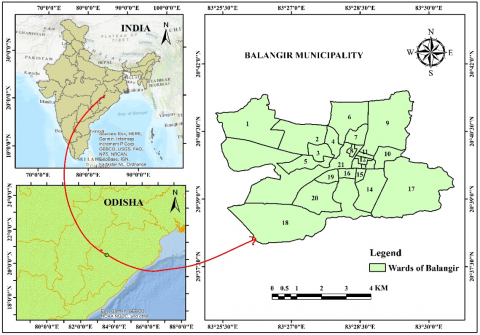
Balangir Municipality, located in Balangir District, Odisha, India, is an urban centre divided into 21 wards (Figure 1). According to the 2011 Census, the municipality had a population of 98,238, comprising 50,582 males and 47,656 females, with a female sex ratio of 942 compared to the state average of 979. The child population (aged 0-6) was 10,248 (10.43% of the total), with a child sex ratio of 925 against the state average of 941. The literacy rate in Balangir was 86.27%, surpassing the state average of 72.87%, with male literacy at 91.76% and female literacy at 80.46%. The estimated population in 2023 is approximately 133,000, as the scheduled 2021 Census was postponed due to COVID-19, and updated figures are pending confirmation [23]. The study focuses on Balangir Municipality to analyse single-use plastic usage, disposal practices, municipal waste management effectiveness, community participation, and policy gaps, aiming to propose sustainable solutions for plastic waste management.
Figure 1. Study area map
2.2 Database and methodology
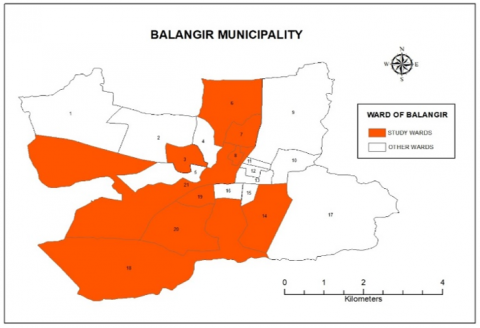
The methodology of the present study is based on a primary survey conducted across nine wards of Balangir Municipality, Odisha (Figure 2) in March-April months of 2025. A total of 270 responses were collected using the questionnaire method. This sample covers the municipality well enough statistically and socio-demographically. A stratified random sampling technique was applied to select participants from different wards, ensuring representation across socio-economic and geographic variations within the municipality. The surveyed wards were categorized by population density—Very High, Highest, and High—with 90 respondents per category to ensure balanced representation (Table 1). Within each ward, households were randomly selected to minimize bias and capture diverse perspectives on single-use plastic consumption and disposal. The questionnaire was structured with both closed and open-ended questions, available in Odia and English to ensure clarity and accessibility for respondents of different educational backgrounds. Table 2 summarises questions designed to gather information during the survey on household frequency of single-use plastic use, disposal and segregation methods, awareness of municipal waste policies, and perceptions of environmental impact and behavioural change. Data collection was conducted through in-person visits, during which respondents were informed about the purpose of the study and assured of confidentiality and voluntary participation.
Figure 2. Map showing the sampled wards
Table 1. Ward-wise sampling distribution in Balangir Municipality
|
Population Category |
Wards Covered |
Total Respondents |
|
Very High |
Ward 18 (Rajib Nagar, Tulsi Nagar), Ward 20 (Ichhapada, Indiranagar), Ward 21 (Shastri Nagar) |
90 |
|
Highest |
Ward 7 (Brahmin Pada, Gandhinagar Pada), Ward 8 (Hatpada Pada), Ward 14 (Malpada) |
90 |
|
High |
Ward 3 (Kandhpali, Talpali Pada), Ward 6 (Chimnibhati Pada), Ward 19 (Nalkhandi Pada) |
90 |
|
Total Respondents |
9 Wards |
270 |
Table 2. Main questions used in semi-structured interviews with residents
|
Themes |
Questions |
|
Household usage and sources of SUPs |
|
|
Disposal practices |
|
|
Awareness of environmental impacts |
|
|
Perceptions of municipal waste management |
|
|
Challenges and barriers to sustainable practices |
|
|
Suggestions for improvement and future outlook |
|
The analysis of the findings in this study focuses on the household practices, awareness levels, and waste management challenges associated with single-use plastic carry bags in Balangir Municipality. Table 3 summarises the major patterns of usage, disposal, and municipal management by social, behavioural, infrastructural, and policy dimensions. The table provides a conceptual foundation for the detailed interpretation of the results, which are discussed in the following sections.
Table 3. Insights from the SUPs management in Balangir Municipality
|
Research Objective |
Key Findings from the Case Study |
|
What are the waste disposal practices undertaken by municipal authorities in Balangir Municipality? |
Municipal waste management in Balangir is characterized by inconsistent collection services, with 65% of respondents perceiving it as inefficient due to limited infrastructure, infrequent pickups, and inadequate equipment. Only 32% of residents are aware of specific municipal policies like the Plastic Waste Management Rules (2016), leading to poor enforcement and reliance on informal systems. Waste segregation at source is negligible (58% never segregate), resulting in unsegregated dumping in landfills or open spaces. |
|
How do households manage and dispose of single-use plastic carry bags? |
Households predominantly dispose of single-use plastic carry bags through unregulated methods, with 36.69% mixing them with regular trash without segregation, 18.49% using a combination of trash disposal, burning, or repurposing, and 6.29% burning them alongside other refuse, contributing to air pollution. Encouragingly, 35.92% reuse bags for storage or packaging, though this delays rather than prevents waste accumulation. Disposal sites include home waste bins (36.29%), backyards (14.81% + 5.55%), and public bins (8.14%), with 22.22% utilizing Swachh Bharat Abhiyan points. Overall, 71.11% never segregate plastic, highlighting gaps in infrastructure and habits that lead to environmental degradation. |
|
How aware are the people of Balangir Municipality of the impact of single-use plastic carry bags on the environment? |
Awareness levels are moderate, with 68% acknowledging severe environmental threats like pollution and health hazards, but only 45% actively reducing consumption due to convenience and lack of alternatives. Younger respondents (18-35 years) show higher concern (e.g., 52.59% somewhat concerned, 28.51% very concerned), influenced by media, education, and social media (32.59% from combined sources). However, 18.81% remain neutral, and observations of litter vary (44.07% sometimes notice it). Challenges include habitual use (17.4% cite convenience/habit), high costs of alternatives (15.55%), and limited community-based education, indicating a gap between knowledge and behavioural change. |
3.1 Demographic characteristics of the respondents
Table 4 summarizes the demographic characteristics of the respondents. Males constituted 72.22% (195 respondents), while females accounted for 27.78%, reflecting a male-dominated sample, possibly due to socio-cultural factors or survey accessibility. The age distribution was diverse, with the 18–25 age group being the largest (36.3%), followed by 26–35 (16.7%), 36–45 (16.3%), 46–60 (14.4%), and 60+ (16.3%). This youthful sample suggests potential for higher awareness of environmental issues among younger respondents. Educationally, 56% had primary education, 16.3% held undergraduate degrees, 12.6% had secondary education, 8.1% had postgraduate qualifications, and 7% had no formal education. The predominance of primary education indicates a need for accessible awareness campaigns tailored to varying literacy levels.
Table 4. General information of the respondent Balangir Municipality
|
Parameters |
Group/Categories |
No. of Respondents |
Percentage (%) |
|
Gender |
Male |
195 |
72.22 |
|
Female |
75 |
27.78 |
|
|
Age |
18-25 |
98 |
36.3 |
|
26-35 |
45 |
16.7 |
|
|
36-45 |
44 |
16.3 |
|
|
46-60 |
39 |
14.4 |
|
|
60+ |
44 |
16.3 |
|
|
Educational Qualification |
No formal education |
19 |
7 |
|
Primary |
151 |
56 |
|
|
Secondary |
34 |
12.6 |
|
|
Undergraduate |
44 |
16.3 |
|
|
Postgraduate |
22 |
8.1 |
3.2 Usage patterns and sources of single-use plastic carry bags
In Balangir, single-use plastic carry bags are now a common feature of urban life. They help people carry items with ease. However, they are the biggest contributor to pollution as well. The survey data reveals a high dependence on single-use plastic carry bags among the residents of Balangir Municipality. A significant 45.92% of respondents reported using plastic bags daily, demonstrating the deep-rooted reliance on these materials for shopping and packaging purposes (Table 5). This habitual usage is largely driven by their affordability, convenience, and easy availability, despite increasing awareness of environmental concerns [24, 25]. Additionally, 38.14% of respondents admitted to using plastic bags several times a week, further emphasizing their widespread consumption. This frequency suggests that even among those who do not use plastic bags daily, regular dependence on them persists, contributing to the overall accumulation of plastic waste in the region. On the other hand, a smaller fraction, 15.92%, indicated occasional use of plastic bags, which may suggest that some community members are making conscious efforts to reduce plastic consumption. However, this percentage remains relatively low compared to the dominant groups that use plastic regularly.
Table 5. Usage frequency by age group in Balangir Municipality
|
Age Group |
Sample Size |
Daily (%) |
Several Times a Week (%) |
Occasionally (%) |
Key Comment |
|
18-25 |
98 |
55.10 |
30.61 |
14.29 |
Highest daily use, driven by youth mobility and retail habits. |
|
26-35 |
45 |
44.44 |
40.00 |
15.56 |
Balanced frequency, influenced by work-related shopping. |
|
36-45 |
44 |
40.91 |
43.18 |
15.91 |
Moderate, with family needs increasing weekly use. |
|
46-60 |
39 |
38.46 |
41.03 |
20.51 |
Declining daily reliance, possibly due to health awareness. |
|
60+ |
44 |
36.36 |
36.36 |
27.27 |
Lowest daily, favoring occasional due to traditional practices. |
This trend represents the role of urbanization as urban dwellers in the related Indian researches have 97.7% usage in contrast to 87.7% in the countryside due to factors such as ease (34.8) and availability (28.2). Behavioral analysis suggests that daily usage among younger respondents (18–25) is strongly influenced by mobility patterns, exposure to retail environments, and the perceived convenience of plastic bags. A 22-year-old respondent from Ward 18 (Very High Density) says, “I take plastic bags for grocery every day because they are free and handy to carry. What else will I take?” This highlights reliance or habit, and perceived lack of alternatives. Demographic differences add important insights. According to other studies, the substantial user were men who had the greater proclivity towards plastic carry bags. People who were more educated, displayed the highest usage thereby showing that awareness does not mean proper behaviour. Occupation affects use, too. Urban workers and non-agriculturists use plastic more because it is convenient.
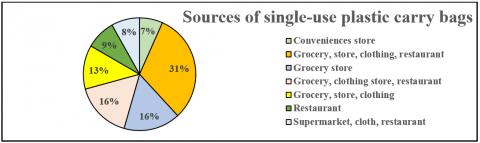
In Balangir Municipality, grocery stores, clothing stores, and restaurants are the primary sources of single-use plastic carry bags in Balangir Municipality. A significant 31.48% of respondents reported receiving plastic bags from a combination of grocery stores, clothing stores, and restaurants, highlighting the widespread distribution of plastic packaging across multiple retail sectors (Table 6). Among individual sources, grocery stores alone account for 16.29% of plastic bag distribution, while an equal percentage (16.29%) of respondents mentioned receiving bags from a combination of grocery stores, clothing stores, and restaurants. This suggests that grocery stores remain a major contributor to plastic bag circulation, as they serve as everyday shopping destinations. Clothing stores and supermarkets also play a significant role. Around 12.59% of respondents received plastic bags from grocery stores and clothing stores combined, whereas 8.14% obtained them from supermarkets, clothing stores, and restaurants. This pattern indicates that plastic bags are not limited to food-related purchases but are also widely used in the retail and apparel industries. Restaurants alone contributed to 8.51% of plastic bag distribution, emphasizing the role of takeout and food delivery services in plastic consumption. Meanwhile, convenience stores accounted for 6.66%, showing a lower but still notable contribution to plastic waste (Figure 3). In Ward 7, with the highest density, a shopkeeper said, “We give them plastic bags because customers expect them to give; a cloth bag would cost more, and no one would want to pay more.” This continues the cycle of supply and demand; the waste continues to amplify. In Kerala, similar occurrences have been seen where household practices are contested by government policies; Odisha has also instituted a ban on items less than 50 microns since 2016, which does not appear to be uniformly enforced. In Balangir, the introduction of restrictions like compulsory alternatives for retailers can control the use of plastic as implemented in Maharashtra.
Table 6. Sources of single-use plastic carry bags in Balangir Municipality
|
Source Combination |
Percentage (%) |
Primary Wards Affected |
Comment |
|
Grocery, Clothing, Restaurants |
31.48 |
Very High (e.g., Ward 18) |
Dominant multi-source, reflecting diverse retail exposure. |
|
Grocery Alone |
16.29 |
Highest (e.g., Ward 7) |
Everyday essentials drive this, with free provision common. |
|
Grocery and Clothing |
12.59 |
High (e.g., Ward 3) |
Apparel markets add to grocery habits in mixed-use areas. |
|
Supermarkets, Clothing, Restaurants |
8.14 |
Very High (e.g., Ward 20) |
Urban supermarkets contribute to takeout and shopping. |
|
Restaurants Alone |
8.51 |
Highest (e.g., Ward 8) |
Food delivery and eateries as key pollution contributors. |
|
Convenience Stores |
6.66 |
All Categories |
Quick-stop sources, often overlooked in bans. |
|
Other Combinations |
Remaining |
Varied |
Includes occasional vendors, amplifying total over 70%. |
Figure 3. Sources of single-use plastic carry bags
3.3 Household disposal practices and behaviours in Balangir Municipality
Balangir’s municipal waste management exhibits both formal and informal practices. The study highlights that waste disposal services provided by the municipality are inconsistent across various wards. While certain high-density areas receive relatively regular waste collection services, other regions, particularly in lower-income settlements, face infrequent and inadequate waste disposal services. Survey data indicates that approximately 65% of respondents believe that the existing municipal waste collection system is inefficient, leading to open dumping and plastic pollution in public spaces (Table 7). Furthermore, only 32% of the respondents were aware of any municipal policy specifically addressing plastic waste management. These gaps reflect limited perceived behavioral control, where residents recognize environmental risks but lack accessible avenues to act sustainably.
Table 7. Waste management efficiency, policy awareness, and segregation
|
Aspect / Question |
Response Category |
Percentage (%) |
|
Perception of municipal collection efficiency |
Inefficient |
65.00 |
|
Somewhat efficient |
24.07 |
|
|
Efficient |
10.92 |
|
|
Awareness of municipal waste management policies |
Aware |
32.00 |
|
Not aware |
68.00 |
|
|
Plastic waste segregation at the source |
Always |
4.44 |
|
Sometimes |
11.11 |
|
|
Rarely |
26.30 |
|
|
Never |
58.15 |
Additionally, 58% of the respondents reported that municipal waste segregation at the source is negligible. The absence of dedicated collection points for plastic waste and the unavailability of recycling facilities exacerbate the issue, leading to increased accumulation of non-biodegradable plastic waste in landfills. Consequently, the inefficiency of municipal waste management services remains a significant impediment to reducing plastic waste pollution in Balangir Municipality.
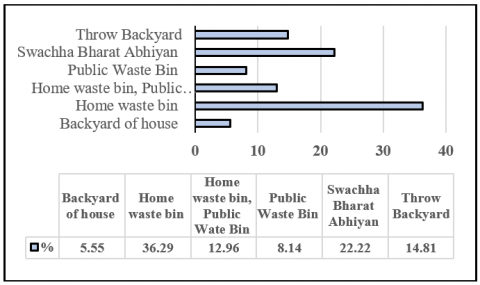
Figure 4. Places for disposing of plastic carry bags
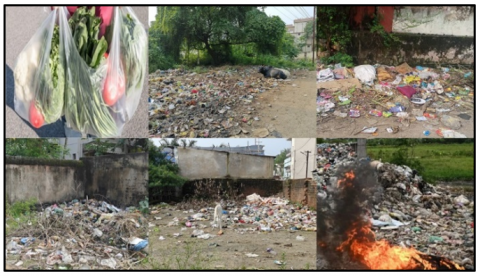
The data on disposal practices in Balangir Municipality highlights varying approaches to waste disposal. The most common practice (36.29%) is disposing of waste in home waste bins, indicating a preference for household-level containment before further disposal (Figure 4). However, 14.81% of respondents still throw waste directly into the backyard, contributing to environmental pollution and health hazards (Figure 5). Additionally, 5.55% use their backyard as a disposal site, further exacerbating localized waste accumulation. While 22.22% of respondents dispose of waste under the Swachh Bharat Abhiyan initiative, reflecting an effort towards structured waste management, the public waste bin usage remains low at just 8.14%, suggesting limited accessibility or awareness. 12.96% use both home and public waste bins, showing a mixed approach to disposal, which may be influenced by convenience or municipal waste collection efficiency. Waste segregation remains a major concern, with 71.11% of households never separating plastic waste, severely hindering recycling and sustainable waste management efforts. The data underscores the need for improved waste disposal infrastructure, increased access to public waste bins, and stronger awareness campaigns to encourage environmentally responsible disposal habits. Strengthening municipal waste collection services and promoting source segregation at the household level can significantly reduce improper waste disposal and enhance overall waste management efficiency in Balangir Municipality.
Figure 5. Household waste disposal sites and burning in Balangir
The disposal of single-use plastic carry bags in Balangir Municipality follows a diverse set of methods, largely influenced by accessibility to waste management services, household practices, and municipal interventions. A significant portion (36.69%) of residents dispose of plastic waste along with regular trash without any segregation, contributing to the accumulation of mixed waste in landfills (Table 8). Another 18.49% use a combination of disposal methods, including trash disposal, burning, or repurposing plastic for household use. Additionally, 6.29% of respondents burn plastic waste with other household refuse. Respondents from Ward 19 said, “We throw plastic in the backyard as the truck didn’t come regularly. What do we do? Burning them sometimes clears space.” Encouragingly, 35.92% of households reuse plastic bags for storage or packaging purposes. However, this only delays their eventual disposal and contributes to long-term waste buildup. The role of the Balangir Municipality is crucial in plastic waste management, but inefficiencies remain.
Table 8. Breakdown of disposal practices by population density category
|
Population Category |
Mixing with Trash (%) |
Backyard Dumping (%) |
Burning (%) |
Reuse (%) |
Structured Disposal (e.g., Swachh Bharat) (%) |
Never Segregate (%) |
|
Very High (Wards 18, 20, 21) |
38.5 |
22.0 |
5.5 |
34.0 |
20.0 |
60.0 |
|
Highest (Wards 7, 8, 14) |
37.0 |
19.5 |
7.0 |
36.5 |
21.5 |
57.5 |
|
High (Wards 3, 6, 19) |
34.5 |
19.7 |
6.3 |
37.3 |
25.2 |
57.0 |
|
Overall Average |
36.69 |
20.36 |
6.29 |
35.92 |
22.22 |
58.15 |
3.4 Municipal management challenges and community awareness
Balangir faces structural and behavioral challenges in waste management. The municipal waste management system in the study area is found to be ineffective, with 65% across eight wards rating collection as inadequate, citing irregular collection and lack of manpower. An official from Ward 3 mentioned, “We have vehicles but due to lack of manpower we are not able to cover all wards on a daily basis, which leads to plastics being dumped into drains and culminate in floods.” The CAG audit, Odisha states, no ULB achieves 100% waste processing. According to a news item in 2017, Balangir’s 70% door-to-door collection has gaps which lead to littering in the open. Due to these issues, vector-borne diseases arise that are also national-level problems. The findings from the survey reveal a mixed assessment of public awareness regarding the environmental implications of single-use plastic waste. While 68% of respondents acknowledged that plastic pollution poses severe environmental threats, only 45% actively adopted measures to reduce their plastic consumption. The remaining respondents cited convenience and lack of viable alternatives as reasons for their continued reliance on plastic bags. A key observation is that younger respondents, particularly those aged between 18 and 35, exhibited a relatively higher level of concern and awareness about the environmental effects of plastic waste compared to older generations. While governmental and non-governmental awareness campaigns have played a role in shaping public perception, behavioural change remains slow due to ingrained habits and insufficient enforcement mechanisms. The study also reveals that a considerable percentage of respondents were unaware of biodegradable or reusable alternatives to plastic bags. While some residents had been exposed to awareness initiatives, the overall effectiveness of these campaigns in fostering sustainable waste disposal practices remains limited. This highlights the need for stronger policy implementation, behavioural change programs, and incentives for adopting sustainable alternatives. Simply raising awareness is insufficient; efforts should focus on enforcing plastic bags, providing accessible alternatives, and encouraging responsible consumer behaviour to achieve effective plastic waste management.
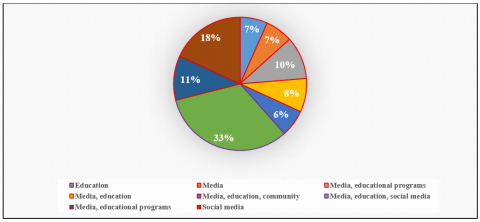
The data highlights the influential role of media and education in raising awareness about the environmental impact of single-use plastic carry bags. The most effective source is a combination of media, education, and social media, accounting for 32.59% of awareness (Figure 6). Social media alone (18.14%) and combined media-education efforts (10.81%) also contribute significantly. In contrast, formal education (6.66%) and community-based awareness (6.59%) show limited impact, indicating the need to strengthen grassroots efforts and enhance curriculum-based environmental education.
Figure 6. The source of knowledge about community awareness
In terms of public concern, most respondents (52.59%) are somewhat concerned, suggesting moderate awareness but limited behavioural change. A more environmentally conscious group (28.51%) reports being very concerned, indicating potential for proactive action. However, (18.81%) are neutral, revealing a gap in emotional or practical engagement with the issue. This highlights the need for targeted interventions, including incentive-based policies and community outreach to transform awareness into sustainable practices. Regarding public observations of plastic bag littering, responses vary. While 44.07% sometimes notice plastic litter and 26.66% often see it, others report rarely (6.66%) or never (22.59%) encountering such waste. These varied perceptions suggest that plastic pollution is unevenly distributed or differently perceived within communities. Strengthening waste management systems, improving awareness, and enforcing anti-littering measures are essential to address this visible aspect of plastic pollution.
In Balangir, there are various structural and behavioural challenges in the disposal and recycling of single-use plastic carry bags. Even though we already know that plastic waste is harmful to the environment, people still throw them anyway as they are not offered the right option. This is due to poor infrastructure, limited participation in waste segregation, and ineffective policy enforcement. Many people still throw out plastic in the normal trash and limited access to recycling facilities does not help. Moreover, the growing use of plastics is helped by habitual use of plastic bags, lack of affordable alternatives and irregular municipal waste management. To tackle such issues, it is important to formulate an effective waste management system, which can be done with a joint effort of the urban local bodies, businesses as well as the society at large [26-28].
People in Balangir Municipality are constantly beset with problems that cannot avoid carrying plastic. As many find plastic access more convenient to use than alternatives, continued usage of plastic is because of convenience (15.92%). Another factor is their availability in stores (13.07%). Many outlet owners still supply plastic bags to customers. As a result, customers unconsciously use them as the default choice. 17.4% of respondents noted barriers to switching to sustainable alternatives were convenience, availability, habit and absence of affordable alternatives. According to the reports, the high cost of alternatives like cloth or biodegradable bags is a challenge for 15.55%. The findings show that there is awareness of plastic pollution, but access, financial capacity, and habitual use remain obstacles to progress. To address these issues more stringent regulations, better enforcement, and incentives for cleaner alternatives can encourage the adoption of sustainability.
The study highlights the use, disposal, and issues related to single-use plastic carry bags in Balangir. Many people are aware of their impacts on the environment. However, knowledge does not equal action. Even today, many households mix plastic with other waste or throw it in the bin along with other trash, or burn it showing their ignorance. A portion of the population reuses plastic bags, but this merely delays disposal rather than reducing waste. The main obstacles to proper disposal include limited awareness, lack of convenient recycling options, and inadequate infrastructure. Despite general support for reducing or banning plastic bags, the actual shift toward using sustainable alternatives like reusable bags is slow, influenced by factors such as habit, cost, and availability. Media, education, and social platforms play an important role in raising awareness, though traditional classroom education and community-based efforts have a comparatively lower impact. Public concern about plastic waste exists, but it is often moderate, and not all individuals translate this concern into environmentally responsible behavior. Observations of plastic litter in communities vary, indicating both uneven pollution distribution and differences in public perception. These findings underscore the urgent need for stronger policy implementation, improved waste management systems, and more effective public engagement strategies to foster lasting behavioural change. Some limitations of the study are its dependence on household surveys conducted at one single moment in the time, which may be subject to self-reporting problem and no longitudinal data to assess the behaviour changed over time. Still, similar municipalities in India could espouse the methodology and findings. Hence, it could serve as a guide for comparative studies and scalable interventions.
The authors sincerely acknowledge the Balangir Municipality authorities for their cooperation and support during data collection. We extend our gratitude to the local residents, waste collectors, and vendors who participated in this study, sharing their valuable time and insights.
[1] Kumar, R., Verma, A., Shome, A., Sinha, R., et al. (2021). Impacts of plastic pollution on ecosystem services, sustainable development goals, and need to focus on circular economy and policy interventions. Sustainability, 13(17): 9963. https://doi.org/10.3390/su13179963
[2] Taghipour, H., Mohammad, A., Tarfiei, M., Jafari, N. (2023). Single-use plastic bags: Challenges, consumer’s behavior, and potential intervention policies. Journal of Material Cycles and Waste Management, 25(6): 3404-3413. https://doi.org/10.1007/s10163-023-01763-z
[3] Mugobo, V.V., Ntuli, H. (2022). Consumer preference for attributes of single-use and multi-use plastic shopping bags in Cape Town: A choice experiment approach. Sustainability, 14(17): 10887. https://doi.org/10.3390/su141710887
[4] Tsoumas, J. (2019). Designing single-use plastic products: Far from the earthly paradise. American Scientific Research Journal for Engineering, Technology, and Sciences (ASRJETS), 52(1): 79-88. https://core.ac.uk/download/pdf/235050758.pdf.
[5] Mazhandu, Z.S., Muzenda, E., Mamvura, T.A., Belaid, M., Nhubu, T. (2020). Integrated and consolidated review of plastic waste management and bio-based biodegradable plastics: Challenges and opportunities. Sustainability, 12(20): 8360. https://doi.org/10.3390/su12208360
[6] Donuma, K.U., Ma, L., Bu, C., George, L.Y., Gashau, M., Suleiman, A.O. (2024). Environmental and human health risks of indiscriminate disposal of plastic waste and sachet water bags in Maiduguri, Borno State Nigeria. Waste Management Bulletin, 2(2): 130-139. https://doi.org/10.1016/j.wmb.2024.04.002
[7] Bidashimwa, D., Hoke, T., Huynh, T.B., Narkpitaks, N., Priyonugroho, K., Ha, T.T., Burns, A., Weissman, A. (2023). Plastic pollution: How can the global health community fight the growing problem? BMJ Global Health, 8(3): e012140. https://doi.org/10.1136/bmjgh-2023-012140
[8] Sheriff, S.S., Yusuf, A.A., Akiyode, O.O., Hallie, E.F., Odoma, S., Yambasu, R.A., Thompson-Williams, K., Asumana, C., Gono, S.Z., Kamara, M.A. (2025). A comprehensive review on exposure to toxins and health risks from plastic waste: Challenges, mitigation measures, and policy interventions. Waste Management Bulletin, 3(3): 100204. https://doi.org/10.1016/j.wmb.2025.100204
[9] Sk, M.M., Ali, S.A., Ahmad, A. (2020). Optimal sanitary landfill site selection for solid waste disposal in Durgapur city using geographic information system and multi-criteria evaluation technique. KN-Journal of Cartography and Geographic Information, 70: 163-180. https://doi.org/10.1007/s42489-020-00052-1
[10] Chen, Y., Awasthi, A.K., Wei, F., Tan, Q., Li, J. (2021). Single-use plastics: Production, usage, disposal, and adverse impacts. Science of the Total Environment, 752: 141772. https://doi.org/10.1016/j.scitotenv.2020.141772
[11] Sk, M.M. (2025). Assessing vulnerability of a solid waste management system through GIS and the Rank Sum method: A case study of Durgapur city, India. Advances in Environmental Technology, 11(1): 36-62. https://doi.org/10.22104/aet.2024.7053.1939
[12] Sk, M.M., Patra, T.R. (2025). Global research dynamics on climate change and indigenous livelihoods: Insights from scientometric analysis. In Climate Change and Disadvantaged Communities: Challenges and Opportunities (1st ed.). CRC Press, pp. 261-282. https://doi.org/10.1201/9781003620747-7
[13] Islam, F.S. (2025). The effects of plastic and microplastic waste on the marine environment and the ocean. European Journal of Environment and Earth Sciences, 6(3): 1-9. https://doi.org/10.24018/ejgeo.2025.6.3.508
[14] Smith, O., Brisman, A. (2021). Plastic waste and the environmental crisis industry. Critical Criminology, 29(2): 289-309. https://doi.org/10.1007/s10612-021-09562-4
[15] Madhavaraj, M., Karthikeyan, K. (2025). A review of municipal solid waste management and landfills in India: Environmental impacts, sustainable strategies and policy insights. Journal of Material Cycles and Waste Management, 27: 3076-3099. https://doi.org/10.1007/s10163-025-02287-4
[16] Hossain, R., Islam, M.T., Shanker, R., Khan, D., Locock, K.E.S., Ghose, A., Schandl, H., Dhodapkar, R., Sahajwalla, V. (2022). Plastic waste management in India: Challenges, opportunities, and roadmap for circular economy. Sustainability, 14(8): 4425. https://doi.org/10.3390/su14084425
[17] Ali, S.A.S., Ilankoon, I.M.S.K., Zhang, L., Tan, J. (2024). Packaging plastic waste from e-commerce sector: The Indian scenario and a multi-faceted cleaner production solution towards waste minimisation. Journal of Cleaner Production, 447: 141444. https://doi.org/10.1016/j.jclepro.2024.141444
[18] Ajzen, I. (1991). The theory of planned behavior. Organizational Behavior and Human Decision Processes, 50(2): 179-211. https://doi.org/10.1016/0749-5978(91)90020-T
[19] Gifford, R., Nilsson, A. (2014). Personal and social factors that influence pro-environmental concern and behaviour: A review. International Journal of Psychology, 49(3): 141-157. https://doi.org/10.1002/ijop.12034
[20] Towards the circular economy: An economic and business rationale for an accelerated transition. Ellen MacArthur Foundation. https://www.ellenmacarthurfoundation.org/towards-the-circular-economy-vol-1-an-economic-and-business-rationale-for-an, accessed on Jan. 1, 2013.
[21] Ostrom, E. (2010). Polycentric systems for coping with collective action and global environmental change. Global Environmental Change, 20(4): 550-557. https://doi.org/10.1016/j.gloenvcha.2010.07.004
[22] Pretty, J. (2003). Social capital and the collective management of resources. Science, 302(5652): 1912-1914. https://doi.org/10.1126/science.1090847
[23] Sk, M.M., Sethy, T. (2025). Tourism, cultural heritage, and sustainability in Balangir, Odisha, India: An evaluation of identity conservation and economic growth. South Asian Journal of Social Sciences and Economics, 22(4): 147-159. https://doi.org/10.9734/sajsse/2025/v22i4991
[24] Sk, M.M. (2025). Trash to trouble: Revealing the environmental costs of poor waste management in Durgapur. Journal of Geographical Studies, 9(1): 69-90. https://doi.org/10.21523/gcj5.25090105
[25] Suleman, R., Amjad, A., Ismail, A., Javed, S., Ghafoor, U., Fahad, S. (2022). Impact of plastic bags usage in food commodities: An irreversible loss to environment. Environmental Science and Pollution Research, 29(33): 49483-49489. https://doi.org/10.1007/s11356-022-21091-3
[26] Kibria, M.G., Masuk, N.I., Safayet, R., Nguyen, H.Q., Mourshed, M. (2023). Plastic waste: Challenges and opportunities to mitigate pollution and effective management. International Journal of Environmental Research, 17(1): 20. https://doi.org/10.1007/s41742-023-00507-z
[27] Choudhury, B.K., Haloi, R., Bharadwaj, K.K., Rajkhowa, S., Sarma, J. (2022). Bio-based and biodegradable plastics as alternatives to conventional plastics. In Plastic and Microplastic in the Environment: Management and Health Risks. John Wiley & Sons Ltd., pp. 170-186. https://doi.org/10.1002/9781119800897.ch9
[28] Fouda-Mbanga, B.G., Nyoni, B., Mnyango, J.I., Phiri, C., et al. (2025). The nexuses of micro(nano)plastics at environmental interfaces: Challenges in wastewater treatment and sustainable water management. Journal of Environmental Chemical Engineering, 13(6): 119952. https://doi.org/10.1016/j.jece.2025.119952